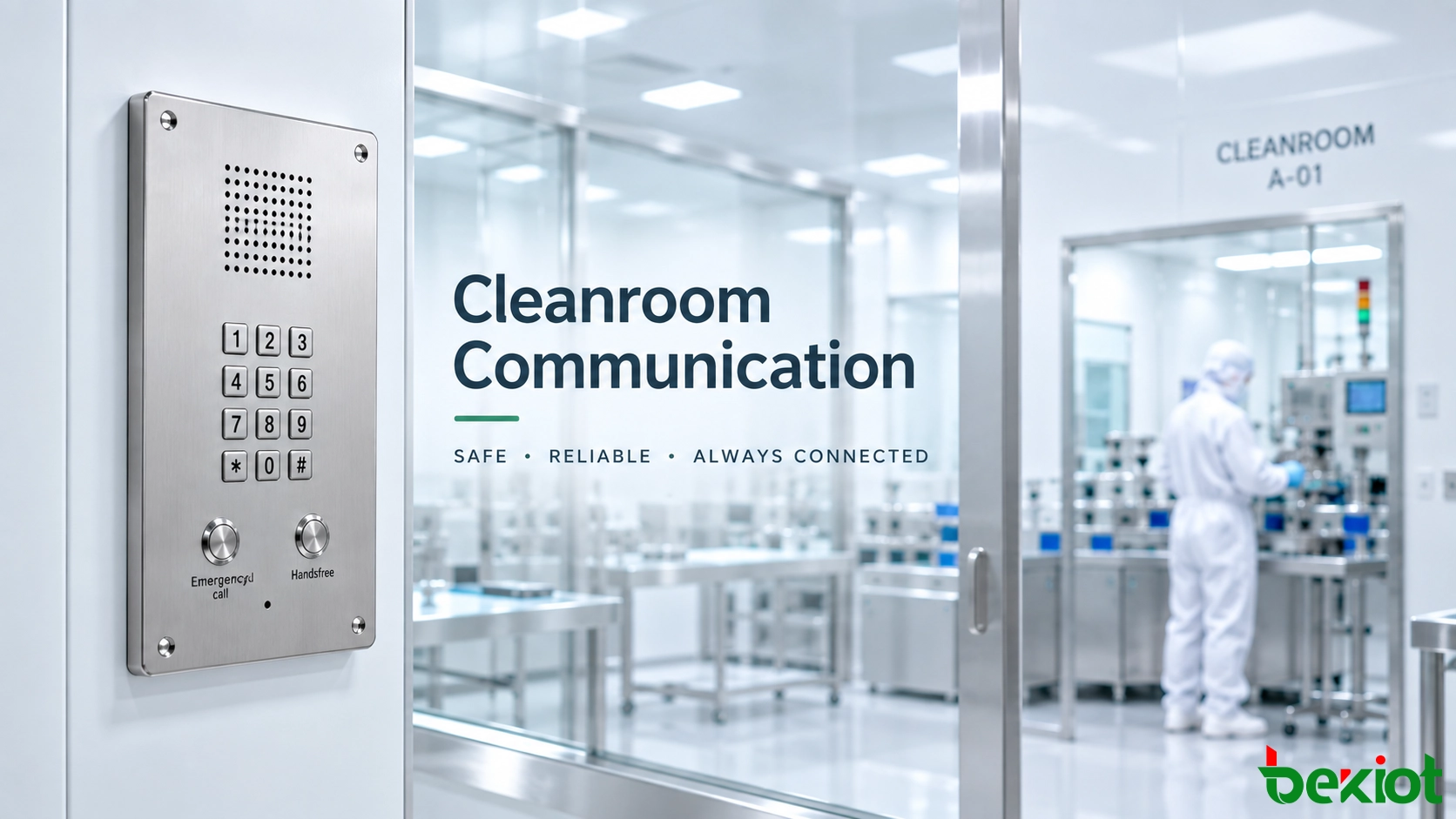
A cleanroom telephone is a voice communication terminal installed inside a cleanroom or another controlled working area. It provides personnel with a defined point for contacting a control room, supervisor, maintenance team or another authorized extension without depending on a conventional desktop telephone.
The term describes the communication endpoint rather than the complete system behind it. A cleanroom telephone may connect to an IP PBX, SIP server, softswitch or another compatible voice platform, allowing it to operate as part of the same communication infrastructure used elsewhere in a facility.
What distinguishes the device is not simply its ability to make a telephone call. Its physical form, operating method and relationship with the room are different from those of a typical office phone. Many models are installed at a permanent location and combine the microphone, loudspeaker and call controls within a single front interface instead of relying on a separate handset and desktop base.
This becomes useful when communication needs to remain associated with a room or process area. The person using the telephone may change from one shift to another, but the communication point remains in the same location and continues to serve the same operational role.
How It Differs from a Standard Telephone
A conventional office telephone is normally associated with a desk or an individual user. It may have its own extension, but the physical device can be moved, reassigned or replaced without significantly changing the surrounding workspace.
A cleanroom telephone is generally treated differently. Once installed, it becomes part of the communication arrangement for that room or production zone. Its extension may therefore represent a location rather than a particular employee.
The operating method can also be different. Instead of lifting a handset, holding it throughout the conversation and returning it to a cradle, a hands-free terminal uses an integrated microphone and loudspeaker for two-way voice communication.
Typical differences include:
A wall-mounted or flush-mounted form rather than a movable desktop base;
An integrated microphone and loudspeaker for hands-free communication;
A front interface containing the controls required at that location;
Fewer movable components during routine calling;
An extension associated with a room, production zone or communication point;
Integration with the facility's existing voice communication infrastructure.
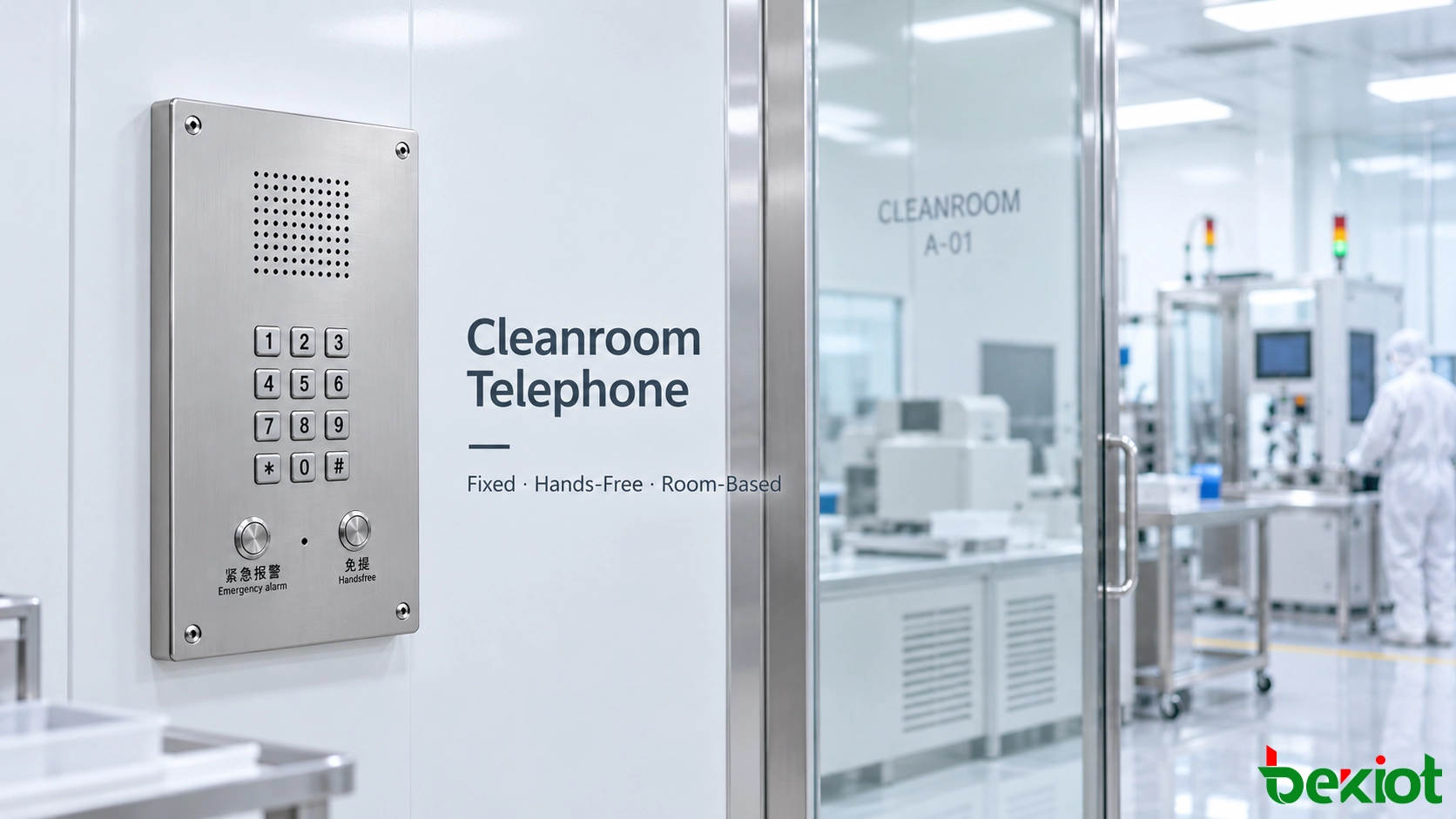
These characteristics do not form a universal specification for every cleanroom telephone. One project may require a numeric keypad for normal extension dialing, while another may use only a small number of predefined call buttons. Network interfaces, enclosure materials, environmental protection and operating controls can also vary between products.
The key difference is that the telephone is designed around the role of a permanent communication point inside a controlled space rather than around the normal requirements of an office workstation.
Telephone, Intercom or Communication System?
The terms cleanroom telephone, cleanroom intercom and cleanroom intercom system are often used in closely related projects. They may even refer to similar hardware, but they describe different levels of the communication architecture.
A cleanroom telephone usually refers to the physical device used by personnel inside the controlled area. A user initiates or receives a call, speaks through its microphone and listens through its loudspeaker. If the telephone supports SIP addressing, it can have its own extension and communicate with multiple destinations according to the routing rules of the voice platform.
An intercom generally emphasizes communication between defined points. A call button may connect a clean area directly with a control room, security position or another designated destination. Some intercom terminals also support SIP and normal extension dialing, so the technical boundary between a telephone and an intercom is not always absolute.
The communication system sits above these devices and determines how they are registered, identified and connected.
A typical system may contain:
Cleanroom telephones and intercom terminals;
Ethernet switches and network infrastructure;
An IP PBX, SIP server or softswitch;
Control-room telephones and dispatch consoles;
Office SIP phones and other authorized extensions;
Recording, management or other communication services where required.
This distinction becomes important when defining a project. Specifying a cleanroom telephone determines the field device, but it does not by itself determine who receives a call, how extensions are assigned, whether calls can be transferred or how communication is routed between different parts of the facility.
Those functions depend on the wider communication architecture and the capabilities enabled on the connected platform.
Inside a Cleanroom IP Telephone
Although cleanroom telephones vary in appearance, an IP model normally combines several functional sections within one device.
The user interface provides the controls needed to operate the telephone. A full keypad can allow users to dial different extensions, while dedicated buttons can provide faster access to predefined destinations. The appropriate arrangement depends on whether personnel need flexible dialing or a limited set of known call paths.
The audio section provides the connection between the local user and the remote party. A microphone captures speech from the cleanroom side, while the loudspeaker reproduces incoming audio. In a hands-free design, these components perform the role that would otherwise be handled by a conventional telephone handset.
The network section connects an IP telephone to the facility network. For a SIP-based model, signaling is exchanged with the communication platform so that the device can register, initiate calls and receive incoming call requests.
After a call has been established, voice media can be transported over the IP network according to the system configuration. This separates the local telephone from the call-control function: the device provides the user interface, while the communication platform determines how the call reaches its destination.
The front panel and enclosure form the physical boundary between the internal electronics and the working environment. Some cleanroom telephones use stainless steel for the exposed front panel and place most of the enclosure behind the mounting surface.
This type of construction can reduce the amount of equipment projecting into the room and provide a consistent operating surface. However, the actual suitability of any material or enclosure depends on the requirements of the individual facility.
A stainless-steel front panel, for example, should not automatically be interpreted as proof of a particular cleanroom classification, GMP compliance, antibacterial performance or resistance to a specific cleaning chemical. Where these properties are required, they need to be verified from the relevant product documentation and project specification.
What Happens When a Call Is Made?
A call from a cleanroom telephone involves several parts of the communication system, even though the process appears simple to the user.
Consider an operator inside a controlled production area who notices a process condition that needs to be reported. The operator uses the local telephone and selects the required destination, either by dialing an extension or using a predefined call key.
The telephone sends the call request across the IP network to the SIP communication platform. The platform identifies the destination and applies the configured call routing. The call may then be presented to a control-room dispatch telephone, another SIP phone or another authorized communication device.
Once the remote party answers, the voice path is established. Speech from the cleanroom side is captured by the microphone and transported across the network. Audio from the remote party is returned to the cleanroom telephone and reproduced through its loudspeaker.
The simplified path is:
Cleanroom Telephone → IP Network → SIP Platform → Control-Room Telephone
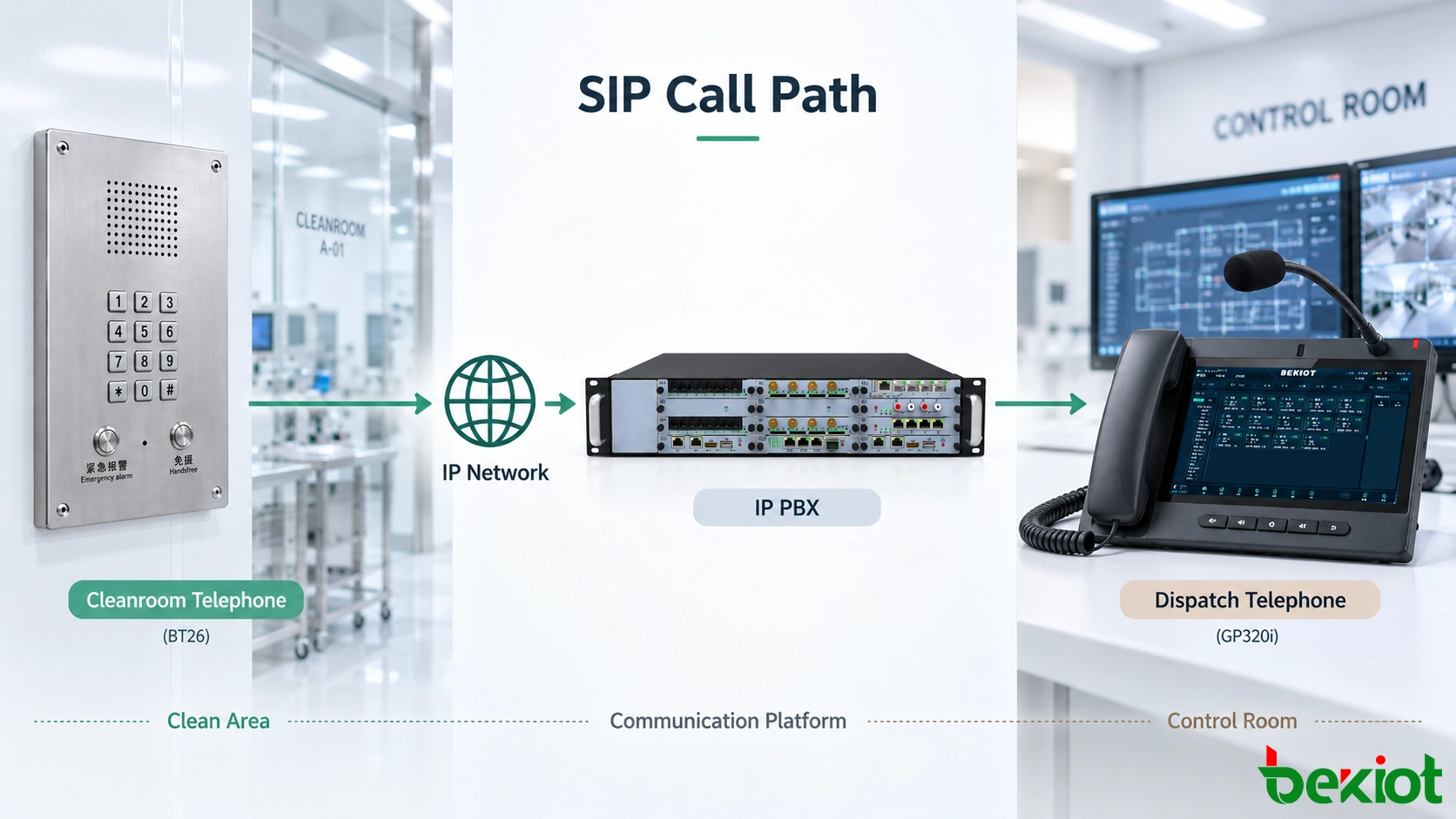
The platform is important because it separates the originating telephone from the final destination. The cleanroom device does not necessarily need a dedicated physical connection directly to the control room. Instead, the communication platform can route calls according to the facility's numbering and operating rules.
The same architecture supports incoming calls. If the control room needs to speak with personnel in a particular clean area, the operator can call the extension assigned to that location.
This creates a useful relationship between telephone numbers and physical areas. Instead of every extension representing an individual employee, some extensions can represent rooms or operating zones.
For example:
Extension 6101 — Formulation Room;
Extension 6102 — Filling Area;
Extension 6103 — Clean Corridor;
Extension 6104 — Laboratory.
If the filling area calls the control room, the originating extension can indicate where the communication request came from. When the control room needs to reach that area, it can use the same extension structure to establish the return call.
In a larger facility, this room-based numbering concept can simplify communication organization because the identity remains associated with the location even when personnel and work shifts change.
Why Use a Fixed Communication Point?
Modern facilities have several ways to provide voice communication. Personnel may use mobile radios, wireless devices, smartphones or other portable terminals. A cleanroom telephone serves a different operational purpose.
Mobile communication is generally associated with the person carrying the device. When the user moves, the communication device moves with them. This is useful for maintenance teams, supervisors and other personnel who work across multiple locations.
A permanently installed telephone is associated with a place.
Its value is that the communication point remains available at a known location regardless of which employee is working there. Shift changes do not alter the physical location, and personnel do not need to know which individual currently carries a particular radio.
Consider a filling room that operates across several shifts. Different operators may work inside the room during the day, but the control room still needs one predictable way to reach whoever is currently present. An extension assigned to that room provides such a path.
The same principle can apply to a laboratory, clean corridor, process room or another controlled area.
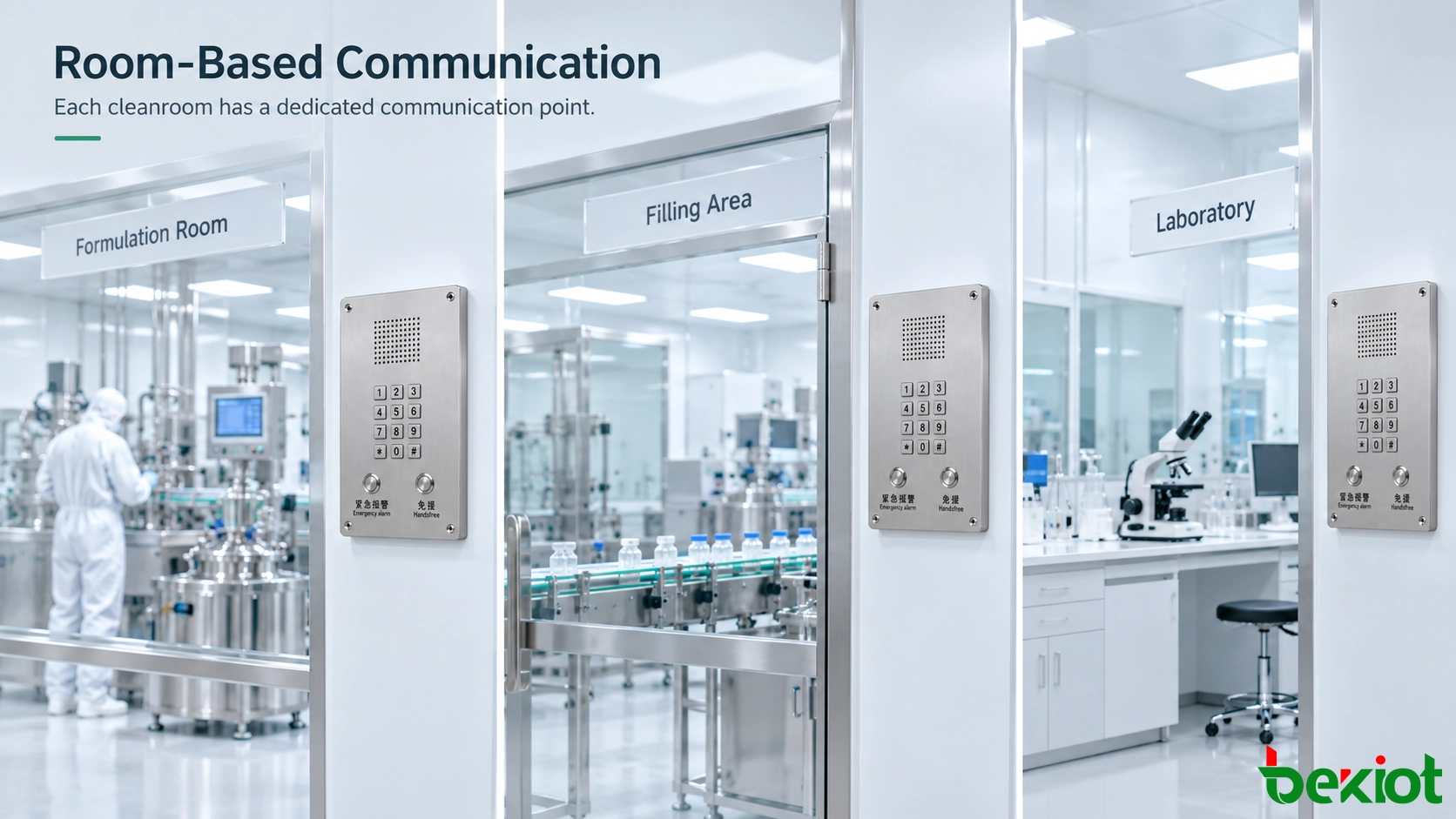
Fixed and mobile communication therefore do not have to replace one another. They can address different communication relationships within the same facility.
A mobile radio can follow a maintenance technician moving between buildings, while a cleanroom telephone remains available to authorized personnel inside a specific room. Where required, the wider communication architecture can connect these resources to support coordination between stationary and mobile users.
The difference is therefore less about choosing one technology over another and more about deciding whether the communication identity should follow a person or remain associated with a place.
Where Cleanroom Telephones Are Used
Cleanroom telephones are relevant wherever personnel inside a controlled area need a direct voice path to people responsible for supervision, coordination or technical support outside that space.
The communication relationship changes with the operating environment.
In pharmaceutical production, the communication path may run from a formulation, filling or processing room to a production supervisor or central control room. Personnel can report an equipment condition, request technical support or confirm an operating instruction without leaving the controlled area simply to find an office telephone.
Pharmaceutical facilities may also apply site-specific procedures governing equipment surfaces, materials and cleaning. The telephone therefore needs to be considered as both a communication device and a piece of equipment located within the controlled production environment.
In semiconductor and precision electronics manufacturing, the relationship may be between an individual process zone and a central operations position. Large clean production floors can contain multiple work areas, so several telephones can provide recognizable communication points across the facility.
In this arrangement, the extension identifies the area from which the call originates. A control-room operator can therefore distinguish one process location from another even when different personnel are working there at different times.
In laboratories, the communication boundary is often more direct: personnel inside the controlled room need to speak with colleagues outside it. A local telephone provides that voice path without requiring the person inside to leave the room for routine communication.
Similar communication relationships can occur in medical, research, food production and other controlled environments. However, the fact that two facilities both use the term “cleanroom” does not mean their environmental requirements are identical.
Product suitability should therefore be based on the actual operating conditions, facility requirements and technical documentation applicable to the project.
A Practical SIP Endpoint
The Becke Telcom BT26 Cleanroom IP Handsfree Telephone is one example of a communication terminal for clean production and other controlled working areas.
The telephone uses a SUS304 brushed stainless-steel front panel and a flush-mounted structure. The microphone, loudspeaker, keypad and call controls are integrated into the front interface, allowing personnel to communicate without using a conventional telephone handset.
From the network side, the BT26 uses IP/RTP voice transmission and can connect to SIP-based IP PBX, softswitch and IMS communication platforms.
This allows the device to operate as an extension within a larger communication architecture rather than as an isolated point-to-point telephone.
For example, a BT26 installed in a production room can have its own extension, while a dispatch telephone in the control room provides the corresponding operating position. The IP PBX or SIP platform manages the call relationship between the two locations.
The same telephone can communicate with other authorized SIP devices when the platform and numbering plan permit it. This allows the cleanroom communication point to participate in a wider facility voice system instead of being limited to one permanently wired destination.
Related Product: BT26 Cleanroom IP Handsfree Telephone
In this type of deployment, the telephone provides the voice interface inside the controlled area, while the network and communication platform connect that location with the people responsible for supervision, coordination or technical support elsewhere in the facility.
Frequently Asked Questions
Does every cleanroom telephone need its own extension number?
Not necessarily. The numbering plan depends on how the communication system is designed. However, assigning an individual extension to each telephone can make room-based communication easier to identify and manage.
In a facility with several controlled areas, separate extensions allow the control room to distinguish one location from another. This can be particularly useful when the same operating position receives calls from multiple production rooms.
Can a cleanroom telephone communicate with a standard SIP phone?
Yes, provided both devices are compatible with the same SIP communication environment and the required call routing is configured.
Their physical designs do not need to be identical. A cleanroom telephone can be designed for use inside a controlled area while the other side of the call is an office SIP phone or control-room telephone. The SIP platform provides the communication relationship between them.
Is a separate IP PBX required for cleanroom telephones?
Usually not. If the facility already operates a compatible SIP-based IP PBX or communication platform, cleanroom telephones can often be registered as part of that existing voice system.
Whether a separate platform is appropriate depends on factors such as network architecture, system separation, security policies and project-specific communication requirements rather than on the telephone alone.
What happens if the IP network becomes unavailable?
A SIP cleanroom telephone depends on the network path and communication services required to establish a call. If a relevant network segment, Ethernet switch or SIP service becomes unavailable, calls that depend on that part of the infrastructure may be interrupted or may not be established.
Where voice communication is required during network or power failures, resilience should be considered at the system level. Depending on the project, this may involve network redundancy, backup power, redundant communication servers or an alternative communication method.