An elevator intercom system is a critical emergency communication solution for buildings, residential communities, commercial complexes, hospitals, hotels, campuses, and transportation facilities. When passengers are trapped in an elevator or need urgent assistance, the system provides a direct voice channel between the elevator car, machine room, elevator top, pit area, property control room, security center, or cloud service center.
Traditional elevator intercom systems are often based on two-wire or four-wire analog communication. They can meet basic emergency calling requirements, but they are limited in audio quality, remote management, video linkage, system integration, and centralized operation. A SIP-based elevator intercom solution upgrades the original analog elevator communication system into an IP network platform while keeping the existing elevator intercom wiring and devices as much as possible.
For modern smart buildings and smart communities, elevator intercom should not work as an isolated emergency phone. It should be integrated with IP PBX, SIP communication platforms, video surveillance, public address, access control, fire alarm, parking intercom, emergency help points, and visual dispatch systems. This creates a unified communication and safety management platform for daily service, emergency response, and long-term operation.
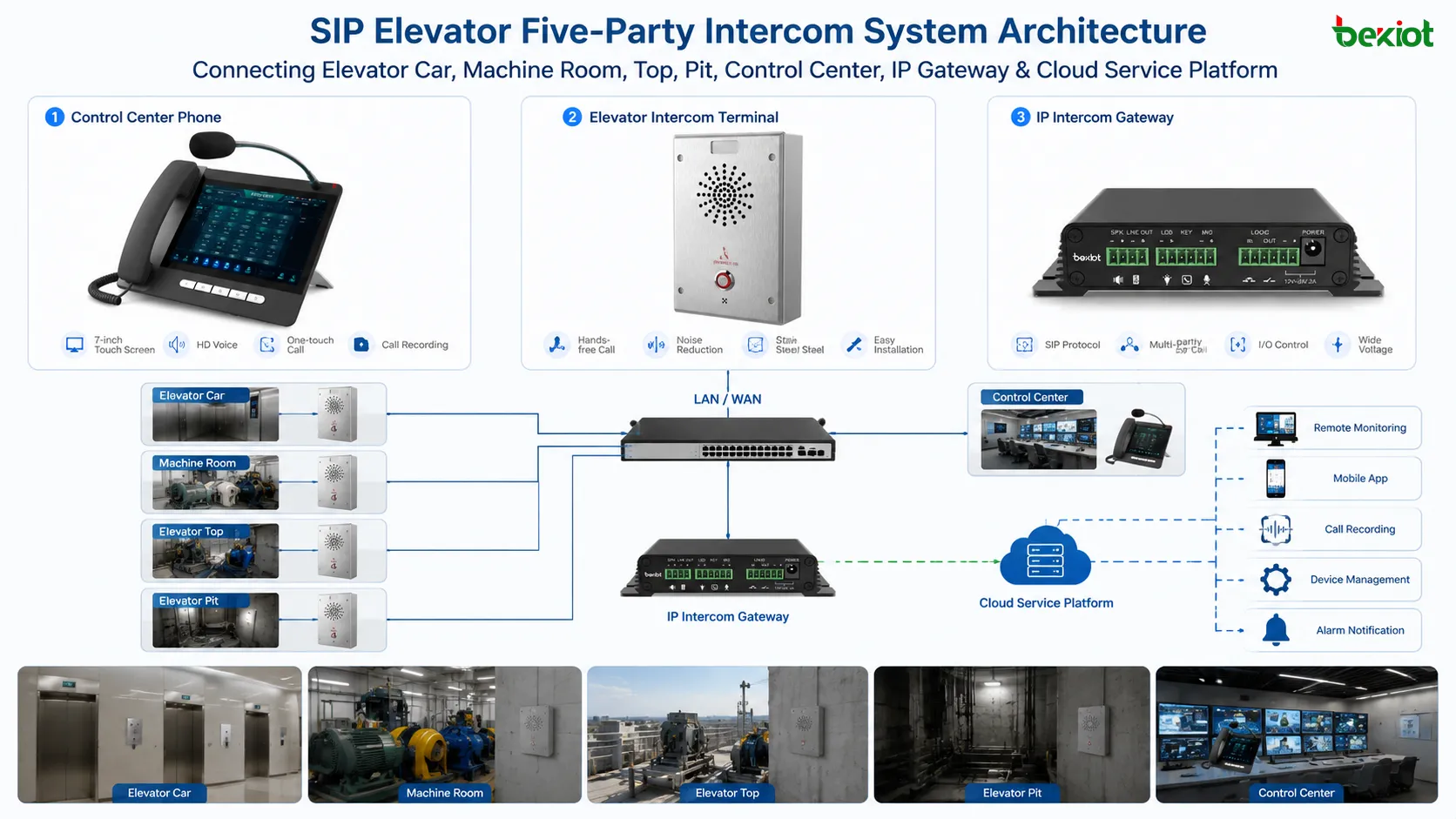
Elevator emergency communication is a required safety function in many buildings. In traditional projects, elevator intercom is mainly deployed through analog two-wire or four-wire systems. The elevator car, machine room, elevator top, and pit area can communicate with each other, but it is difficult to connect these systems with modern IP networks, security platforms, cloud management, and remote dispatch centers.
In retrofit projects, replacing all existing elevator communication devices may increase construction difficulty and project cost. Rewiring inside the elevator shaft, changing the original elevator intercom system, or rebuilding the communication link can affect project delivery and maintenance. Therefore, a more practical method is to keep the original analog elevator four-party intercom system and use a SIP elevator intercom gateway to connect it with the IP communication platform.
This solution is designed for elevator emergency calling, property service, video linkage, alarm processing, broadcast notification, and centralized management. It allows the existing elevator intercom system to become part of a wider building safety communication network.
The SIP elevator intercom system uses a two-wire or four-wire elevator IP gateway to connect the original elevator analog intercom devices with the SIP communication platform. The original elevator car intercom, machine room phone, elevator top phone, and pit phone can be retained. Through the gateway, these devices can communicate with the control center, security room, property office, dispatch console, or cloud service center.
When any elevator intercom point triggers a call, the signal is converted by the SIP elevator gateway and sent to the control center through the LAN, WAN, or dedicated network. The operator can answer the call, speak with the passenger or maintenance staff, identify the elevator location, check the linked camera, and coordinate rescue actions.
The system can also bind elevator intercom points with IP cameras. When a call or alarm is triggered, the control center can automatically display the corresponding video image, helping operators verify the situation inside or around the elevator. This improves emergency response efficiency and reduces the risk of missed information.
The elevator SIP five-party intercom gateway is the key device for system retrofit and integration. It connects with the original two-wire or four-wire elevator intercom system and converts analog intercom signals into SIP communication signals. Through the gateway, the original elevator intercom system can be connected to an IP PBX, SIP server, IMS platform, dispatch console, or cloud communication platform.
The gateway helps reduce reconstruction cost because it can keep the original elevator intercom wiring and terminals. It is suitable for old community renovation, commercial building upgrade, hotel elevator safety improvement, hospital facility management, and multi-building property projects.
The system supports communication among the elevator car, machine room, elevator top, pit area, and control center. When a passenger presses the emergency button inside the elevator car, the call can be sent to the monitoring center or property duty room. When maintenance staff work in the machine room, elevator top, or pit area, they can also communicate with the control center for coordination.
This five-party communication structure improves emergency handling, maintenance coordination, and elevator safety management. It is especially useful during elevator fault handling, passenger rescue, equipment inspection, and daily maintenance.
The SIP server or IP PBX platform manages endpoint registration, call routing, extension numbering, call transfer, group ringing, recording, and system interconnection. Elevator intercom calls can be routed to a control room phone, visual dispatch console, property office, security room, engineering department, mobile extension, or external phone number through a gateway.
Because the system is based on standard SIP protocol, it can be integrated with mainstream IP PBX, IMS, VoIP telephone systems, SIP phones, dispatch platforms, and third-party communication systems. This makes the system more open and scalable for future building communication expansion.
The control center receives elevator emergency calls, displays terminal status, manages call queues, coordinates operators, and handles alarm events. For large communities or commercial complexes, multiple control consoles can be deployed in the monitoring center, security room, property office, and cloud service center.
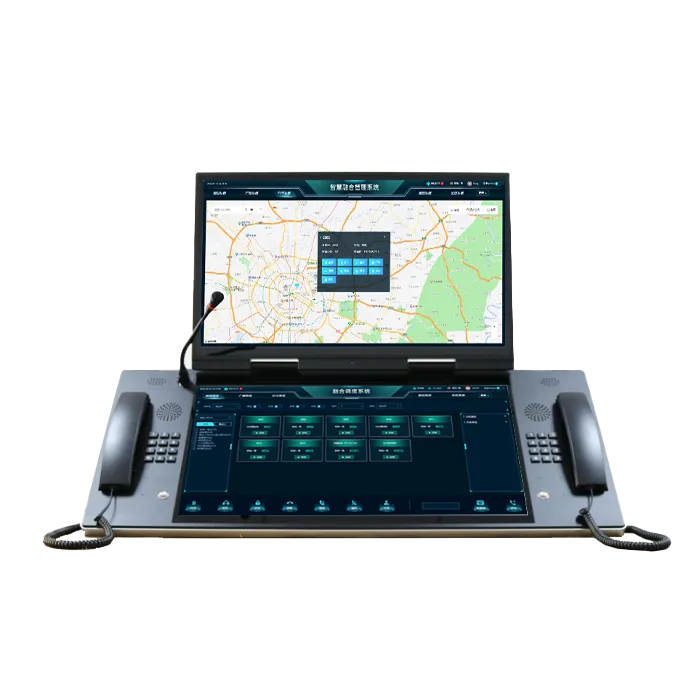
The visual dispatch console can support one-click calling, terminal status display, video linkage, broadcast control, call recording, alarm processing, and conference coordination. Operators can manage elevator intercom, parking intercom, public help points, access control intercom, and emergency broadcast from one unified interface.
The elevator intercom gateway can be linked with specified IP cameras. When an intercom call or alarm is triggered, the control center can automatically display the related camera image. This allows the operator to verify whether passengers are trapped, whether the elevator cabin is abnormal, or whether maintenance staff need support.
Video linkage is important for emergency response because voice communication alone may not provide enough information. By combining SIP intercom and video monitoring, the control center can make faster and more accurate decisions.
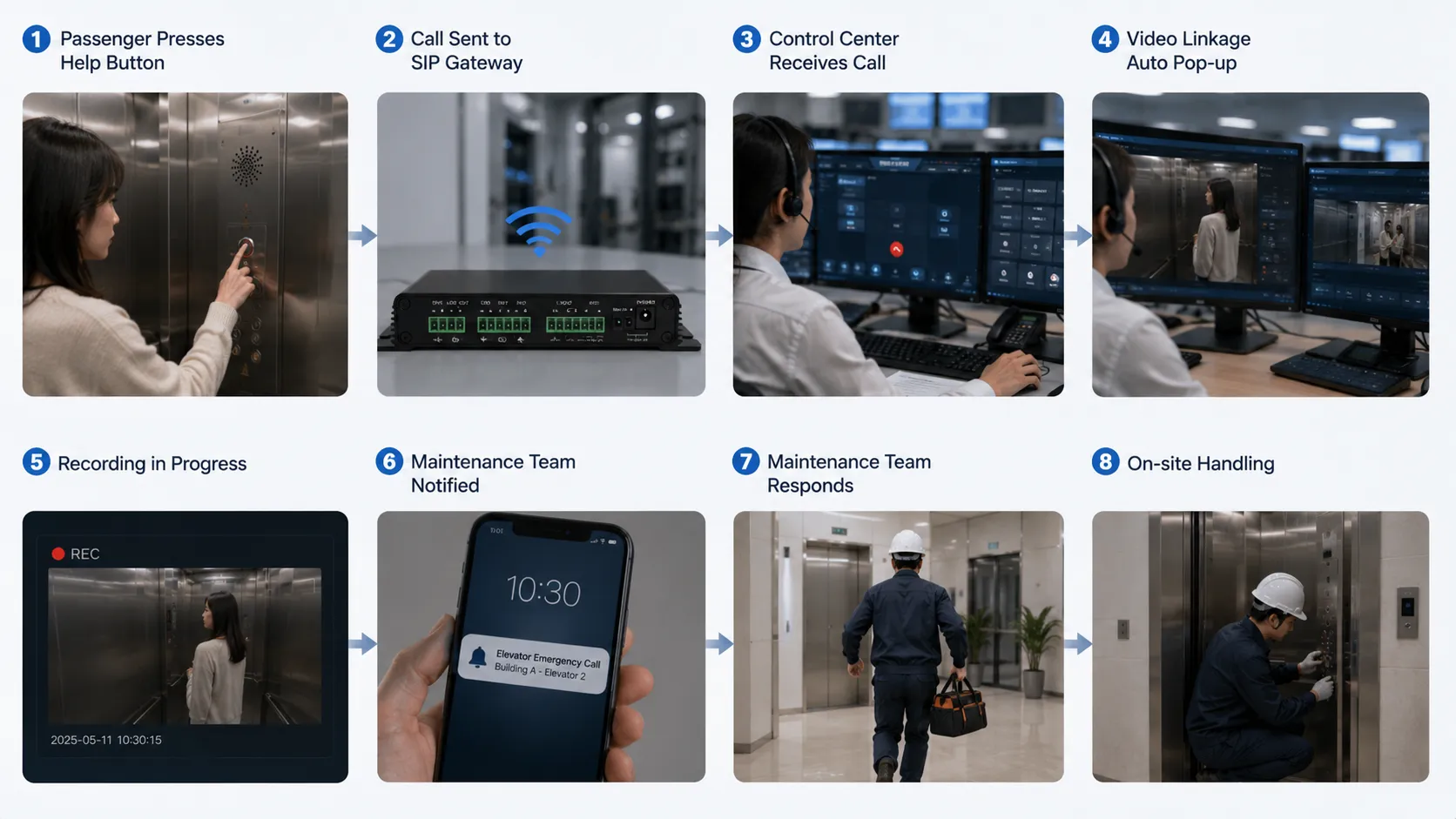
The system connects the elevator car, machine room, elevator top, pit area, and control center into a unified SIP communication network. The original analog four-party intercom can be retained and extended to the control center through the SIP elevator gateway.
This design helps property teams achieve five-party communication without fully replacing the original elevator intercom infrastructure. It is suitable for both new projects and retrofit projects.
The solution supports two-wire or four-wire elevator intercom retrofit scenarios. By using an elevator SIP intercom gateway, existing analog elevator intercom devices can be connected to the IP network. This reduces rewiring work, lowers construction cost, and shortens project implementation time.
For old residential communities, commercial buildings, hotels, hospitals, and public facilities, this retrofit method is more practical than replacing the entire elevator communication system.
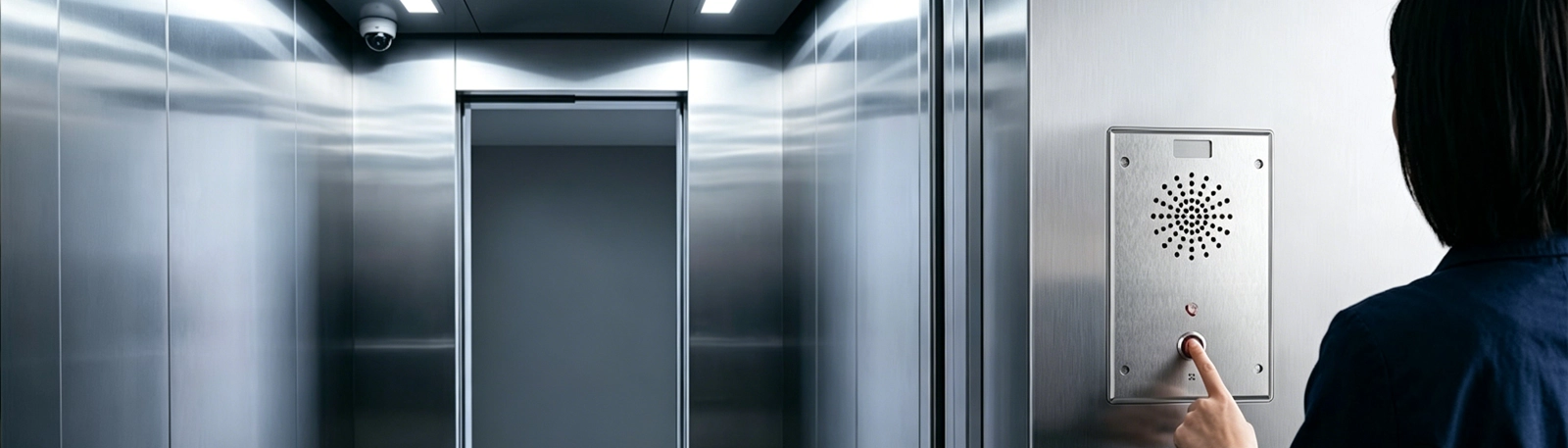
Passengers can press the emergency button inside the elevator car to call the control center, security room, property office, or cloud service center. The system can display the calling elevator information, route the call to the correct operator, and support fast response during elevator faults or trapped passenger incidents.
If the first operator is busy or does not answer, the call can be transferred to another extension, another control console, a duty phone, or a mobile phone according to project settings.
The system can support busy transfer, no-answer transfer, time-based transfer, and manual transfer. This helps ensure that emergency calls are not missed when the security room is busy, the operator is away, or the first answering point is unavailable.
For large sites, the system can support multiple simultaneous calls. Different elevator intercom terminals, public help points, parking intercoms, and access control terminals can communicate with the control center at the same time without affecting each other.
In some deployment scenarios, if the SIP server fails or the network platform is temporarily unavailable, the system can support direct IP calling or fallback communication between specific devices. This helps maintain basic communication capability during system exceptions.
Offline intercom improves system reliability and is especially valuable for emergency communication projects where service continuity is important.
The system can support wideband voice, echo cancellation, and stable SIP audio transmission to improve communication clarity. Compared with traditional analog or wireless elevator intercom systems, SIP-based communication can provide better audio quality, stronger system stability, and easier centralized management.
Clear two-way audio helps operators comfort trapped passengers, confirm the situation, and guide maintenance teams during emergency response.
Each elevator intercom gateway or terminal can be associated with a specified IP camera. When an emergency call or alarm occurs, the control center can automatically open the related video image. Operators can view the elevator cabin, elevator hall, or nearby monitoring point while speaking with the caller.
This function supports visual verification, faster decision-making, and better event traceability. It is suitable for smart communities, commercial buildings, hotels, hospitals, shopping malls, and transportation facilities.
The system can record intercom calls and keep event logs. Records may include calling time, terminal location, answering operator, call duration, alarm type, linked video, and handling result. These records support safety review, maintenance tracking, operation assessment, and evidence retention.
For property management and public safety operation, recording and traceability help standardize emergency response procedures.
The elevator intercom system can be integrated with the building public address system. The control center can perform zone broadcast, emergency broadcast, scheduled broadcast, background music, or voice announcement to selected areas.
In smart community scenarios, the same platform can support elevator intercom, public corridor broadcast, parking broadcast, outdoor help point broadcast, and emergency notification.
The system can be connected with emergency alarms, fire alarms, smoke sensors, access control, parking systems, and building management systems. When an alarm is triggered, the platform can generate an event, display the location, open the linked video, notify operators, and start the response workflow.
This turns elevator communication from a single voice system into a complete safety response platform.
In a smart community or building complex, elevator intercom can be integrated with multiple subsystems, including monitoring systems, telephone systems, parking intercom, public address, access control, emergency help points, cloud PBX, operator IMS networks, and dedicated security networks.
Through this integration, the property management center can use one platform to manage daily service calls, emergency calls, video linkage, alarm response, broadcast notification, access control assistance, and maintenance coordination. This improves management efficiency and reduces the cost of operating multiple isolated systems.
A modern elevator intercom system should not only solve the problem of emergency calling inside the elevator. It should also become an integrated part of building safety, property service, video verification, and emergency response management.
In residential communities, the system can connect elevator intercom, building entrance intercom, indoor units, parking intercom, outdoor help points, public broadcast, and property control rooms. Residents can request assistance through elevator emergency buttons, public area intercom terminals, or access control intercom devices.
The property center can answer calls, view linked video, open doors remotely, transfer calls, broadcast notifications, and coordinate security staff through one platform.
Commercial buildings usually have many elevators, high passenger flow, and multiple management teams. The elevator intercom system allows passengers, security staff, engineering teams, and property operators to communicate quickly during elevator faults or service events.
The system can be integrated with building monitoring, IP phones, access control, fire alarm, and public address systems to support centralized safety operation.
For hotels and serviced apartments, elevator emergency communication is closely related to guest experience and safety. Calls from elevator cabins can be routed to the front desk, security room, duty manager, or engineering team.
Video linkage and call recording help hotel staff verify incidents quickly, respond professionally, and maintain service records.
Hospitals require reliable 24/7 communication for patients, visitors, doctors, nurses, and facility maintenance teams. Elevator intercom calls can be connected with security centers, nursing stations, facility offices, and emergency control rooms.
The system can also support broadcast notification and alarm linkage to improve hospital safety management during emergencies.
Shopping malls, exhibition centers, government buildings, schools, and public facilities need fast response to passenger assistance, emergency calls, and equipment failures. Elevator intercom can work with CCTV, help points, public address, and security dispatch platforms to create a unified service and safety system.
Airports, railway stations, metro stations, bus terminals, and parking facilities often require centralized monitoring of many elevators and public assistance points. A SIP-based elevator intercom system can connect these points to a command center and support video linkage, broadcast notification, and multi-operator response.
For single buildings or local communities, the elevator SIP intercom gateway can connect to the local area network. The control center, SIP server, IP cameras, dispatch console, and management devices can operate within the same LAN. This deployment is simple, stable, and suitable for most building projects.
For large communities, distributed buildings, or property groups, the system can be deployed across different network segments, routers, or wide area networks. SIP communication and platform management allow multiple buildings to connect to a centralized monitoring center or cloud service center.
For property groups and multi-site projects, elevator intercom events can be connected to a cloud service center. The cloud center can support centralized answering, call records, device status, alarm processing, remote maintenance, and unified operation.
For existing buildings with two-wire or four-wire analog elevator intercom systems, the SIP elevator gateway can be installed to connect the original elevator intercom with the IP communication platform. This method keeps the original system as much as possible and enables SIP communication, video linkage, recording, and centralized dispatch.
The solution can use the existing elevator intercom wiring and building network infrastructure. It reduces the need for large-scale rewiring and makes old elevator intercom upgrade more practical.
By keeping the original two-wire or four-wire elevator intercom devices and adding a SIP gateway, the project can reduce hardware replacement, wiring, and installation costs.
The system is based on standard SIP communication and can connect with IP PBX, IMS, SIP phones, dispatch consoles, cloud PBX platforms, and third-party communication systems.
Elevator intercom, parking intercom, access control intercom, public help points, emergency alarms, video monitoring, and public broadcast can be managed through one platform.
Emergency calls can be linked with cameras and alarm events, allowing operators to see the on-site situation while communicating with passengers or field staff.
The platform can support remote device management, status monitoring, call records, and system configuration. This reduces maintenance workload and improves long-term operation efficiency.
Elevator intercom is often a required safety application. Once the SIP communication platform is deployed, it can be extended to building intercom, public address, parking assistance, emergency help points, access control, alarm linkage, and smart community operation.
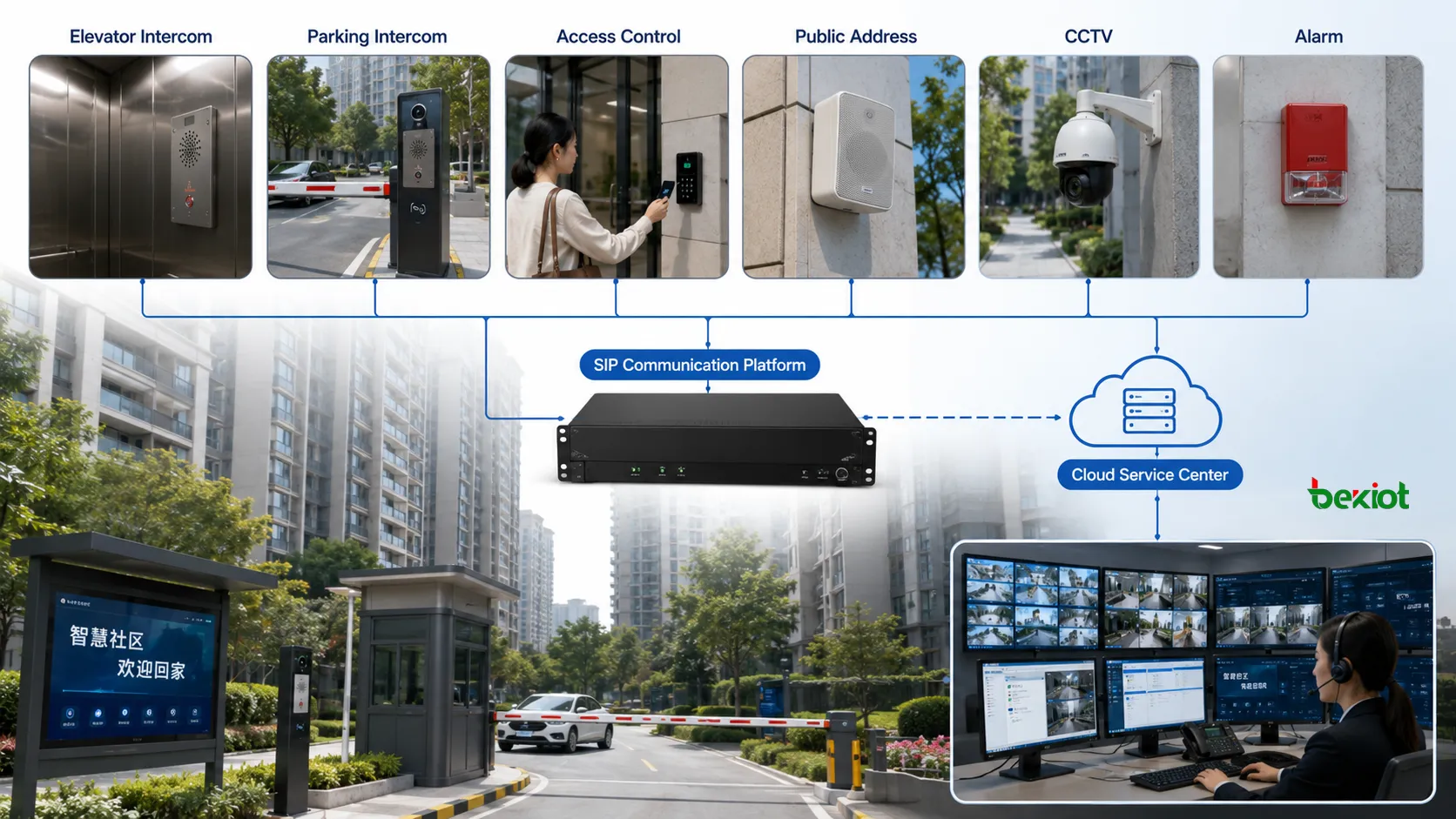
Becke Telcom can provide SIP-based communication products and integration options for elevator emergency communication, property control rooms, IP PBX systems, dispatch platforms, public address, alarm linkage, and building safety management. For projects requiring two-wire or four-wire elevator intercom retrofit, SIP communication, video linkage, and centralized management, Becke Telcom solutions can help connect elevator intercom with wider building communication workflows.
The solution can be adapted to residential communities, commercial buildings, hotels, hospitals, campuses, transportation hubs, and industrial parks. It can work together with SIP phones, emergency call boxes, industrial telephones, paging gateways, CCTV systems, access control, alarm systems, and command dispatch platforms.
An elevator intercom system should not remain as a standalone analog emergency phone. By using a SIP five-party elevator intercom gateway, existing two-wire or four-wire elevator intercom systems can be upgraded into an IP-based, visual, manageable, and integrated communication platform.
This solution keeps the value of the original elevator intercom infrastructure while adding SIP communication, control center calling, video linkage, alarm integration, broadcast notification, recording, call transfer, offline intercom, and centralized management. For smart buildings and smart communities, it provides a practical path to safer elevator operation and more efficient property service.