
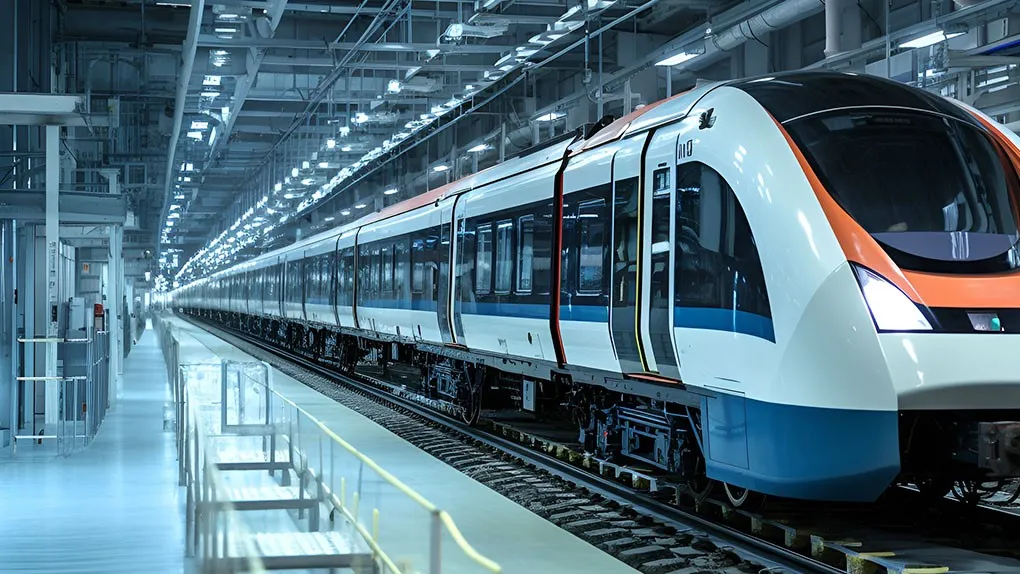
Subway
Smart One-Touch Passenger Assistance System Solution for Chongqing Rail Transit Line 6
In response to these operational and service challenges, Chongqing Rail Transit Group introduced and systematically deployed the Becke One-Touch Help system. Rather than being a simple hardware add-on, this solution combines top-level planning, technical integration, and standardized workflows to reshape how passenger assistance and incident response are delivered across the rail network.
In official usage, the Becke One-Touch Help system may also be described as a help button or staff call point. Its core role is to create a fast-response channel between routine passenger service requests and high-level emergency actions such as pressing an emergency stop device.
The design goals are clear and practical:
Fast connection: It removes communication barriers between passengers and the back-end control room, replacing multi-step reporting with a direct passenger-to-control-room link.
Precise location awareness: The moment a passenger initiates a call, the control center can identify the exact help point location, turning vague descriptions into actionable coordinates.
Efficient handling: With standardized response procedures, staff can quickly assess the event level and dispatch the most appropriate on-site personnel, such as station staff, security, or cleaning teams, to close out non-emergency incidents faster.
This positioning fills a critical service gap. It reduces the risk of minor issues consuming emergency resources while giving passengers a much faster and more effective way to ask for help when they genuinely need assistance.
The value of this solution lies not only in what it does, but also in how it has been deployed at scale. According to local media reports, by September 2023 Chongqing Rail Transit had already installed 469 help buttons across operating stations on nine major lines, including the Loop Line, Lines 1, 2, 3, 5, 6, the International Expo Line, and Lines 9 and 10.
This shows the system was not treated as a small pilot on a single route. Instead, it was rolled out as a standardized part of the wider rail network. That network-wide approach helps ensure a more consistent passenger experience across different lines and transfer stations, reflecting a broader effort to raise service standards across the entire metro system.
To make assistance truly easy to access, the help buttons are placed according to two principles: visibility and convenience. Based on official information, they are mainly installed at key passenger touchpoints where people are most likely to need help or seek information:
Manual ticket counters or smart customer service centers: These are high-frequency service areas for ticketing issues and general passenger questions, making them a natural location for help points.
Next to accessible elevators: This placement supports passengers with reduced mobility, as well as travelers carrying large luggage, who may need immediate assistance if they encounter equipment issues or require support.
On selected ticket vending machines: Passengers experiencing difficulties during self-service transactions can request help without leaving the machine.
The devices are typically designed in highly visible colors, such as red, and marked with clear labels so they can be identified quickly even in crowded, noisy station environments.

Behind the Becke One-Touch Help system is a much broader integration framework. It is not a standalone intercom device. Instead, it is embedded into the station's digital operating environment, including the Passenger Information System (PIS) and the Integrated Supervisory and Control System (ISCS).
Communication technology: The system generally uses IP-based VoIP technology. When a passenger presses the button, the signal travels through the station's internal network and directly reaches a dedicated terminal in the station control room, enabling clear and stable two-way voice communication.
Location and system linkage: This is where the platform creates real operational value. Each help call carries a unique device ID, allowing the back-end system to identify the exact help point on an electronic map. More importantly, the system can work with the ISCS platform. When a help point is activated, nearby CCTV video can be displayed automatically on the control-room monitoring screen, giving operators a combined audio-and-video view of the situation and supporting faster, more accurate judgment.
Data back end: Calls can be recorded, and the handling process can be logged as structured work orders. This data can then be used for later analysis, optimization, and operational decision-making.
With this architecture, a simple physical button becomes a smart sensing endpoint that combines communication, positioning, monitoring, and operational data collection.
To keep the platform running efficiently, Chongqing Rail Transit has paired the technical design with clear and standardized operating procedures for both passengers and staff.
For passengers, the process is designed to be straightforward and intuitive:
Find the button: Look for clearly marked help buttons at ticket halls, customer service centers, accessible elevator areas, or other designated points inside the station.
Press once to connect: If assistance is needed, simply press the button. No additional steps are required.
Explain the situation clearly: Once staff answer the call, speak close to the microphone and briefly explain the issue. The most useful information includes who you are, where you are, and what kind of help is needed. For example: "I'm next to the ticket machine at Exit A of Guangdianyuan Station on Line 6," or "An elderly passenger nearby may need medical assistance."
Wait in a safe place: After receiving instructions, remain in a safe nearby area and wait for station staff to arrive.
At the same time, operators also remind passengers not to press the button casually in non-essential situations, so response resources remain available for people who truly need help.
For control-room staff, a standard operating procedure is essential for maintaining service quality and response speed. A simplified workflow looks like this:
Receive: A dedicated terminal in the control room sounds an alert, while the screen displays the help point location and linked video. The operator answers promptly and identifies the station control room.
Assess: Based on the passenger conversation and linked CCTV view, the operator quickly determines the type and urgency of the issue, such as an inquiry, service request, equipment fault, conflict, or medical concern.
Dispatch: Using the station's internal dispatch system, the operator sends the nearest appropriate staff member, such as station personnel, security, or cleaning support, with a clear instruction including the exact location and incident summary.
Resolve and close: Once the on-site team handles the situation, they report back to the control room. The operator records the action taken and closes the work order, completing the service loop.
This SOP converts what could otherwise be an inconsistent response process into a measurable, manageable, and traceable workflow.
The value of the Becke One-Touch Help system goes far beyond convenience. It improves the passenger experience, strengthens operational efficiency, and supports the broader image of a modern, service-oriented city.
The most direct value of the system is that it gives passengers a visible, easy-to-use safety net. It sharply reduces the time between encountering a problem and receiving a response, compressing what might once have taken several minutes into a much faster process. That immediacy can significantly reduce stress and uncertainty in unfamiliar or crowded station environments.
Whether the user is a visitor who is lost, a commuter dealing with a ticketing issue, or a bystander trying to help someone else, the button provides a direct link to official support. In practical terms, it solves problems. Psychologically, it also creates reassurance by showing passengers that help is always within reach.
The system is also a practical example of passenger-centered service design. It lowers the threshold for asking for help, which is especially valuable for older passengers, people with disabilities, and others who may not be comfortable relying on smartphones or mobile apps.
It also complements other support services offered by the metro network. If a passenger has not made a prior assistance booking, or encounters an unexpected issue inside the station, the help button still provides a direct and reliable path to support. That makes the service more inclusive and more usable in real-world situations.
In tense passenger situations, the absence of a fast and neutral third-party response can allow small misunderstandings to escalate. A station-based help system can act as a practical buffer. If passengers are arguing or a situation begins to feel unsafe, the help point allows operators to bring official staff into the scene quickly.
The arrival of trained personnel can calm emotions, restore order, and move the issue from a private confrontation to a managed public response. In that sense, the system is not only a service tool, but also a way to support a more orderly and safer travel environment.
For operators, the platform delivers a major efficiency gain. It replaces the old model of relying on incomplete verbal descriptions with exact help-point identification. From the control room, staff can see precisely where the request is coming from and send the nearest available responder using the shortest route.
This shift from broad, general calling to location-based dispatch improves response accuracy, reduces wasted movement, and makes better use of staffing resources across the station.
Every use of the Becke One-Touch Help system generates useful operational data. Call recordings, timestamps, locations, incident types, and handling durations can all feed into a larger operations database. Over time, this allows operators to identify meaningful patterns, such as:
Hotspot analysis: Identifying stations, areas, or time periods with higher volumes of help requests or recurring incidents.
Issue classification: Understanding whether requests are mainly related to ticketing, equipment faults, passenger disputes, or accessibility needs, which can guide future improvements.
Performance measurement: Tracking response and handling times to support staff training, resource planning, and service evaluation.
This kind of data-driven decision-making helps move rail operations from experience-based management toward more digital and intelligent operational planning.
The Becke One-Touch Help system is also a meaningful application within the broader smart rail agenda. It supports passenger service by making assistance easier to access. It supports operations by enabling more precise dispatch and better data analysis. It also supports safety by improving situational awareness and response coordination.
By connecting voice communication, location data, CCTV linkage, and operational records, the platform shows how digital technologies can be integrated into day-to-day rail service in a practical and scalable way.
A city's governance capacity is often revealed in how it handles everyday challenges, not only major emergencies. In that respect, the Becke One-Touch Help system reflects a more refined and forward-looking approach to public safety and passenger service.
It shows that urban management is not only about large infrastructure projects, but also about the real, moment-to-moment experience of the people using them. That is an important marker of modern, technology-enabled governance.
For visitors and first-time riders, public transport is often one of the first places where a city's service culture becomes visible. A metro system that feels safe, accessible, and responsive leaves a strong impression.
When a visitor gets lost in a busy interchange and receives immediate help by pressing a clearly marked button, the experience communicates more than convenience. It reflects efficiency, care, and public-service maturity. In that sense, a small help point can become a meaningful part of how the city is remembered.
Public safety is not maintained by operators alone. It depends on wider public participation. The help button system makes that participation easier and safer. When passengers witness a medical issue or a potential security concern, they do not need to take unnecessary personal risks or guess how to reach the right department. They can use the help point to bring trained professionals into the situation quickly.
That lowers the barrier for responsible public action and encourages a more collaborative safety culture across the transit system.