A prison phone system is a secure communication management solution designed for correctional facilities, detention centers, custody houses, and other supervised environments where inmate calls must be strictly controlled, recorded, monitored, and managed. It enables inmates to maintain approved family contact while helping prison administrators protect security, maintain order, and improve communication supervision.
The system combines CTI technology, IP telephony, VoIP communication, access authorization, call recording, billing, and centralized management into one integrated platform. It supports controlled family calling, whitelist number management, call duration limits, call frequency limits, dual-card authorization, real-time monitoring, forced call termination, and statistical reporting.
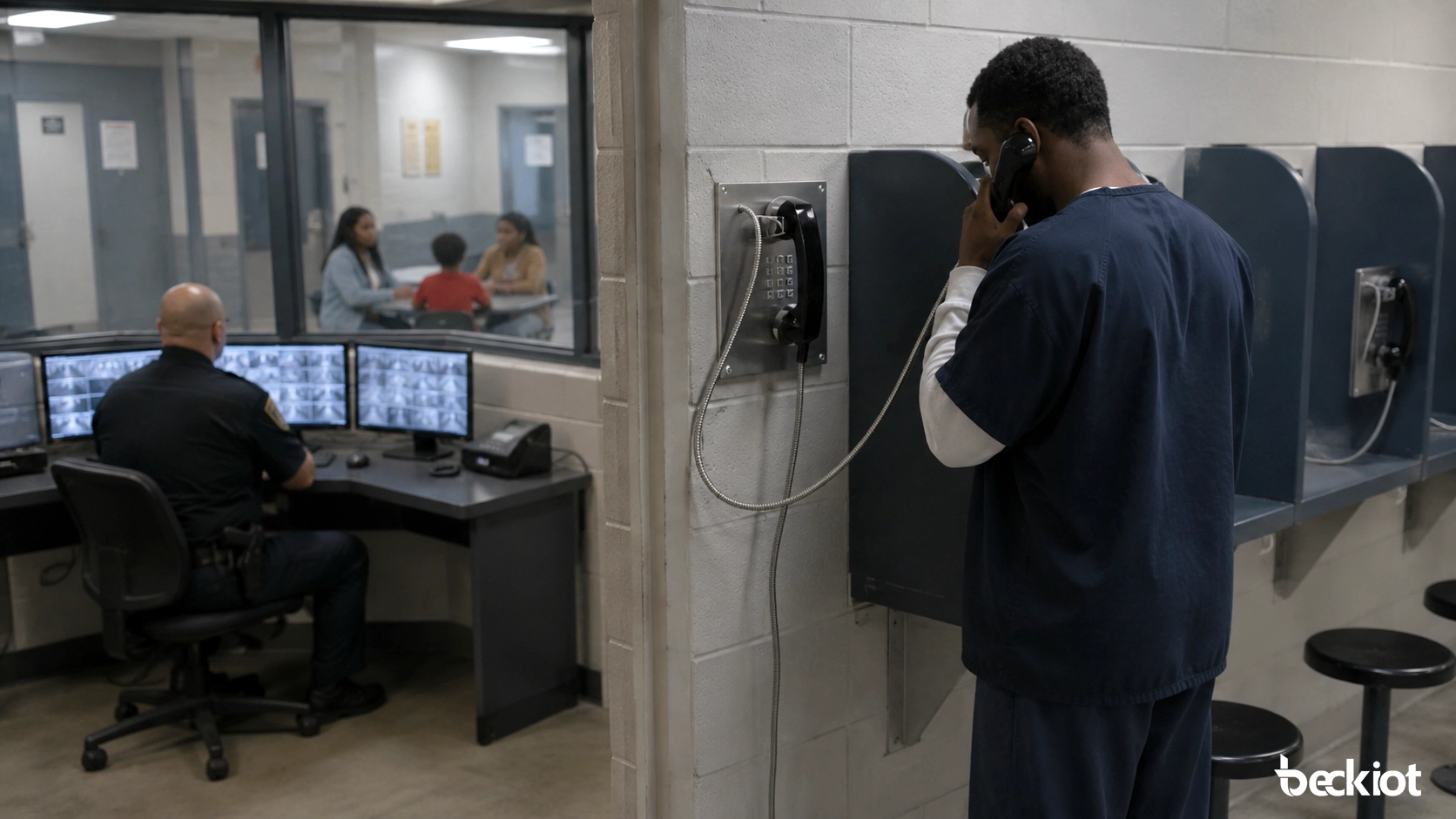
The prison phone system is developed for correctional institutions that need to provide lawful family communication while maintaining full supervision over every call. Inmates can only call approved family members or guardians, and each call can be controlled by identity verification, number authorization, time limits, account balance, and monitoring rules.
Compared with ordinary telephone systems, a prison family calling system is not only a voice communication platform. It is also a security management tool. It helps correctional facilities regulate inmate communication, reduce unauthorized contact risks, maintain complete call records, and provide reliable evidence for post-call review when needed.
The system uses CTI, which stands for Computer Telephony Integration, to combine telephone communication with computer-based management. Through this architecture, administrators can control calling permissions, monitor call status, record conversations, manage accounts, generate reports, and handle abnormal calls from a central software platform.
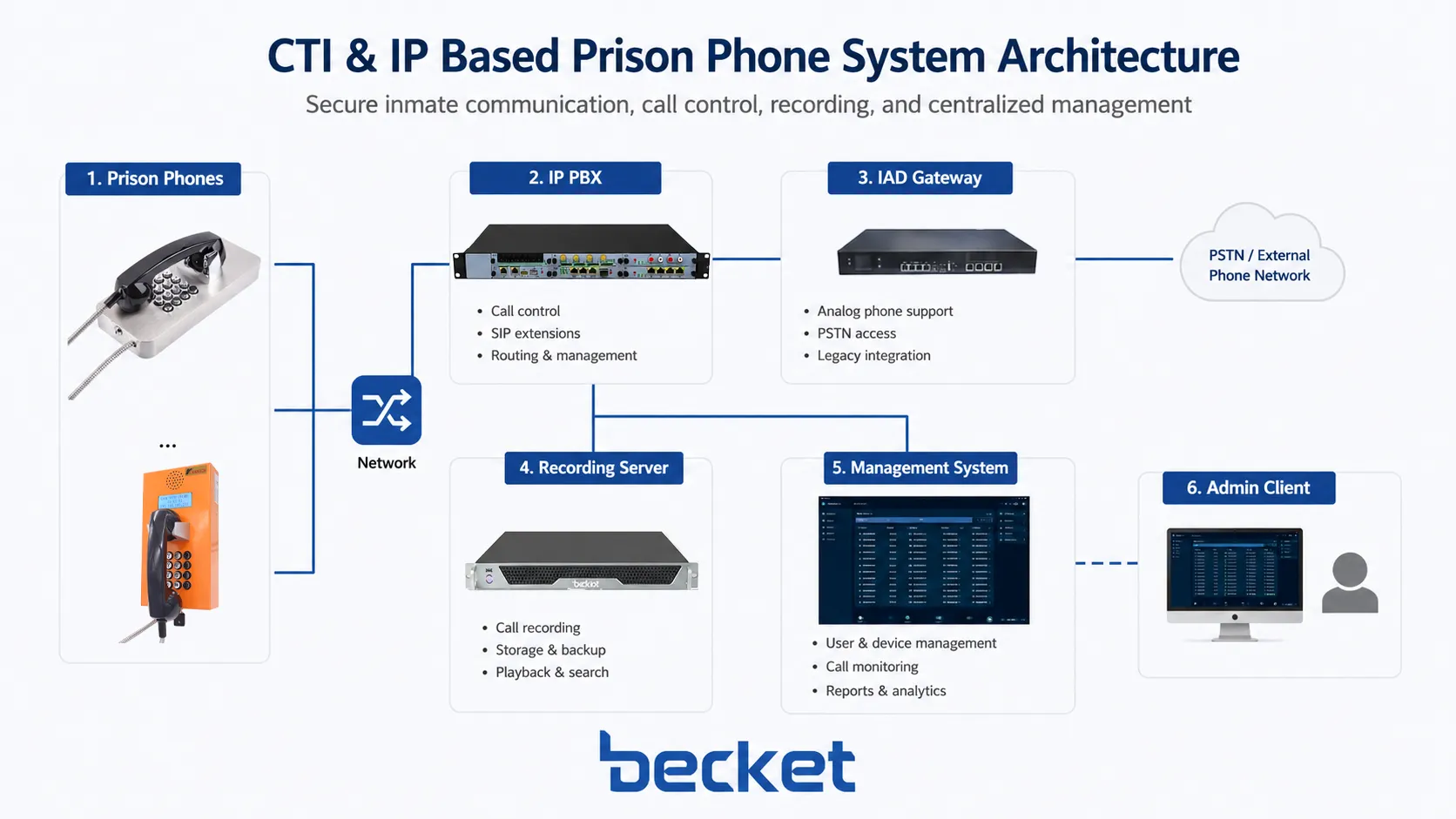
With IP communication and VoIP technology, voice calls can be transmitted through the correctional facility network. The system can connect IP PBX servers, softswitch platforms, IAD voice gateways, SIP phones, recording servers, billing modules, and monitoring terminals. This makes the system suitable for both new digital prison projects and upgrades from traditional analog telephone systems.
The prison phone system adopts a centralized management and distributed deployment model. Core servers and management platforms are usually installed in the central equipment room, while phone terminals, IAD gateways, or IP phones are deployed in cell blocks, visiting rooms, work areas, corridors, and other controlled communication points.
This architecture allows all calls to be managed from the control center while keeping telephone access convenient for different prison zones. It also improves scalability because new phone points, extensions, call routes, or monitoring terminals can be added according to the facility layout and management requirements.
A complete prison phone system normally includes a softswitch or IP PBX platform, inmate phone management server, IAD voice gateway, IP phone or prison telephone terminal, call recording server, monitoring software, billing module, database, and administrator workstation. These components work together to create a secure, traceable, and manageable communication environment.
| Component | Function |
|---|---|
| Softswitch or IP PBX | Controls call routing, extension management, trunk access, and connection with PSTN, E1, IMS, or SIP trunk lines. |
| Prison Phone Management Server | Manages inmate profiles, family contact lists, calling permissions, authorization rules, billing data, and call records. |
| IAD Voice Gateway | Connects analog telephones or local phone points to the IP network and converts voice signals into IP packets. |
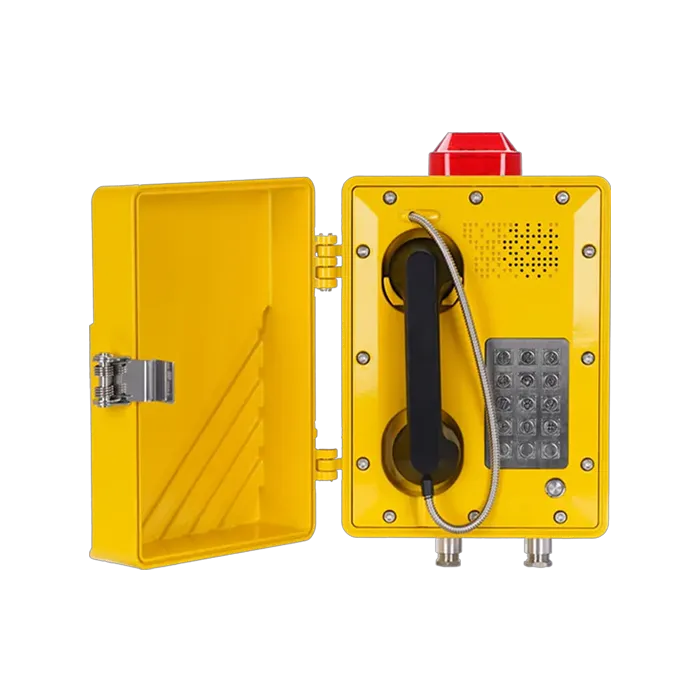
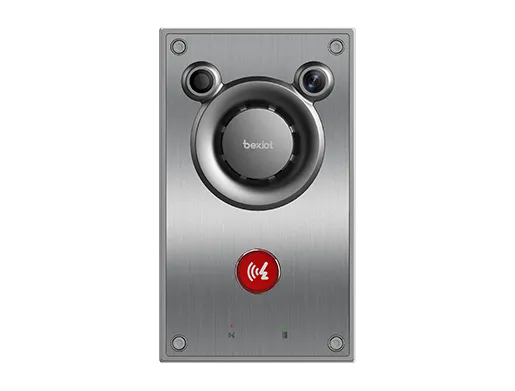
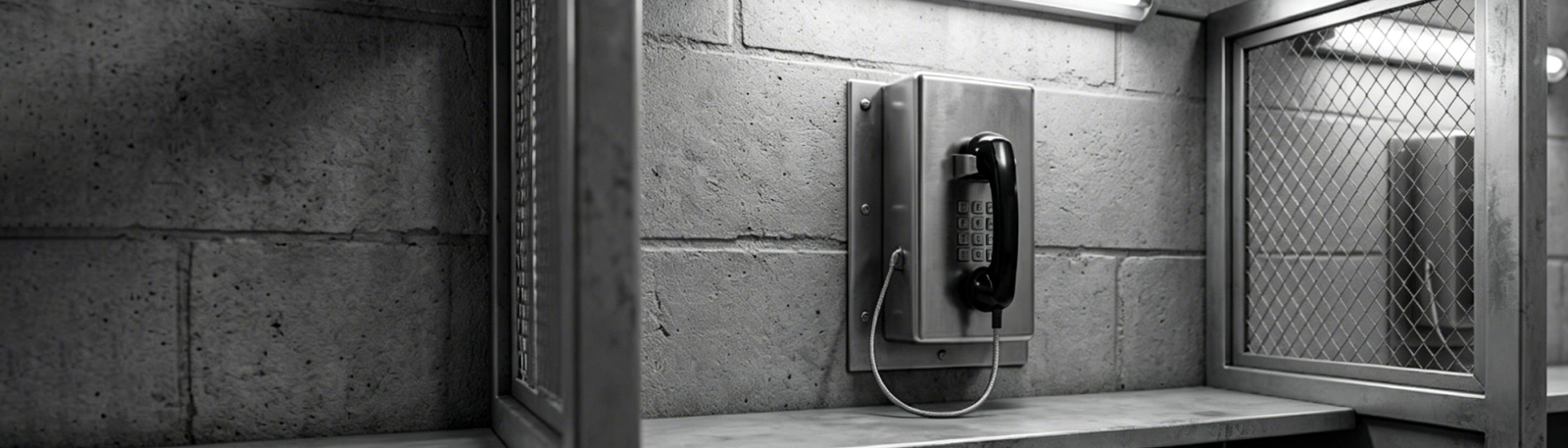
| IP Phone or Prison Telephone | Used by inmates for authorized family calls. It may support card authentication, keypad dialing, display prompts, and SIP registration. |
| Recording and Monitoring Software | Supports full-call recording, real-time listening, call playback, forced disconnection, and supervisor intervention. |
| Billing Module | Calculates call charges, deducts prepaid balances, manages recharge records, and generates billing reports. |
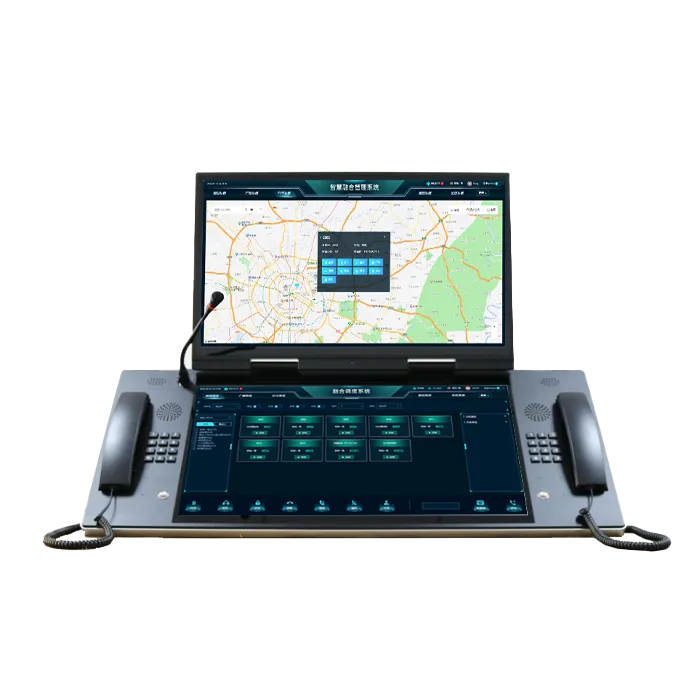
| Administrator Workstation | Provides a visual interface for officers to manage users, review records, monitor calls, and export reports. |
The system provides centralized inmate profile management. Administrators can register inmate ID, name, prison block, supervision level, IC card number, call permissions, special monitoring status, and other related information. Batch import from Excel can also be supported to reduce manual data entry.
Based on inmate classification, the system can apply different call rules. For example, inmates with good behavior may be granted more call time or additional monthly call attempts, while inmates requiring closer supervision may have stricter limits. This helps correctional facilities implement differentiated communication policies in a controlled and transparent way.
To prevent unauthorized communication, the system manages approved family contacts or guardians for each inmate. Administrators can register the family member’s name, relationship, phone number, identification information, and call authorization status. Only reviewed and approved numbers can be called.
This whitelist mechanism is one of the most important security functions of the prison phone system. Before a call is placed, the system verifies the inmate identity and checks whether the dialed number belongs to the approved contact list. Calls to unknown, unapproved, or restricted numbers are automatically blocked.
The system supports multiple authorization methods, such as IC card verification, account and password login, or officer confirmation. In some correctional environments, dual-card authorization can be used. This means the inmate must authenticate first, and the supervising officer must also confirm the call before it is allowed.
Dual authorization improves call security and ensures that each family call is conducted under proper supervision. It is especially useful in facilities where call access must be strictly linked to officer presence, inmate status, or scheduled calling windows.
The prison phone system only permits calls to pre-approved phone numbers. This prevents inmates from calling unauthorized individuals, unknown contacts, or numbers that may create security risks. The whitelist can be managed by inmate, prison block, family relationship, supervision level, or call policy.
By applying strict number control, the facility can reduce illegal communication channels, prevent the transfer of prohibited information, and maintain better control over external contact.
Administrators can set maximum call duration for each inmate, each call type, or each user level. For example, a single call may be limited to 10, 20, 30, or 60 minutes according to the correctional facility’s policy.
When the allowed call time is reached, the system automatically ends the call. This avoids excessive use of communication resources, helps maintain calling order, and ensures fair access for different inmates.
The system can limit the number of calls an inmate is allowed to make within a defined period, such as daily, weekly, or monthly. Once the permitted number of calls is used up, the inmate cannot initiate another family call until the next reset period or until an administrator adjusts the allowance.
Call frequency control helps correctional facilities balance communication needs, supervision workload, and resource allocation. It also supports policy-based management according to inmate behavior, classification, or rehabilitation progress.
During a live call, authorized officers can terminate the call immediately if they detect abnormal behavior, prohibited content, or a violation of communication rules. Forced call termination can be performed through the monitoring interface or a dedicated supervisor terminal.
This function gives correctional staff real-time intervention capability. It helps prevent security incidents and ensures that inmate family calling remains compliant with facility regulations.
Every authorized inmate call can be automatically recorded from beginning to end. The recording file is stored on the server with call information such as date, time, inmate identity, called number, call duration, supervision officer, and related call status.
Recording files can be protected by access permissions to prevent unauthorized playback, deletion, or modification. This ensures that sensitive communication records are properly secured and can be reviewed only by authorized personnel.
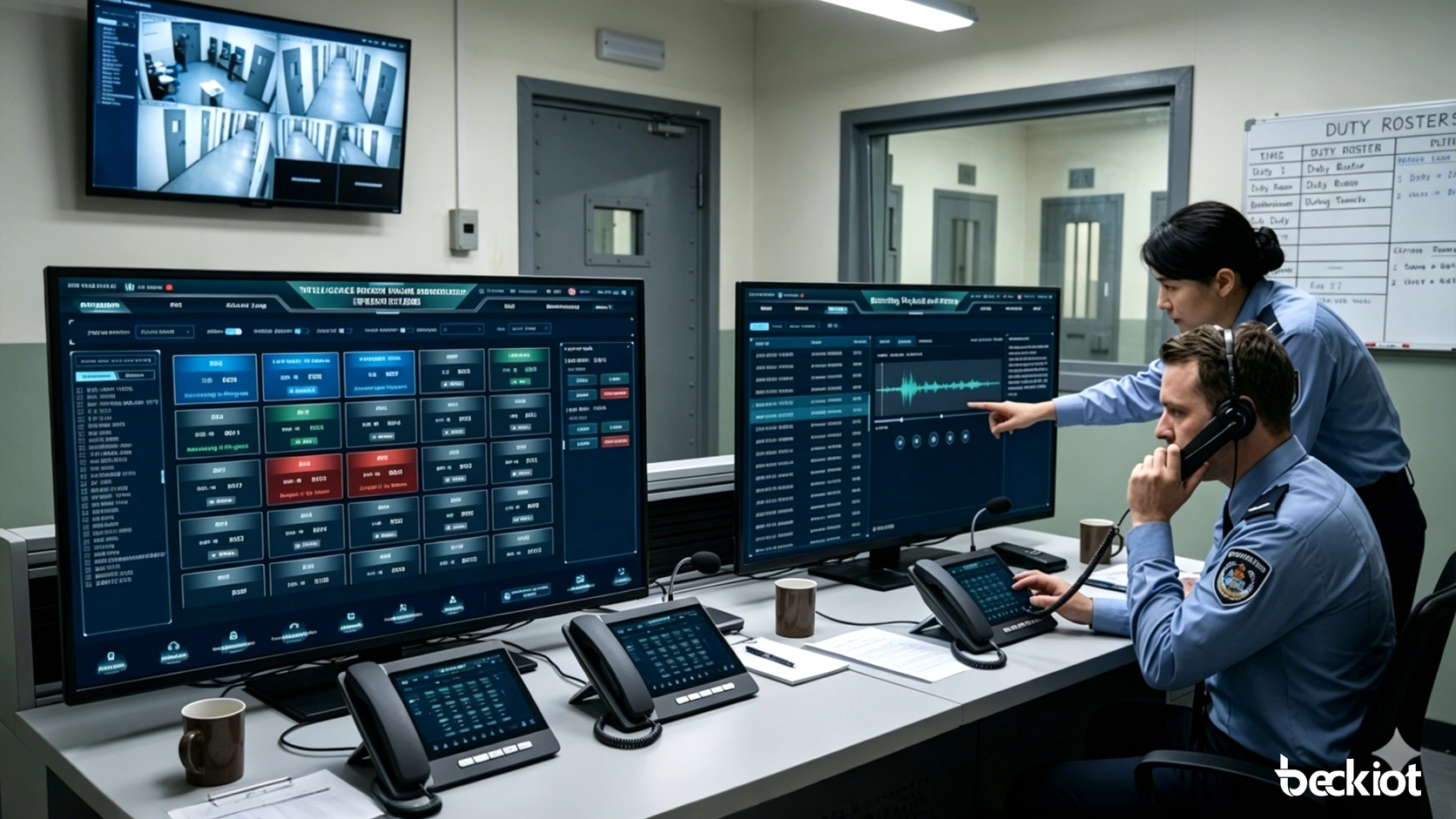
Authorized officers can listen to active calls in real time without interrupting the conversation. This allows supervisors to identify abnormal content, emotional changes, prohibited information, or other potential risks during the call.
If necessary, the system can also support supervisor intervention, voice warning, or forced disconnection according to the platform configuration. This creates a complete monitoring workflow from real-time supervision to post-call review.
After a call is completed, administrators can search call records by inmate name, inmate ID, prison block, call time, called number, family contact, or other conditions. The corresponding recording can be played back for investigation, dispute resolution, internal audit, or management review.
For important call records, review notes can be added to document the playback time, reviewing officer, review reason, and follow-up action. This improves traceability and supports standardized communication supervision.
The system supports prepaid account billing. Before making family calls, inmates can have a balance assigned to their account through authorized recharge procedures. When a call is placed, the system calculates the fee based on call duration, rate rules, destination type, and billing unit.
After the call ends, the charge is automatically deducted from the inmate account, and a detailed call bill is generated. The call bill can include caller identity, called number, call start time, call duration, call fee, account balance, and billing status.
Administrators can configure different billing rates for local calls, long-distance calls, mobile calls, international calls, or custom number prefixes. Billing units and rate rules can be adjusted according to the facility’s communication policy and telecom operator settlement requirements.
This flexible rate management helps correctional facilities keep call charging transparent, accurate, and easy to audit.
The system can record recharge information and account balance changes. Administrators can add funds to a specific inmate account, review recharge history, and export account reports. Inmates may also be allowed to check remaining balance and call usage through a controlled interface, depending on the facility’s policy.
When the account balance is insufficient, the system can automatically reject the call or terminate the call according to the configured rule. This prevents unpaid call usage and reduces manual billing disputes.
The system provides statistical analysis for call records. Administrators can review call volume, total call duration, average call length, abnormal call patterns, and calling trends by prison block, time period, inmate, or family contact.
These reports help prison administrators understand how the family calling service is being used and whether communication resources are being allocated properly.
The platform can generate inmate-based call statistics, including monthly call attempts, successful calls, total duration, expense, main contact person, and call frequency. This information can support behavior analysis, rehabilitation management, and communication policy adjustment.
If abnormal calling behavior is detected, administrators can investigate the call records, review recordings, or apply stricter control rules to the related account.
The system can generate billing reports by time range, prison block, account, destination type, or call rate. These reports help management teams understand communication costs, compare usage patterns, and simplify financial reconciliation.
Reports can be exported for further analysis, internal reporting, or management review. This improves data transparency and reduces manual workload.
The prison phone system provides strict control over who can call, which numbers can be dialed, how long each call can last, how many calls can be made, and who is allowed to monitor or review call records. This makes it suitable for high-security correctional environments.
Full-call recording creates a complete communication archive. Recording files can be stored, searched, played back, and reviewed according to permission levels, helping the facility maintain evidence, support audits, and improve supervision.
Different users can be assigned different operation permissions. For example, a prison block officer may only manage records within the assigned area, while system administrators can access global configuration, reporting, and account management functions.
The management platform can support operation from PC workstations and other authorized terminals. Officers can monitor call status, search records, review statistics, and respond to abnormal events more efficiently.
The modular system design supports future expansion. Additional phone terminals, IAD gateways, SIP trunks, external lines, recording capacity, or monitoring workstations can be added as the facility grows or as management requirements change.
The system can support multiple external line access methods, including PSTN, E1, IMS, and SIP trunk connections. This allows correctional facilities to connect with different telecom operators and preserve existing communication investments where possible.
CTI technology enables the phone system to be controlled by computer software. Calls can be authorized, connected, recorded, monitored, interrupted, searched, and reported through the management platform. This greatly improves automation and reduces manual handling.
By using IP communication and VoIP technology, the system reduces traditional telephone wiring complexity and improves deployment flexibility. It also supports centralized management across multiple prison areas, buildings, or communication rooms.
A distributed network architecture allows voice gateways and phone terminals to be placed close to the actual use points, while servers and management systems remain centralized. This design improves operational flexibility and supports large-scale deployment.
The system can apply identity authentication, permission control, recording protection, data access control, and system-level security mechanisms. These features help protect sensitive inmate communication records and reduce the risk of unauthorized operation.
The prison phone system can be integrated with other correctional management systems, such as inmate information platforms, security management systems, rehabilitation assessment systems, access control, monitoring platforms, and command dispatch systems.
Controlled family communication can help inmates maintain emotional connection with approved relatives. This supports rehabilitation, reduces isolation, and helps correctional facilities provide a regulated communication channel instead of leaving communication demand unmanaged.
By replacing uncontrolled or informal communication with a monitored and traceable system, the facility can reduce unauthorized contact risks and maintain better communication discipline.
Automated authorization, call logging, recording, billing, and reporting reduce the amount of manual work required from officers. This allows staff to focus more on supervision, safety, and rehabilitation management.
The billing module provides clear charging rules, recharge records, account balances, and call statements. This improves fee transparency and reduces disputes related to call charges.
Call statistics and reports help administrators understand calling demand, resource usage, abnormal communication patterns, and cost trends. This data can support policy adjustment and operational planning.
| Scenario | Application |
|---|---|
| Prison Family Calling Room | Provides controlled inmate-to-family communication with recording, billing, and supervision. |
| Detention Center | Supports temporary detainee calling under strict authorization and monitoring rules. |
| Custody House | Provides secure communication points for supervised external contact. |
| Correctional Facility Cell Block | Deploys distributed phone terminals close to inmates while maintaining central management. |
| Visitor and Family Communication Area | Supports scheduled or authorized communication with call records and review capability. |
| Smart Prison Communication Platform | Integrates inmate calling with security, management, recording, and reporting systems. |
The central equipment room can host the IP PBX or softswitch server, prison phone management server, database server, recording server, billing platform, and network equipment. This area is responsible for centralized call control, data storage, platform management, and trunk access.
IAD gateways, IP phones, or rugged prison telephone terminals can be installed in different prison blocks, visiting rooms, or designated calling areas. All phone points are connected through the internal network and managed by the central platform.
Authorized officers can use management workstations to monitor live calls, search call records, play recordings, manage inmate accounts, configure permissions, and export reports. Different permission levels can be assigned according to job responsibility.
An IP-based prison phone system is easier to scale, manage, and integrate than a traditional analog calling system. It supports centralized configuration, remote maintenance, flexible trunk access, recording integration, data reporting, and system expansion. For modern correctional facilities, it provides a more efficient foundation for secure communication management.
By combining VoIP technology with CTI management, the system helps correctional facilities build a controlled, traceable, and policy-driven communication environment. It balances the need for inmate family contact with the facility’s requirements for supervision, security, efficiency, and compliance.
The prison phone system is a professional communication management solution for secure inmate family calling. With CTI and IP architecture, whitelist dialing, inmate and family contact management, dual-card authorization, full-call recording, real-time monitoring, prepaid billing, statistical analysis, and distributed deployment, it helps correctional facilities provide controlled communication services while maintaining strict security supervision.
For prisons, detention centers, custody houses, and smart correctional facility projects, this system can improve communication management, reduce manual workload, enhance transparency, support rehabilitation work, and strengthen overall prison information management.