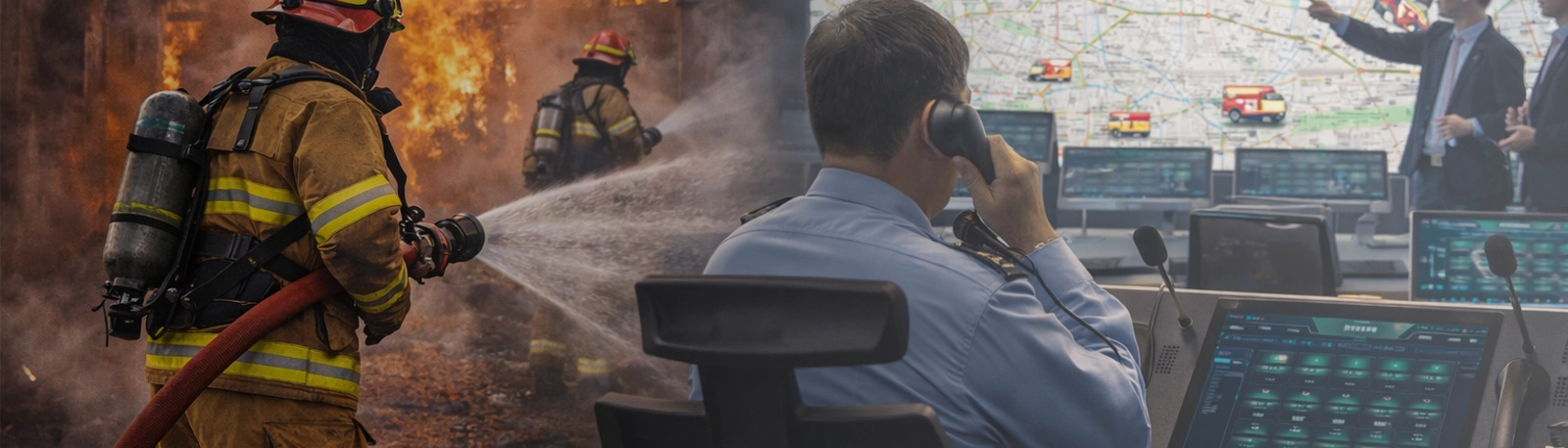
Fire and rescue agencies no longer operate in a single-channel environment. Emergency calls, radio traffic, station mobilization, field communications, video, mapping, incident data, mutual aid coordination, and post-incident reporting all move at the same time. When these capabilities sit in separate systems, control room teams lose speed, incident commanders lose visibility, and field crews spend valuable minutes switching between tools instead of focusing on life safety and incident stabilization.
Becke Telcom’s Fire and Rescue Command and Control System is designed as a converged operational platform rather than a standalone dispatch application. Built on an open IP/SIP architecture, the solution brings together command and control workflows, voice dispatching, radio and telephony interworking, GIS-based resource visibility, station alerting, mobile broadband access, incident conferencing, public warning, and third-party system integration. The result is a more connected operating model for municipal fire departments, regional fire and rescue services, airport fire brigades, industrial fire teams, wildland response agencies, and multi-agency emergency organizations.
The value of a modern fire and rescue platform is not simply that it can receive alarms and dispatch units. Its real value is the ability to turn call information, operational communications, resource visibility, and command decisions into one continuous response workflow.
In many organizations, the control room or communications center still has to bridge multiple disconnected systems. Call handlers may work in one environment, dispatchers in another, radio operators in a third, and supervisors in yet another interface for mapping or video. At incident level, crews rely on radio, mobile devices, vehicle terminals, station turnout equipment, and ad hoc phone calls. This fragmentation makes major incidents harder to manage, especially when events escalate quickly or require support from neighboring agencies.
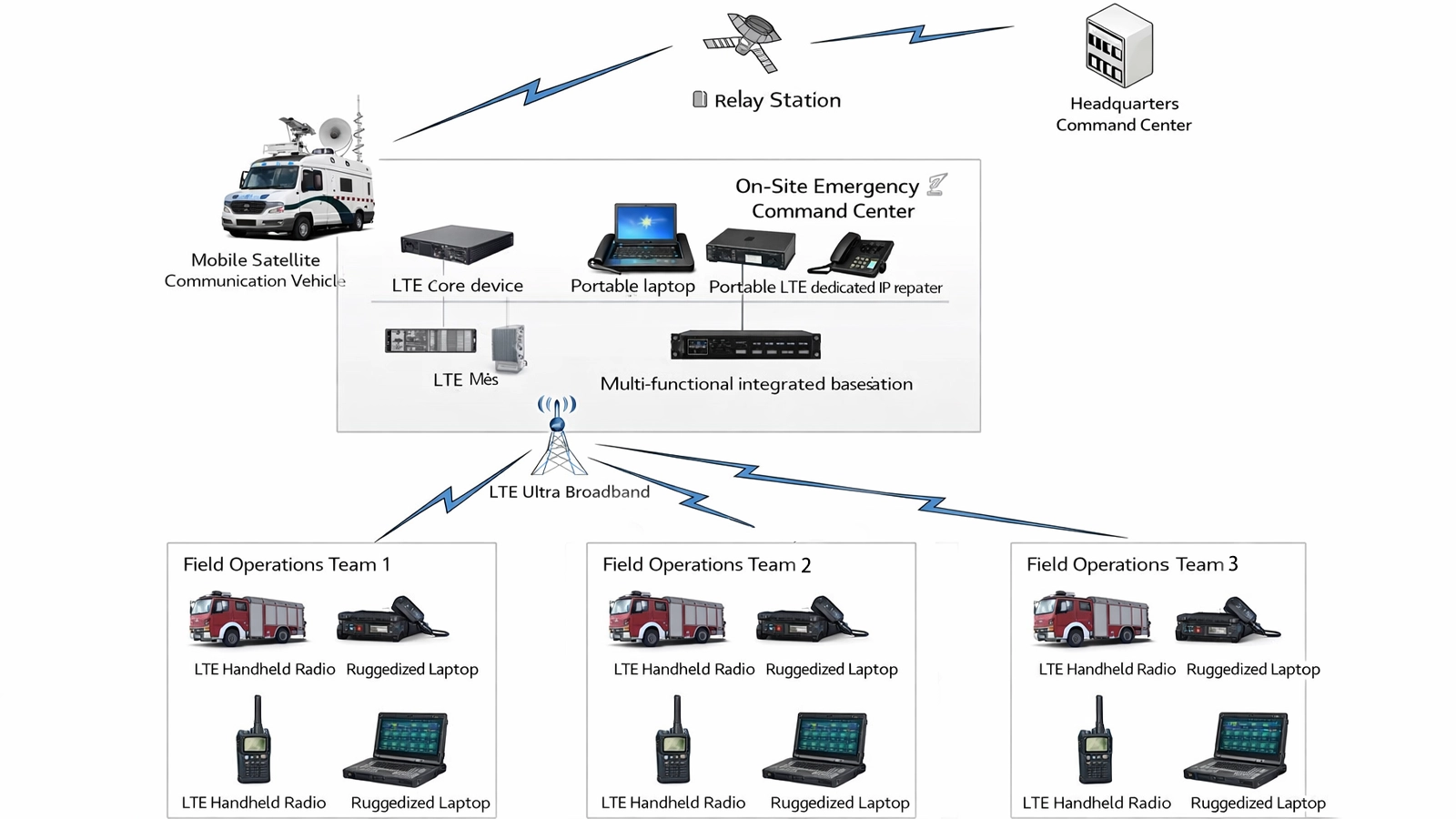
A unified command and control approach reduces that fragmentation. It allows emergency call data, incident type, location, apparatus status, crew availability, hydrant or site pre-plan information, live communications, scene video, and command decisions to remain linked from first notification to final review. For fire and rescue services, that means better mobilization discipline, more consistent incident command support, stronger interoperability during mutual aid operations, and clearer accountability after the event.
The solution is especially valuable in environments where response depends on multiple communication paths. Urban departments may need to coordinate telephony, CAD-driven dispatch, station alerting, mobile data, and radio at high call volumes. Regional or rural agencies may need resilient communications across large geographies. Airport, petrochemical, port, tunnel, and industrial fire services often need direct integration with public address, emergency telephones, CCTV, access control, gas detection, plant alarms, and crisis management procedures.
Becke Telcom positions this system as an operational backbone for fire and rescue communications. It can support agencies that describe their workflow as command and control, mobilizing, communications center operations, computer-aided dispatch support, incident command coordination, or integrated emergency response management. Instead of forcing departments into a single narrow software model, the platform is designed to adapt to local response doctrine, organizational structure, and technology standards.
For North American deployments, the system can be aligned with CAD-centered operations, incident command workflows, radio dispatch, station alerting, mobile response, and public safety broadband integration. For UK and European environments, the same platform can be adapted to control room, mobilizing, incident command support, resilience planning, and cross-service coordination models. In both cases, the core design principle remains the same: one operational environment for communication, coordination, and command support.
The Becke Telcom architecture is best understood as four tightly linked layers: the control and dispatch layer, the communications integration layer, the field response layer, and the command support layer. Each layer performs a distinct role, but all of them share the same operational data and event logic.
This layer supports call intake, incident creation, event classification, resource recommendation, mobilization actions, operator workflows, supervisor oversight, and dispatch records. It is the operational heart of the control room. Depending on project scope, it may connect with an existing CAD or mobilizing system, or form part of a broader Becke Telcom command environment where voice, location, and incident workflows are managed together.
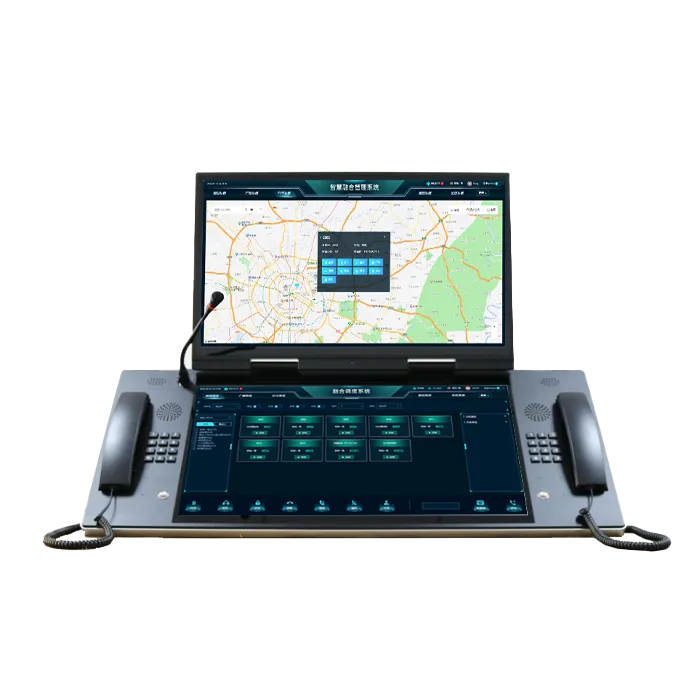
Control room positions can be configured for call handling, dispatch, command supervision, communications support, or multi-agency coordination. The goal is to give operators a single working view of incoming events, active incidents, unit status, communication channels, and escalation actions, without forcing them to jump from one isolated system to another.
This layer connects IP phones, dispatch consoles, SIP endpoints, voice gateways, radio over IP gateways, public address systems, intercoms, emergency call points, conferencing tools, and mobile applications. It provides the practical interoperability that fire and rescue operations need every day. Dispatchers can place calls, bridge talkgroups, initiate group conferences, connect remote specialists, or patch radio and telephony resources together when incidents expand beyond routine handling.
For organizations with legacy infrastructure, this layer also protects previous investments. Existing PBX assets, analog lines, radio systems, station circuits, and plant or site emergency devices can be brought into the platform through gateways and open interfaces rather than being discarded during modernization.
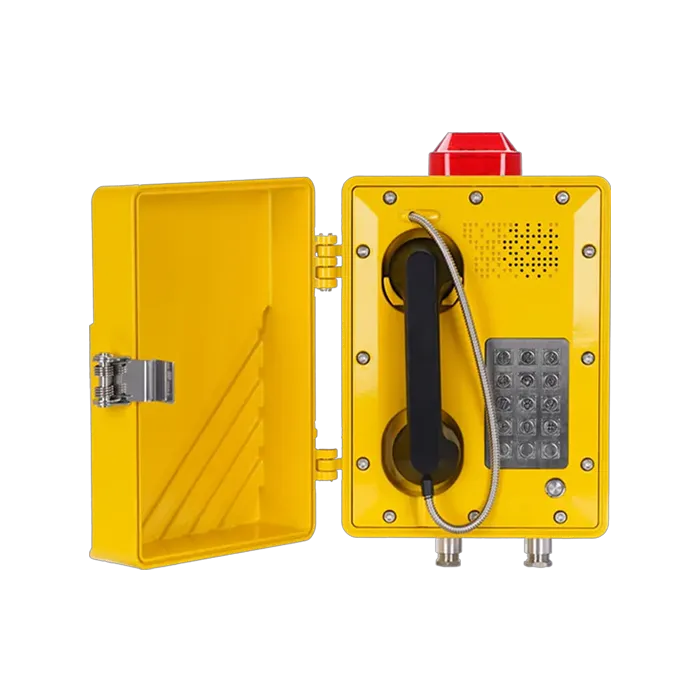
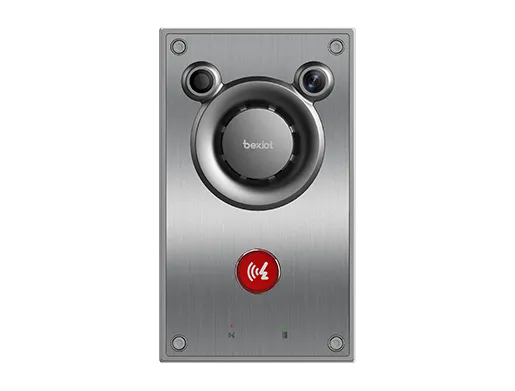
The field response layer includes fire appliances, mobile command vehicles, officer devices, mobile apps, rugged tablets, station turnout equipment, public safety radios, industrial telephones, emergency intercoms, and remote incident endpoints. It extends the command and control platform beyond the control room so that on-scene officers and support personnel can access the information and communications they need while responding, en route, or operating at the scene.
This is particularly important for agencies that operate across urban, industrial, airport, transport, maritime, or wildland environments. Field communications must continue to work even when incident conditions change rapidly, radio coverage varies, or responders move between fixed infrastructure, vehicle-based systems, and mobile broadband.
The command support layer adds GIS, resource mapping, video access, incident conferencing, operational dashboards, alarms, workflow automation, audit trails, and interfaces to external systems. It supports duty officers, incident commanders, emergency operations centers, and strategic command teams that need broader situational awareness than a voice-only dispatch environment can provide.
When a major event develops, this layer helps connect tactical communications with strategic coordination. Incident commanders can see unit positioning, linked cameras, live incident notes, site plans, risk information, and support requests without losing connection to the active communications workflow.
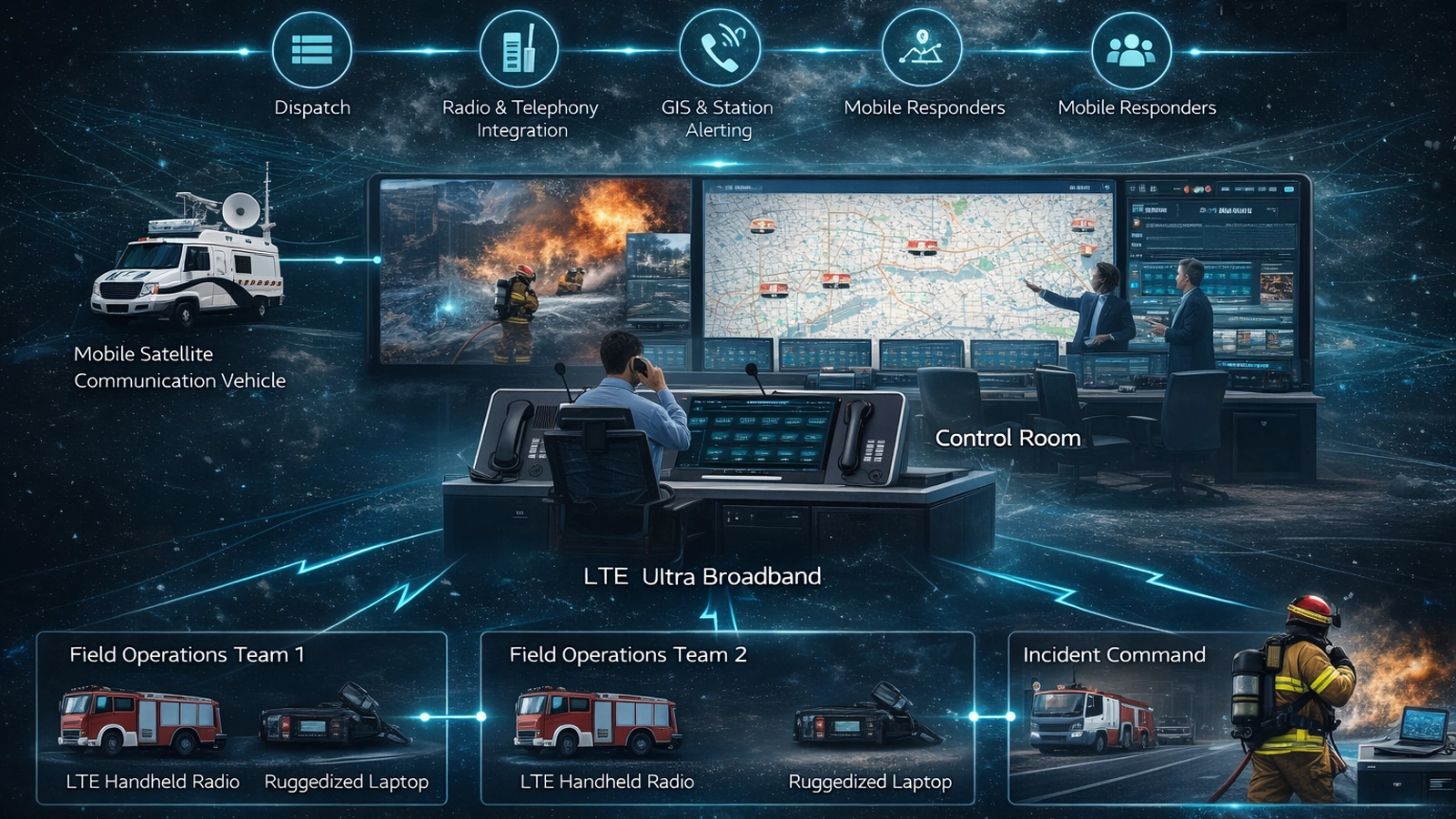
A fire and rescue response begins with accurate information and disciplined mobilization. The platform supports the process from initial event intake through dispatch and onward to incident updates. Operators can create or receive incidents, verify location and type, allocate response resources, notify stations and officers, and keep incident records synchronized throughout the event lifecycle.
Where an agency already operates a dedicated call-handling or CAD platform, Becke Telcom can function as the communications and interoperability layer around it. Where a broader command environment is required, the platform can also provide unified operational screens that combine incident information with communication tools, mapping, conferencing, and escalation controls.
Fire and rescue operations depend on structured command, clear roles, and timely information flow. The solution supports this by connecting control room workflows with the needs of incident commanders, sector officers, and support functions. It helps move the response from initial turnout to sustained command without breaking the information chain.
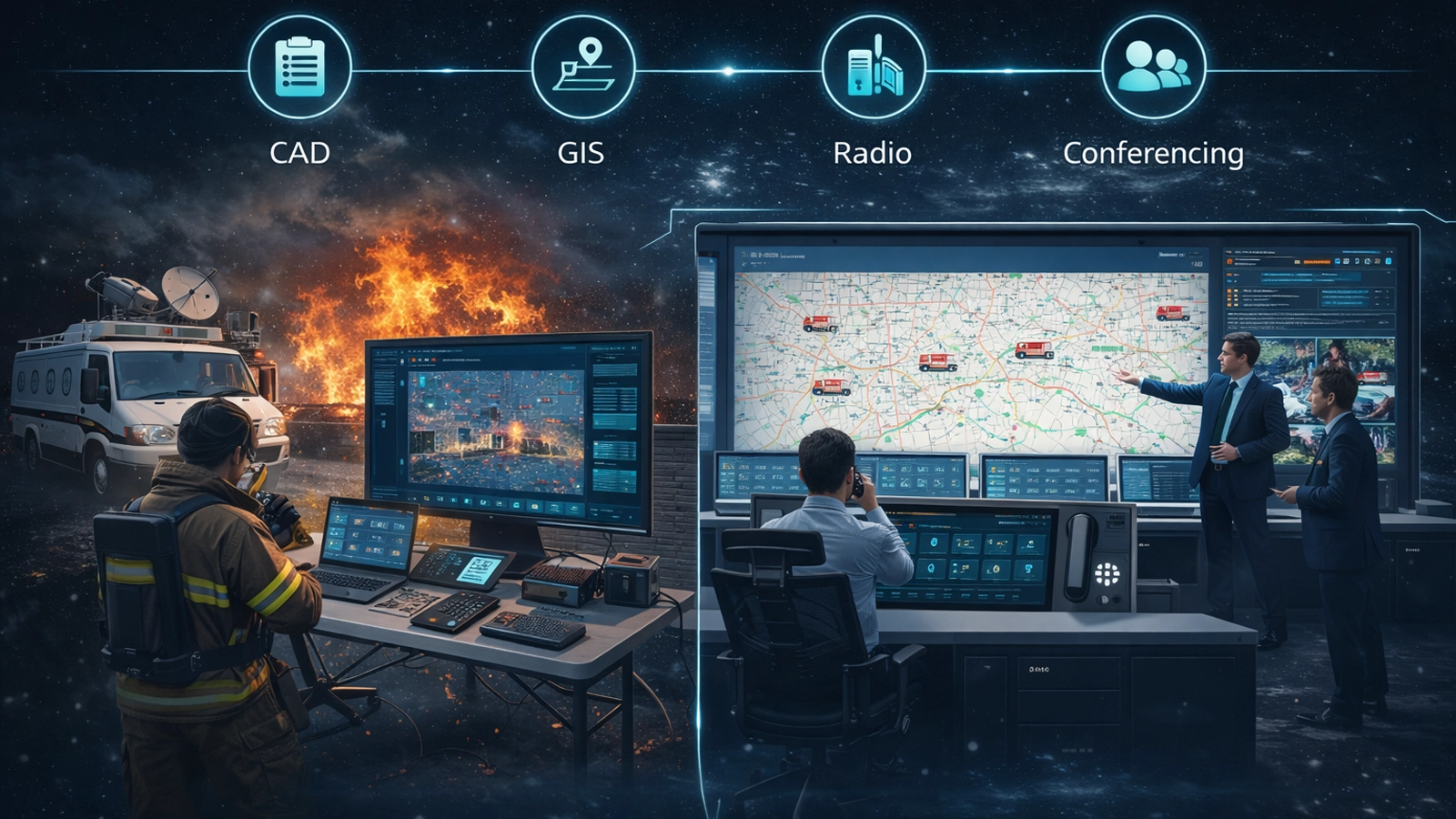
During working incidents, command staff can use the platform to maintain voice contact with control, request additional resources, pull in specialist support, launch incident conferences, and distribute key updates across assigned groups. This is valuable for structure fires, technical rescues, transportation incidents, hazmat operations, industrial emergencies, wildfire deployment, and prolonged flood response.
Most fire and rescue agencies still depend on radio as the primary operational channel, but voice coordination increasingly extends across telephony, broadband push-to-talk, mobile applications, and remote command users. Becke Telcom brings these channels together through SIP-based control, gateway interworking, and radio over IP integration.
The practical benefit is interoperability. A dispatcher can patch a radio talkgroup to a command conference, connect an external specialist by phone, bring in a mobile supervisor through broadband, or allow a remote coordination center to monitor and support the event. That is especially useful during mutual aid incidents, industrial site emergencies, border or regional cooperation, and incidents where command personnel are not all operating on the same native communications network.
Voice alone does not provide enough context for modern response. The command and control system can place incidents, stations, appliances, hydrants, critical infrastructure, site hazards, emergency telephones, cameras, and support assets on a common map. When vehicle location data or mobile positioning is available, the platform can show where resources are, where they are heading, and what nearby assets may be available.
This improves decision-making in both routine and complex incidents. The control room can identify the nearest suitable response, command can understand operational spread, and supervisors can support redeployment or cover moves when multiple incidents occur at once. GIS-based visibility is also useful for airports, petrochemical facilities, ports, tunnels, campuses, and large industrial estates where location precision matters.
Fast turnout depends on more than sending a message to a station. It depends on delivering the right call information, the correct mobilization tone or workflow, and a clear path from control room decision to crew action. Becke Telcom can integrate station alerting devices, internal station phones, speaker systems, visual indicators, turnout notifications, and acknowledgement workflows so that the station side of mobilization becomes part of the same operational platform.
This creates a more coherent response sequence. From the moment a unit is assigned, the system can support station notification, dispatch messaging, officer contact, response acknowledgement, and status progression back to control. For combination departments, retained services, airport stations, industrial brigades, or geographically distributed stations, that consistency is especially important.
Incident commanders increasingly need visual context as early as possible. The platform can integrate fixed CCTV, perimeter cameras, drone feeds, body-worn or vehicle video, and mobile video sessions so that control rooms and command teams can verify scene conditions, access routes, smoke movement, perimeter status, and critical hazards before all resources arrive on scene.
Video does not replace radio discipline or command procedure, but it significantly improves situational awareness. In industrial fires, transport incidents, airport operations, tunnel events, and wide-area incidents such as floods or wildfires, visual feeds help accelerate strategic decisions and support safer resource deployment.
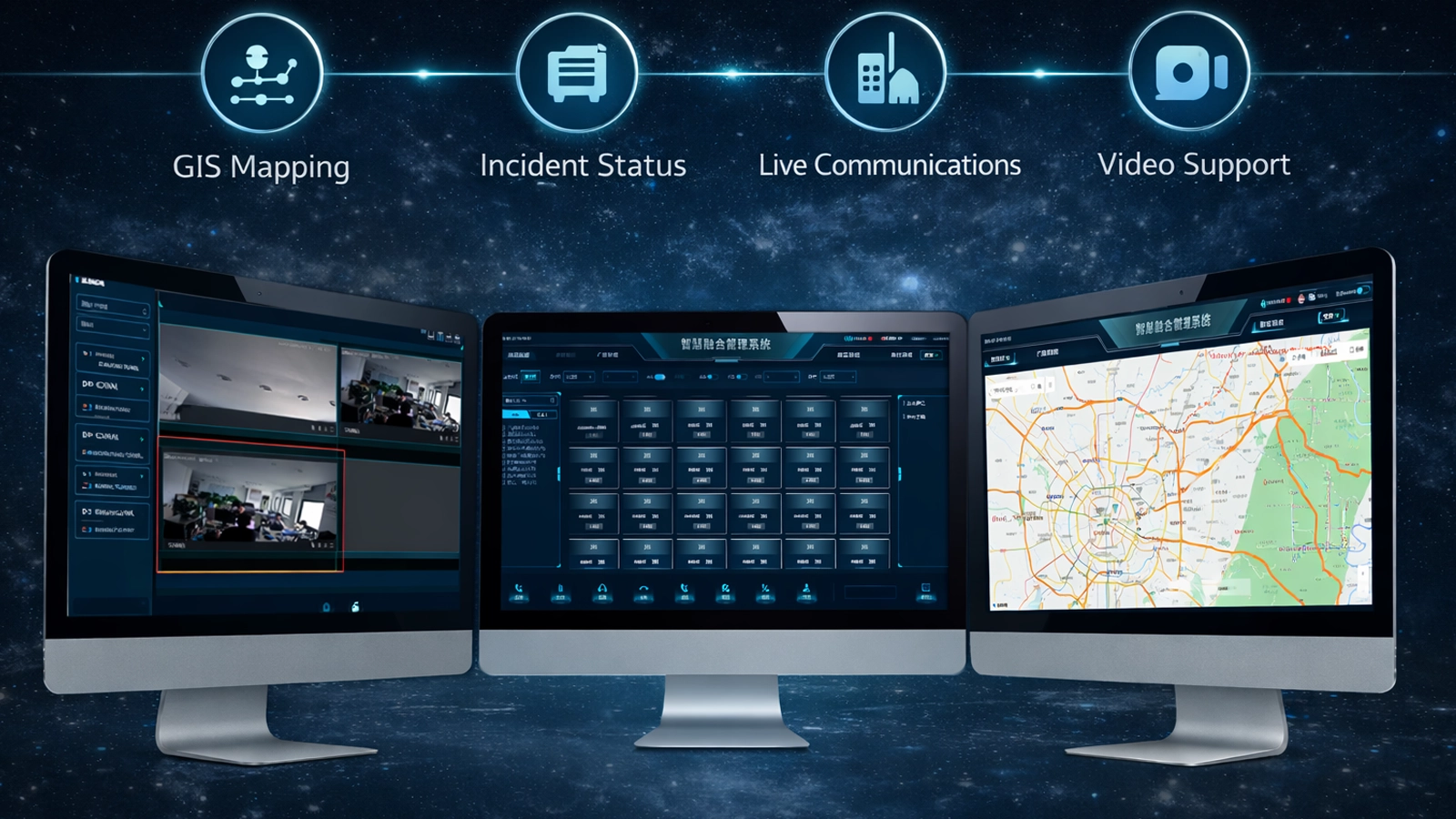
Major incidents rarely stay inside one organizational boundary. Fire and rescue services often need to coordinate with EMS, police, emergency management, industrial site teams, utility operators, transport authorities, or neighboring departments. The Becke Telcom platform is designed to support that reality through shared communications, standardized workflows, gateway-based connectivity, and controlled access for partner agencies.
This capability becomes critical during large fires, severe weather, industrial incidents, mass-casualty events, hazardous materials releases, and major transportation disruptions. A system that can connect multiple agencies without rebuilding the entire communications architecture during the crisis provides real operational value.
Fire and rescue organizations need more than operational speed. They also need traceability. The platform can retain call records, dispatch actions, communication logs, radio patches, conference activity, operator actions, incident notes, and linked media records where project scope requires it. This supports review, training, investigation, governance, and service improvement.
For command staff and communications managers, post-incident analysis is often where long-term value becomes clear. A well-structured record of what happened, who was notified, which channels were used, how resources were assigned, and where delays occurred allows agencies to improve procedures rather than relying on memory alone.
| Module | Main Scope | Operational Value |
|---|---|---|
| Command and Dispatch | Incident intake, mobilization workflow, operator positions, event escalation, supervisor oversight | Creates a disciplined response process from first notification onward |
| Voice and Radio Interworking | SIP calling, dispatch consoles, radio over IP, talkgroup patching, conferencing, gateway integration | Improves interoperability across agencies and communication domains |
| GIS and Resource Mapping | Incident mapping, resource visibility, site plans, camera and device positioning, location overlays | Supports faster decisions and better situational awareness |
| Station Alerting | Turnout notifications, station phones, visual and audio alerts, acknowledgement, status feedback | Reduces delay between mobilization decision and crew response |
| Mobile and Broadband Access | Apps, tablets, mobile command access, remote supervisors, field messaging and video | Extends command and control beyond the communications center |
| Incident Intelligence | CCTV, drones, mobile video, pre-plan documents, hazard data, dashboards | Helps command teams understand the incident faster |
| Integration and Open Interfaces | CAD links, alarm systems, PA systems, building systems, emergency call points, third-party APIs | Protects existing investments and supports phased modernization |
An emergency call enters the communications center and the incident is created with location and type. The system supports mobilization of first-due units, station alerting, officer notification, and operational channel setup. As more information arrives, dispatch can update the incident, assign additional resources, and open a command conference if required.
Once units are committed, command staff can view the incident on GIS, pull in site or hydrant references, access nearby cameras where available, and maintain coordination between control, command officers, and support resources. If the incident escalates into a multiple alarm response, the same platform can support mutual aid connectivity and continued record keeping.
In a rescue incident involving fire, EMS, police, and highway authorities, communications discipline is often more difficult than the initial dispatch. Becke Telcom helps by creating a common operational environment in which communications, status updates, incident logs, and inter-agency links stay visible. Radio and telephony bridges can be opened where needed, while command retains a clear record of resource requests and decision points.
This reduces the communication friction that often appears when agencies use different systems, especially on fast-moving roadway incidents where scene access, lane closure, casualty management, and rescue operations must be coordinated quickly.
High-risk environments require more than standard dispatch. The incident may involve plant alarms, emergency telephones, access control, CCTV, gas monitoring, evacuation messages, public address systems, and specialist industrial response teams. Becke Telcom is particularly strong in these projects because the company’s broader communications portfolio already covers industrial telephones, PA and intercom systems, SIP endpoints, emergency call devices, and voice gateways.
That means the command and control environment can be linked to the actual field infrastructure instead of staying isolated at control room level. Operators can initiate calls, trigger notifications, connect field devices, review video, and support industrial command procedures from one coordinated platform.
Wide-area incidents place pressure on communications resilience, mobile coverage, and command coordination over time. The platform supports distributed command by linking control room teams, mobile command units, field supervisors, and remote decision-makers through voice, mapping, status visibility, and broadband-enabled collaboration tools. This is valuable when incidents last for operational periods rather than minutes.
As resources move across districts or agencies, the system can help maintain common incident awareness, preserve communication continuity, and support staged escalation rather than forcing teams to build temporary coordination from scratch at every phase.
Becke Telcom approaches fire and rescue projects from a communications integration perspective rather than from a software-only perspective. That matters because emergency response environments do not depend on software alone. They depend on consoles, phones, intercoms, public address systems, gateways, broadband links, radio interworking, rugged field devices, and dependable voice paths under pressure.
The company’s strength lies in building a practical bridge between command applications and operational communications infrastructure. This makes Becke Telcom especially suitable for projects where fire and rescue command must also connect with industrial emergency systems, transport infrastructure, municipal safety systems, airports, ports, tunnels, campuses, utilities, or multi-site enterprise environments.
Another advantage is deployment flexibility. Some customers need an overlay solution that integrates with existing CAD, radio, and telephony systems. Others want a broader modernization path toward unified dispatch, command support, field collaboration, and emergency communications convergence. Becke Telcom can support both directions through phased implementation.
A successful project should begin with operational mapping rather than product selection alone. The first step is to document how the agency currently handles call intake, dispatch, station alerting, radio operations, officer contact, incident escalation, mutual aid, and post-incident review. The second step is to identify the systems already in place, the systems that must remain, and the areas where integration creates the highest immediate value.
From there, the platform can be rolled out in phases. Many organizations begin with control room communications integration, console modernization, incident conferencing, and gateway-based interoperability. Others prioritize station alerting, GIS visibility, mobile command access, or industrial site integrations. Because the platform is modular, the project can expand from a communications upgrade into a full command and control environment over time.
For resilience, the deployment can be designed with redundancy, distributed nodes, survivable communications paths, and role-based access. This is especially important for agencies that operate critical infrastructure, regional control rooms, high call volumes, or large geographic service areas.
Becke Telcom’s Fire and Rescue Command and Control System is built to help agencies respond with greater speed, clearer coordination, and better operational continuity. By converging dispatch support, station mobilization, radio and telephony interworking, GIS, video, mobile access, and incident command tools, the platform gives fire and rescue organizations a more connected way to manage routine calls and major incidents alike.
For departments and authorities planning a modernization program, the most effective path is not usually to replace every legacy system at once. It is to create a unified operational framework that can connect what already exists, improve response workflows immediately, and support future growth. Becke Telcom provides that framework.
If your organization is planning a new fire and rescue communications center, a station alerting upgrade, a radio and telephony interoperability project, or a broader command and control modernization initiative, Becke Telcom can help define the architecture, integration scope, and deployment roadmap.
A dispatch system focuses mainly on receiving incidents and mobilizing resources. A command and control system is broader. It connects dispatch with communications, command support, mapping, field collaboration, interoperability, and incident review.
Yes. Becke Telcom can operate as an integration and communications layer around an existing CAD or mobilizing environment, or it can be part of a wider modernization program that adds more unified command and coordination functions.
Yes. Through SIP integration, voice gateways, and radio over IP technologies, the platform can help bridge radios, phones, dispatch consoles, and mobile users into a more coordinated operational environment.
No. It is also suitable for airport fire services, industrial emergency response teams, petrochemical and energy sites, tunnels, ports, transport operators, campuses, and regional emergency organizations that need structured command and communications.
Yes. The solution is modular and can be introduced in stages, starting with the highest-priority functions such as communications integration, station alerting, GIS visibility, incident conferencing, or field mobility.