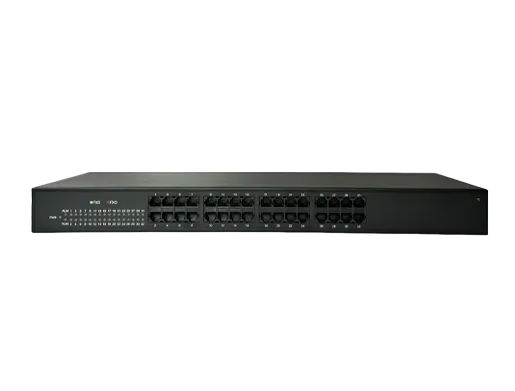
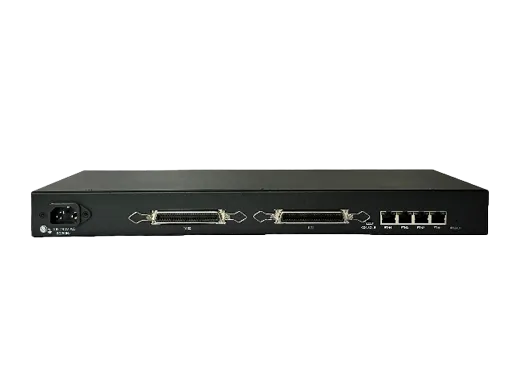

Becke IPGA-32S FXS Gateway is designed for organizations that still depend on large numbers of analog endpoints but want a cleaner path into modern SIP communications. With 32 FXS ports in a high-density platform, it helps bring room phones, desk phones, corridor phones, service extensions, and legacy analog terminals into a more unified voice environment without forcing a full endpoint replacement.
This model is positioned for practical deployment value. It focuses on stable analog line access, broad SIP interoperability, flexible dial planning, secure signaling, and easier administration for IT and telecom teams. For hospitality properties, campuses, factories, healthcare buildings, branch offices, and distributed service environments, it provides an efficient way to keep analog access available while aligning communications with current IP voice infrastructure.
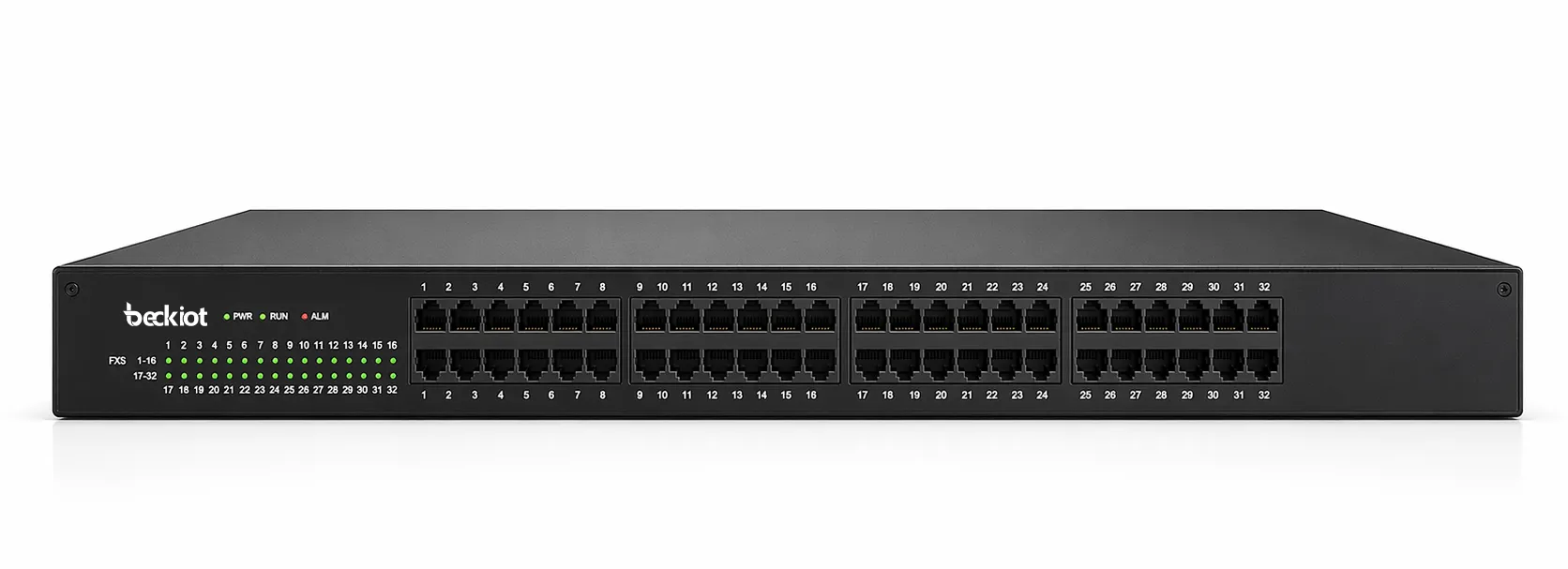
For projects that need many analog extensions under one device, IPGA-32S offers a more orderly rollout path than stacking multiple low-port gateways. Its 32 FXS port design supports centralized extension planning for guest rooms, dormitories, wards, offices, elevators, service desks, and legacy analog work areas that still need reliable daily voice access.
The platform is well suited to environments where analog devices remain operationally useful but the core communication system is already SIP-based. Instead of creating a fragmented transition, IPGA-32S helps concentrate analog access into one manageable gateway layer so migration can move forward with less disruption.
IPGA-32S is built for integration with standard SIP environments and can fit into IP PBX, softswitch, SIP server, and IMS-oriented deployments. That makes it easier to introduce into existing voice systems without locking the project into a narrow architecture or an isolated analog island.
Because enterprise migration projects often involve mixed numbering plans, phased rollouts, and platform coexistence, compatibility matters as much as port count. This gateway is positioned to work smoothly in those real-world conditions, helping preserve service continuity while legacy analog devices are brought into a more modern call-control framework.
A strong 32-port analog gateway is valuable not only because it connects more devices, but because it reduces migration friction across the whole voice project.
Voice infrastructure in live business environments has to remain dependable long after installation day. IPGA-32S is therefore positioned around stability, with an embedded operating system, proven hardware architecture, and support for primary and secondary SIP server failover to improve continuity when the preferred server is unavailable.
Security is also part of its deployment value. Support for encrypted signaling and media helps protect communication sessions in managed networks, while QoS and VLAN capabilities make it easier to place the gateway into segmented enterprise voice environments with better traffic control and more predictable service quality.
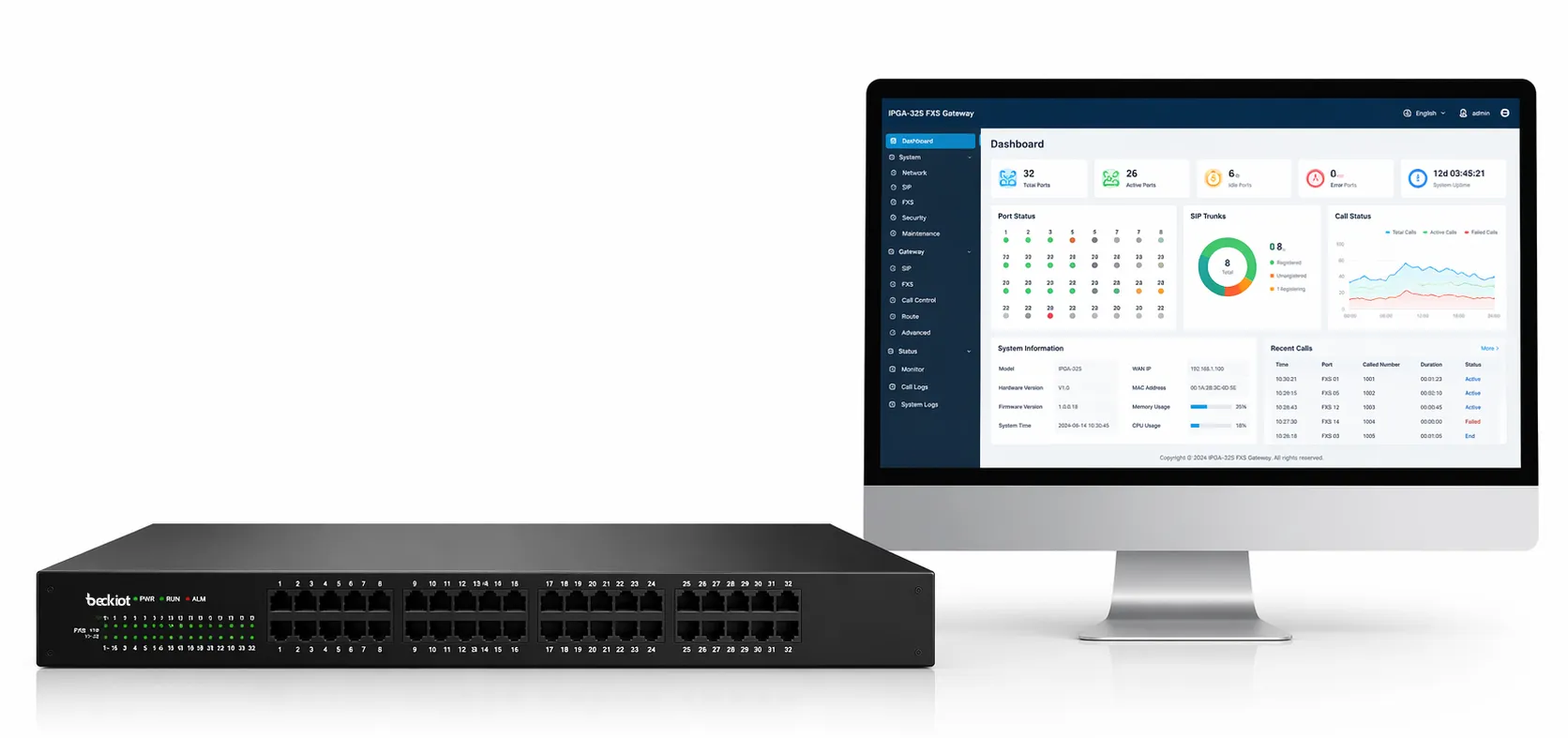
IPGA-32S supports flexible routing logic and dial plan configuration so project teams can align call behavior with real organizational needs. This is especially useful in mixed environments where analog room phones, service phones, and office extensions must coexist with SIP extensions, PBX numbering plans, branch prefixes, and location-based routing rules.
That flexibility improves usability during phased migrations. Teams can retain familiar extension structures where needed, simplify breakout policies between sites, and build a transition path that feels controlled rather than disruptive.
To keep analog endpoints aligned with normal business workflows, the gateway supports a practical set of enterprise voice features, including call waiting, blind and attended transfer, call forwarding, speed dial, do not disturb, hunting groups, music on hold, message waiting indication, and three-way conference support.
This matters in projects where analog phones are still used in active operational roles rather than as passive backup devices. By preserving useful call behavior, IPGA-32S helps analog users remain part of the wider organization’s communication processes instead of becoming a disconnected legacy layer.
IPGA-32S is also positioned as a manageable platform for rollout and lifecycle operations. The web interface supports day-to-day configuration work, and functions such as automated provisioning, backup and restore, debugging utilities, and remote management support help reduce onsite intervention and simplify maintenance across single-site or multi-site projects.
Support for IPv4 and IPv6 gives network teams more flexibility when fitting the gateway into different addressing standards, while management and supervision features help administrators maintain clearer visibility over deployed systems.
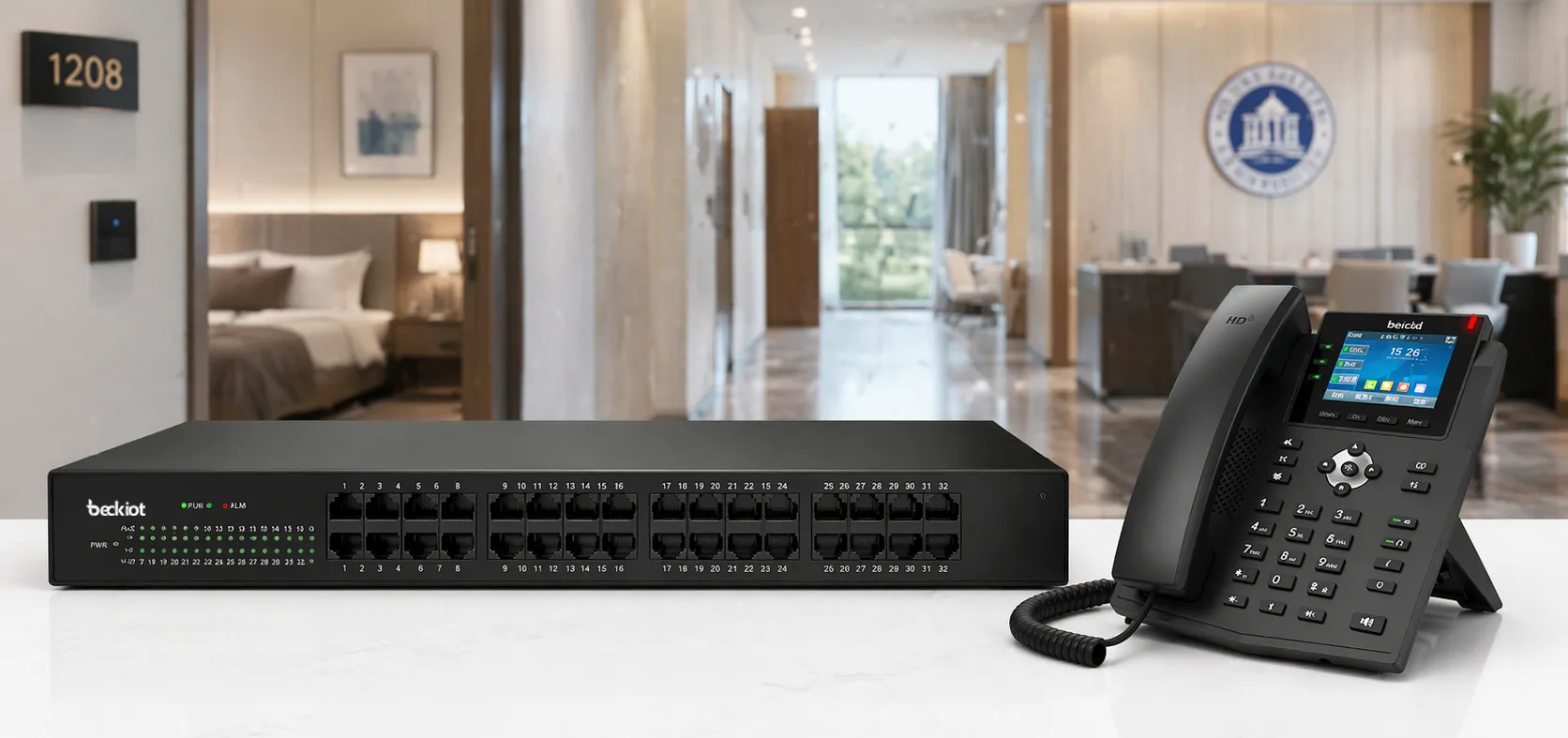
Many organizations still have analog phones in reception areas, warehouses, workshop zones, staff rooms, security points, or legacy office locations. IPGA-32S provides a practical analog access layer for these environments, allowing the business to modernize its central voice platform without replacing every installed endpoint immediately.
That makes it a strong fit for controlled modernization projects where budget, deployment speed, and operational continuity all matter. The gateway helps protect existing endpoint investment while moving the voice backbone toward a more centralized SIP architecture.
Hotels, dormitories, care facilities, and educational campuses often need large numbers of straightforward analog extensions deployed in an organized way. In these scenarios, IPGA-32S offers a clean fit by concentrating room-scale analog access into a higher-density platform that can be easier to plan, number, and maintain.
It is equally useful in healthcare or managed accommodation settings where analog room phones remain common and where administrators need consistent provisioning, centralized supervision, and reliable integration with a larger IP-based communication system.
IPGA-32S also fits projects where many analog devices must be gathered into a SIP core across one or more sites. This includes service organizations, support environments, branch networks, and hybrid legacy-to-IP deployments that need consistent routing, centralized policy control, and dependable interoperability with the broader communication platform.
Because it is designed to work within established SIP ecosystems, the gateway supports phased system growth as architecture evolves. That makes it suitable not only for immediate analog access requirements, but also for longer-term voice infrastructure planning.
The strength of IPGA-32S is not limited to its 32-port capacity. Its value comes from how density, SIP interoperability, feature completeness, failover readiness, security, and management efficiency are combined in one deployment-focused analog gateway platform. That combination helps teams simplify migration, preserve service continuity, and reduce operational complexity.
For buyers evaluating 32-port analog gateways, the real question is rarely just how many ports are available. The more important issue is how smoothly the gateway fits into numbering plans, call policies, network segmentation, server redundancy, and ongoing maintenance workflows. IPGA-32S is positioned around that practical requirement.
It is best suited for medium-to-large analog access deployments where many existing phones or room extensions need to connect into a SIP-based communication platform from a single gateway. Typical examples include hotels, dormitories, hospitals, factories, branches, campuses, and enterprise voice modernization projects.
Yes. It is positioned for broad SIP interoperability and is suitable for integration with IP PBXs, softswitches, SIP servers, and related IP voice environments. This makes it easier to use in both new deployments and phased migration projects.
Its deployment-oriented strengths include primary and secondary SIP server failover, secure signaling and media protection, QoS and VLAN support, web-based management, backup and restore functions, automated provisioning support, and practical maintenance tools for troubleshooting and ongoing administration.
A 32-port platform can simplify rack planning, extension management, routing policy, provisioning, and maintenance in higher-density analog deployments. It is often the cleaner choice when the project requires centralized administration and a more organized path for large groups of analog endpoints.
| Item | Specification |
|---|---|
| Product Model | IPGA-32S FXS Gateway |
| Voice Interface | 32×FXS Ports (RJ11×32 or RJ21×2) |
| Ethernet Interface | 4×10/100/1000Mbps RJ45 |
| USB Interface | 1×Mini USB |
| Concurrent Calls | 32 Channels |
| Supported Protocols | SIP/IMS (supports primary/backup server registration), DHCP, TCP/UDP, HTTP/HTTPS, ARP/RARP, TLS, DNS, NTP, TFTP, TELNET, STUN, TR-069, SRTP, SNMP |
| Audio Codecs | G.711a/u, G.723, G.729A/B, iLBC, AMR |
| DTMF Modes | In-band, RFC2833, SIP INFO |
| Echo Cancellation | Hardware AEC (Acoustic Echo Cancellation) |
| IP Mode | IPv4/IPv6 |
| VPN | Supports VPN Client |
| Lightning Protection | Level 4 |
| Reset Button | 8-second long press to restore factory settings |
| Status Indicators | PWR (Power), RUN (Operation), ALM (Alarm), Network Port, FXS Channel Status |
| Product Dimensions | 440×44×202 mm |
| Net Weight | 2.7 kg |
| Operating Temperature | 0°C ~ 45°C |
| Storage Temperature | -20°C ~ 85°C |
| Operating Humidity | 8% ~ 90% (Non-condensing) |
| Storage Humidity | 8% ~ 90% (Non-condensing) |