Parking lots and parking garages are everyday public spaces, but they are also environments where communication problems can quickly turn into safety problems. A driver may need help at an entry barrier. A visitor may feel unsafe in a stairwell or remote parking zone. A payment machine may fail late at night when few staff are nearby. A medical incident, vehicle issue, or security concern may happen in an area that is visible on a map but not easy to reach in real time. In all of these situations, the first requirement is simple: people need a fast and reliable way to reach someone who can help.
That is why a parking lot emergency call box system should not be treated as a standalone help point project. In a practical deployment, the call box is only the front end of a larger communication workflow. The real value comes from how quickly the call reaches the control room, how clearly the operator can identify the location, how easily the situation can be verified by voice or video, and how smoothly the response can be coordinated across security, operations, patrol, maintenance, and public communication systems.
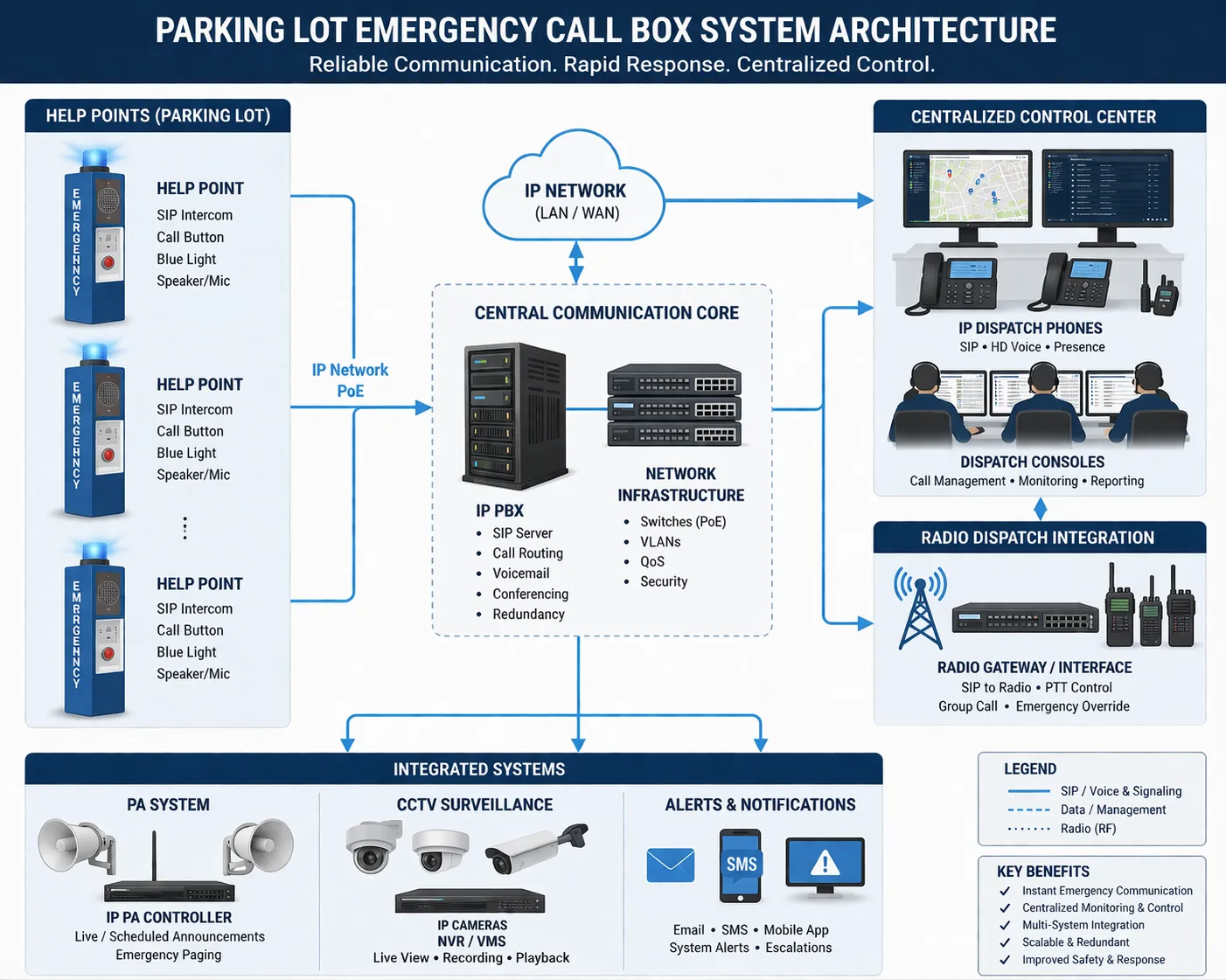
A modern parking lot emergency communication solution combines emergency call boxes, hands-free intercom, SIP communication, IP PBX telephony, radio dispatch, public address, CCTV linkage, and centralized management into one connected framework. Instead of managing calls, phones, radios, and announcements separately, operators can work through one coordinated process that supports visitor assistance, incident response, and site-wide operational control.
Unlike a compact indoor facility, a parking lot or garage spreads activity across entrances, exits, payment stations, stairwells, pedestrian routes, elevator lobbies, open parking rows, upper levels, and remote corners. Some areas are busy during the day and nearly empty at night. Others remain active around the clock but still have limited direct supervision. When someone needs assistance, they may be far from a staffed office and unsure where to turn.
This creates a communication challenge that cannot be solved by a telephone alone. The caller may not know which number to dial, may not be able to describe the exact location, or may need help while standing in an exposed or stressful environment. A clearly marked emergency call box solves the first part of that problem by giving people an obvious and immediate help point. The wider system solves the rest by making sure the right people receive the call, understand the location, and can coordinate the next step quickly.
Many parking facilities still operate with communication layers that are only loosely connected. The control room may have desk phones, field staff may rely on radios, and the public address system may sit on a separate platform. CCTV may be available, but not linked directly to incident communication. In day-to-day operation this can feel manageable. During a real incident, it often leads to delays, repeated explanations, and fragmented action.
An integrated approach changes that. The emergency call box can open a two-way voice session, route the call through the IP PBX, trigger camera pop-up, alert patrol staff through the radio network, and support targeted public announcements if the situation requires broader coordination. This is what turns a simple help request into a structured emergency communication workflow.
In parking environments, the most effective emergency call box is not just the one that connects a call. It is the one that connects the call, the operator, the field team, and the wider response process without wasting time.
A parking lot emergency call box system is a safety communication solution designed to support one-touch help requests, emergency calling, two-way voice communication, location-based response, and coordinated site management across parking lots and parking garages. It typically includes emergency call boxes or help points, SIP intercom terminals, IP phones, IP PBX integration, radio dispatch connectivity, paging or public address systems, visual indicators, CCTV linkage, and centralized control software.
The solution is suitable for parking garages, open-air parking lots, mixed-use parking structures, public parking facilities, campuses, shopping centers, hospitals, transport hubs, residential complexes, and civic sites. Its role is not limited to emergency calling. It also supports everyday assistance, remote operator communication, parking operations, technical issue reporting, and more organized incident handling across the site.
When a user presses the emergency call box button, the event is sent to the control room, security desk, service office, or designated duty group. The platform identifies the exact location, such as a barrier gate, payment station, stairwell, parking level, row marker, pedestrian exit, or remote parking zone. The operator can immediately open a hands-free voice session to understand the problem, reassure the caller, and determine what response is needed.
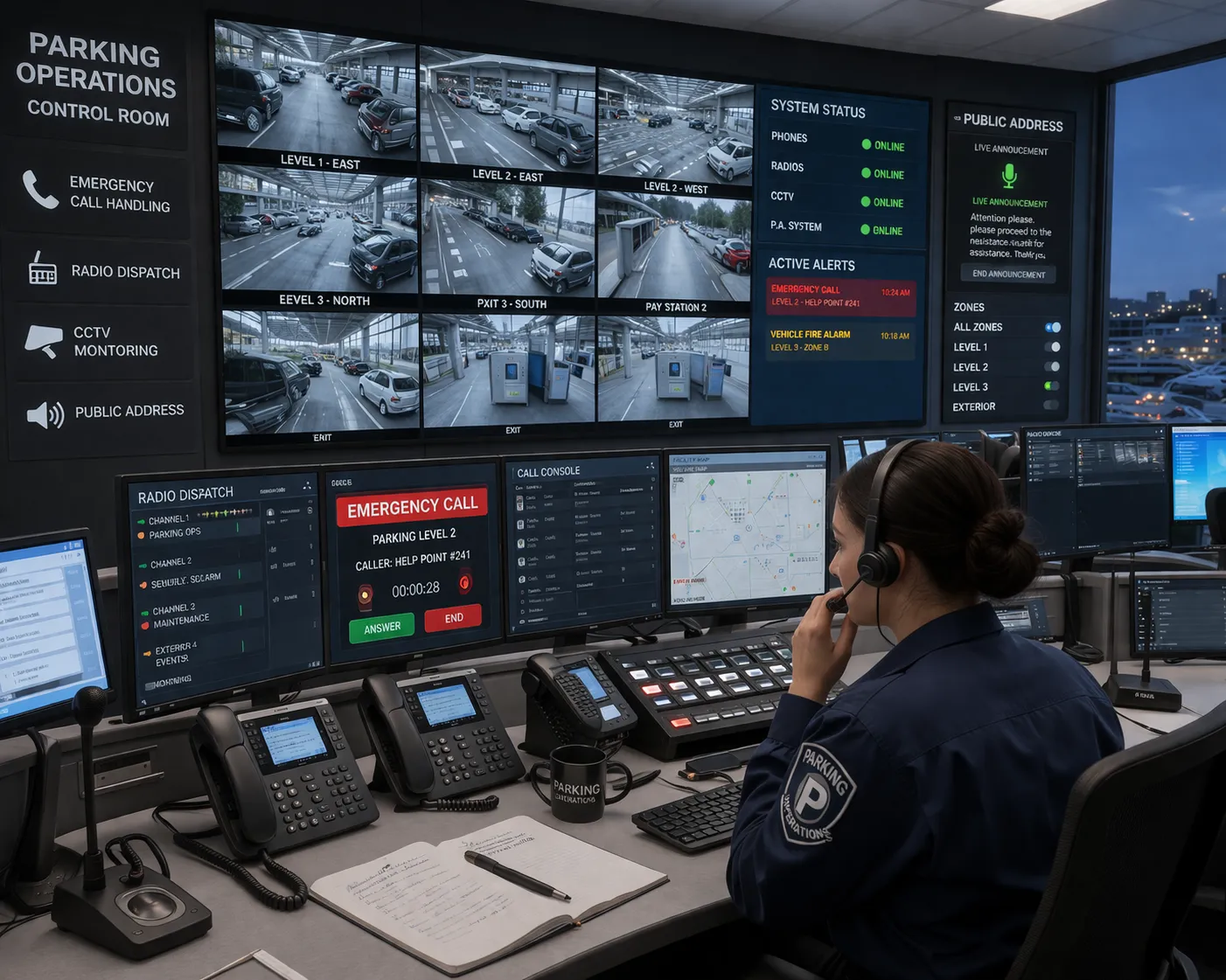
If the situation requires field intervention, the operator can route the call through the IP PBX system, notify relevant staff by phone, and contact patrol or security teams through the integrated radio dispatch layer. If the event affects a wider area, the public address system can deliver targeted guidance or emergency messaging to the relevant zone. At the same time, linked CCTV views can provide visual confirmation, and the management platform can record the event for follow-up and review.
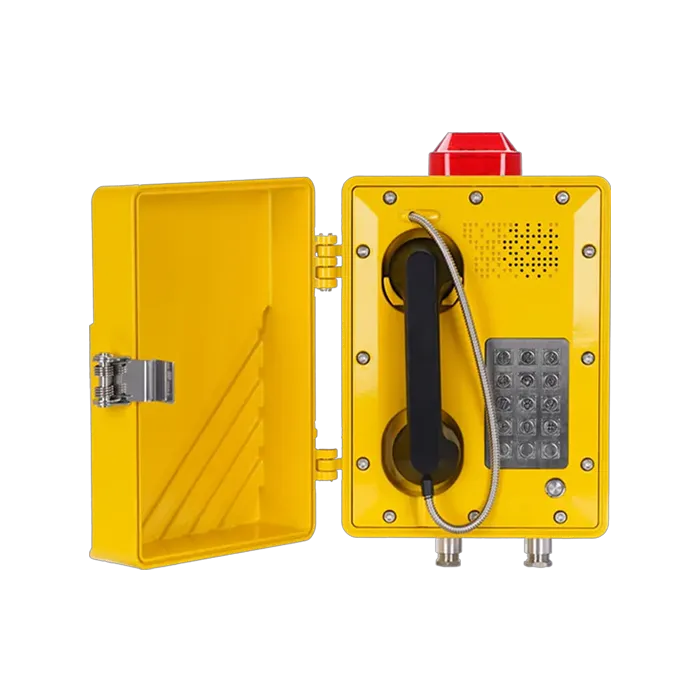
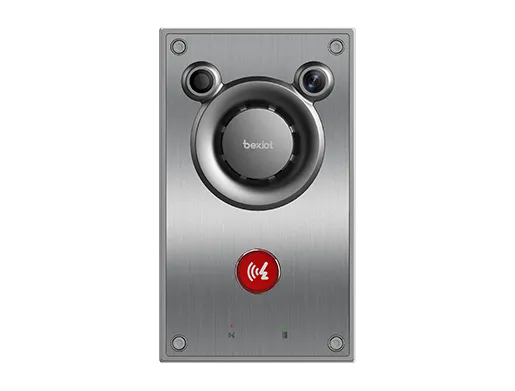
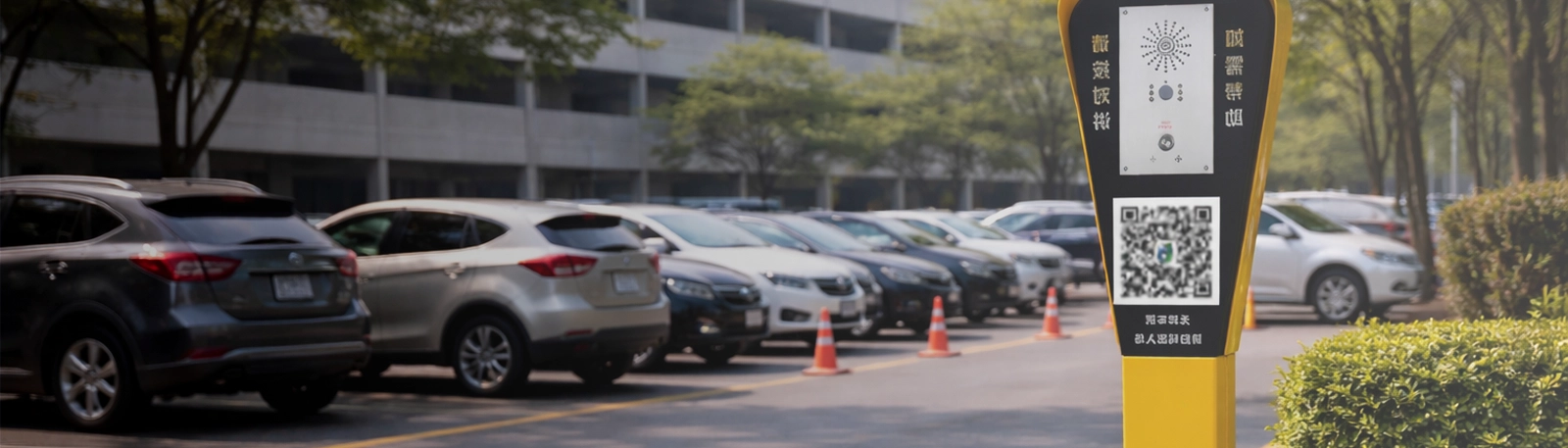
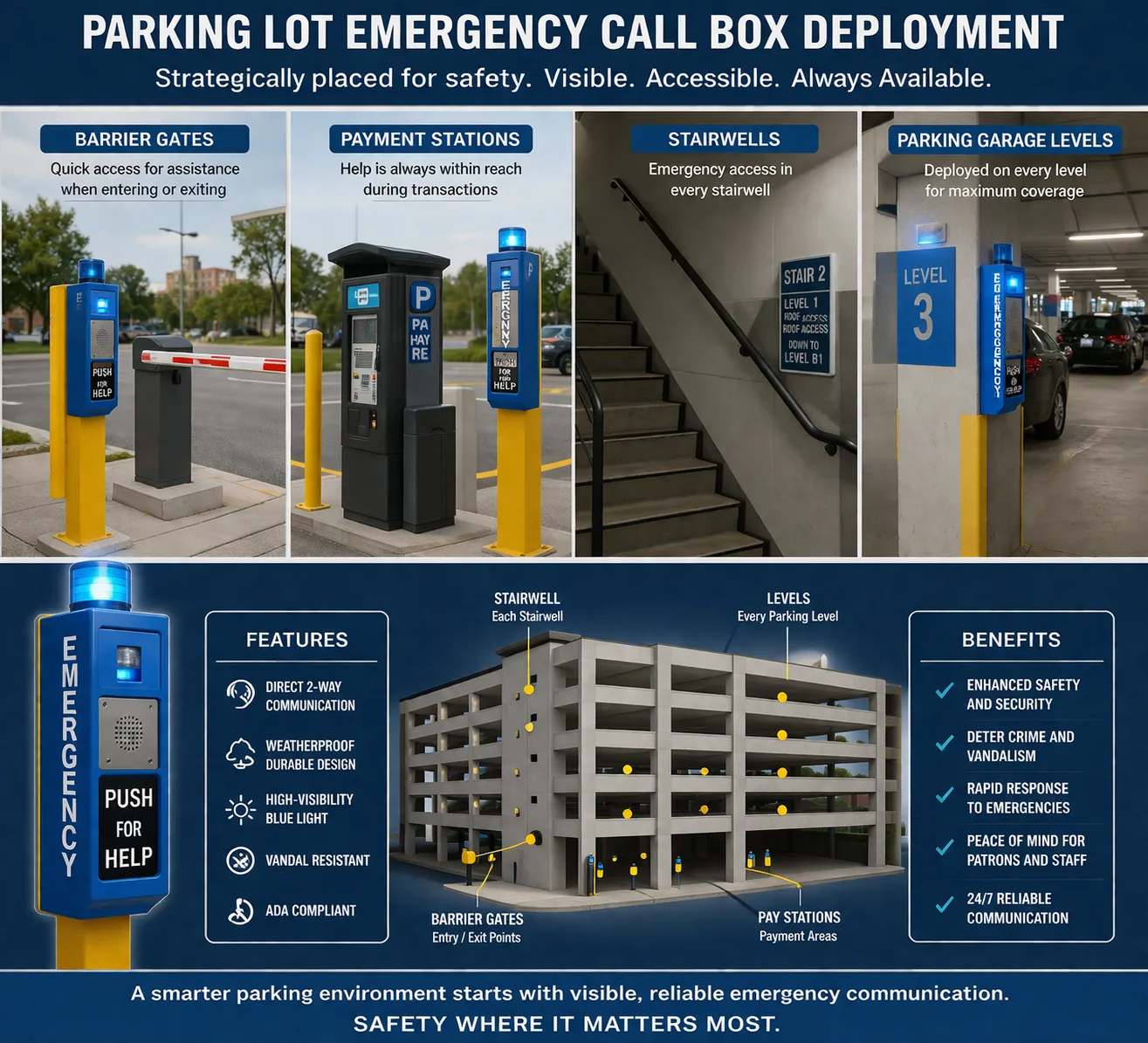
Emergency call boxes are the visible front end of the system. They can be installed at entrances, exits, barrier gates, payment stations, stairwells, pedestrian walkways, elevator lobbies, open lot sections, rooftop levels, and remote parking rows. In a parking setting, the device must be easy to identify, simple to use, and dependable in both busy daytime periods and quieter night-time conditions.
Hands-free operation is particularly important. A caller may be carrying bags, pushing a stroller, assisting another person, or feeling distressed. A hands-free intercom allows immediate communication without requiring a handset or complicated interaction. This not only improves usability for the public, but also makes the operator’s job easier by opening a direct voice channel the moment the call is answered.
One of the biggest advantages of a modern parking lot system is that the call box does not need to remain an isolated endpoint. By integrating SIP intercom devices with the IP PBX or IP telephone system, parking operators can route calls intelligently and make emergency communication part of the wider site voice network. That means a call can ring a control desk, a duty office, a supervisor group, or multiple endpoints at once based on how the site is organized.
This telephone system convergence supports practical functions that directly improve response efficiency. Group ringing reduces the chance of missed calls. Call forwarding helps operators redirect traffic outside normal staffing hours. Transfer functions allow the call to move from customer service to security or maintenance without forcing the caller to start over. Recording and event logs help management review incidents later. For multi-building or multi-site operators, the IP PBX also makes it easier to connect parking communication into a unified extension network.
In a parking facility, the people who can physically respond are often not the ones sitting in front of a desk phone. They are patrol guards, parking attendants, mobile maintenance teams, or shift supervisors moving through the site. This is why radio dispatch integration matters so much. Once the call is understood, the control room must be able to notify mobile staff immediately and give them clear instructions without leaving the communication workflow.
When the radio layer is integrated with the wider system, the control center can coordinate desk-based telephony and mobile field response more naturally. The operator can speak to the caller, view the related camera, and at the same time alert the nearest patrol group or maintenance team through the radio channel. This is especially valuable in larger garages, multi-level structures, and open parking areas where response time depends on mobility.
Parking communication is not only about one-to-one response. Some incidents require one-to-many communication. A blocked lane, a disabled payment area, a temporary closure, a fire-related evacuation, or a security event may require staff or visitors in a specific zone to receive immediate instructions. That is where the public address system becomes part of the emergency workflow.
By integrating PA into the solution, operators can deliver live or pre-recorded messages to selected parking levels, entrances, exits, stairwells, or pedestrian areas. This helps avoid unnecessary site-wide broadcasts while still supporting clear local guidance. In normal operation, the same system can also be used for service messages and traffic management announcements, which gives the deployment value beyond emergency response alone.
Emergency call boxes for garages, open lots, stairwells, and pedestrian areas
Hands-free SIP intercom terminals for direct voice communication
IP PBX and IP phone integration for routing, transfer, group ringing, and logging
Radio dispatch connectivity for patrol, security, and mobile maintenance teams
Public address integration for zone-based instructions and emergency announcements
CCTV linkage for real-time visual verification
Visual indicators for local awareness and clear call point identification
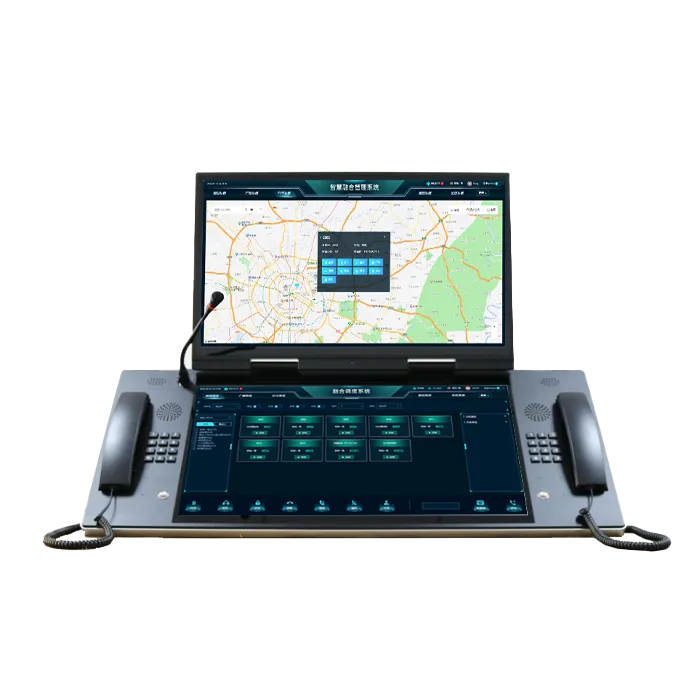
Centralized software for monitoring, event handling, and system management
The first function of the system is to make help easy to reach. A driver at a barrier gate may need immediate support if the gate does not open. A visitor may need assistance in a stairwell or at a payment machine. Someone may need urgent help because of a medical issue or personal security concern. The emergency call box provides a direct, unmistakable point of contact that works even when a person does not know where to call or who should answer.
This matters because many parking incidents begin as service issues and then become safety issues. A person stranded in a poorly occupied section of the garage may begin with a routine assistance request, but the operator still needs the tools to escalate quickly if the situation changes. A modern solution supports that shift without forcing the site to treat every call as the same type of event.
Once the call is received, the next priority is understanding. Two-way hands-free voice allows the operator to ask what happened, assess urgency, and decide what kind of help is required. This reduces guesswork and improves the quality of the response. The caller does not need to search for numbers, and the operator does not need to rely only on a silent alarm signal.
In practice, this also reassures the caller. The person knows the system is active, someone has answered, and help is being organized. In parking environments, where callers may feel isolated or exposed, that immediate human connection can be just as important as the technical response itself.
Telephone system integration turns the emergency call box into part of the site’s operational voice network. Calls can follow time-based routing rules, ring multiple desks at once, transfer to specific teams, and escalate automatically when the first recipient does not answer. This is especially useful in facilities where security, parking operations, customer service, and maintenance all participate in incident handling.
From an operational point of view, this also makes the system more sustainable. Staff can work through familiar phone workflows, and management can keep emergency communication aligned with the broader site telephony structure instead of maintaining a separate and isolated voice path.
When an incident requires someone to go to the scene, radio integration becomes critical. The control room can notify patrol staff, security officers, parking attendants, or technical teams through their field communication channels without breaking the response flow. This saves time and helps ensure that the responder on the ground receives consistent information.
It also supports group coordination. If more than one team needs to be informed, such as security and maintenance at the same time, the operator can use the dispatch framework to synchronize the response rather than making a chain of separate calls.
Parking environments often require communication beyond the original caller. Integrated public address allows operators to warn people away from a blocked area, provide guidance during equipment outages, support movement control, or issue emergency instructions during more serious events. The ability to target individual levels, gate areas, or pedestrian routes is especially valuable because it keeps communication relevant and avoids unnecessary disruption elsewhere.
This also helps unify routine operations and emergency handling. The same integrated audio infrastructure can support service communication during normal hours and clearer safety messaging when the situation becomes more urgent.
The final layer is centralized control. A parking lot emergency communication system works best when the operator can see calls, locations, device status, camera views, and response actions in one place. Instead of working across separate phone screens, radio consoles, PA interfaces, and CCTV windows, the control room can manage the event through one coordinated workflow.
This not only improves live response. It also creates stronger event traceability. Logs, recordings, location history, acknowledgements, and operator actions can be reviewed later for training, compliance, and continuous improvement.
A driver, visitor, or staff member presses the emergency call box button.
The platform identifies the exact parking zone, level, or endpoint location.
The operator opens a hands-free voice session to assess the issue.
The call can be routed or transferred through the IP PBX if additional support is needed.
Field teams are dispatched through the radio communication layer.
PA announcements or local guidance are activated when wider communication is required.
The event is logged, tracked, and reviewed through the centralized management platform.
The strongest parking lot emergency systems do not treat phones, radios, announcements, and help points as separate tools. They make them work together as one response process.
These are some of the most active and operationally sensitive areas in any parking facility. Calls from these points may involve access problems, payment disputes, vehicle issues, or safety concerns. Because traffic flow is involved, fast communication matters not only for the person calling but also for the wider operation of the site.
Integrating the call point with telephony, video, and dispatch allows the control room to resolve routine cases quickly while still being prepared to escalate more serious incidents when needed.
Pay-on-foot machines, pedestrian exits, and access corridors are common places for users to experience confusion, delay, or vulnerability. These are often transition points where visitors are carrying belongings, checking payment instructions, or moving between the garage and the surrounding site. Help points here support both convenience and safety.
Because these locations often experience short but frequent interactions, voice clarity and clear call routing are particularly important. The operator needs to resolve many calls efficiently while still being able to recognize the few that require a more urgent response.
These areas are often where personal security concerns are felt most strongly, especially during off-peak hours. They are also places where medical incidents, falls, or suspicious activity may go unnoticed if there is no direct communication point available. Emergency call boxes in these spaces provide a clear way to request help and support faster location-based response.
They also benefit greatly from integration with CCTV and radio dispatch. The control room can verify the scene visually and direct mobile staff to the correct level or stair core without wasting time on manual clarification.
Open-air parking areas introduce additional challenges such as weather exposure, wider spacing between help points, and less physical enclosure. A remote zone may be used heavily during an event, partially occupied at night, or only intermittently supervised. This makes visibility, durability, and precise location tagging especially important.
In these environments, the combination of a visible call point, direct voice communication, and integrated mobile dispatch gives the site a far more reliable way to support public safety across distributed outdoor space.
When the emergency call box system is integrated into the IP PBX, calls can follow the same disciplined routing logic as the rest of the facility’s communication environment. This allows parking operations, customer support, security, and maintenance teams to participate in one structured call flow rather than responding through ad hoc workarounds.
For sites that already use IP telephony, this also simplifies management. Operators can use familiar endpoints, administrators can apply defined call policies, and the emergency communication system becomes part of a broader and more manageable voice strategy.
Desk phones are important, but they do not move. In parking facilities, the people who solve problems are often on foot or in vehicles. Radio dispatch integration helps bridge that gap by connecting fixed call handling with mobile response. The operator can translate a voice request into direct field action in the same moment the event is understood.
This is especially valuable in larger car parks, campus parking systems, event venues, hospitals, and transport-related parking sites where mobile teams already play a central role in safety and operations.
Public address is often underestimated in parking environments. In reality, it can play a major role in keeping traffic moving, reducing confusion, and supporting safe behavior during disruptions. When linked to the wider communication system, announcements become part of a coordinated operational toolset rather than a separate emergency-only function.
Becke Telcom can integrate parking lot emergency call boxes, SIP intercom terminals, IP PBX systems, desk phones, radio dispatch, public address, CCTV linkage, and centralized management software into one unified communication framework. This helps operators connect fixed call points, desk-based telephony, mobile field teams, and site-wide audio guidance through a response model that is easier to manage and more effective in real use.
The most immediate benefit is that help becomes easy to find and easy to reach. Visitors do not have to guess who to call or where to go. Operators gain clearer information earlier, which helps them respond with more confidence and less delay. In parking environments, that directly improves both safety performance and user experience.
A visible and responsive communication system also changes how the parking facility feels. It gives the public greater confidence that assistance is available, especially during low-occupancy hours or in areas where people may otherwise feel isolated.
Because the solution integrates telephony, intercom, radio dispatch, and PA, it reduces the fragmentation that slows real response. Operators can understand the event, route communication intelligently, notify mobile staff, and issue guidance without jumping across unrelated systems.
This is valuable not only in emergencies but also in day-to-day parking operations where efficiency, consistency, and quick issue resolution all matter.
Centralized records, call history, response logs, and location-based event tracking give management a clearer picture of what is happening across the facility. Over time, this supports better staffing decisions, better incident review, and better maintenance planning.
Faster emergency calling and assistance across parking areas
Clear location identification for more accurate response
Smarter call handling through IP PBX integration
Better field coordination through radio dispatch
Targeted guidance through integrated public address
Improved visual verification through CCTV linkage
More consistent incident handling through centralized workflows
Stronger operational traceability through logs and recordings
A parking lot emergency call box system should be planned as a complete emergency communication and operational coordination solution rather than a standalone set of call points. In real parking environments, safety depends on more than the ability to place a call. It depends on how effectively the site can connect that call with voice verification, precise location awareness, telephone routing, radio-based field dispatch, public guidance, and centralized command.
By integrating emergency call boxes with SIP intercom, IP PBX telephony, radio communication, public address, CCTV, and centralized management, parking operators can create a more responsive, more connected, and more dependable communication environment. The result is better public support, faster incident handling, and stronger control across the entire parking facility.
Its purpose is to give drivers, visitors, and staff a fast way to request help while allowing the operator to identify the location, communicate with the caller, and coordinate response actions more effectively.
IP PBX integration improves call routing, group ringing, transfer, escalation, and recording. It helps make emergency call handling part of the wider site telephony workflow instead of leaving it as a separate isolated system.
Radio dispatch helps the control room notify mobile patrol, security, or maintenance teams immediately after the call is assessed. This shortens field response time and supports better coordination across large or multi-level parking areas.
Yes. Integrated PA allows operators to broadcast instructions, warnings, service updates, or emergency messages to selected levels, zones, or pedestrian areas when broader communication is needed.
Common locations include entrances, exits, barrier gates, payment stations, parking levels, stairwells, elevator lobbies, pedestrian routes, and open or remote parking zones.
Yes. CCTV linkage helps operators verify the scene visually, understand the environment around the call point, and support faster and more accurate decision-making during live incidents.