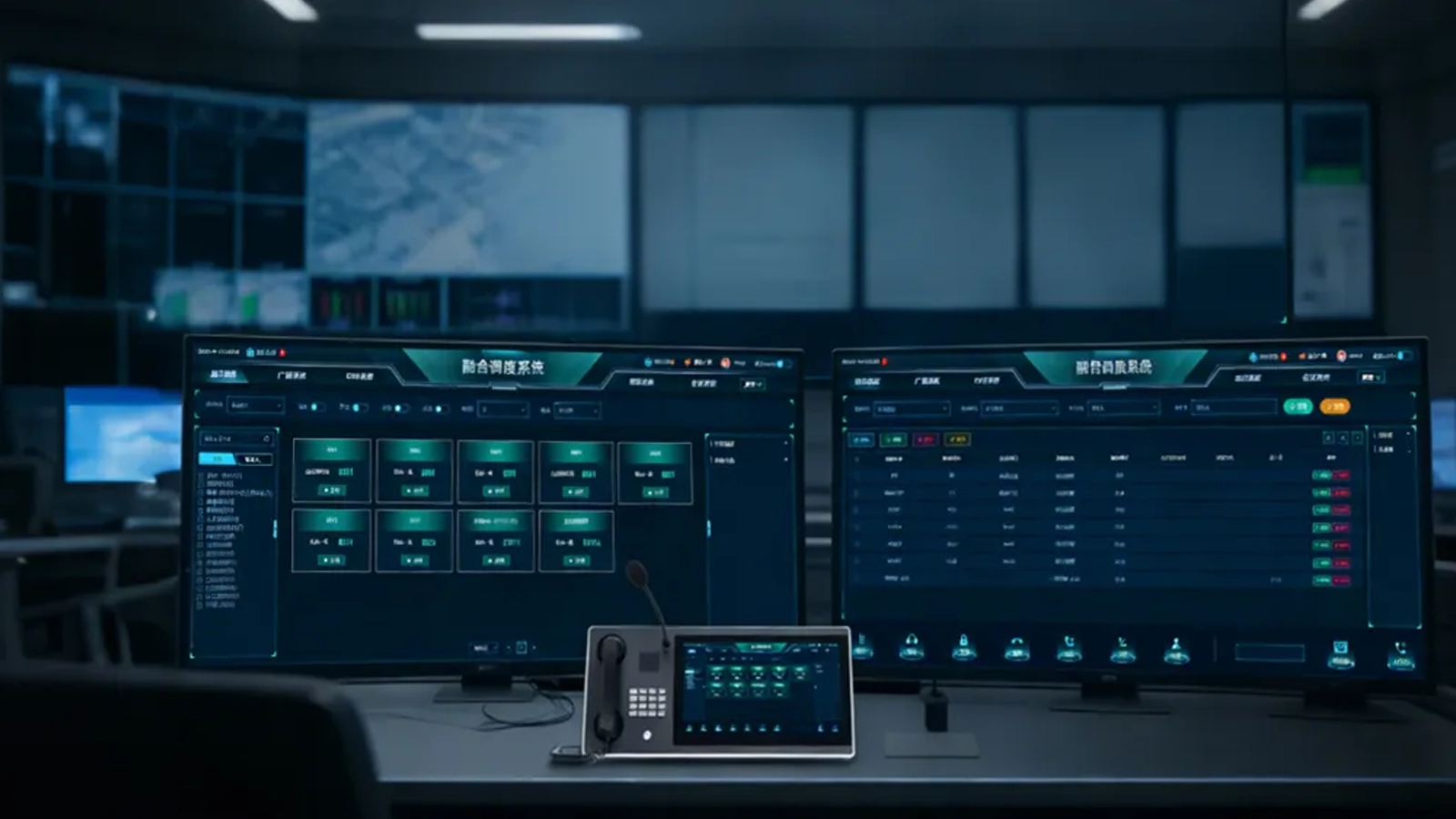


The MEB92 High-Power SDR MANET Backpack Base Station is a portable broadband relay device designed for emergency communications, rescue command, UAV data transmission, outdoor engineering, maritime operations and other field applications that require a higher-power mobile networking node.
Based on a software-defined radio architecture, the MEB92 uses decentralized multi-hop MANET technology to establish wireless communication without relying on a fixed central node. Compatible devices can communicate directly while participating nodes provide dynamic routing and relay forwarding across the network.
Compared with lower-power handheld or backpack MANET nodes, this version provides 10 W × 2 transmit power, making it more suitable for deployment as a portable relay, temporary field base station or higher-power node within a distributed MANET system.
The device supports backpack and tripod deployment, one-touch startup, removable battery operation, UAV airborne applications, ground-station use and relay deployment. Multiple compatible nodes can establish a wireless multi-hop network within seconds while carrying voice, data, video and positioning information across the same broadband network.
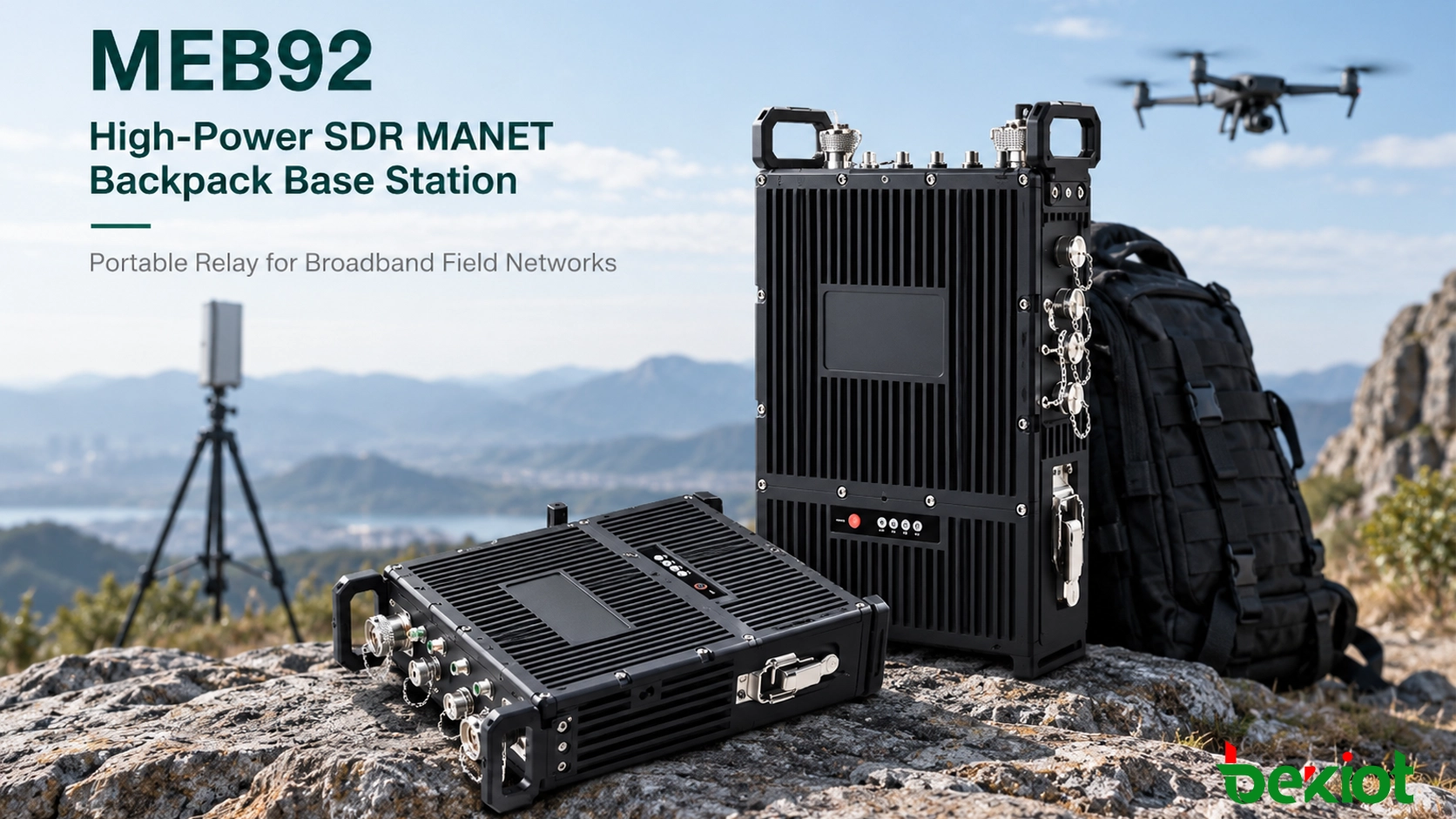
The high-power MEB92 configuration provides 10 W × 2 transmit power. This differentiates it from lower-power portable MANET terminals and makes it more suitable for use as an important relay or field networking node.
Actual communication performance still depends on operating frequency, antenna configuration, terrain, interference, deployment height and overall network topology. The transmit-power specification should therefore not be interpreted as a fixed communication-distance guarantee.
MEB92 uses a decentralized MANET architecture. Compatible devices can establish communication without requiring traffic to pass through a conventional central base station.
Each participating node can form part of the routing structure, allowing the network to support direct communication as well as multi-hop relay forwarding.
The network supports dynamic routing as participating nodes move or communication conditions change. When a direct path is not available, traffic can be forwarded through other compatible nodes within the MANET network.
This capability is especially relevant for distributed field environments where personnel, vehicles, UAVs and temporary relay positions may change throughout an operation.
The unit can be carried as backpack equipment or deployed on a tripod. This gives field teams the flexibility to transport the node into an operating area and establish it at an appropriate communication position.
Backpack deployment is useful where the relay position needs to move with the operation, while tripod deployment provides an option for establishing a temporary stationary communication node.
MEB92 supports one-touch startup for rapid field deployment. Combined with decentralized networking, the unit can be brought online quickly when temporary communication resources are required.
The device uses a removable 25.2 V / 10.5 Ah battery. The manufacturer's technical specification lists approximately 6–8 hours of standby time.
The 6–8 hour figure should be treated specifically as the stated standby specification. It should not be presented as guaranteed continuous full-load operating time.
MEB92 can transport voice, data, video and positioning information through the same broadband MANET infrastructure.
This multi-service capability allows the network to support applications such as field video transmission, operational data exchange, mobile positioning and communication between distributed teams rather than functioning only as a conventional voice radio system.
Same-frequency networking can support up to 64 nodes. Supported network topologies include star, linear, mesh and hybrid dynamic configurations.
This allows the high-power backpack base station to operate as part of a larger system containing portable terminals, relay nodes, airborne equipment and ground communication devices.
A backpack format allows the MEB92 to be transported into areas where installing a fixed communication station is impractical. After arriving at the site, the unit can remain with a mobile team or be positioned as a relay node according to the network requirement.
The higher transmit-power configuration is especially suited to deployments where the backpack device is expected to play a more important role in the relay structure than a small user terminal.
Tripod deployment allows MEB92 to operate as a temporary field networking point. This can be useful around incident command locations, outdoor engineering sites, patrol areas and other environments where communication infrastructure is required only for the duration of an operation.
Once positioned, the unit can remain as part of the local network while handheld, vehicle-mounted or airborne nodes continue to move around the operating area.
A field network does not need every node to maintain a direct communication path to one central location. Additional MANET nodes can be introduced to provide intermediate forwarding paths between separated areas.
MEB92 can participate in this relay structure and help form star, linear, mesh or mixed network configurations according to the deployment.
The purpose of adding a relay is not simply to increase the number of nodes. A relay should solve a real communication problem such as separation between operating areas, terrain obstruction or an unsuitable direct path.
The manufacturer's product description identifies UAV airborne, ground-station and relay deployment among the supported configurations.
Compatible airborne and ground nodes can therefore be incorporated into a wider MANET system according to the project architecture, allowing different mobile communication devices to participate in the same decentralized network.
The standard operating frequency is 1350–1450 MHz. Frequencies from 350 MHz to 6 GHz can be customized, and optional frequency-hopping configurations are available.
Operating frequency should be selected according to project requirements and applicable spectrum regulations in the deployment country or region.
MEB92 supports channel bandwidth settings of 1.25, 2.5, 5, 10 and 20 MHz. The bandwidth can be adjusted according to available spectrum and network requirements.
Different channel bandwidths provide flexibility when balancing available spectrum resources and the amount of data that needs to be transported across the field network.
Supported modulation modes include BPSK, QPSK, 16QAM, 64QAM and 256QAM with adaptive operation.
Adaptive modulation allows the radio system to use different transmission modes as wireless conditions change.
The specified transmission capability is 50 Mbps at 20 MHz channel bandwidth, with receiver sensitivity specified at -103 dBm at 5 MHz.
Actual application throughput can vary according to RF conditions, network topology, interference, relay hops and simultaneous network traffic. The specified maximum data rate should therefore not be treated as guaranteed end-to-end application throughput.
For deployments carrying live video, capacity planning should consider video bitrate, the number of simultaneous streams and other network traffic rather than relying only on the maximum radio transmission specification.
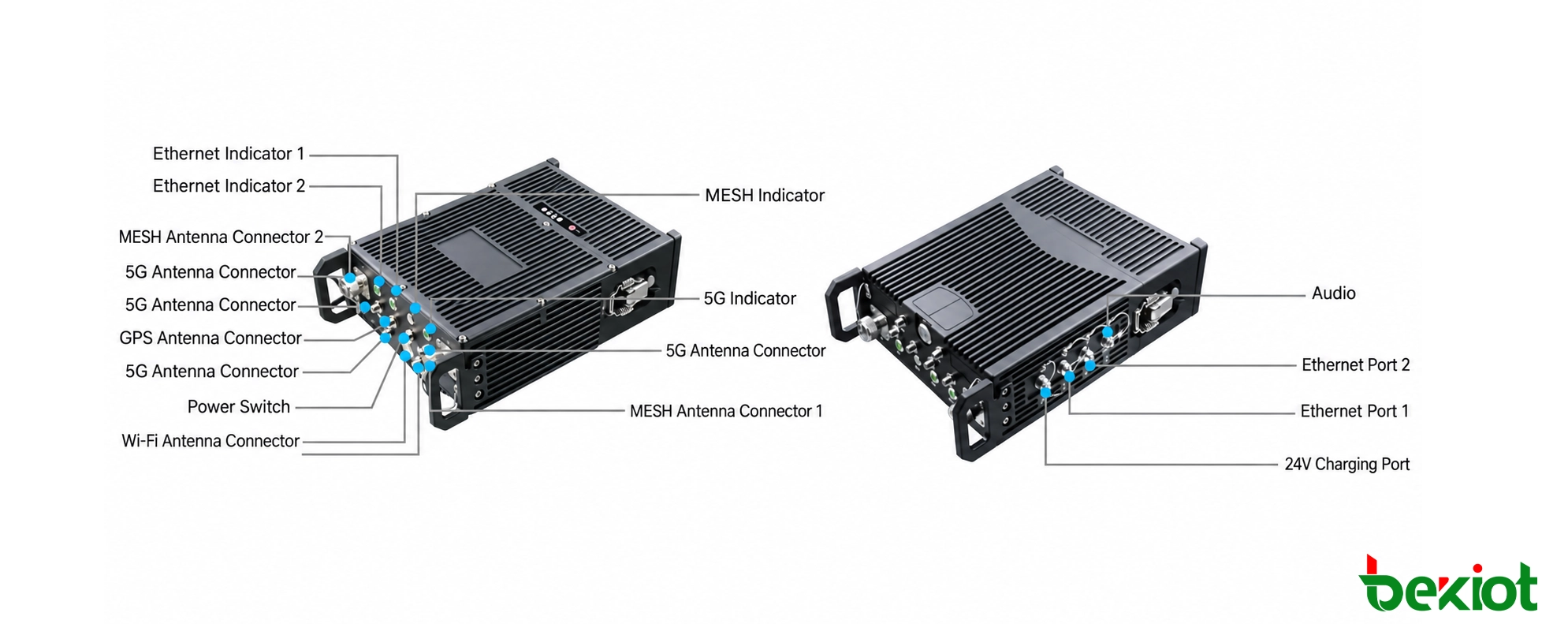
Two N-type female antenna interfaces are provided for MESH communication. The dual-interface configuration supports the radio architecture used by the MANET system.
The unit provides one SMA interface for GPS, four SMA interfaces for 5G antennas and one SMA interface for Wi-Fi.
These interfaces allow MEB92 to participate in a broader communication architecture that combines MANET networking with positioning and other communication functions.
Two 100 Mbps Ethernet interfaces are available for wired IP connectivity. Compatible network equipment can be connected according to the design of the complete communication system.
At a temporary command location, these interfaces can provide physical connectivity for compatible computers, video equipment or other IP devices that need access to the field MANET network.
The device includes one audio interface and one SIM card slot. A dedicated switch is also provided as part of the functional interface group.
The interface specification provides one DC 24 V power input.
Status indicators include one MESH indicator, two Ethernet indicators and one 5G indicator.
MEB92 can be deployed during emergency communications and rescue command operations where temporary broadband wireless networking is required.
Backpack and tripod deployment allow communication nodes to be transported into an incident area and positioned according to the changing requirements of the response operation.
As frontline teams move and the incident area develops, additional MANET nodes can be introduced without requiring every user to maintain a direct connection with one fixed communication point.
The manufacturer identifies emergency communication vehicles among the target applications. The portable base station can participate in a MANET network involving mobile field nodes and communication equipment associated with temporary command operations.
In this type of deployment, a communication vehicle can provide command-side resources while backpack nodes and other compatible devices extend networking closer to the field operation.
During disaster response, communication resources may need to be deployed rapidly across a wide or changing area. MEB92 can participate in a decentralized multi-hop network to transport voice, video, data and positioning information between compatible devices.
The portable form factor is useful when relay positions cannot be fully determined before teams arrive at the site.
The source application example describes the use of MESH personnel terminals, relay equipment and a dispatch platform to establish an audio and video command network across high-rise residential buildings, underground parking areas, large commercial complexes and metro environments.
In such deployments, the IP network can also provide a transport path for compatible firefighter monitoring equipment and field sensors, including information related to personnel status, air supply and hazardous-gas monitoring.
Portable relay nodes can be positioned according to the actual communication environment, allowing the network architecture to respond to physical obstacles and changes in the operating area.
UAV video and data transmission is one of the applications listed for the product. Compatible UAV nodes and MEB92 ground equipment can participate in a wider MANET communication architecture according to project requirements.
In an air-ground deployment, airborne nodes can contribute video and operational data while ground relay nodes provide additional paths toward other field or command-side equipment.
Outdoor power projects and surveying operations can require temporary communications across locations where public or fixed infrastructure is limited.
Portable MANET equipment can provide a wireless transport network for voice, video and data between distributed field locations.
Because the equipment can be relocated, the communication network can move as the project advances from one work area to another.
MEB92 is also intended for private communication networks used in urban patrol operations. Portable relay equipment allows the communication architecture to be adapted according to the operating area.
A relay node can be moved when patrol routes or temporary security zones change rather than remaining tied to one permanent installation point.
Shipboard transmission is listed among the product's application areas. The manufacturer's maritime rescue example describes MESH nodes being deployed across a primary vessel, smaller vessels, UAVs and helicopters to create a multi-hop communication network.
This type of architecture allows multiple mobile platforms to participate in the same temporary broadband communication system during maritime operations.
Selecting a higher-power backpack base station should begin with the role the node needs to perform inside the network rather than transmit power alone.
A field network primarily used for voice and positioning may have different requirements from one that needs to carry several video streams. The number of users, relay nodes and network hops also affects how the available radio capacity is shared.
Antenna placement is another important design factor. A higher-power radio installed in an obstructed location may not provide the same practical result as a carefully positioned node with a clearer radio path.
Tripod deployment can be useful when the node needs to remain at a selected location, while backpack deployment provides greater flexibility when the communication point needs to move with the operation.
Battery planning should also reflect the expected field duration. The published 6–8 hour figure is a standby specification rather than guaranteed full-load operating time, so extended operations should consider available charging or battery replacement arrangements.
The high-power MEB92 measures approximately 288 × 174 × 70 mm, excluding antennas, and weighs approximately 4 kg, also excluding antennas.
Compared with the lower-power MEB92-36 backpack relay, the larger enclosure, higher-capacity battery and increased power consumption reflect its different high-power field deployment role.
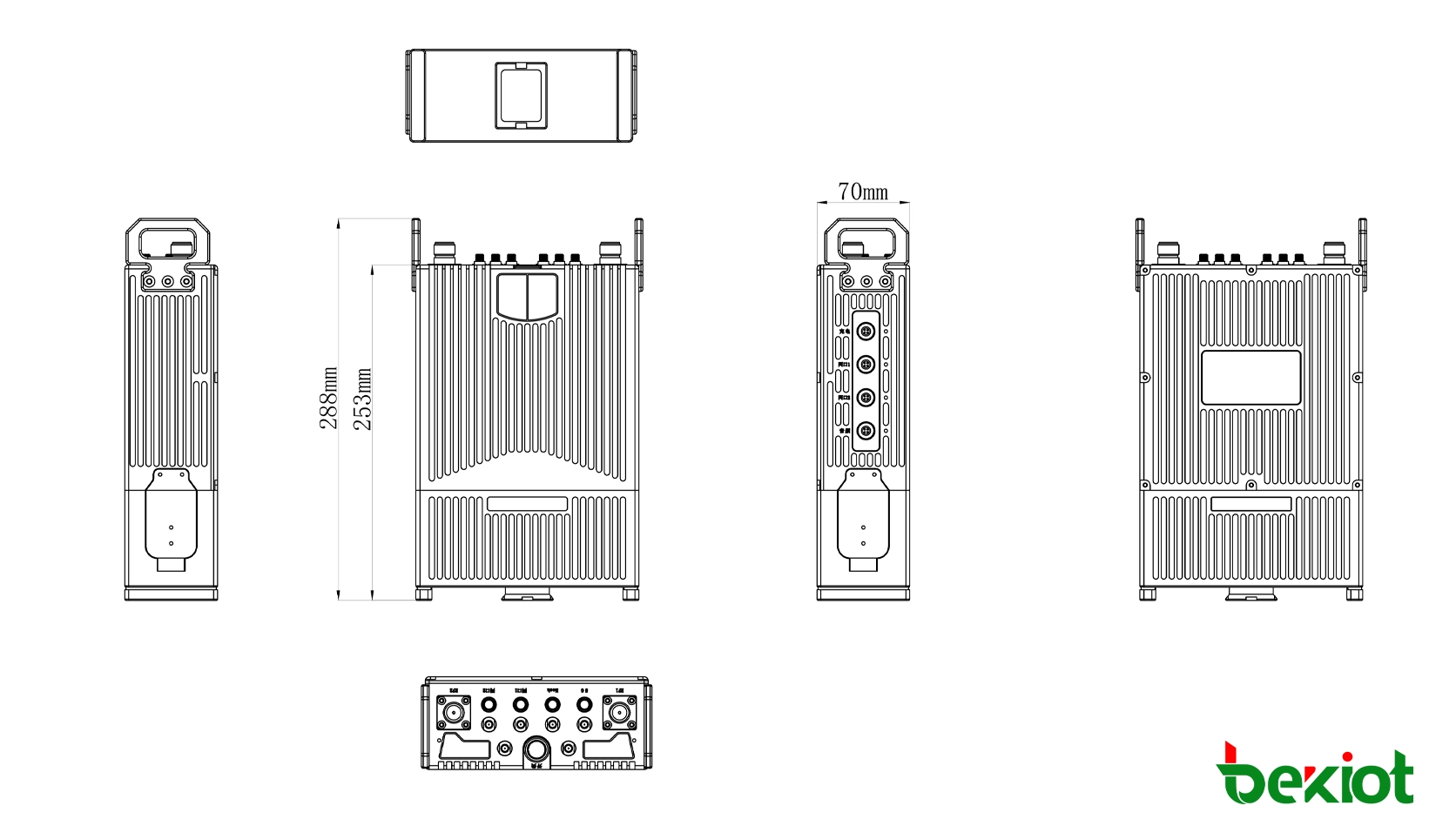
The high-power MEB92 is intended for a different role from the lower-power MEB92-36 backpack relay. Both products use SDR-based decentralized MANET networking and support up to 64 same-frequency nodes, but their RF, battery and physical configurations are substantially different.
| Specification | MEB92-36 Backpack Relay | MEB92 High-Power Backpack Base Station |
|---|---|---|
| Transmit Power | 2 W × 2 | 10 W × 2 |
| Maximum Channel Bandwidth | 20 MHz | 20 MHz |
| Transmission Capability | 50 Mbps @ 20 MHz | 50 Mbps @ 20 MHz |
| Dimensions | 207 × 152 × 44 mm | 288 × 174 × 70 mm |
| Weight | Approx. 1.7 kg | Approx. 4 kg |
| Battery | 12.6 V / 7 Ah | 25.2 V / 10.5 Ah |
| Average Power Consumption | 15 W | 66 W |
| Typical Role | Portable backpack relay | High-power portable relay / field base station |
The standard MEB92-36 is better suited to deployments where lower equipment weight and portability are important. The high-power MEB92 is intended for projects where the backpack node needs a higher RF configuration and can accommodate the corresponding increase in equipment size, battery capacity and power consumption.
The main difference is the RF and hardware configuration. The high-power MEB92 uses 10 W × 2 transmit power, compared with 2 W × 2 for MEB92-36. It also has a larger enclosure, a higher-capacity 25.2 V / 10.5 Ah battery and higher power consumption, making it more suitable for use as a substantial portable relay or temporary field base station.
No fixed communication distance is specified for the product. Practical coverage depends on operating frequency, antenna type and installation, antenna height, terrain, buildings, RF interference and the position of other MANET nodes. Coverage should therefore be evaluated according to the actual deployment environment.
No. The manufacturer identifies approximately 6–8 hours as standby time. It should not be interpreted as guaranteed continuous full-load operation, since actual battery duration can vary with transmit activity, traffic load, connected functions and operating conditions.
Yes. MEB92 provides two 100 Mbps Ethernet interfaces for compatible IP equipment. Computers, video devices or other network equipment can be integrated according to the IP configuration, bandwidth requirements and architecture of the complete communication system.
Project planning should confirm the permitted operating frequency, number and type of MANET nodes, required topology, expected voice, video and data traffic, antenna configuration, deployment environment, power requirements and whether handheld, backpack, vehicle-mounted or airborne nodes will operate together.
| Model | MEB92 |
|---|---|
| Product Type | High-Power SDR MANET Backpack Base Station |
| Radio Architecture | Software-Defined Radio (SDR) |
| Standard Frequency | 1350–1450 MHz |
| Custom Frequency | 350 MHz–6 GHz, customizable |
| Frequency Hopping | Optional |
| Transmit Power | 10 W × 2 |
| Channel Bandwidth | 1.25 / 2.5 / 5 / 10 / 20 MHz, adjustable |
| Modulation | BPSK / QPSK / 16QAM / 64QAM / 256QAM, adaptive |
| Transmission Capability | 50 Mbps @ 20 MHz |
| Receiver Sensitivity | -103 dBm @ 5 MHz |
| Network Capacity | Up to 64 nodes in same-frequency networking |
| Network Topology | Star / Linear / Mesh / Hybrid Dynamic |
| MESH Antenna Interfaces | 2 × N-type female |
| GPS Antenna Interface | 1 × SMA |
| 5G Antenna Interfaces | 4 × SMA |
| Wi-Fi Antenna Interface | 1 × SMA |
| Power Input | 1 × DC 24 V |
| Ethernet | 2 × 100 Mbps Ethernet |
| Functional Interfaces | Switch × 1 / Audio × 1 / SIM Card Slot × 1 |
| Status Indicators | MESH × 1 / Ethernet × 2 / 5G × 1 |
| Operating Temperature | -40°C to +55°C |
| Storage Temperature | -40°C to +85°C |
| Operating Humidity | 5%–95%, non-condensing |
| Dimensions | 288 × 174 × 70 mm, excluding antennas |
| Weight | Approx. 4 kg, excluding antennas |
| Battery Capacity | 25.2 V / 10.5 Ah |
| Battery Operating Temperature | -10°C to +55°C |
| Specified Standby Time | Approx. 6–8 hours |
| Peak Power Consumption | 110 W |
| Average Power Consumption | 66 W |