Selecting a cleanroom telephone requires more consideration than choosing a standard office communication device. In pharmaceutical manufacturing, semiconductor production, laboratories, and other controlled environments, communication terminals must provide reliable voice communication while matching cleaning procedures, installation requirements, and long-term maintenance plans.
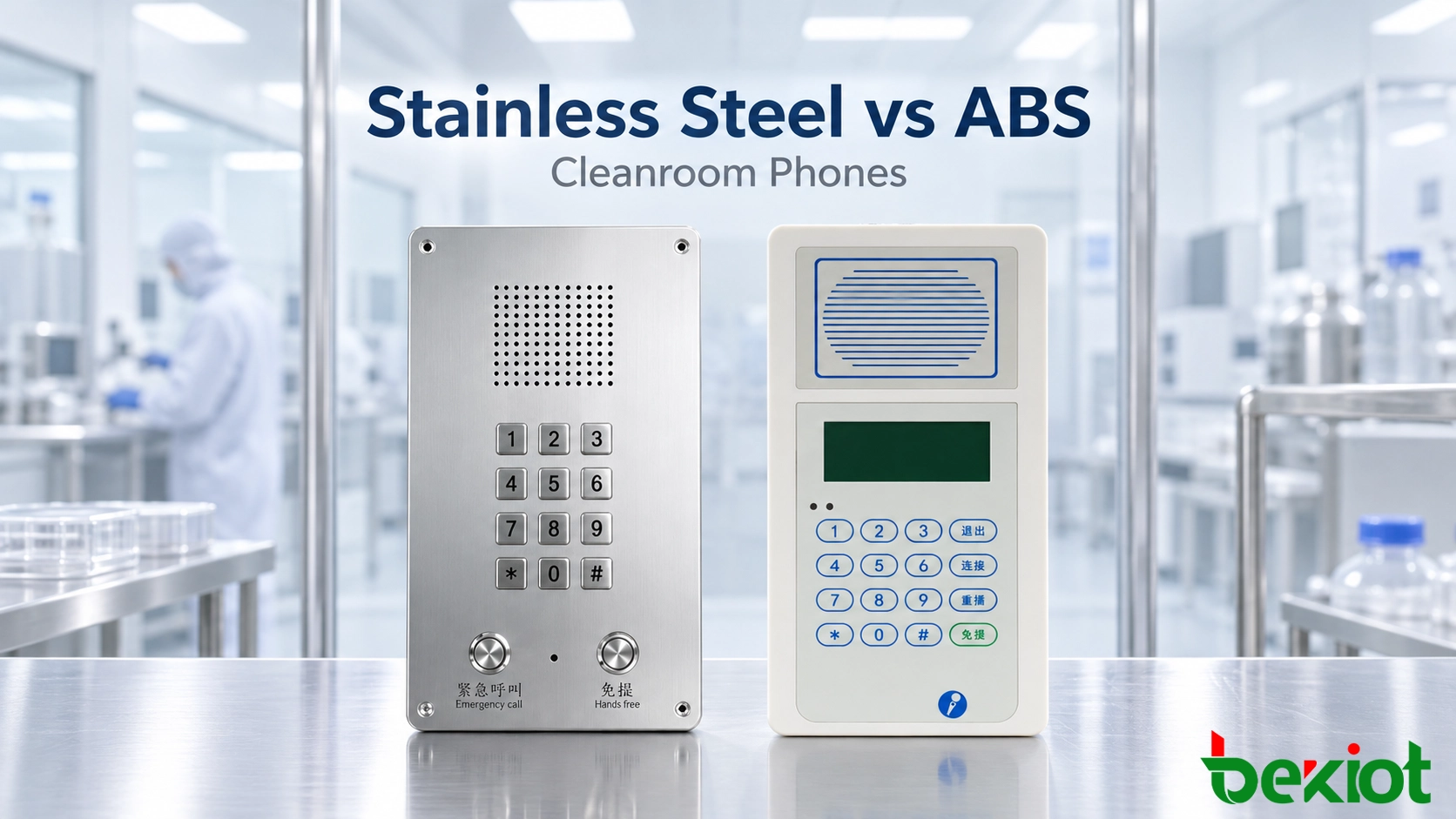
Stainless steel and ABS are two commonly used enclosure materials for cleanroom phones. Both materials can support SIP-based communication and hands-free operation, but they provide different advantages for different applications. Stainless steel focuses on durability and long-term protection, while ABS provides a lightweight and flexible option for controlled environments where deployment efficiency is important.
The best choice is not always the strongest material. Engineers should evaluate the complete application environment, including cleaning frequency, installation location, operating conditions, maintenance strategy, and expected service life before selecting a cleanroom telephone.
Why Cleanroom Telephone Material Matters
Cleanroom communication equipment operates in environments where reliability, cleanliness, and maintenance efficiency are important. Unlike ordinary office telephones, cleanroom phones may be exposed to regular cleaning procedures, protective gloves, continuous operation, and strict site management requirements.
The enclosure material directly affects several practical factors:
Resistance to daily wear and physical impact
Surface cleaning and maintenance requirements
Installation flexibility
Long-term operating stability
Equipment replacement planning
However, enclosure material is only one part of cleanroom telephone selection. The complete device design, including mounting method, communication protocol, surface structure, and system compatibility, should also match the project requirements.
Communication Requirements in Different Cleanroom Areas
Cleanroom environments are not identical. Different areas within the same facility may have different communication requirements depending on workflow, personnel activities, and equipment operation. A suitable cleanroom telephone should match the specific location where it will be installed.
Production and Manufacturing Areas
In pharmaceutical manufacturing, semiconductor facilities, and precision production environments, communication terminals are often used for coordination between operators, supervisors, and control rooms.
These locations usually require reliable devices that can withstand frequent daily operation. A stronger enclosure design can provide additional protection when the telephone remains installed in the same location for many years.
Laboratories and Research Areas
Laboratories may place more emphasis on installation flexibility and convenient access. Communication points may need to be added in different rooms according to research activities and facility layout changes.
In these applications, lightweight designs and flexible installation options can provide practical advantages during installation and future expansion.
Supporting Areas and Clean Corridors
Technical rooms, preparation areas, and clean corridors may require communication mainly for daily coordination and operational assistance.
These areas may not require the same level of mechanical protection as production zones, making flexible material selection an important consideration.
Stainless Steel Cleanroom Phones for Demanding Environments
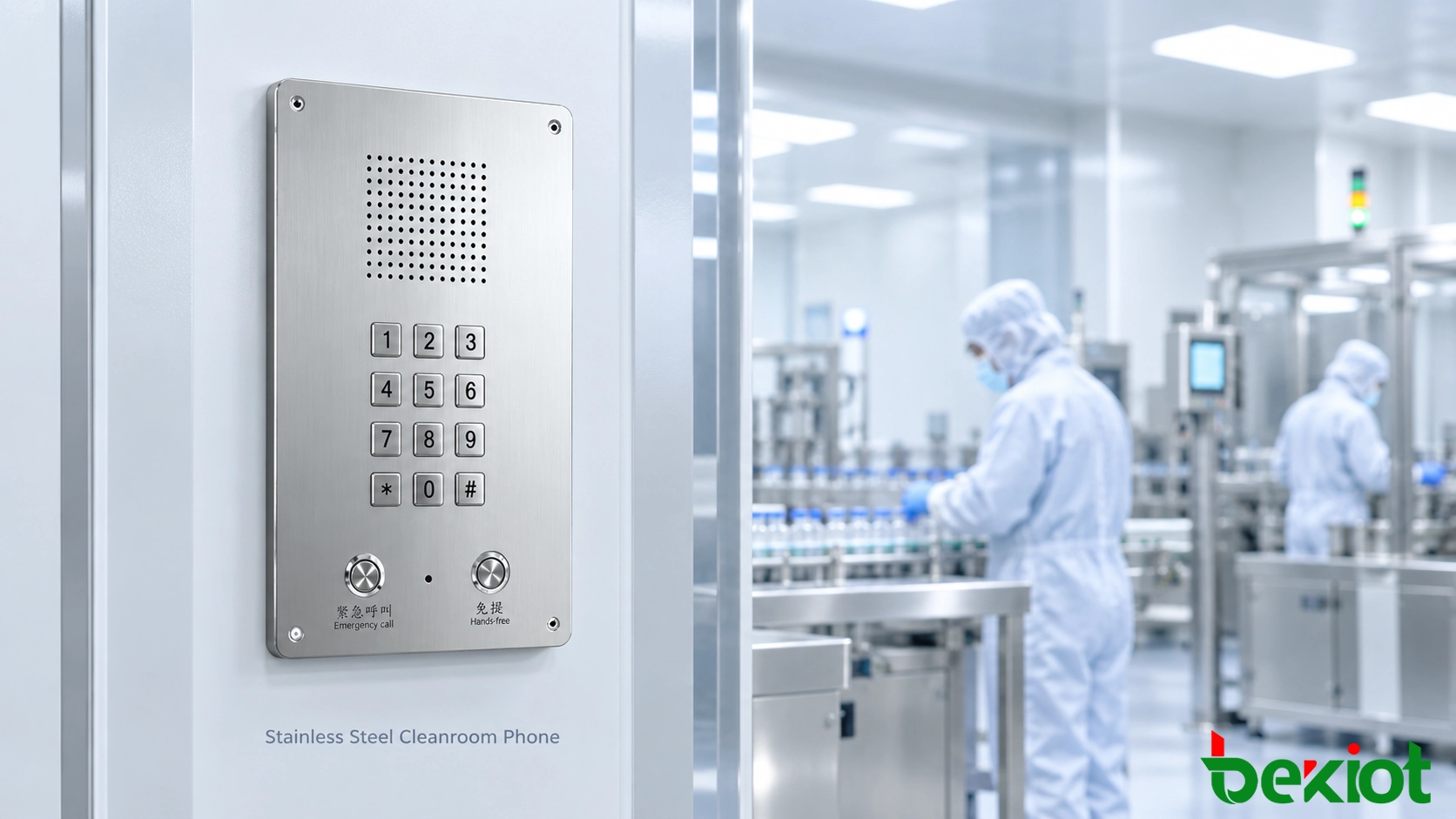
Stainless steel cleanroom phones are commonly selected for applications where durability, structural protection, and long-term reliability are priorities. The robust enclosure design makes them suitable for environments where communication equipment is expected to operate continuously under strict maintenance procedures.
Strong Mechanical Protection
Stainless steel housings provide high resistance against impact, wear, and daily operational stress. For facilities where communication availability is important, stronger physical protection can help reduce equipment replacement frequency.
Typical applications include:
Pharmaceutical production facilities
Semiconductor manufacturing areas
Precision manufacturing environments
Industrial laboratories
Cleaning and Surface Maintenance Advantages
Cleanroom equipment requires regular cleaning and maintenance procedures. Stainless steel provides a durable surface that is suitable for repeated wiping and routine maintenance.
The material can help maintain the appearance and structural stability of the communication terminal during long-term operation. However, material selection should always be considered together with the complete product design and facility requirements.
Corrosion Resistance and Long-Term Stability
In addition to mechanical strength, stainless steel provides stable surface performance during long-term use. Cleanroom communication equipment may experience humidity changes, cleaning processes, and repeated operator contact.
For facilities that prefer long-term fixed installation and predictable maintenance planning, stainless steel cleanroom phones can provide additional value throughout the equipment lifecycle.
Related Product: BT26 Cleanroom SIP Phone
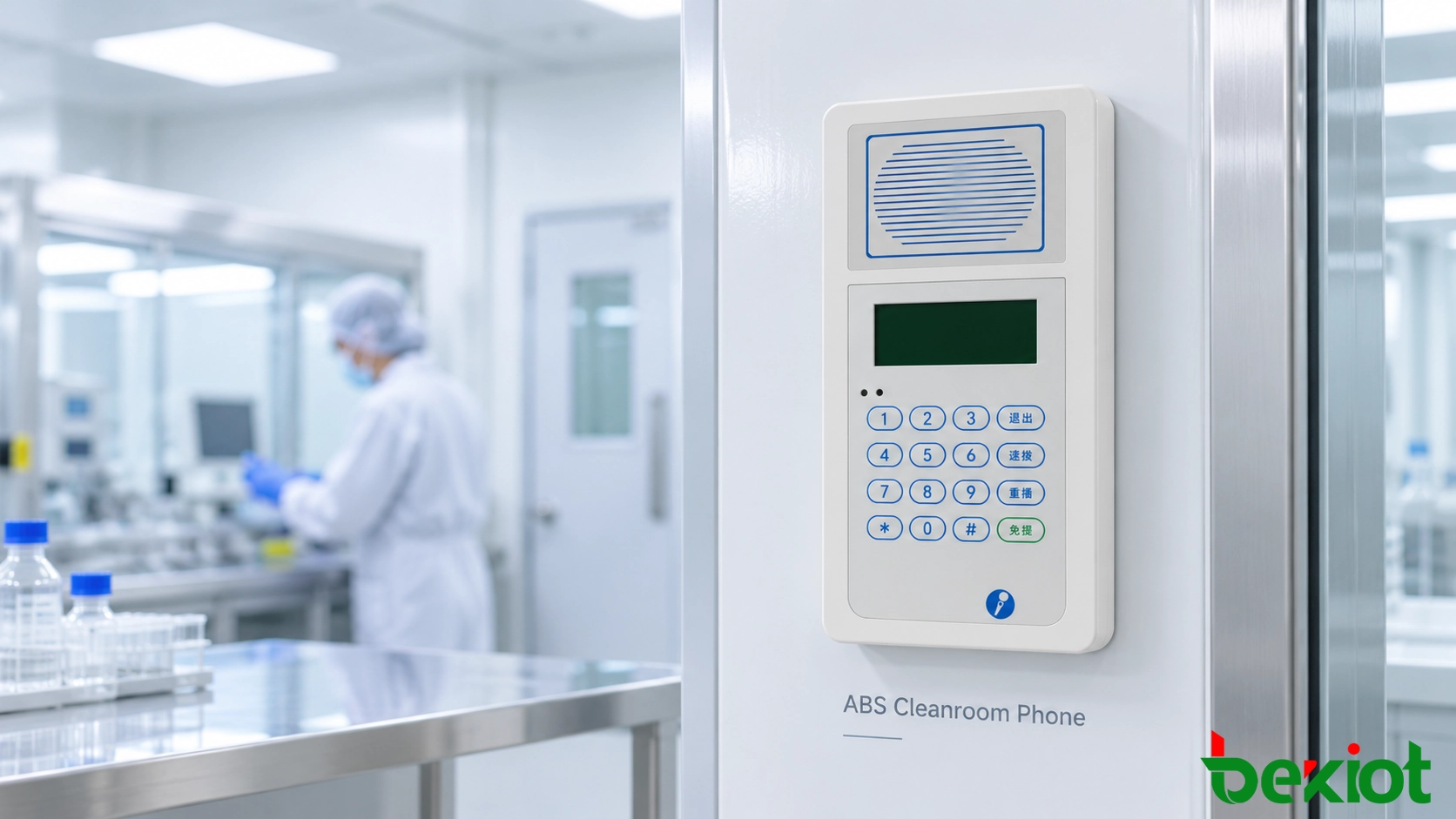
ABS Cleanroom Phones for Flexible Deployment
ABS cleanroom phones provide a practical alternative for applications where lightweight construction, flexible installation, and efficient deployment are important considerations.
Lightweight Structure and Installation Flexibility
Compared with stainless steel models, ABS housings are lighter and easier to handle during installation. This can be beneficial when a project requires multiple communication points across different rooms or supporting areas.
Suitable for General Controlled Environments
ABS cleanroom phones can provide reliable communication functions for laboratories, controlled production areas, and other environments where maximum mechanical protection is not the primary requirement.
Selecting ABS does not mean sacrificing communication reliability. SIP-enabled ABS cleanroom phones can still connect with IP PBX systems, softswitch platforms, and other SIP communication solutions.
Practical Choice for Multiple Communication Points
Large facilities may require many communication terminals across different areas. In these projects, installation efficiency and deployment flexibility can influence the overall system design.
ABS cleanroom phones provide an effective option when the environment requires reliable communication but does not require the highest level of mechanical protection.
Related Product: BT26 ABS Clean Room SIP Phone
Stainless Steel vs ABS Cleanroom Phones Comparison
Stainless steel and ABS cleanroom phones can both provide reliable communication functions, but their advantages are different. The correct selection depends on the operating environment, maintenance requirements, installation conditions, and expected service life.
| Category | Stainless Steel Cleanroom Phone | ABS Cleanroom Phone |
|---|---|---|
| Material Strength | Higher mechanical protection for demanding environments | Suitable for general controlled environments |
| Surface Maintenance | Durable surface suitable for frequent cleaning procedures | Suitable for regular cleaning and maintenance |
| Installation | Suitable for fixed and long-term installation | Lightweight design for flexible deployment |
| Operating Environment | Production areas and demanding industrial environments | Laboratories, supporting areas, and general controlled spaces |
| Lifecycle Consideration | Higher initial investment with long-term durability advantages | Efficient deployment where flexibility and installation cost are important |
Does Material Determine Cleanroom Compatibility?
When selecting a cleanroom telephone, it is important to understand that enclosure material alone does not determine whether a device is suitable for a specific environment.
A stainless steel housing does not automatically mean that a telephone is suitable for every cleanroom classification. Likewise, an ABS housing does not automatically exclude a device from controlled environments.
Engineers should evaluate the complete communication terminal design, including:
Surface structure and cleaning requirements
Installation method and sealing considerations
Communication system compatibility
Daily operation requirements
Facility specifications and project standards
The enclosure material should support the overall design objective rather than being considered as the only selection factor.
How to Select Between Stainless Steel and ABS Cleanroom Phones
Choosing the correct cleanroom telephone material requires a practical evaluation of the application environment. A structured selection process can help avoid choosing a device that does not match the actual operational requirements.
Evaluate the Operating Environment
The first step is understanding where the telephone will be installed and how frequently it will be used.
Areas with frequent operator interaction, intensive cleaning procedures, or higher physical stress may benefit from stainless steel construction. Locations with lighter communication requirements may use ABS models effectively.
Consider Installation Requirements
Installation conditions can influence the most suitable telephone design. Flush-mounted cleanroom phones are often selected where wall integration, space management, and easy surface cleaning are important.
Wall-mounted models can provide more flexibility when adding communication points to an existing facility or when installation conditions change.
Plan Long-Term Maintenance
Cleanroom communication terminals are usually installed as long-term infrastructure. Maintenance planning should consider cleaning procedures, spare equipment requirements, replacement difficulty, and future system expansion.
The lowest initial purchase cost is not always the lowest total cost throughout the equipment lifecycle. A suitable material choice should balance initial investment, reliability, and future maintenance requirements.
Total Cost Considerations for Cleanroom Phone Selection
Material selection should not only be based on the initial purchase price. In industrial projects, the total cost of ownership is influenced by installation efficiency, maintenance frequency, replacement requirements, and communication reliability.
Stainless steel cleanroom phones may require a higher initial investment, but their stronger structure can provide advantages in environments where equipment experiences intensive daily use and long-term operation is expected.
ABS cleanroom phones may provide a practical solution for projects requiring a large number of communication points or flexible deployment. Their lightweight design can simplify installation and support efficient project implementation.
Therefore, the best choice depends on balancing:
Initial equipment investment
Installation requirements
Expected service life
Maintenance workload
Importance of communication availability
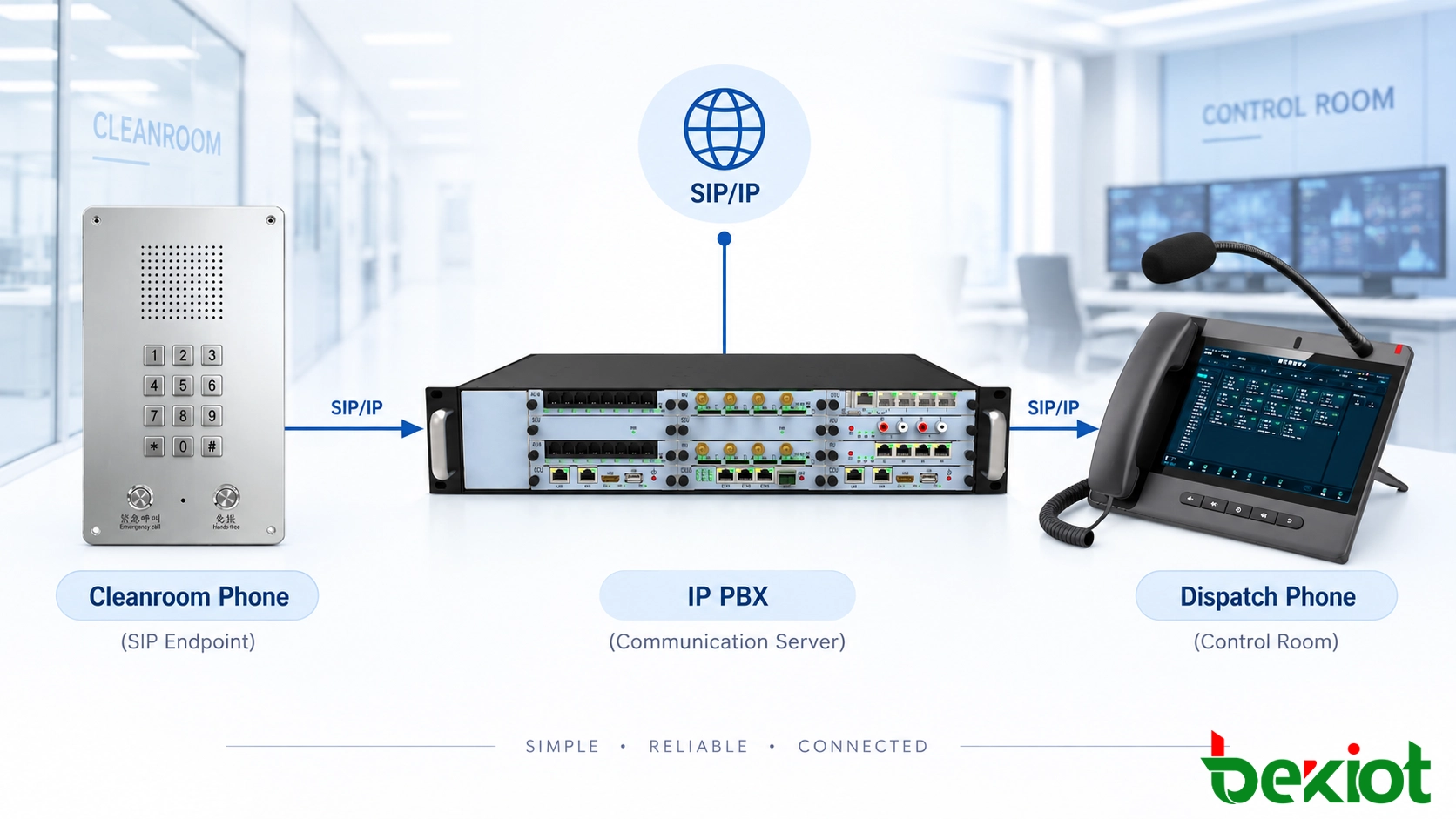
SIP Cleanroom Phones in Modern Communication Systems
Modern cleanroom communication systems are increasingly integrated with IP networks. A SIP cleanroom telephone can become part of a larger communication infrastructure instead of operating as an independent device.
Through SIP registration, the cleanroom telephone can connect with IP PBX systems, softswitch platforms, and other SIP communication solutions. This allows operators to communicate with control rooms, offices, security departments, and other authorized users through a unified network.
A typical SIP cleanroom communication process includes:
The operator initiates a call from the cleanroom telephone
SIP signaling is processed by the communication server
The system routes the call to the selected extension or control location
Voice communication is established through the IP network
This integration allows cleanroom communication terminals to support wider operational workflows while maintaining simple operation for users in controlled areas.
Becke Telcom Cleanroom Telephone Solutions
Becke Telcom provides SIP-based cleanroom telephone solutions designed for controlled environments requiring reliable voice communication and practical installation.
The product range includes stainless steel and ABS cleanroom telephone options, allowing organizations to select suitable communication terminals according to operating environment, installation requirements, and maintenance expectations.
Stainless steel models are suitable for applications where durability, stronger protection, and long-term operation are important. ABS models provide a lightweight option for flexible deployment in general controlled environments.
The BT26 Cleanroom Telephone uses a stainless steel enclosure design and supports SIP communication, hands-free calling, and integration with IP PBX or SIP communication platforms. It provides a dedicated communication point between clean areas, control rooms, offices, and operational departments.
By selecting the appropriate enclosure material and communication design, organizations can build a cleanroom communication system that matches their operational requirements throughout the facility lifecycle.
FAQ
What Is the Difference Between a Cleanroom Phone and a Standard IP Phone?
Cleanroom phones are designed for controlled environments where equipment surface maintenance, installation conditions, and operational reliability are important. Compared with standard office IP phones, cleanroom models are designed to better match requirements such as frequent cleaning and fixed installation.
How Do I Choose a Cleanroom Phone for a Pharmaceutical Facility?
The selection should consider the production environment, cleaning procedures, installation location, communication requirements, and maintenance plan. Areas with intensive operation may require stronger enclosure designs, while general controlled areas may use more flexible options.
Are Flush-Mounted Cleanroom Phones Better for Controlled Environments?
Flush-mounted installation can reduce equipment protrusion from the wall surface and improve space management in areas where cleaning convenience is important. However, the suitable installation method depends on the facility layout and maintenance requirements.
Can a Cleanroom Phone Be Integrated With Existing Enterprise Communication Systems?
Yes. SIP-based cleanroom phones can integrate with existing communication platforms such as IP PBX and softswitch systems, allowing cleanroom users to communicate with offices, control rooms, and other authorized locations.
What Should Be Considered Before Installing Cleanroom Communication Equipment?
Before installation, organizations should evaluate the operating environment, mounting location, network connection, power supply, cleaning requirements, and future maintenance needs to ensure reliable long-term operation.