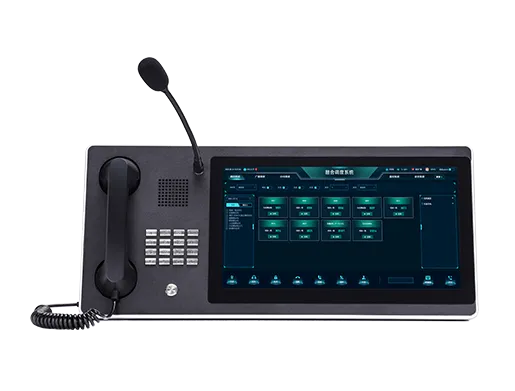
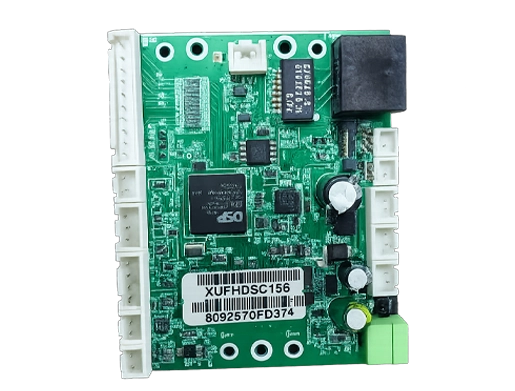
Mission-critical communications refers to communication systems designed to remain available, dependable, and operational in situations where communication failure could lead to serious safety risks, operational disruption, financial loss, or loss of command and control. In practical terms, these systems are used where communication is not simply convenient but essential. If the voice path, alerting channel, dispatch connection, or field coordination link fails, the consequence may affect people, infrastructure, public safety, or industrial continuity.
Unlike ordinary communication tools that are mainly judged by convenience or cost, mission-critical communications is judged by resilience, availability, response speed, coverage, priority handling, and performance under stress. These systems are expected to function during emergencies, infrastructure failures, site incidents, severe weather events, transportation disruptions, industrial faults, security events, and multi-agency operations. They must work not only in normal conditions but also when the environment becomes unstable, overloaded, noisy, or dangerous.
In modern deployments, mission-critical communications may include dispatch systems, radio networks, SIP-based industrial telephony, emergency call stations, public address and general alarm platforms, paging systems, intercom networks, incident response communication platforms, and integrated command-and-control environments. Depending on the sector, the system may support one or more types of communication, including voice, group calling, emergency alerting, broadcasting, priority routing, video linkage, location awareness, and cross-network interoperability. What defines it is not one specific technology, but the requirement that the system must continue supporting critical operations when communication matters most.

Mission-critical communications supports dependable voice and coordination across critical operations, emergency response, and industrial environments.
What Mission-Critical Communications Means in Practice
Communication That Cannot Fail at the Wrong Moment
The defining idea behind mission-critical communications is simple: some communication links are too important to fail during a real event. In an office environment, a dropped call may be an inconvenience. In a hospital emergency workflow, a transport tunnel, a refinery, a railway control environment, or a public safety incident, the same type of failure can be much more serious. It may delay a response, interrupt coordination, block escalation, or reduce situational awareness at the exact moment the system is needed most.
That is why mission-critical communications is designed around continuity rather than basic connectivity. The question is not only whether two points can talk to each other, but whether the communication path remains usable during faults, heavy load, environmental stress, and operational urgency. In many cases, this means the system must support redundant architecture, emergency power, priority logic, protected field devices, resilient networking, and failover control.
This practical perspective separates mission-critical communications from general business communication. The system is not built only for efficiency or convenience. It is built so that teams can continue to communicate when the situation is unstable, time-sensitive, or safety-related.
More Than Just Radio or Telephony
Mission-critical communications is sometimes associated only with professional radio networks, but the modern concept is broader. In many organizations, critical communication relies on several layers working together. These may include fixed telephony, SIP intercom, radio dispatch, alarm broadcasting, emergency help points, paging, mobile applications, control room software, and video-assisted incident management. A field worker may use a radio, while a control room operator uses a dispatch console, and a public warning message may go out through speakers or alert devices connected to the same operational workflow.
Because of this, mission-critical communications is best understood as a system environment rather than a single endpoint type. What matters is the ability to support command, coordination, escalation, and response across the people and devices involved in the mission. In some sectors that mission is public safety. In others it is industrial continuity, passenger protection, utility reliability, or site emergency response.
This broader view is increasingly important because modern critical operations depend on integrated communication rather than isolated channels. Voice, alarms, dispatch, and field devices often need to work together in one response framework.
Mission-critical communications is defined less by the device being used and more by the consequence of losing communication when the operation is under pressure.
Core Functions of Mission-Critical Communications
Real-Time Voice Coordination
One of the most fundamental functions of mission-critical communications is immediate voice coordination. In a critical event, voice remains one of the fastest ways to exchange instructions, confirm status, escalate issues, and direct response. Whether the platform is based on radio, SIP, IP telephony, intercom, or a blended architecture, the system must support timely and intelligible voice exchange across the users involved.
Real-time voice is especially important because critical situations are dynamic. Conditions can change quickly, and written messages are often too slow or too fragmented to support live coordination. A dispatcher may need to reroute field personnel, a plant operator may need to report a hazard, or a transport controller may need to issue immediate instructions to multiple points at once. Voice provides speed, nuance, and confirmation in a way that many other channels cannot match in urgent scenarios.
For this reason, mission-critical systems often prioritize audio clarity, low latency, strong coverage, and quick call setup. The technical platform may vary, but the operational expectation remains the same: when someone speaks, the message must reach the right people without delay.
Priority Handling and Emergency Escalation
Not all communication has the same urgency. Mission-critical systems therefore need to distinguish between routine traffic and urgent traffic. A normal operational call should not block an emergency instruction. A routine page should yield to an alarm message. A high-priority user such as a control room operator, supervisor, or emergency responder may need communication privileges that override lower-priority traffic when an event occurs.
This is where priority handling becomes essential. The system may support emergency call precedence, priority paging, interrupt capability, group override, or alarm-linked broadcast behavior. In some environments, a distress trigger or emergency key can raise the communication state immediately, giving the user fast access to command resources. In others, the system may automatically escalate an event to multiple endpoints, dispatch consoles, or alert groups at once.
Priority logic is one of the main reasons mission-critical communications cannot be treated as ordinary communication with stronger hardware. The system must understand operational hierarchy and urgency so that high-value communication is protected during the moments that matter most.
Group Communication and Coordinated Response
Critical events rarely involve only one person speaking to one other person. More often, several users or teams need to hear the same message, respond to the same incident, or remain aligned during a developing situation. Mission-critical communications therefore often includes group communication functions such as group calling, selective group paging, conference bridges, area broadcasting, or dispatch-led multi-party coordination.
This group capability is valuable in emergency response, industrial maintenance events, transport disruption management, and large-site operations. A supervisor may need to reach all responders in one area. A control room may need to coordinate security, maintenance, and field operations together. A plant may need to issue a local warning to a defined production zone while simultaneously keeping central operators informed. The communication model must support both speed and shared awareness.
Because of this, mission-critical platforms are commonly designed to support one-to-one, one-to-many, and many-to-many communication patterns rather than just standard individual calls.
Alerting, Broadcast, and Field Notification
Another major function is the ability to send alerts and instructions outward to people in the field or across a site. This may include public address announcements, general alarms, evacuation messages, warning tones, scheduled alerts, or targeted voice instructions delivered to specific zones or devices. In some environments, field notification is as important as dispatcher-to-responder communication because the mission includes protecting staff, passengers, visitors, or surrounding infrastructure.
Broadcasting functions become especially important in large campuses, tunnels, ports, power facilities, industrial plants, schools, and transportation hubs. A mission-critical communication system may need to issue announcements not only to trained operators but also to the public or to non-technical personnel who must respond quickly. This requires intelligible audio, correct zone logic, priority control, and dependable output devices.
As a result, many modern mission-critical communication architectures include paging, PA, and alarm capability as part of the broader operational communication design.
System Value of Mission-Critical Communications
Operational Continuity Under Stress
The first major value of mission-critical communications is continuity during abnormal conditions. A normal communication platform may work well when the network is quiet, the environment is stable, and the workload is predictable. A mission-critical platform must continue operating when conditions become more difficult. That may include infrastructure faults, severe weather, power instability, security incidents, noise, congestion, or simultaneous multi-team activity.
In operational terms, this continuity protects the organization’s ability to make decisions and take action. Communication is often the connective layer between sensing a problem and responding to it. If that layer fails, technical resources and personnel may still exist, but they become harder to coordinate. The practical value of continuity is therefore much larger than the communication channel itself. It preserves command flow, response timing, and shared awareness.
This is why mission-critical communication systems are often designed with redundancy, backup power, protected devices, and resilient network paths. Their value lies not only in carrying messages, but in helping the organization remain operational when circumstances are working against it.
Faster Response and Better Situational Control
Mission-critical communications also improves response speed. In many scenarios, the difference between a controlled event and a serious escalation depends on how quickly information moves between the field and decision-makers. A worker reports a fault. A security officer requests backup. A dispatcher identifies which teams must respond. A site controller issues instructions. When these exchanges happen quickly and clearly, the organization can stabilize the event faster.
Better communication also improves situational control. Decision-makers are more effective when they receive timely updates, confirm understanding, and coordinate multiple resources in parallel. A communication system that supports live voice, group coordination, alerting, and escalation allows the command layer to maintain a clearer operational picture. That is especially important in environments where conditions evolve minute by minute.
In this sense, mission-critical communications is not only about talking. It is about creating a usable control layer across the organization’s response structure.
Risk Reduction and Safety Support
Another central value is risk reduction. Communication failures can increase exposure during emergencies, industrial hazards, transport incidents, and infrastructure disruptions. If staff cannot report a problem, receive instructions, or warn others in time, the event may worsen. A well-designed mission-critical communication system lowers that risk by improving reach, clarity, accountability, and escalation pathways.
This safety value is especially clear in industries where communication is tied directly to people protection. Emergency help points, industrial telephones, site-wide paging, radio dispatch, and alarm-linked voice systems all contribute to safer operations by shortening the gap between detection and response. Even in environments where communication is not the primary control mechanism, it still plays a decisive role in how effectively the organization reacts.
Because of this, mission-critical communications is often treated as a safety-enabling infrastructure layer rather than only as an IT or telephony service.
Interoperability Across Teams and Systems
Critical events often involve more than one team, one building, or one communication technology. A modern response may require coordination between radio users, SIP phones, intercom stations, dispatch software, alarms, cameras, and mobile field personnel. Interoperability is therefore a major system value. It allows the communication environment to bridge operational boundaries instead of creating them.
This is particularly valuable in transport systems, industrial sites, public safety support environments, utilities, ports, airports, and large campuses. Different teams may use different devices and workflows, but the mission still requires coordinated action. A communication platform that supports interoperability helps these teams exchange information more directly and with less manual workaround.
As critical operations become more integrated, interoperability becomes one of the strongest reasons to modernize mission-critical communication architecture.
The real system value of mission-critical communications is not only that people can talk, but that the organization can still coordinate, decide, and act when conditions are no longer normal.
Key Technical and Operational Characteristics
High Availability and Resilient Architecture
Mission-critical systems are expected to remain available under demanding conditions, so their architecture typically emphasizes resilience. This may include redundant servers, backup power, dual network paths, protected field endpoints, failover controllers, or distributed communication nodes. The goal is to reduce single points of failure and keep communication available even if one part of the infrastructure is damaged or offline.
Resilience is not only about hardware duplication. It also involves good failover behavior, monitoring, recovery logic, and the ability to maintain service quality during stress. A system that technically survives a fault but becomes too slow, confusing, or unstable to use is not truly mission-critical from an operational perspective.
For this reason, architecture planning often focuses on real incident behavior, not only on specification sheets. The system must be judged by how it performs during the kinds of events it was built to support.
Coverage, Intelligibility, and Environmental Suitability
Critical communication cannot depend on ideal acoustic or physical conditions. Many mission-critical environments are noisy, outdoor, industrial, mobile, or geographically complex. That means the system must provide appropriate coverage and device suitability for the real environment. A refinery may need explosion-protected phones and loudspeakers. A railway site may need weatherproof emergency help points. A tunnel may require distributed intercom and paging. A campus may need wide-area alerting across mixed indoor and outdoor zones.
Intelligibility is especially important. It is not enough for sound to be loud. The message must be understandable under stress, noise, and urgency. This affects device selection, speaker design, microphone performance, audio processing, and placement strategy.
As a result, mission-critical communications often combines network design with environmental engineering. The field endpoint matters as much as the central server because communication reliability is ultimately experienced at the point of use.
Priority, Security, and Controlled Access
Mission-critical communication systems usually need stronger control over user roles and communication rights than ordinary systems. Not every user should have the same authority to interrupt traffic, send site-wide messages, or initiate emergency escalation. The platform must support hierarchy, policy, and secure control so that urgent communication remains trusted and operationally appropriate.
Security also matters because unauthorized access or misuse can have serious consequences. Depending on the environment, the system may require protected signaling, access control, device authentication, logging, and segmented network design. These features support both cybersecurity and operational integrity.
Together, priority and security help ensure that the system remains not only available, but also disciplined and dependable during sensitive events.
Applications of Mission-Critical Communications
Public Safety Support and Emergency Response
One of the most obvious application areas is public safety support. Emergency response organizations, control centers, transport authorities, campuses, hospitals, and municipal services all rely on dependable communication during incidents. The system may be used to coordinate responders, connect help points to a control room, broadcast instructions, support inter-agency communication, or provide voice escalation during emergencies.
Even when a site is not a formal public safety agency, it may still require public-safety-grade communication behavior. A university campus, stadium, airport, industrial plant, or large public venue may need reliable emergency voice communication for crowd guidance, security response, and incident management. In these settings, mission-critical communications bridges the gap between normal operations and emergency action.
This is one reason the concept has expanded beyond specialist radio users. Many sectors now need the same core communication qualities even if their operational mission differs.
Transportation and Traffic Infrastructure
Transportation systems depend heavily on coordinated communication because they involve moving people, distributed assets, safety-sensitive infrastructure, and time-critical operations. Airports, railway networks, metro systems, highways, tunnels, ports, and logistics terminals all use mission-critical communications to support control rooms, field staff, emergency points, passenger information workflows, and incident response.
In these environments, the system may include tunnel telephones, platform intercoms, radio dispatch, SIP paging, emergency broadcast, maintenance communication, and integration with surveillance or control systems. The communication platform must remain dependable in noise, distance, weather exposure, and high-traffic conditions.
Because transport operations are so distributed, communication is one of the main tools for maintaining situational coordination across the network.
Energy, Utilities, and Industrial Operations
Industrial plants, power stations, substations, offshore facilities, water systems, utility corridors, and chemical sites often require mission-critical communications because process continuity and personnel safety depend on rapid coordination. In these sites, communication may support operators, maintenance teams, security staff, control rooms, and emergency response teams across difficult physical environments.
The system may involve industrial SIP telephones, PAGA, explosion-protected endpoints, field intercoms, radio interworking, dispatch platforms, and centralized alerting. Integration with alarms and process conditions is also common. The objective is not only to provide routine voice service, but to preserve communication during abnormal plant conditions or hazardous events.
In these sectors, mission-critical communications is closely tied to operational resilience and industrial safety management.
Hospitals, Campuses, and Large Facilities
Hospitals, universities, commercial campuses, secure facilities, and large service environments also benefit from mission-critical communications. These sites may not look like heavy industry, but they still depend on fast, reliable communication for emergency alerts, staff coordination, visitor assistance, security escalation, and operational continuity. A hospital may need nurse support escalation, public announcement, and emergency voice coordination. A campus may need help points, lockdown messaging, and multi-building paging. A secure facility may need controlled intercom and command-center integration.
What these environments share is the need to communicate across physical space, user roles, and event severity. Normal administrative communication is not enough when the incident demands coordinated action across teams and buildings. Mission-critical architecture helps close that gap.
This shows that mission-critical communications is not limited to one industry. It applies wherever communication failure would significantly increase operational or safety risk.
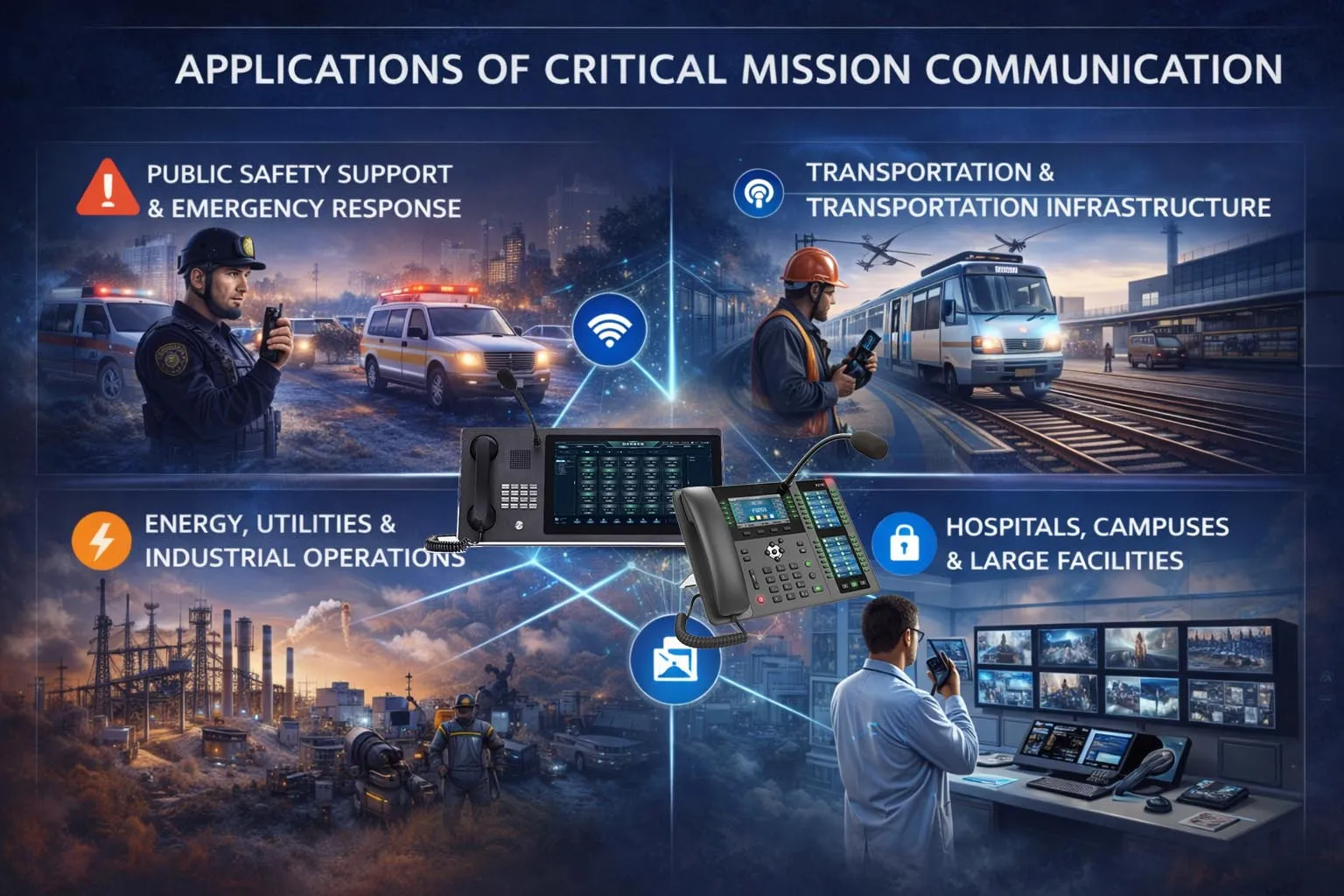
Mission-critical communications is widely used in public safety support, transport, industry, utilities, healthcare, and large-site operations.
Why Mission-Critical Communications Matters More Today
Critical Operations Are More Connected Than Before
Modern operations depend on increasingly connected infrastructure. Sites that once used isolated systems now rely on integrated IP networks, centralized platforms, distributed endpoints, and software-based control. This improves efficiency, but it also means communication disruptions can affect more systems and more people at once. As a result, the need for dependable communication has become more important, not less.
Mission-critical communications answers this need by focusing on continuity, interoperability, and response capability rather than only on cost or convenience. As organizations integrate telephony, paging, alarms, dispatch, video, and field communications, the communication layer becomes more central to both daily operations and emergency readiness.
That is why mission-critical design is increasingly relevant beyond traditional specialist sectors. Many organizations now require some level of critical communication capability simply because the consequence of losing coordination has grown.
Voice Still Matters in Time-Critical Events
Even in a digital world filled with apps, dashboards, and automated alerts, voice remains one of the most effective tools for urgent coordination. It carries instruction, confirmation, context, and human judgment quickly. In a fast-moving incident, voice is often the link that turns data into action. Mission-critical communications preserves that link and supports it with the architecture needed to keep it dependable.
This is especially true where events develop faster than people can type, read, or navigate interfaces. A site alarm, a transport fault, a security breach, or an industrial upset often requires immediate spoken coordination among several parties. Mission-critical communication systems are designed to make that possible even under pressure.
For that reason, mission-critical communications remains one of the most important foundations of resilient operational control.
As systems become more connected and incidents become more complex, dependable communication becomes more central to control, not less.
FAQ
What makes communication “mission-critical”?
Communication becomes mission-critical when its failure could significantly affect safety, emergency response, operational continuity, or command and control during an important event.
Is mission-critical communications only for public safety agencies?
No. It is also widely used in transportation, industry, utilities, healthcare, campuses, ports, airports, and other environments where dependable communication is essential during incidents or abnormal conditions.
What functions are commonly included in mission-critical communication systems?
Common functions include real-time voice coordination, group communication, dispatch, emergency alerting, priority handling, broadcasting, intercom, and interoperability across different devices or networks.
Why is mission-critical communications different from normal business communication?
Because it is designed around resilience, urgency, and operational consequence. It must continue working under stress, faults, and emergency conditions where ordinary communication tools may not be sufficient.