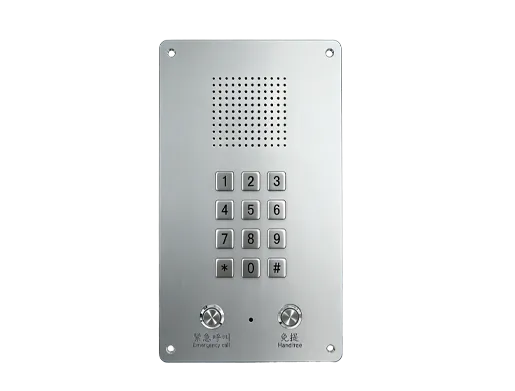

Becke BT26 Cleanroom IP Handsfree Telephone is designed for controlled environments where reliable voice communication, easy cleaning, and reduced contact are all essential. Built on mature VoIP phone technology and developed for industry-specific needs, it combines SIP voice intercom functionality with a handsfree operating style, making it well suited to locations where hygiene discipline and efficient communication must work together.
Its stainless steel panel and keypad, flush-mounted structure, and handsfree communication design make it particularly suitable for clean production and controlled-use areas. In facilities where operators may wear gloves, protective garments, or sterile equipment, BT26 helps simplify communication without relying on a traditional handset. This makes it a practical fit for cleanrooms, pharmaceutical plants, operating areas, food processing lines, cosmetics manufacturing spaces, and other environments where contamination control and space-saving installation matter.
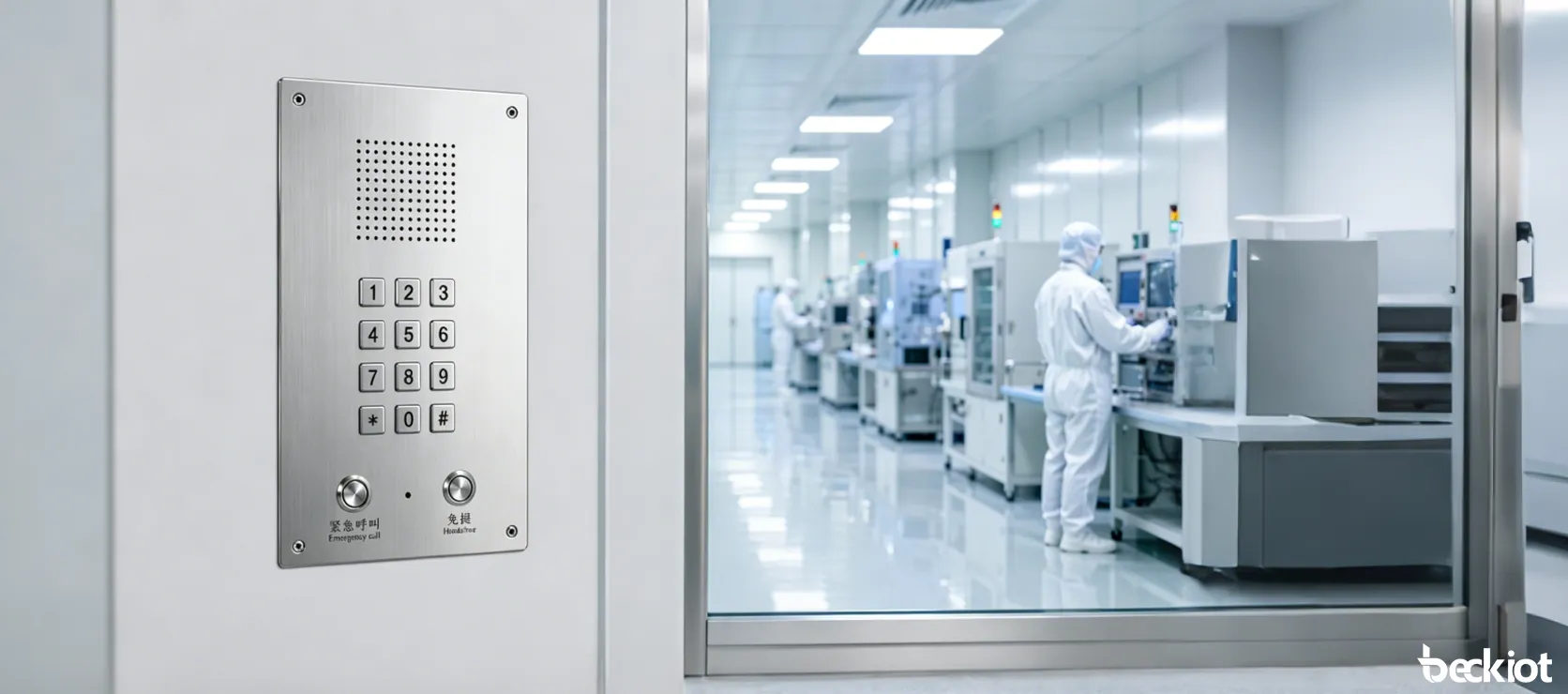
BT26 is not a generic desk phone adapted for industrial use. It is built specifically for clean and controlled environments where surface materials, installation style, and operating method directly affect suitability. The stainless steel workmanship used on the front panel and keypad supports a cleaner, more professional finish for demanding spaces, while the embedded installation design helps the device sit neatly within the wall without occupying unnecessary room.
Its handsfree intercom format is especially valuable in clean areas because users do not need to pick up a handset to place or answer calls. This helps reduce touch-based interaction and supports workflows where avoiding unnecessary contact is part of the operating discipline. In practical terms, BT26 fits environments where communication must remain easy, immediate, and consistent without compromising the cleanliness logic of the site.
BT26 uses standard IP and RTP transmission and is designed for strong interoperability with mainstream SIP-based IP PBX, softswitch, and IMS platforms. This makes it easier to integrate into existing communication infrastructure and reduces deployment friction for projects that already rely on SIP call control. For system integrators and enterprise users, compatibility is a major advantage because it allows BT26 to be introduced without requiring a closed or specialized voice environment.
That deployment flexibility is particularly important in modern industrial and medical facilities, where communications may need to connect across production zones, nurse or operator stations, control rooms, technical offices, and security points. BT26 helps support this integration path by working within standard SIP-based ecosystems rather than creating a separate communication island.
In cleanroom communications, the best device is not simply the one that can make a call, but the one that fits hygienic workflows, SIP infrastructure, and space-limited installation at the same time.
The ultra-slim embedded installation style allows BT26 to fit cleanly into wall surfaces without creating the footprint of a conventional phone terminal. In production rooms, sterile corridors, operating support zones, and process-controlled spaces, this kind of installation helps preserve visual order while reducing protruding hardware in the work area.
Handsfree operation adds another layer of practical value. Users can communicate quickly without interrupting workflow to handle a receiver, which is useful in environments where staff may already be managing tools, materials, sterile process steps, or protective procedures. The result is a communication terminal that feels more natural in specialized clean environments than a traditional handset-based device.
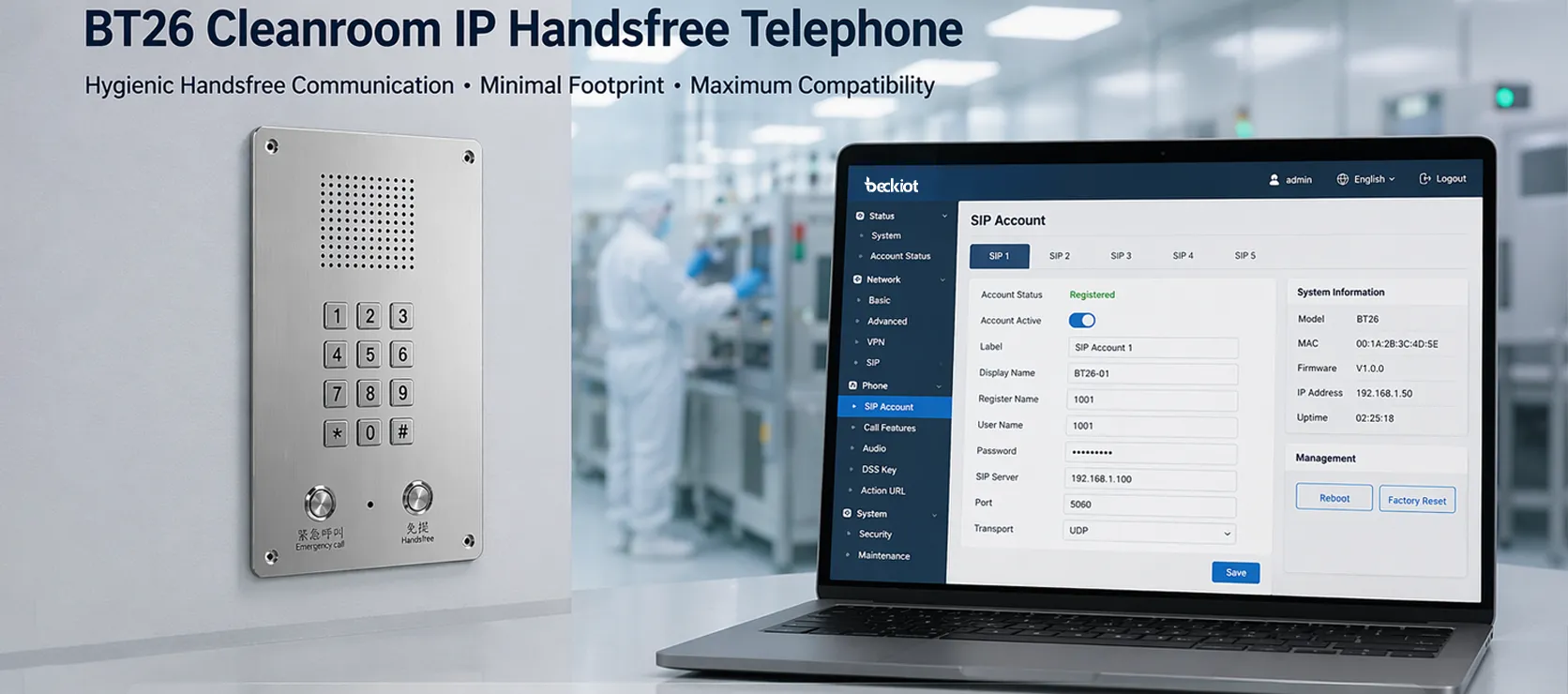
BT26 supports two SIP accounts and includes a useful range of calling features for day-to-day operational communication. These functions include hotline calling, call hold and waiting, auto answer, call forwarding, call transfer, redial, mute, do not disturb, five-party conferencing, speed dial, and voicemail support. This gives the device more practical value than a simple one-function intercom terminal.
For users in controlled production or medical support areas, these features help BT26 fit real operating workflows rather than serving as a basic emergency-only endpoint. Whether the need is quick contact with a control desk, transfer to another department, or routine coordination between work areas, the device supports a broader communication role across the facility.
BT26 supports full-duplex handsfree communication with automatic echo cancellation and other audio processing functions that help maintain clarity during open-speaker conversations. In clean environments, this is especially important because handsfree operation is often the preferred communication mode rather than an occasional convenience feature.
The device also supports intercom, call pickup, call park, one-touch dialing, intelligent DSS key functionality, auto hang-up, and one-touch voice broadcast of the IP address. These functions make operation quicker for both installers and end users. Fast action and simple control logic are particularly useful in specialized industrial and medical spaces where staff need a straightforward, repeatable communication tool rather than a complicated endpoint.
On the network side, BT26 supports IPv4 and IPv6, OpenVPN, STUN, multiple SIP connection and deployment modes, DNS SRV, and three DTMF methods. This allows it to fit a wide range of SIP network architectures, from local deployments to more distributed and secured environments where remote access, NAT traversal, and flexible routing may be required.
These capabilities are useful for facilities with centralized communication platforms spanning multiple rooms, buildings, or departments. The telephone can be integrated into structured enterprise voice systems while still supporting the operational simplicity expected at the user end. That balance between backend flexibility and frontend simplicity is an important strength in professional deployments.
BT26 supports built-in HTTP and HTTPS web configuration, web packet capture, remote management, software upgrade, template import and export, periodic update checking, and multiple provisioning methods. It also supports batch configuration generation and deployment tools that help installers manage larger rollouts more efficiently.
For projects involving many endpoints across clean production lines, laboratories, or process-controlled facilities, these management capabilities can significantly reduce deployment time and maintenance effort. Instead of relying only on manual local setup, administrators can standardize configuration and keep devices aligned more efficiently over time.
BT26 supports TLS, HTTPS, SRTP, MD5 and MD5-SESS validation mechanisms, and AES encryption, helping it align with secure SIP communication requirements in professional environments. This is particularly relevant in facilities where voice traffic may involve operational coordination, restricted areas, or privacy-sensitive workflow communication.
Its codec support includes both narrowband and wideband options, along with audio enhancement functions such as VAD, CNG, AEC, PLC, AJB, and AGC. Together with full-duplex handsfree performance, these functions help maintain clear voice transmission in environments where communication must remain dependable even during routine background activity.
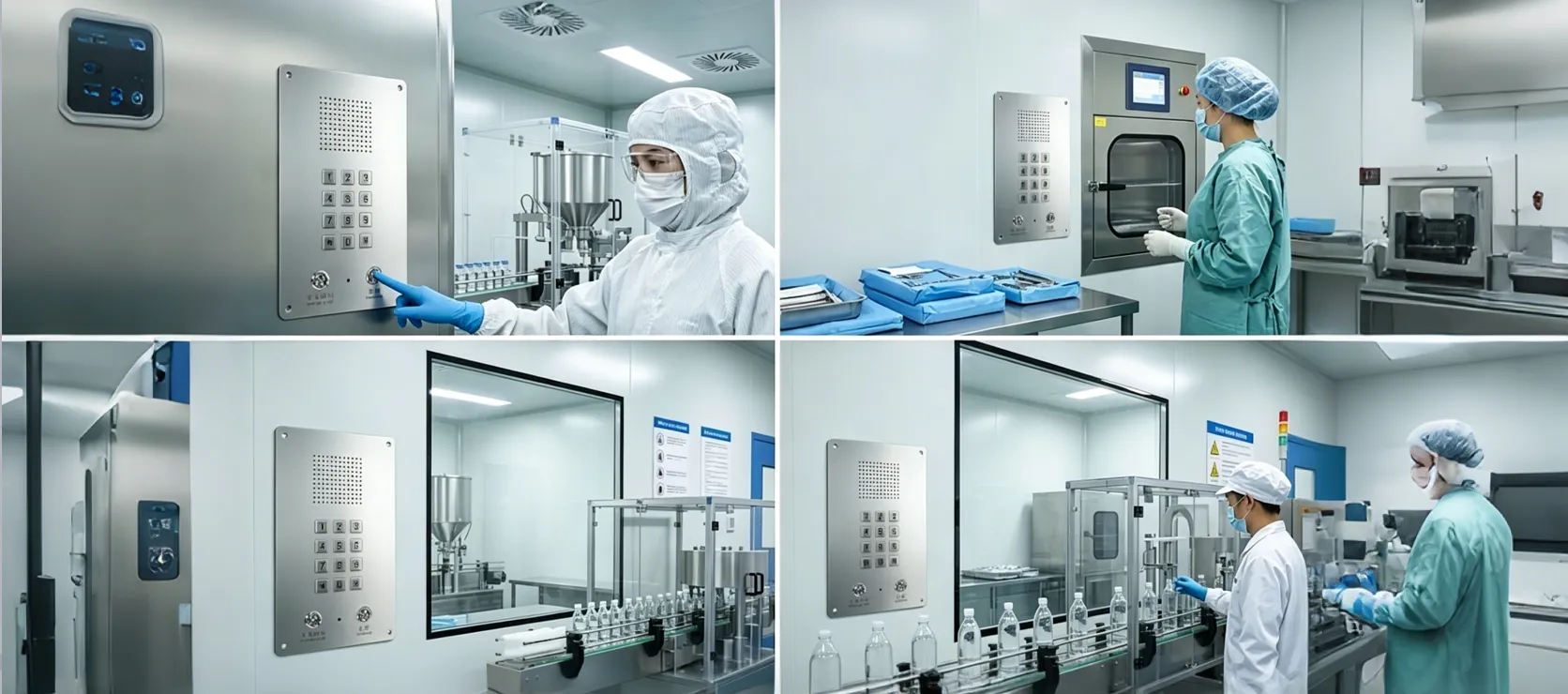
Pharmaceutical production plants and biotechnology facilities often require controlled communication points inside clean processing areas, preparation rooms, and restricted production zones. BT26 is a strong fit for these projects because it combines a cleanable stainless steel interface, flush-mounted structure, and handsfree communication style in a device that can integrate into a SIP-based plant communication system.
Its design supports environments where workers may wear gloves, clean garments, or protective equipment and where minimizing unnecessary contact is part of standard operating practice. This makes it suitable for both daily production coordination and process support communication.
In surgical support environments, sterile preparation areas, and other medical clean zones, communication devices must be practical, unobtrusive, and easy to operate without creating unnecessary handling steps. BT26 supports this requirement with a handset-free operating model and wall-integrated design that helps it fit controlled medical spaces more naturally than traditional desk or wall phones.
Its SIP compatibility also makes it easier to connect medical communication points with nurse stations, technical support positions, operator desks, or internal telephony systems where rapid voice coordination is required.
Food-grade manufacturing and cosmetics production environments often need communication terminals that can support hygiene-focused workflows while still allowing quick voice coordination between rooms, lines, and supervisors. BT26 is well suited to these settings because it avoids the clutter of a conventional phone and provides simple, direct communication access in a cleaner installation format.
For production facilities seeking a communication endpoint that matches controlled-environment expectations while remaining easy to deploy on SIP infrastructure, BT26 offers a practical and professional solution.
Beyond pharmaceuticals and food production, BT26 is also useful in other clean industrial areas where dust control, process discipline, or contamination reduction are important. This may include electronics manufacturing support rooms, precision assembly spaces, laboratory corridors, and technical clean zones that require fast voice communication without bulky equipment.
In these scenarios, the product’s value comes from its combination of compact form, handsfree use, SIP interoperability, and remote management readiness. It helps create communication points that are easy to use, easy to integrate, and better suited to specialized environments.
BT26 stands out because it is designed around the real requirements of cleanroom communication rather than only around standard office telephony logic. Its stainless steel construction, flush-mounted profile, handsfree calling model, dual SIP account support, strong SIP platform compatibility, and practical remote management functions make it a more suitable terminal for professional clean-environment deployments.
For system integrators, facility planners, and end users, the advantage is clear: BT26 offers a cleaner installation style, less touch-based operation, and easier integration into modern SIP communication systems. In spaces where hygiene, simplicity, and reliable voice access all matter, it provides a focused and deployment-ready solution.
BT26 is best suited for cleanrooms and controlled environments such as pharmaceutical plants, biotechnology facilities, operating areas, food processing workshops, cosmetics production rooms, and other spaces where hygiene-focused communication is required.
Handsfree communication reduces the need to pick up a handset, which helps lower unnecessary touch interaction and supports users who may be wearing gloves, sterile garments, or protective equipment during operation.
Yes. BT26 uses standard IP and RTP transmission and is designed to integrate with mainstream SIP-based IP PBX, softswitch, and IMS platforms, making deployment easier in existing enterprise voice environments.
BT26 supports web-based configuration, remote management, software upgrades, configuration template import and export, batch provisioning tools, packet capture, and multiple auto-deployment methods, which help simplify both rollout and long-term maintenance.
| Item | Specification |
|---|---|
| Product Model | BT26 Cleanroom IP Handsfree Telephone |
| Material | SUS304 Stainless Steel |
| Basic Call Features | Supports 2 SIP accounts; supports hotline, call hold/waiting, auto answer, call forward, call transfer, redial, mute, do not disturb, 5-party conference, speed dial, voicemail; supports intercom, call pickup, call park |
| Audio Codecs & Processing | Narrowband codecs: G.711(A/U), G.729A/B/AB, G.726, iLBC; Wideband codecs: G.722, L16; supports VAD, CNG, AEC, PLC, AJB, AGC and other audio processing algorithms, full-duplex hands-free with automatic echo cancellation |
| DTMF Transmission Modes | In-band, RFC2833, SIP INFO |
| Supported Protocols | TLS, HTTPS, SRTP (RFC3711) |
| Security Mechanisms | MD5/MD5-SESS authentication, AES encryption algorithm |
| Key Configuration | 1 DSS speed dial key, 1 hands-free key, 12 numeric keys |
| Network Interface | 1×RJ45 Ethernet port |
| Speaker Power | 3W |
| Installation | Flush-mount |
| Power Input | 802.3af PoE, DC 6-24V input |
| Power Output | 1 onboard programmable power output |
| Power Supply | PoE or 12V power supply optional |
| Flush-mount Dimension | 215×115×40mm |
| Overall Dimension | 240×140×40mm |
| Weight | 1.5kg |
| Operating Temperature | -20℃ ~ 60℃ |
| Operating Humidity | 10% ~ 90% (non-condensing) |