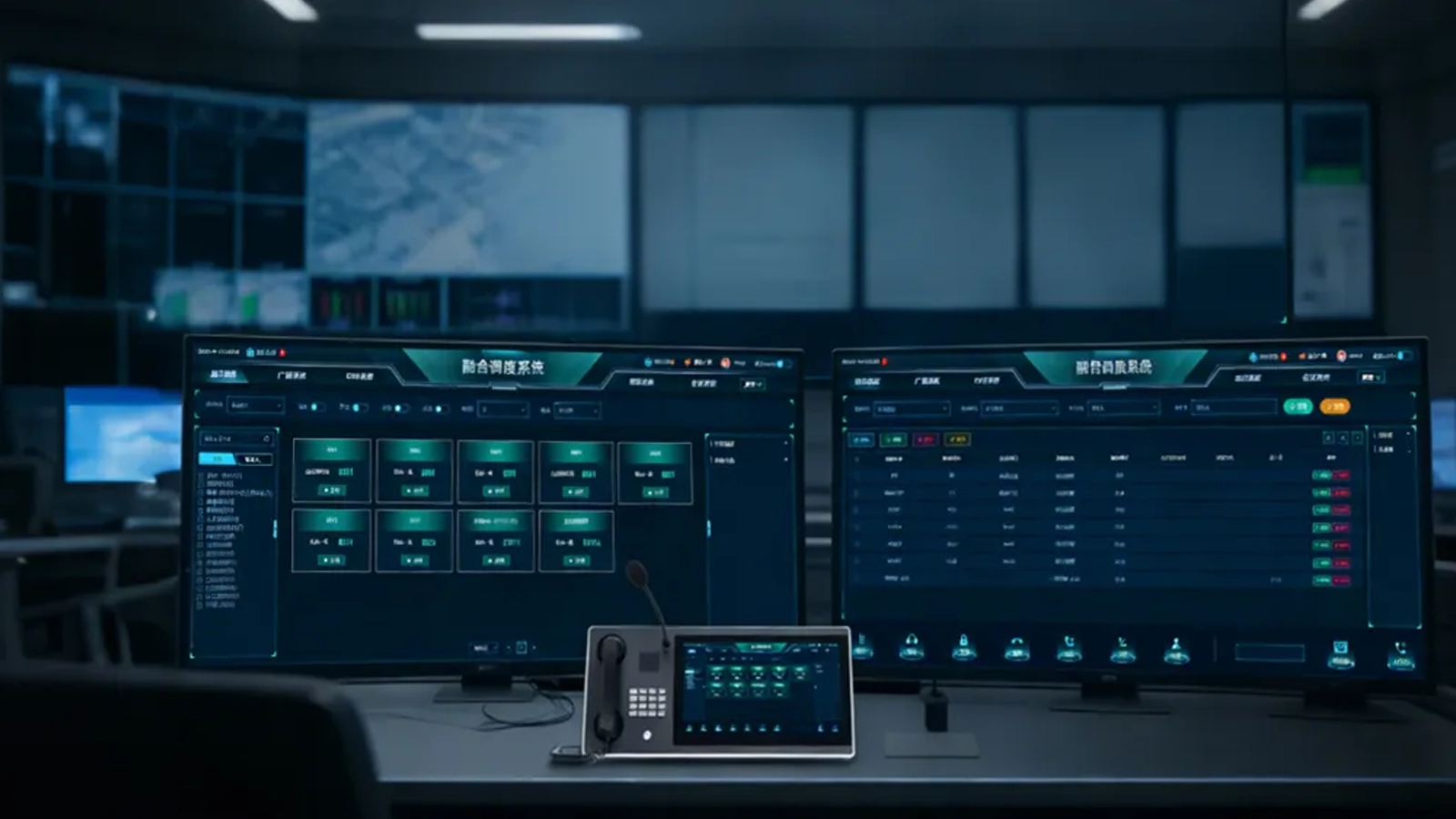


The MEB92 SDR MANET Backpack Base Station is a portable broadband communication node designed for emergency response, rescue command, UAV data transmission, outdoor engineering, patrol networks and other field operations where wireless infrastructure may be unavailable, incomplete or difficult to deploy quickly.
Rather than functioning only as an individual user terminal, the MEB92-36 is designed to participate in a wider MANET architecture as a portable relay, temporary communication node or ground-side networking device. Its software-defined radio platform and decentralized multi-hop networking capability allow compatible devices to communicate and forward traffic without relying on a conventional fixed central base station.
This makes the unit suitable for communication systems in which personnel, vehicles, UAVs and temporary relay points need to be connected across a changing operating area. Compatible nodes can form a wireless network within seconds, while available communication paths can change as individual nodes move or the network topology changes.
Voice, operational data, video and positioning information can share the same broadband MANET network. Depending on the project architecture, MEB92-36 can therefore serve as more than a simple point-to-point radio link and can become part of a distributed field communication system.
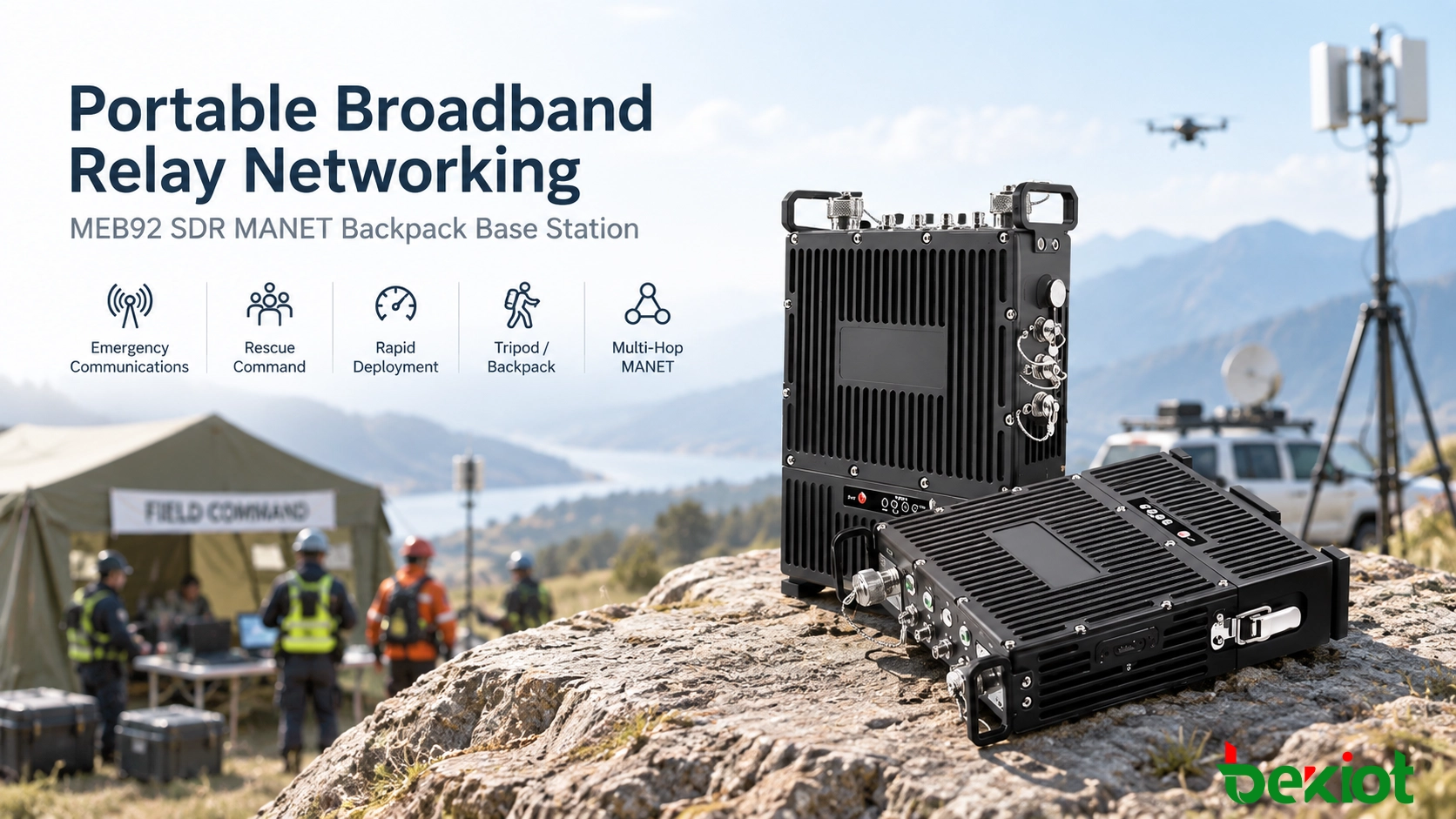
MEB92-36 uses a decentralized MANET architecture. Compatible nodes do not depend on one fixed central networking point before they can communicate. Instead, participating devices can establish communication links directly and take part in routing traffic through the available wireless network.
This architecture is particularly useful for temporary or mobile deployments. A rescue team, field vehicle, relay position or compatible airborne node can be introduced into the network according to operational requirements without rebuilding the entire communication structure around a permanent base station.
In a multi-hop deployment, not every device needs to maintain a direct radio path to the final destination. Compatible nodes can participate in relay forwarding, allowing information to pass through intermediate nodes when required by the current network topology.
As field equipment changes position, the available routes through the network can also change. This allows the MANET system to adapt to a mobile operating environment rather than depending on one static communication path.
The practical value of this design becomes clearer in distributed field operations. A node positioned closer to a command vehicle may forward information originating from another node located farther away, while additional relays can be introduced when the operating area becomes more dispersed.
Same-frequency networking supports up to 64 nodes. Depending on deployment requirements, compatible equipment can be arranged in star, linear, mesh or hybrid dynamic topologies.
A linear arrangement may be useful when communication points extend along a route or work corridor, while a wider mesh deployment can support distributed teams operating in different directions. Hybrid arrangements can also be used where field terminals, relay devices, ground stations and airborne nodes perform different roles within the same communication system.
MEB92-36 can be carried as a backpack communication node when a relay or broadband networking function needs to move with a field team. This allows communication equipment to be transported directly into locations where fixed infrastructure is unavailable or where deployment conditions are changing rapidly.
Backpack deployment is particularly relevant when the required communication position cannot be determined in advance. Personnel can carry the unit into the operating area and establish a node at a position selected according to the actual field environment.
The unit also supports tripod deployment. Once a suitable communication position has been selected, MEB92-36 can operate as a temporary stationary node rather than remaining attached to personnel.
This gives the same platform two different deployment roles: it can be transported as portable equipment and then positioned as a temporary relay or networking point when operational conditions require a more stable location.
Relay forwarding is one of the key roles of MEB92-36 within a multi-hop MANET system. Multiple relay nodes can be positioned across a larger operating area when direct communication between all participating devices is not practical.
The product description also identifies ground-station deployment as a supported configuration. In a wider system, the unit can therefore be used alongside field terminals and other compatible MANET equipment rather than being limited to use as a personal communication device.
UAV airborne deployment is also included among the supported configurations. In a mixed ground-and-air architecture, compatible airborne and ground equipment can participate in the wider MANET network according to the communication design of the project.
This type of arrangement can support applications where an airborne platform provides video or other IP data while ground nodes provide relay, field access or connection toward command-side equipment.
MEB92-36 supports one-touch startup, helping reduce the number of operating steps required when a node needs to be placed into service in the field.
Power is provided by a removable 12.6 V / 7 Ah battery. Because the battery is removable, it can be replaced when required instead of permanently limiting the device to a built-in power source.
The technical specification lists approximately 6 hours of standby time. This figure should be treated specifically as a standby specification rather than as a guaranteed six hours of continuous full-load transmission.
The standard operating frequency is 1350–1450 MHz. Frequency configurations between 350 MHz and 6 GHz can be customized, and optional frequency-hopping configurations are also available.
This frequency flexibility allows the radio configuration to be selected according to the communication system being deployed. The actual operating band must still be determined according to project requirements and the spectrum regulations applicable in the deployment location.
MEB92-36 provides 2 W × 2 transmit power and two MESH antenna interfaces. This dual-radio configuration forms the RF foundation for communication with compatible MANET equipment.
The transmit-power figure should be considered together with antenna configuration, operating frequency, bandwidth, terrain and node placement when planning a real network. RF output alone does not define the usable communication range of a deployed system.
Supported channel bandwidth settings include 1.25, 2.5, 5, 10 and 20 MHz. Different bandwidth configurations provide system designers with flexibility when matching the wireless network to available spectrum and required transmission capacity.
A deployment primarily carrying operational data may have different bandwidth requirements from one that simultaneously carries multiple video streams, positioning information and voice services. For this reason, channel bandwidth should be treated as part of the overall system configuration rather than as an isolated specification.
Supported modulation modes include BPSK, QPSK, 16QAM, 64QAM and 256QAM with adaptive operation.
The availability of several modulation modes allows the radio system to work with different transmission conditions rather than relying on one fixed modulation method throughout operation.
The specified transmission capability reaches 50 Mbps at 20 MHz channel bandwidth. Receiver sensitivity is specified at -103 dBm at 5 MHz.
The 50 Mbps value describes the stated transmission capability under the specified radio configuration. It should not be interpreted as guaranteed application throughput for every deployment because actual system performance is also affected by network topology, RF conditions, traffic load and the number and position of participating nodes.
The available specification does not provide one universal communication-distance figure. For a MANET product, practical coverage should therefore be evaluated together with frequency, antennas, terrain, node height, relay placement and the architecture of the complete network instead of being expressed as one fixed distance.
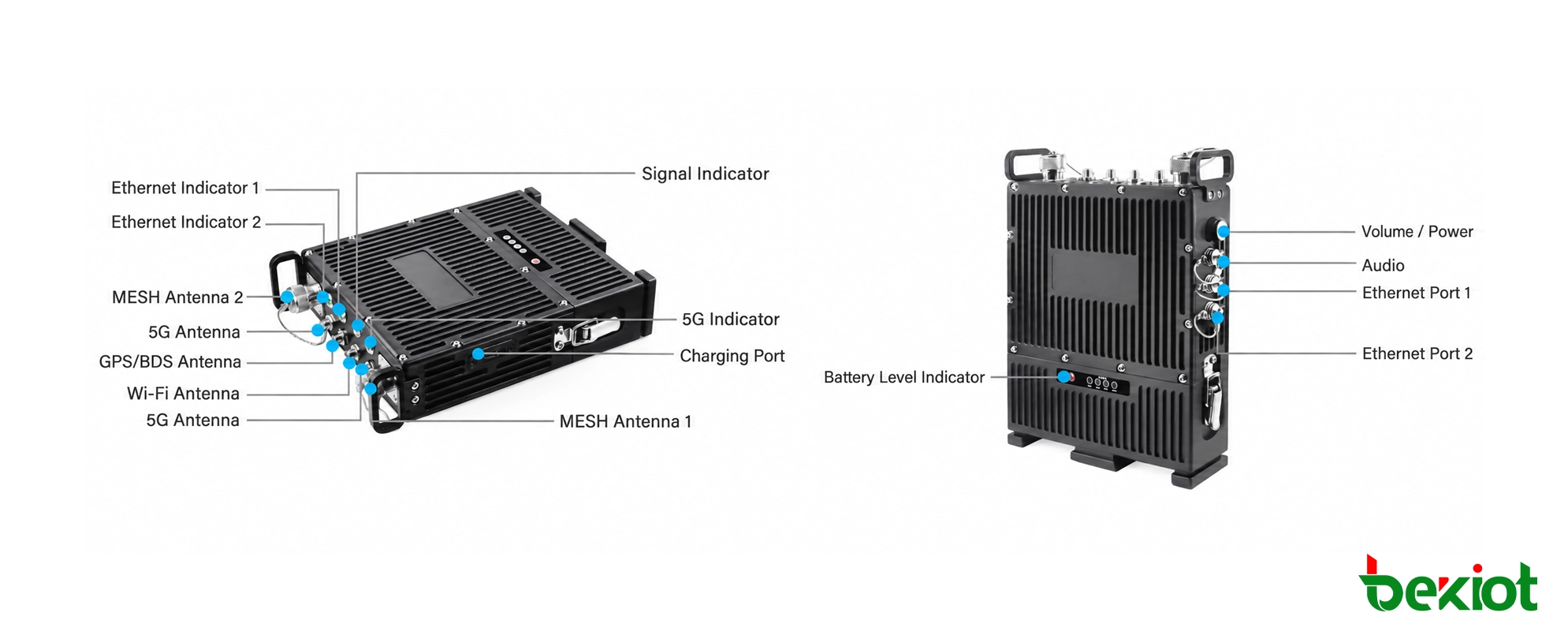
MEB92-36 provides two N-type female interfaces for MESH antennas, one SMA interface for GPS, two SMA interfaces for 5G antennas and one SMA interface for Wi-Fi.
These connections show that the device is intended to operate as part of a broader communication environment rather than as an isolated radio unit. The exact function of each connection depends on the configuration of the complete system.
Two 100 Mbps Ethernet interfaces are provided for wired IP connectivity. Compatible IP equipment can therefore be connected to the MANET node according to the project architecture.
In field deployments, these Ethernet connections may be used as the wired side of a broader wireless transport path. This is particularly relevant when cameras, computers, command equipment or other compatible IP devices need to exchange information through the MANET network.
Additional interfaces include an audio connection, SIM card slot, charging interface and volume/power control. The equipment specification also lists one DC 24 V power port.
Together with the removable battery, these interfaces allow the product to be incorporated into both portable deployments and wider field communication installations according to the power and connectivity design of the project.
Status indicators include one MESH indicator, two Ethernet indicators and one 5G indicator. These provide visible status information for the main network connections during deployment and operation.
Emergency communications and rescue command are among the main application areas identified for MEB92-36. When existing communication infrastructure is unavailable or insufficient, portable MANET nodes can be transported to the incident area and used to establish a temporary broadband network.
Different participating nodes can be distributed between field teams, relay positions and command-side locations. Because the network supports voice, data, video and positioning information, several communication services can share the same MANET infrastructure.
Multi-hop networking is also applicable to disaster-response and rescue operations where personnel are distributed throughout a changing environment.
Application examples include high-rise residential buildings, underground parking areas, large commercial complexes and metro facilities. In these environments, MANET terminals, relay equipment and command-side systems can be organized into a decentralized audio and video communication network.
The role of the relay layer becomes particularly important when teams are separated by distance or physical structures and the communication system needs additional intermediate nodes to connect different operating areas.
UAV video and data transmission is another listed application. Compatible UAV communication equipment can participate in a MANET containing ground-side nodes and relay equipment.
In such deployments, the wireless network can transport video and operational data between airborne and ground equipment while other nodes continue to participate in routing and relay forwarding.
Outdoor power projects and surveying operations often involve personnel and equipment spread across temporary work areas. MEB92-36 can provide a portable networking option where permanent communication infrastructure is not readily available.
The ability to use backpack, tripod and relay configurations gives deployment teams flexibility when selecting communication positions according to the actual work site rather than a fixed infrastructure layout.
Urban patrol private-network construction and routine patrol operations are also identified as target applications. Mobile communication nodes can form a flexible wireless network while operating across a distributed area.
The decentralized architecture is relevant to these deployments because participating devices do not need to remain connected through one fixed central node throughout the entire operation.
Shipboard transmission and maritime rescue are included among the application examples. Compatible MANET equipment can be distributed across vessels, UAVs, helicopters and other participating nodes to create a multi-hop communication network.
The exact architecture will depend on the marine operating environment, required coverage and participating communication equipment, but the underlying role of MEB92-36 remains the same: providing a portable broadband node that can participate in routing and relay forwarding.
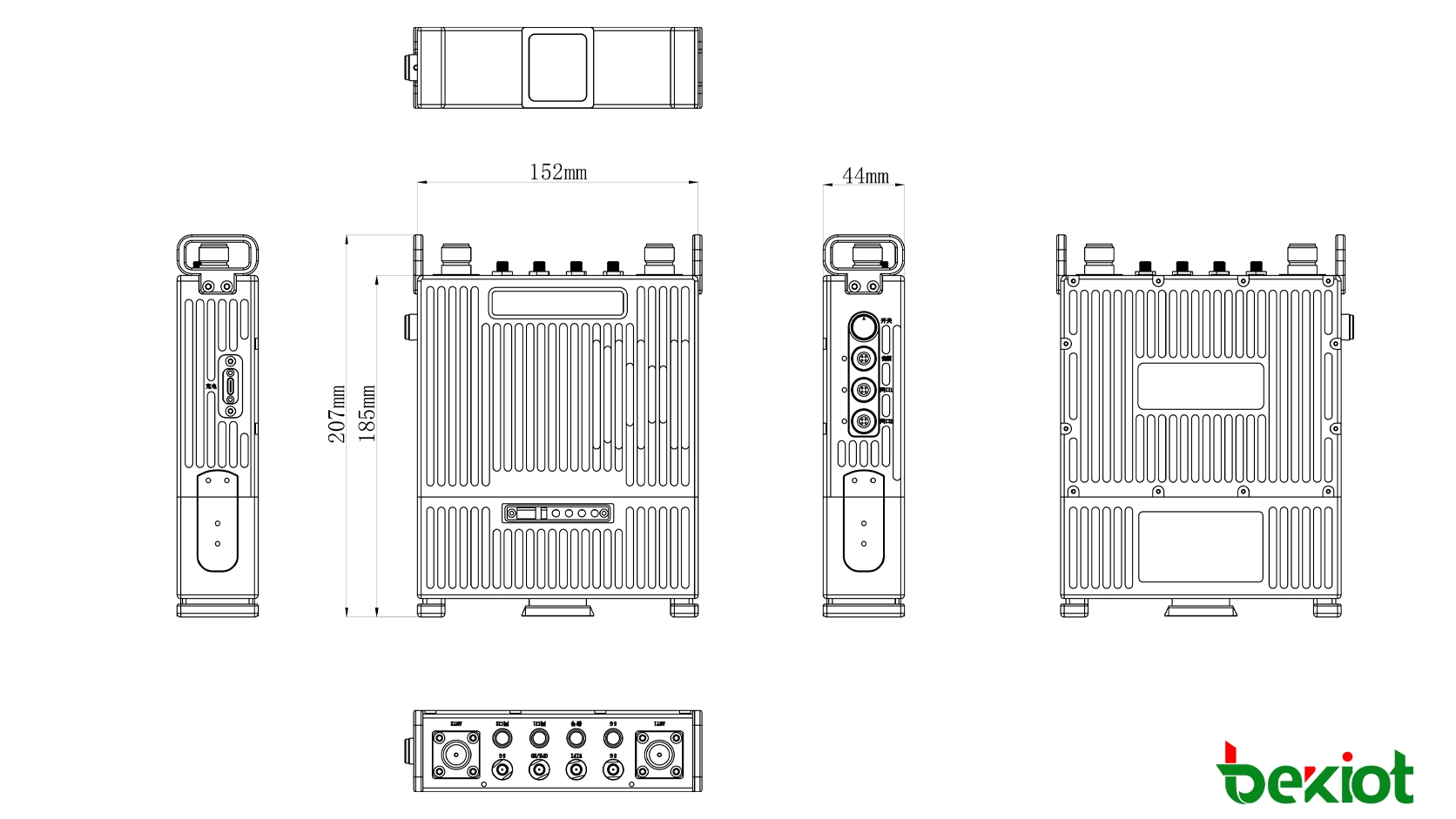
MEB92 measures approximately 207 × 152 × 44 mm, excluding antennas, and weighs approximately 1.7 kg, also excluding antennas.
Its compact enclosure and removable battery design allow the device to be carried as a backpack communication node while also supporting tripod, relay and temporary ground-station deployment.
Other radio and interface parameters, including operating frequency, transmit power, channel bandwidth, transmission capability, antenna connections and Ethernet interfaces, are described in the corresponding sections above so that each specification remains connected to its actual function and deployment context.
No. The available technical specification lists approximately six hours as standby time. It should not be presented as six hours of guaranteed continuous full-load operation.
No fixed communication distance is provided in the available technical parameters. Actual coverage depends on factors such as operating frequency, antenna configuration, terrain, node placement and the relay architecture used in the project.
No IP protection rating is provided in the available product specification. An IP rating should therefore not be stated unless additional verified manufacturer documentation is available.
| Model | MEB92 |
|---|---|
| Device Model | MEB92-36 |
| Product Type | SDR MANET Backpack Base Station / Backpack Relay |
| Radio Architecture | Software-Defined Radio (SDR) |
| Standard Frequency | 1350–1450 MHz |
| Custom Frequency | 350 MHz–6 GHz, customizable |
| Frequency Hopping | Optional |
| Transmit Power | 2 W × 2 |
| Channel Bandwidth | 1.25 / 2.5 / 5 / 10 / 20 MHz, adjustable |
| Modulation | BPSK / QPSK / 16QAM / 64QAM / 256QAM, adaptive |
| Transmission Capability | 50 Mbps @ 20 MHz |
| Receiver Sensitivity | -103 dBm @ 5 MHz |
| Network Capacity | Up to 64 nodes in same-frequency networking |
| Network Topology | Star / Linear / Mesh / Hybrid Dynamic |
| MESH Antenna Interfaces | 2 × N-type female (N-K) |
| GPS Antenna Interface | 1 × SMA |
| 5G Antenna Interfaces | 2 × SMA |
| Wi-Fi Antenna Interface | 1 × SMA |
| Power Port | 1 × DC 24 V |
| Ethernet | 2 × 100 Mbps Ethernet |
| Charging Interface | 1 × Charging Port |
| Control | 1 × Volume / Power Control |
| Audio | 1 × Audio Interface |
| SIM | 1 × SIM Card Slot |
| Status Indicators | MESH × 1 / Ethernet × 2 / 5G × 1 |
| Operating Temperature | -40°C to +55°C |
| Storage Temperature | -40°C to +85°C |
| Operating Humidity | 5%–95%, non-condensing |
| Weight | Approx. 1.7 kg, excluding antennas |
| Dimensions | 207 × 152 × 44 mm, excluding antennas |
| Battery Capacity | 12.6 V / 7 Ah |
| Battery Operating Temperature | -10°C to +55°C |
| Specified Standby Time | Approx. 6 hours |
| Average Power Consumption | 15 W |
| Peak Power Consumption | 22 W |