A clean room intercom system is designed to provide clear, hygienic, and reliable communication in sterile areas, controlled environments, and contamination-sensitive facilities. It allows operators, supervisors, nurses, engineers, and control room staff to communicate instantly without unnecessary room entry, repeated movement, or disruption to cleanroom procedures.
Related Product Introduction:Clean Room SIP Phone
For pharmaceutical workshops, laboratories, hospitals, biotechnology facilities, semiconductor plants, and precision manufacturing sites, ordinary telephones or handheld communication devices may not meet the hygiene, installation, and operational requirements of clean areas. A dedicated clean room intercom system helps maintain communication efficiency while supporting contamination control, workflow safety, and emergency response.
The Real Challenge of Cleanroom Communication
Communication Behind PPE and Cleanroom Barriers
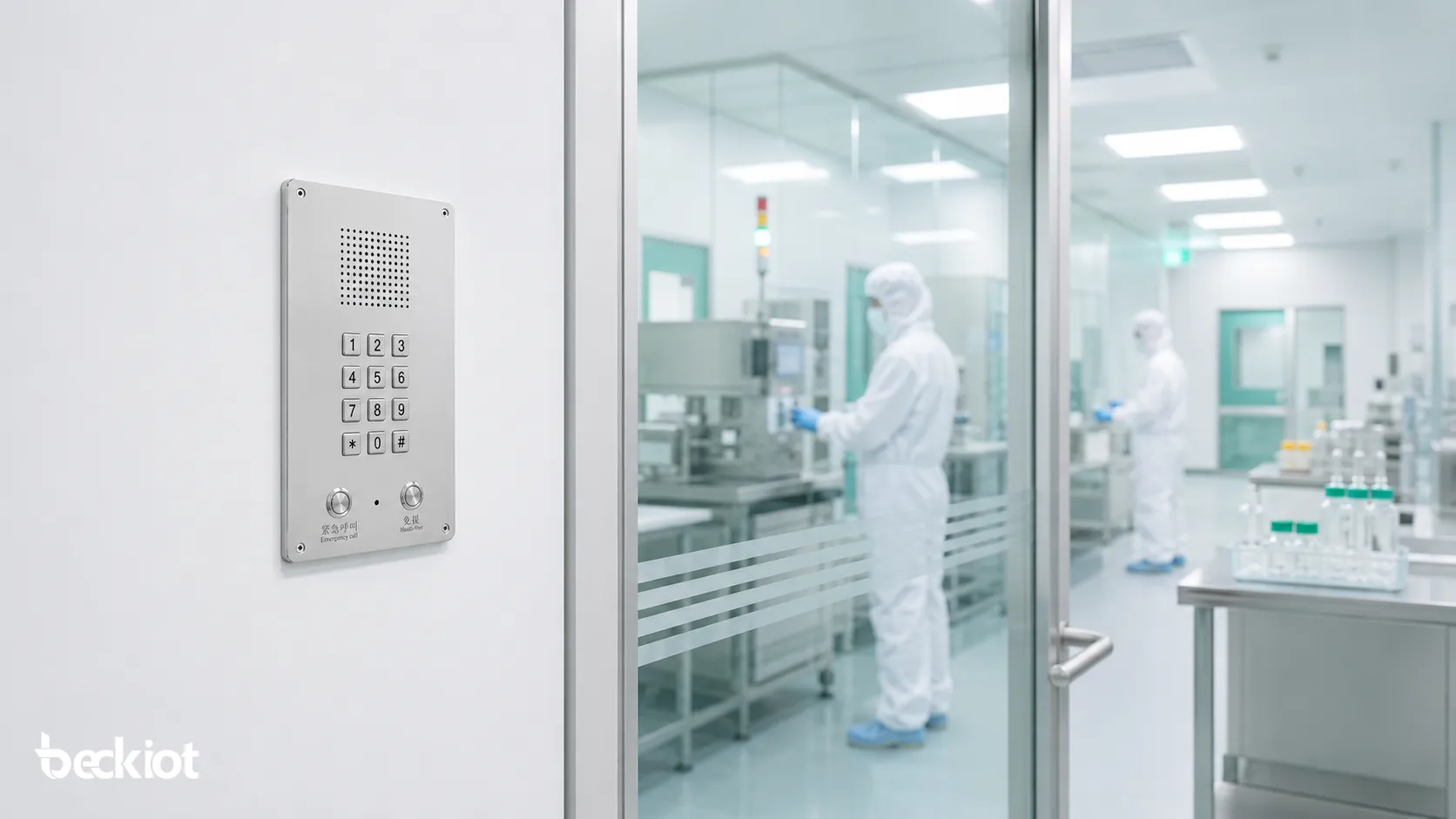
In sterile areas, staff often wear masks, gloves, hoods, gowns, protective clothing, or other PPE. These barriers can make face-to-face communication difficult and may reduce voice clarity, especially in areas with ventilation noise, production equipment, or laboratory instruments.
A clean room intercom system provides hands-free or one-touch voice communication between clean rooms, airlocks, corridors, control rooms, nurse stations, and management offices. Staff can confirm instructions, report process status, request assistance, or handle urgent situations without leaving their work zone.
Reducing Unnecessary Room Entry
Every unnecessary door opening may affect pressure balance, airflow control, and contamination management. In pharmaceutical, medical, and high-precision production environments, reducing unnecessary movement between zones is an important part of cleanroom discipline.
With a reliable clean room intercom system, operators can communicate across rooms and departments without physically entering the clean area simply to deliver a message. This improves communication speed while helping facilities maintain controlled workflows.
Hygienic Installation and Easy Cleaning
Cleanroom communication devices should be easy to clean, simple to maintain, and suitable for regular disinfection routines. Compared with standard office phones, clean room intercom terminals are usually designed with smooth surfaces, sealed structures, wall-mounted or flush-mounted installation, and minimal gaps that may collect dust or particles.
For projects with higher hygiene requirements, stainless steel panels, touchless activation, hands-free calling, and flush-mounted installation can be considered according to the actual site environment.
What Is a Clean Room Intercom System?
A clean room intercom system is a dedicated voice communication system used in sterile, dust-free, or controlled environments. It connects cleanroom terminals with control rooms, nurse stations, production offices, security rooms, or dispatch centers, allowing staff to communicate quickly without disturbing cleanroom procedures.
Modern systems often use SIP or VoIP technology, which means clean room intercom terminals can connect to an IP PBX, SIP server, dispatch platform, paging system, or enterprise communication network. This makes the system easier to expand, manage, and integrate with other facility systems.
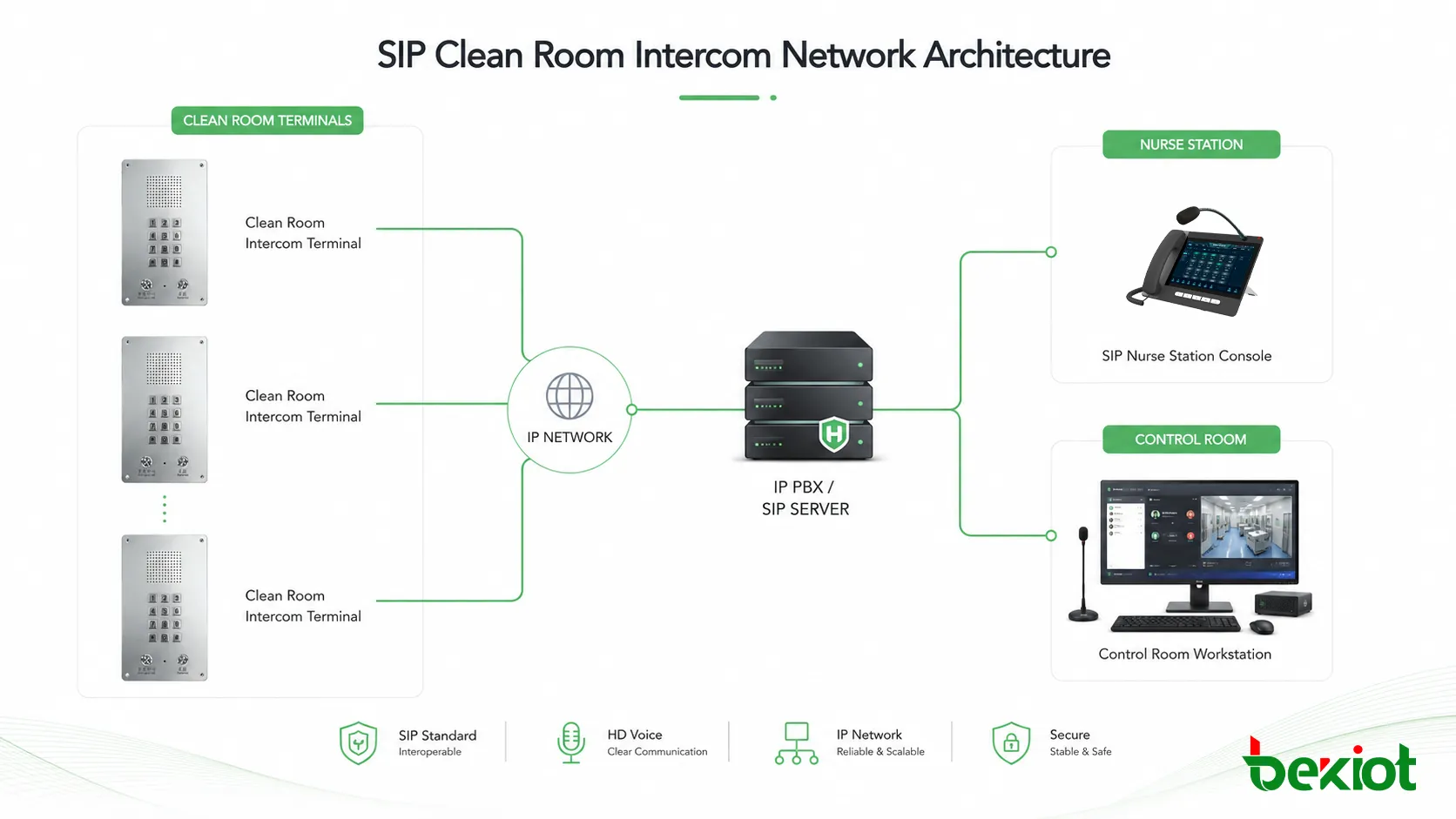
Main Components of a Clean Room Intercom System
Clean Room Intercom Terminals
Clean room intercom terminals are installed inside sterile areas, laboratories, production rooms, clean corridors, airlocks, or equipment rooms. They can support hands-free calling, one-touch calling, auto-answer communication, emergency calling, and daily coordination between different work areas.
Depending on the project requirements, the terminal can be designed as a SIP clean room phone, flush-mounted intercom panel, wall-mounted intercom station, or stainless steel communication terminal. Becke Telcom clean room SIP phone solutions can be used for projects that require hygienic installation, stable voice communication, and SIP-based system integration.
Control Room or Nurse Station Console
The control room, nurse station, or production management office is usually the central communication point of the system. Operators can receive calls from clean rooms, contact specific terminals, make announcements, coordinate emergency response, or monitor communication status.
In larger facilities, the control side can be connected with a dispatch platform, IP PBX system, public address system, CCTV system, access control system, or alarm system to build a more complete communication and management solution.
SIP Server or IP PBX Platform
A SIP server or IP PBX platform manages extension registration, call routing, group calling, call forwarding, call recording, and system integration. This IP-based architecture is suitable for multi-room, multi-floor, and multi-building cleanroom projects.
For facilities that already use VoIP or SIP communication, clean room intercom terminals can be integrated into the existing network, reducing system complexity and improving centralized management.
Key Features of a Clean Room Intercom System
Hands-Free Voice Communication
Hands-free communication is useful when workers are wearing gloves, handling materials, operating equipment, or following strict hygiene procedures. Staff can speak clearly without frequently touching the device, which helps reduce contact points and improves communication efficiency.
Clear Audio for Controlled Environments
Clean rooms may contain ventilation systems, air handling units, laboratory equipment, filling machines, or production lines. These background noises can make ordinary communication difficult. A reliable clean room intercom system should provide clear voice transmission, suitable speaker volume, echo control, and stable audio performance.
SIP and VoIP Integration
SIP-based clean room intercom systems can connect with IP PBX systems, SIP servers, dispatch platforms, recording systems, and enterprise VoIP networks. This allows facilities to manage internal communication, external calls, group paging, emergency calls, and system expansion through a unified communication architecture.
Touchless or One-Touch Calling
According to project requirements, the system can support one-touch calling, auto-answer, speed dial, or optional touchless activation. These functions help staff contact the control room, nurse station, maintenance team, or supervisor quickly during daily operation or emergency situations.
Easy Cleaning and Maintenance
Clean room intercom devices should be designed for convenient cleaning and long-term maintenance. Smooth panels, sealed front surfaces, embedded installation, and durable materials can help reduce dust accumulation and simplify routine cleaning work.
Emergency Calling and Alarm Linkage
In critical areas, the intercom system can support emergency call functions and priority communication. It can also be integrated with alarm systems, access control, CCTV, or public address systems, helping the control room respond faster when an incident occurs.
Typical Applications
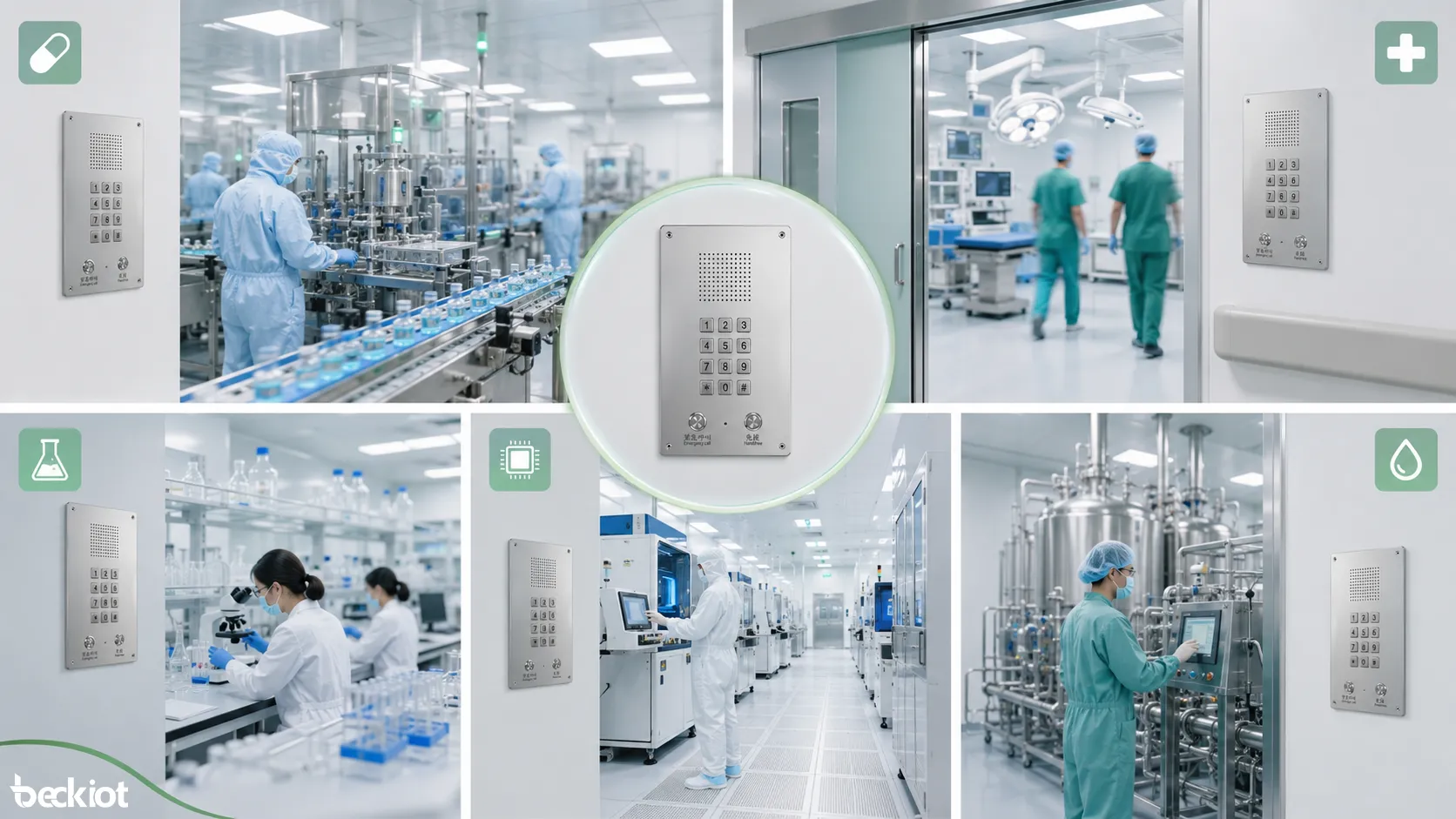
Pharmaceutical and GMP Workshops
In pharmaceutical production, clean room intercom systems support communication between operators, quality control teams, equipment rooms, material transfer areas, and central control rooms. They help reduce unnecessary movement and support controlled production workflows.
Hospitals and Sterile Medical Areas
Hospitals can use clean room intercom systems in operating rooms, isolation wards, sterile supply departments, clean corridors, laboratories, and ICU-related areas. The system helps medical staff communicate quickly while reducing unnecessary contact and movement between clean and non-clean areas.
Laboratories and Biotechnology Facilities
Laboratories and biotechnology facilities often require stable communication between lab rooms, observation areas, sample handling areas, equipment rooms, and safety management offices. Clean room intercom systems provide convenient communication while supporting controlled working procedures.
Semiconductor and Precision Manufacturing
Semiconductor plants and precision manufacturing facilities require strict dust control and process coordination. Clean room intercom systems help operators, engineers, and supervisors communicate during equipment operation, process adjustment, maintenance, and emergency handling.
Food and Aseptic Processing Areas
In food processing and aseptic packaging environments, clean communication terminals can help production teams, quality inspection staff, and control room personnel coordinate production tasks without unnecessary movement across controlled zones.
How the System Works
A typical clean room intercom system connects cleanroom terminals to a SIP server, IP PBX, or unified communication platform through the facility network. Each terminal can be assigned an extension number, call group, or dedicated calling rule.
When staff inside a clean room press a call button, use hands-free calling, or activate a preset call function, the system can connect the call to a control room, nurse station, security office, maintenance team, or other designated extension. The same system can also support group calls, paging, emergency calls, and integration with other communication endpoints.
For larger projects, the system can be combined with dispatch consoles, CCTV linkage, door control, alarm input, public address speakers, and recording systems. This creates a more complete communication loop from event discovery to voice confirmation, response coordination, and follow-up management.
How to Choose a Clean Room Intercom System
Check the Cleanroom Environment
Before selecting a system, it is important to understand the cleanroom classification, wall structure, cleaning method, network conditions, communication distance, and installation position. Different environments may require wall-mounted terminals, flush-mounted panels, stainless steel devices, or hands-free SIP intercom stations.
Confirm the Communication Workflow
A good system design should match the actual workflow of the facility. For example, a pharmaceutical workshop may need communication between production rooms and a central control room, while a hospital may need communication between sterile areas and nurse stations.
Choose SIP-Based Architecture for Expansion
SIP-based architecture is suitable for modern cleanroom projects because it supports flexible extension management, IP network deployment, multi-site expansion, and integration with existing VoIP systems. It also makes future upgrades easier.
Consider Hygiene and Maintenance Requirements
The selected device should be easy to clean, stable for long-term use, and suitable for the facility’s maintenance routines. For controlled environments, the structure, panel material, installation method, and cleaning compatibility should all be considered during system design.
Becke Telcom Clean Room Communication Solution
Becke Telcom provides clean room SIP phone and intercom solutions for sterile areas and controlled environments. The solution can support SIP voice communication, hands-free calling, one-touch calling, centralized management, IP PBX integration, and connection with dispatch or unified communication platforms.
For hospitals, laboratories, pharmaceutical workshops, biotechnology facilities, semiconductor plants, and precision manufacturing environments, Becke Telcom can provide clean room communication terminals and system design support according to the actual project environment.
The solution can be integrated with SIP servers, IP PBX systems, control room consoles, paging systems, CCTV, alarms, and access control systems, helping users build a reliable communication network for daily operation and emergency response.
Why Choose a Dedicated Clean Room Intercom System?
A dedicated clean room intercom system is not only a communication device. It is part of the facility’s operational management, contamination control, and emergency response process. By reducing unnecessary movement, improving voice clarity, and connecting clean areas with control rooms, the system helps staff work more efficiently and safely.
For cleanroom projects where hygiene, reliability, and system integration are important, choosing a professional clean room intercom solution can improve daily coordination and provide a stronger communication foundation for critical operations.
Conclusion
A clean room intercom system provides reliable communication for sterile areas, controlled environments, and contamination-sensitive facilities. It helps staff communicate clearly, reduce unnecessary room entry, support hygiene workflows, and respond faster to operational or emergency situations.
Whether used in pharmaceutical production, hospitals, laboratories, biotechnology facilities, semiconductor plants, or aseptic processing areas, a well-designed clean room intercom system can improve communication efficiency and support safer facility operation.
FAQ
What is a clean room intercom system?
A clean room intercom system is a dedicated voice communication system designed for sterile, dust-free, and controlled environments. It allows staff to communicate between clean rooms, corridors, control rooms, nurse stations, and management areas without disrupting cleanroom procedures.
Where is a clean room intercom system used?
It is commonly used in pharmaceutical factories, hospitals, laboratories, biotechnology facilities, semiconductor plants, food processing areas, and other controlled production environments.
Why not use a normal telephone in a clean room?
Normal telephones may have handsets, gaps, exposed surfaces, and structures that are difficult to clean. Clean room intercom devices are usually designed for hygienic installation, easy cleaning, and reliable communication in controlled environments.
Can a clean room intercom system connect with an IP PBX?
Yes. Many modern clean room intercom systems use SIP protocol and can connect with IP PBX systems, SIP servers, dispatch platforms, recording systems, and other VoIP communication networks.
Can the system support emergency calls?
Yes. A clean room intercom system can support emergency calling, priority communication, one-touch calling, and linkage with control rooms, alarm systems, CCTV, or public address systems according to the project design.
Is a SIP clean room intercom system suitable for multi-room facilities?
Yes. SIP-based systems are suitable for multi-room, multi-floor, and multi-building cleanroom facilities because they support extension management, network deployment, group calling, and centralized control.