When enterprises evaluate a VoIP system, the real challenge for IT teams is rarely whether the platform can simply make and receive calls. The bigger questions are whether call quality, system reliability, pricing transparency, security and compliance, third-party integrations, and future scalability can all meet business requirements at the same time. A 2026 survey of 236 IT professionals produced a notable result: among the standalone VoIP providers with sufficient responses, Ooma established a relatively clear lead, while the relationship between satisfaction, willingness to recommend, and individual feature scores became increasingly complex further down the rankings.
The survey did not compare the entire unified communications market as one category. Instead, it focused on providers that offer VoIP as a standalone service. The research initially covered 21 companies, but only six received enough valid responses to be included in the final results. Although this approach cannot represent every enterprise communications purchasing scenario, it provides a more focused view of the issues IT professionals care about when evaluating standalone VoIP platforms.
More importantly, competition in 2026 is no longer simply about call quality and price. Security, compliance, software integration, scalability, and AI capabilities are now part of the evaluation process. The survey results suggest that these newer dimensions are widening the gap between providers and exposing uneven development across the VoIP market.
What 236 IT Professionals Said
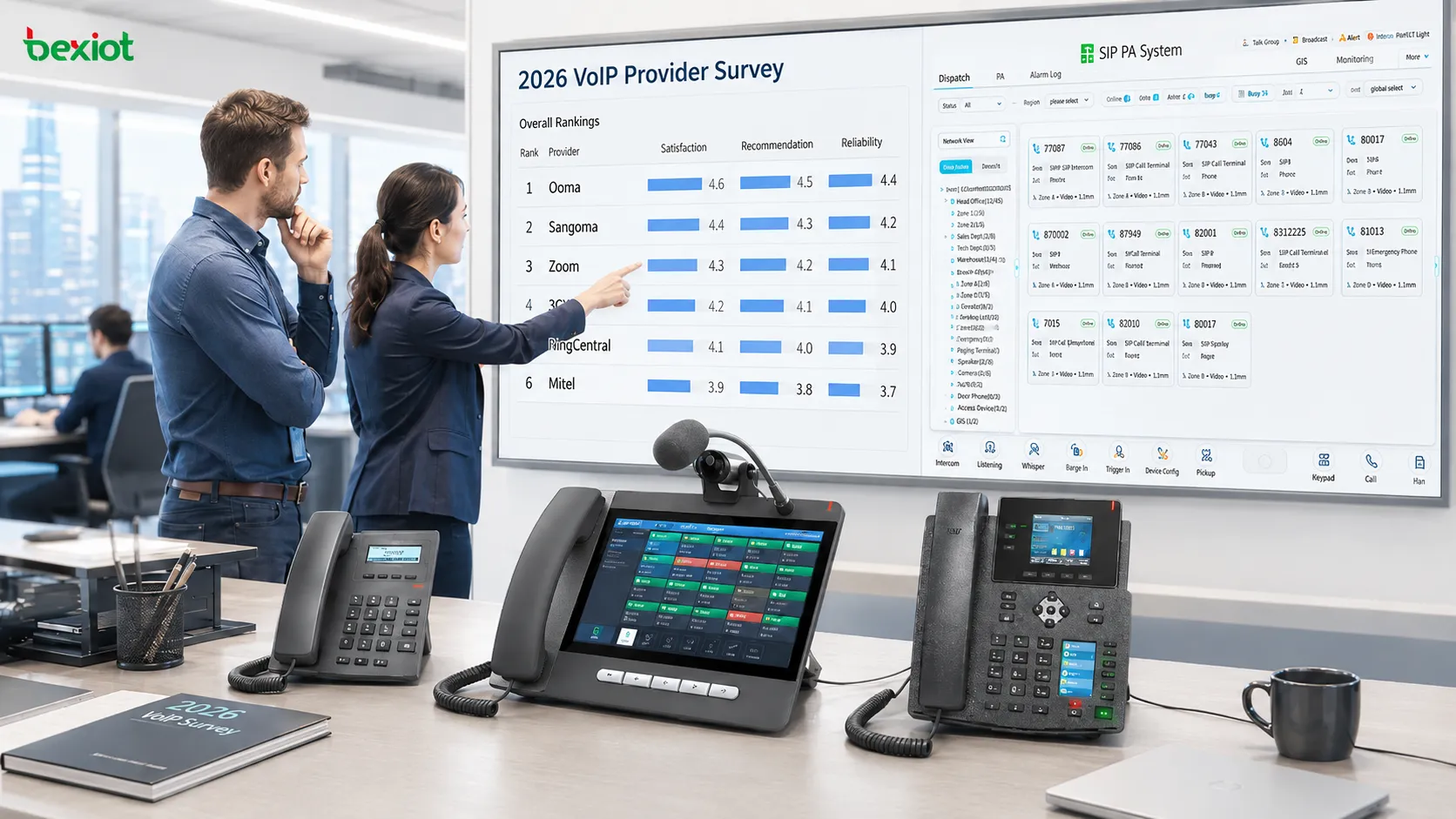
Looking at the overall results, Ooma delivered the most consistent performance among the six providers with sufficient survey responses. Its combined feedback gave it a relatively clear lead. For enterprises conducting an initial shortlist, this suggests that Ooma deserves consideration as an early evaluation candidate rather than being treated as just one option among a large group of providers.
The picture becomes much more complicated in the second tier. Sangoma received favorable feedback for call quality, reliability, and cost transparency, three of the most fundamental purchasing criteria for an enterprise phone system. However, its scores were weaker in AI capabilities, third-party software integration, and security and compliance.
Security and compliance deserve particular attention. An organization can reduce the priority of AI features depending on its business requirements, and it may be willing to accept limited integration with certain applications. However, if a platform cannot meet internal security or regulatory requirements, the barriers to adoption usually become much higher. Strong traditional voice performance alone is no longer enough to sustain the competitiveness of a modern enterprise VoIP platform.
Zoom followed closely in user satisfaction and consistently placed second or third across several feature categories. However, it ranked only fourth when respondents were asked whether they would recommend the platform to their peers. That gap is revealing: users may consider a system generally effective without necessarily feeling confident enough to recommend it.
3CX showed the opposite pattern. Its recommendation score was actually higher than Zoom's, but weaker overall satisfaction and feature results prevented it from moving higher in the combined ranking. For procurement teams, this is a reminder that neither recommendation scores nor satisfaction ratings should be viewed in isolation. Functional capabilities, real-world user experience, and willingness to recommend need to be considered together.
Ranking Gaps Reveal New Buying Priorities
The results for RingCentral and Mitel reinforce another point: a single strength is no longer enough to earn consistently high marks in the enterprise VoIP market.
RingCentral had the second-largest number of respondents in the survey, giving its results a useful level of reference. Overall, slightly more users were satisfied than dissatisfied, but slightly fewer respondents said they would recommend RingCentral to a peer than those who would not. This places the platform firmly in the middle of the group.
One of RingCentral's clearer strengths was scalability, where it ranked second overall. For organizations with multiple offices, growing user populations, or expanding communications requirements, scalability is an obvious advantage. However, its fifth-place ranking for cost transparency highlights another issue that deserves close attention during procurement.
The real cost of an enterprise communications system often goes beyond the base subscription fee. Numbers, endpoints, feature licenses, integrations, migration, and long-term operations can all contribute to total cost. The survey did not break down these expenses in detail, but a weaker cost-transparency score still suggests that buyers should define pricing boundaries and long-term cost models before committing to a platform.
Mitel finished at the bottom of the six-provider group. Although its satisfaction results were not entirely negative, fewer than one-third of respondents said they would recommend the service to a peer. In the feature rankings, Mitel placed fourth for call quality and fifth for software integration, while most of its other evaluated features remained near the bottom of the list.
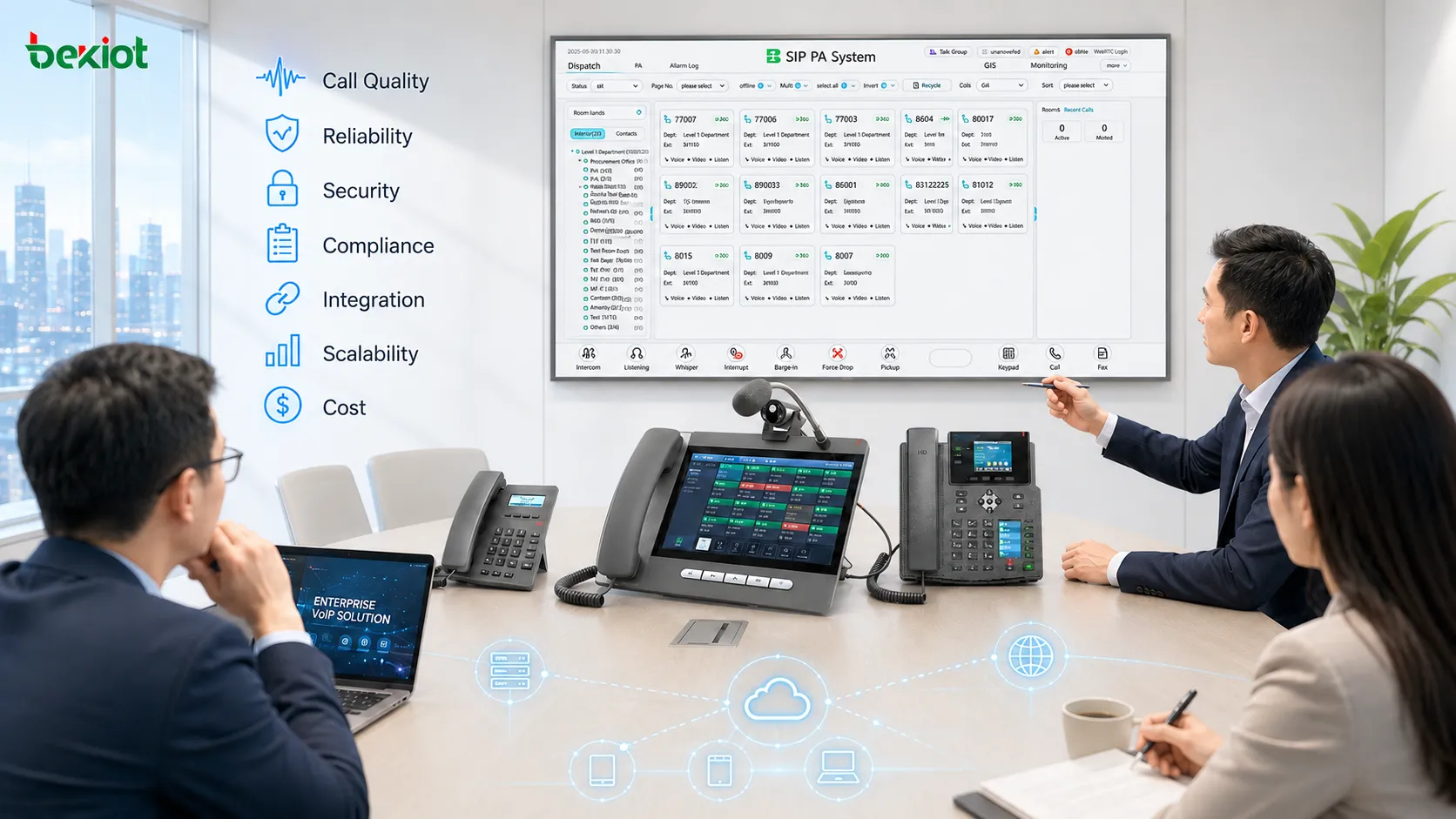
The broader takeaway is that VoIP procurement is no longer simply about choosing a phone system. Enterprises are selecting a communications platform that must fit into the existing IT environment. IT departments now need to evaluate not only whether calls sound clear and the service remains stable, but also whether the platform can align with the broader IT architecture, including software ecosystems, scaling models, security policies, compliance requirements, and budget management.
This also means organizations should not make purchasing decisions by simply following the ranking order. A company with many branch offices may place greater weight on scalability. A highly regulated organization may prioritize security and compliance. Companies that already depend heavily on CRM, collaboration software, and business applications need to examine APIs and application integration much more closely.
Why AI Features Still Fall Short
Among all the survey metrics, AI deserves separate attention.
AI was the only feature category in which some providers received negative scores, and no vendor demonstrated an overwhelming lead. Even Ooma, the strongest overall performer, scored only 73.9% for AI capabilities. At the other end of the scale, Mitel recorded an AI score of -57.1%, the lowest result in the category.
This does not mean enterprises have no interest in AI. Rather, it suggests that AI capabilities in current VoIP platforms have not yet delivered sufficiently clear value for a broad range of users. IT professionals are clearly willing to evaluate these tools, but AI has not yet become as mature or dependable a purchasing factor as call quality, reliability, or scalability.
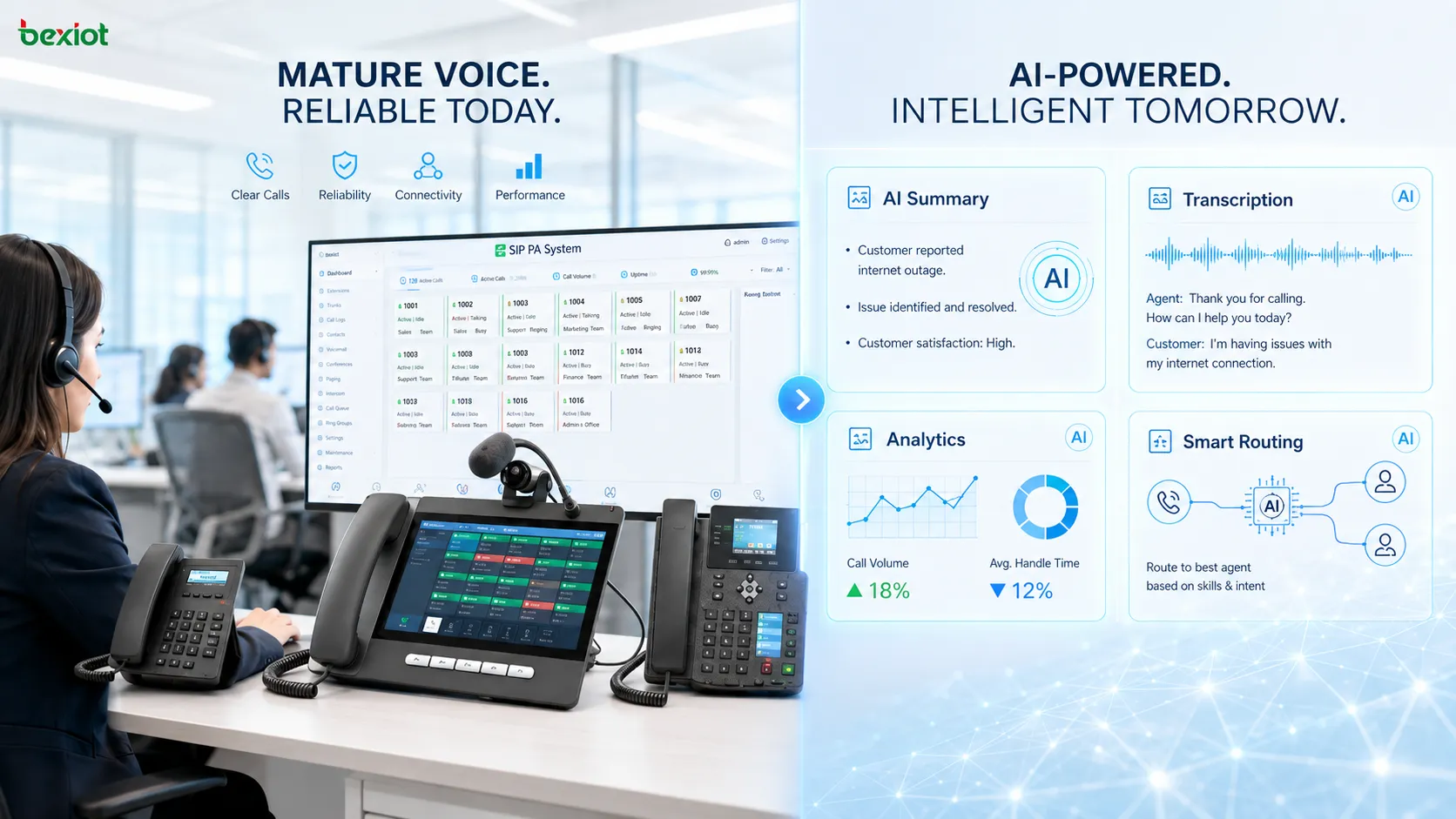
VoIP vendors have been adding AI to voice communications in areas such as automated summaries, intelligent transcription, call analytics, speech recognition, smart routing, and other forms of automation. For enterprise IT teams, however, the presence of a feature and the practical value of that feature are two very different things.
If AI capabilities increase licensing costs without significantly reducing manual work, or if generated summaries and analytics still require extensive human review, their business value becomes harder to justify. Likewise, if AI introduces additional complexity around data processing, permissions, or compliance, organizations may become more cautious rather than more enthusiastic.
The 2026 VoIP market therefore shows a clear transitional pattern. Core communications capabilities are already mature, while vendors are looking to AI, software integration, and intelligent automation as new areas of differentiation. User acceptance of these newer capabilities, however, has not yet caught up with the pace of product marketing.
From a purchasing perspective, this creates a relatively straightforward priority order. AI can be treated as a value-added feature, but in most enterprise environments, reliability, call quality, security and compliance, integration, scalability, and cost structure should still be validated first.
Should Enterprises Follow Rankings or Business Needs?
The easiest mistake to make with these results is to treat the first-place provider as the best choice for every organization. In practice, the survey is better used to narrow a shortlist than to serve as a final purchasing decision.
Ooma's lead indicates relatively strong overall acceptance among the IT professionals surveyed. Sangoma's results show that traditional voice quality and reliability still matter. The contrast between Zoom and 3CX demonstrates that recommendation and satisfaction are not interchangeable. RingCentral illustrates the possible trade-off between scalability and pricing transparency. Mitel, meanwhile, shows that acceptable performance in a few categories may not be enough to offset consistently weaker results across the broader feature set.
What enterprises really need to do is map these evaluation criteria back to their own operating environment. A company with only a few dozen employees and an enterprise with thousands of users, multiple regional offices, and complex compliance requirements will naturally define a suitable VoIP system very differently.
Before purchasing, organizations should test the platform in their actual network environment and validate number migration, endpoint compatibility, critical business integrations, and security permissions. Cost-conscious companies should also separate initial pricing from the ongoing costs that appear as the deployment expands. Only then can a public ranking become a useful procurement reference rather than a simple popularity list.
The 2026 survey suggests that the VoIP market has entered a stage where there is no obvious universal choice. Market leaders still exist, but enterprises are no longer buying only a voice service. They are selecting a communications platform that will operate inside the IT environment for years. Emerging VoIP companies such as Becke Telcom are also attempting to differentiate themselves through areas such as security, compliance, and AI capabilities, but whether they can balance core communications performance with innovation will still need to be validated by the market. Looking ahead, the providers most likely to earn lasting recommendations from IT teams will be those that find the right balance between reliable communications, security, software ecosystems, transparent pricing, and genuinely useful AI.
Frequently Asked Questions
Why did only six of the 21 VoIP providers make the final ranking?
The survey initially covered 21 companies that offer VoIP as a standalone service, but only six received enough responses from IT professionals to support a meaningful comparison. As a result, the final rankings focused on those six providers.
Does a higher recommendation score always mean a higher overall ranking?
No. 3CX received a higher recommendation score than Zoom, but weaker satisfaction and feature results kept its overall position below Zoom. Recommendation is only one part of a broader evaluation.
Do weak AI scores mean enterprises should ignore VoIP AI completely?
No. Lower overall scores mainly indicate that the market is still maturing. Enterprises can test AI functions that directly support their workflows, but the number of AI features alone should not determine the choice of an entire communications platform.
How should enterprises choose between standalone VoIP and UCaaS?
The two approaches support different procurement strategies. Standalone VoIP makes it easier to focus specifically on voice capabilities, while UCaaS typically combines voice, video, messaging, and collaboration in a broader suite. The right choice depends on the existing software environment, required feature scope, and whether the organization wants to consolidate communications under a single platform.