Emergency communication systems often handle different types of calls at the same time. A routine assistance request, a security event and a critical emergency call may enter the same communication network, but they should not always receive the same level of response. Priority calling allows SIP emergency intercom systems to identify important events, apply predefined routing rules and ensure that urgent communication reaches the appropriate personnel first.
In a SIP-based emergency communication architecture, priority calls are managed through a combination of endpoint configuration, SIP server policies, IP PBX routing rules and dispatch procedures. The purpose is not simply to assign a higher value to one device, but to create a reliable communication workflow where emergency calls can be recognized, delivered and handled according to operational requirements.
A complete priority call design considers multiple factors, including call level, destination group, operator availability, network conditions, preemption policy and recording requirements. This approach is widely used in industrial facilities, transportation infrastructure, public buildings and other environments where communication delays may affect safety.
Understanding Priority Calls in SIP Emergency Communication
Priority calls define how different communication requests are processed when multiple calls exist within the same system. In a standard SIP environment, all endpoints can establish communication sessions, but emergency communication requires additional rules to determine which calls should receive immediate attention.
A SIP emergency intercom can be assigned a priority level that influences how the communication platform handles the call. When the device initiates a request, the SIP server or IP PBX can identify the priority information and apply the corresponding routing strategy.
A typical priority structure may include:
Emergency call: The highest priority level used for immediate assistance and safety-related incidents.
Security call: Used for security events requiring operator attention.
Routine assistance call: Used for normal communication requests.
The number of priority levels depends on the project requirements. Large facilities may define additional levels to match their internal response procedures, such as different priorities for production areas, security zones and command centers.
Without priority management, an emergency request may enter the same queue as normal communication traffic. In a busy environment, this may delay response time and reduce the effectiveness of the emergency system.
Related Product:SIP Emergency Intercom
Priority Assignment at the Device Level
The first step in configuring priority communication is defining the role of each endpoint. Different communication points may require different priority settings according to their location and operational importance.
For example:
An emergency intercom installed near hazardous equipment may use the highest priority level.
A security entrance communication point may use a security priority level.
A general assistance terminal may use a standard priority level.
This configuration allows the system to distinguish between different communication requirements instead of treating every call equally.
Configuring SIP Emergency Call Priority and Routing Rules
Priority configuration is not completed only by assigning a level to an emergency intercom. The SIP communication platform must also define how the call is routed, who receives it and what actions should occur after the call is received.
A typical priority call configuration process includes:
Creating or selecting the emergency communication extension.
Assigning a priority level according to the application.
Defining the primary response destination.
Configuring backup destinations and escalation rules.
Setting preemption behavior for emergency situations.
Testing the complete communication workflow.
Emergency Extension Configuration
Each SIP emergency intercom should have a clearly defined identity within the communication system. This may include SIP extension number, physical location, department assignment and emergency category.
For example, an intercom installed in a chemical production area may be configured differently from a visitor assistance terminal at a building entrance. The communication platform uses this information to apply the correct routing rules.
SIP Routing Rules and Destination Management
After the priority level is assigned, the SIP server or IP PBX applies routing rules to determine where the call should be delivered.
A routing rule may define:
Primary operator destination.
Backup response group.
Call timeout period.
Escalation path.
Recording requirements.
For example, an emergency call from an industrial area may first be routed to a local control room. If the call is not answered within the configured time, it can be escalated to a central operation center.
Priority Identification in SIP Systems
In SIP-based architectures, priority handling is normally implemented through server-side rules rather than relying only on the physical communication terminal.
The SIP platform evaluates information such as extension identity, destination rules and configured policies to determine how the call should be processed.
This design provides flexibility because priority logic can be modified centrally without changing every field device configuration.
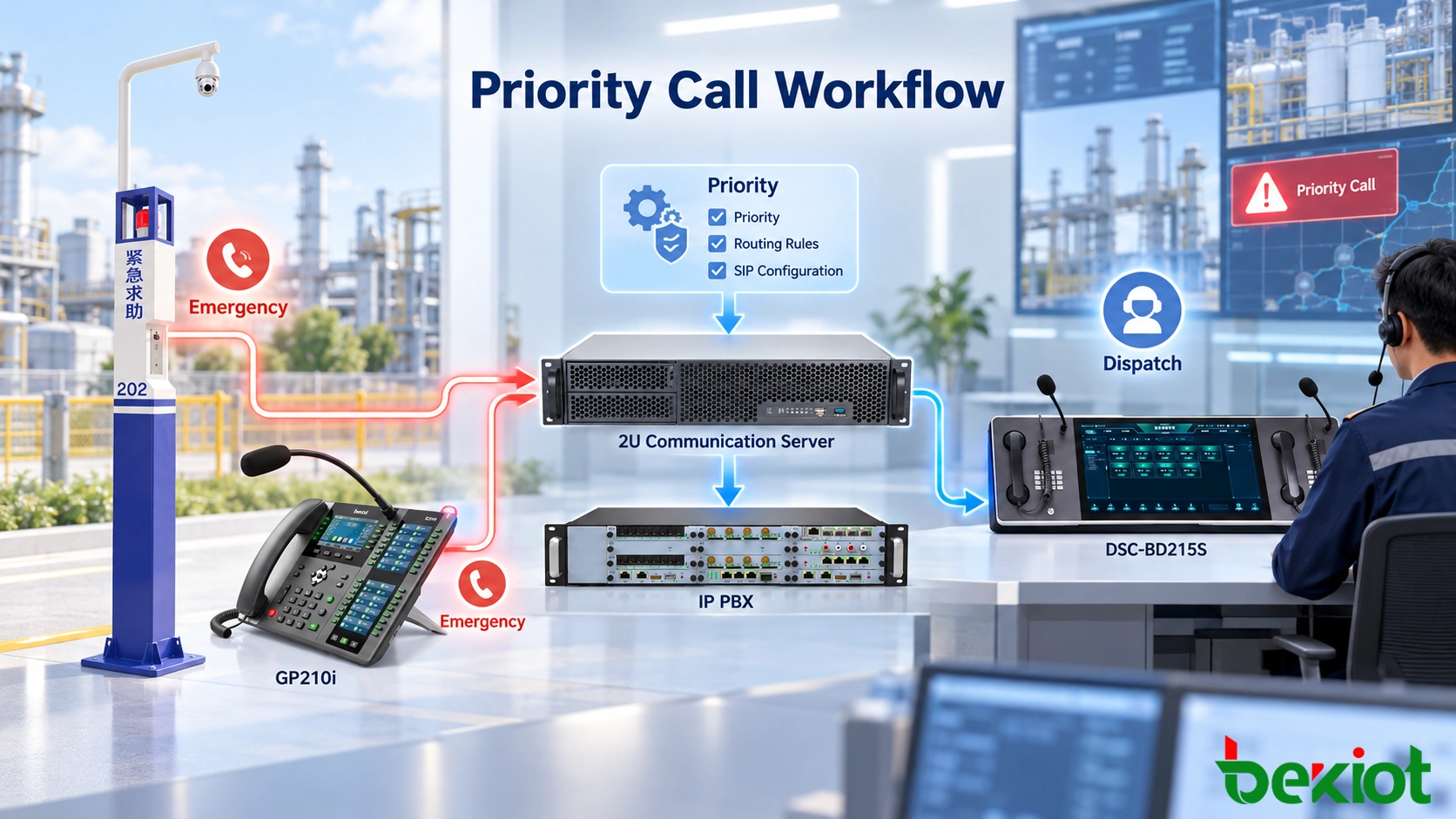
Priority call configuration workflow showing emergency extension setup, routing rules and response handling.
Priority Call Preemption and Emergency Override Mechanisms
Priority communication becomes especially important when normal calls are already active. In these situations, emergency systems may require preemption or override functions to ensure that critical communication can still reach the responsible personnel.
Normal Call Handling
In normal operation, SIP calls follow standard routing rules:
SIP Phone → IP PBX → User
Each communication session is handled according to user availability and configured call policies.
Emergency Call Override
When a high-priority emergency call is generated, the system evaluates the priority level and applies the configured emergency policy.
A typical process includes:
The SIP platform receives an emergency call request.
The system identifies the priority level.
Lower-priority calls may be placed on hold or redirected according to policy.
The emergency call is delivered to the designated response personnel.
Preemption does not mean randomly disconnecting users. It is a controlled function designed for specific emergency scenarios where communication availability is more important than maintaining normal sessions.
Integrating Priority Calls with IP PBX and Dispatch Platforms
The SIP server or IP PBX is the core component responsible for managing priority communication. It receives call requests from SIP emergency intercoms, evaluates configured rules and delivers the call to the correct response location.
In small deployments, priority calls may be routed directly to designated SIP phones. In larger facilities, emergency communication is usually connected with dispatch platforms that allow operators to manage multiple calls, view location information and coordinate response activities.
IP PBX Priority Call Configuration
An IP PBX provides the call control functions required for priority communication. Administrators can configure emergency routes, priority extensions and response groups according to the requirements of the facility.
Typical IP PBX priority settings include:
Emergency extension numbers.
Priority-based dial plans.
Dedicated emergency destinations.
Backup response groups.
Call forwarding and escalation rules.
Emergency call recording policies.
For example, an emergency intercom installed in a hazardous production area can be configured to call a dedicated control room extension first. If the primary operator is unavailable, the system can automatically transfer the call to another response group.
Related Product:IP PBX System
Dispatch Console Integration
A dispatch console provides centralized management for emergency communication. Compared with a standard SIP phone, a dispatch platform can handle multiple priority calls, display caller information and support coordinated response procedures.
A typical priority dispatch workflow includes:
Receiving a high-priority SIP emergency call.
Identifying the source location.
Displaying related communication information.
Connecting with response personnel.
Recording operator actions and communication history.
This architecture is commonly used in industrial control rooms, transportation operation centers, security command centers and other environments where multiple emergency communication points must be managed centrally.
Multi-Level Communication Management
Large organizations often require different response levels for different types of events. A local security office may handle routine assistance calls, while a central emergency center manages critical incidents.
The SIP platform can define communication policies according to:
Location.
Incident category.
Time schedule.
Operator availability.
Emergency priority level.
This structure prevents unnecessary escalation while ensuring that important events receive appropriate attention.
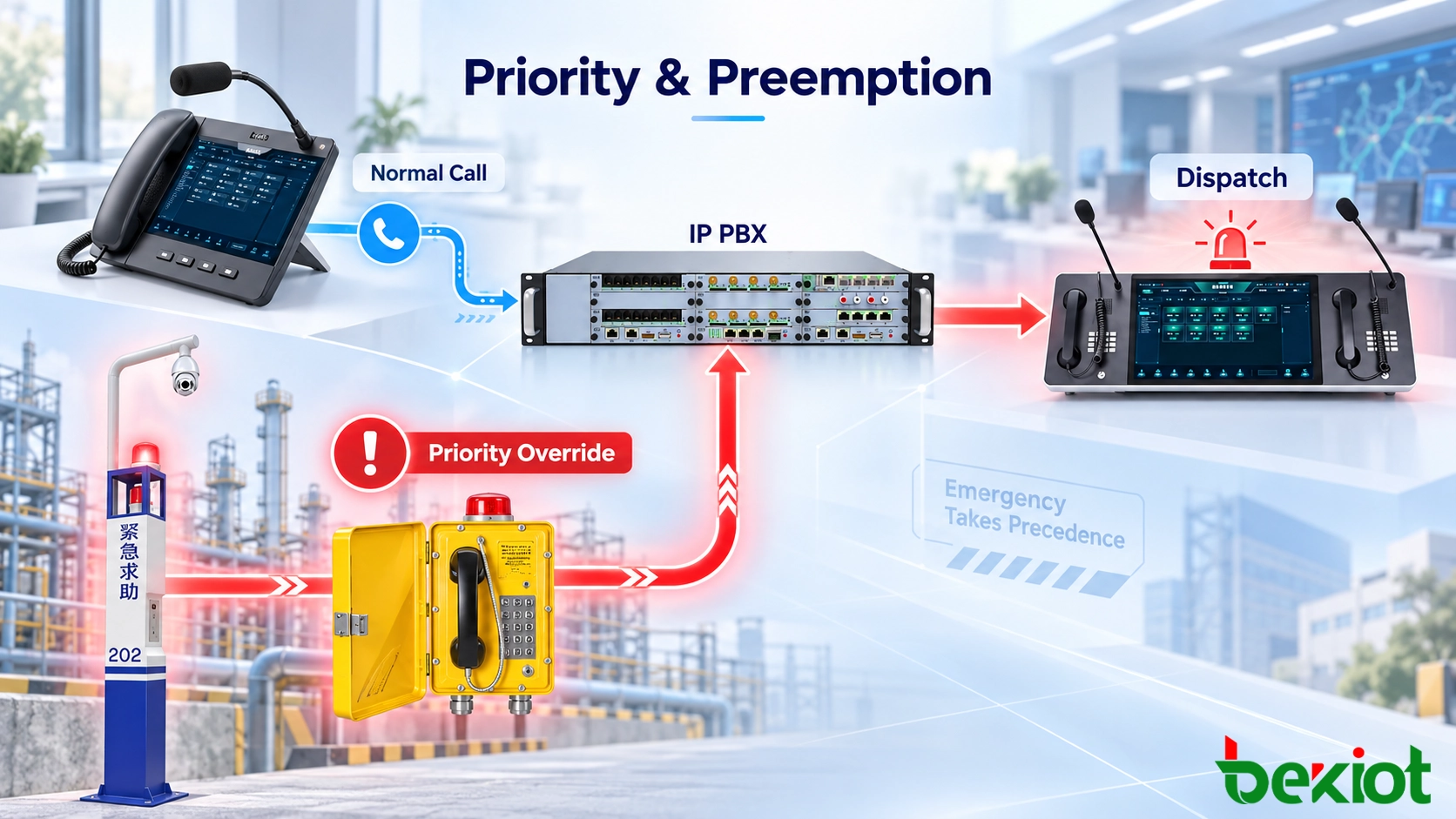
SIP priority call architecture showing emergency intercoms connected with IP PBX and dispatch platforms.
Deployment Considerations for Reliable Priority Communication
Priority calls depend on more than software settings. Reliable emergency communication requires proper planning of network infrastructure, device configuration, power supply and operational procedures.
Network Design and Quality Management
SIP emergency communication systems are often deployed across large facilities, including factories, campuses, transportation sites and outdoor areas. Network performance directly affects call establishment time, voice quality and system availability.
Important network considerations include:
VLAN separation between voice and other network traffic.
QoS configuration for SIP signaling and RTP media.
Sufficient bandwidth for voice and integrated video services.
Network redundancy for critical locations.
Reliable PoE power supply for field devices.
A properly designed network ensures that emergency calls can be established quickly even when the communication environment is under heavy usage.
Device Configuration and Testing
Before deployment, each emergency communication point should be tested according to the defined priority workflow. Verification should include:
SIP registration status.
Emergency destination numbers.
Priority level assignment.
Call routing behavior.
Preemption function.
Recording operation.
Testing should include both normal operating conditions and emergency scenarios to ensure that priority rules behave as expected.
Industrial Environment Requirements
Many priority communication systems are installed in demanding environments, including factories, energy facilities, chemical plants and hazardous areas.
In these applications, equipment selection should consider environmental factors such as dust, moisture, vibration, temperature variations and hazardous area requirements.
For hazardous industrial environments, Becke Telcom explosion-proof communication products such as EX-BH621 explosion-proof telephone can be integrated into SIP-based emergency communication architectures. These devices allow field personnel to communicate with control rooms while supporting reliable communication in demanding industrial locations.
The selection of industrial communication equipment should always be based on project requirements, environmental conditions and applicable safety requirements.
Related Product:Explosion-Proof Telephone
Recording and Event Analysis
Emergency priority calls often require traceability after an incident. Recording and logging functions allow organizations to review communication history, operator actions and response procedures.
Depending on the system design, records may include:
SIP call details.
Call audio recordings.
Priority event history.
Operator response records.
These records support incident investigation, operational improvement and compliance requirements.
Applications of SIP Priority Communication Systems
SIP priority communication systems are widely used in environments where different communication requests must be handled according to urgency and operational importance. The core requirement is not only establishing a voice connection, but ensuring that critical communication reaches the correct personnel without unnecessary delay.
By combining SIP emergency intercoms, IP PBX systems, dispatch platforms and industrial communication terminals, organizations can create structured response workflows for different operational scenarios.
Oil and Gas Facilities
Oil and gas facilities often include hazardous areas, remote operating zones and centralized control rooms. Communication systems in these environments must support reliable interaction between field personnel and operators while maintaining clear priority rules.
SIP emergency intercoms and explosion-proof communication devices can be configured with different priority levels according to location and operational requirements. A critical field call can be routed directly to the control center, while routine communication follows standard procedures.
Chemical and Manufacturing Plants
Chemical plants and manufacturing facilities may require communication systems that support both daily operations and emergency response. Production areas, storage zones and safety locations can have different communication priorities.
For example, an emergency communication terminal near production equipment may use a higher priority level than a general assistance point. When an abnormal condition occurs, the system can ensure that the appropriate response team receives the call first.
Mining and Energy Sites
Mining operations and energy facilities often contain large areas where direct communication between field locations and operation centers is essential. Priority communication helps ensure that safety-related calls are not delayed by normal traffic.
Industrial SIP telephones, explosion-proof telephones and emergency communication terminals can be integrated into SIP-based platforms to support communication between remote areas and centralized control rooms.
Transportation Infrastructure
Transportation facilities such as railway stations, tunnels, airports and parking areas often deploy emergency communication points across large public spaces.
Priority calling allows assistance requests, security events and emergency incidents to follow different response paths. Operators can quickly identify the importance of each event and coordinate the appropriate action.
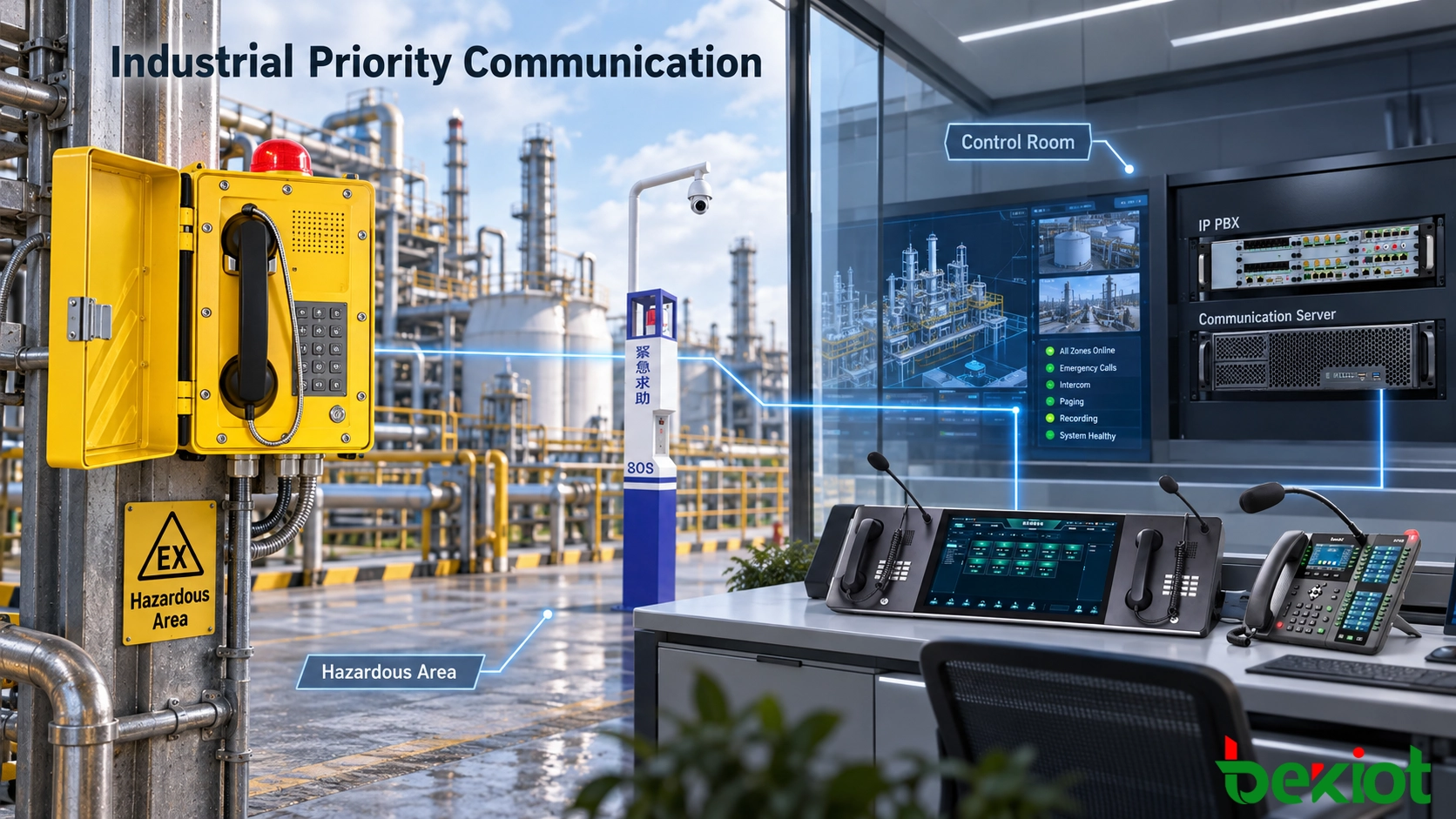
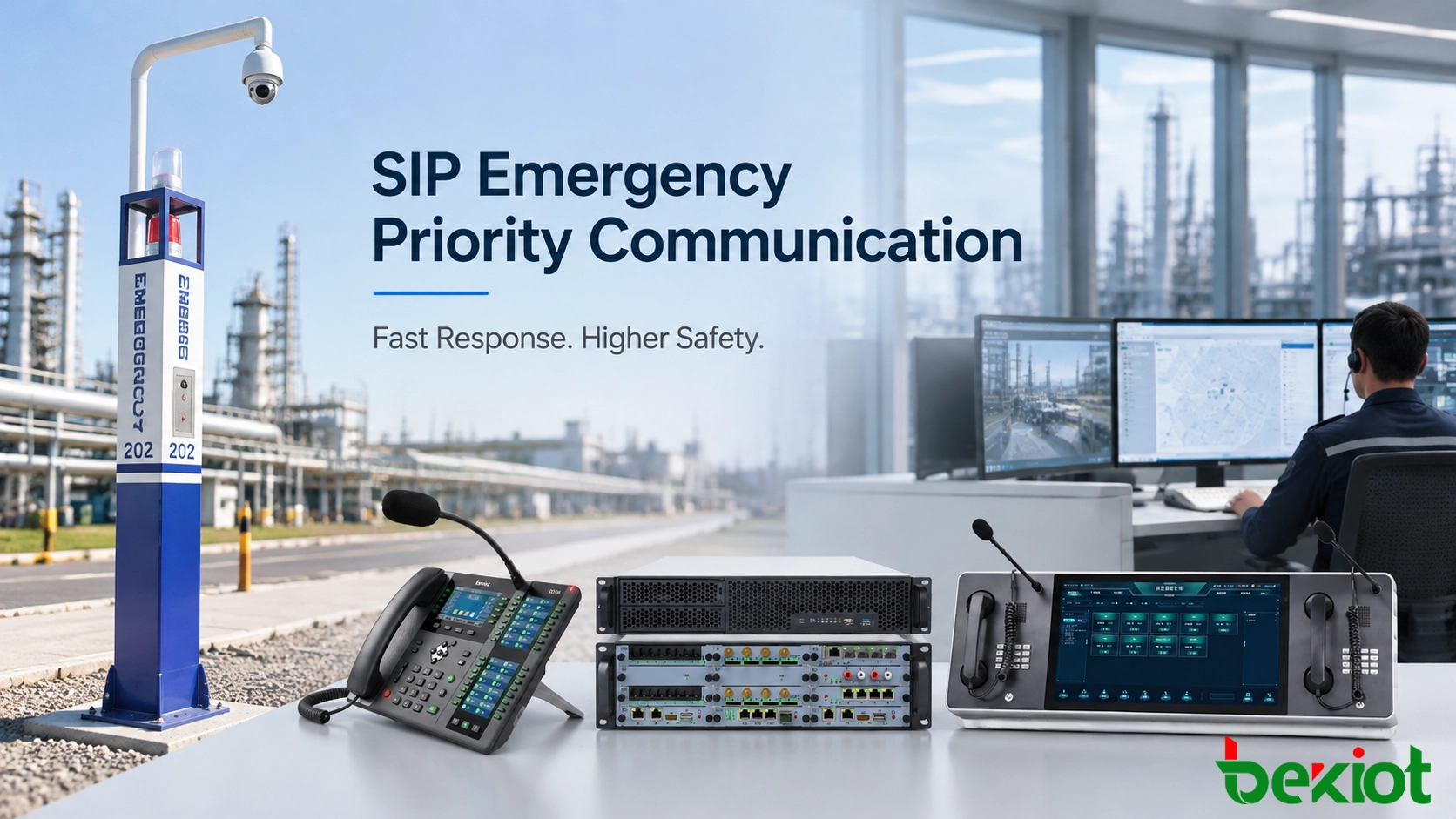
Industrial SIP priority communication application showing emergency terminals, control systems and operator response.
Building a Reliable SIP Priority Communication System
A priority communication system is not created only by assigning different call levels. Effective emergency communication requires coordination between endpoint configuration, SIP infrastructure, routing policies, network design and response procedures.
The most reliable systems define clear rules before deployment:
Which devices can initiate priority calls.
Which personnel receive different emergency levels.
When preemption should occur.
How calls are escalated when unanswered.
How communication records are maintained.
For organizations operating critical facilities, priority calling provides a structured method to manage communication resources during normal operations and emergency situations.
Becke Telcom SIP communication solutions support industrial telephones, SIP emergency intercoms, explosion-proof communication equipment and IP-based communication platforms that can be integrated into emergency response architectures according to project requirements.
FAQ About SIP Priority Calls
Can emergency SIP calls override normal phone calls?
Yes. When configured with appropriate priority rules and preemption policies, emergency SIP calls can receive higher handling priority than normal communication sessions. The exact behavior depends on the SIP server, IP PBX configuration and operational requirements.
How does an IP PBX identify a priority emergency call?
An IP PBX can identify priority calls through configured extensions, routing rules, user policies and emergency communication settings. The system then applies the corresponding call handling strategy.
Can multiple SIP emergency intercoms have different priority levels?
Yes. Different SIP emergency intercoms can be assigned different priority levels according to their location, application and operational importance.
Are SIP priority calls recorded for later review?
Yes. Depending on the system configuration, priority calls can be recorded along with call details, event information and operator actions for incident analysis and operational review.
Can explosion-proof SIP telephones support emergency priority communication?
Yes. Explosion-proof SIP telephones can support priority communication when integrated with a compatible SIP-based communication platform. This allows hazardous-area locations to communicate with control rooms through predefined emergency workflows.