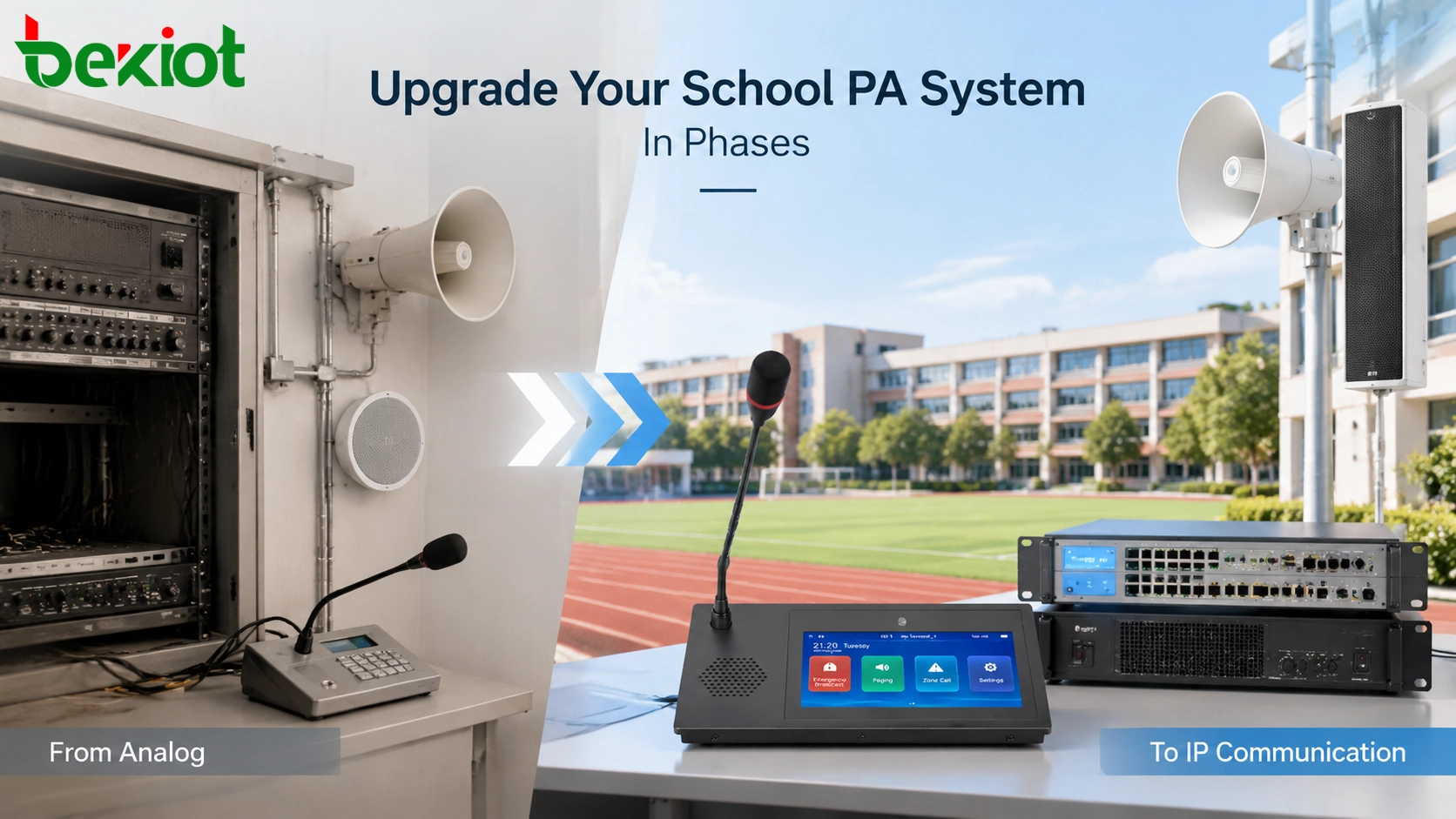
Many schools continue to operate traditional analog PA systems installed years ago. These systems can still support daily announcements, but expanding coverage, managing multiple buildings and integrating modern communication functions can become increasingly difficult over time.
A complete replacement is not always the most practical approach. A phased upgrade allows schools to improve communication capabilities gradually while keeping suitable existing equipment in service during the transition. By combining current analog infrastructure with IP-based paging and communication technologies, schools can reduce disruption, control project complexity and build a more flexible communication environment.
The goal of a phased migration is not simply replacing old equipment. It is creating a communication architecture that supports future expansion, easier management and better coordination between classrooms, administrative areas and campus facilities.
Why Schools Upgrade Traditional PA Systems
Traditional analog PA systems usually follow a simple structure: a microphone sends audio to an amplifier, and the amplifier distributes signals through dedicated speaker cables to different areas. This design can provide reliable announcements, but it becomes harder to manage when schools add new buildings, require more broadcast zones or need communication with specific locations.
Common limitations of older PA systems include:
Limited zone control when announcements need to target specific areas.
Difficulty expanding coverage to newly constructed buildings.
Limited remote management and centralized control capabilities.
Challenges connecting PA communication with other campus systems.
Modern schools often require more than basic announcements. Administrators may need separate communication for classrooms, playgrounds, sports facilities, dormitories or administrative buildings. Security teams may need direct communication with specific areas, while operators may need a clearer overview of campus communication resources.
These requirements are encouraging schools to gradually move from isolated analog systems toward network-based communication platforms.
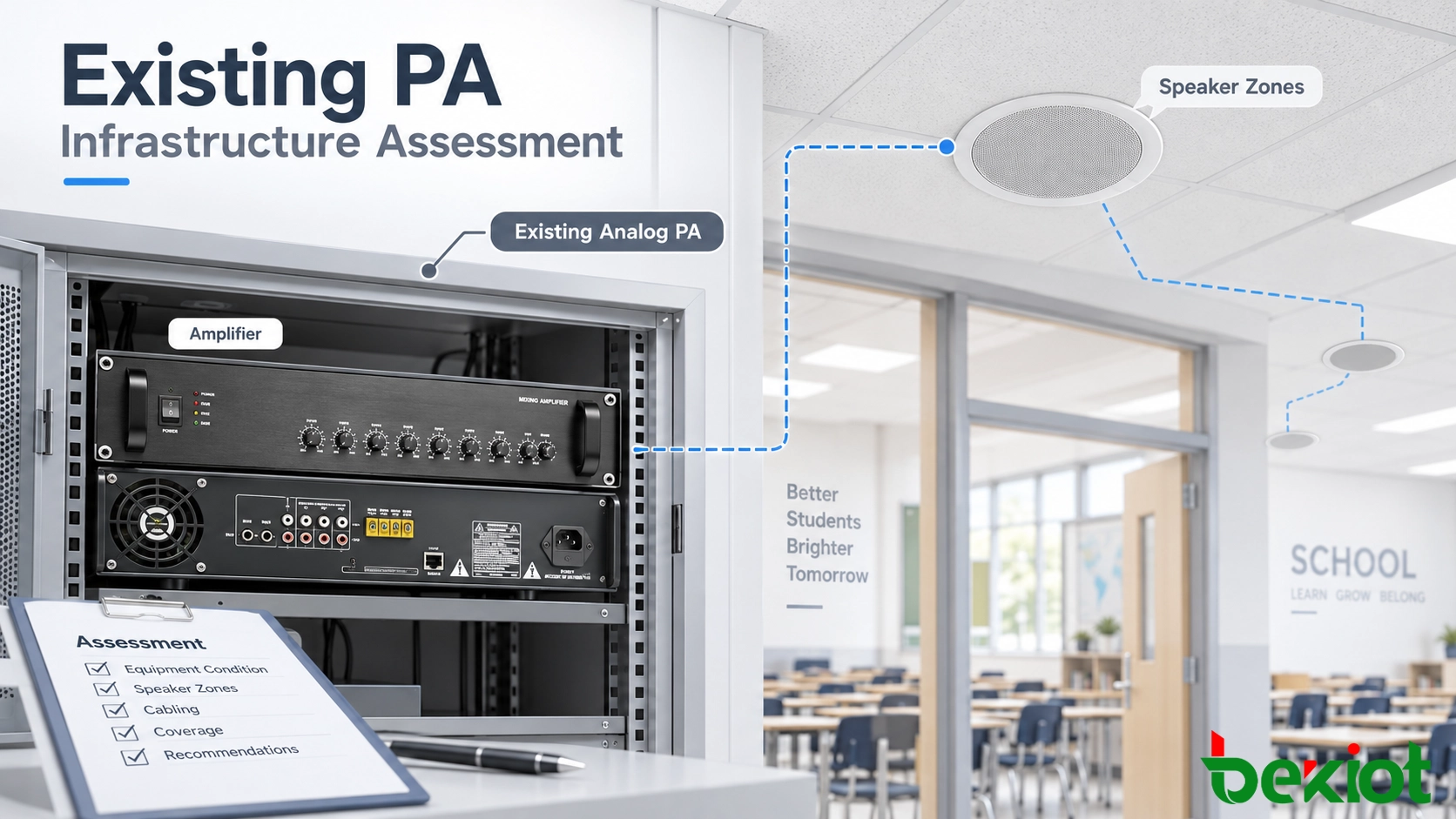
Phase 1: Assess the Existing PA Infrastructure
The first step in an upgrade project is understanding the current system. Replacing equipment immediately without evaluating existing infrastructure may increase unnecessary costs and create avoidable installation challenges.
A detailed assessment should include:
Existing amplifiers and their available capacity.
Current speaker locations and cable conditions.
Existing broadcast zones and operational requirements.
Network availability across classrooms and campus buildings.
Future expansion plans and integration requirements.
Many schools focus first on selecting new equipment, but the existing audio infrastructure often determines the most practical migration path. Speaker condition, cable quality, amplifier output, impedance matching, background noise and coverage requirements can directly influence the final system design.
A detailed assessment helps identify which areas can continue using existing equipment and which locations require new IP endpoints or additional communication coverage. This prevents unnecessary replacement and creates a clearer upgrade roadmap for future phases.
A complete replacement project may require new cabling, new speakers and significant construction work across the campus. For many schools, maintaining communication services during installation is a major concern. A phased migration reduces disruption by allowing new IP-based functions to be introduced while existing areas continue operating.
During this stage, schools can identify which areas require immediate improvement and which parts of the existing system can remain in use during later upgrade phases.
Phase 2: Introduce IP Paging Alongside Existing Equipment
A phased upgrade does not require schools to replace every speaker and amplifier at the beginning. Many projects start by introducing IP communication equipment while existing analog zones continue operating.
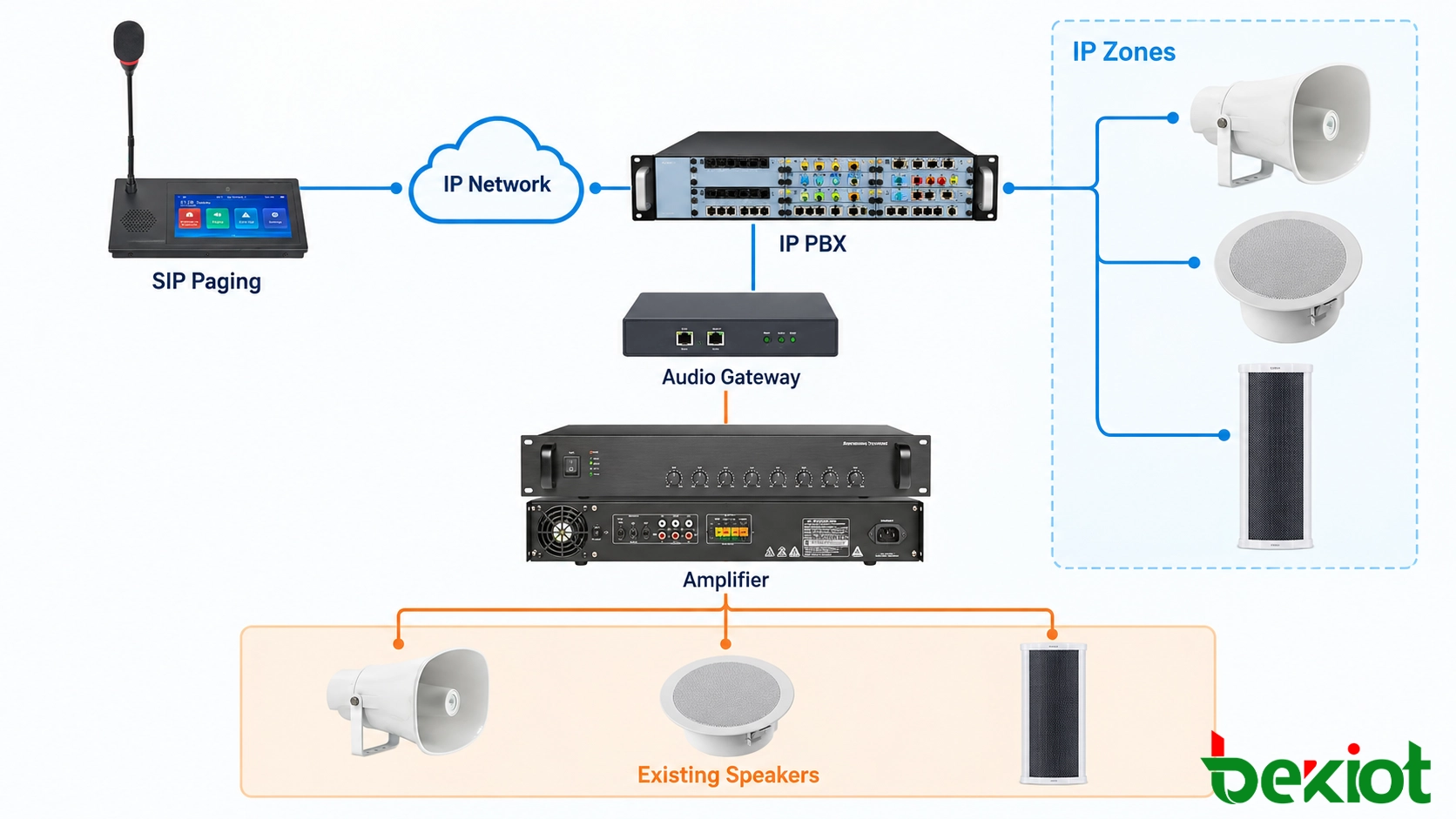
A hybrid architecture allows new IP-based devices to work alongside existing audio infrastructure through suitable interfaces. This approach helps schools gain new functions without immediately rebuilding the entire PA network.
A typical migration path may include:
Adding network-based paging terminals for authorized users.
Deploying IP speakers in new buildings or priority areas.
Connecting existing analog amplifier systems through compatible gateways.
Migrating selected zones from analog control to IP-based management.
The basic architecture changes from a fully local audio system into a network-connected communication system:
SIP Paging Microphone
↓
IP Network
↓
SIP Server / IP PBX
↓
Audio Gateway
↓
Existing Amplifier + Analog Speakers
The hybrid stage is often the most important transition point because it connects existing infrastructure with future communication requirements. Instead of treating analog and IP systems as completely separate environments, schools can introduce centralized management and network-based functions while continuing to use suitable existing equipment.
This approach is especially valuable for large campuses where replacing every speaker line at once would increase installation complexity. Buildings or zones can be upgraded gradually while normal announcements continue throughout the campus.
Becke Telcom SIP Paging Microphones provide operator interfaces for network-based announcements, while SIP Speakers can extend IP paging coverage to locations where network connectivity is available.
This hybrid approach allows schools to improve communication capability while reducing installation risks and maintaining normal campus operations.
Phase 3: Expand Zones and Centralized Control
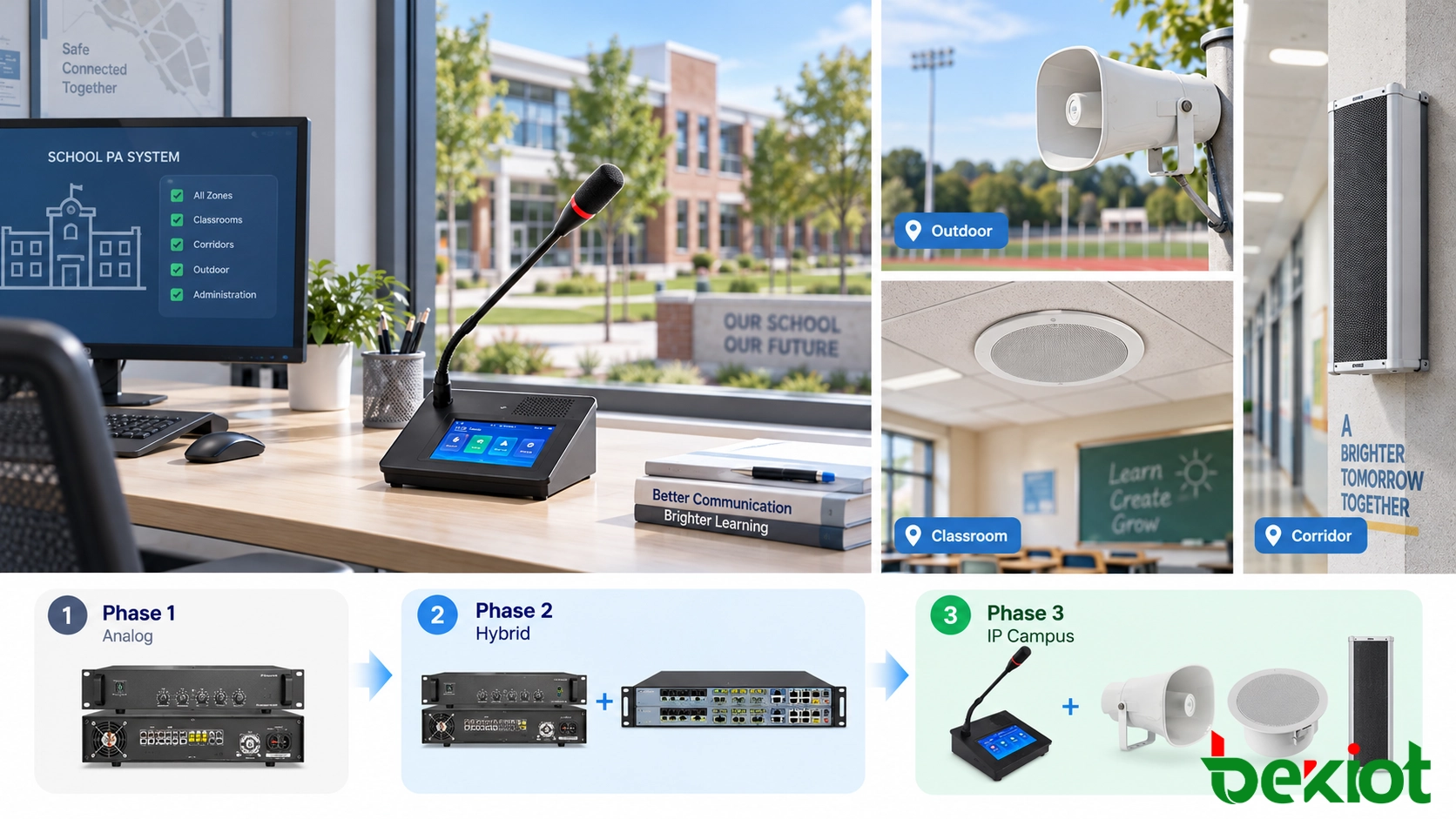
One of the major benefits of IP-based PA systems is flexible zone management. Instead of relying only on fixed wiring groups, schools can organize communication areas through software configuration and network-connected endpoints.
A modern campus communication system may separate:
Classroom buildings.
Outdoor areas and playgrounds.
Sports facilities.
Dormitories.
Administrative offices.
With centralized control, authorized operators can send announcements only to the required areas instead of broadcasting across the entire campus. This improves daily communication efficiency and reduces unnecessary interruptions.
Network-based systems also simplify future expansion. When a new building is added, additional IP endpoints can be integrated into the communication platform without redesigning the entire audio distribution network.
Centralized management also provides a clearer overview of connected devices, communication status and system configuration. IT teams can monitor system operation, adjust settings and perform maintenance more efficiently compared with isolated analog systems.
Phase 4: Extend Communication Capabilities
As schools modernize their communication infrastructure, the PA system can become part of a wider campus communication environment. Instead of operating only as an isolated announcement tool, it can connect with other approved communication systems according to project requirements.
Possible integrations may include:
SIP intercom systems.
Security communication terminals.
Operator communication stations.
Notification and coordination platforms.
For example, a campus security team may need direct communication with a specific building, while administrators may need to send announcements to selected zones. An IP communication platform can provide the communication path while each connected system continues to perform its dedicated function.
Priority announcements and communication workflows should be designed according to the school's operational procedures. An IP paging system should not automatically be considered a replacement for certified fire alarm or evacuation systems unless it has been specifically designed and approved for that purpose.
Planning a Smooth Migration Without Full Replacement
The most effective school PA upgrade strategy is usually gradual rather than a single large replacement project. Schools can prioritize important areas, maintain existing services and introduce new capabilities step by step.
A practical migration plan should consider:
Existing equipment that can continue operating.
Areas requiring immediate communication improvement.
Network availability and power requirements.
Future campus expansion plans.
Integration requirements with other communication systems.
Before final acceptance, schools should verify not only whether announcements can be heard, but whether the complete communication workflow operates correctly. Testing should include zone selection, audio clarity, device availability, scheduled announcements, network connectivity and communication between different campus areas.
A structured acceptance process helps identify problems before daily operation begins and ensures that administrators, IT teams and security personnel understand how to manage the upgraded system.
During later phases, schools can gradually move from a hybrid PA environment toward a fully network-based communication system. The final architecture depends on campus size, operational requirements and existing infrastructure conditions.
For projects requiring operator communication, multi-location coordination and dedicated control positions, Becke Telcom IP Dispatch Consoles provide communication terminals for authorized operators and control environments.
A phased upgrade approach allows schools to modernize communication without unnecessary disruption. By combining suitable existing PA infrastructure with IP-based technologies, educational facilities can create a scalable, flexible and manageable communication environment.
Frequently Asked Questions
Can a school keep existing speakers during an IP PA upgrade?
Yes. Many projects allow existing speakers and amplifier systems to remain in operation during early upgrade stages. Suitable interfaces or gateways can connect existing analog zones with newer IP-based communication equipment where technically appropriate.
Does a school need to replace the entire PA system at once?
Not necessarily. A phased migration allows schools to upgrade important areas first and gradually expand the system according to campus requirements, available budget and infrastructure conditions.
Can an IP PA system work with an existing amplifier?
In many cases, yes. The final design depends on the existing amplifier type, audio interfaces, speaker wiring and required functions. A suitable gateway or integration method can allow existing equipment to remain part of the upgraded communication system.
What is the main difference between analog and IP PA systems?
Analog systems mainly depend on dedicated audio wiring, while IP PA systems use network communication to connect endpoints and control functions. IP systems generally provide more flexible expansion, centralized management and integration options.
What should schools consider before starting a PA upgrade?
Schools should evaluate existing equipment, future expansion plans, network conditions, required zones and communication requirements before selecting an upgrade path.