


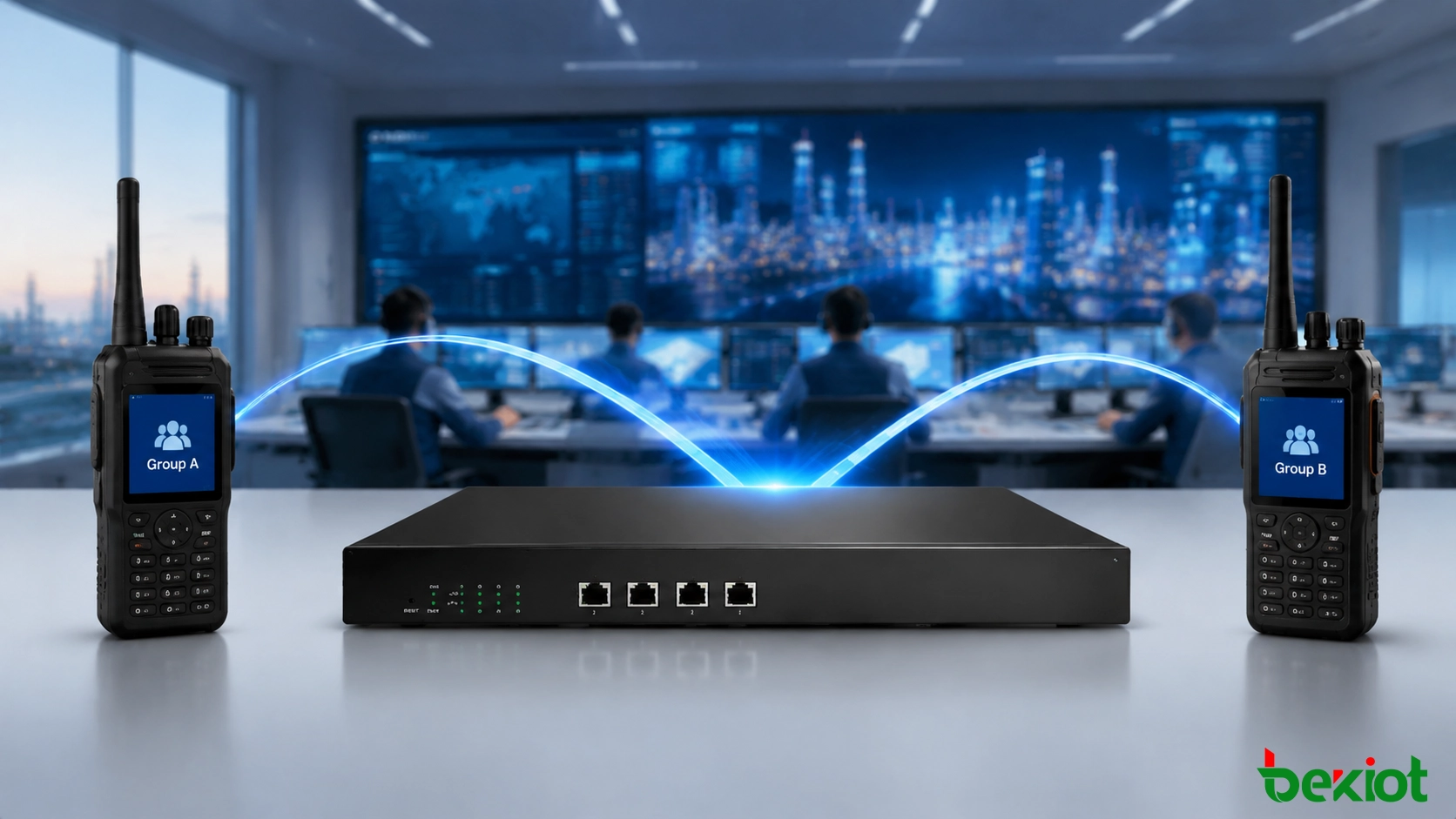
With the rapid adoption of broadband communication technologies, PoC (Push-to-Talk over Cellular) radios have become an important communication solution for industrial facilities, emergency response teams, transportation operators, security organizations, and large enterprises. Compared with traditional radio systems, PoC terminals provide wider coverage, faster deployment, and more flexible group communication through 4G, 5G, or private broadband networks.
However, when different organizations deploy PoC radios from different manufacturers or platforms, a common problem appears: devices that look similar and use the same mobile network often cannot communicate directly with each other. This limitation becomes especially noticeable in large projects where multiple departments, contractors, or partner organizations need to coordinate quickly.
For example, a factory may have security personnel using one PoC platform, maintenance teams using another system, and emergency contractors using a third communication solution. Although all users may operate within the same physical area, their communication resources remain separated because each platform manages users, groups, permissions, and voice services independently.
The reason is not related to whether the devices use 4G or 5G connectivity. The real challenge comes from platform isolation. Different PoC systems are usually built with different server architectures, authentication methods, communication protocols, and management mechanisms. Without an interoperability solution, these systems cannot automatically exchange voice information.
ROIP (Radio over IP) gateway technology provides an effective method to overcome this limitation. By acting as a communication bridge between independent platforms, ROIP gateways allow different PoC systems, radio networks, and IP communication platforms to work together while protecting existing equipment investments.
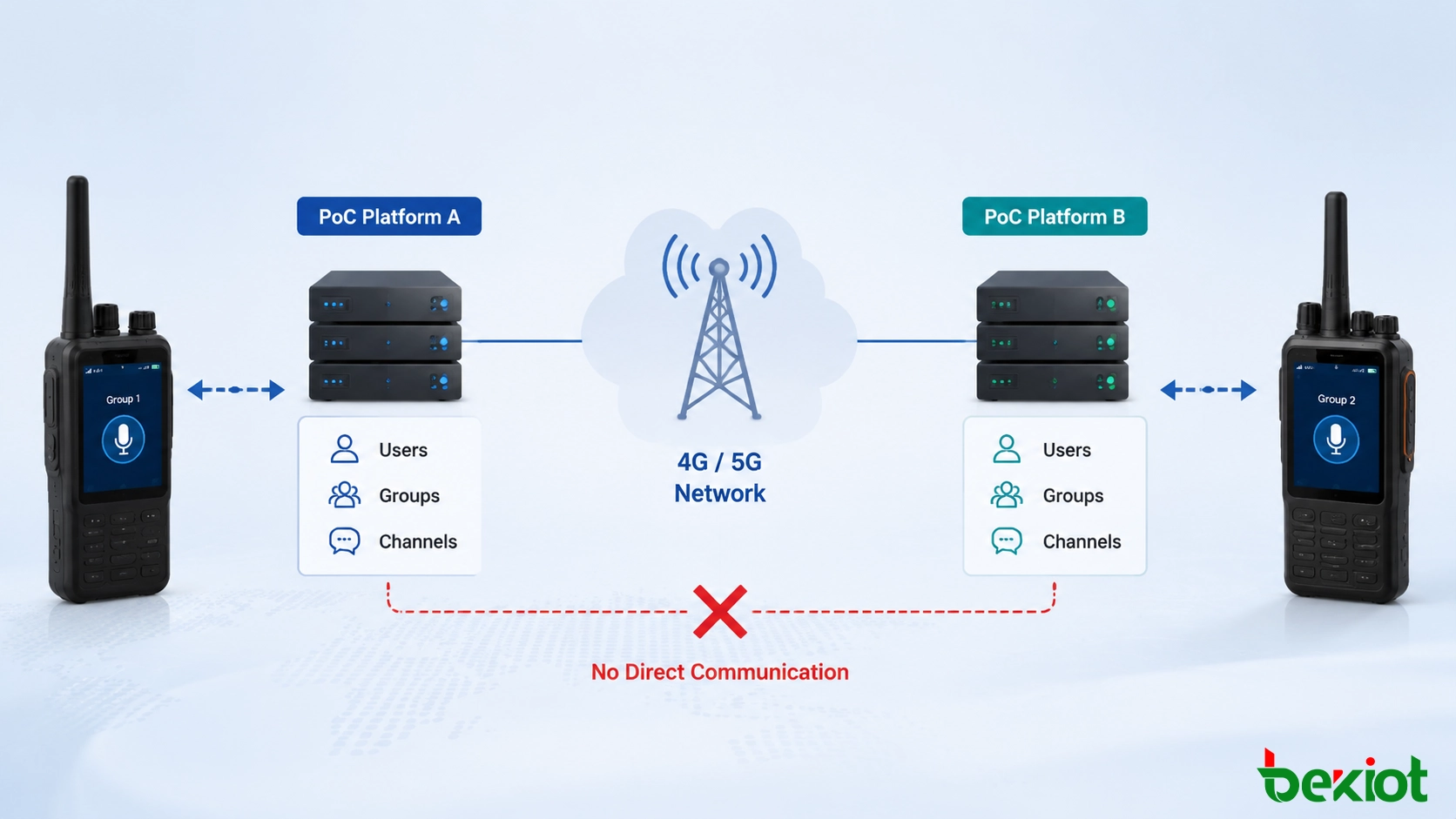
Why Cellular Networks Cannot Create Direct Communication
Many users assume that communication compatibility depends mainly on the mobile network. If two PoC radios connect through the same cellular operator, they should theoretically communicate with each other. However, this understanding overlooks the role of the PoC platform.
A cellular network only provides the data connection between terminals and servers. It is similar to an internet connection that allows devices to reach online services, but it does not determine how different applications communicate with each other.
The actual communication process in a PoC system depends on the backend platform, which controls:
User identity verification
Device registration
Talk group management
Call permission control
Voice session establishment
Priority communication rules
Dispatch and monitoring functions
When two PoC terminals belong to different platforms, each platform only recognizes its own registered users and communication groups. The server systems do not automatically share databases or exchange communication information.
Therefore, even if two devices are located in the same factory, connected to the same mobile network, and physically close to each other, they may still be unable to start a voice call because their communication platforms are isolated.
The Technical Barriers Behind Platform Isolation
The inability of different PoC brands to communicate directly is caused by multiple technical differences. These differences exist from user management to voice transmission and security control.
Independent User Authentication Systems
Every PoC platform normally maintains its own user database. User accounts, departments, roles, and permissions are managed separately.
A user registered on one platform is not automatically recognized by another platform. Without integration, the second system cannot confirm the user's identity or determine whether the user has permission to join a specific communication group.
This separation is important for security, but it also creates communication barriers when multiple organizations need cooperation.
Different Communication Protocols and Architectures
Although PoC systems provide similar functions from the user's perspective, their internal architectures may be completely different.
Different manufacturers may use different:
Voice transmission mechanisms
Signaling methods
API interfaces
Server communication models
Data management structures
Because there is no universal communication standard that forces all PoC platforms to operate identically, direct connection between different brands is usually unavailable.
Separate Talk Group Management
Group communication is one of the most important features of PoC systems. Organizations create different groups according to departments, regions, tasks, or emergency levels.
However, a talk group created on one platform only exists within that platform. A security group, maintenance group, or emergency group cannot automatically appear in another manufacturer's system.
Cross-platform communication requires a solution that can understand different group structures and connect selected communication channels together.
Security and Permission Restrictions
Industrial and emergency communication systems often involve sensitive operational information. Simply opening communication access between unrelated platforms may create security risks.
A professional interoperability solution must therefore provide controlled connections, allowing administrators to define:
Which platforms can communicate
Which groups can be connected
Who can access shared channels
How communication records are managed
How ROIP Gateways Build Communication Bridges
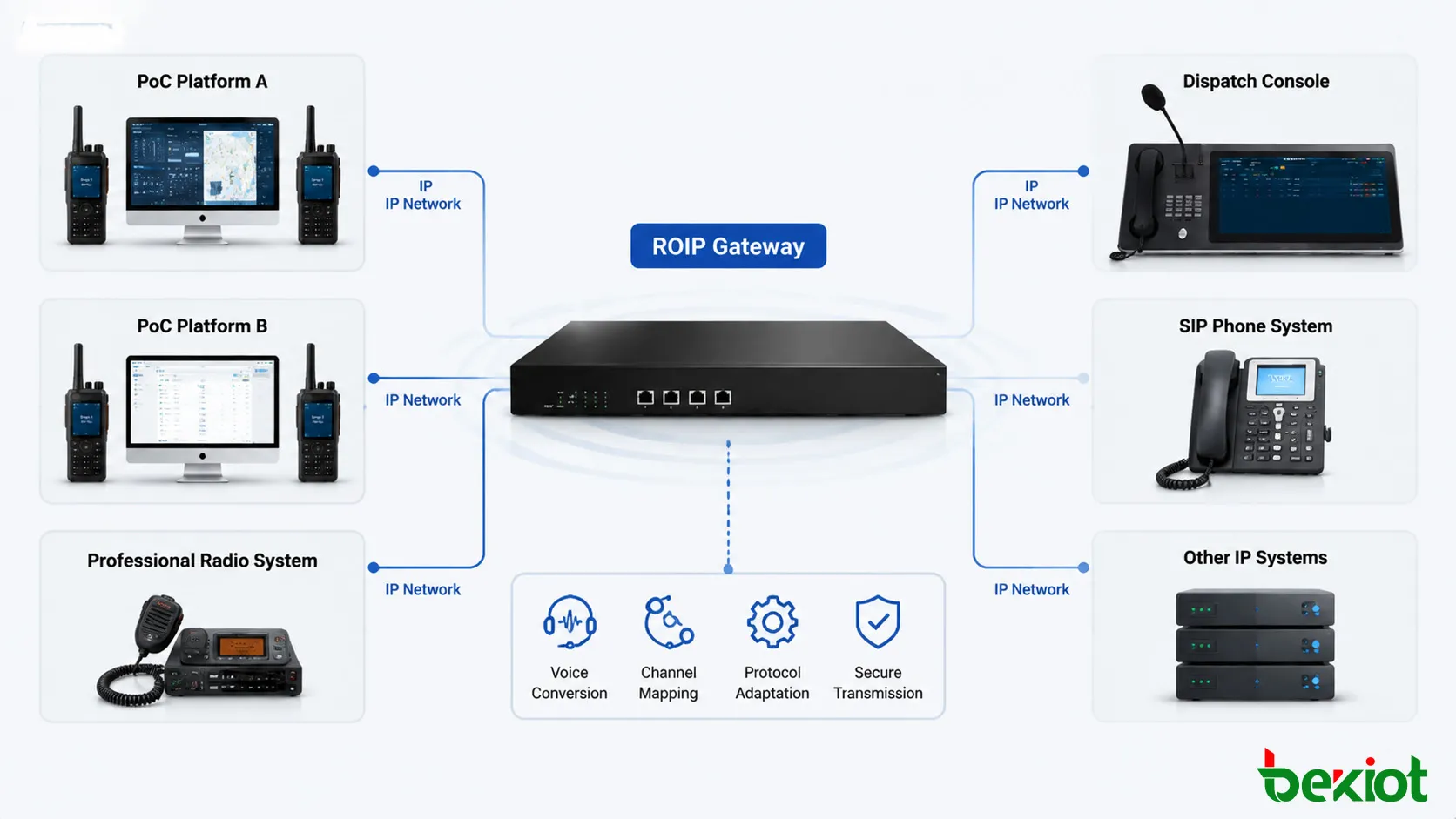
ROIP (Radio over IP) gateway technology is designed to solve communication barriers between independent voice systems. Instead of replacing existing PoC terminals or forcing all organizations to migrate to one platform, an ROIP gateway creates an intermediate communication layer that connects different systems together.
In a multi-platform communication environment, the ROIP gateway works as a translator and bridge. It receives audio information from one communication system, processes the voice stream, and forwards it to another connected platform according to predefined rules.
This approach allows different communication resources to operate together, including:
PoC broadband radio systems
Traditional radio networks
SIP-based communication systems
Dispatch consoles
Industrial communication terminals
Emergency command platforms
The biggest advantage of this architecture is that organizations do not need to abandon existing communication investments. Different departments can continue using their current terminals while gaining the ability to coordinate through a unified communication environment.
ROIP Gateway Solution for Multi-Network Voice Communication Integration
Communication Conversion and Channel Mapping
A key function of an ROIP gateway is communication conversion. Different systems may use different audio formats, signaling methods, and connection methods. The gateway processes these differences and creates a common communication path.
For example, an emergency command center may need to connect:
Police or security PoC terminals
Industrial worker communication devices
Emergency response radios
Control room dispatch equipment
Through channel mapping, administrators can define which communication groups should be connected and under what conditions. This prevents unnecessary communication exposure while ensuring that critical information reaches the right personnel.
Unified Voice Coordination Without Terminal Replacement
One of the most important benefits of ROIP integration is preserving existing equipment. Large organizations often have thousands of communication terminals already deployed. Replacing all devices simply because different systems cannot communicate can create significant costs and operational disruption.
A gateway-based approach allows organizations to upgrade communication capabilities step by step. Existing PoC users can continue their normal operations while the overall system gains cross-platform communication capability.
Application Scenarios Requiring Cross-Platform Communication
Communication interoperability becomes especially important in environments where multiple teams, organizations, or systems must cooperate quickly. In these scenarios, isolated communication platforms may slow down decision-making and emergency response.
Industrial Plants and Energy Facilities
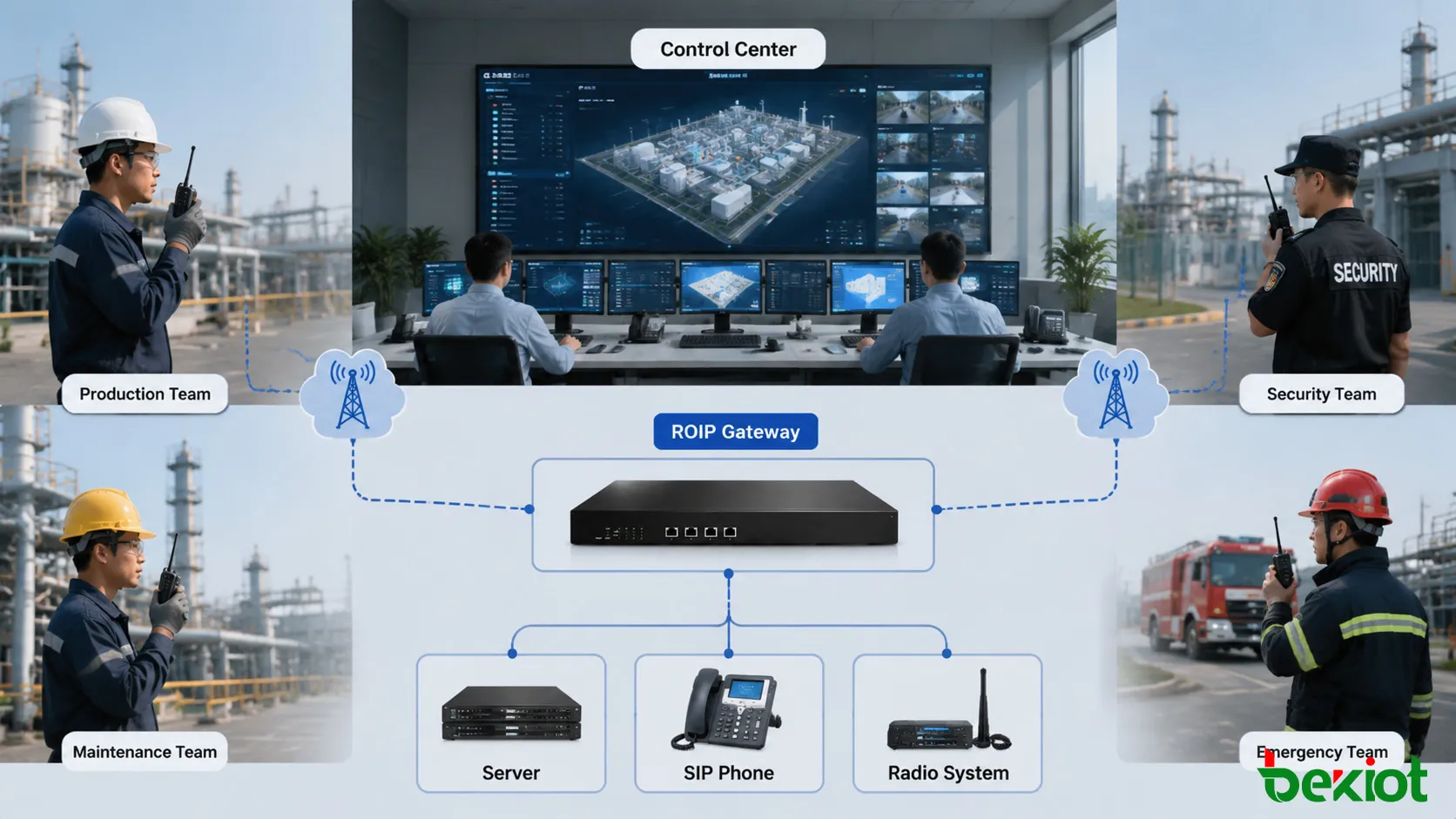
Industrial environments such as oil and gas facilities, chemical plants, power stations, mining sites, and manufacturing campuses often contain multiple operational teams.
Production operators, maintenance personnel, security teams, contractors, and emergency responders may use different communication tools according to their responsibilities.
During normal operations, these groups may work independently. However, during equipment failures, safety incidents, or emergency situations, rapid communication between different teams becomes essential.
An ROIP gateway enables these separate communication systems to exchange voice information without requiring every user to move to a single platform.
Emergency Command and Public Safety Operations
Emergency response requires fast coordination between multiple organizations. Fire departments, medical teams, security personnel, and facility operators may have different communication systems.
During an incident, the ability to create a temporary unified communication channel can significantly improve response efficiency.
ROIP integration allows command centers to connect different communication resources and provide coordinated voice communication during critical events.
Transportation and Large Infrastructure
Railways, airports, ports, highways, and urban infrastructure projects usually involve complex communication environments.
Different departments may operate independent communication systems for operations, security, maintenance, and emergency management.
A unified communication architecture helps these departments exchange information faster, especially when handling unexpected events such as equipment failures, passenger emergencies, or security incidents.
Advantages of Integration Compared With Complete Replacement
When organizations discover that different PoC systems cannot communicate, a common consideration is whether all equipment should be replaced with one unified platform. Although this approach may solve compatibility problems, it is often expensive and difficult to implement.
A complete replacement project may involve:
Replacing thousands of user terminals
Retraining employees
Changing communication procedures
Interrupting existing operations
Rebuilding management systems
For many organizations, interoperability is a more practical strategy. ROIP gateways provide several advantages:
Protect Existing Communication Investments
Organizations can continue using existing PoC devices and communication platforms while adding cross-system connectivity.
Reduce Migration Risks
A gradual integration approach allows companies to improve communication capabilities without a complete system replacement.
Improve Operational Flexibility
Different departments can maintain their preferred communication tools while still participating in unified operations when required.
Support Future Expansion
As organizations introduce new communication technologies, an interoperability architecture makes it easier to connect additional platforms in the future.
Key Considerations When Deploying ROIP Integration
Although ROIP gateways provide an effective interoperability solution, successful deployment requires careful planning. Communication integration is not only about connecting audio channels; it also involves network design, security management, and operational requirements.
Communication Capacity Planning
Before deployment, organizations should evaluate how many communication groups, users, and simultaneous voice sessions need to be supported.
High-demand environments such as emergency command centers or industrial control rooms may require higher processing capability and redundant communication paths.
Network Reliability Requirements
Because ROIP communication relies on IP networks, network stability directly affects communication quality.
Important considerations include:
Bandwidth availability
Network latency
Packet loss control
Redundant network design
Cybersecurity protection
Security and Permission Management
Different communication groups should be connected according to operational requirements. Administrators need clear control over communication permissions to avoid unnecessary information sharing.
A professional deployment should include user management, access control, and communication monitoring mechanisms.
id="qrd5bj-end"
Building a Flexible Communication Architecture for the Future
As digital transformation continues across industries, communication systems are moving from isolated networks toward integrated and collaborative architectures. Organizations are no longer relying on a single communication method. Instead, they combine PoC radios, professional radios, IP telephony, dispatch platforms, video systems, and other digital communication tools.
This trend creates a growing need for interoperability. A modern communication system must not only provide reliable voice transmission but also support different devices, platforms, and operational requirements.
When planning a long-term communication strategy, organizations should consider interoperability from the beginning rather than treating it as a future problem. Important evaluation factors include:
Compatibility with existing PoC platforms
Support for multiple communication technologies
Scalability for future users and departments
Network reliability and redundancy capability
Security and access control requirements
Integration with dispatch and emergency management systems
A well-designed ROIP-based communication architecture allows organizations to gradually expand their systems while maintaining operational continuity. Instead of creating more isolated communication islands, interoperability helps build a unified communication environment.
Conclusion
Different brands of PoC radios usually cannot communicate directly because they operate within separate communication ecosystems. Although the devices may use the same 4G or 5G network, the actual communication process depends on independent platforms, user databases, authentication mechanisms, group management systems, and voice transmission architectures.
The challenge is not solved by improving network coverage alone. What organizations need is a communication bridge that allows different platforms to exchange voice information securely and efficiently.
ROIP gateways provide a practical solution by connecting independent PoC systems, traditional radio networks, SIP communication systems, and dispatch platforms. They help organizations protect existing investments, improve emergency coordination, and gradually build a unified communication infrastructure.
For industries such as energy, manufacturing, transportation, public safety, and large-scale enterprise operations, communication interoperability is becoming a critical requirement. By adopting ROIP-based integration, organizations can overcome platform barriers and create more reliable, flexible, and future-ready communication networks.
FAQ
Can PoC radios from different manufacturers communicate after ROIP integration?
Yes. After proper configuration, ROIP gateways can create communication connections between different PoC platforms, allowing users from separate systems to participate in shared voice communication.
Is ROIP only used for connecting PoC radios?
No. ROIP technology can also connect professional radio systems, SIP-based communication platforms, dispatch consoles, and other IP voice systems depending on project requirements.
Will users need to replace their existing PoC terminals?
In most cases, users can continue using their existing devices. The interoperability function is usually implemented through the gateway and communication platform layer.
How does an organization decide whether it needs ROIP integration?
Organizations should consider ROIP integration when multiple communication systems already exist and different teams need coordinated voice communication without replacing all current equipment.
Can ROIP gateways be expanded when communication requirements increase?
Yes. A properly designed architecture can support additional communication platforms, users, and channels as operational requirements grow.







