


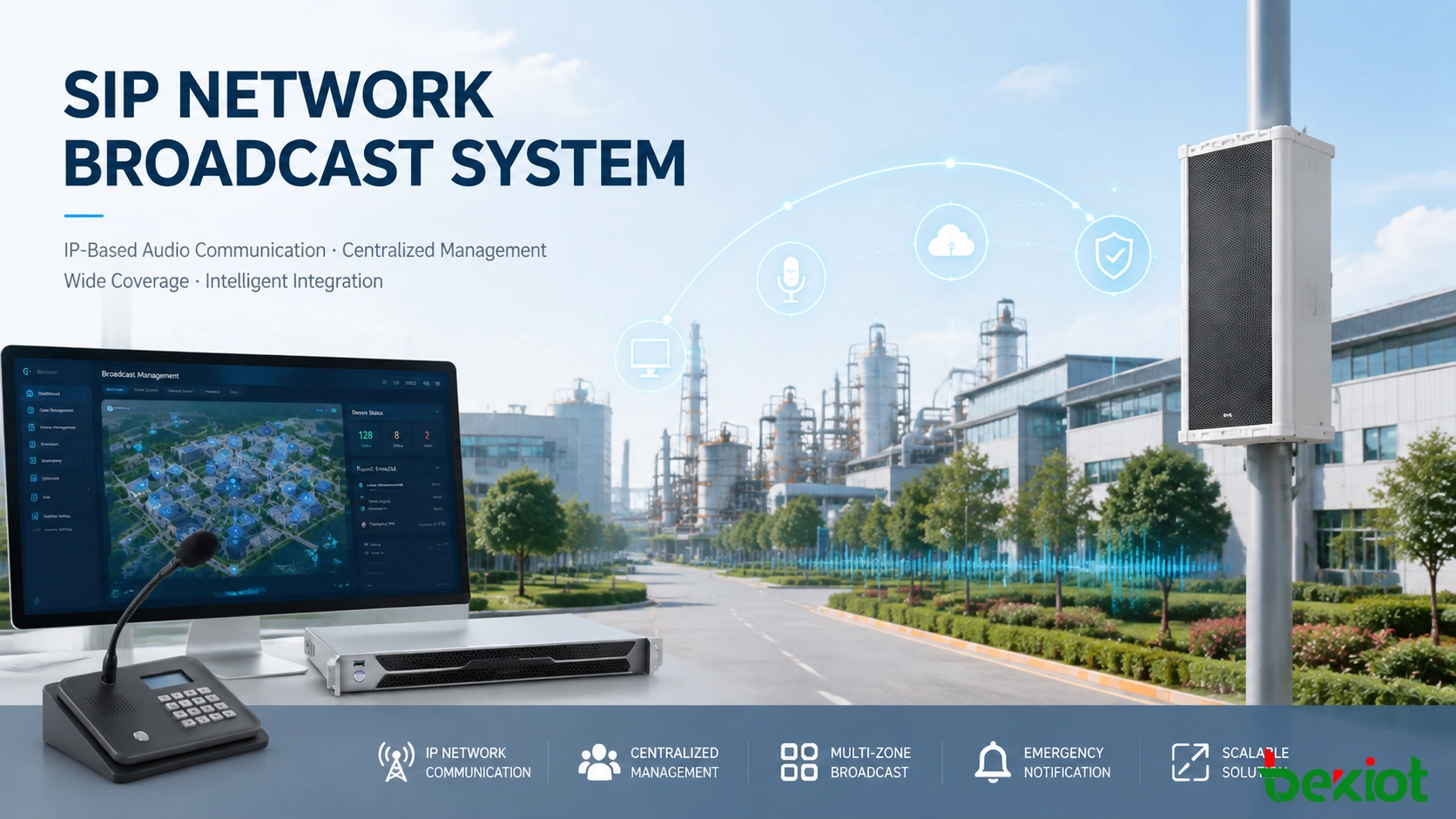
Broadcast communication has become an essential service in schools, industrial facilities, transportation hubs, commercial buildings, and public infrastructure. Traditional audio systems have provided reliable voice delivery for many years, but as organizations require more flexible management, remote operation, and intelligent emergency communication, conventional broadcast architectures are facing increasing limitations.
Many traditional broadcast systems depend on dedicated audio wiring, centralized amplifiers, and fixed-zone configurations. Although these systems can support basic announcements, expanding coverage areas, integrating with other communication platforms, or managing distributed locations can become complex and costly.
SIP network speakers provide a practical pathway for upgrading existing broadcast environments. By using standard IP communication technology, organizations can introduce intelligent audio terminals into existing networks, achieve centralized management, and build a more scalable communication infrastructure without completely replacing the original system.
Unlike traditional analog broadcast terminals, SIP audio columns communicate through IP networks. They can register with communication platforms, receive digital audio streams, support remote configuration, and integrate with modern communication systems. This makes them suitable for environments that require both daily announcements and emergency information delivery.
Why Broadcast Systems Are Moving Toward IP Networks
The evolution from traditional broadcast systems to IP-based audio communication is driven by changing operational requirements. Organizations are no longer looking for simple audio playback; they need communication systems that can connect different departments, support centralized management, and respond quickly during emergencies.
Traditional broadcast architectures usually have several limitations:
Dedicated audio cables are required between control rooms and terminal locations.
System expansion may require additional wiring and hardware changes.
Remote management capabilities are limited.
Integration with other digital communication systems is difficult.
Different areas often require independent control methods.
For example, a large industrial park may need production announcements, safety notifications, emergency instructions, and temporary operational messages across different areas. A traditional system may require complex manual operations, while an IP-based broadcast system can distribute information through network connections and centralized software management.
IP technology changes the role of broadcast systems from simple audio distribution equipment into a connected communication platform.
How SIP Technology Enables Modern Audio Communication
SIP (Session Initiation Protocol) is a widely adopted communication protocol used for establishing and managing IP-based voice sessions. In SIP broadcast applications, audio terminals communicate through network connections instead of traditional point-to-point audio transmission lines.
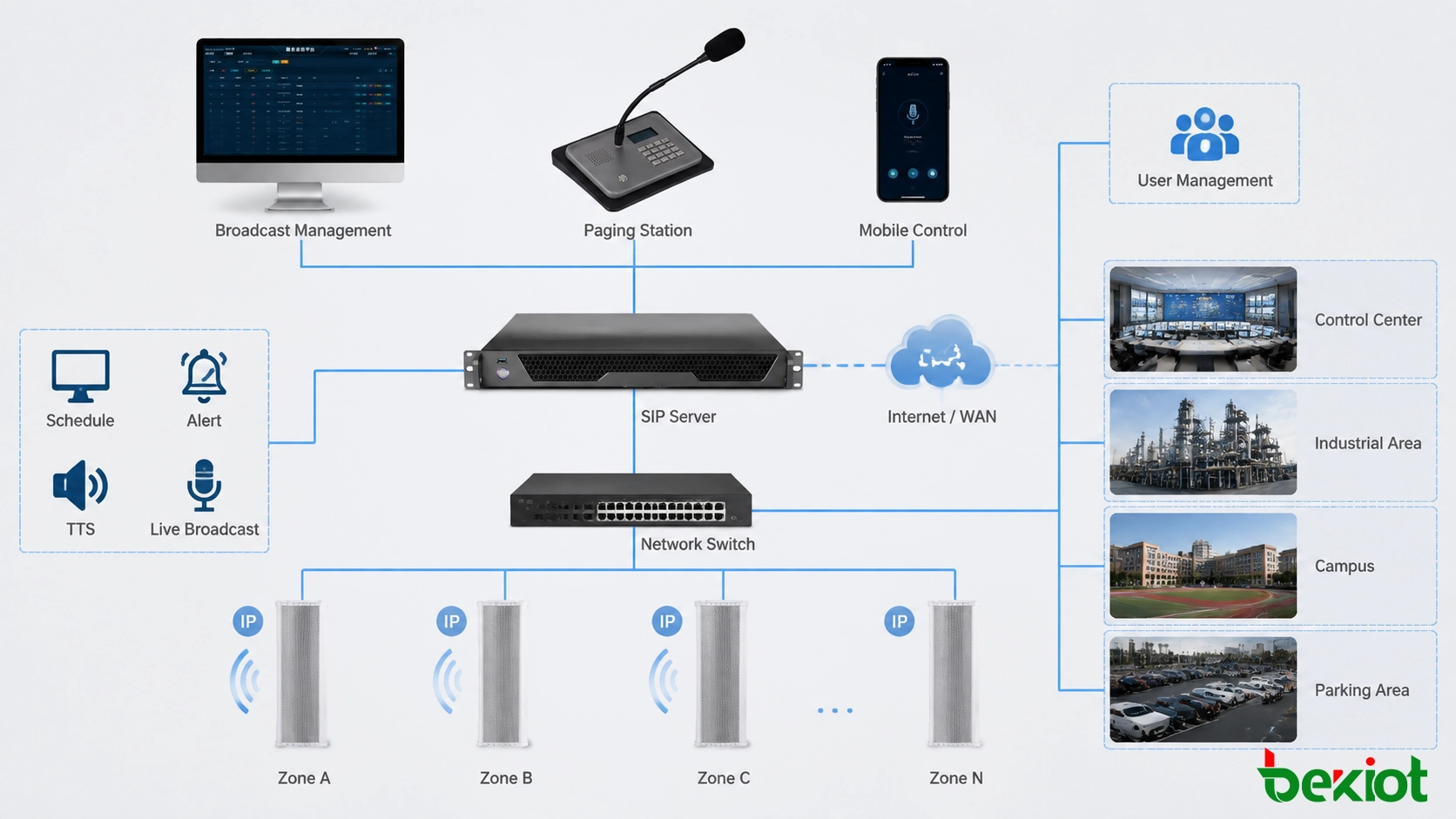
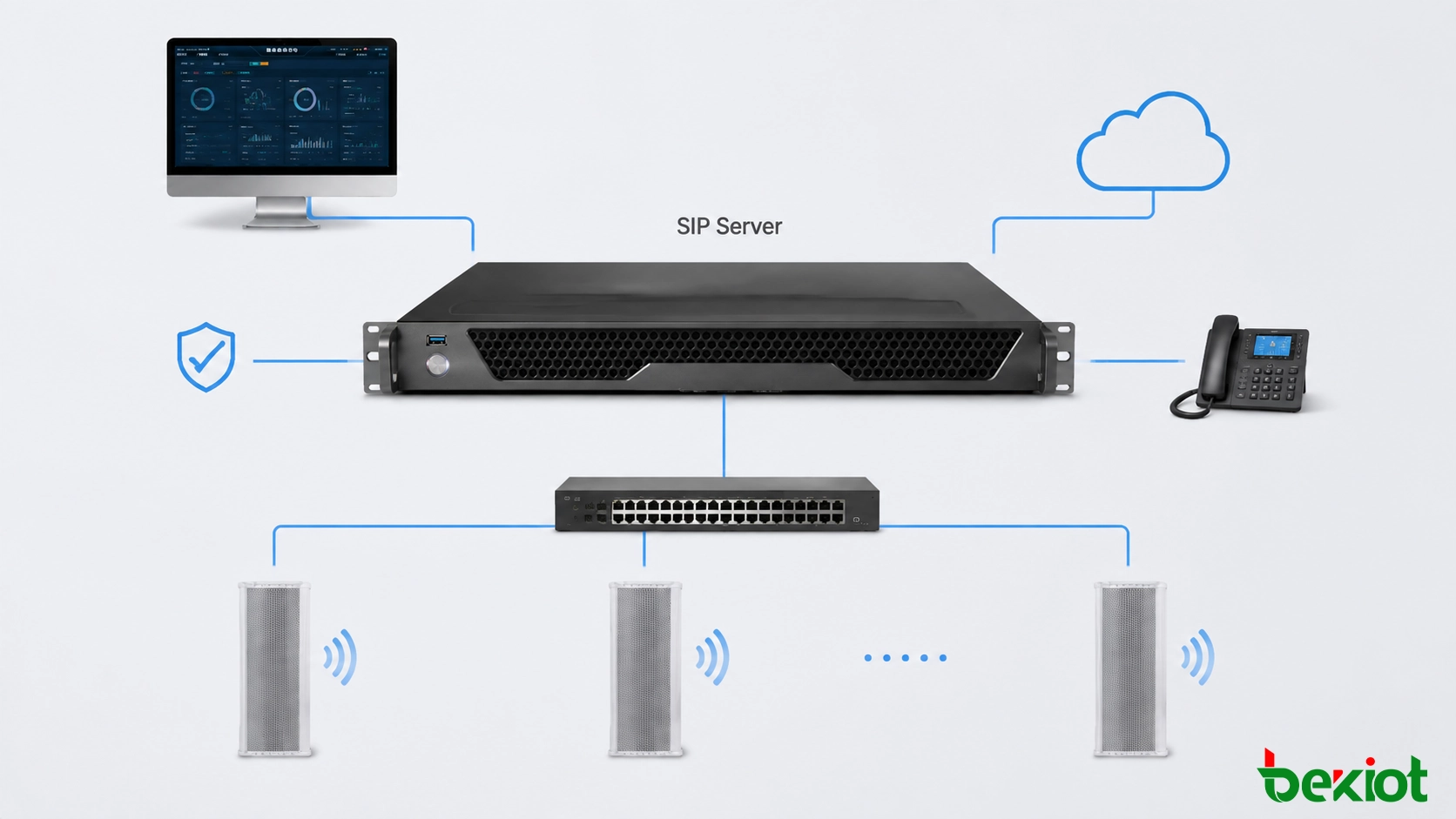
A complete SIP broadcast architecture usually contains several key components:
Communication Management Platform
The management platform provides centralized control functions, including terminal management, broadcast scheduling, user permissions, group configuration, and operation monitoring.
SIP Server
The SIP server manages communication sessions between terminals and platforms. It handles device registration, session establishment, and communication control.
IP Network Infrastructure
The network provides the transmission path between servers, management platforms, and audio terminals. Ethernet networks, enterprise LANs, and industrial networks can all support SIP communication when properly configured.
SIP Network Speakers
SIP speakers receive digital audio streams through the network, decode the signals, and output clear voice through integrated speaker units and amplification components.
During a broadcast operation, an administrator selects a target area or group through the management platform. The SIP server establishes communication sessions with selected terminals, and the speakers receive the audio stream for real-time playback.
This architecture allows organizations to manage large numbers of distributed audio terminals from a centralized location while reducing dependence on dedicated audio wiring.
Related Product: SIP Outdoor Waterproof Column Speaker
Planning the Infrastructure Before Deployment
Although SIP network speakers simplify broadcast system expansion, proper planning is still required before deployment. A reliable IP broadcast project depends on network performance, communication compatibility, security design, and environmental conditions.
Evaluating Network Capacity
SIP audio transmission generally requires less bandwidth than video applications, but network planning should consider the number of terminals, simultaneous broadcasts, and future expansion requirements.
Large facilities with multiple broadcast zones should ensure that network resources are sufficient during emergency announcements or high-demand communication periods.
Checking SIP Compatibility
Before integration, engineers should verify that the existing communication environment supports SIP-related requirements.
SIP service availability
Network routing configuration
Firewall and security policies
Terminal registration requirements
Communication management compatibility
Improving Network Reliability
Because broadcast systems often support emergency communication, network reliability is critical.
Professional deployments should consider:
Network redundancy design
Traffic prioritization through QoS
Device access protection
Network monitoring and maintenance
A Practical Integration Process for SIP Speakers
Integrating SIP network speakers into an existing broadcast environment requires a structured approach. Instead of replacing the entire system, organizations can gradually introduce IP-based audio terminals and connect them with existing communication infrastructure.
A successful deployment usually includes several important stages:
Analyze the Existing Broadcast Environment
Before installation, engineers should evaluate the current broadcast architecture, including audio sources, control methods, terminal locations, network availability, and future expansion requirements.
The evaluation process should identify:
Existing broadcast zones and coverage requirements
Current audio transmission methods
Number and locations of required speaker terminals
Integration requirements with communication platforms
Environmental conditions of installation areas
This analysis helps determine the most suitable deployment method and avoids unnecessary system modifications.
Connect SIP Speakers Through IP Networks
After network preparation, SIP speakers can be connected through standard IP infrastructure such as Ethernet networks.
Each terminal is registered on the communication platform through SIP account information and network configuration. Once registered successfully, administrators can remotely manage the terminal, assign broadcast groups, and configure operational functions.
Compared with traditional audio wiring, IP-based deployment provides greater flexibility. New broadcast points can be added by connecting additional network terminals without extending long-distance audio cables.
Configure Broadcast Groups and Communication Rules
After terminal connection, administrators can create broadcast groups according to operational requirements.
Common configurations include:
Department-based broadcasting
Regional announcements
Scheduled audio playback
Emergency priority broadcasting
Temporary voice paging
For example, a factory can create separate zones for production workshops, warehouses, and outdoor areas. A campus can manage different buildings independently while maintaining centralized control.
This flexible group management capability allows organizations to deliver the right information to the right location.
Testing and Optimizing System Performance
Before final operation, the integrated broadcast system should be tested under different conditions.
Testing usually includes:
Audio clarity verification
Network stability testing
Terminal response checking
Broadcast priority validation
Emergency communication testing
Proper testing ensures that the system can provide reliable communication during both daily operation and critical events.
Applications in Industrial and Public Environments
SIP network speakers are suitable for environments that require wide-area voice coverage, centralized control, and reliable communication. Their IP-based architecture makes them especially valuable in locations where traditional broadcast systems are difficult to expand or manage.
Industrial Facilities and Manufacturing Sites
Factories and industrial facilities often contain large working areas, multiple departments, and strict safety requirements. Clear communication is essential for production coordination, operational instructions, and emergency notifications.
SIP audio columns can provide:
Production announcements
Safety reminders
Emergency evacuation messages
Daily operational communication
Because terminals communicate through IP networks, industrial facilities can expand coverage as production areas grow without redesigning the entire audio system.
Energy Facilities and Large Industrial Parks
Energy plants, chemical facilities, and large industrial parks often require reliable communication across outdoor areas, control rooms, workshops, and restricted zones.
A SIP-based broadcast architecture can connect distributed audio terminals with centralized management platforms, allowing operators to quickly distribute important information across different areas.
When integrated with emergency communication platforms, SIP speakers can become part of a broader safety communication system.
Schools, Campuses, and Public Buildings
Educational institutions and public facilities need both routine announcements and emergency information services.
SIP broadcast systems allow administrators to manage classrooms, buildings, outdoor areas, and public spaces through centralized software.
Typical applications include:
Daily announcements
Campus notifications
Emergency alerts
Event broadcasting
Transportation Areas and Outdoor Spaces
Transportation hubs, parking areas, stations, and public outdoor environments require communication equipment that can operate reliably under changing conditions.
Weather-resistant SIP audio terminals can provide clear voice coverage while supporting integration with centralized communication systems.
Key Benefits of IP-Based Broadcast Architecture
Compared with traditional broadcast solutions, SIP-based systems provide greater flexibility, scalability, and integration capability.
Flexible Expansion and Deployment
Because SIP speakers use existing IP networks, organizations can expand broadcast coverage by adding new terminals without extensive additional cabling.
This is especially valuable for large campuses, industrial parks, and distributed facilities where communication areas may continue to expand.
Centralized Management and Remote Maintenance
Administrators can manage multiple terminals from a central platform, including device configuration, group management, scheduling, and status monitoring.
Remote management reduces maintenance workload and improves operational efficiency.
Integration with Modern Communication Systems
SIP technology provides strong compatibility with other IP-based communication solutions.
A SIP broadcast system can be integrated with:
Emergency notification platforms
Command and control systems
Enterprise communication platforms
Security management systems
This allows broadcast functions to become part of a unified communication environment instead of operating as an isolated audio system.
Future Trends in Intelligent Audio Systems
The development of SIP network speakers reflects a broader trend toward intelligent and integrated communication infrastructure. As organizations continue digital transformation, broadcast systems are evolving from independent audio tools into connected information platforms.
Future IP broadcast architectures will focus on deeper integration with cloud services, artificial intelligence, data analytics, and emergency management systems.
Integration with Cloud and Digital Platforms
Cloud-based management technologies allow organizations to operate distributed broadcast systems across multiple locations. Instead of managing each site independently, administrators can monitor and configure terminals through centralized platforms.
This approach is especially useful for enterprises with multiple branches, large campuses, transportation networks, and geographically distributed facilities.
Smarter Communication Through Data Analysis
Future broadcast systems will increasingly use operational data to improve efficiency. Device status monitoring, usage analysis, and intelligent scheduling can help organizations optimize communication resources.
By combining SIP audio systems with intelligent management platforms, organizations can create more responsive communication environments.
Integration with Emergency and Security Systems
Modern safety management requires fast information delivery and coordinated response. SIP broadcast systems can become part of a larger emergency communication architecture by connecting with security platforms, monitoring systems, and command centers.
During emergencies, organizations can quickly deliver instructions to specific areas or the entire facility through centralized control.
Building a Scalable IP Broadcast Communication System
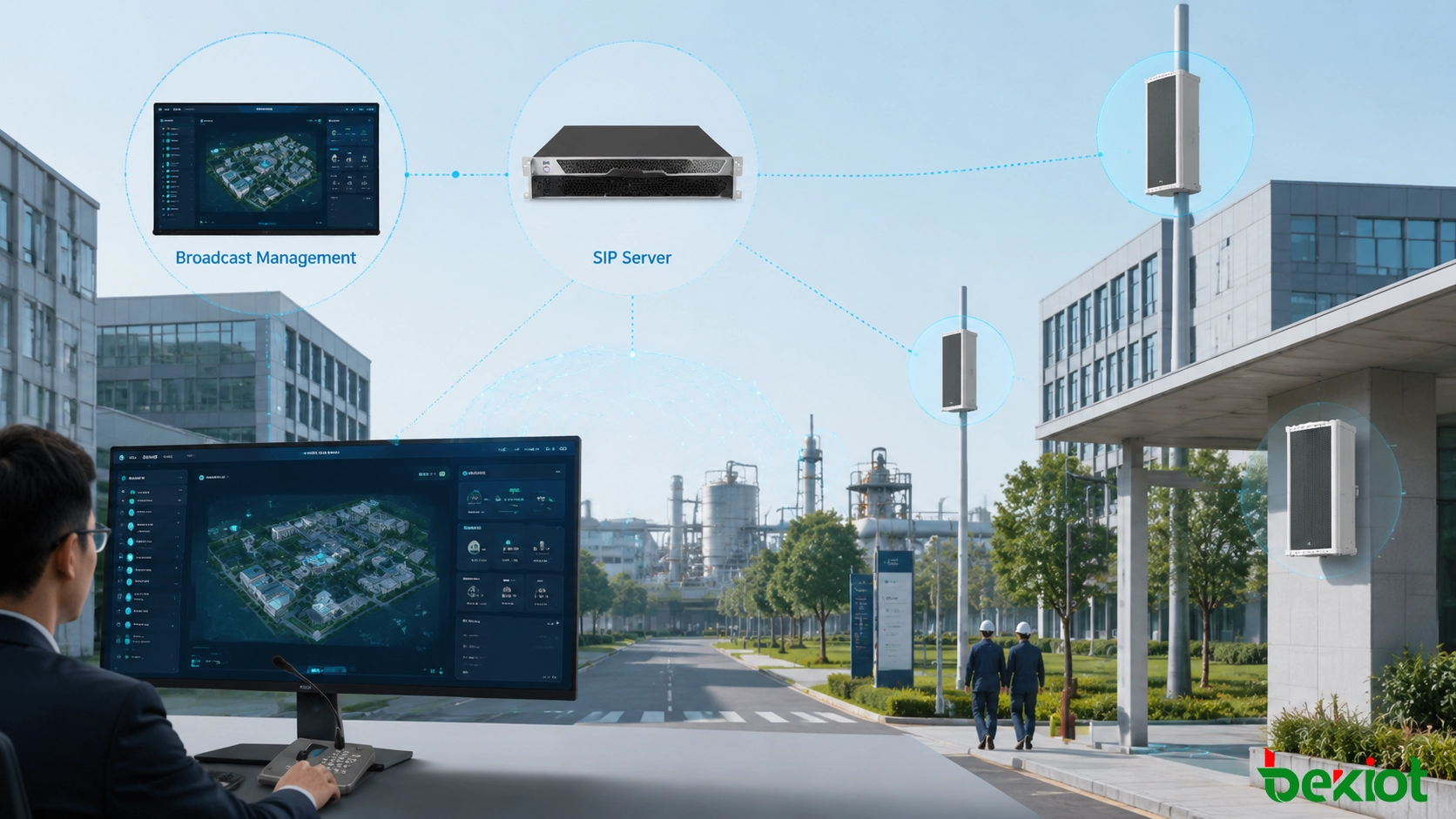
The value of SIP network speakers is not limited to replacing traditional audio equipment. Their greater importance lies in creating a scalable communication foundation that can adapt to future operational requirements.
A well-designed SIP broadcast system allows organizations to:
Expand communication coverage according to business growth
Connect different communication platforms through standard protocols
Improve daily operational efficiency
Strengthen emergency response capabilities
Reduce long-term maintenance complexity
For organizations planning communication upgrades, SIP technology provides a practical balance between modernization and investment protection. Existing infrastructure can continue operating while new IP-based capabilities are introduced gradually.
Instead of building isolated audio networks, modern organizations are moving toward unified communication environments where broadcasting, emergency notifications, and operational communication can work together.
Conclusion
Integrating SIP network speakers into existing broadcast systems provides an effective solution for organizations seeking more flexible and intelligent communication capabilities. Through standard SIP protocols and IP networking technology, traditional broadcast environments can be upgraded without completely replacing existing infrastructure.
A successful SIP broadcast deployment requires careful planning of network conditions, system compatibility, terminal locations, and operational requirements. When properly designed, SIP audio solutions can provide reliable voice communication across industrial facilities, campuses, transportation areas, commercial environments, and public infrastructure.
As digital communication continues to evolve, SIP network speakers will become an important component of intelligent broadcast architectures, helping organizations achieve centralized management, scalable expansion, and more efficient information delivery.
FAQ
Can SIP network speakers be added to an existing broadcast system?
Yes. SIP speakers can often be introduced as part of a system upgrade strategy, allowing organizations to expand communication capabilities without completely replacing existing infrastructure.
What network conditions are required for SIP broadcast deployment?
A stable IP network with proper bandwidth, routing configuration, and security management is required. Large deployments should also consider traffic prioritization and network reliability.
Are SIP speakers suitable for outdoor environments?
Yes, but outdoor applications require terminals designed for environmental conditions such as moisture, dust, temperature variation, and long-term exposure.
Can SIP broadcast systems support emergency communication?
Yes. With suitable management platforms and configuration, SIP broadcast systems can deliver priority announcements and emergency messages to designated areas.
Why are organizations choosing SIP-based broadcast solutions?
Organizations choose SIP solutions because they provide easier expansion, centralized management, better integration capability, and improved support for modern digital communication requirements.







