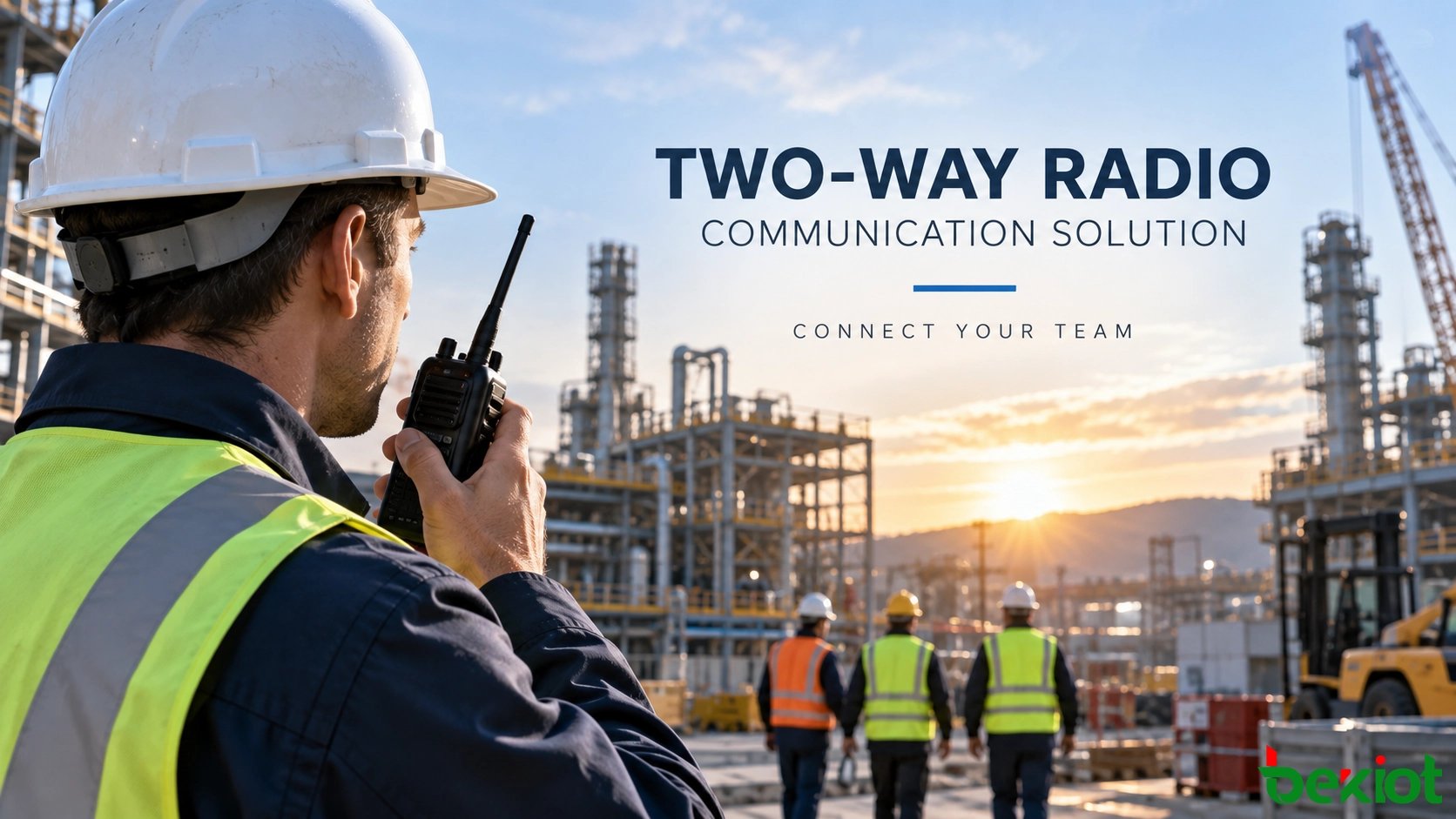
Field communication has a different rhythm from ordinary office calling. A maintenance technician reporting an equipment fault, a security officer requesting support or a construction supervisor coordinating several crews usually needs to reach the right people immediately. Searching for a contact, dialing a number and waiting for a conventional call to connect can add unnecessary steps to short operational exchanges.
A two-way radio communication solution provides a direct voice path between field personnel and supervisors. Portable radios provide the everyday operating interface, while channels, talk groups and RF coverage determine who can communicate and where the system remains usable. For larger sites, selected radio resources can also extend toward control positions or remote operational areas without changing the familiar push-to-talk workflow used in the field.
PTT Creates a Direct Path Between Field Personnel
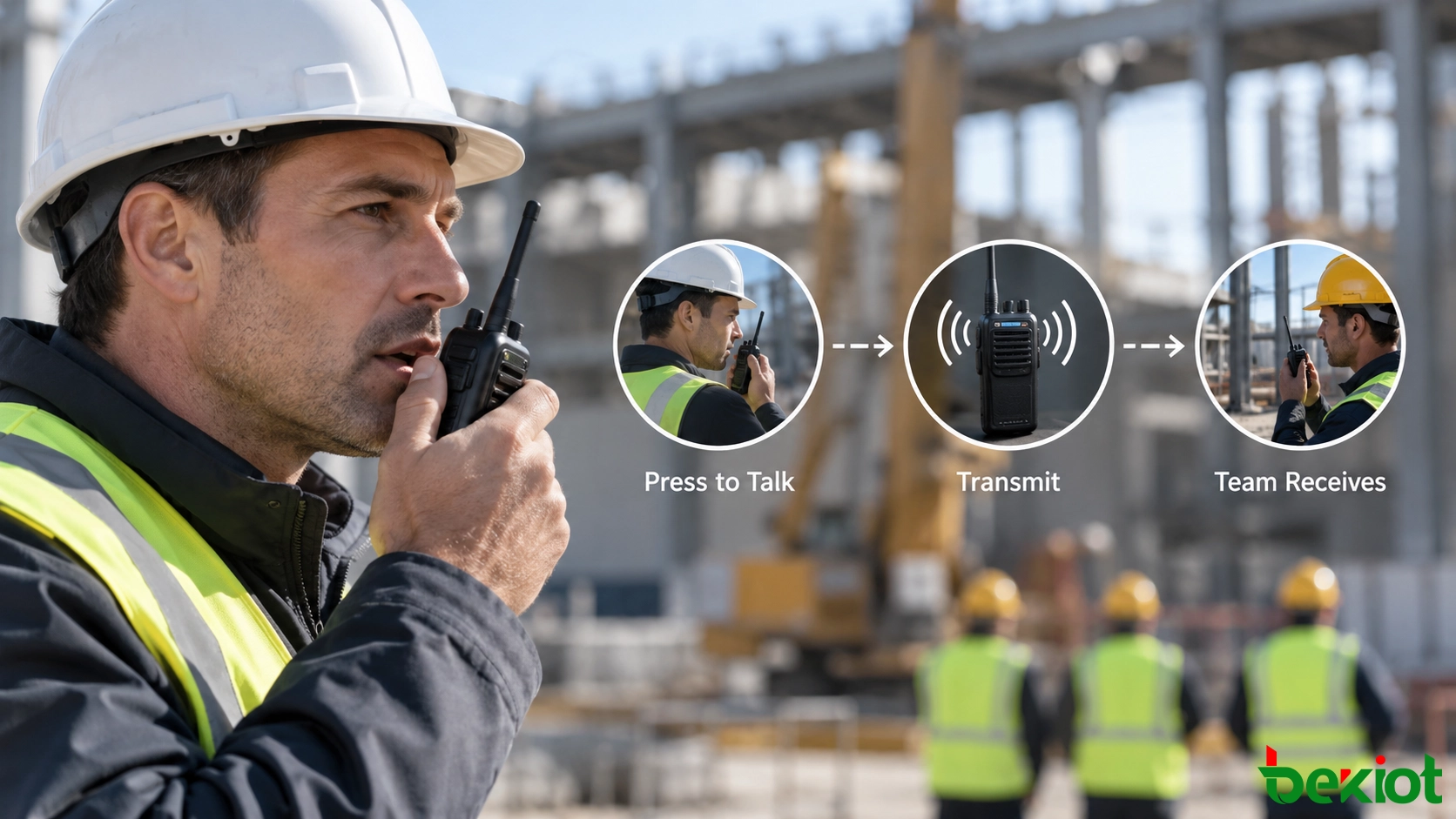
Conventional two-way radio communication is built around push-to-talk (PTT). In a typical half-duplex conversation, one user transmits while other users on the same communication path listen. Releasing the PTT button returns the radio to receive mode and allows another person to respond.
This operating model is particularly effective for short, task-oriented communication. One supervisor can issue an instruction to an assigned team without calling each worker separately. Personnel in the field can use the same communication path to report work progress, equipment problems, location changes or safety concerns.
A practical operating sequence is simple:
Listen briefly to confirm that the channel is available.
Press and hold the PTT button.
Pause briefly before beginning the message.
Identify the destination, location or task when necessary.
Keep the message short and clear.
Release PTT immediately after speaking.
Listen for confirmation or a response.
The short pause after pressing PTT is useful because some radio systems require a small amount of time to establish the transmit path. Speaking at exactly the same moment the button is pressed can cause the beginning of a message to be clipped.
Microphone position also affects intelligibility. For many portable radios, keeping the microphone approximately 3–5 cm from the mouth is a useful operating reference. Holding it too far away may reduce voice level, while speaking directly against the microphone can introduce breath noise or excessive audio input. Actual positioning should still be adjusted according to radio design and surrounding noise.
Channels and Talk Groups Keep Routine Traffic Organized
A radio fleet becomes difficult to manage when every employee shares the same communication path. Maintenance personnel may not need to hear routine security traffic, while warehouse operators do not need every conversation taking place between engineering teams.
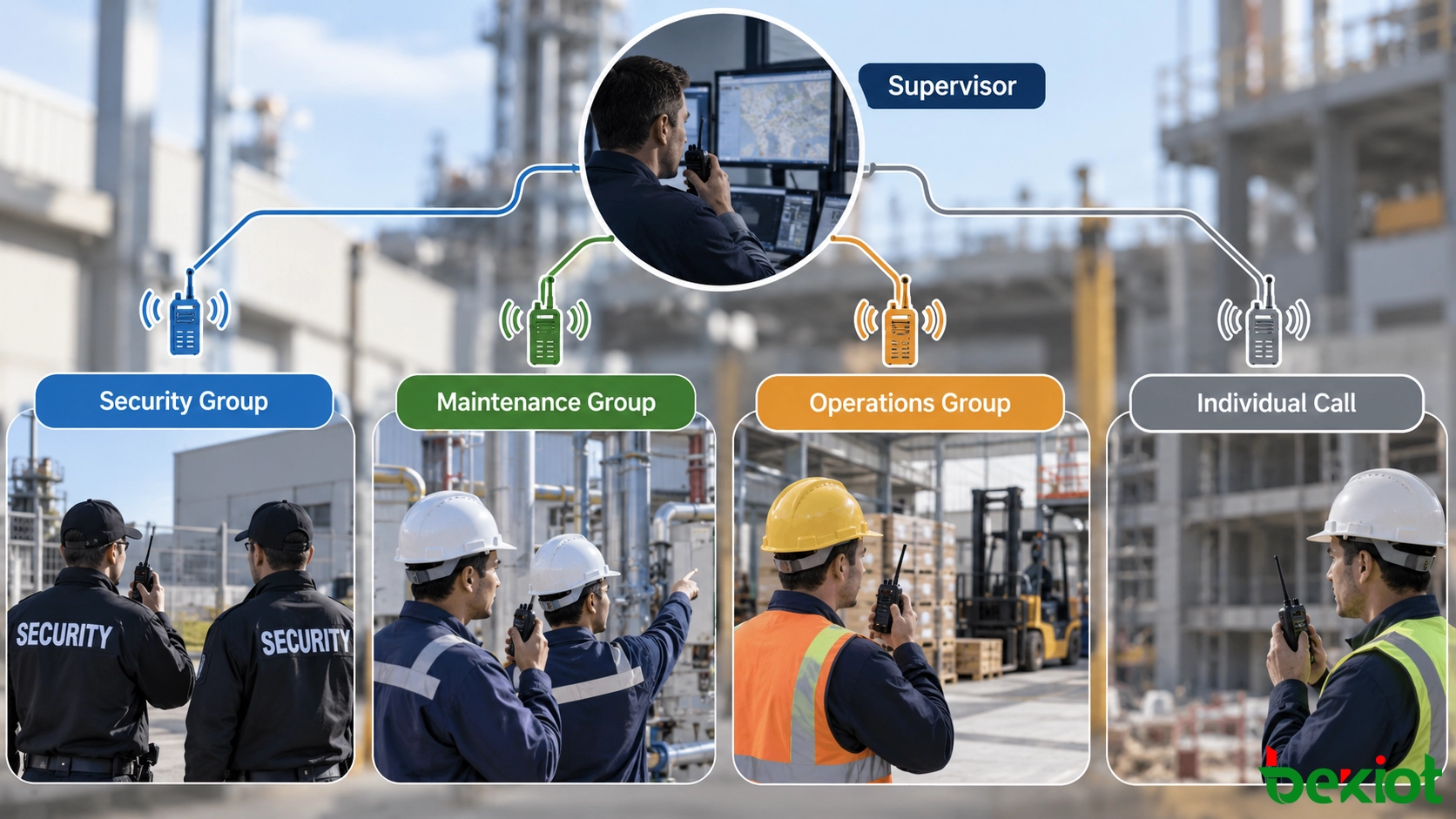
Channel and talk-group planning separates this traffic according to the way the organization works. A site may assign different communication resources to security, maintenance, production, logistics and supervisory personnel while maintaining a defined method for cross-department coordination.
The visible channel number on a radio is only part of that configuration. Two units do not automatically communicate because both displays show the same number. Depending on the radio technology, compatible frequency settings, signaling parameters, digital identities, talk groups or other programmed values may also be required.
A typical operational structure can include:
Security: patrol, entrance control and incident reporting.
Maintenance: equipment faults, inspections and repair work.
Operations: production and routine site coordination.
Logistics: warehouses, loading areas and vehicle movements.
Supervision: communication between team leaders and field personnel.
Emergency Coordination: an agreed communication path for incidents involving multiple teams.
The structure should remain simple enough for users to understand without constantly referring to a channel list. Too few groups can create congestion, while too many can fragment communication and make it harder for personnel to determine where a message should be sent.
Group Communication
A group call allows one transmission to reach several assigned users. This is useful when a work instruction, status update or incident message affects an entire team. Construction crews, security patrols, warehouse operators and maintenance teams are common examples of users who benefit from one-to-many communication.
Because the communication resource is shared, users should avoid unnecessarily long transmissions. Short messages leave the channel available for other personnel and make it easier to handle frequent operational exchanges.
Individual Communication
Where supported by the radio system, an individual call can address a specific radio or user identity. This provides an alternative when a message is relevant to one person rather than the whole group, reducing unnecessary interruptions for other users.
Cross-Team Coordination
Departmental separation should not create communication barriers during an incident. Larger sites need a predefined method for bringing security, maintenance, operations and supervisors into the same response workflow when an event affects several teams.
This may involve a designated emergency group, temporary cross-team communication or coordination through an authorized control position. The method should be established before an incident rather than improvised while personnel are already responding.
Coverage Planning Starts with the Physical Site
Radio coverage cannot be reduced to one distance figure. Terrain, building materials, operating frequency, antenna position, transmit power, interference, receiver characteristics and surrounding structures all influence the usable communication area.
As a general field reference, conventional portable radios may communicate approximately 1–3 km in relatively open outdoor areas under suitable conditions. In built-up urban environments, practical coverage may fall to roughly 500–800 m. Inside basements, workshops and heavily obstructed structures, usable communication can sometimes be limited to approximately 200–400 m.
These figures are indicative rather than guaranteed. A 500-meter path across an open yard is very different from the same distance through reinforced walls, production equipment and multiple floors. Radio range should therefore be evaluated against the actual site rather than selected from a theoretical maximum-distance figure.
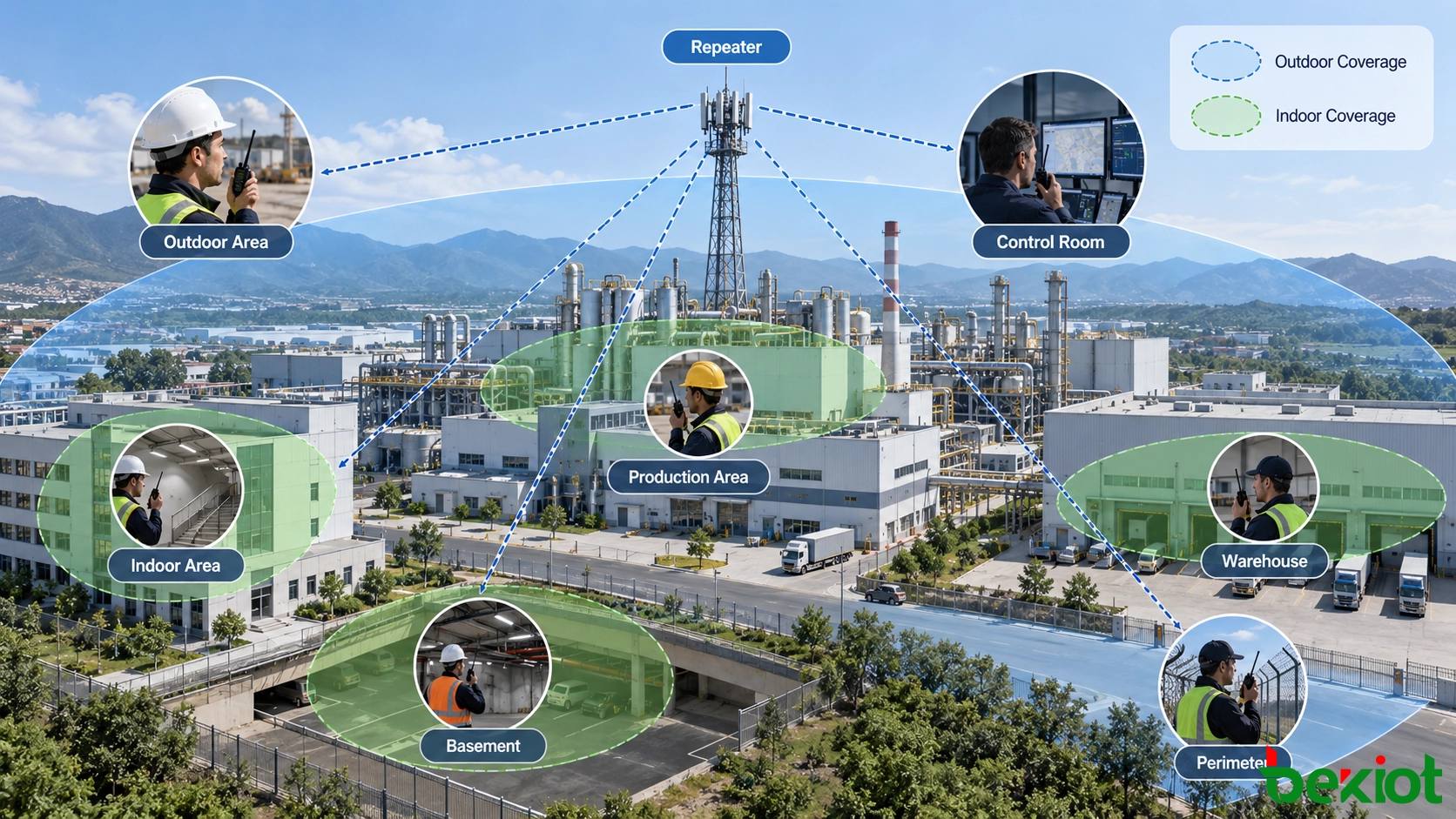
Industrial environments require particular attention. Steel structures, tanks, machinery, pipelines and reinforced concrete can create reflections and RF shadow areas. Multi-storey facilities introduce additional vertical coverage challenges, while basements, tunnels and underground parking areas may be difficult to reach from surface-level users.
Survey the Locations That Matter
Coverage testing should follow actual movement and operating procedures. Testing only in open areas near the main building can give an unrealistic picture of system performance.
A site survey may include:
production workshops;
equipment and utility rooms;
warehouses and loading areas;
security rooms and site entrances;
stairwells and enclosed corridors;
basements and underground parking areas;
perimeter positions;
remote outdoor work zones.
Testing should confirm voice intelligibility and repeatability, not merely the presence of an RF signal. If communication works only when the user stands in one exact position, that point should not be considered reliable operational coverage.
Extend Coverage Where Direct Radio Paths Become Unreliable
When portable-to-portable communication cannot cover the required area, increasing the number of handheld radios does not remove the underlying RF limitation. Coverage infrastructure needs to be considered instead.
Depending on the site, this may involve repeaters, appropriately positioned antennas or other radio infrastructure intended to extend the usable communication area. The correct approach depends on whether the challenge comes from geographic distance, building penetration, underground areas, terrain or a combination of these conditions.
Coverage extension should be based on survey results. Infrastructure placed according to assumptions may still leave important work areas outside reliable communication range.
Where This Communication Model Fits
Two-way radio communication is particularly useful where personnel move frequently, messages are short and operational, and several users may need to receive the same information. The communication structure can remain straightforward for a small team or be divided into several coordinated groups for a larger site.
Industrial Facilities
Factories, processing facilities and utility sites often combine production areas, equipment rooms, warehouses and outdoor work zones. Operators can use radio communication for routine coordination, while maintenance personnel report faults and supervisors organize field response without depending entirely on fixed telephones.
The main design challenge is often the physical environment. Machinery, structural steel, enclosed technical rooms and outdoor process areas can create very different RF conditions within the same facility. Coverage planning should therefore follow where personnel actually work rather than treating the whole facility as one uniform radio environment.
Construction Sites
Construction personnel move between floors, temporary work areas, equipment zones and site boundaries. Supervisors need a fast method for reaching crews without knowing exactly where each worker is located at every moment.
Groups can be organized according to work team or responsibility. Coverage should also be reviewed as construction progresses because the RF environment changes when walls, structural steel, equipment and building services are added.
Warehousing and Logistics
Warehouses and logistics facilities depend on frequent short exchanges between loading docks, storage areas, vehicle coordinators and supervisors. Radio groups can separate warehouse operations from security or maintenance while preserving a route for escalation when an event affects several departments.
Large metal shelving systems, vehicles, loading areas and adjoining buildings can also influence coverage, making practical testing important before finalizing the deployment.
Security Operations
Security personnel may be distributed between entrances, patrol routes, control rooms and perimeter positions. Group communication allows an event observed by one officer to be shared quickly with other personnel who may need to respond.
Coverage testing should include isolated or enclosed positions where personnel may need assistance rather than focusing only on normal patrol routes.
Outdoor and Distributed Work Areas
Large outdoor sites, transport facilities, utility operations and temporary field projects can extend beyond convenient fixed communication points. Portable radio supports personnel mobility, while the coverage plan should account for terrain, structures and the maximum separation between working teams.
Daily Reliability Depends on More Than Signal Strength
Good RF coverage does not automatically produce effective field communication. User behavior, environmental noise, battery condition and message structure can determine whether a technically available radio path is actually useful during operations.
One basic rule is to listen before transmitting. When another user is already speaking, a second transmission may interfere with the existing conversation or prevent the message from being understood. Waiting briefly for the channel to become available reduces unnecessary collisions.
Messages should also remain concise. Radio channels are shared communication resources, so unnecessarily long transmissions prevent other personnel from responding. Operational language should communicate the important information early: who is being called, where the event is occurring and what action is required.
Battery Readiness
Portable radios used throughout long shifts require a charging and battery-management routine. Personnel should begin work with sufficient capacity for the expected operating period, while spare batteries or charging positions may be appropriate for continuous operations.
Critically low battery capacity can affect equipment availability and, on some devices, operating performance during repeated transmissions. Emergency response teams and personnel working in isolated areas deserve particular attention because communication loss at those positions may have greater operational consequences.
Noise and Speech Intelligibility
A strong radio signal does not guarantee that a message will be understood. Machinery, engines, ventilation systems and outdoor activity can mask speech even when RF coverage is good.
Suitable microphone positioning, audio accessories and short standardized messages can improve intelligibility. Noise reduction or external audio equipment may also be considered for locations where personnel routinely work around high ambient noise.
Consistent Location and Team Names
Communication becomes slower when different users describe the same place in different ways. A workshop known informally by several names can force personnel to request clarification during an incident.
Channel names, department names and critical locations should therefore use consistent terminology. The same naming structure can be reflected in radio labels, operating procedures and site documentation so that personnel receive an instruction and immediately understand where it applies.
Design the Deployment Around Real Workflows
The starting point for a radio communication project should be the people, work areas and messages involved in daily operations. A small construction crew working within one open area has very different requirements from an industrial facility containing several departments, multiple buildings and underground technical areas.
Before finalizing the communication structure, the project should identify:
the number and type of radio users;
departments and teams that communicate routinely;
required group and individual communication paths;
indoor, outdoor and underground operating areas;
expected RF coverage challenges;
cross-department emergency procedures;
shift duration and charging arrangements;
high-noise operating areas;
future user and coverage expansion.
For a compact operation, the result may be a straightforward radio fleet with a small number of clearly defined channels. Larger sites may require departmental talk groups and additional coverage infrastructure while keeping the field operating procedure simple.
The configuration should also leave reasonable room for change. New work areas, additional personnel or organizational changes can alter communication requirements after the initial deployment. Reserving capacity for future groups and coverage expansion can reduce the need to redesign the entire channel structure later.
Before handover, the configured radios should be tested in representative operating areas with the same type of communication expected during normal work. Personnel should know which group to use, how to initiate a call, how urgent traffic is handled and where known coverage limitations exist.
A well-planned deployment keeps the user experience straightforward even when the site itself is complex. Field personnel should be able to select the correct communication group, press PTT, deliver a clear message and receive a response without needing to understand the underlying RF design.
Extending Field Radio Communication When Operations Grow
Some organizations eventually need radio communication to extend beyond a single work area. A control position may need to coordinate several field groups, or separate facilities may need a common communication path for selected operations.
These requirements can be addressed by extending the radio environment through suitable communication infrastructure while preserving the normal PTT workflow for field personnel. Local RF coverage should still be designed and tested at each site; connecting operational areas does not remove the need for reliable radio coverage where users actually work.
This separation is useful when planning future expansion. The field radio layer can remain focused on portable communication, while additional control-room or multi-site capabilities are introduced only when the operational workflow requires them.
Projects that require deeper integration with dispatch systems, IP networks or other communication platforms should evaluate those functions as a separate system layer. This keeps the basic two-way radio solution focused on field communication and avoids making everyday radio operation unnecessarily complicated.
FAQ
Can radios from different manufacturers operate within the same communication system?
They may be able to communicate when the radio technology, frequency range, channel parameters and required signaling are compatible. Interoperability should be verified through configuration and testing rather than assumed from the appearance or channel numbering of the radios.
Can an existing analog radio network be upgraded gradually?
In many projects, migration can be completed in stages if the existing and new equipment support an appropriate transition strategy. Current frequencies, coverage areas, user groups and operating procedures should be documented before migration so that essential communication paths remain available.
Can two sites share selected radio communications?
Yes. Suitable network-connected radio infrastructure can extend selected communication resources between geographically separated locations. Each site still requires reliable local RF coverage for its own field users.
Does every two-way radio deployment require a frequency license?
Licensing requirements depend on the country or region, frequency band, radio service and operating parameters. The applicable spectrum regulations should be confirmed before frequencies are assigned and the system is placed into service.
How much spare capacity should be planned for future users?
There is no fixed percentage that applies to every radio system. Spare capacity should reflect expected staff growth, additional work groups, new operating areas and possible changes to the communication structure. Allowing reasonable room for expansion during the initial planning stage is usually easier than reorganizing the entire channel plan after the system is already in daily use.