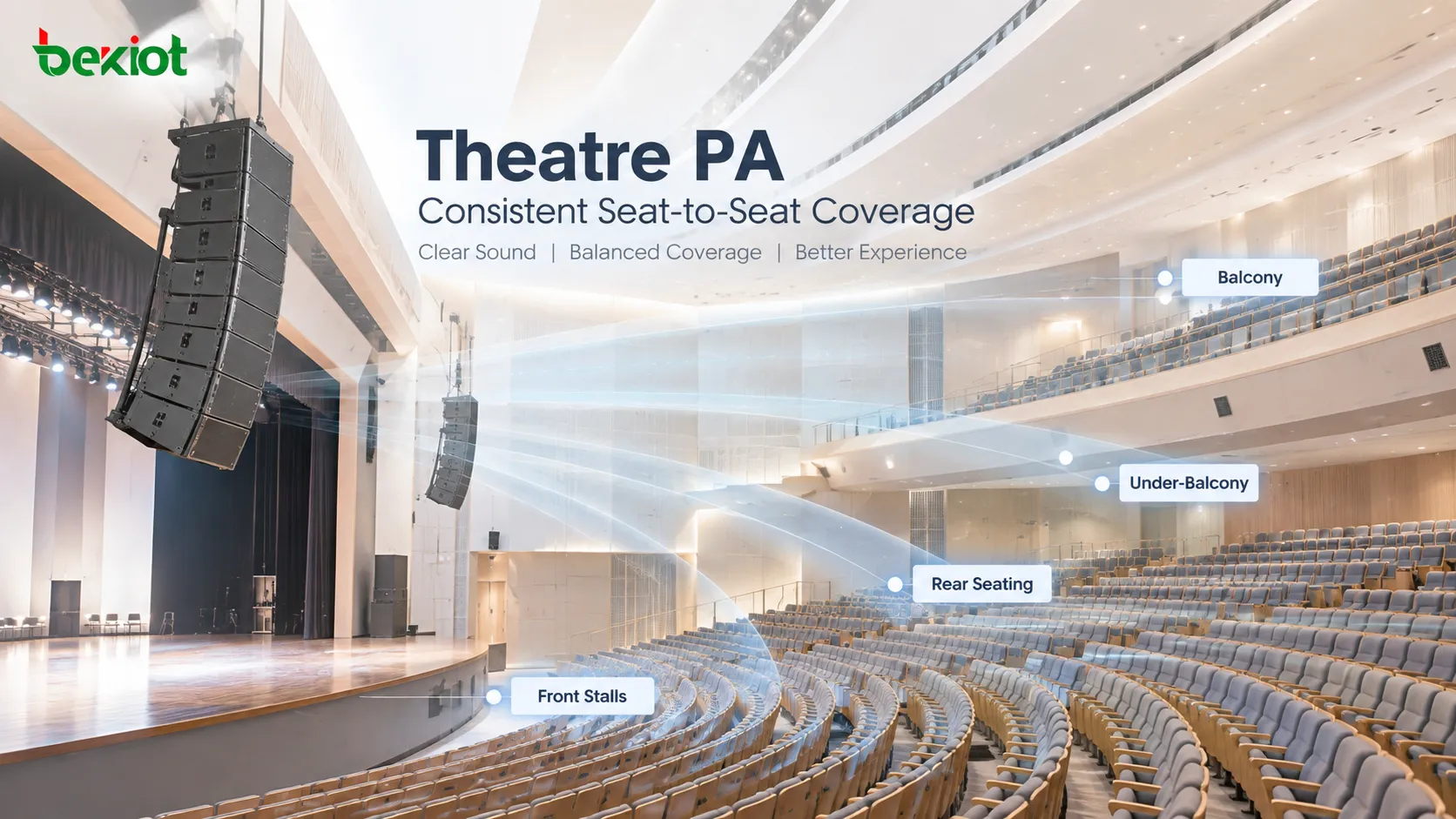
Theatres are one of the most demanding environments for a PA system because different seating levels and viewing positions create very different listening conditions. A theatre PA may already be capable of producing high sound pressure levels, yet the front rows can still feel too loud while audiences farther back struggle to understand speech. Dialogue may sound clear at the FOH position, but listeners under a balcony or in the upper gallery may lose important high-frequency detail. If the problem were simply insufficient volume, increasing amplifier power and loudspeaker output would solve it. In practice, theatre sound reinforcement is far more complex.
Recent theatre sound-system upgrades are placing less emphasis on maximum SPL as the sole design objective and more emphasis on differences between seating areas. In a multi-level theatre with around 1,000 seats, for example, the system may combine main line arrays, subwoofers, front fills and under-balcony delay loudspeakers, with coverage modelled before installation. The objective is not merely to make sound audible everywhere, but to provide stalls, balconies, rear seating and obstructed areas with similar SPL, frequency balance and speech intelligibility.
This reflects a broader change in how theatre PA performance is evaluated: high SPL still matters, but it has become a baseline capability rather than the final objective. What increasingly defines system quality is whether sufficient headroom can be distributed evenly throughout the audience area.
Why Did Theatre PA Systems Traditionally Emphasize High SPL?
The original purpose of sound reinforcement was straightforward: without electronic amplification, speech and music from the stage could not reach a large audience at an adequate level. As theatres became larger, amplifier power, loudspeaker sensitivity and Maximum SPL naturally became important design specifications. If the system could generate enough acoustic output, audiences farther from the stage had a better chance of hearing the performance.
That approach made sense. In large auditoriums, concert halls and multipurpose theatres, insufficient output meant that listeners in the rear seats simply could not hear enough direct sound. High-efficiency loudspeakers, more powerful amplifiers and array systems capable of projecting sound over longer distances therefore became fundamental elements of professional sound reinforcement.
However, modern loudspeakers and amplifiers can now provide substantial output and headroom. Once that basic capability is available, a different problem becomes more obvious: a system can be very loud without sounding equally good in every seat.
What Problems Can Result from Focusing Only on High SPL?
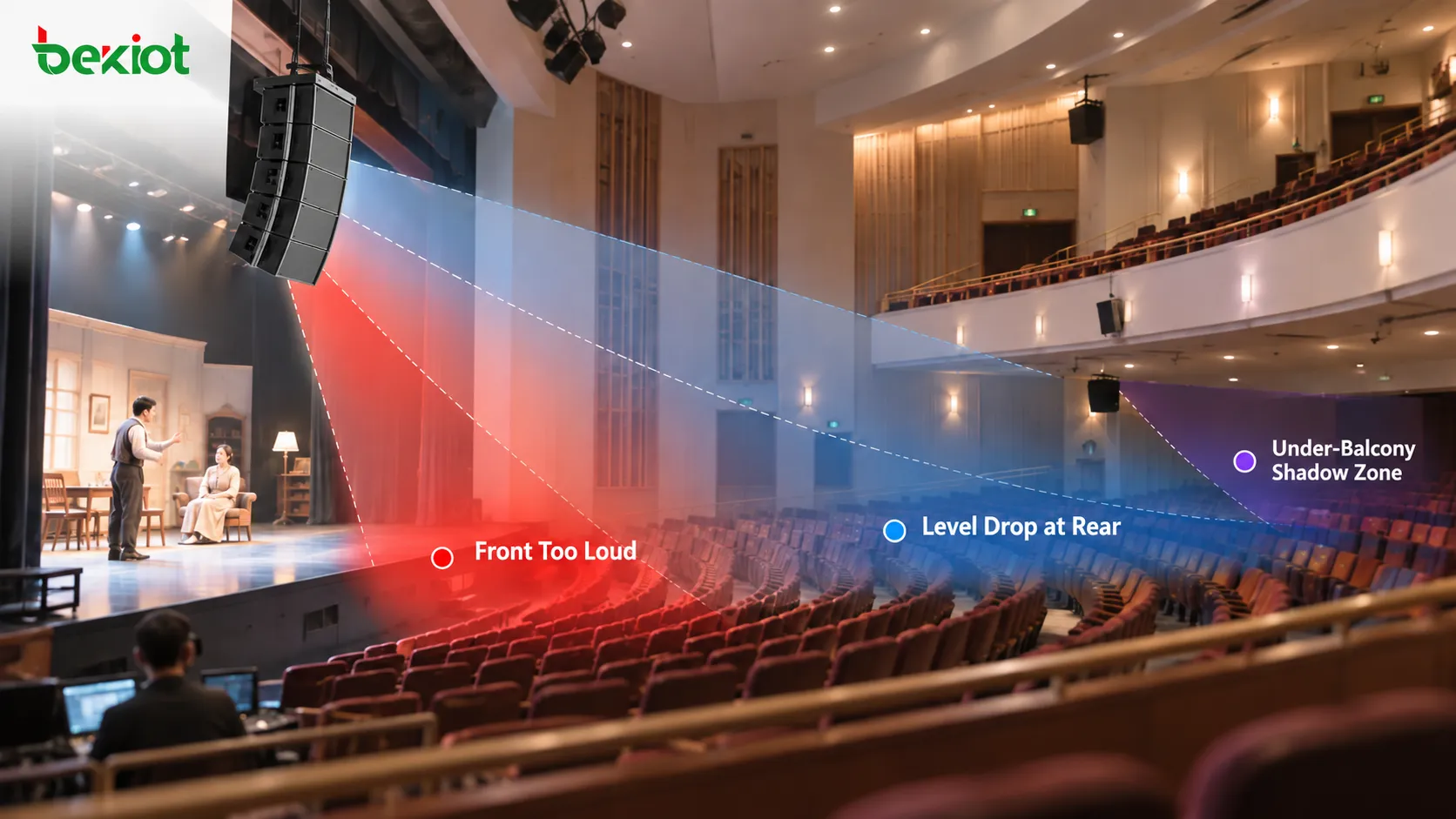
A theatre is not a flat listening area where every seat is the same distance from the loudspeakers. The front rows may be relatively close to the main system, while the rear stalls, upper balconies and under-balcony seating can be much farther away or partially obstructed by architectural structures. If engineers try to compensate for distant areas simply by increasing the output of the main system, the front audience is usually affected first.
The first problem is greater SPL variation between seating areas. The front rows may already be listening at a relatively high level while the rear is only just receiving sufficient coverage. Increasing the main system further to improve the rear seats can expose the front audience to unnecessary sound levels and increase listening fatigue.
The second problem is that higher SPL cannot restore high-frequency energy that is physically obstructed. Balconies, boxes, structural beams and other architectural elements can interfere with the direct path from the main loudspeakers. Even if overall output is increased, listeners in these shadowed areas may still lose the mid- and high-frequency information that is essential for speech intelligibility. Louder does not automatically mean clearer.
The third problem is that more acoustic energy can also create more reflections. If the main array sends excessive energy toward walls, ceilings or balcony structures, reflected sound increases. The audience then hears a mixture of direct sound and delayed reflections rather than a clean direct signal. For spoken content, this can significantly reduce consonant clarity and overall intelligibility.
This creates an important turning point in theatre sound design: once sufficient output is available, the benefit of continually increasing Maximum SPL becomes smaller, while coverage, directivity control and the ratio of direct to reflected sound become increasingly important.
What Does Consistent Seat-to-Seat Coverage Mean in a Theatre PA System?
Consistent seat-to-seat coverage does not mean that every seat must produce exactly the same measurement result. In a real theatre, differences in distance, reflections, seating, balcony structures and wall surfaces make perfect uniformity impossible. The engineering objective is to keep those variations within a reasonable range so that audiences in different areas receive a similar listening experience.
This consistency includes several dimensions. The first is SPL consistency, meaning that the front and rear seats should not have an excessive difference in perceived loudness. The second is frequency-response consistency, so the front rows do not sound bright while the rear seats lose significant high-frequency content. The third is speech-intelligibility consistency, ensuring that dialogue remains understandable across the audience area rather than only in a few central seats. Time alignment between the main system and distributed fills is another important factor.
From the audience perspective, the principle is simple. A well-designed theatre PA should allow listeners in the front rows, rear stalls, balconies and under-balcony areas to hear a reasonably similar program balance. One group of listeners should not have to tolerate excessive level simply so that another group can barely hear the performance.
This is why theatre sound is increasingly evaluated by more than the maximum output capability of the loudspeakers. A more meaningful question is: how large is the difference between the best-covered and worst-covered listening areas?
Why Is Consistent Coverage More Effective Than Simply Increasing SPL?
One of the first advantages of consistent coverage is improved speech intelligibility. A large proportion of theatre content depends heavily on spoken information, including drama, musicals, conferences, school productions and other stage events. If the main system focuses primarily on long-distance output without controlling direct-sound coverage in each area, the audience may experience a system that is loud but still difficult to understand.
The second advantage is reduced excessive SPL in local areas. Once the main system no longer has to carry every seat by itself, sound energy can be assigned more accurately. The main array can serve the primary and distant audience areas, fills can support obstructed locations, and nearby listeners no longer need to absorb additional output simply to compensate for distant seats.
The third advantage is more stable tonal balance. If the low-, mid- and high-frequency balance changes significantly across the room, the FOH engineer cannot optimize every seating area at the same time. The front may sound correct while the rear is too dark; adding more high frequency to compensate for the rear can then make the front sound overly bright. Better coverage consistency allows FOH EQ, dynamics and overall program balance to translate more predictably throughout the venue.
The fourth advantage is more useful system headroom. Modern theatres still need strong output capability, but high SPL should exist as dynamic headroom rather than as a way to compensate for poor coverage design. Adequate headroom allows the system to reproduce transient peaks from music and performances without unnecessary distortion, while normal operation does not depend on continuously driving the main system at excessive levels.
How Do Main Arrays, Fills and Delay Loudspeakers Create Consistent Coverage?
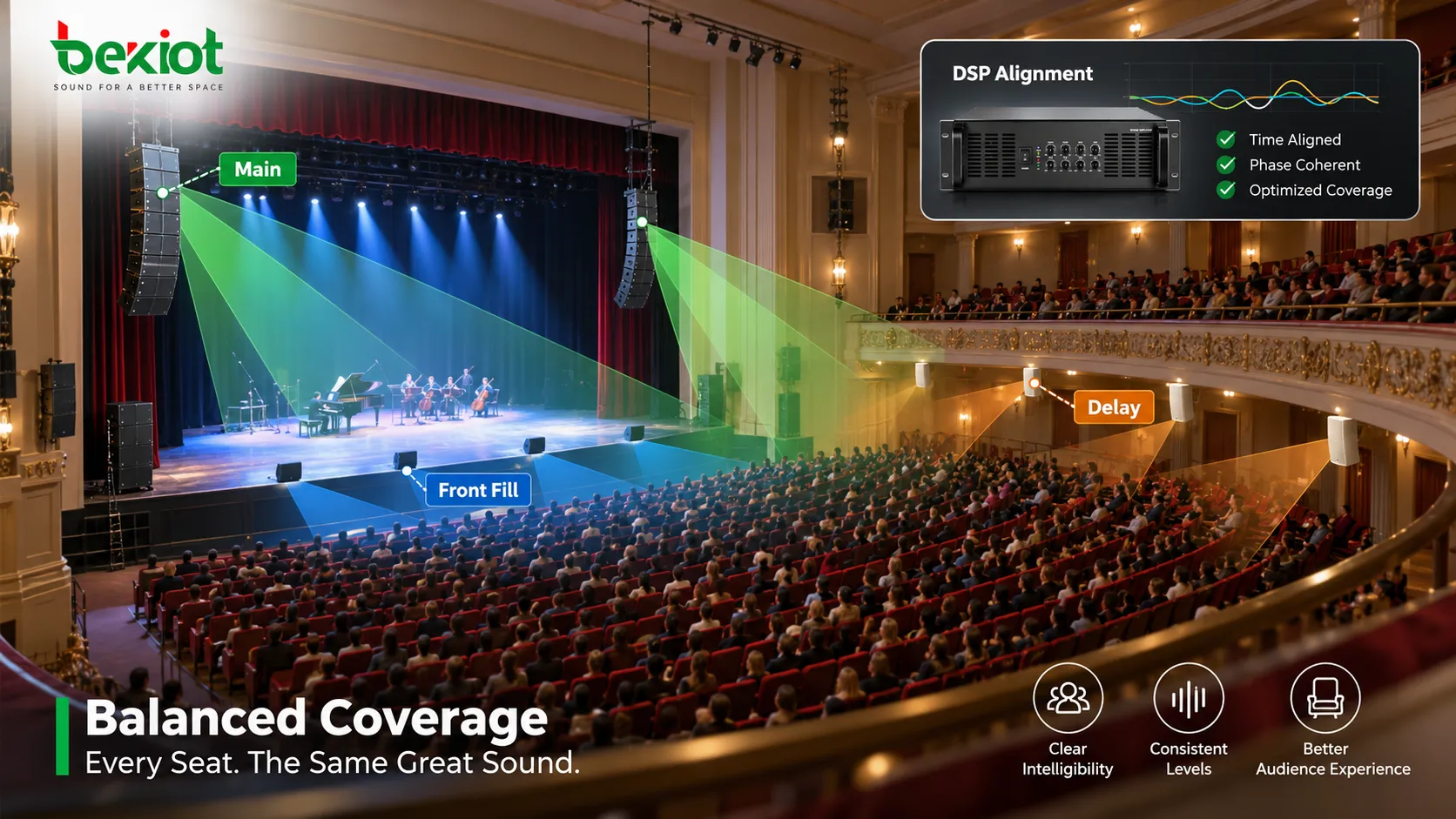
Consistent seat-to-seat coverage is rarely achieved by simply installing a larger pair of loudspeakers. Instead, the audience area is divided into several logical coverage zones, with different loudspeaker systems assigned to different tasks.
The main line array or primary PA system covers most of the stalls and the main long-throw audience area. Its job is not only to provide sufficient output but also to control vertical directivity, keeping acoustic energy focused on the actual audience area rather than sending excessive sound toward the ceiling or other unused surfaces.
Seats close to the stage may be too near the main array or outside its optimum vertical coverage. Front fills or near-field fills can therefore be used to support these seats without forcing the main array to operate with an unnecessarily wide vertical pattern.
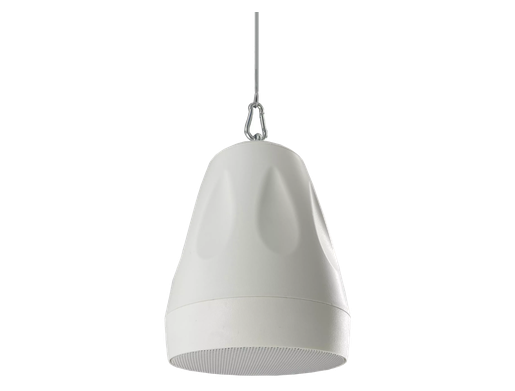
Under-balcony areas present another common challenge. The balcony structure can block mid- and high-frequency direct sound from the main system, so local delay loudspeakers are often required to restore level and speech clarity. Their role is not simply to create another louder source. DSP delay and level adjustment are used so that the fill integrates with the acoustic arrival from the main system and maintains a continuous sound field.
A practical system relationship can be summarized as:
Main Array for Primary Coverage → Front Fill for Near Seating → Delay Fill for Obstructed and Distant Areas → DSP for Time and Level Alignment → More Consistent Listening Across the Audience.
This distributed approach makes it much easier to control differences between seating areas than asking a single main system to cover every location equally well.
Why Should Consistent Coverage Begin with Predictive Acoustic Modelling?
Coverage consistency is difficult to achieve by relying only on listening tests after installation, because many critical decisions become difficult to change once the loudspeakers are flown. The array location, suspension height, number of elements and vertical splay angles can all have a major effect on coverage, yet adjustment options become limited after installation.
For this reason, modern theatre PA design increasingly relies on prediction software. Before equipment is installed, engineers can model the geometry of the stalls, balconies, stage and major architectural surfaces, then place the proposed loudspeakers into that model and predict SPL distribution and coverage boundaries throughout the audience area.
This allows designers to identify potential problems in advance. They can determine whether the main array sends excessive energy toward the ceiling, whether the first balcony receives sufficient direct coverage, whether the upper balcony requires a different array angle, where under-balcony high-frequency loss is likely to begin, and how far front fills and delay fills need to extend.
The purpose of this approach is not to replace the engineer with software. It is to move the process from correcting structural problems after installation toward reducing those problems before installation begins. Recent theatre upgrades increasingly use three-dimensional and loudspeaker coverage modelling before installation so that the final acoustic result can follow the design intent as closely as possible.
For seat-to-seat consistency, this stage is especially important because the design objective is not whether one reference point is loud enough, but how the entire audience area behaves relative to itself.
Consistent Seat-to-Seat Coverage Must Be Verified with Multi-Point Measurements
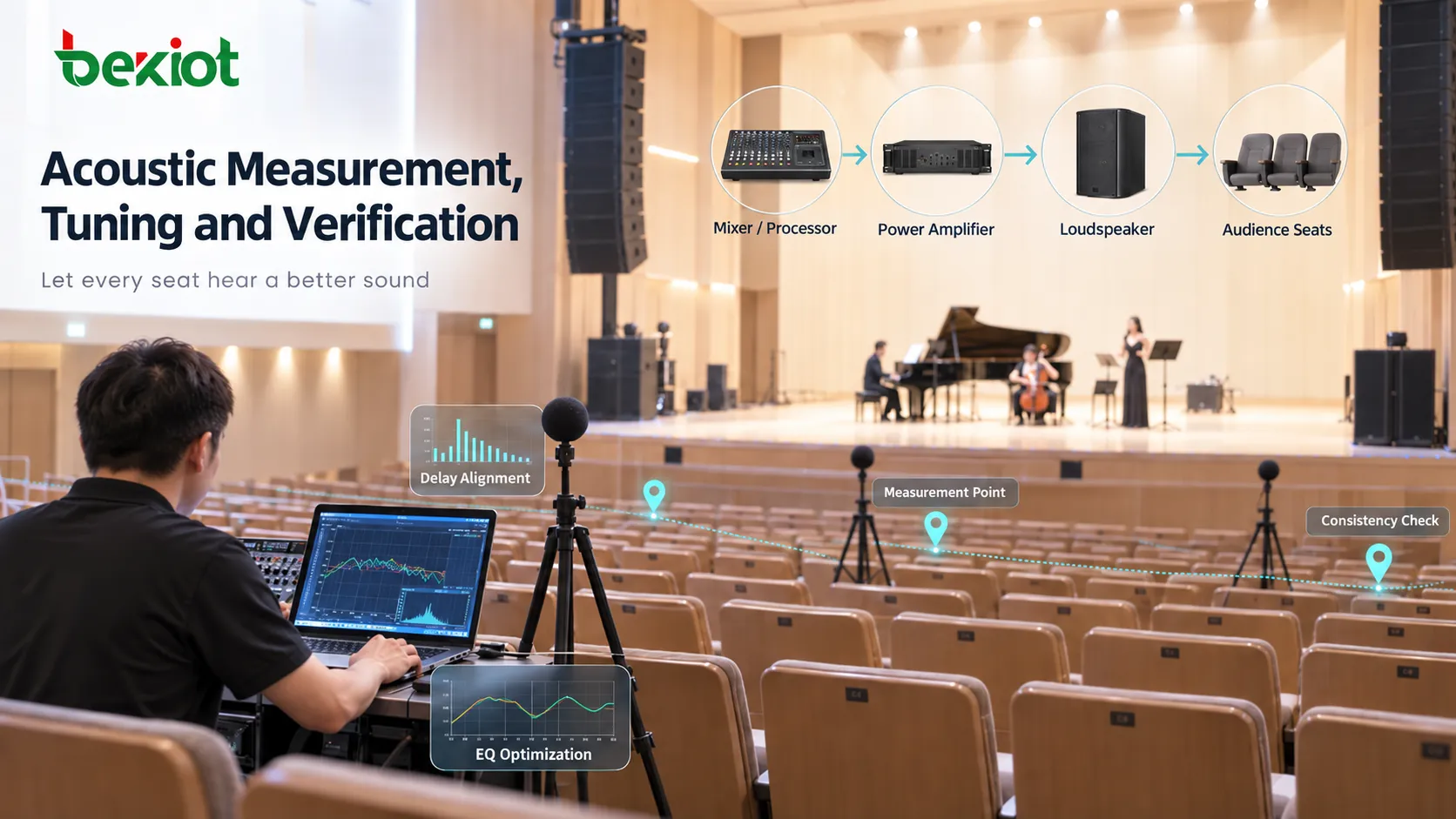
Prediction software can estimate system coverage, but final commissioning still has to take place in the actual theatre. Real wall materials, seating, stage scenery, audience absorption and installation tolerances can all produce differences between predicted and measured results.
Traditional tuning can place too much emphasis on the FOH position. If the system sounds good at the mixing console, it can be tempting to assume that the entire room is correct. In a multi-level theatre, however, FOH represents only one location within the overall audience area.
A more reliable process is to verify performance at multiple representative locations, including the front, middle and rear stalls, different balcony levels, under-balcony seating, and the transition areas where the main system overlaps with local fills. Engineers should evaluate not only SPL but also frequency response, timing relationships and speech intelligibility, supported by actual program listening.
The transition between the main system and delay loudspeakers deserves particular attention. If timing and level are not correctly aligned, two individually well-performing loudspeaker systems can still create comb filtering, image shifts or an obvious double-sound effect in the overlap area.
Consistent coverage is therefore not a single loudspeaker specification. It is a system result created through design, prediction, installation, DSP tuning and multi-point verification.
The Shift from High SPL to Uniform Coverage Is Changing How Theatre PA Systems Are Evaluated
The move from high SPL toward consistent seat-to-seat coverage does not mean that loudspeaker output is no longer important. Without sufficient Maximum SPL and headroom, a system may still be unable to support musicals, live music and other high-dynamic-range productions.
What has changed is the priority between these requirements. A traditional approach could easily become:
Not Loud Enough → Add Power → Increase SPL.
A more modern design process is closer to:
Define the Audience Area → Control Loudspeaker Directivity → Assign Main and Fill Coverage → Align Time and Frequency Response → Measure Differences Across the Venue → Ensure Adequate Headroom.
The fundamental change is a move away from evaluating only the output capability of the equipment and toward evaluating what the audience actually receives. A loudspeaker system may be capable of very high SPL, but if the front rows are excessively loud, the rear seats sound dull and dialogue under the balcony is difficult to understand, it is still not a well-performing theatre PA system.
Consistent seat-to-seat coverage addresses one of the most basic expectations of theatre sound reinforcement: audience members may purchase seats in different parts of the venue, but they should not receive completely different sound quality because of where they sit.
The future of theatre PA design is therefore not a simple choice between “SPL” and “coverage.” High output, headroom, directivity, delay fills and DSP should all serve the same objective: delivering a stable, intelligible and as-consistent-as-practical listening experience throughout the entire usable audience area.
FAQ
Does Consistent Seat-to-Seat Coverage Mean Every Seat Must Have Exactly the Same SPL?
No. Differences in distance and architecture make identical measurements at every seat unrealistic. The goal is to keep variations under control so that SPL, frequency balance and speech intelligibility remain reasonably consistent between the front, rear, balcony and obstructed seating areas.
Do Theatre PA Systems Still Need High SPL?
Yes, but the more accurate objective is sufficient Maximum SPL and headroom rather than continuously operating the system at high levels. Extra output capability should handle performance peaks and dynamic material, not compensate for inadequate coverage design.
Why Can't Increasing the Main Array Level Fix Poor Sound Under a Balcony?
A balcony structure can physically block the mid- and high-frequency direct sound from the main loudspeakers. Increasing the main array level also raises SPL in other parts of the theatre, but it may not restore the speech detail lost in the acoustic shadow. Local delay loudspeakers are therefore commonly used to restore direct sound in these areas.
Does a Line Array Make Consistent Theatre Coverage Easier?
In deeper theatres or venues with multiple balcony levels, a line array can provide useful vertical-directivity control and help distribute acoustic energy more accurately. Final performance, however, still depends on the number of elements, array angles, suspension position, fill design and system tuning rather than on the loudspeaker format alone.
Why Is Prediction Software Used Before Installing a Theatre PA System?
Prediction software helps engineers estimate SPL distribution and coverage across different seating areas before the system is installed. It can guide array height, aiming angles and fill locations. It does not replace final on-site measurement, but it can reduce the risk of discovering major coverage problems only after the loudspeakers have been installed.