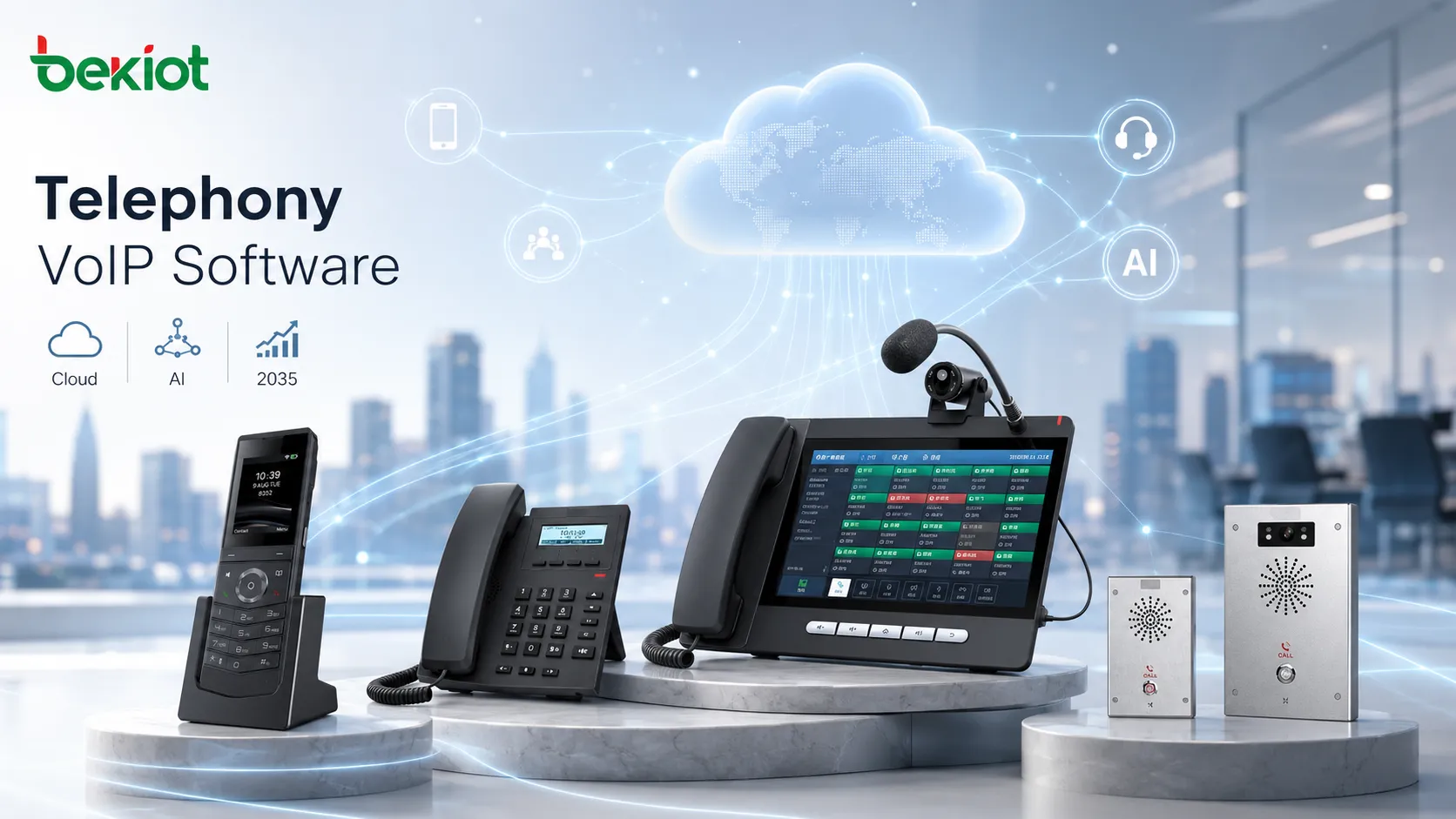
Business communication has moved far beyond the office desk phone. A company may now need voice calling for remote employees, video meetings for distributed teams, messaging for daily collaboration, cloud contact center tools for customer service, and analytics for management decisions. This shift has made telephony VoIP software a core part of digital communication strategy rather than a simple replacement for traditional phone lines.
The global telephony VoIP software market was valued at about USD 16.14 billion in 2024 and is projected to reach around USD 64.98 billion by 2035, with an estimated 13.5% CAGR from 2025 to 2035. This growth reflects a wider transition toward internet-based voice, cloud communication platforms, unified communications, AI-enabled call handling, and more flexible enterprise connectivity.
VoIP software enables voice communication over internet protocol networks by converting voice into digital packets. For businesses, education providers, healthcare organizations, customer service teams and consumer communication platforms, this means lower communication costs, easier scaling, faster deployment and stronger integration with other digital tools. The real market opportunity is not only cheaper calling. It is the ability to connect voice with the way modern organizations actually work.
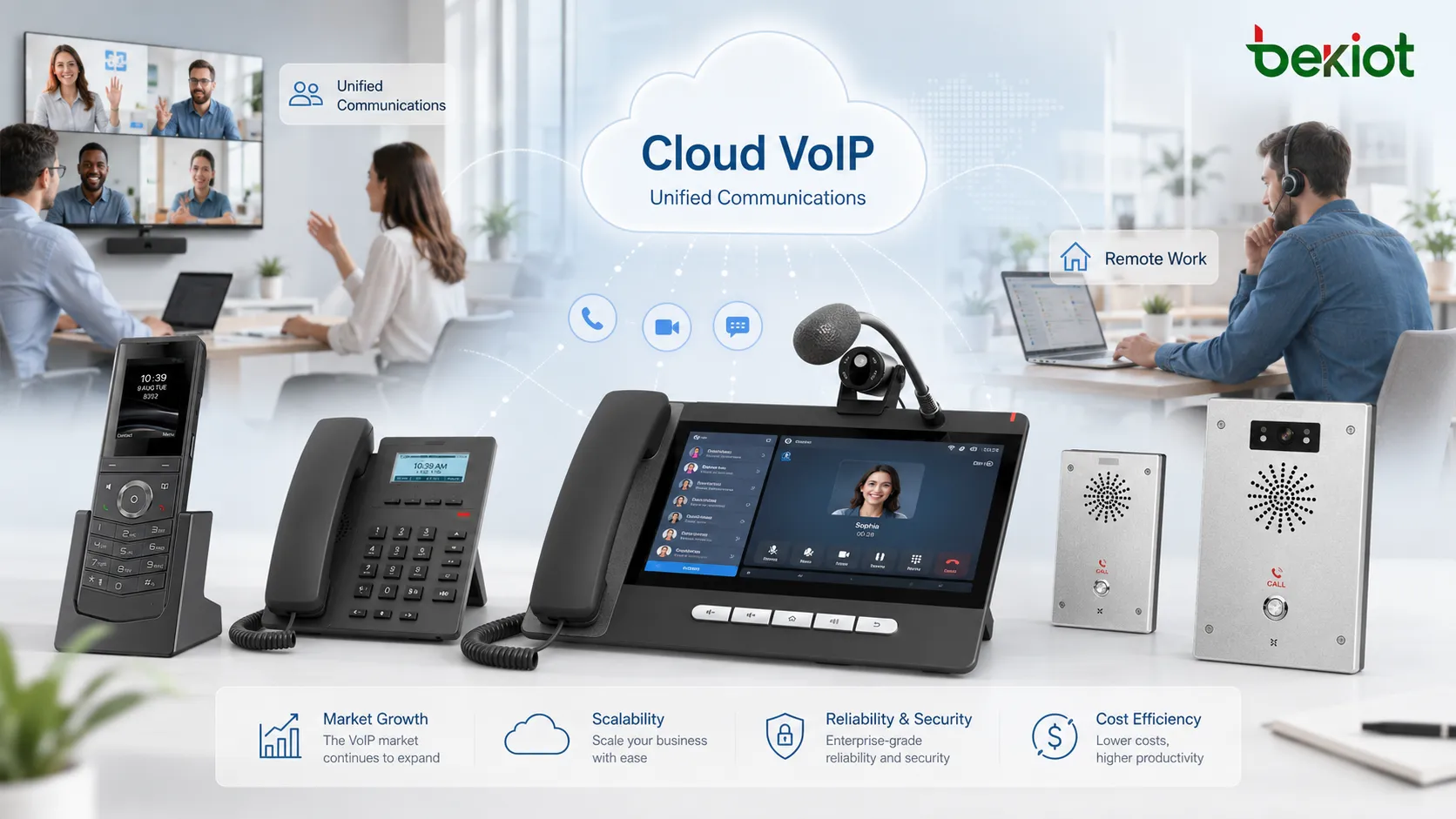
Market Growth Reflects Digital Work
The main reason behind the expansion of telephony VoIP software is the change in workplace structure. Traditional phone systems were built around fixed office locations, hardware PBX equipment and local telephone lines. Modern businesses are more distributed. They may have headquarters, branch offices, remote employees, mobile teams, outsourced customer support and international partners working together every day.
VoIP software fits this environment because it separates business calling from one physical location. Employees can make and receive calls through IP phones, desktop softphones, mobile apps or browser-based clients. A business number can follow the user instead of remaining tied to one desk. Departments can use call queues, ring groups, forwarding rules and voicemail workflows without depending entirely on local telephone hardware.
Cost efficiency remains a strong market driver. International calling, multi-site communication and legacy phone maintenance can become expensive when companies rely only on traditional telecom services. VoIP can reduce dependence on older infrastructure and make communication spending easier to control. For small and medium-sized companies, cloud VoIP also reduces the need to buy and maintain complex equipment from the beginning.
Larger enterprises often look at VoIP from another angle. They need standardization, management visibility and system integration. A company with many locations may want one communication policy, one user management model, one analytics dashboard and one calling experience across different offices. VoIP software makes that kind of unified management more practical.
Unified Platforms Change Expectations
Unified communications has become one of the strongest forces in the VoIP software market. Businesses no longer want voice, video, messaging, file sharing and customer interaction to exist in separate systems. They want one platform where employees can call, meet, chat, collaborate and follow up without constantly switching tools.
A customer interaction now often moves across several channels. A call may become a support ticket. A sales conversation may need to be logged in a CRM. A missed call may trigger a callback task. A technical issue may start with a voice call and continue through video meeting, screen sharing and internal team messaging. VoIP becomes more valuable when it can connect to these workflows.
This is why platform integration matters more than basic calling features. Companies want VoIP software that can work with CRM systems, help desk platforms, collaboration suites, contact center tools, calendar applications and data dashboards. The phone call is still important, but the information around the call is becoming just as important.
Unified platforms also improve hybrid work. A user can answer a business call at the office, continue communication from a laptop at home and respond through a mobile app while traveling. For managers, this creates better control over communication continuity. For employees, it creates a more natural work experience.
AI And Automation Add Value
Artificial intelligence is changing how VoIP software is evaluated. Basic voice transmission is no longer enough for many businesses. They now expect smarter call routing, live transcription, call summaries, sentiment analysis, fraud prevention, quality monitoring and automated customer service support.
In customer service environments, AI can help identify caller intent and route the call to the right department. It can support agents with real-time suggestions, summarize conversations after the call and identify repeated customer issues. These functions reduce manual work and help teams respond faster.
Automation also improves daily operation. Businesses can use automated attendants, scheduled routing, voicemail-to-email, callback rules, call recording policies and quality checks to reduce repetitive tasks. In contact centers, automation can help manage peak call volumes, after-hours service and routine customer requests.
AI does not remove the need for human support. Complex complaints, technical issues, sensitive customer cases and high-value business conversations still require real judgment. The value of AI-enabled VoIP software is that it gives human teams better information, cleaner workflows and more time to focus on the conversations that matter most.
5G And Cloud Improve Adoption
Better network infrastructure is another reason telephony VoIP software continues to grow. Faster broadband, stronger mobile networks and wider cloud adoption make internet-based voice more reliable for business use. As 5G networks expand, VoIP services can benefit from lower latency, higher capacity and improved support for mobile communication.
5G is especially important for mobile-first work models. Field teams, remote workers, sales staff, technicians and service employees increasingly depend on mobile devices for business communication. Better mobile connectivity can improve voice quality, video calling, unified communication access and real-time collaboration.
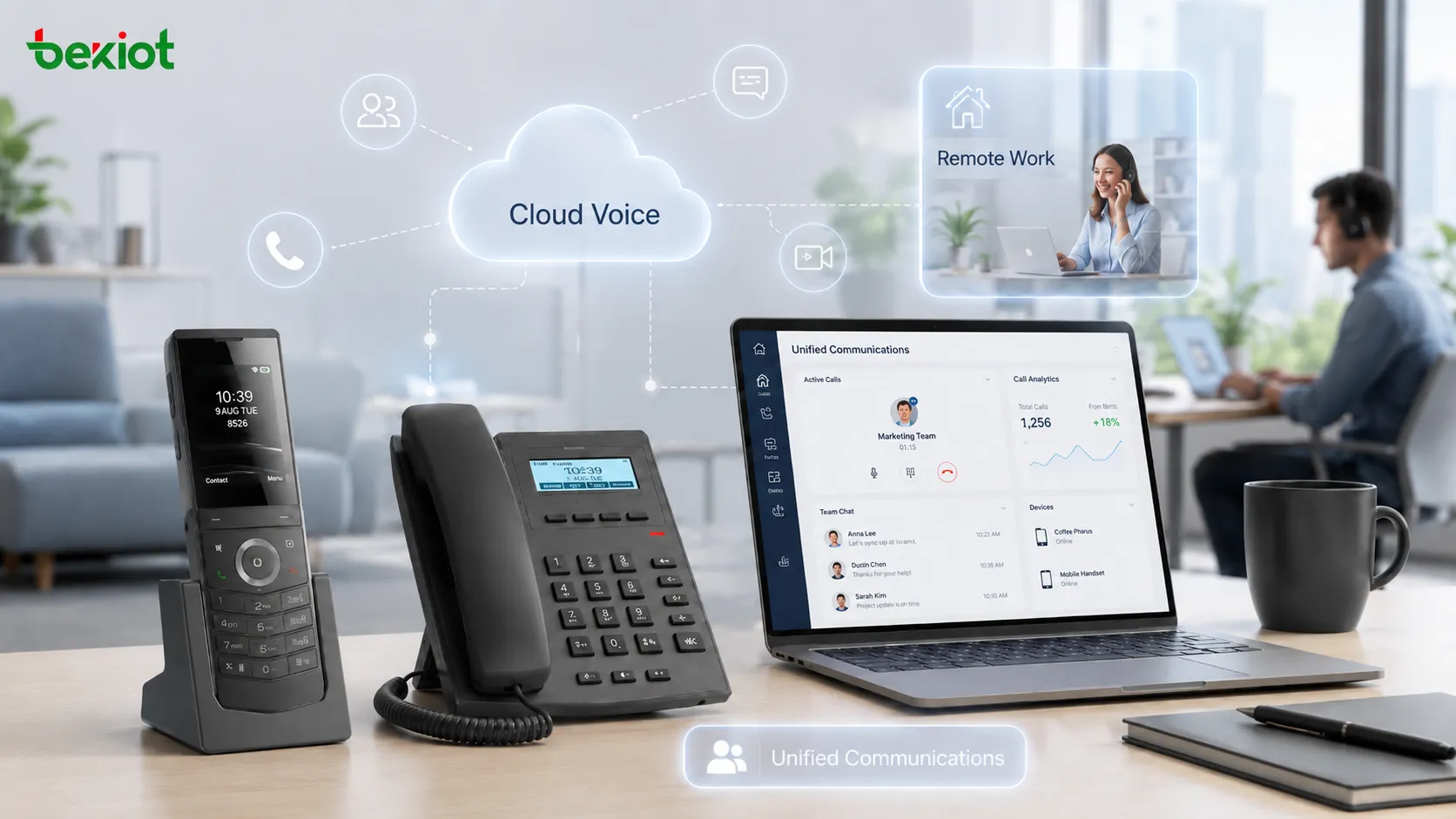
Cloud deployment is equally important. A cloud-based VoIP platform can be updated, expanded and managed more easily than a hardware-heavy phone system. New users can often be added through software administration. Branch offices can be connected faster. Features such as call analytics, recordings, voicemail, routing and user permissions can be managed from a central interface.
Government investment in broadband, smart cities and digital public services also supports wider VoIP adoption. As internet infrastructure improves, more businesses and public institutions can move from legacy phone systems toward software-based communication platforms.
Regional Demand Follows Infrastructure
Regional market growth depends on broadband availability, cloud readiness, enterprise digitization and communication habits. North America is expected to generate strong demand because the United States and Canada already have mature internet infrastructure, broad cloud adoption and many businesses looking for flexible communication solutions.
North American growth is also supported by the large number of small and medium-sized enterprises that need affordable, scalable and easy-to-manage communication tools. Remote work, SaaS adoption and customer service modernization continue to push companies toward cloud VoIP and unified communication platforms.
Asia-Pacific is expected to show faster growth. Rapid industrialization, technology development, expanding e-commerce, mobile internet usage and a growing middle class are all increasing demand for flexible communication systems. Countries with strong digital infrastructure development are especially well positioned for VoIP adoption.
Europe has its own growth logic. Many European businesses operate across countries, languages and regulatory environments. This creates demand for secure, manageable and integrated communication platforms. Data protection, compliance and multi-country service consistency are important considerations in this region.
Latin America, the Middle East and Africa also offer long-term opportunities as businesses and public organizations improve digital infrastructure. In these markets, VoIP adoption may be driven by cost control, mobile-first communication, government digital projects, enterprise expansion and the need for more flexible customer interaction tools.
Competition Moves Toward Ecosystems
Competition in the telephony VoIP software market is no longer limited to call pricing. Leading providers are competing through cloud PBX features, UCaaS platforms, contact center functions, AI tools, analytics, integrations, mobile access, security controls and workflow automation.
Representative market players include RingCentral, Nextiva, Microsoft Teams, Dialpad, Cisco Webex, LogMeIn, Google Voice, Avaya, Mitel, Grasshopper, Zoom and NEC. These companies do not all compete in exactly the same way. Some focus on cloud PBX and unified communications. Some are deeply connected with office collaboration ecosystems. Some have strong enterprise telephony history. Others emphasize AI-powered communication, analytics or flexible customer engagement.
RingCentral is widely associated with cloud communications, UCaaS and CCaaS capabilities. Nextiva focuses on cloud-based business communication and customer management tools. Microsoft Teams connects calling with collaboration and productivity workflows. Dialpad emphasizes AI-driven voice, video, messaging and analytics. Cisco Webex combines calling, meetings and collaboration with enterprise-grade communication features.
For buyers, this competitive landscape creates both choice and complexity. A business should not select VoIP software only by brand recognition. It should review system compatibility, user experience, call routing, CRM integration, contact center needs, mobile access, security, reporting, recording, number migration and long-term scalability.
Buyer Planning Should Stay Practical
A successful VoIP project should begin with business requirements rather than product features. A company should first ask why it wants to upgrade its communication system. The reason may be cost reduction, remote work support, branch office integration, customer service improvement, contact center modernization, cloud migration or replacement of outdated PBX equipment.
Network readiness is a critical step. VoIP quality depends on bandwidth, latency, jitter, packet loss, Wi-Fi coverage, router configuration and QoS policy. Even a strong software platform can perform poorly if the network cannot support stable voice traffic. Businesses should test real call conditions before large-scale rollout.
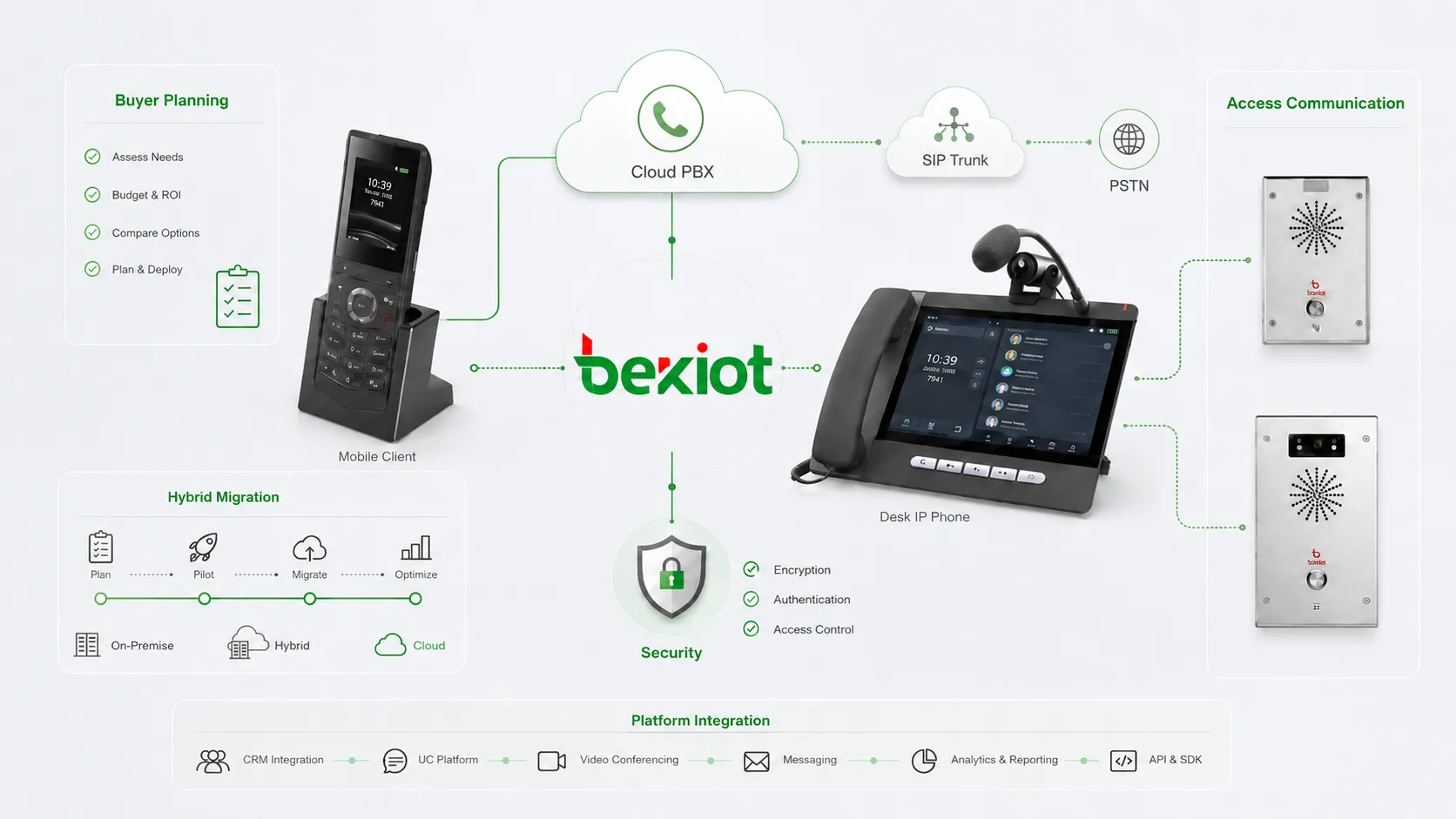
Security also matters. VoIP platforms may contain user accounts, call recordings, customer information, administrator portals, SIP credentials and mobile access. Strong passwords, multi-factor authentication, role-based permissions, encryption, audit logs, firmware updates and fraud prevention should be part of the deployment plan.
Many companies also need a phased migration plan. They may keep analog phones, fax lines, elevator phones, door intercoms, alarm lines or legacy PBX systems during the transition. Gateways, SIP trunks and hybrid deployment models can help protect existing investments while the organization moves toward cloud-based communication.
FAQ
When should a business move from traditional telephony to VoIP?
A migration becomes worth evaluating when the company has remote teams, rising telecom costs, multi-site operations, customer service pressure or a need to connect calling with business software.
Does VoIP software always require full cloud deployment?
No. Companies can choose cloud VoIP, on-premises systems, hosted PBX, SIP trunking or hybrid deployment depending on security needs, budget, existing infrastructure and IT resources.
Which industries care most about communication compliance?
Finance, healthcare, education, public services, outsourced contact centers and government-related organizations often care about recording, retention, access control, audit logs and privacy rules.
How does AI improve VoIP software in daily use?
AI can support intent recognition, smart routing, real-time transcription, call summaries, quality review, fraud detection and customer sentiment analysis.
Why should network testing happen before deployment?
Voice traffic is sensitive to delay, jitter and packet loss. Testing helps confirm whether the existing network can support clear and stable calls before users depend on the system.
The telephony VoIP software market is expanding because enterprise communication is becoming cloud-based, intelligent and platform-centered. As remote work, unified communications, AI contact centers, 5G connectivity and digital infrastructure continue to develop, VoIP software will remain an important foundation for business collaboration, customer engagement and modern communication management.