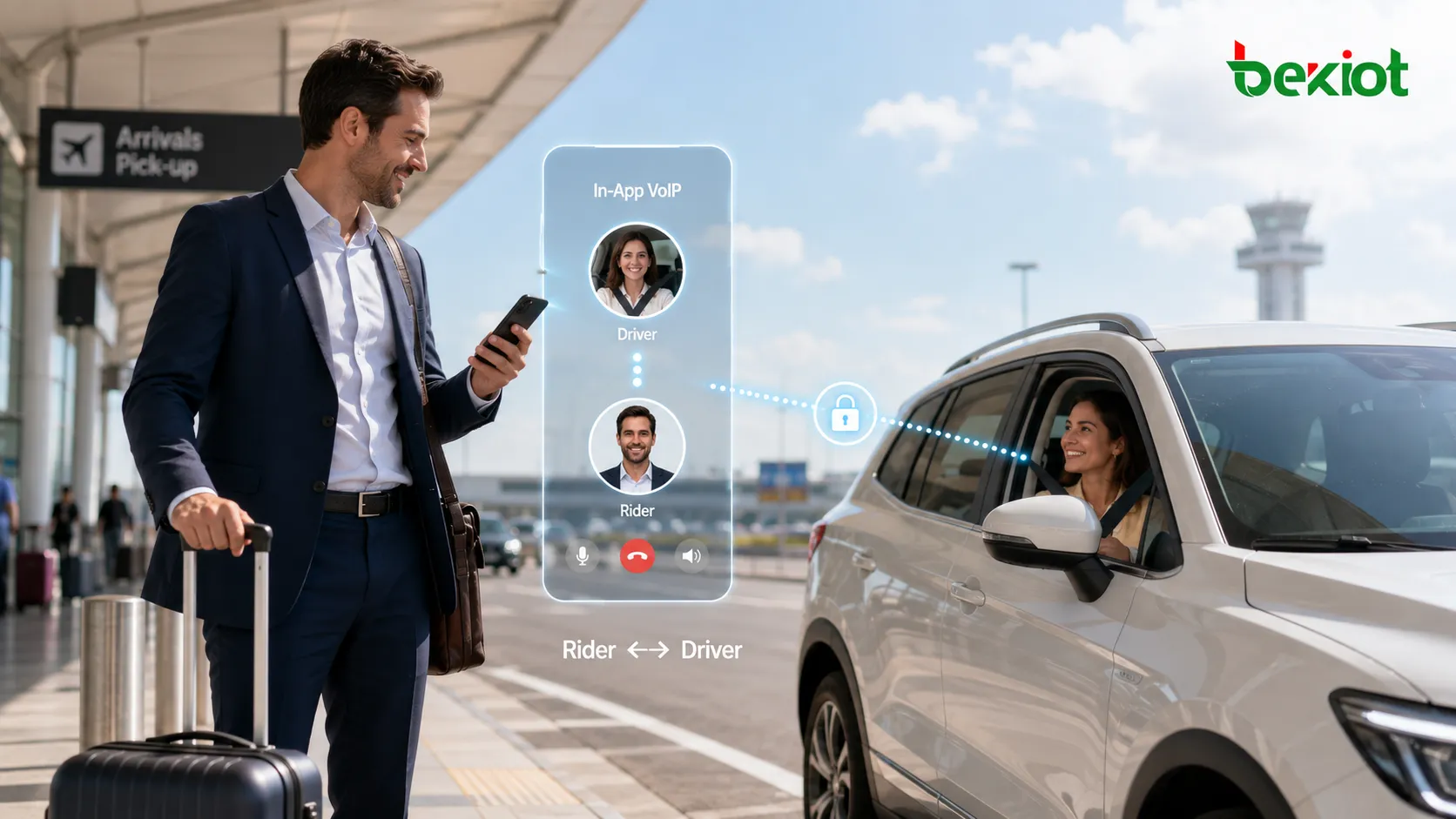
A rider has reached the pickup point but cannot find the car. The driver is nearby, yet the map location is slightly off. In situations like this, continuing to send text messages is often less effective than simply making a call.
But if every ride still depends on a conventional phone call between two personal mobile numbers, another set of problems appears. Do the rider and driver really need to see each other's actual phone numbers? What happens when the rider is traveling internationally and traditional voice roaming is expensive? Can they still communicate if carrier voice service is congested while mobile data remains available? And after the trip ends, should either party still retain a private contact method that is no longer relevant to the transaction?
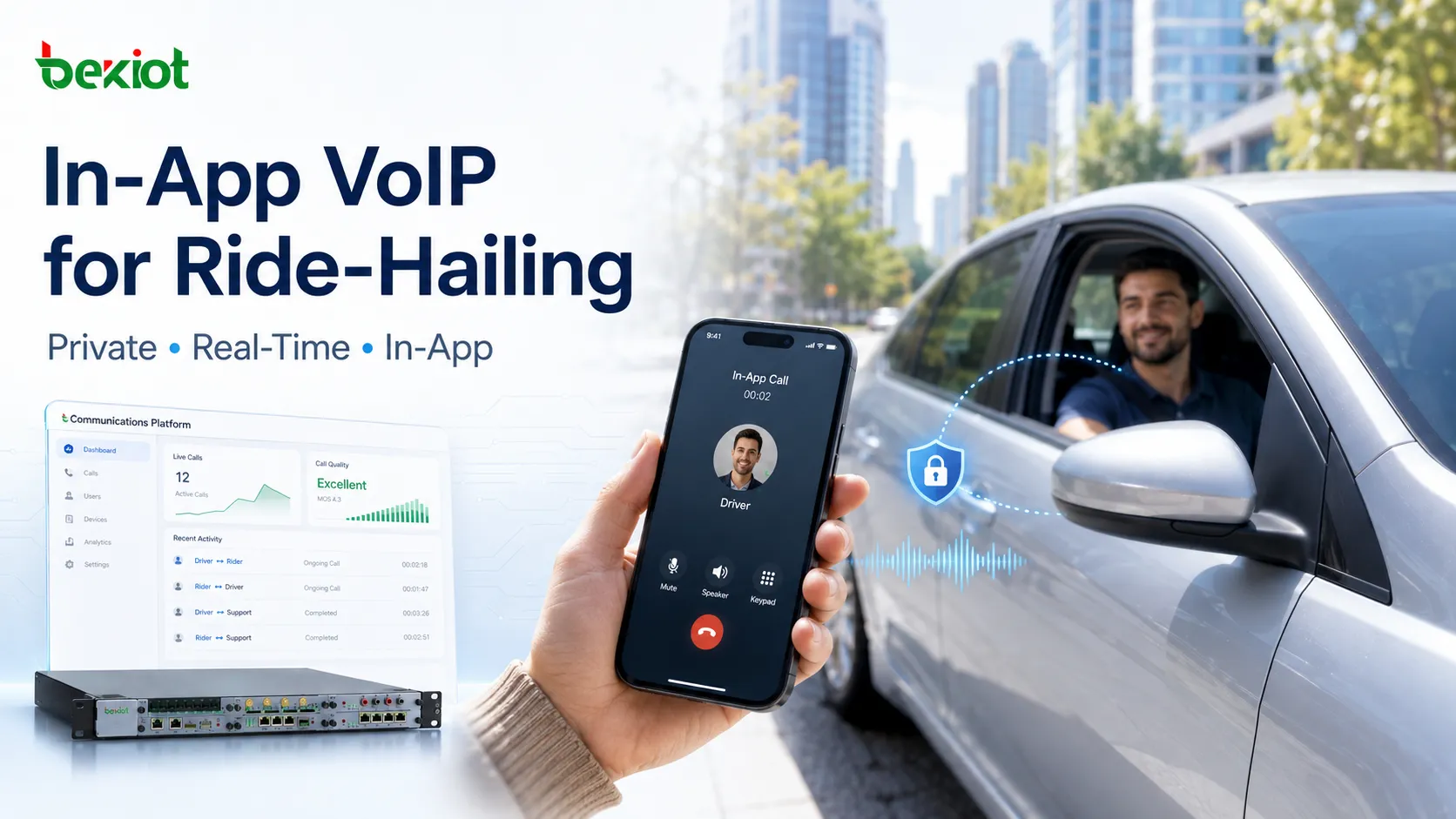
In-app VoIP calling provides one way to address these issues. When Uber introduced VoIP calling in 2018, the platform already supported text messaging, in-app chat, and conventional phone calls. VoIP was not simply another "Call" button. It brought real-time voice communication further inside the application's own communication environment.
The same model has become increasingly relevant to ride-hailing, food delivery, logistics, telehealth, customer service, and mobile workforce applications. The underlying requirement is similar: users still need immediate voice communication, but the platform does not necessarily want that interaction to depend entirely on the public telephone network or on the exchange of personal phone numbers.
Why Traditional Phone Calls Are Not Always the Best Fit for Ride-Hailing
Voice calls during a ride are usually short, but they are highly time-sensitive. A rider may only need to say, "I'm at the east entrance," while the driver may need to respond, "I can't stop there. Please walk about 50 meters forward." These conversations are closely tied to a specific trip and usually only matter while that trip is active.
With a traditional cellular call, however, the platform effectively hands one of the most important real-time interactions over to an external phone system. The app manages the booking, map, payment, and trip status, but the moment a user taps a phone number, the interaction may leave the app and move into the device's native dialer.
That approach is simple, but it creates several structural limitations.
Communication identity is tied to a real phone number. Without number masking or another privacy layer, riders and drivers may be exposed to each other's personal mobile numbers.
The call is separated from the business workflow. Moving from the trip screen to the native dialer weakens the direct relationship between the conversation and the active booking.
Cross-border calling costs can be unpredictable. Travelers may face roaming or international voice charges when calling a local driver from a foreign SIM.
Availability depends on carrier voice service. Even when mobile data is still working, problems with the traditional voice network may affect the ability to place a call.
VoIP changes this boundary. Voice is carried as IP data over an internet connection, so the user does not necessarily need to establish a conventional PSTN or carrier voice call using the other party's phone number.
What Problems Does In-App VoIP Actually Solve?
To the user, the feature may look like nothing more than a "Call" button. From the platform's perspective, however, VoIP changes both how a call is established and how that conversation relates to the application itself.
Voice No Longer Has to Depend Entirely on the Traditional Phone Network
VoIP carries voice media over an internet connection. If mobile data or Wi-Fi provides sufficient connectivity, the application can establish a real-time voice session without relying entirely on the carrier's conventional voice service.
This does not mean VoIP is automatically more reliable in every situation. Call quality still depends on latency, jitter, packet loss, bandwidth, and network handovers. What VoIP does provide is another communication path. If the user already has a working data connection for the app, voice can potentially use that same network environment.
International Communication Can Be Less Dependent on Voice Roaming Charges
This can be particularly useful for travel and globally deployed mobile applications. A rider using a home-country SIM abroad may incur roaming charges when calling a local driver through the traditional phone network.
An in-app VoIP call primarily uses data instead. If the traveler already has local mobile data, an international data package, or Wi-Fi access, the conversation does not need to be billed in the same way as a conventional international voice call. Data charges may still apply, but the cost model is different from traditional roaming voice.
This makes VoIP particularly relevant to ride-hailing, travel platforms, hotel services, and international customer support. Voice communication remains available, but its transport and billing model moves from the traditional telephone network toward the application's data connection.
Communication Stays Inside the App
This is often more important to the user experience than any individual protocol or codec.
The user does not need to leave the trip screen, copy a phone number, or switch to the device's native dialer. Trip status, driver information, location, and the voice call entry point can remain part of the same workflow.
From a product architecture perspective, communication becomes a native business capability rather than an external function attached to the application.
Why Number Privacy May Matter More Than Lower Calling Costs
For a transaction that may last only a few minutes or perhaps an hour, exposing a permanent personal phone number is often unnecessary.
What the rider and driver actually need is the ability to talk during the active trip. They do not need permanent access to each other's private contact details.
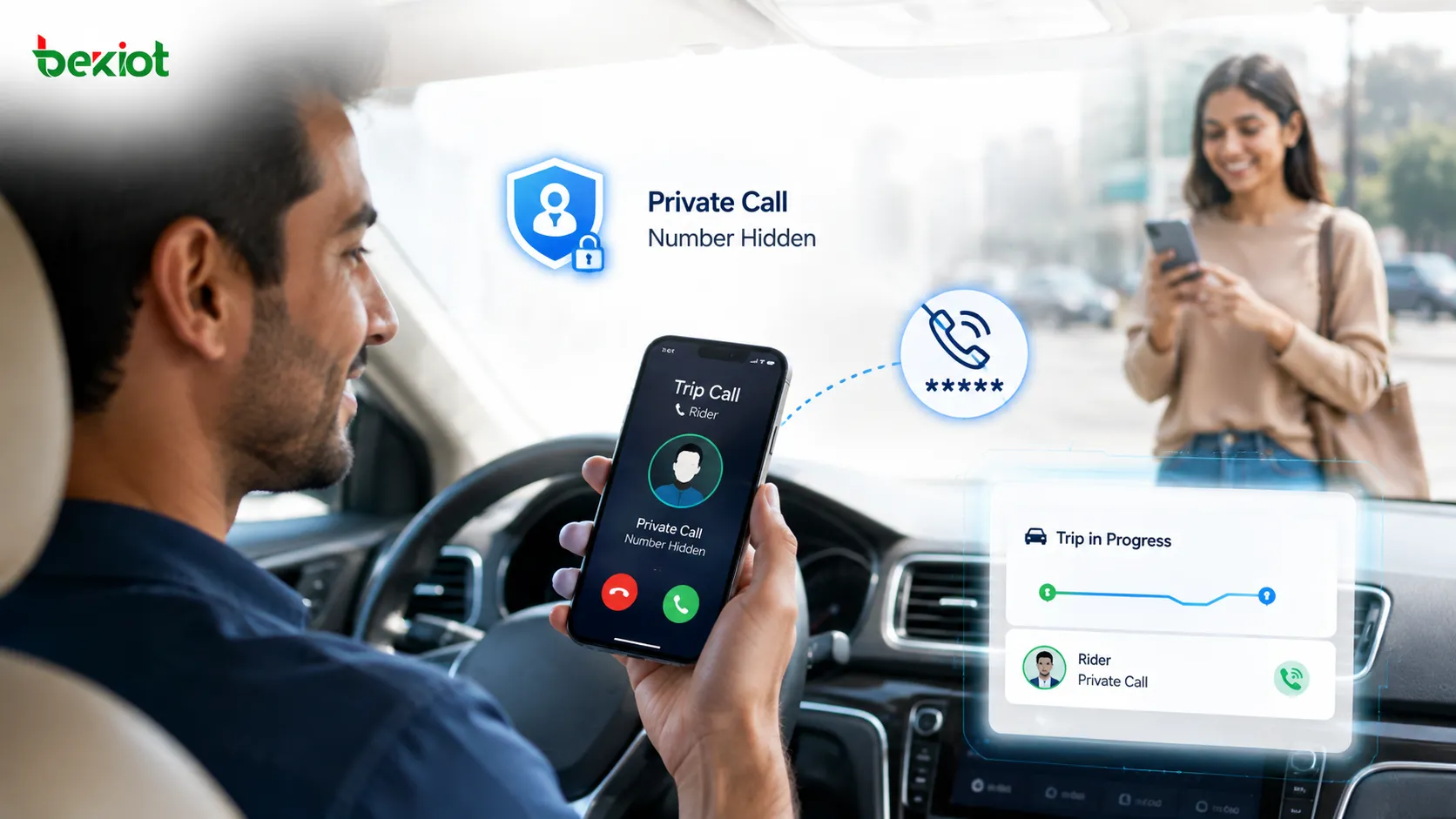
In-app VoIP is well suited to this type of temporary communication relationship. The platform can establish the voice session using user accounts, trip IDs, or internal session identifiers instead of presenting a personal mobile number as the communication address.
This can be especially valuable for drivers. A driver may interact with many unfamiliar riders every day. If every trip exposes the driver's personal phone number, the privacy risk accumulates over time.
The same principle applies to delivery couriers, field service technicians, logistics personnel, and online consultants. The two parties need real-time communication, but that permission should ideally have a clear business scope and a defined lifetime.
| Communication Method | Real Phone Number Required? | Stays Inside the App? | Typical Use |
|---|---|---|---|
| Traditional Phone Call | Usually requires a number or number-masking service | Usually no | General telephone communication |
| In-App Chat | No | Yes | Non-urgent information exchange |
| In-App VoIP | Can operate without exposing the real number | Yes | Real-time voice communication |
What Changes Architecturally When VoIP Becomes a Platform Capability?
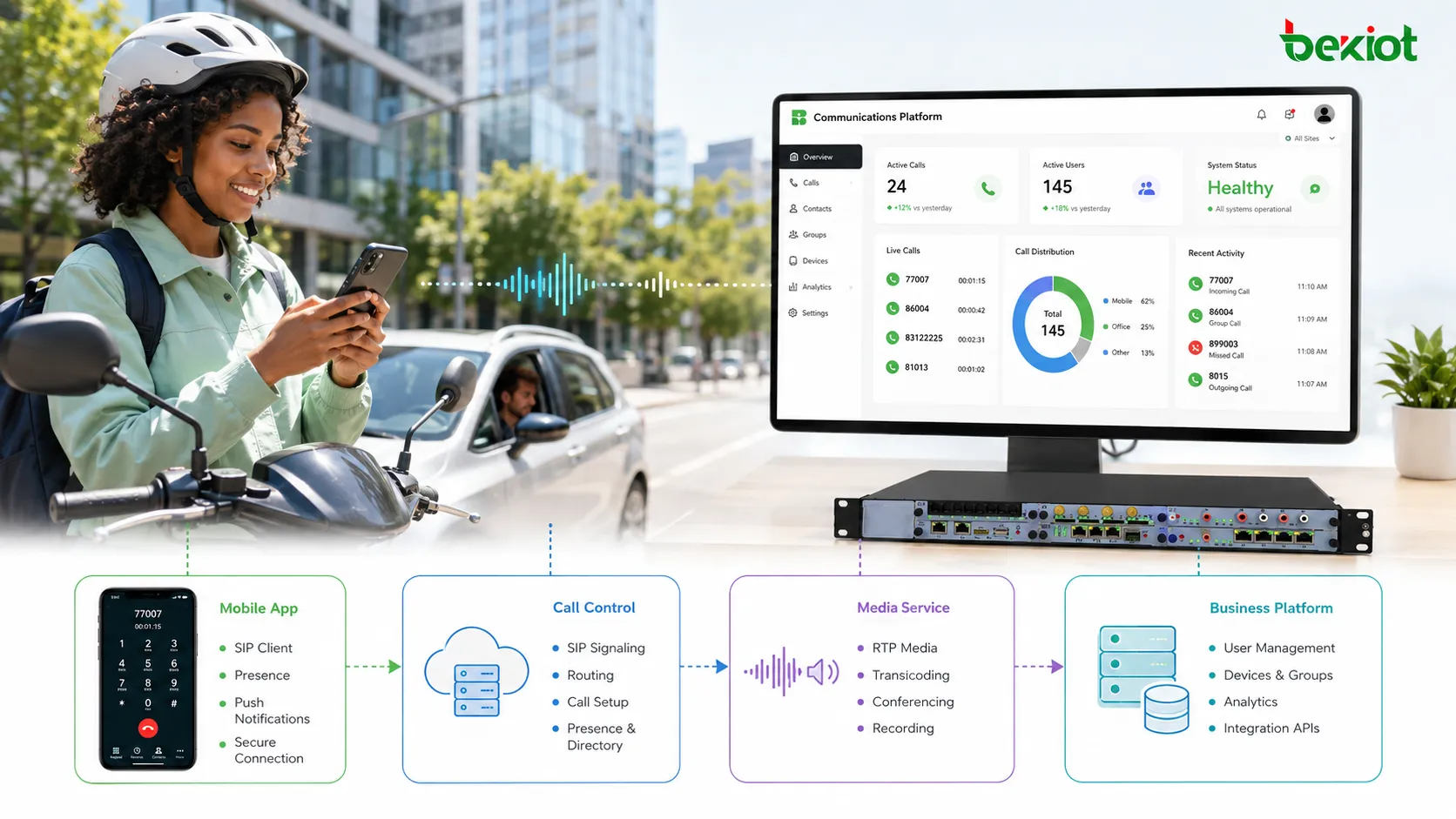
From an engineering perspective, in-app VoIP involves much more than adding microphone capture and audio playback to a mobile client. A reliable deployment requires a complete real-time communication path behind the application.
A typical in-app voice architecture can be divided into several logical components:
Mobile clients: Handle outgoing and incoming calls, microphone capture, remote audio playback, and device functions such as speakerphone and Bluetooth headset switching.
Identity and business logic: Determine who is allowed to call whom. For example, only the rider and driver associated with the current active trip may be permitted to communicate.
Call control: Manage call setup, ringing, answering, termination, and session state.
Media transport: Carry real-time audio and handle network traversal, changing connectivity conditions, and media relay where required.
Messaging and notifications: Work with the mobile operating system's push mechanisms so that the called party can still receive an incoming call alert when the app is in the background.
There is no single mandatory protocol for this architecture. A system may use SIP, WebRTC, or another real-time communication framework. For the business platform, the more important design issue is linking user identity, trip authorization, and the voice session.
When a trip ends, the platform can revoke the direct communication permission between the rider and driver. When a new trip begins, a new communication context can be created for that business relationship. This approach provides a clearer security boundary than simply storing and exposing telephone numbers.
Seen this way, the value of VoIP is not merely that it "digitizes the phone call." It allows voice to be managed by the application in the same way it already manages messaging, location, payments, and order state.
Successful Mobile VoIP Requires More Than Simply Completing a Call
In a product demonstration, VoIP may appear complete as soon as two phones can talk to each other. Real-world mobile networks are much less predictable.
A user may move from Wi-Fi to 4G or 5G, enter an underground parking garage, walk into an elevator lobby, or reach the edge of network coverage. Latency changes, packets can be lost, and available bandwidth can fluctuate from one moment to the next.
Mature mobile VoIP systems therefore tend to focus on several operational capabilities:
| Technical Area | Practical Impact |
|---|---|
| Network Handover | Whether the call can remain active when moving between Wi-Fi and cellular data |
| Jitter and Packet Loss | Whether speech remains understandable under poor network conditions |
| Echo Cancellation and Noise Reduction | Whether users can communicate clearly around engines, traffic, and road noise |
| Background Incoming Calls | Whether users can receive calls when the app is not in the foreground |
| Authorization Control | Whether users can continue calling each other after the business relationship has ended |
| Encryption and Access Control | Reducing unauthorized access to voice content and session identities |
Ride-hailing introduces another important challenge: both parties are often outdoors and moving. Drivers may be surrounded by engine noise, traffic, and wind, while riders may be standing at airports, railway stations, or busy streets.
In these environments, speech intelligibility and weak-network performance are often more valuable than simply pursuing the highest possible audio bitrate.
VoIP Is Shifting Communication From Phone Numbers to Business Identity
From a longer-term product architecture perspective, one of the most important changes introduced by in-app VoIP is not that voice travels over IP. It is that the logic controlling "who can communicate with whom" can move away from telephone numbers.
In a traditional telephone system, the phone number is both an identity reference and a routing address. If someone knows the number, they can generally attempt to call it.
A platform can use a very different model. Communication is not permitted simply because one user knows another user's number. Instead, the system can authorize a call because two users currently share a valid business relationship.
This model fits platform-based services particularly well. A ride-hailing trip, delivery task, logistics shipment, medical appointment, or service ticket can all act as the authorization context for a temporary communication session.
When the transaction ends, the communication relationship can end with it.
That is why the role of VoIP in mobile applications extends well beyond reducing phone charges. It gives platforms a way to combine voice, messaging, user identity, and business state within one communication model.
For applications that frequently connect people who do not know each other personally, this temporary, controlled, business-driven communication model can be a better long-term architecture than simply exposing another telephone number.
FAQ
Does In-App VoIP Require a Traditional IP PBX?
Not necessarily. An IP PBX is useful when the system also needs to manage enterprise extensions and SIP endpoints, but a mobile application can also use a dedicated RTC platform, WebRTC architecture, or cloud communications service.
Whether an IP PBX is required depends largely on whether the application must also connect to SIP phones, PSTN numbers, contact centers, or other enterprise voice systems.
Why Are VoIP Calls More Complicated When the App Is Running in the Background?
Mobile operating systems restrict long-running background activity to conserve battery and system resources. As a result, incoming VoIP calls typically need to work with push notifications, native calling frameworks, and application-level session recovery rather than assuming that the app can remain continuously active.
Should VoIP Be the Only Communication Method for Emergency Calls?
In most cases, a general-purpose in-app VoIP service should not simply replace established emergency calling systems. Emergency communications may involve location handling, caller identification, availability during network failures, and local regulatory requirements.
Standard in-app VoIP is better suited to business communication such as rider-to-driver calls, customer support, or communication between field workers.
What Should a Company Test First When Adding VoIP to Its Own Mobile App?
Testing should go beyond basic call setup. Weak networks, Wi-Fi-to-cellular handovers, background incoming calls, Bluetooth headset switching, echo, road noise, and long-duration call stability should all be evaluated early.
A call that works perfectly in a lab environment can behave very differently once users begin moving through real mobile networks.