


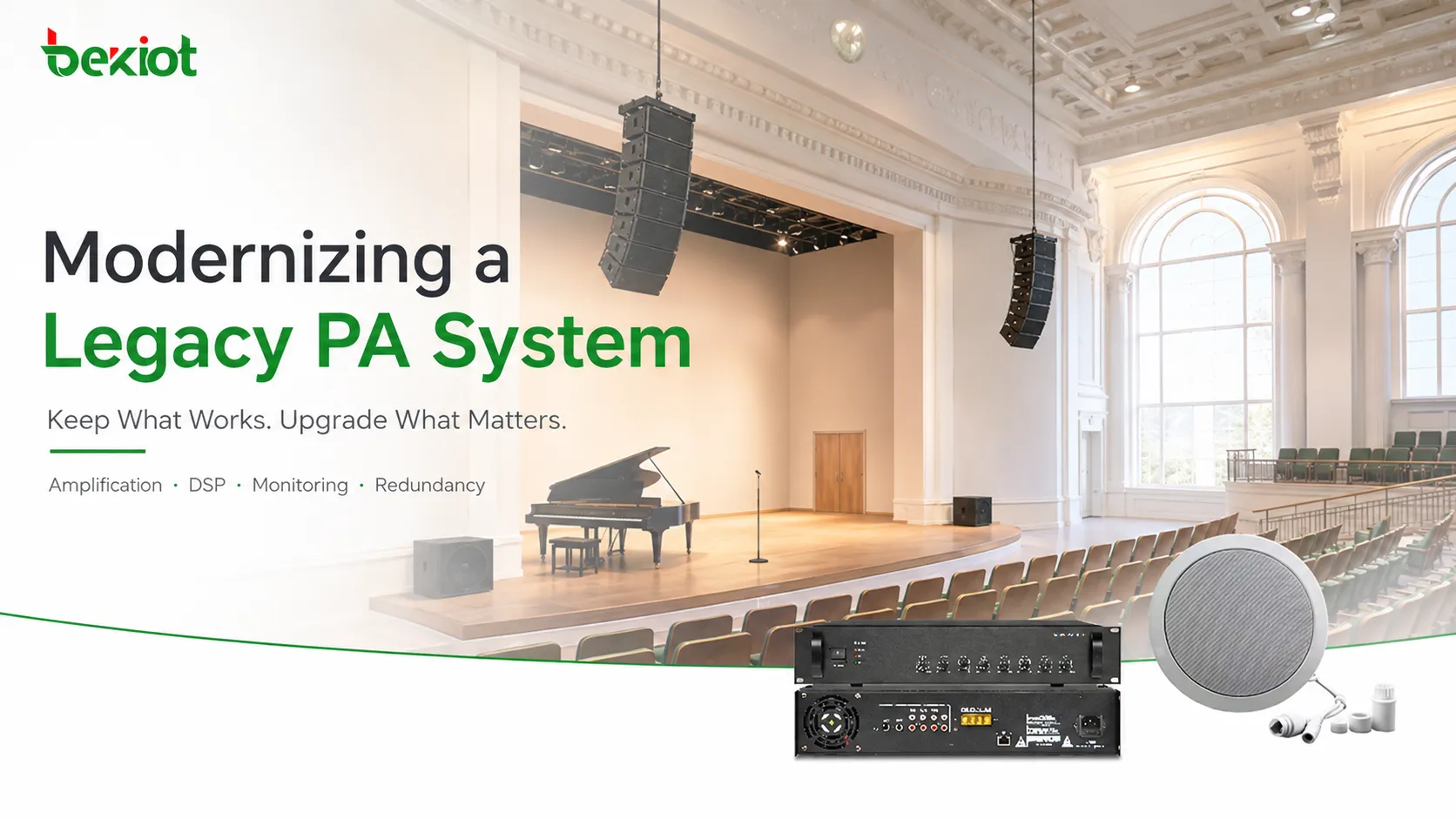
Fox Theatre in Boulder, Colorado, recently completed a PA system upgrade. What makes the project worth paying attention to isn't the choice of a new amplifier, but the fact that the renovation team didn't tear out an older sound reinforcement system and start over. The venue kept the existing loudspeaker enclosures and redesigned the parts that most affect reliability, power headroom, control, and operational efficiency — giving a system with clear historical character the stability a modern production environment requires. Projects like this actually reveal the real challenges of PA renovation better than a full replacement ever could. In many theaters, auditoriums, live music venues, sports arenas, and even industrial audio installations that have been running for years, not every piece of equipment fails at the same time. The loudspeakers may still deliver the intended coverage, and their mounting positions may already be proven over years of use. But the amplifiers may have begun to fail frequently, the racks are oversized, power consumption is high, the control approach is outdated, and system status can only be judged manually.
For aging PA systems, the real question is not “how old is the equipment?” but: Which parts still have value, and which parts have become the bottleneck for reliability and maintenance?
The First Thing That Ages in a Legacy PA System Is Often Not the Loudspeakers
A PA system is made up of many links working together. Sources, mixers, DSP, network transport, power amplifiers, loudspeakers, power distribution, and control systems — a problem anywhere in the chain can show up as “the system isn't working properly.” If you don't first identify the failure boundary, the easiest response is usually a complete replacement. But that isn't necessarily the best option for cost or performance.
Fox Theatre's old system had a typical profile: the loudspeaker system itself had historical value, and the venue wanted to preserve the original sonic character and spatial signature. What really affected performances was amplifier reliability. When an amplifier fails during a show, it doesn't simply mean “the sound is a little quieter.” It can mean losing a specific frequency band, a group of loudspeakers, or even an entire side of the sound field.
This isn't unusual for PA systems that have been in service for a long time. If the drivers, crossover design, and enclosure structure of the loudspeakers are still under control, they can often continue to be used. But the amplifiers, power supplies, cooling, and control sections work under high load for long periods, so they are more likely to become the weakest part of the system. In some early high-power systems especially, amplifier racks run hot for years. Electrolytic capacitors age, fans collect dust, and connectors oxidize — all before the loudspeakers show signs of trouble.
That's why a more sensible approach before renovation is to break the PA system into several layers: Can the loudspeakers still achieve the target sound pressure and coverage? Do the existing amplifiers still have enough headroom? Is the power distribution reasonable? Do the DSP and routing meet current production needs? Can equipment status be viewed remotely? Is there a backup path if one link fails?
Only after answering these questions one by one can you know whether to “replace the system” or “replace the weakest link in the system.”
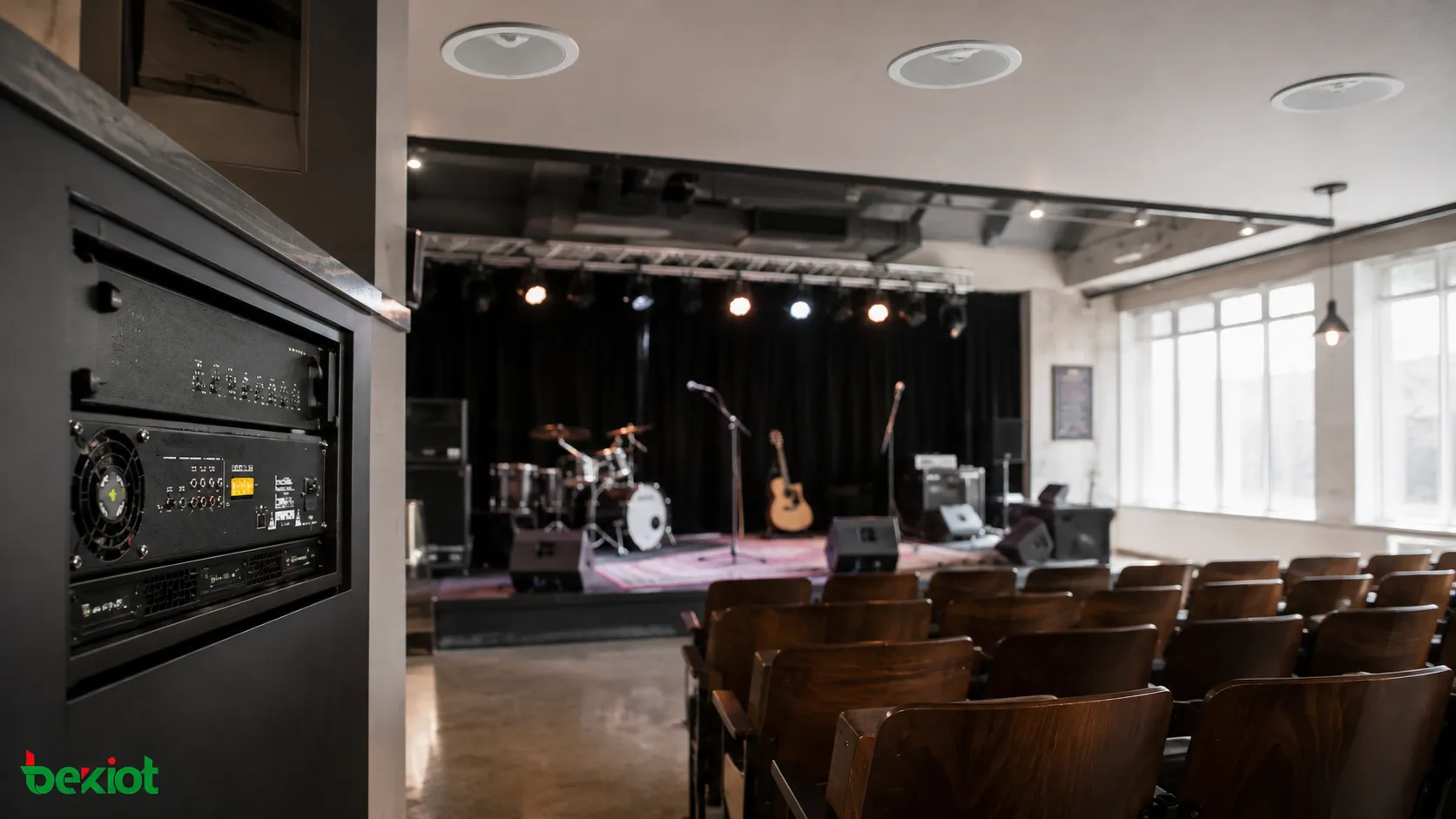
Why Modernization Should Start with Amplifiers and Power
The amplifier isn't the piece of PA equipment most visible to the audience, but it determines whether the loudspeakers receive enough stable, controllable power output.
For older large-scale sound reinforcement systems, this is even more obvious. Legacy loudspeaker systems may use multiple independent drive paths. One enclosure doesn't simply connect to one amplifier channel; the low-frequency, mid-frequency, and high-frequency sections each require different power channels. Fox Theatre's system was exactly like this. Each enclosure needed multiple amplifier channels and, at the same time, required substantial power output.
That means an upgrade can't simply compare “how many watts the old amplifier had” with “how many watts the new one has.” What really needs to be calculated is how many independent channels the system requires, what the actual load is for each frequency band, how high the continuous and peak power demands are, and how much headroom remains when the amplifiers operate under heavy load.
Headroom matters a great deal. An amplifier constantly running near its limit can deliver its rated power, but during real performances it will enter limiting more easily when transient peaks arrive. The goal of PA system design is not to make the amplifier “just loud enough.” It's to leave enough dynamic range above normal program level. A system without enough headroom may still sound clean enough, but the amplifier is already frequently entering protection or limiting. Over time, that affects both sound quality and failure rates.
Power is the same issue. If a high-power PA still relies on low-efficiency, large traditional amplifier architectures, the number of racks, electrical load, and cooling requirements all increase. When modern high-density amplifiers can provide more channels in less rack space, they save not only equipment footprint but also power distribution, cooling, cabling, and maintenance space.
That's why many older PA systems look like they have “fewer devices” after an upgrade while their actual capability improves. Modernization doesn't mean adding more equipment. It means reconsolidating power, DSP, routing, and monitoring that used to be scattered across multiple enclosures.
Why Small Venues Need High Channel Density and Integrated DSP Even More
For theaters and live music clubs, rack space itself is a cost.
Every square meter near the stage can affect artist equipment, lighting, monitors, set pieces, and crew movement. If an old PA requires many amplifier racks that occupy the side of the stage or backstage area, a system upgrade naturally raises another requirement: reduce the equipment into a smaller area without lowering output capability.
Fox Theatre's renovation involved moving the system to a loft area to free up stage space. That requirement simultaneously tests amplifier density, cooling, power, and remote management capability.
Once the amplifiers are moved farther away from operators, having to walk to the racks every time you check status would make maintenance less efficient. That's why modern PA amplifiers are no longer just devices that “amplify a small signal.” They now also handle DSP, matrix, routing, limiting, loudspeaker management, and network monitoring.
This kind of integration has a very direct engineering benefit: the system chain becomes shorter.
In the past, you might have needed a separate DSP, matrix processor, network converter, and multiple amplifiers. Now some processing can be done inside the amplifier. With fewer devices, there are fewer connection points, and potential failure points drop. In a small space especially, one less device isn't just one less rack unit. It may also mean one less power feed, one less cable run, and one less node to troubleshoot.
But there's a misunderstanding to avoid here: more integrated functions don't mean simpler system design. DSP parameters, gain structure, crossover points, limiters, and loudspeaker protection still need to be measured and adjusted according to the original system. Especially in projects where the old loudspeakers are kept and the drive system is updated, new amplifiers can't simply be connected with default settings and considered finished.
The real goal should be to make the new amplifier platform fit the old loudspeakers, not force the old loudspeakers to adapt to the new equipment.
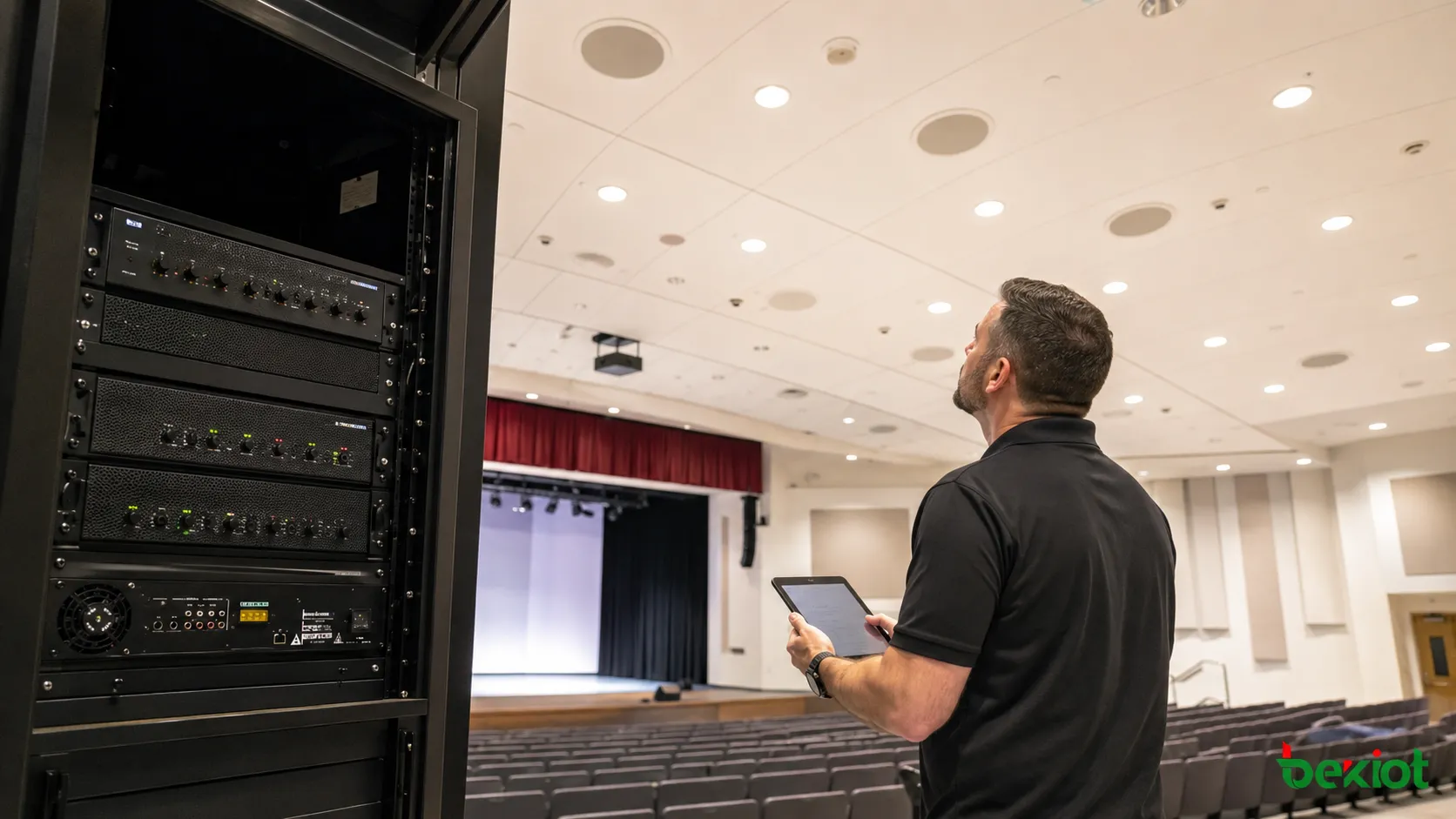
Reliability Isn't Just About New Equipment — Control and Redundancy Need to Be Redesigned Too
After a PA system is updated, whether it runs reliably cannot be judged only by whether the equipment is new.
For production systems, the more important questions are: Can problems be detected before they happen? Can audio continue if a network link fails? Can operators quickly identify which path, which amplifier, or which channel is having trouble?
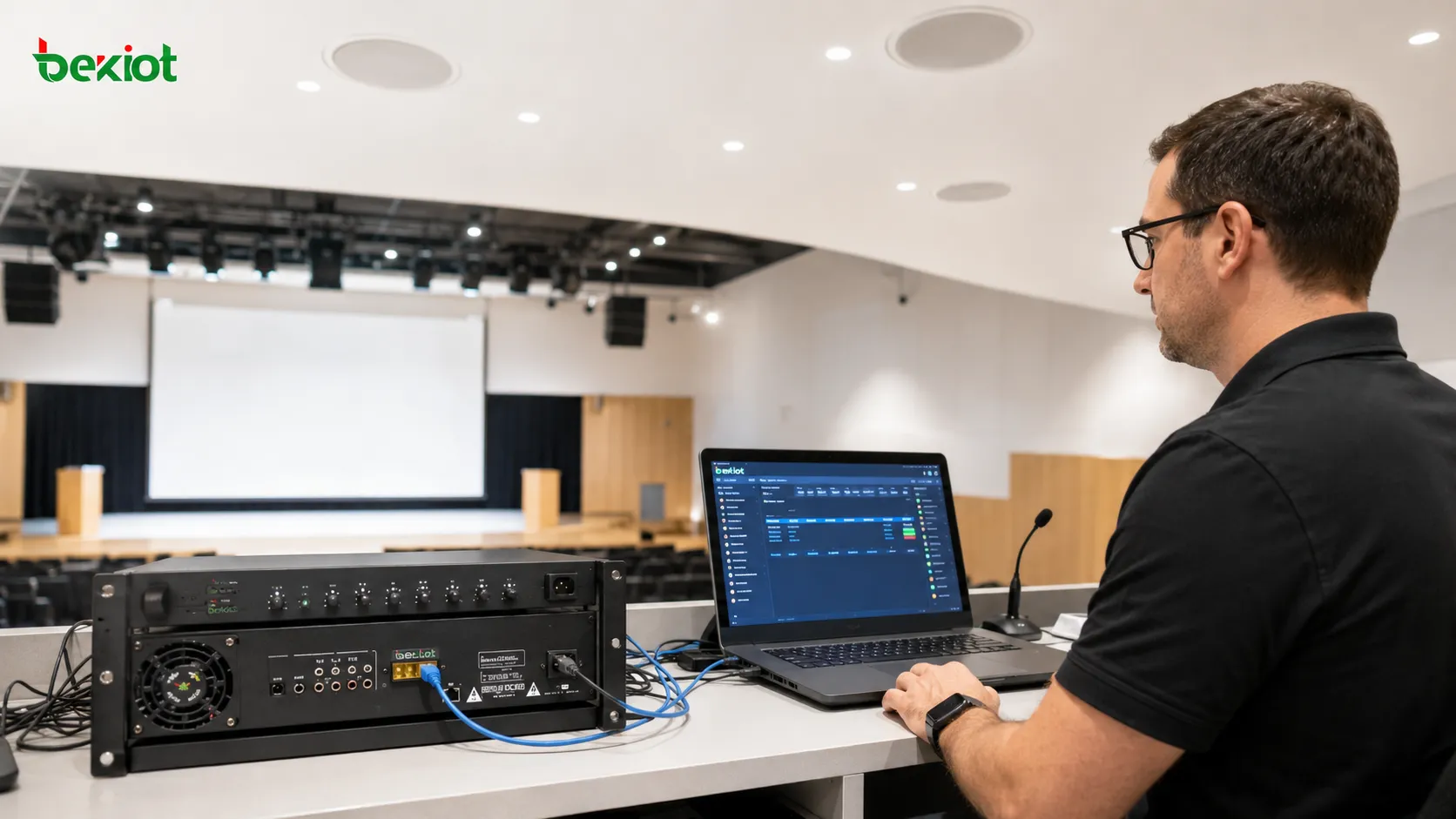
After the upgrade, Fox Theatre's amplifiers can be connected to a control environment over Ethernet. The venue uses ArmoníaPlus for system configuration, commissioning, and operational monitoring, with remote access available through Wi-Fi and a web interface. This is especially useful for a compact venue, because technicians don't need to stand next to the amplifier racks to see system status.
The real value of remote control isn't “you can adjust parameters from a phone.” It's that the PA system shifts from passive maintenance to visible status. Once amplifier temperature, channel status, input/output levels, and fault information can be viewed centrally, engineers have a chance to notice problems before the audience hears them. Many live incidents don't happen because a device suddenly fails. They happen because small problems go unnoticed for a long time and then surface all at once during a critical moment in a show.
Input links also need redundancy. This system uses both Dante and analog inputs, providing two different paths to improve continuity during a performance. This kind of thinking is more practical than simply trying to make everything IP-based.
Digital audio networks do bring flexible routing and easier system management, but a mature live PA doesn't automatically become reliable just because it uses a network protocol. Switches, power supplies, clocks, cables, and configuration can all become new failure points. So whether to keep an independent analog path for critical business depends on the venue's importance and the cost of downtime.
For performance venues, if the main digital link fails and an analog backup allows the show to continue, that few minutes or even tens of minutes of fault tolerance is often more valuable than adding a new feature.
The Core of PA Renovation Is Deciding What to Keep
Whether an old PA is worth renovating ultimately comes back to the system itself.
In some systems, the loudspeakers are seriously aged, and the coverage pattern no longer matches the current needs of the venue. In that case, a full replacement may be more reasonable. But if the loudspeakers still have a solid foundation and only the amplifiers, DSP, power, and control layers are lagging behind, tearing everything out and rebuilding can cause unnecessary expense.
The lesson from projects like Fox Theatre is to separate “sound system” from “equipment age.”
Old equipment doesn't necessarily mean bad sound, and new equipment doesn't automatically mean a good system. What really determines the result is whether the entire signal chain can maintain proper gain structure, whether the amplifiers have enough headroom, whether the loudspeakers are correctly protected, whether the control system can detect problems early, and whether critical links have fault tolerance.
For theaters, auditoriums, clubs, and other long-term venues, a sensible PA modernization usually follows this order: first run a system assessment, then determine which loudspeakers and cabling can remain in service. Next, recalculate power, channel count, and power conditions. Then decide on DSP, network control, and backup links. Finally, complete commissioning and acceptance through on-site measurement.
The focus of this approach isn't “replace as little as possible.” It's to replace only the parts that truly limit system performance and reliability.
When a historically significant sound reinforcement system can still provide the right sound field, a modernization can combine traditional loudspeakers with new amplifiers, DSP, network management, and redundant architecture. The audience may not see a major change in the room, but the back-of-house system has moved from “it works” to “it can be monitored, managed, has headroom, and can tolerate faults.”
That's the change really worth paying attention to in a PA upgrade.
FAQ
When upgrading an old PA system, is more amplifier power always better?
No. Amplifier selection must consider loudspeaker impedance, rated power, program peaks, channel count, and limiter protection. Simply increasing rated power doesn't guarantee better sound, and improper configuration can actually increase the risk of loudspeaker damage.
After replacing amplifiers, do the original speaker cables have to be replaced as well?
Not necessarily. You need to check cable gauge, length, insulation condition, connectors, and loop resistance. If the existing wiring meets power transfer and safety requirements, it can continue to be used. If there are signs of aging, excessive voltage drop, or connection reliability issues, those should be addressed during the renovation.
If a PA system already uses Dante, why keep analog audio too?
Whether to keep an analog link depends on the project's reliability goals. Digital networks are good for flexible routing and centralized management, while an independent analog input can serve as a different technology path and provide an emergency audio channel if network equipment or configuration fails.
What should be prioritized during acceptance after a theater PA upgrade?
Besides subjective listening, check sound pressure coverage in each area, frequency response, system gain, amplifier headroom, loudspeaker limiting, network stability, input switching, backup links, and fault alarms. For performance venues, system testing should also be done at sound pressure levels close to those of a real production.







