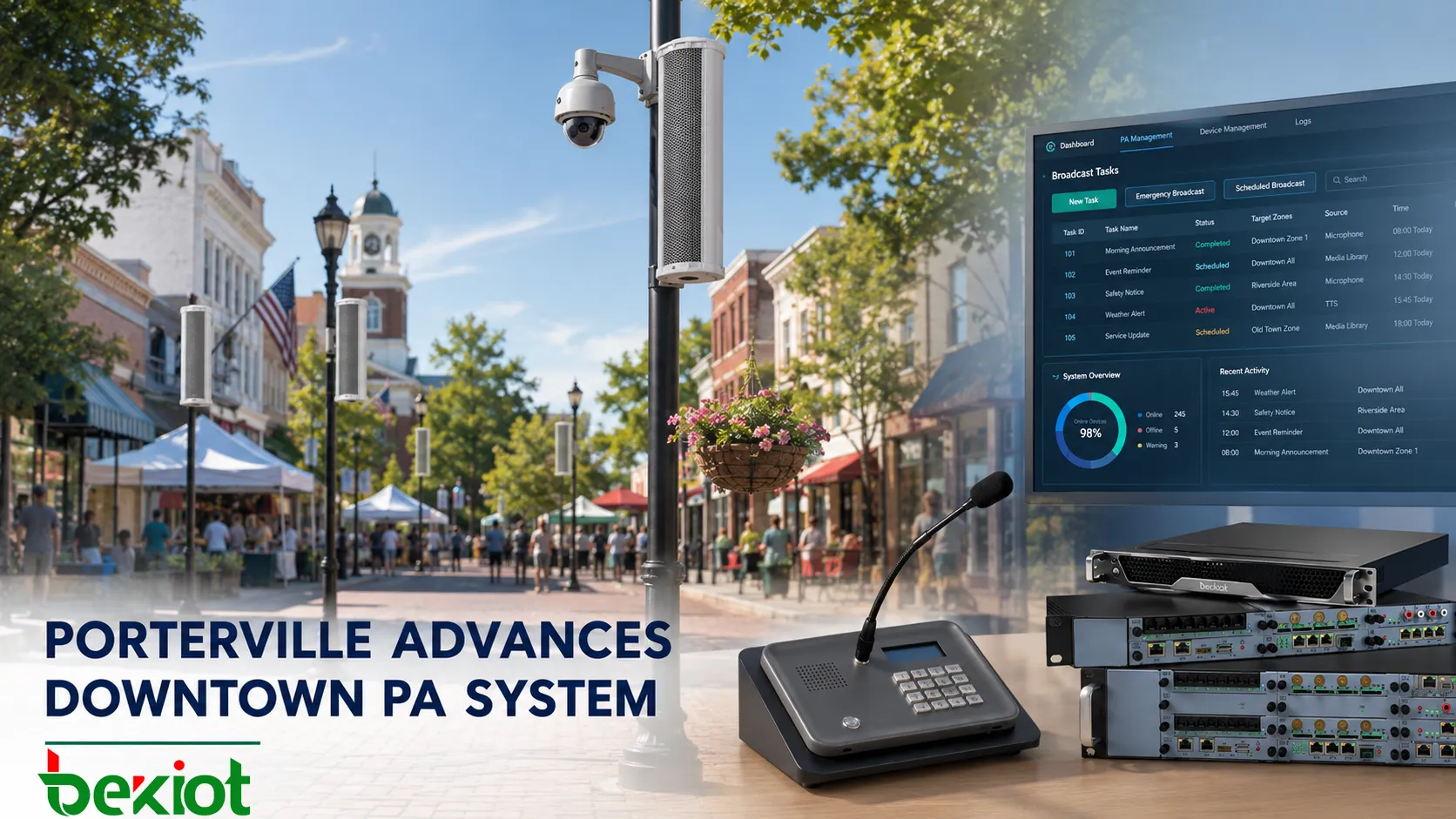
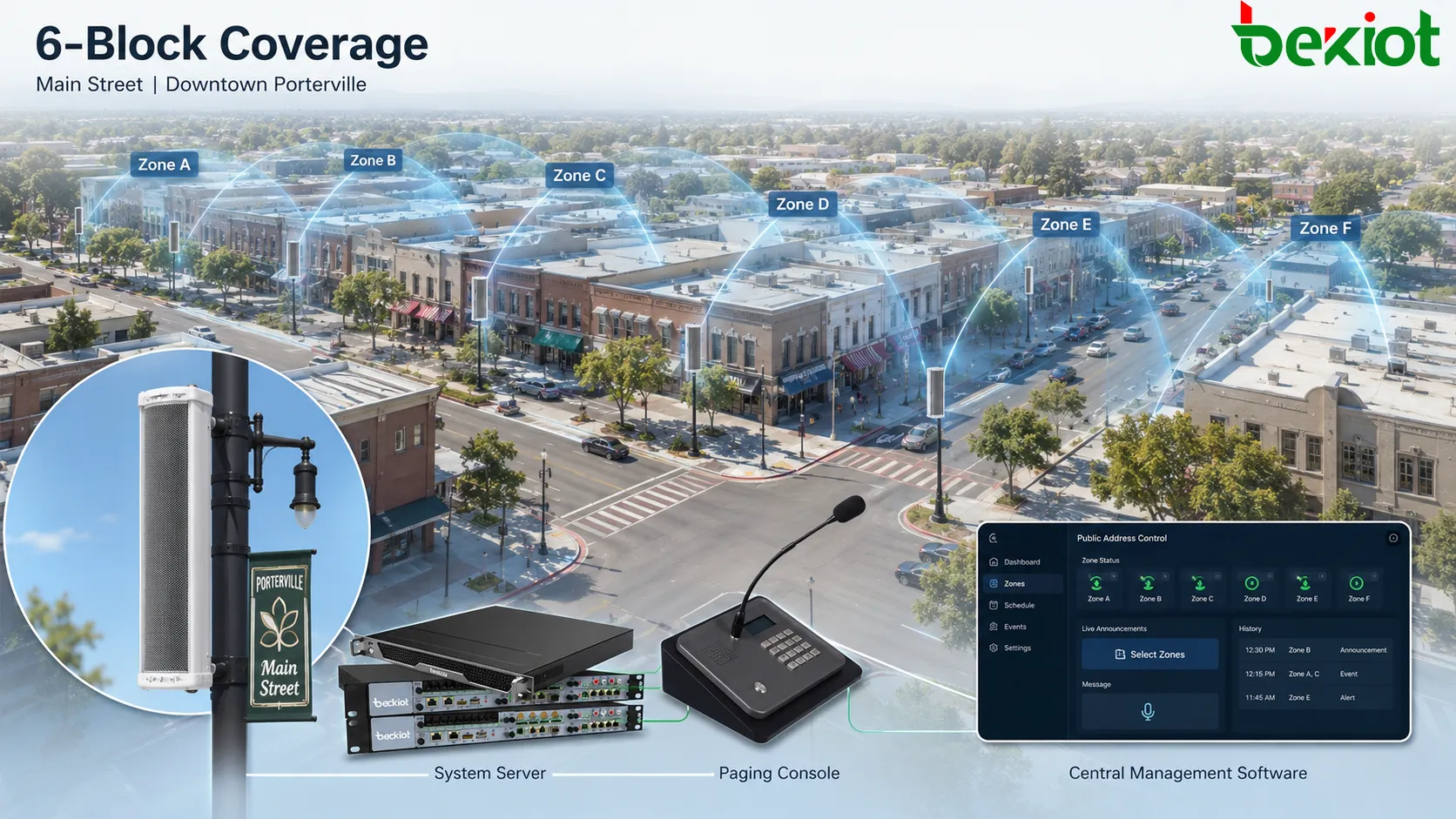
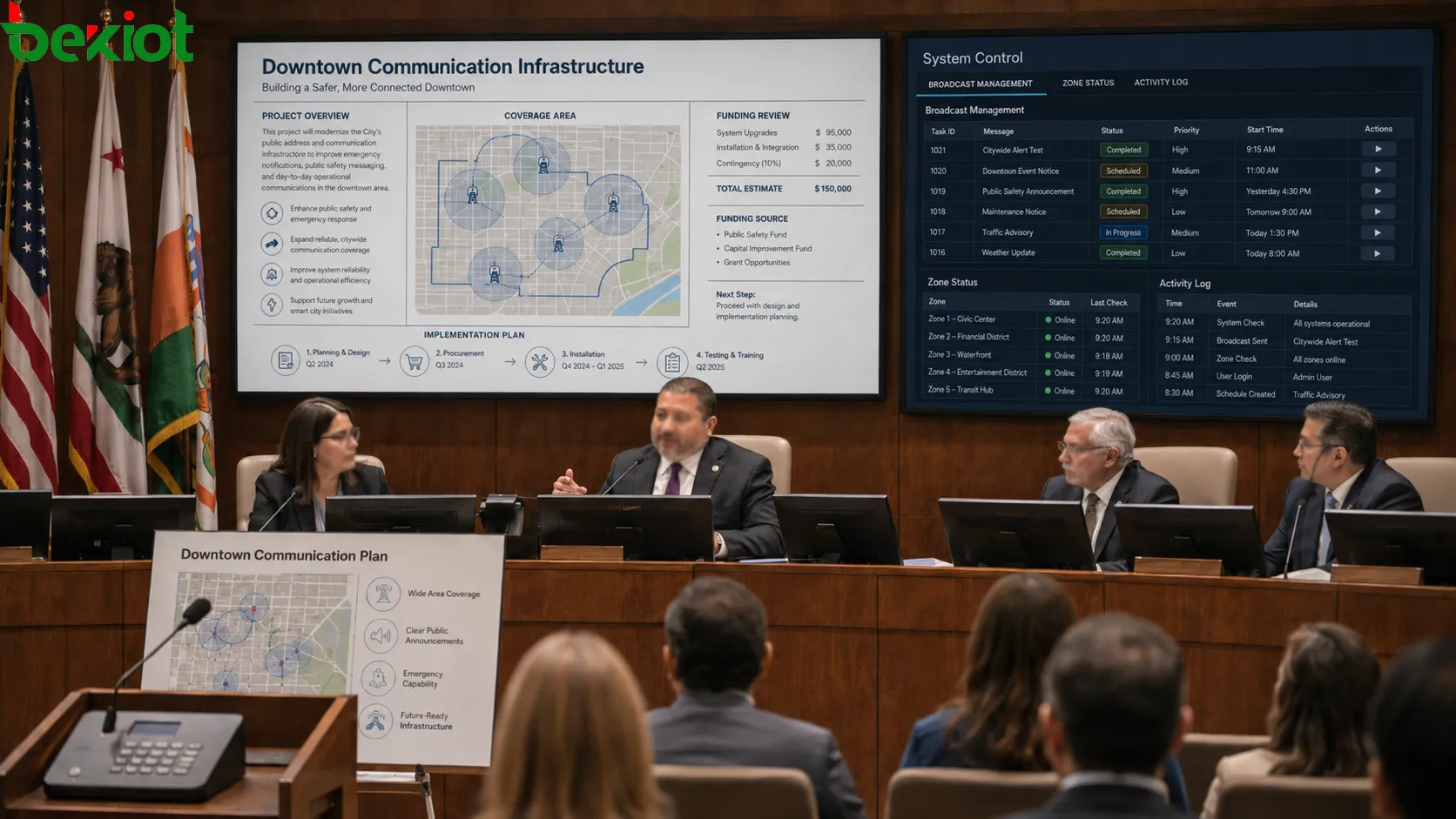
Porterville is taking the next step toward installing a permanent public address system in its downtown district. The proposed network would cover about six blocks of Main Street and support public events, community announcements, and coordinated communication across the city center.
The City Council voted 4-1 to allow staff to begin a formal request for proposals. That decision does not authorize a construction contract or confirm the final price. It allows the city to collect technical plans and competitive bids before deciding whether the system should be purchased and how it should be funded.
Council Opens Bidding Process
The preliminary project is estimated to cost about $150,000. City officials have described the figure as an early planning estimate rather than a confirmed construction price. The request for proposals will give suppliers an opportunity to recommend equipment, installation methods, speaker locations, control functions, and maintenance arrangements.
Once proposals are submitted, council members will be able to compare actual costs with the original estimate. They may also adjust the number of speakers, reduce the coverage area, divide construction into phases, or reject the project if the bids do not provide enough public value.
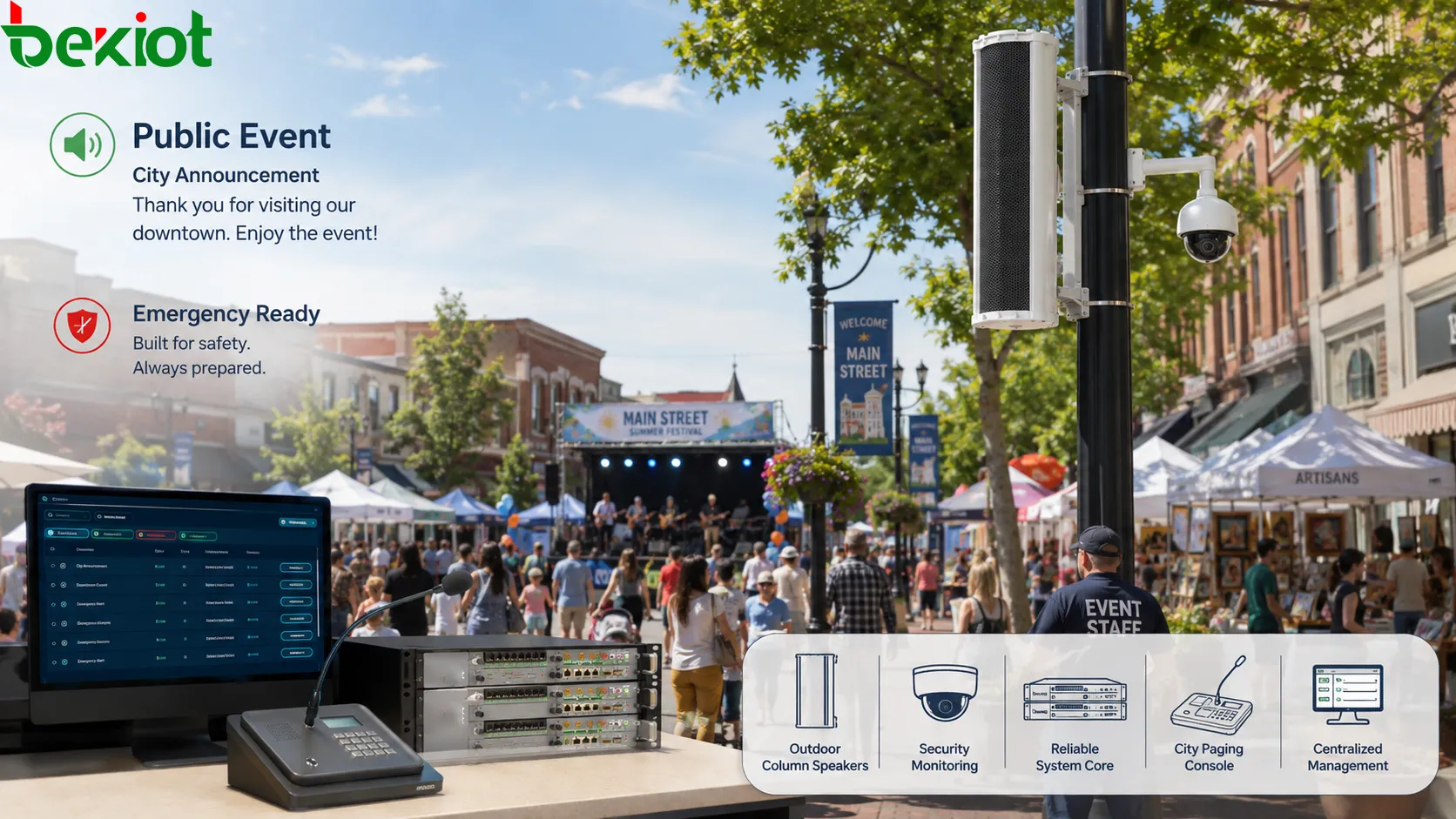
A permanent downtown PA system could reduce dependence on temporary audio equipment during festivals, holiday programs, street closures, and other public gatherings. Instead of renting and installing separate systems for each event, authorized city staff could use a fixed network designed around the layout and background noise of Main Street.
The project could also provide a consistent channel for time-sensitive public information. Depending on the final design and city operating policies, the system might be used for event instructions, traffic notices, lost-person announcements, weather warnings, evacuation directions, or other messages intended for people already in the downtown area.
Important technical details remain unresolved. The city has not yet confirmed the number of speakers, the exact mounting locations, the type of network connection, or whether the system would be divided into independently controlled zones. Those decisions will affect sound coverage, installation costs, maintenance requirements, and the system's ability to operate without creating unnecessary noise outside the intended area.
Measure I Funding Draws Scrutiny
The strongest disagreement concerns the proposed use of Measure I revenue. Porterville voters approved the one-cent sales tax in 2018. Public discussion at the time emphasized essential city services, including police, fire protection, emergency response, youth programs, and efforts to address gang activity.
Some residents and council members argue that a downtown speaker network does not closely match the priorities voters were presented with when the tax was approved. They have questioned whether the city should use limited Measure I funds for audio infrastructure while continuing to face staffing, homelessness, sanitation, and public safety concerns.
The criticism has generally focused on the funding source rather than the concept of the system. Several speakers said they supported better downtown communication but wanted the city to explore alternatives before relying on Measure I.
Suggested options include the general fund, state downtown improvement grants, community enhancement funds connected to cannabis revenue, entertainment district revenue, and contributions from businesses that may benefit from increased activity on Main Street.
Councilmember Raymond Beltran, who cast the only vote against moving forward, said other funding choices should receive more attention. His position reflected concern about both the intended use of Measure I and the city's broader financial outlook. A project may serve a public purpose, he argued in substance, without automatically becoming the best use of a voter-approved tax associated with essential services.
This distinction is important for public trust. Local governments often have legal flexibility when spending general tax revenue, but residents may judge a project according to the promises, campaign language, and service priorities that shaped the original vote. Clear explanations are therefore necessary even when a proposed expenditure is technically permitted.
Supporters Point to Downtown Investment
Supporters of the proposal view the PA system as another part of Porterville's ongoing effort to improve the downtown district. The city has invested in streetscape work, tree replacement, lighting upgrades, parking improvements, and programs intended to attract more activity to Main Street.
From that perspective, a permanent communication system could make public spaces easier to manage. Event organizers could issue consistent instructions across several blocks, while city departments could coordinate announcements without relying entirely on portable loudspeakers or separate sound systems.
Vice Mayor Ed McKervey also noted that Measure I funds have previously supported major community projects beyond conventional police and fire expenses. Supporters therefore see the tax as a broader source of funding for infrastructure that contributes to public use, downtown activity, and community services.
Mayor Greg Meister has presented the project as part of a longer downtown improvement strategy rather than a stand-alone equipment purchase. He has also stressed that the $150,000 figure is not final. Competitive proposals may show that the system can be completed for less, or they may demonstrate that the initial estimate does not cover the desired level of performance.
The value of the system will ultimately depend on how often it is used and how well it is managed. A network that supports frequent public events, urgent announcements, and coordinated municipal operations may provide more long-term value than equipment that is activated only a few times each year.
Operating policies will also matter. The city will need to define who may use the system, which messages are permitted, how commercial content is handled, and what approval is required before an announcement is broadcast. If local businesses contribute financially, public control should remain clear so that the system continues to serve civic communication rather than private advertising.
Procurement Will Shape Final Decision
The project remains in an evaluation stage. The council vote allows the city to collect proposals, but it does not settle the questions raised during the meeting. The final decision will depend on actual bids, technical quality, funding availability, and the city's ability to explain the system's public benefit.
A well-prepared request for proposals should describe the required coverage area, expected sound levels, speaker durability, weather resistance, control permissions, network security, backup power, and maintenance responsibilities. It should also ask suppliers to explain how their designs will limit sound outside the intended zone.
Officials may benefit from separating the initial equipment price from the full lifecycle cost. Installation, network connections, software licensing, inspections, repairs, and future replacement can all affect the real expense of a municipal PA system. A lower purchase price may not provide better value if the equipment is difficult to maintain or unsuitable for outdoor use.
The bidding process will give Porterville an opportunity to test the original assumptions. If the proposals show that a smaller or phased system can meet the city's needs, officials could reduce the immediate financial commitment. If the bids are significantly higher than expected, the council may need to reconsider the project scope or identify a different funding combination.
For now, the proposal illustrates a broader challenge facing local governments. Downtown improvements may support economic activity and community life, but they must compete with staffing, public safety, infrastructure, and social service needs. Moving the project forward will require more than demonstrating that a speaker system could be useful. The city will also need to show that the cost, funding source, and operating plan are appropriate for Porterville's current priorities.
FAQ
How can an outdoor PA system avoid disturbing nearby residents?
Directional speakers, separate broadcast zones, maximum volume settings, scheduled operating hours, and on-site acoustic testing can help keep sound within the intended downtown area.
Should a municipal PA system record its activity?
Keeping logs of broadcast times, authorized operators, selected zones, and message categories can support accountability, complaint reviews, maintenance checks, and emergency incident analysis.
What environmental protection should outdoor speakers provide?
Equipment should be selected for exposure to rain, dust, sunlight, temperature changes, wind, and possible physical impact. The required protection level depends on the installation location and local climate.
Can the system connect with emergency communication platforms?
Integration may be possible if the selected equipment supports compatible network protocols, control interfaces, and priority rules. Any emergency connection should include access controls and testing procedures.