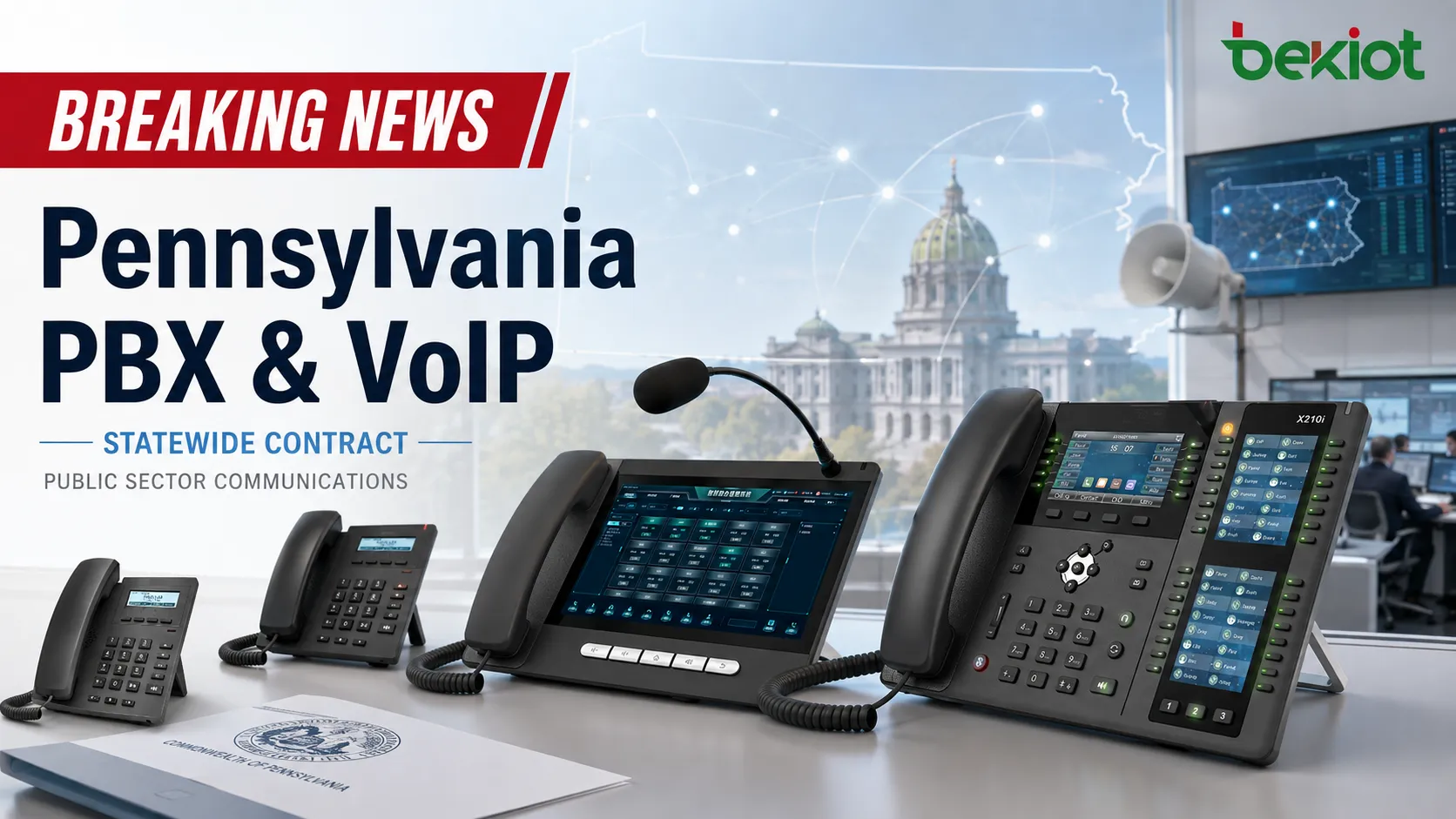
Pennsylvania public agencies now have a new statewide procurement route for upgrading aging telephone infrastructure. ConnX announced on August 4, 2026, that it had been awarded a two-year Commonwealth contract covering private branch exchange systems, on-premises VoIP, legacy voice transformation, and related professional services.
Key facts:
The agreement is a two-year statewide contract identified as Contract Number 4400032931.
Commonwealth agencies and eligible COSTARS members may access approved PBX and telecommunications services.
The scope includes equipment, planning, system design, implementation, migration, analog replacement, monitoring, and support.
The contract is intended to provide a more direct and compliant path for public-sector communications modernization.
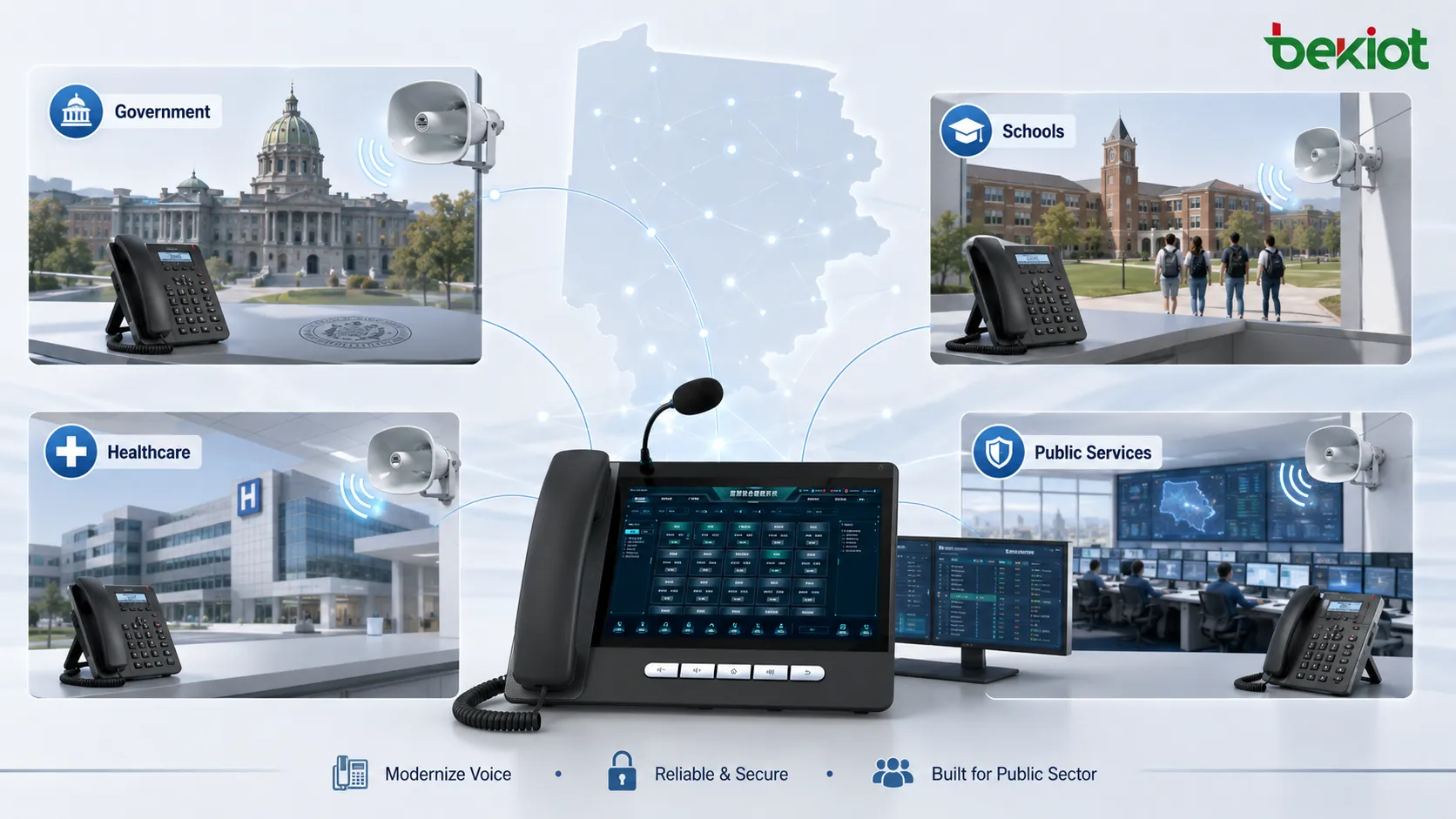
The statewide agreement covers PBX equipment, on-premises VoIP, legacy voice migration, and related communications services.
Statewide Contract: A Flexible Procurement Vehicle for Voice Modernization
The agreement gives Pennsylvania agencies a contract vehicle that can support communications projects of different sizes and technical conditions. Rather than limiting participating organizations to a single replacement package, the contract covers PBX telephone equipment, on-premises VoIP platforms, professional services, legacy system transformation, and continuing operational support.
This flexibility matters because public organizations do not begin modernization from the same starting point. One agency may still operate a traditional digital PBX with copper connections, while another may already use IP phones but maintain separate systems at regional offices. A third organization may rely on a mixture of modern VoIP, analog devices, carrier lines, fax services, and older emergency or administrative numbers.
Under the statewide arrangement, participating entities can define projects around their actual operating environment. Some may purchase new PBX or on-premises VoIP equipment. Others may focus on system expansion, number migration, analog replacement, network integration, or long-term management. This allows modernization to be planned around service continuity rather than forcing every organization into an identical technical schedule.
The contract also reflects a broader change in public-sector technology procurement. Telephone infrastructure is increasingly treated as an operational platform rather than a stand-alone hardware purchase. Agencies need equipment, but they also need assessment, engineering, migration planning, carrier coordination, testing, monitoring, and ongoing lifecycle management.
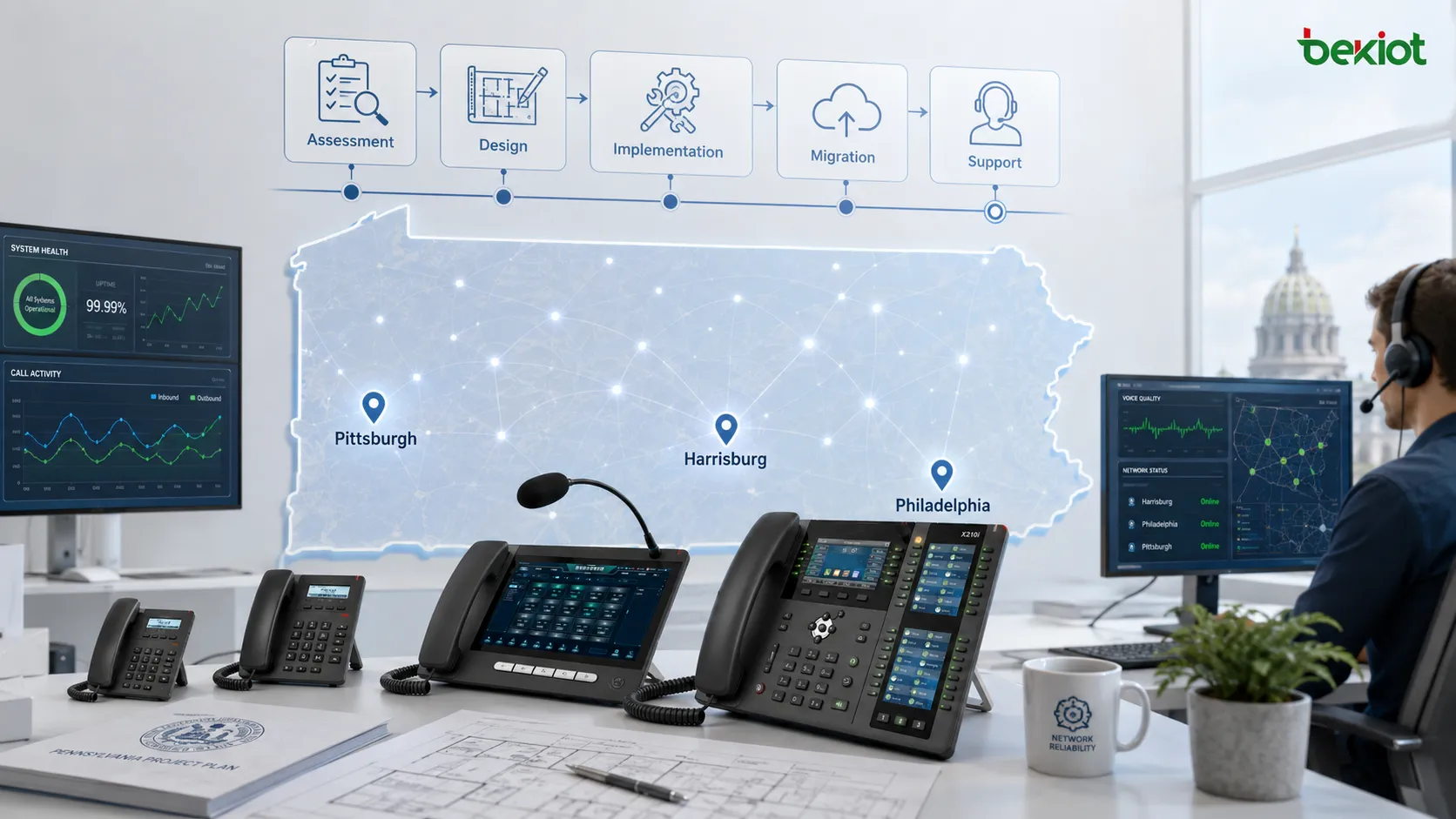
ConnX said its role will extend through those stages. The company plans to support organizations from early assessment and design through implementation, number migration, and continuing management. This end-to-end structure is particularly relevant for agencies whose voice networks connect public service lines, administrative offices, emergency contacts, remote workers, and multiple physical locations.
Legacy Infrastructure: Mounting Operational and Security Challenges
Many public institutions continue to operate telephone systems installed years or even decades ago. These platforms may still complete basic calls reliably, but their long-term operating conditions are becoming more difficult. Replacement cards can be harder to obtain, vendor support may be limited, and specialized maintenance knowledge can disappear as older systems reach the end of their commercial life.
The problem becomes more complex when an organization operates several systems across different offices. Headquarters may use one PBX, regional facilities another, and public service departments a separate contact center or carrier arrangement. Number plans, call-routing rules, maintenance agreements, and reporting tools can become fragmented across the organization.
Aging voice infrastructure may also create security and administration concerns. Older equipment was not always designed for current network segmentation, identity management, logging, software maintenance, or access-control requirements. Even when the telephone system remains operational, the surrounding management environment can become difficult to align with newer cybersecurity and governance policies.
On-premises VoIP offers one modernization path for organizations that want to retain core call control within their own facilities or managed private environment. It can provide IP-based extensions, centralized configuration, improved visibility, and easier integration with collaboration, recording, contact center, and carrier services. At the same time, agencies can continue to apply their own network, data, and operational policies.
The transition cannot be approached as a simple equipment swap. Public organizations often depend on published numbers, departmental hotlines, emergency contacts, fax lines, access-control intercoms, elevators, paging systems, and other analog services. Before older infrastructure is removed, each service must be identified and assigned an appropriate migration or replacement method.
ConnX Chief Client Officer Steve Pitchon described the contract as an important milestone for the company and connected it with the need for reliable, secure, and cost-controlled public-sector communications. The company said modernization should support the current workforce, improve constituent engagement, and reduce the operational burden created by legacy platforms.
Full-Lifecycle Services: Assessment, Migration and Continuous Support
The professional-services portion of the agreement is likely to be as important as the equipment itself. A communications transformation normally begins with an inventory of existing PBX systems, extension ranges, carrier trunks, telephone numbers, analog ports, call flows, recordings, emergency routes, and site-to-site connections.
That inventory provides the foundation for system design. Engineers can then determine platform capacity, network requirements, redundancy, endpoint types, security controls, and migration phases. Multi-site organizations may also need centralized numbering, interoffice dialing, local survivability, and a method for maintaining communications if a wide-area connection becomes unavailable.
Implementation involves more than installing a server and connecting phones. The project team may need to configure call routing, import users, establish permissions, connect carrier services, test emergency dialing, confirm inbound numbers, and verify that departmental workflows continue to operate as intended.
Number migration is another critical stage. Public telephone numbers may appear on government websites, printed documents, service directories, emergency plans, and public information materials. An unsuccessful or poorly timed migration can disrupt access even when the new PBX platform itself is functioning correctly.
For this reason, agencies may choose phased cutovers by location, department, or number group. Legacy and new platforms can operate in parallel during testing. Important lines can be migrated first as controlled pilots, while rollback arrangements remain available until inbound, outbound, transfer, voicemail, recording, and emergency functions have been verified.
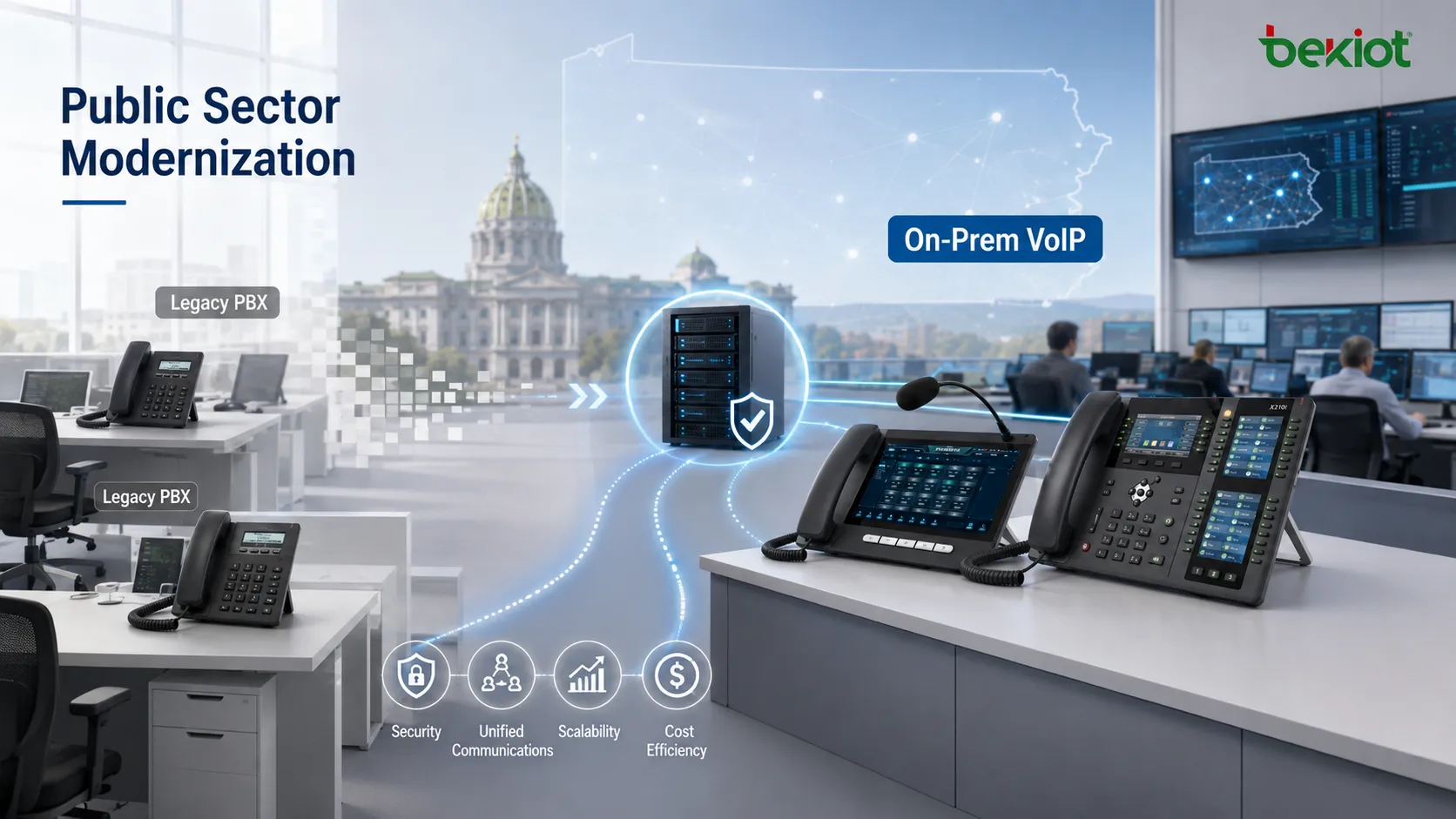
The contract also includes legacy voice transformation and analog replacement. Some analog services can be connected through gateways or adapters, while others may require a dedicated replacement design. The decision depends on the device, transmission method, operational importance, and compatibility requirements.
Once systems enter production, monitoring and support become part of the long-term operating model. Administrators need visibility into endpoint status, trunk availability, call failures, capacity, network quality, and configuration changes. They also need a support process that can distinguish between platform faults, network issues, carrier problems, and endpoint failures.
ConnX describes its approach as an integrated managed communications model combining voice, collaboration, contact center, carrier services, professional services, and lifecycle management. For public agencies, consolidating these responsibilities may reduce the gaps that often appear when separate vendors manage the PBX, network, carrier connection, and migration work.
COSTARS Eligibility: Expanded Access for Public Sector Organizations
The contract is not limited to Commonwealth departments. Eligible COSTARS members can also use the awarded vehicle to obtain approved PBX, telecommunications, and related services. This expands the potential reach to qualified public entities that may include local governments and other participating organizations.
The primary benefit is a simplified procurement path. A statewide contract that has already gone through a competitive award process can reduce the need for each participating entity to repeat the entire supplier-selection procedure. That may shorten the time between identifying a communications problem and beginning a modernization project.
Simplified procurement does not remove the need for technical planning. Each organization still has to define its current infrastructure, service requirements, budget, security expectations, implementation schedule, and acceptance criteria. The contract provides access to approved services, but the quality of the final result will still depend on project-specific assessment and governance.
The arrangement may be particularly useful for organizations that prefer staged modernization. A municipality could begin with its highest-risk PBX, then update additional offices over time. A school or public facility could first replace unsupported analog systems before moving other users. A larger agency could establish the central platform and numbering structure before migrating regional sites.
The broader significance of the award is that public-sector voice modernization is moving away from isolated hardware replacement. Agencies increasingly evaluate communications as a managed operational environment that includes security, user access, carrier connectivity, lifecycle planning, and service continuity.
The two-year Pennsylvania contract creates a common entry point for that work. Its practical impact will depend on how participating organizations prioritize their most urgent risks, preserve useful existing resources, and plan migrations around critical public services. A carefully phased project can modernize communications without treating every legacy component as an immediate replacement requirement.
FAQ
Does the statewide contract require a complete system replacement?
No. Participating organizations can define the scope around their operational and budget requirements. Projects may focus on selected sites, unsupported equipment, analog services, capacity expansion, or a complete platform migration.
Can agencies keep existing telephone numbers?
Existing numbers can often be retained through a coordinated carrier and number-porting process. The project team should verify ownership, routing, emergency address information, and migration timing before the cutover.
How should an agency evaluate analog devices?
Each device should be identified by function rather than port type alone. Fax machines, intercoms, alarms, elevators, paging interfaces, and emergency lines may have different compatibility and reliability requirements.
What should be included in final acceptance testing?
Testing should cover inbound and outbound calls, transfers, voicemail, emergency dialing, failover behavior, user permissions, recording, analog services, carrier connectivity, and communication between participating locations.