


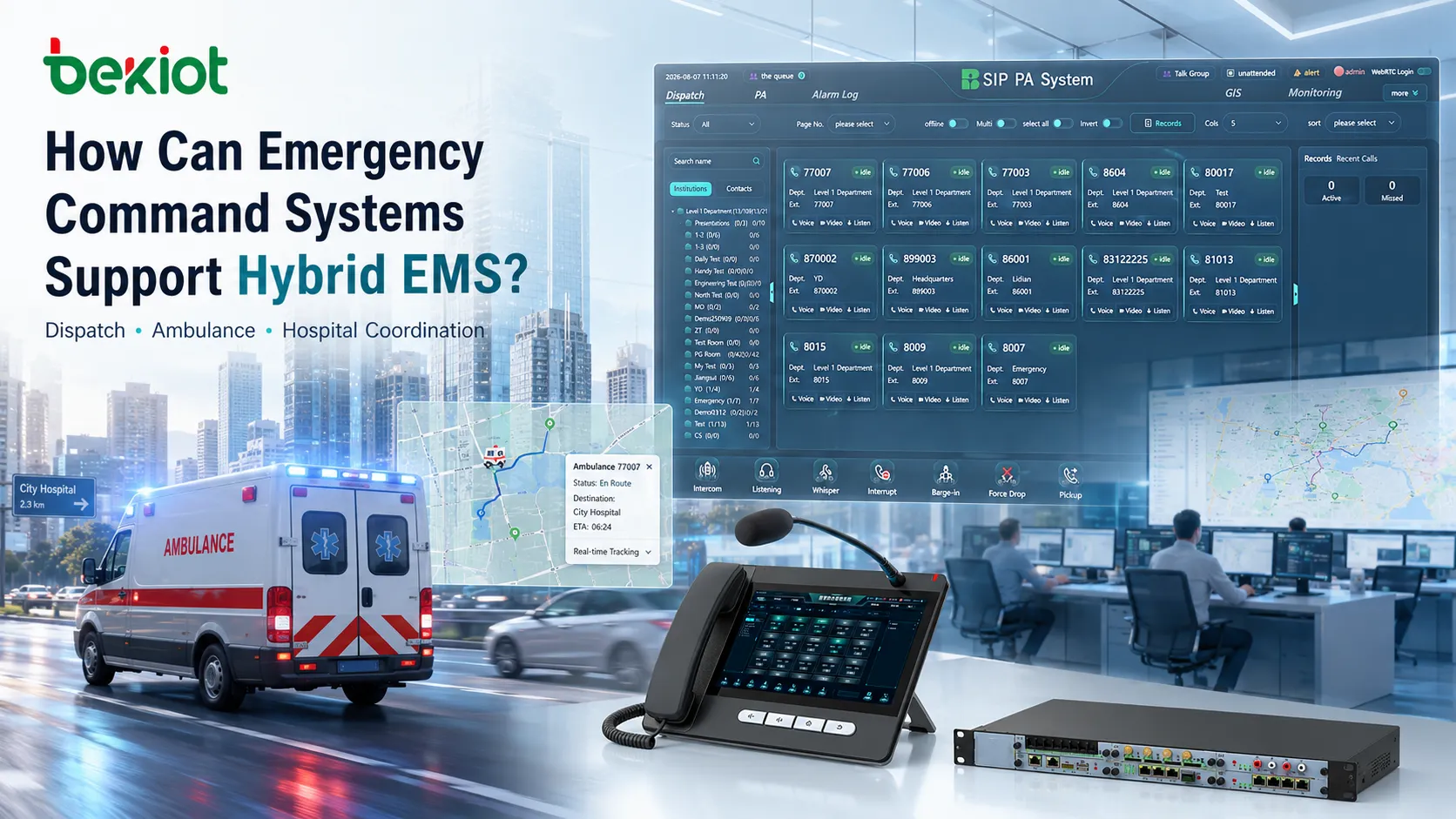
Scranton, Pennsylvania, is considering a move toward a hybrid EMS model that combines public and private ambulance services. Its proposed 2027 capital budget includes the purchase of three used ambulances to begin building city-operated EMS capacity. On the surface, this looks like an equipment investment. The harder questions usually begin after the vehicles are placed into service. Who dispatches the call? Can public and private ambulances be managed within the same resource pool? Which unit is closest, and what level of clinical capability does the crew have? Can the receiving hospital handle this type of patient right now? And when a multi-casualty incident occurs, how quickly can fire, EMS, law enforcement and the dispatch center operate as one response structure? None of these problems is solved automatically by adding more ambulances.
For any EMS system that is expanding or changing its operating model, vehicle count is only the starting point. What matters more is whether those resources can be seen, dispatched and coordinated as part of one operational picture. That is where a mature emergency dispatch and command system becomes essential.
More Ambulances Often Make Dispatch More Complex First
EMS dispatch is relatively straightforward when a single organization controls the vehicles, crews, duty rosters and dispatch authority. The communications center has direct visibility into the resources it owns and can assign them without having to cross organizational boundaries.
A hybrid model is different. City ambulances, private EMS providers and hospital-based transport teams may all be available at the same time, but they do not necessarily operate under the same management structure. When a 911 call arrives, the dispatch system needs to show more than “five ambulances are nearby.” It also needs to identify which units are available, which are already committed, whether each crew is clinically appropriate for the call, how long each unit is expected to take to arrive and, just as importantly, whether the dispatcher actually has the authority to assign that resource.
If that information remains isolated in separate systems, dispatchers are forced to make phone calls, switch between multiple applications or call units one by one over the radio. That may be manageable during low call volumes. During a major traffic collision, severe weather event or regional public health emergency, however, manual coordination can quickly become the slowest part of the entire response chain.
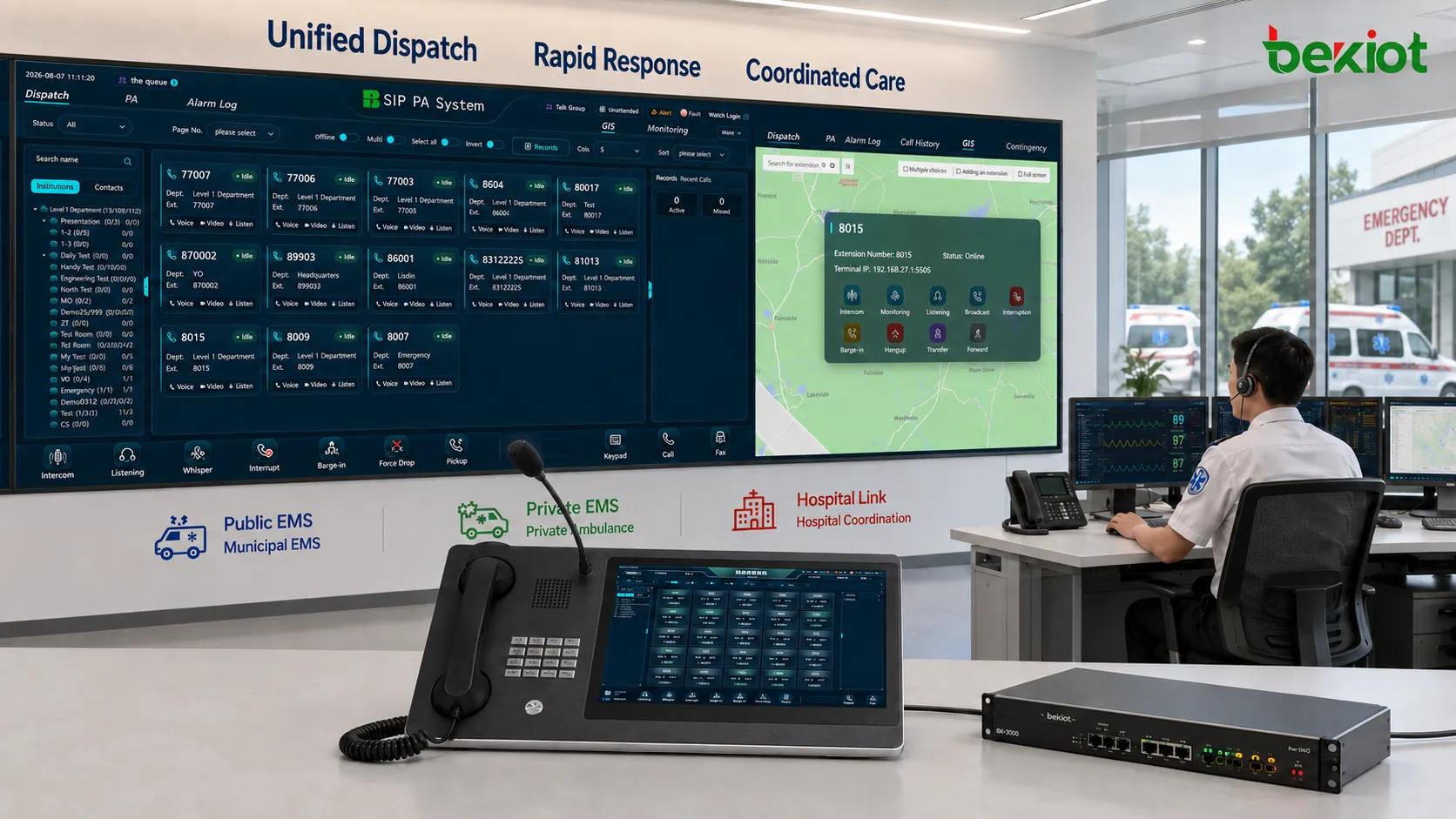
The first requirement in a hybrid EMS environment is therefore not a larger video wall. It is a shared resource status model. Each provider can continue operating its own management system, but key operational states—available, assigned, en route, on scene, transporting, at hospital and back in service—need to be visible within a common command view.
Once location, unit status and incident assignment are continuously updated, the dispatch center can make decisions based on distance, capability, jurisdiction and incident priority rather than falling back on a basic “who answers the radio first” method.
Information Should Not Break Between the 911 Call and Hospital Handoff
EMS does not end when the ambulance reaches the patient. A complete response may include call intake, incident triage, unit assignment, response, on-scene treatment, transport, hospital selection, pre-arrival notification and final handoff. New information is generated at every stage, and each update can change what needs to happen next.
Consider a common situation. The initial call may simply report that a patient is having difficulty breathing. When the crew arrives, they may discover that the condition is significantly more serious than originally reported. The incident priority may need to increase, additional resources may be required and the original destination hospital may no longer be appropriate.
If the field crew can only repeat these updates by radio, while dispatch, hospitals and supporting agencies maintain separate information streams, the same message may need to be relayed several times. Every additional handoff creates another opportunity for delay or loss of context.
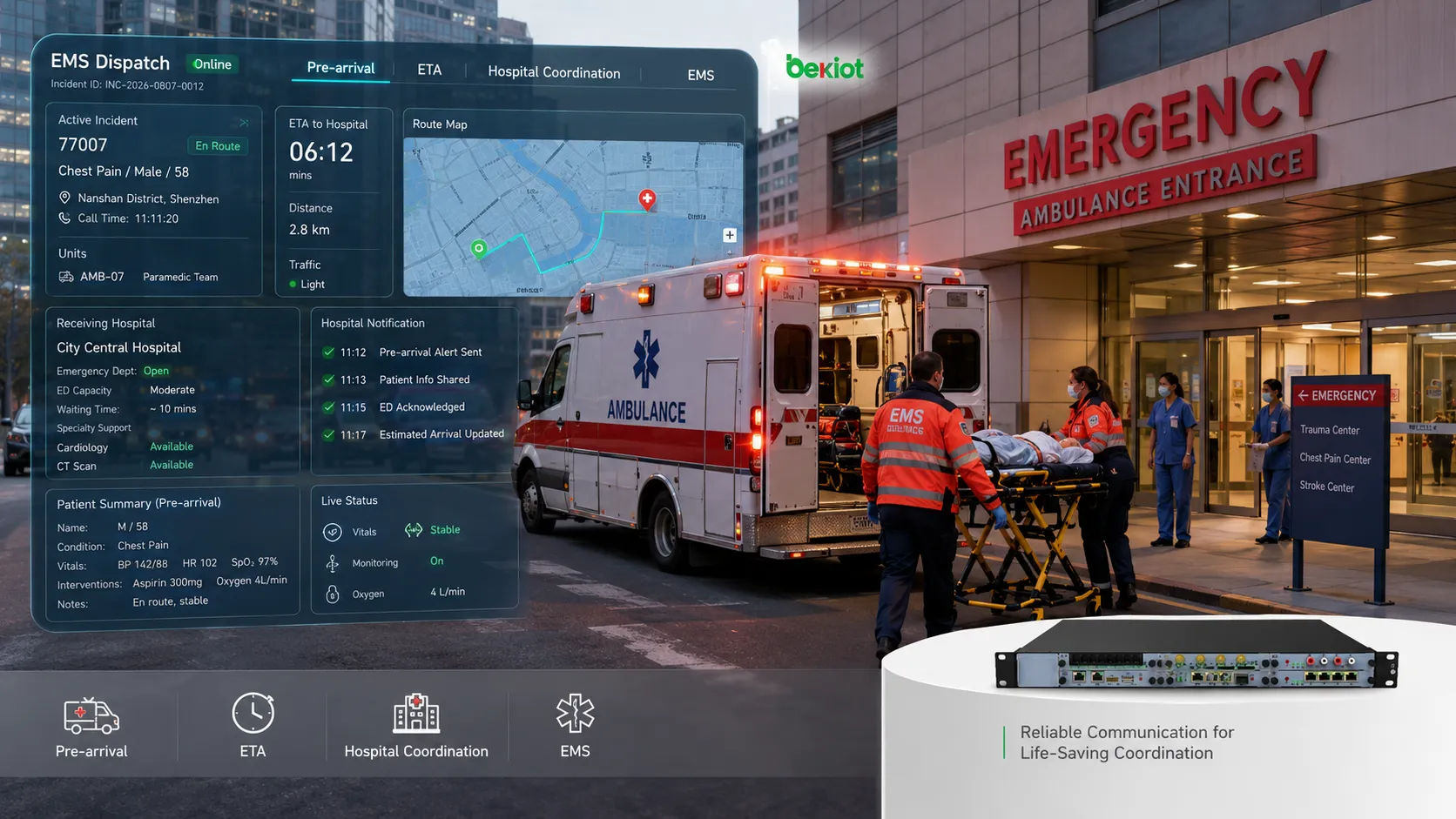
An emergency command system should instead treat the incident as a continuously updated operational record. Once the communications center creates the call, unit location and status are associated with the same incident. When the crew arrives, it can update patient category and support requirements. When transport begins, the system can pass the necessary pre-arrival information to the destination emergency department.
For a hospital, receiving a ten-minute warning about the type of patient that is arriving is far more useful than beginning preparations only when the ambulance reaches the emergency entrance. For dispatchers, knowing whether a hospital can currently accept a particular type of emergency is more useful than selecting a destination based only on driving distance.
There is an important boundary here. An emergency command system does not need to duplicate the entire electronic medical record. Dispatch decisions typically require operational information such as incident priority, number of patients, broad clinical category, estimated arrival time and hospital acceptance status. Detailed clinical records should remain within the appropriate medical systems and be controlled by the relevant access policies.
In other words, integrating EMS with emergency command is not about putting every piece of medical data into one platform. It is about making sure that the people actively involved in the response receive the information they need, when they need it, to complete their part of the mission.
EMS Depends on Multiple Communications Paths, Not One Network
EMS field communications have never depended on a single network. Paramedics may use a mission-critical radio system to stay in contact with dispatch while using cellular data to update location and task status. Hospitals may rely on fixed telephony, IP voice or their own clinical applications. During a major incident, fire departments, law enforcement, emergency management agencies and additional medical organizations may all join the response using different devices and communications systems.
For that reason, emergency command architecture should not be reduced to “give everyone the same app.” Different users can continue using different terminals and networks. What matters is whether the command layer can bring those communications relationships together.
During routine calls, dispatchers may use group voice, individual calls and messaging to coordinate assignments. During a multi-agency response, the system should be able to create a temporary communications group that brings EMS, fire and incident command personnel into the same operational conversation.
Important communications should also remain associated with the event, including timestamps, dispatcher actions and relevant call records, so that the incident can be reconstructed later if needed.
Priority handling is particularly important in medical emergencies. Routine communications should not interfere with urgent incidents. When a high-severity event occurs, the command center should be able to prioritize the relevant talkgroups or sessions and expand participation to hospitals, supervisory personnel or a regional emergency operations center when required.
Network resilience also matters. Cellular data is useful for maps, video and structured status updates, but during congestion or in coverage gaps, critical voice communications may still depend on dedicated radio. A resilient EMS communications architecture does not assume that one network will always be available. It provides primary and backup communications paths and supports graceful fallback when network conditions deteriorate.
Healthcare Places Higher Demands on Emergency Command Systems
Moving a general municipal emergency dispatch platform directly into a healthcare environment is unlikely to work well without adaptation. Medical response requires speed, but it also operates under stricter requirements for information access, service continuity and accountability.
The first requirement is role-based access. Ambulance drivers, paramedics, dispatchers, emergency department staff and command personnel do not need access to the same information. The system should expose only the functions and data each role requires rather than allowing every endpoint to view every incident and every patient record.
The second requirement is data minimization. GIS location, unit status and incident priority are operationally useful, but patient identity and detailed clinical information should only appear where there is a legitimate need. System design should begin with the question, “Who needs this data, and why?” rather than collecting and distributing information simply because the technology allows it.
Traceability is equally important. Dispatch, reassignment, arrival, hospital selection, communications and major status changes may all become important later for quality review or accountability. The platform should be able to reconstruct a complete event timeline and show why a particular unit was assigned, when the destination changed and who participated in critical decisions.
The final requirement is operational continuity. EMS does not have the option of suspending service during system maintenance. Core dispatch, voice communications and unit-status functions need to account for server failure, network outages, power loss and even the loss of the primary dispatch center. Critical workflows should have documented fallback or degraded-mode procedures.
If the project later needs to integrate hospital emergency systems, electronic patient care records or other healthcare applications, APIs or standardized data exchange interfaces can be used. However, those interfaces should be designed around the actual emergency response workflow rather than forcing the emergency command platform to duplicate every function of a hospital information system.
Conclusion: The Command System Is Not the Video Wall—It Is the Response Chain from City to Hospital
Scranton's plan to add city-operated ambulances represents more than three additional vehicles. It raises a question that many cities eventually face: when public and private EMS resources operate in the same area, how can they work together during a real emergency instead of maintaining separate vehicles, staff and communications systems and then coordinating manually when an incident occurs?
The answer is not found in the ambulance procurement list. It lies in the emergency dispatch and command architecture. A well-designed command system can bring vehicle status, location and assignment information from multiple organizations into a common operational view, helping dispatchers select units based on proximity and capability. It can connect call intake, field care, transport and hospital handoff into one continuous information chain, ensuring that each participant receives the right information at the right time.
It can also integrate radio, cellular networks, IP voice and mobile endpoints so that critical communications remain available across different network conditions. At the same time, it must address the healthcare sector's harder requirements for access control, data minimization, traceability and continuity of operations.
The implementation sequence matters as well. First define call-taking and dispatch responsibilities. Then identify public and private EMS resources. Next, standardize critical unit status, GIS location and incident identifiers. After that, integrate cross-agency voice, messaging and temporary incident communications. Large dashboards, analytics and advanced visualization should come later.
If the underlying resource relationships have not been integrated, even the most impressive command center display will not shorten the time it takes for an ambulance to reach the patient.
When public EMS, private ambulance providers, hospitals and municipal emergency agencies can coordinate around the same incident, “integrated command” stops being a software feature and becomes a real emergency medical response capability.
Becke Telecom focuses on emergency command, dispatch and unified communications solutions for healthcare, public safety and municipal emergency response. Its solutions can support unified access to public and private EMS resources, rapid creation of cross-agency communication groups, pre-arrival coordination between field teams and hospitals, and resilient communications across multiple network paths.
FAQ
Do Private Ambulance Providers Have to Replace Their Existing Dispatch Systems to Join a Citywide Command Platform?
Not necessarily. In many cases, the more practical approach is to keep the provider's existing operational system and synchronize only the required unit status, location and assignment data through APIs, integration middleware or dispatch gateways. Whether a fully unified platform is necessary depends on the size of the organization, access boundaries and the systems already in place.
Does Real-Time Ambulance Tracking Mean Everyone Can See Vehicle Location History?
It should not. Real-time vehicle location is primarily used for dispatch and operational management. Access can be restricted by role, agency and incident scope. Historical location retention and usage should also be governed according to operational requirements, privacy policies and applicable local rules.
Does an Emergency Command Platform Need Full Real-Time Access to Hospital Bed Availability?
Usually not. For pre-hospital EMS, the more useful information is whether a hospital can accept a particular type of emergency, whether the emergency department is operating under special restrictions and what transport guidance applies to the current case. Replicating the hospital's complete bed-management system inside the dispatch platform is generally unnecessary.
Can an EMS Command System Continue Operating If Cellular Service Fails?
That depends on the architecture. Critical EMS deployments commonly retain radio voice, backup networks or other fallback communication methods and also define manual dispatch procedures for network outages. Data functions may become limited temporarily, but essential dispatch and voice communications should be designed to remain available wherever possible.







