


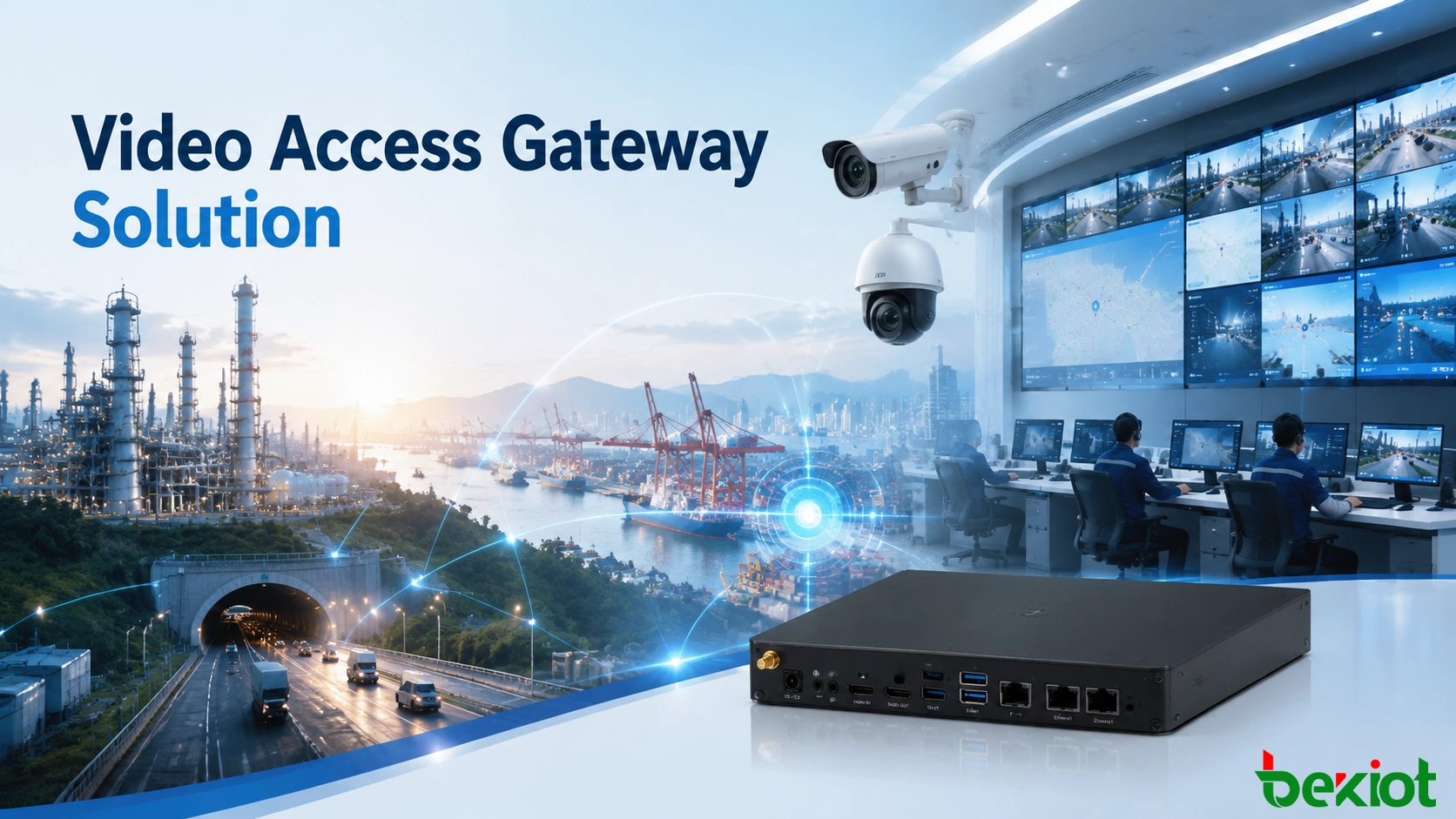
Video has become a critical information source in modern security, communication, and operational management systems. In the past, surveillance cameras were mainly used for independent monitoring and recording. Today, organizations expect video resources to work together with emergency communication, dispatch systems, industrial management platforms, transportation control centers, and intelligent applications to support faster decision-making.
However, many organizations face difficulties when integrating existing video systems with new digital platforms. Different camera manufacturers, surveillance platforms, and application systems may use different protocols, interfaces, and deployment architectures. A video system installed several years ago may operate independently from a newly built command platform, creating isolated information environments where video resources cannot be efficiently shared.
A video access gateway provides an integration layer between these independent systems. By supporting protocol conversion, video resource management, stream adaptation, and application interface integration, the gateway enables existing surveillance infrastructure to connect with modern communication and command platforms without replacing the entire video network.
This solution is widely used in industrial facilities, energy projects, transportation networks, smart campuses, public safety systems, and emergency response environments where real-time video access and unified management are essential.
Why Video Integration Requires a Gateway Layer
Traditional video surveillance systems were usually designed as closed ecosystems. Cameras, network video recorders, storage servers, and management software were deployed as a complete solution, often based on a specific manufacturer's technical architecture.
This approach worked well when video was only required for local monitoring. However, with the development of intelligent operations, organizations now need video to participate in broader workflows.
For example, an emergency command center may need to automatically display nearby cameras after receiving an alarm. An industrial control room may need to combine voice dispatch with live video from production areas. A transportation management center may need to access cameras from stations, tunnels, and roadside locations through one unified platform.
These requirements introduce several integration challenges.
Protocol Differences Between Systems
One of the biggest challenges in video integration is protocol compatibility. Different systems may use different communication standards depending on their original design and application requirements.
Surveillance platforms commonly support protocols such as GB28181, RTSP, and ONVIF for camera access and video transmission. Meanwhile, communication platforms, dispatch systems, and command applications may require SIP-based video communication or standardized media interfaces.
Without a dedicated integration mechanism, these systems cannot directly exchange video information. Each connection may require customized development, increasing implementation complexity and long-term maintenance costs.
A video access gateway solves this problem by converting different protocols into a unified access method. It allows video resources from different systems to be recognized, managed, and accessed by upper-level applications.
Different Video Formats and Transmission Requirements
Video integration is not only a signaling problem. Different systems may also have different requirements for encoding formats, resolution, frame rates, and network transmission.
For instance, one surveillance platform may provide high-definition H.265 streams to reduce bandwidth consumption, while another application may require H.264 compatibility for terminal access. Without proper media adaptation, users may experience unstable playback, excessive network load, or limited device compatibility.
A video access gateway can provide stream processing capabilities to adapt video resources according to application requirements, ensuring that different systems can access suitable video streams.
Distributed Video Resources and Management Complexity
Large-scale projects often include thousands of cameras distributed across different areas, buildings, stations, production zones, or remote locations.
Managing these resources separately creates operational difficulties. Operators may need to switch between multiple platforms, remember different access methods, and maintain independent device lists.
A gateway-based architecture creates a unified video resource layer. It collects distributed video resources, standardizes access methods, and allows different applications to use the same video infrastructure.
How Video Access Gateway Architecture Works
A video access gateway is positioned between existing video systems and upper-level applications. It does not replace cameras or video management platforms. Instead, it acts as a bridge that enables interoperability between different technical environments.
A typical video integration architecture contains several functional layers:
Video Device Layer: Includes IP cameras, network video recorders, existing surveillance platforms, mobile video terminals, and other video sources.
Gateway Processing Layer: Provides protocol conversion, device registration, resource mapping, stream processing, and media adaptation.
Communication and Management Layer: Includes dispatch systems, unified communication platforms, command centers, and video management applications.
Business Application Layer: Uses video resources for emergency response, industrial management, transportation control, security operations, and intelligent applications.
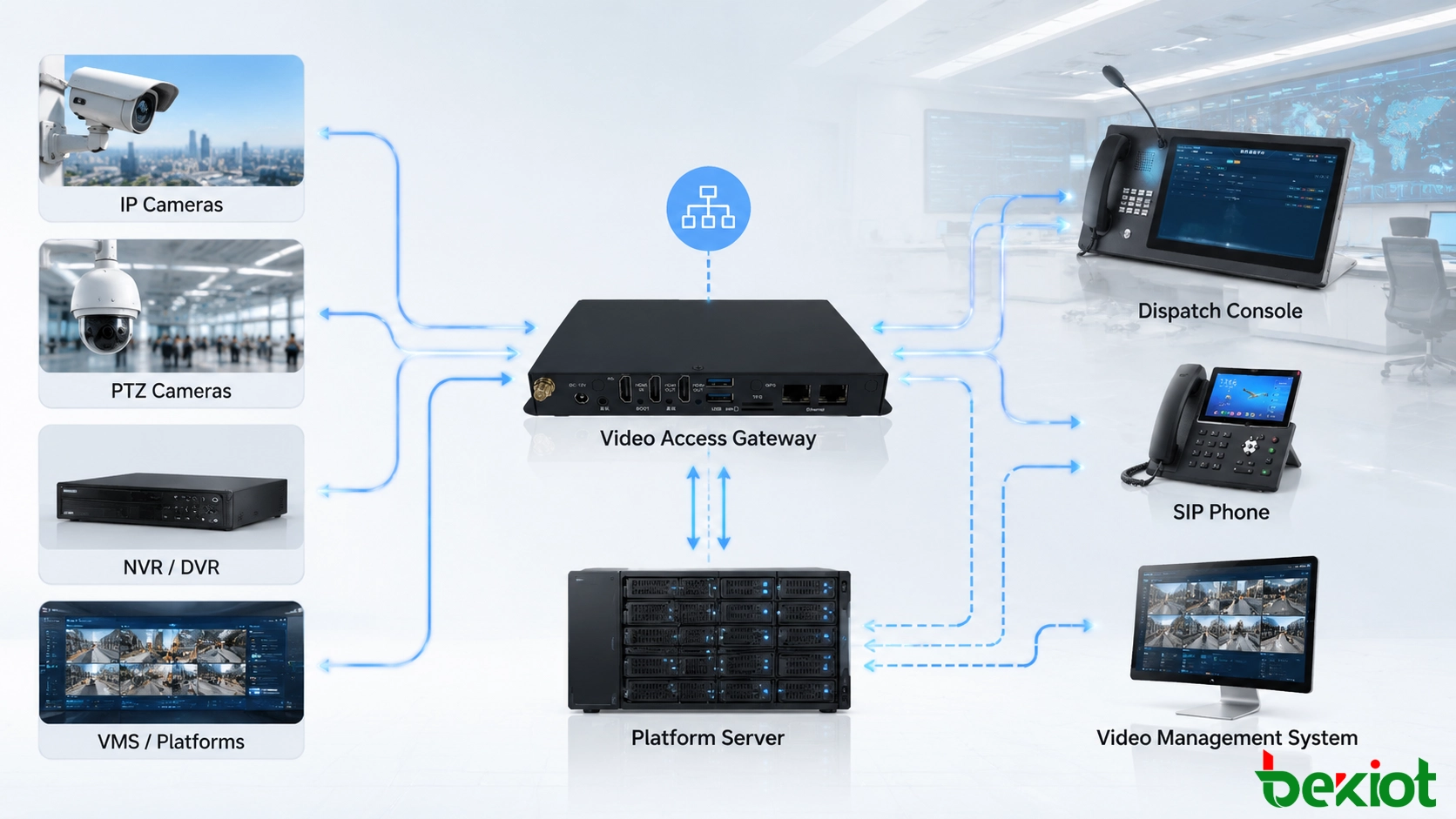
During operation, the gateway receives video resources from connected systems, identifies device information, processes communication requests, and provides standardized access services for different platforms.
For example, cameras connected through GB28181 or RTSP can be converted into resources available for SIP-based communication platforms or command applications. This allows video devices to become part of unified communication workflows rather than remaining isolated inside traditional surveillance networks.
Resource Registration and Directory Management
In large projects, simply connecting video streams is not enough. Operators also need an organized way to identify cameras, locations, and permissions.
Video access gateways can provide resource registration and directory management functions. Cameras can be mapped according to buildings, areas, departments, or operational requirements, allowing users to quickly locate the required video resource.
This capability is especially important for emergency command environments where operators must find the correct camera quickly during an incident.
Four Practical Applications of Video Access Gateway
Surveillance Platform Interconnection
The first major application of a video access gateway is connecting existing surveillance platforms with command, communication, and operational systems.
In many projects, surveillance systems were installed before unified communication platforms or emergency command solutions were introduced. These systems may already contain hundreds or thousands of cameras, but they cannot directly provide video services to newly deployed applications.
A video access gateway creates a communication bridge between these systems. It receives video resources from existing surveillance platforms and converts them into formats and protocols that can be accessed by command applications.
Typical integration processes include:
Receiving camera information and video streams from existing platforms.
Performing protocol conversion between different systems.
Registering video resources into command or communication platforms.
Providing authorized users with real-time video access.
This capability allows operators to combine voice communication, video monitoring, alarms, and dispatch operations within a unified workflow.
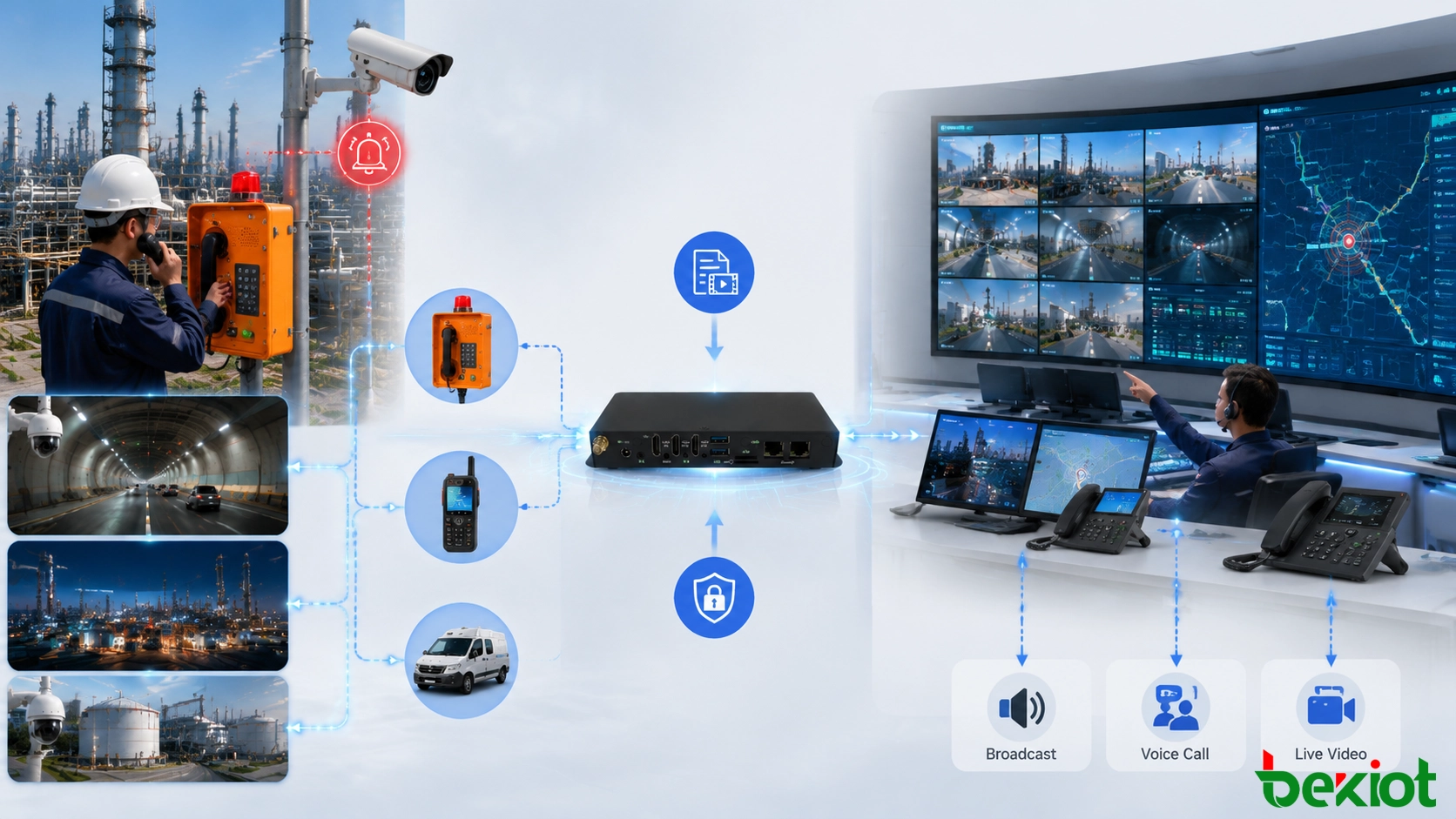
For example, when an emergency call is received from a remote industrial area, the command center can not only communicate with field personnel but also immediately access nearby cameras to verify the situation and make better decisions.
Multi-source Video Aggregation
Large organizations often operate video systems from different construction phases, suppliers, or geographic locations. These systems may include different camera models, video management platforms, and network architectures.
Without integration, operators need to manage each system independently, which reduces efficiency and increases operational complexity.
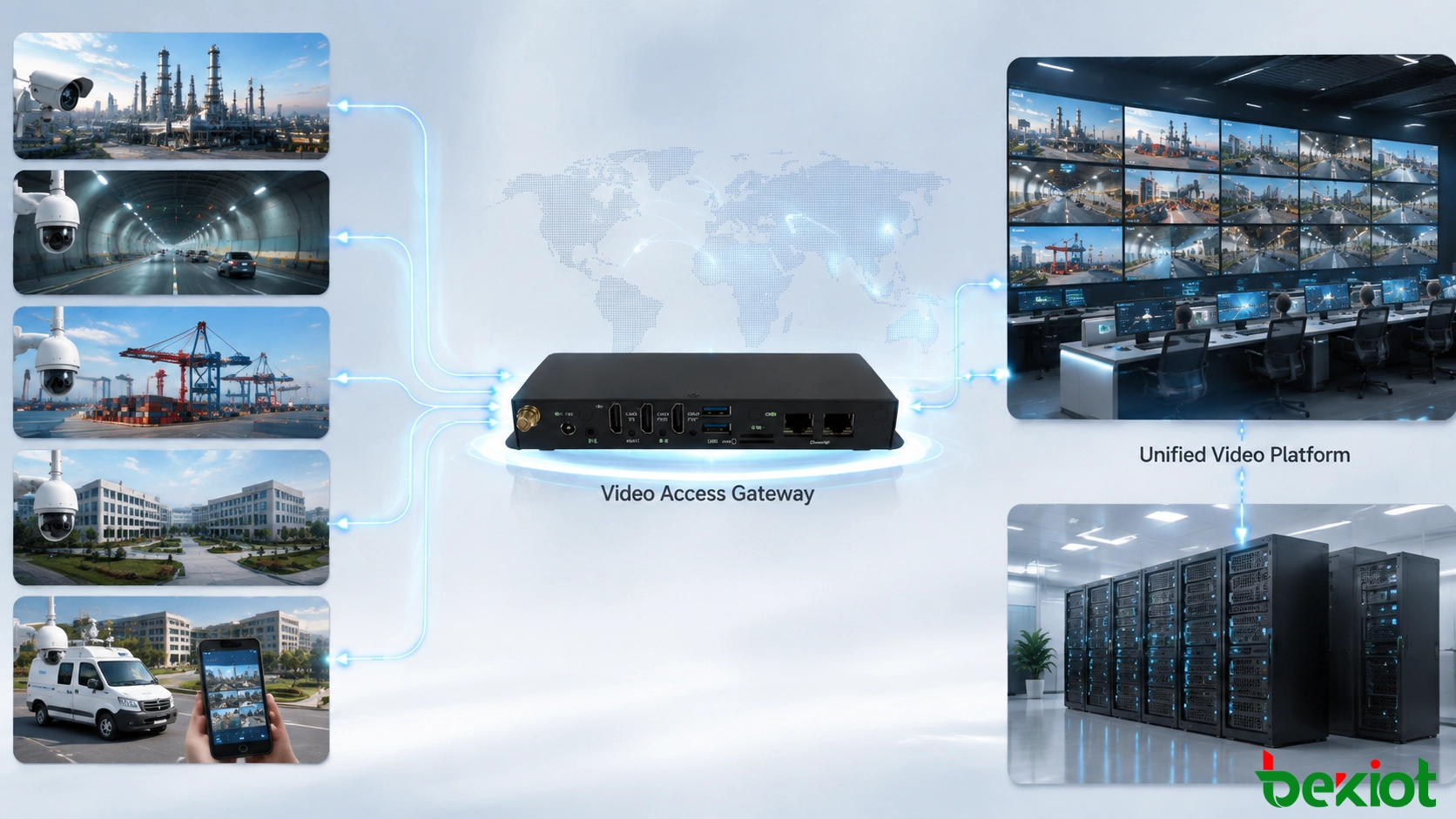
A video access gateway provides a unified aggregation layer by collecting video resources from multiple systems and presenting them through a standardized management interface.
The gateway can support centralized management of:
IP cameras deployed in different areas.
Existing video surveillance platforms.
Network video recorders and storage systems.
Mobile video devices and temporary monitoring terminals.
Through resource aggregation, organizations can create a unified video directory and provide consistent access methods for different departments.
This approach is especially useful for large facilities such as factories, ports, airports, railway networks, and urban infrastructure projects where thousands of video points must be managed efficiently.
Video Stream Conversion and Distribution
Different applications often have different requirements for video access. A large command center may require high-resolution live monitoring, while mobile users or remote offices may require optimized streams with lower bandwidth consumption.
Video access gateways provide stream conversion and distribution capabilities to solve these differences.
The gateway can process video streams based on application requirements, including:
Converting video transmission protocols between different platforms.
Adapting video streams for different terminals and applications.
Distributing the same video resource to multiple authorized systems.
Optimizing bandwidth usage in distributed network environments.
In large command systems, multiple organizations may need access to the same cameras. For example, security departments, operation teams, maintenance teams, and emergency responders may all require different views of the same incident.
Instead of building separate video connections for every department, a gateway provides centralized stream distribution, simplifying network design and improving system reliability.
Business System Integration
Modern video applications are moving beyond traditional monitoring. Organizations increasingly require video resources to work together with other business systems.
A video access gateway can provide integration interfaces that allow software platforms to interact with video resources.
Through APIs and standardized interfaces, applications can perform functions such as:
Requesting live video from specific locations.
Obtaining camera status information.
Linking alarms with nearby video resources.
Integrating video with GIS maps and operational data.
This capability supports advanced applications such as intelligent command systems, industrial safety platforms, smart campuses, and integrated security management systems.
In these scenarios, the gateway acts as middleware between video infrastructure and business applications, reducing software development complexity and improving system flexibility.
Video Gateway Applications Across Industries
Industrial Facilities and Energy Infrastructure
Industrial environments require reliable monitoring of production areas, equipment zones, storage facilities, and safety-critical locations. Video systems often need to work together with communication and emergency response platforms.
A video access gateway enables industrial organizations to connect existing surveillance resources with control rooms, dispatch systems, and safety management platforms.
When abnormal conditions occur, operators can quickly access relevant cameras, communicate with field personnel, and coordinate response activities.
Common applications include:
Oil and gas facilities.
Chemical plants.
Power generation sites.
Mining operations.
Industrial parks.
Transportation and Public Infrastructure
Transportation systems usually contain a large number of cameras distributed across wide geographic areas, including stations, tunnels, roads, bridges, and control centers.
A video access gateway helps connect these distributed resources with central command platforms. Operators can combine video information with voice dispatch, emergency alarms, and geographic information systems to improve incident response efficiency.
Typical applications include:
Railway and metro monitoring.
Highway operation centers.
Airport security systems.
Smart transportation platforms.
Smart Campus and Public Service Systems
Schools, hospitals, government buildings, and public service facilities require comprehensive security management and rapid emergency response capabilities.
Through video gateway integration, existing surveillance systems can be connected with access control, emergency notification, visitor management, and communication platforms.
This creates a more complete operational environment where video information can support daily management and emergency handling.
Key Factors for Video Gateway Deployment
Selecting and deploying a video access gateway requires consideration of both current integration requirements and future system expansion. A suitable solution should not only solve existing compatibility issues but also provide a flexible foundation for long-term development.
Protocol and Platform Compatibility
Protocol compatibility is one of the most important factors when designing a video integration solution. The gateway should support the communication standards used by existing systems and provide flexible interfaces for future applications.
In practical projects, compatibility may involve multiple technologies, including camera access protocols, video transmission standards, communication interfaces, and platform integration methods.
Supporting mainstream protocols such as GB28181, RTSP, ONVIF, and SIP-based video communication helps reduce integration risks and improves system adaptability.
Processing Capability and Expansion Capacity
Video processing requirements vary greatly depending on project scale. A small facility may only need dozens of connected cameras, while large transportation or industrial projects may require thousands of video resources and multiple concurrent users.
During solution planning, organizations should evaluate:
Number of connected video devices.
Required concurrent video streams.
Video resolution and encoding requirements.
Future system expansion plans.
A scalable architecture allows organizations to gradually add cameras, departments, and applications without redesigning the entire system.
Network Design and Reliability Requirements
Video applications generate continuous network traffic, especially when multiple users access high-definition streams simultaneously. Network bandwidth, transmission stability, and latency control directly affect user experience.
For critical environments such as emergency command centers, industrial control rooms, and transportation operation centers, reliability is a key requirement.
A professional deployment should consider:
Network redundancy and availability.
Stable video transmission under different network conditions.
Efficient bandwidth utilization.
Fault recovery and maintenance efficiency.
Security and Permission Management
Video resources often contain sensitive operational information. Unauthorized access may create security risks, especially in industrial, transportation, and public safety environments.
Therefore, video integration solutions should include appropriate security mechanisms such as user authentication, resource authorization, access control, and communication protection.
Different users should be able to access only the video resources related to their responsibilities. For example, security personnel, operation teams, and emergency responders may require different permission levels.
Building Scalable Video Communication Architecture
The future development of video systems is moving toward deeper integration with communication, artificial intelligence, and intelligent management platforms.
Instead of operating as isolated monitoring systems, video resources are becoming part of complete operational ecosystems. They support real-time decision-making, automated event response, and cross-department collaboration.
A video access gateway provides a practical migration path for organizations that already have existing surveillance infrastructure. Instead of replacing all current systems, organizations can gradually connect existing resources with new applications.
This approach provides several long-term advantages:
Protects existing investments in cameras and surveillance platforms.
Simplifies integration between different technology systems.
Supports future expansion and application development.
Improves operational efficiency through unified information access.
For industries that depend on fast response and accurate situational awareness, a flexible video integration architecture becomes an important foundation for digital transformation.
Conclusion
Video access gateways provide an effective solution for connecting fragmented video systems and building unified operational platforms. By combining protocol conversion, video resource aggregation, stream adaptation, and application integration, gateways allow organizations to maximize the value of existing surveillance infrastructure.
Whether applied in industrial facilities, transportation networks, energy projects, smart campuses, or emergency response systems, video integration technology helps organizations achieve faster information sharing, better situational awareness, and more efficient management.
As video continues to become a core component of intelligent operations, a well-designed video access gateway architecture provides the flexibility and scalability required for future communication and security systems.
FAQ
What role does a video access gateway play in a communication system?
A video access gateway works as an integration layer that connects video resources with communication and business platforms. It enables different systems to exchange video information without requiring complete replacement of existing infrastructure.
Can a video access gateway connect different surveillance brands?
Yes. A gateway can integrate different video systems through supported protocols and interfaces, allowing cameras and platforms from different vendors to participate in a unified architecture.
Is a video access gateway only used for security monitoring?
No. In addition to security monitoring, video gateways are widely used in emergency command, industrial management, transportation operations, smart campuses, and other applications that require video integration.
Does deploying a video access gateway require rebuilding the existing video system?
In most cases, no. The gateway is designed to connect existing video resources with new platforms, allowing organizations to expand capabilities while keeping current infrastructure.







