


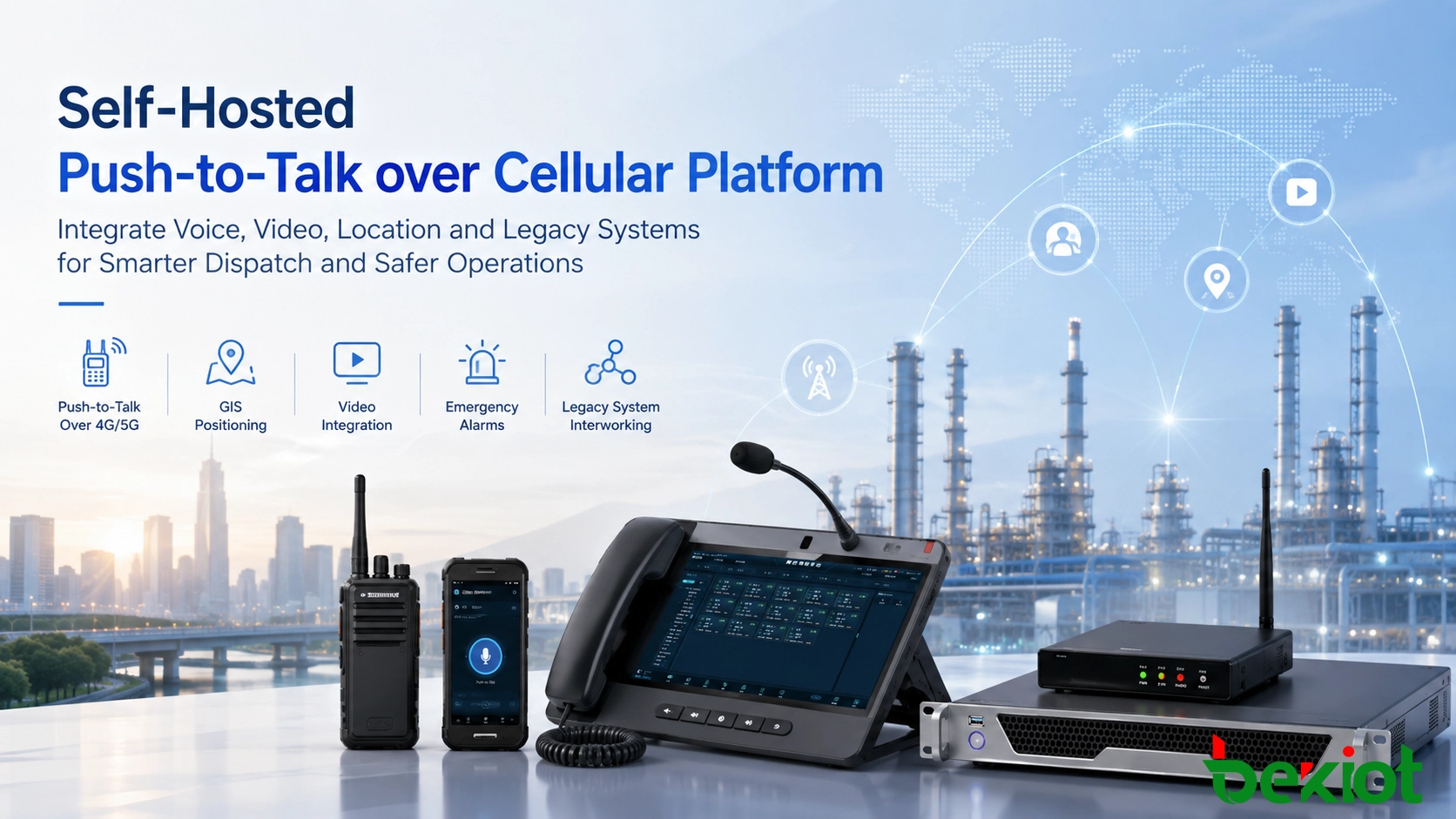
Push-to-Talk over Cellular, often shortened to PoC, brings group voice communication onto public 4G and 5G mobile networks. Compared with building a dedicated narrowband radio network, organizations can use existing carrier coverage instead of deploying large numbers of private base stations and repeaters. Modern smart terminals can also extend traditional push-to-talk communication with positioning, video calls, live video return, emergency alarms and other broadband services. For organizations that need more than a standard subscription service, a self-hosted PoC platform provides another deployment path: mobile network access remains with the telecom operator, while communication management, dispatch and system integration are placed under the organization's own control.
Why Shared SaaS Platforms May Become Limiting
Many public-network push-to-talk services are delivered through an operator-managed platform. Organizations purchase service according to terminal quantities, traffic packages or monthly and annual subscriptions, while the operator maintains the underlying service environment. For straightforward group communication, this model is convenient because users can begin operating without building their own communication infrastructure.
The trade-off is that a shared service platform is normally designed around functions that can be provided consistently to a broad customer base. Standard services such as user registration, group communication and basic management are relatively easy to deliver in this model, but specialized integration requirements may fall outside the platform's predefined framework.
The difference becomes more apparent in industry projects. A transportation company may want PoC users to communicate with an existing radio network. A factory may need alarms from field terminals to appear on the same dispatch screen as video surveillance. A large campus may want telephone users, radio users and mobile PoC terminals to communicate through one operational platform. These requirements go beyond simply providing mobile push-to-talk accounts.
In these environments, the central question is no longer whether public-network push-to-talk works. The question is whether the communication platform can participate in the organization's wider dispatch and operational system.
A Different Way to Build the Core
Self-hosting a PoC platform does not mean rebuilding a nationwide mobile communication network. The terminals still communicate through existing carrier 4G or 5G services. The main change is at the application and management layer.
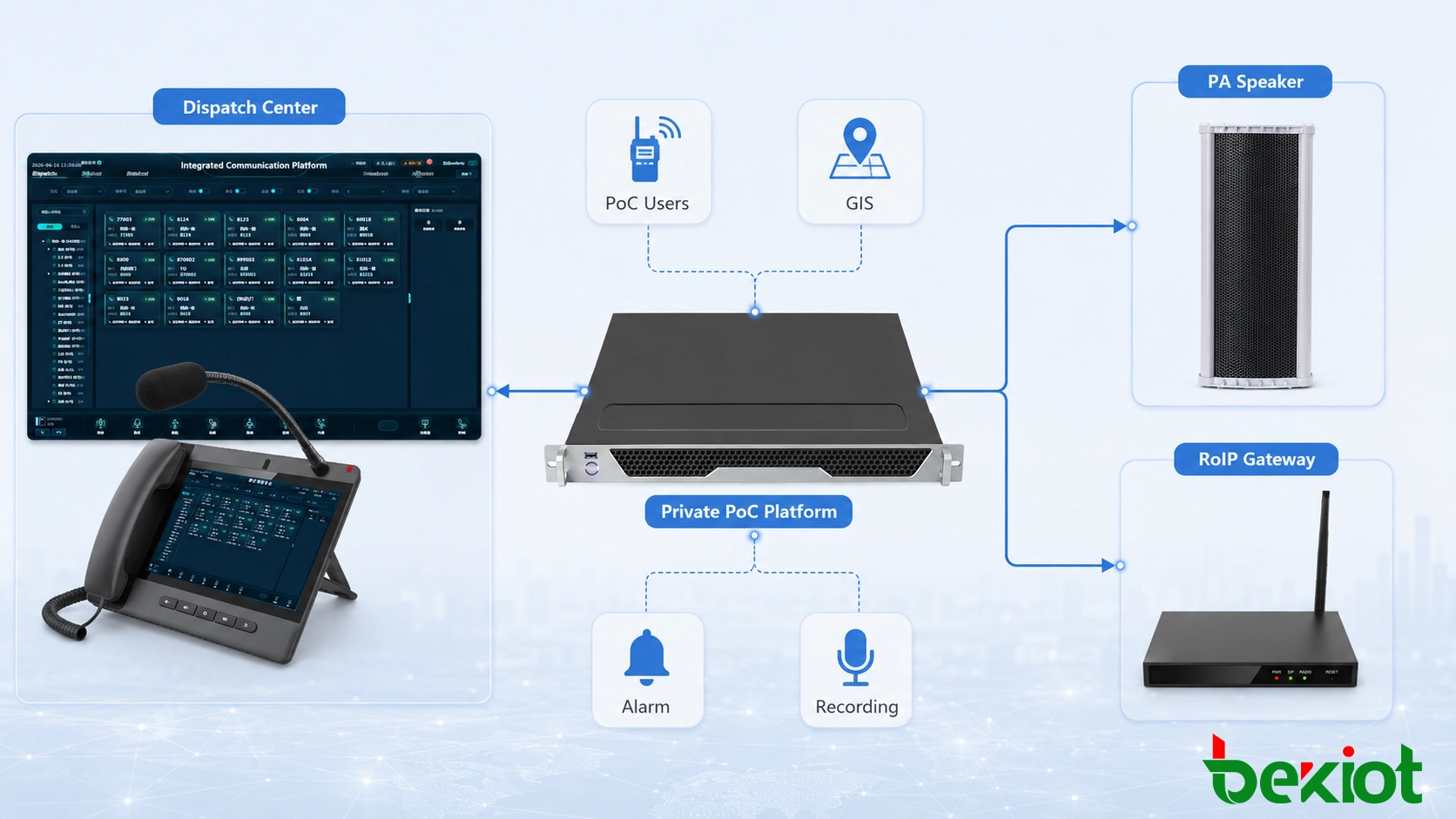
Instead of relying entirely on an external shared service platform, the organization deploys its own PoC server environment. The server becomes the central point for terminal access, user administration and communication control.
A self-hosted platform can support the operational capabilities normally expected from a broadband dispatch environment, including:
User and terminal management
Push-to-talk voice communication
Video communication
GIS-based positioning
One-button emergency alarms
Audio and video dispatch
Voice broadcasting
Communication recording
Video recording
These capabilities are especially useful when communication must be managed according to departments, fleets, operational areas or emergency response groups rather than as a collection of independent mobile users.
The infrastructure requirement is also fundamentally different from constructing a private narrowband trunked radio system. A conventional private radio network may require dedicated base stations, repeaters and radio coverage infrastructure. A PoC platform continues to use the public mobile network for wide-area connectivity, while the self-hosted server provides the service and management layer.
Bringing Video into Dispatch Operations
One important advantage of an independently deployed platform is the ability to connect communication with an organization's existing video surveillance resources.
In many facilities, video monitoring and mobile communication are built as separate systems. Surveillance cameras provide visual information to a monitoring center, while field personnel use radios or PoC terminals through another platform. Operators may therefore need to switch between interfaces during an incident.
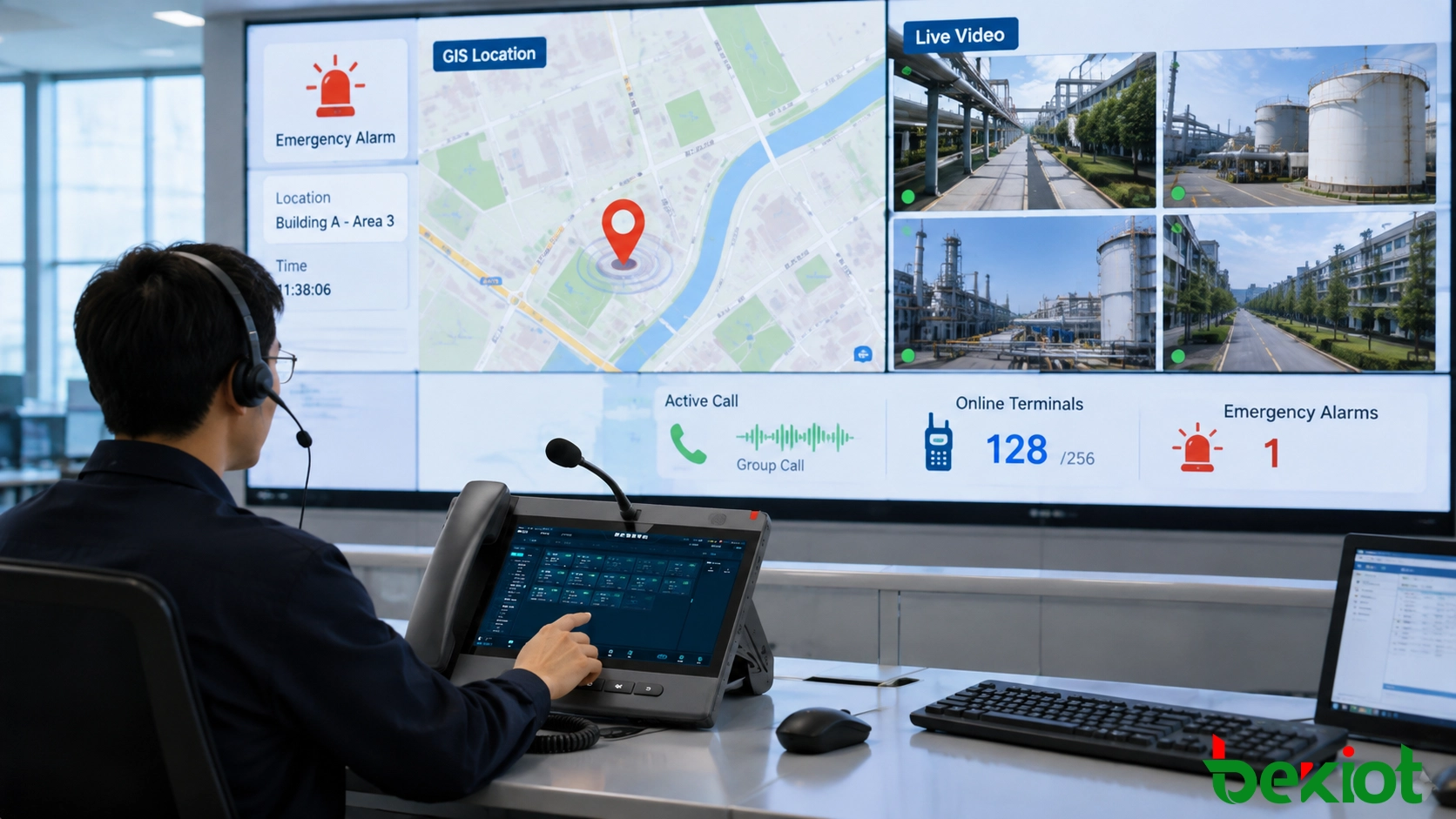
A self-hosted architecture can connect the PoC environment with an existing video monitoring system through an appropriate video access or integration gateway. After the systems are connected, the dispatch platform can use surveillance information together with mobile communication resources.
This makes several coordinated workflows possible. When a field user reports an incident, the dispatcher can check nearby cameras while maintaining voice communication. Relevant surveillance video can also be associated with the communication workflow or delivered to compatible smart terminals when the project requires mobile visual access.
Video interoperability deserves particular attention because surveillance systems and broadband communication platforms may use different media formats or streaming methods. In such projects, a media conversion or transcoding component can be introduced between the systems to resolve incompatible video streams before they are delivered to the PoC environment.
The objective is not simply to add video as another feature. The practical value comes from placing voice, location, alarms and visual information into the same incident-handling process.
Connecting Existing Radio Networks
Many organizations considering PoC already operate a narrowband trunked radio or conventional two-way radio system. These existing systems may still serve important teams because radio terminals are already deployed, operating procedures are mature and coverage has been established for specific work areas.
Introducing public-network push-to-talk does not automatically solve this problem. If the new PoC service operates independently, the organization can end up with two separate communication environments: field teams on narrowband radio and other personnel on public-network terminals. Users, groups and dispatch operations are then managed separately.
A self-hosted platform creates an opportunity to connect these two communication domains. By adding a suitable trunking or radio interconnection gateway, voice traffic from the narrowband system can be linked with users and groups on the PoC platform.
This is useful for phased communication upgrades. Existing radio assets do not have to disappear simply because broadband terminals are introduced. An organization can retain the narrowband system where it continues to be useful while extending communications to personnel who work beyond private radio coverage or who require smart-terminal functions.
For example, plant operators may continue using dedicated radios inside production areas, while managers, maintenance contractors or regional support personnel use 4G or 5G PoC terminals. Interconnection allows these groups to participate in coordinated communication rather than operating as isolated teams.
Extending Beyond Push-to-Talk
The strongest reason for deploying an independent platform is often not one particular PoC function but the ability to make mobile terminals part of a larger communication system.
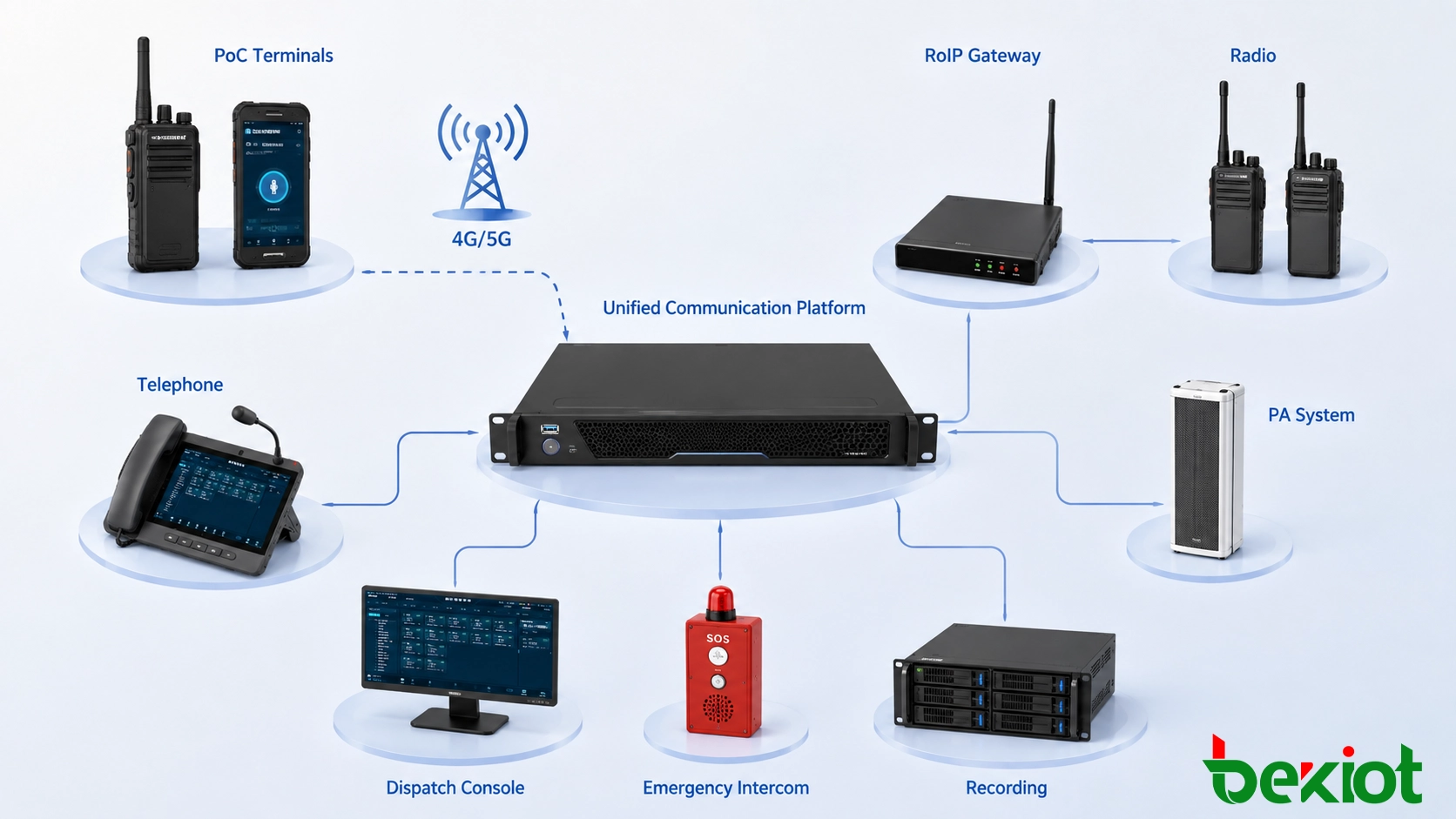
The original push-to-talk environment can be extended toward other resources already used by the organization, including telephone systems, public address systems, help-point or emergency intercom systems and dispatch applications.
Connecting telephony can allow communication workflows to include personnel who use fixed or office phones rather than PoC terminals. Connecting broadcasting can allow authorized dispatch users to extend an operational announcement from individual communication into selected loudspeaker areas. Linking emergency intercom resources can bring fixed help points and mobile personnel into the same dispatch process.
This is particularly relevant to facilities where communication methods have been added gradually over many years. A control room may already operate telephones, radios, surveillance, broadcasting and alarm systems, while each system has its own operating interface. Adding another completely isolated PoC service increases the number of systems operators need to manage.
An integration-oriented architecture takes the opposite approach. The PoC platform becomes another communication resource inside the broader dispatch environment, allowing different terminals and systems to cooperate according to operational requirements.
Where Private Deployment Adds the Most Value
Not every organization needs to operate its own platform. A basic hosted PoC service may remain suitable when the main requirement is straightforward group voice communication and there is little need to connect with other operational systems.
Self-hosting becomes more relevant when communication is part of a larger dispatch workflow. Typical requirements include managing multiple departments from a central control room, combining voice and video information, displaying field personnel on GIS maps, receiving emergency alarms, retaining communication records or connecting broadband users with an established narrowband radio network.
It is also suitable when a project must gradually integrate existing systems rather than replace them at one time. Telephone, surveillance, narrowband radio, broadcasting and emergency intercom resources can remain in operation while interfaces are added according to the project's actual deployment sequence.
This approach changes the role of PoC. It is no longer simply a mobile push-to-talk subscription. It becomes an access layer for personnel who can join a wider operational communication and dispatch system through public 4G and 5G networks.
Planning the Platform Around Operations
Before deploying a private PoC platform, the communication workflow should be defined before individual functions are selected. Organizations should first identify who needs to communicate, which existing systems must remain in service and what information a dispatcher needs during daily operations or emergency events.
User groups and organizational structures should reflect real departments and responsibilities. GIS functions should use location information that dispatchers can interpret quickly. Emergency alarms should be linked to clear response procedures rather than treated as isolated notifications. Recording should also be planned according to the organization's operational and management requirements.
Integration should be assessed system by system. Video surveillance requires a suitable video access path. Narrowband radio needs an appropriate interconnection gateway. Existing telephone or broadcasting resources require interfaces that allow the platforms to exchange the required communication traffic.
This staged method is usually more practical than attempting to redesign the entire communication environment around a single new platform. The purpose of self-hosting is to increase integration flexibility, not to replace every existing communication resource unnecessarily.
Final Notes
Public-network push-to-talk has an inherent deployment advantage because it can use existing 4G and 5G mobile coverage rather than requiring organizations to construct a complete radio access network. Hosted operator services make this capability easy to adopt, but their standardized SaaS model may not satisfy projects that require deeper dispatch functions and cross-system integration.
A self-hosted PoC platform keeps the public mobile network as the communication access layer while moving user management, voice and video communication, GIS positioning, emergency alarms, dispatch, broadcasting and recording into an independently deployed service environment.
Its greater value appears when existing resources must work together. Video surveillance can provide visual context for field events, narrowband radios can remain connected to broadband users, and telephone, broadcasting and emergency intercom systems can be incorporated into a broader dispatch architecture. For organizations with complex operational communication requirements, this integration capability is often the main reason to consider private deployment.
FAQ
Do organizations need their own mobile base stations for a self-hosted PoC platform?
No. The self-hosted platform described here continues to rely on public 4G and 5G mobile services for terminal connectivity. The privately deployed component is the PoC service and management platform rather than the carrier radio access network.
Can a company introduce self-hosted PoC without replacing its existing radios?
Yes. One practical deployment approach is to retain the existing narrowband radio system and connect it to the new PoC environment through a suitable radio or trunking gateway. This allows modernization to proceed in stages.
What should be evaluated before integrating an existing CCTV system?
The project should first confirm how surveillance video is accessed and whether its media streams are compatible with the PoC platform. If the formats are different, a video access or transcoding component may be required between the two systems.
Is self-hosting necessary for a small team that only needs group voice calls?
Not necessarily. If users only need basic push-to-talk communication and do not require integration with dispatch, video, radio or other enterprise systems, a hosted service may be simpler to operate.







