Tunnel construction teams often work across underground work areas, tunnel portals, temporary site facilities and project offices. Digital radios can provide effective communication for workers inside the tunnel, but technical decisions frequently involve people who are not part of the radio network. Project engineers may be located in the site office, while designers, equipment specialists or other external experts may need to join by mobile phone or landline. When these communication resources operate independently, organizing a multi-party technical discussion can take longer than the actual conversation.
A practical solution is to retain the existing radio coverage and wired network while adding a unified command and dispatch layer. By connecting the tunnel radio system, office telephones, PSTN lines and IP endpoints through SIP-based communication, the project can create one communication path between field workers, project engineers and remote specialists without rebuilding the entire site network.
Why Separate Networks Slow Coordination
Radio communication is well suited to tunnel construction because field personnel can communicate while moving between working faces, equipment areas and temporary construction zones. In many projects, digital radio repeaters have already been deployed to provide reliable coverage along the construction area.
The limitation appears when a problem requires participation from outside the radio network. A construction worker may report an abnormal geological condition, equipment fault or technical problem over the radio, but the project engineer may be using an office telephone. An external specialist may only be available through a mobile phone or fixed telephone line.
If the radio system, office telephone system and external telephone network remain independent, information has to be transferred manually between people. One person receives the field report, another calls the project office, and someone else contacts the external specialist. During complicated construction problems, this communication chain can make it difficult for everyone to hear the same information at the same time.
The communication objective is therefore not to replace the radio network. It is to connect the systems already being used so that different participants can join the same dispatch and consultation process.
Building Around Existing Site Resources
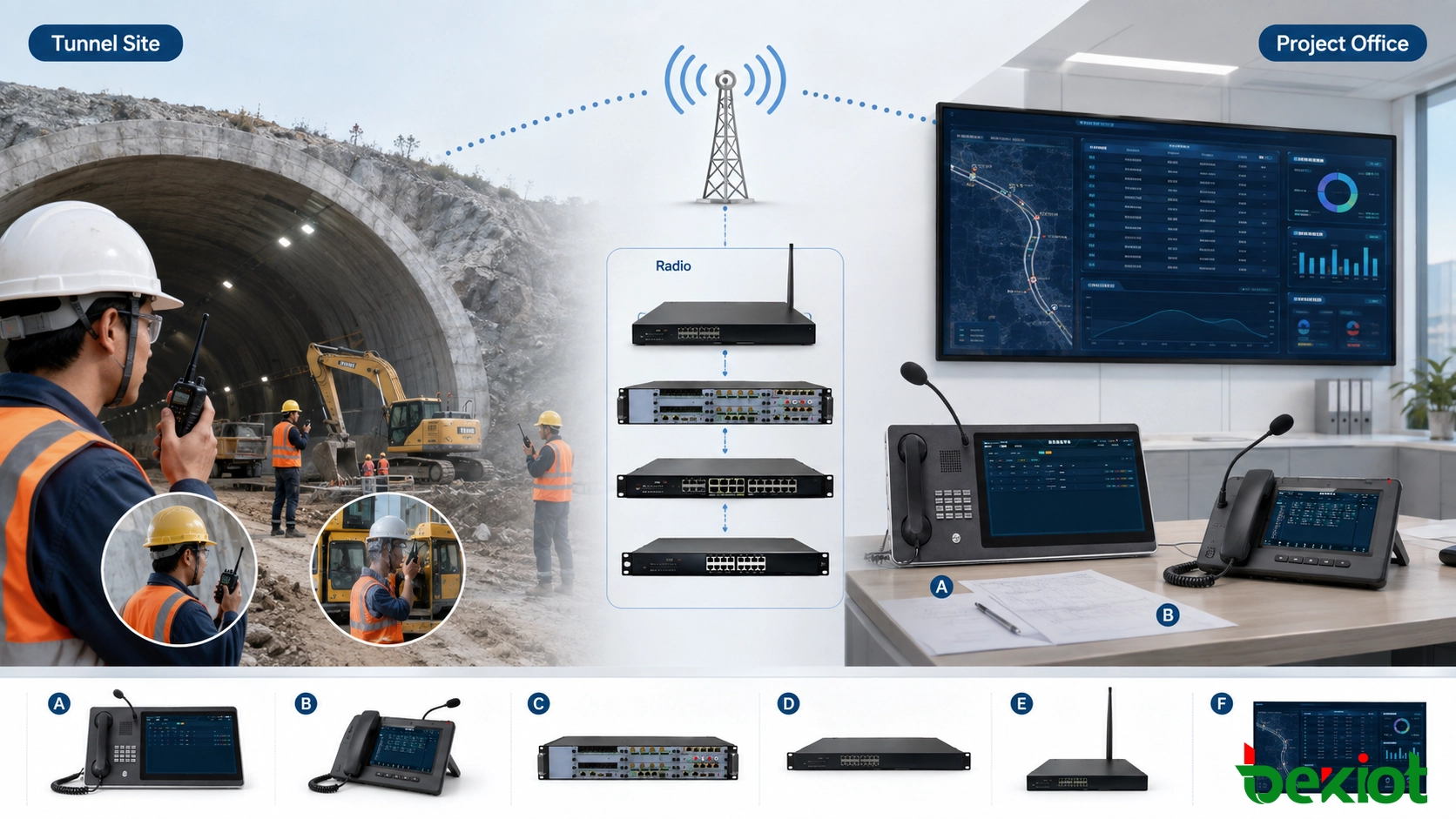
A tunnel construction communication system can make use of two infrastructure resources that may already be available on site: the existing digital radio repeater network and the wired network between the construction area and the project office.
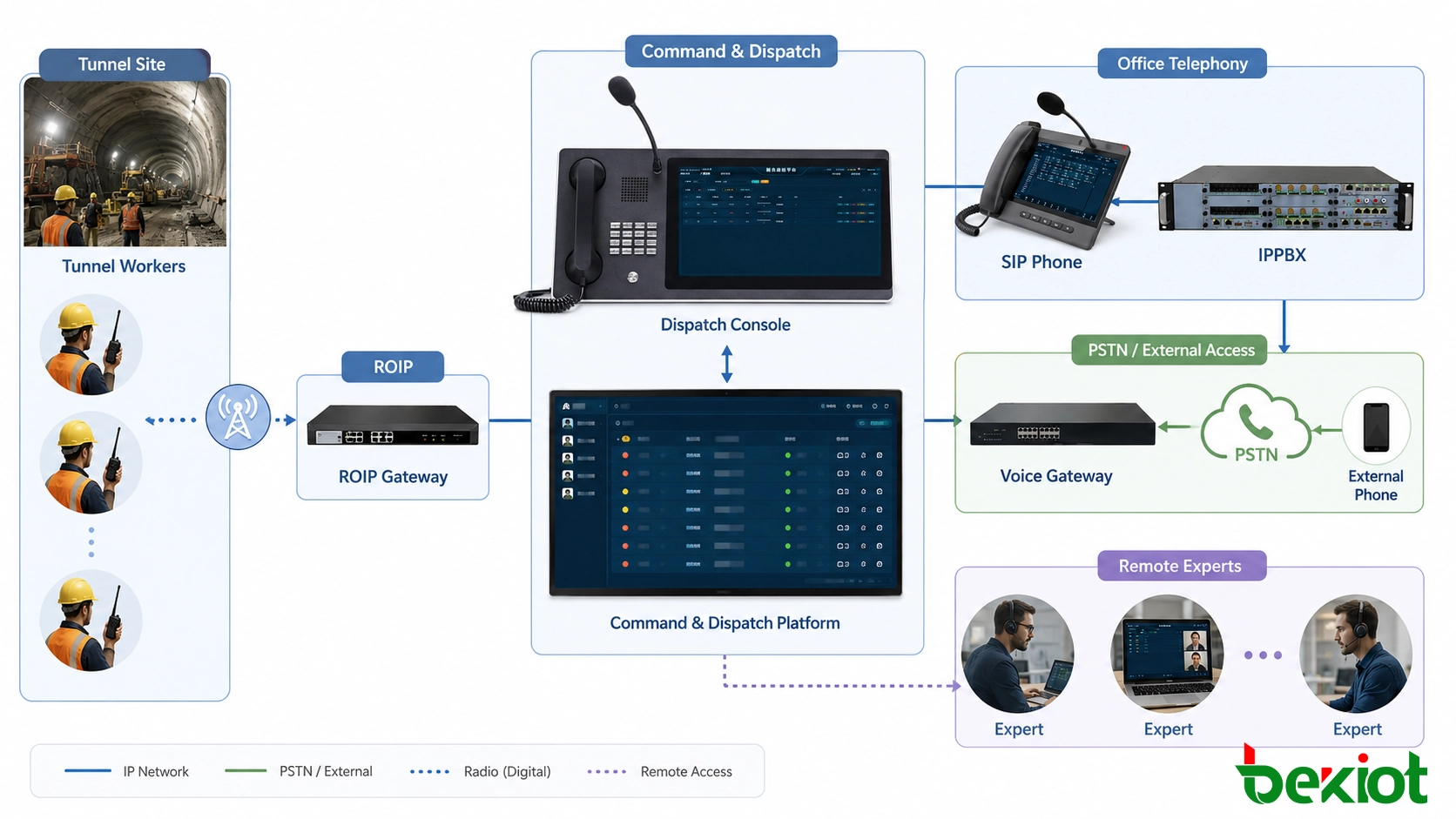
At the construction site, the digital radio system is connected to the command and dispatch platform through an appropriate radio interface or gateway. Field personnel continue using their existing handheld radios, while the dispatch platform gains access to the radio communication group.
The project office can retain its telephone environment. An IP-PBX or compatible communication platform can connect analog telephones, IP phones and external telephone lines. A network switch provides IP connectivity for the office communication terminals, while PSTN access allows participants outside the project network to join through ordinary telephone services when required.
The field dispatch side and project office are then interconnected through the site's existing IP network. SIP provides a common signaling method for compatible IP communication equipment and makes it possible to establish communication across previously separate systems.
This approach is particularly suitable for construction projects where radio coverage and basic network infrastructure are already operational. Instead of replacing field radios or rebuilding office communications, the project adds an integration layer between them.
How the Integrated Architecture Works
The overall architecture can be divided into the field communication side, the project office and external participants.
Field Communication
Workers inside and around the tunnel continue to communicate through digital handheld radios. Existing radio repeaters maintain coverage across the construction area. The radio system is connected to the dispatch platform so that radio users can communicate with participants outside their original talk group when authorized by the dispatcher.
Project Office Communication
The project office connects its telephone resources through the IP communication network. Depending on the existing infrastructure, these resources may include analog telephones, SIP phones, office extensions and external telephone lines.
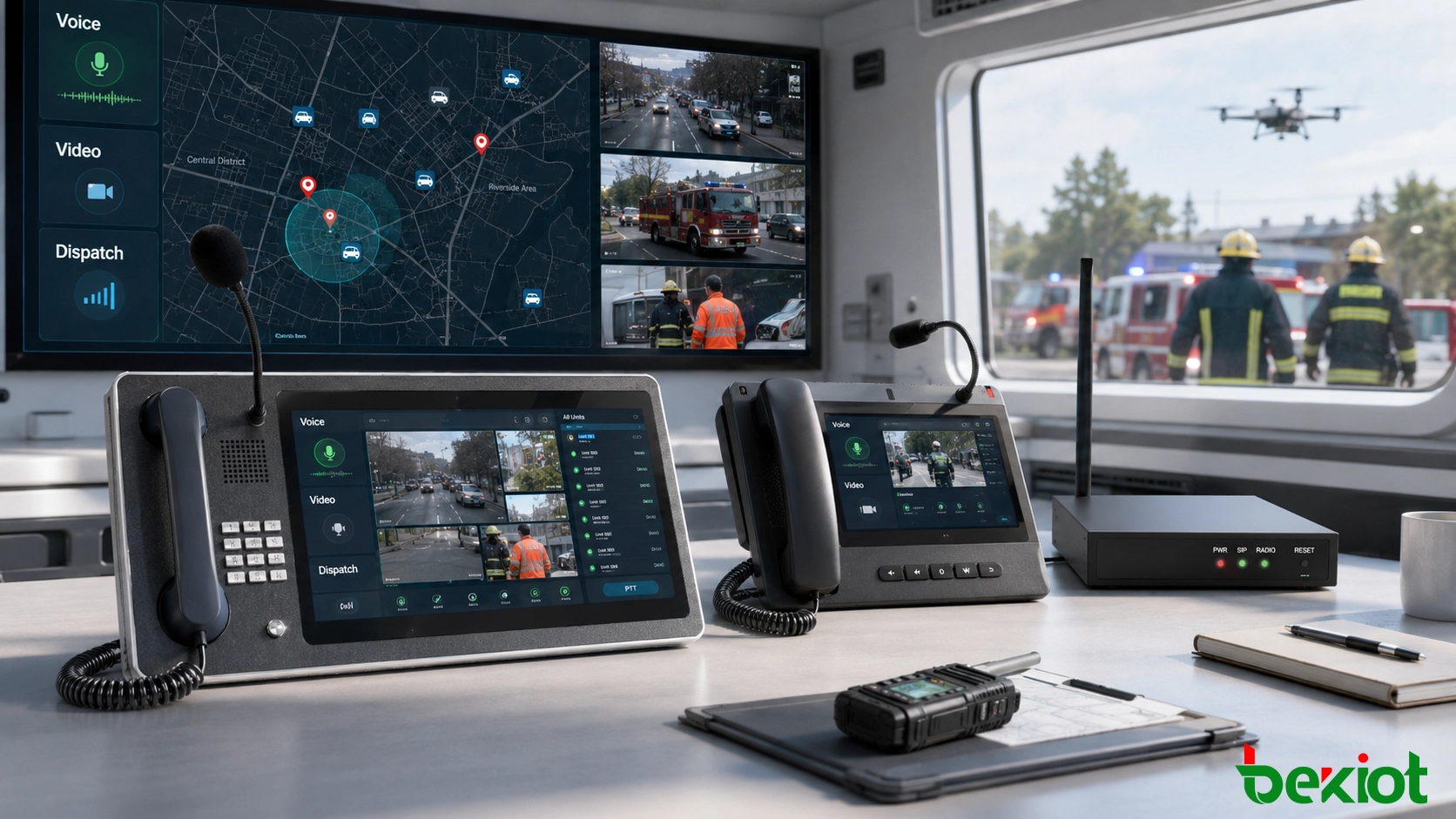
The dispatcher can use a dedicated dispatch terminal or a browser-based dispatch interface to view communication resources and initiate calls. This creates a central operating position without requiring field personnel to change their normal radio operation.
External Expert Access
External specialists do not necessarily need dedicated tunnel communication equipment. When PSTN or suitable external telephone connectivity is available, specialists can participate using mobile phones or fixed telephones.
This is important for tunnel construction because the people needed to solve a technical problem may be distributed across different locations. Equipment suppliers, design engineers, geotechnical specialists or other technical personnel can be brought into the communication session without first traveling to the site.
From Field Report to Expert Consultation
The main value of the system becomes clear when a construction issue needs immediate technical discussion.
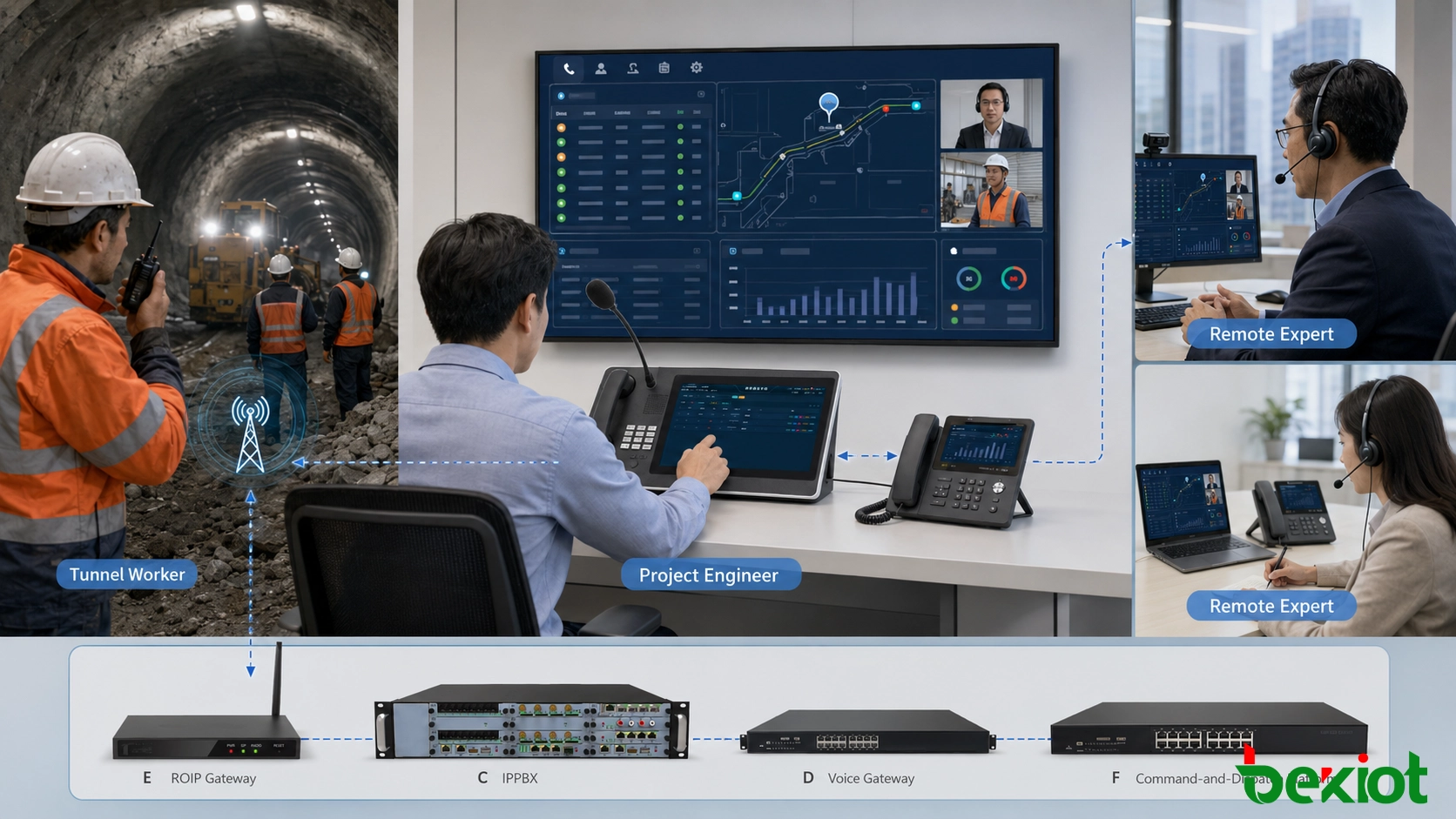
A field worker first reports the situation through the handheld radio. Because the radio group is connected to the dispatch platform, the dispatcher or project engineer can receive the information without establishing a separate manual communication path.
If additional technical support is required, the dispatcher can contact relevant office personnel through their extensions or SIP phones. External experts can then be added through available external telephone connections.
The participants can be brought into the same voice conference so that the person at the tunnel site, project office engineers and remote experts can discuss the issue directly. The field worker can describe the actual condition, project personnel can provide construction information, and specialists can ask questions without relying on repeated message forwarding.
This workflow is especially useful when a technical decision depends on information that is difficult to summarize through several intermediate calls. Keeping the participants in one session helps reduce misunderstandings and gives technical experts direct access to the personnel closest to the problem.
The same communication path can also support operational coordination. The dispatcher can communicate with field radio groups, office personnel and external telephone users from one platform rather than operating several unrelated communication systems.
Unified Dispatch for Daily Operations
Although remote technical consultation is an important use case, the integrated communication platform can also support routine construction coordination.
Dispatch personnel can use a dedicated terminal or Web interface to initiate communication with different users. Instead of remembering which communication system a person belongs to, the dispatcher can work from a unified communication environment and select the required field group, office extension or telephone user.
This is useful when coordinating work between the tunnel and project office. Construction progress, equipment arrangements, maintenance tasks and temporary operational instructions often involve people using different terminals. Interconnection allows these users to communicate without creating a new communication network for every department.
SIP-based integration also gives the system a practical path for expansion. New compatible IP endpoints can be added according to project requirements, while suitable gateways can be used where existing communication resources need to remain in service.
The result is a system that combines existing field communication with centralized command capability rather than replacing one communication method with another.
Advantages for Tunnel Projects
One of the main advantages of this architecture is the ability to reuse infrastructure that has already been deployed. Existing digital radio coverage can continue serving tunnel workers, while the wired network between the construction site and project office becomes the transport network for the integrated communication system.
This reduces the need for large-scale reconstruction of the original communication environment. The project does not have to remove functioning radio infrastructure simply to enable communication with office or external users.
A second advantage is cross-system dispatch. Digital radio users, analog telephone users, external telephone users and IP phone users can participate in a coordinated communication process even though their original terminals use different access methods.
A third advantage is faster multi-party consultation. Instead of relaying a field report through several separate calls, the dispatcher can organize the relevant personnel into one voice session. This can shorten the communication path between the construction face and the technical specialists responsible for evaluating the issue.
The same architecture can also strengthen emergency coordination. If an incident occurs underground, the dispatch position can communicate with field radio personnel while simultaneously contacting project management or other authorized external resources. The system therefore supports both routine construction communication and situations that require broader coordination.
For tunnel projects where radio and telephone resources already exist, the most important design principle is interoperability. The system should connect useful communication assets rather than creating another isolated network alongside them.
Related System: Becke Command and Dispatch System
Planning the Deployment
Before implementation, the project should first identify which communication resources are already available. This normally includes the radio coverage area, digital repeater infrastructure, IP network between the tunnel and office, office telephone environment and available external telephone access.
The integration interfaces can then be planned around these existing resources. Radio communication should be connected without affecting normal field operations, while SIP and telephone resources should be organized so that dispatch personnel can reach the required users efficiently.
Network connectivity between the construction area and project office should also be considered during system planning. Because the original solution relies on the existing wired network for communication between the two locations, stable IP connectivity is an important part of the overall deployment.
User organization is equally important. Radio groups, office extensions and external contacts should be arranged according to actual construction responsibilities so that the dispatcher can quickly identify the people required for a technical consultation or emergency response.
The final configuration should follow the communication resources and working procedures of each tunnel project rather than using a fixed equipment list. The objective is to create a practical connection between field operations, project management and remote technical support.
Final Notes
Tunnel construction communication does not always require a completely new network. Where digital radio coverage and site networking are already available, a unified command and dispatch system can connect those resources with office telephones, IP communication and external telephone users.
The key improvement is the communication path itself. Field workers can remain on their familiar radio system, project engineers can use office communication terminals, and remote specialists can participate through conventional telephone access. A dispatcher brings these different participants together when coordinated discussion is required.
By linking existing systems instead of operating them separately, tunnel projects can establish more direct communication between the construction site and technical decision-makers, improve daily coordination and provide a more efficient mechanism for handling urgent technical or operational issues.
FAQ
Can the system be expanded as the tunnel advances?
Yes. The communication architecture can be extended as construction progresses, provided that field radio coverage and network connectivity are adjusted to match new working areas. Expansion planning should follow the actual tunnel layout and construction stages.
Do external experts need access to the project network?
Not necessarily. If the project provides suitable external telephone connectivity, authorized experts can participate through mobile or fixed telephone services without being directly connected to the internal construction network.
Can different contractors be organized separately?
Yes. Communication users can be grouped according to contractor, work section, responsibility or operational role. Appropriate grouping helps dispatch personnel contact the correct team without involving unrelated users.
What should be checked before commissioning?
Commissioning should verify communication between radio users and office users, external call access, multi-party conference operation, dispatcher access, network connectivity between locations and recovery after temporary link interruption.