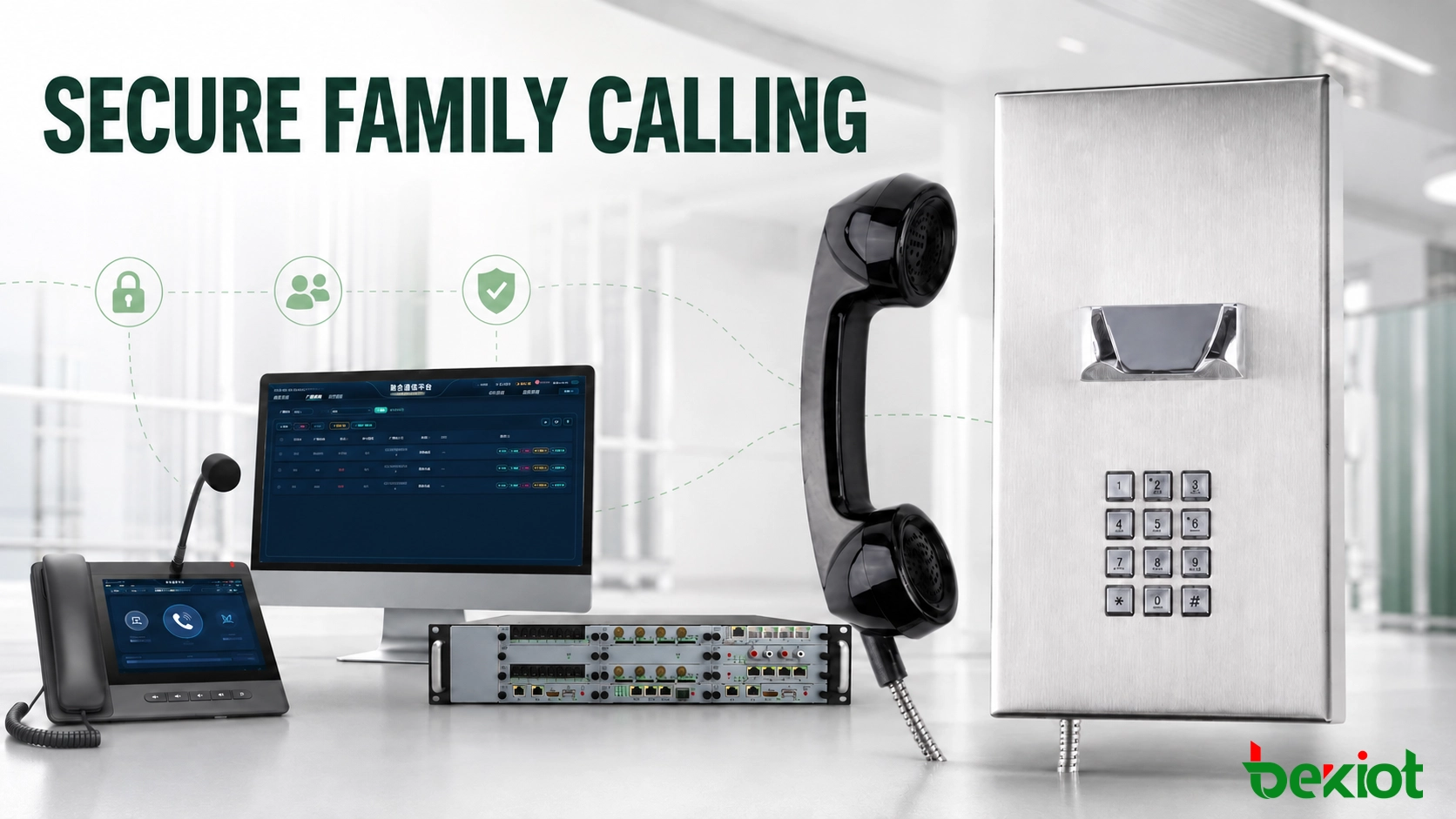
Regular contact with family can support emotional stability and rehabilitation, but communication inside a correctional facility cannot operate like an ordinary public telephone service. Every call must follow approved-contact rules, access schedules, supervision requirements and data-protection policies. An inmate family calling system brings these controls into one managed workflow while giving authorized individuals a practical way to maintain family relationships.
The solution can be used in prisons, detention centers, rehabilitation facilities and other secure institutions. It combines identity verification, telephone access, contact approval, call control, recording, monitoring and reporting. Video visits may be added where policy permits, particularly when distance, health conditions or temporary restrictions make in-person visits difficult.
Why managed family communication matters
Uncontrolled calling creates risks that range from unauthorized contacts to information leakage, harassment and interference with an investigation. A completely closed communication environment, however, can increase isolation and place additional pressure on inmates, families and facility staff. The practical objective is therefore controlled access: legitimate family calls should be easy to arrange, while every connection remains subject to the institution's security rules.
A managed service also reduces repetitive administrative work. Instead of checking a telephone number, calculating the remaining call allowance and creating a record manually, staff can rely on predefined rules. The system can verify the caller, check the approved contact list, apply the permitted time window and generate an audit trail from the same transaction.
The communication platform should support institutional policy rather than make policy decisions by itself. Eligibility, monitoring, retention and suspension rules must be defined by the responsible authority and configured for the relevant jurisdiction, facility type and inmate category.
From authorization to a completed call
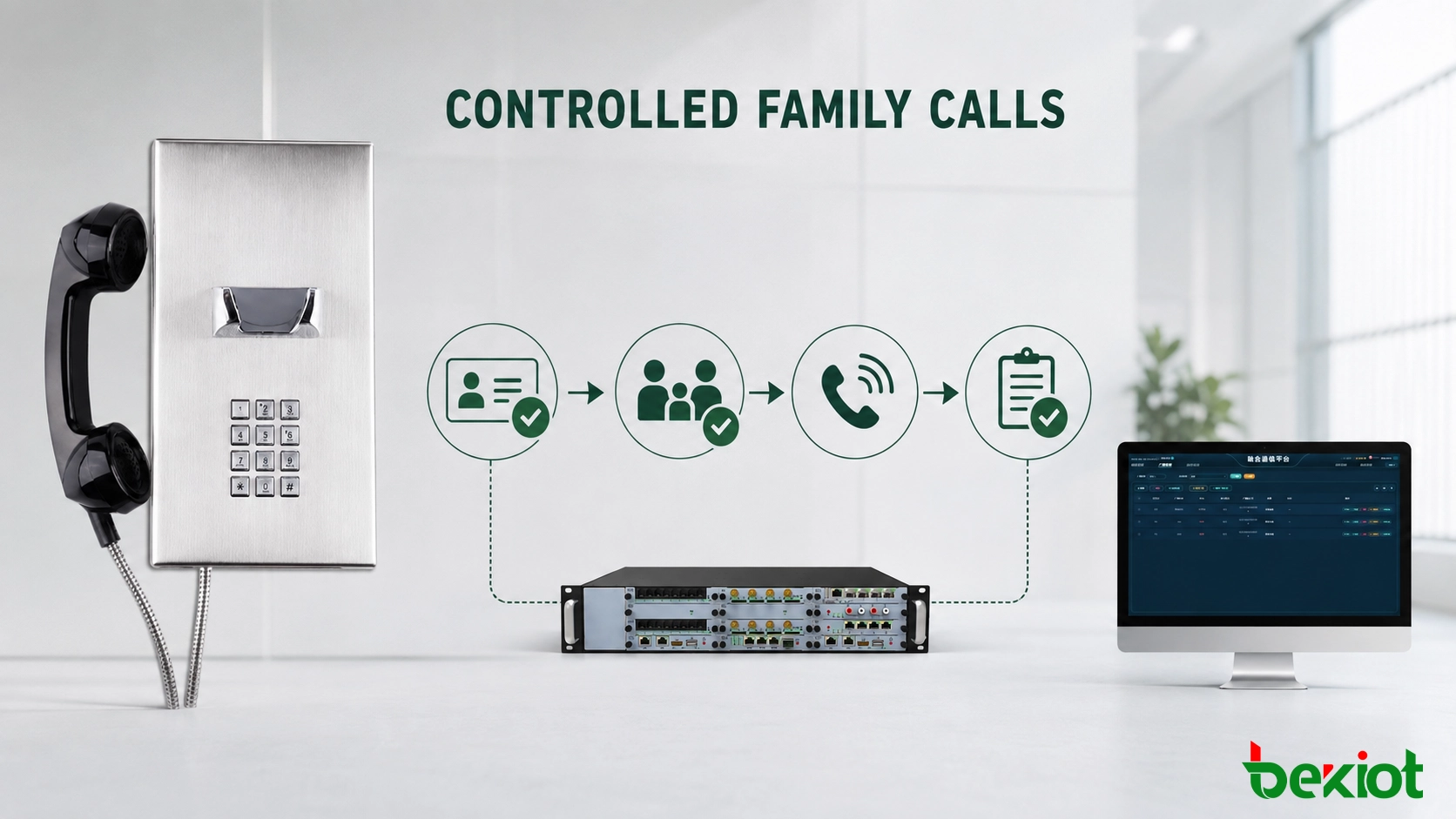
A reliable workflow begins before the handset is lifted. Each stage should create a clear decision and a traceable record:
Register and approve contacts. Family telephone numbers are submitted for review and linked to the appropriate inmate profile. Calls to unapproved or manually entered destinations are blocked unless an authorized officer grants an exception.
Verify the user. The inmate signs in through an IC card, smart card, personal code, biometric check or another approved credential. Combining two factors can reduce card sharing and account misuse in higher-security areas.
Apply access rules. The platform checks whether calling is currently permitted and whether the user has remaining time, frequency or account allowance. Rules may be assigned by housing unit, security level, schedule or individual authorization.
Connect the approved destination. The telephone presents only permitted contacts or sends the request directly to the selected number. This removes unrestricted dialing and reduces number-entry errors.
Supervise the session. Where monitoring is lawful and required, authorized staff can listen in, speak into the call, receive an alert or terminate the connection. The agent interface should show the inmate, contact, start time and remaining duration without exposing unrelated personal data.
Close and document the event. At the end of the call, the platform records the result, duration, parties, terminal and any staff action. Audio is retained only for the period required by applicable rules and institutional policy.
Related Product: Becke Vandal-Resistant Prison Telephone
The building blocks of a practical solution
The service is more than a collection of secure telephones. It needs a central management layer that can apply policy consistently across multiple housing units, buildings or facilities. The main components and responsibilities are shown below.
| Component | Primary role | Key planning point |
|---|---|---|
| Secure calling terminals | Provide controlled voice access in approved areas | Select durable devices and prevent unauthorized dialing or configuration |
| Identity and account service | Links a user, credential, contact list and call allowance | Define enrollment, credential replacement and account-lock procedures |
| Call-control platform | Applies schedules, duration limits, routing and destination rules | Keep security policy separate from carrier and trunk configuration |
| Monitoring and recording service | Supports authorized supervision, intervention and evidence review | Protect recordings with role-based access, encryption and retention controls |
| Officer and administrator workspace | Manages approvals, live sessions, searches, reports and exceptions | Separate daily operations, security review and system administration roles |
| Video visit service | Adds scheduled visual communication for approved participants | Verify both parties and provide an audio fallback when video is unavailable |
A multi-site deployment should use a common policy model while allowing each facility to maintain its own schedules, contact approvals and operational permissions. Central reporting can then provide an organization-wide view without giving every administrator unrestricted access to every recording.
Integration with existing institutional systems should be planned through controlled interfaces. A correctional management database may supply the inmate identifier, housing location and current eligibility status, while an identity service validates cards or biometric credentials. The calling platform can return call results, policy events and service alarms without copying complete case files into the communications environment. Stable identifiers and time synchronization are essential because a recording, approval record and officer action must all refer to the same event. Interface failures should be queued and reconciled instead of silently creating inconsistent permissions.
Balancing supervision, privacy and access restrictions
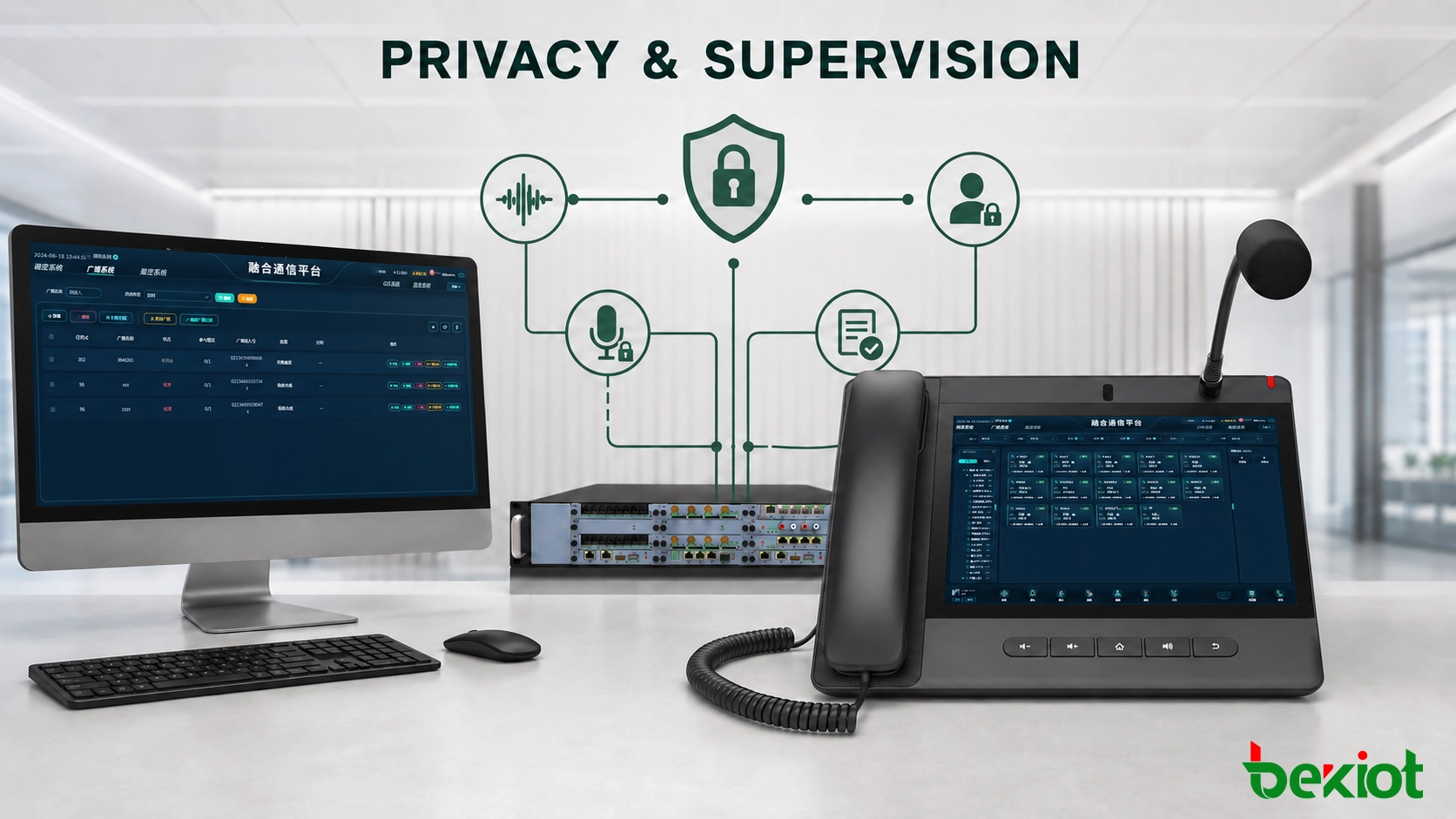
Privacy in a correctional communication system does not necessarily mean that calls are unmonitored. It means that collection, monitoring, access and disclosure are governed by a clear legal basis and limited to authorized purposes. Users should receive an appropriate notice when a call may be recorded or supervised, subject to local law and any protected-call exceptions.
Collect only necessary information. A call record may need an inmate identifier, approved contact, relationship, start time, end time, terminal and result. Unrelated personal data should not be copied into operational screens.
Restrict access by role. Staff who approve contacts do not automatically need permission to play recordings. Monitoring, export, deletion and policy changes should be separate privileges.
Protect data in transit and at rest. Signaling, media, credentials and stored recordings should use suitable encryption and network segmentation. Administrative access should require strong authentication.
Use defined retention periods. Recordings should not be described as permanently stored by default. Retention must follow legal, evidentiary and institutional requirements, with approved holds for material that must be preserved longer.
Audit sensitive actions. Playback, search, export, live monitoring, interruption and configuration changes should record the operator, time, reason and affected call.
Conditions that can pause or restrict access
Calling privileges may need to be limited when a session violates facility rules, an account is under an authorized restriction, a participant cannot be verified or the communication environment does not meet supervision requirements. Restrictions may also apply during an investigation, disciplinary measure, isolation period, emergency lockdown or other condition recognized by the responsible authority.
Technical health is another part of the decision. If required recording, monitoring or identity services are unavailable, the platform should fail according to the approved operating policy. Depending on the call category, that may mean blocking a new session, allowing only an officer-assisted call or routing the request to a designated fallback service.
A restriction should never appear as an unexplained system failure. The interface should provide staff with a policy-based reason code, effective period and review path. The inmate-facing terminal can display a simple status such as unavailable, outside the permitted schedule or awaiting authorization without revealing sensitive case information.
Service health should be visible before it affects a scheduled call period. Administrators need alarms for unavailable terminals, failed trunks, recorder capacity, storage thresholds, clock drift and repeated authentication errors. Operational dashboards should focus on actionable conditions rather than expose call content. Trend reports can identify congested calling periods, frequently failing destinations and areas that need additional terminals, helping the facility improve access without weakening security controls.
Moving from voice calls to secure video visits
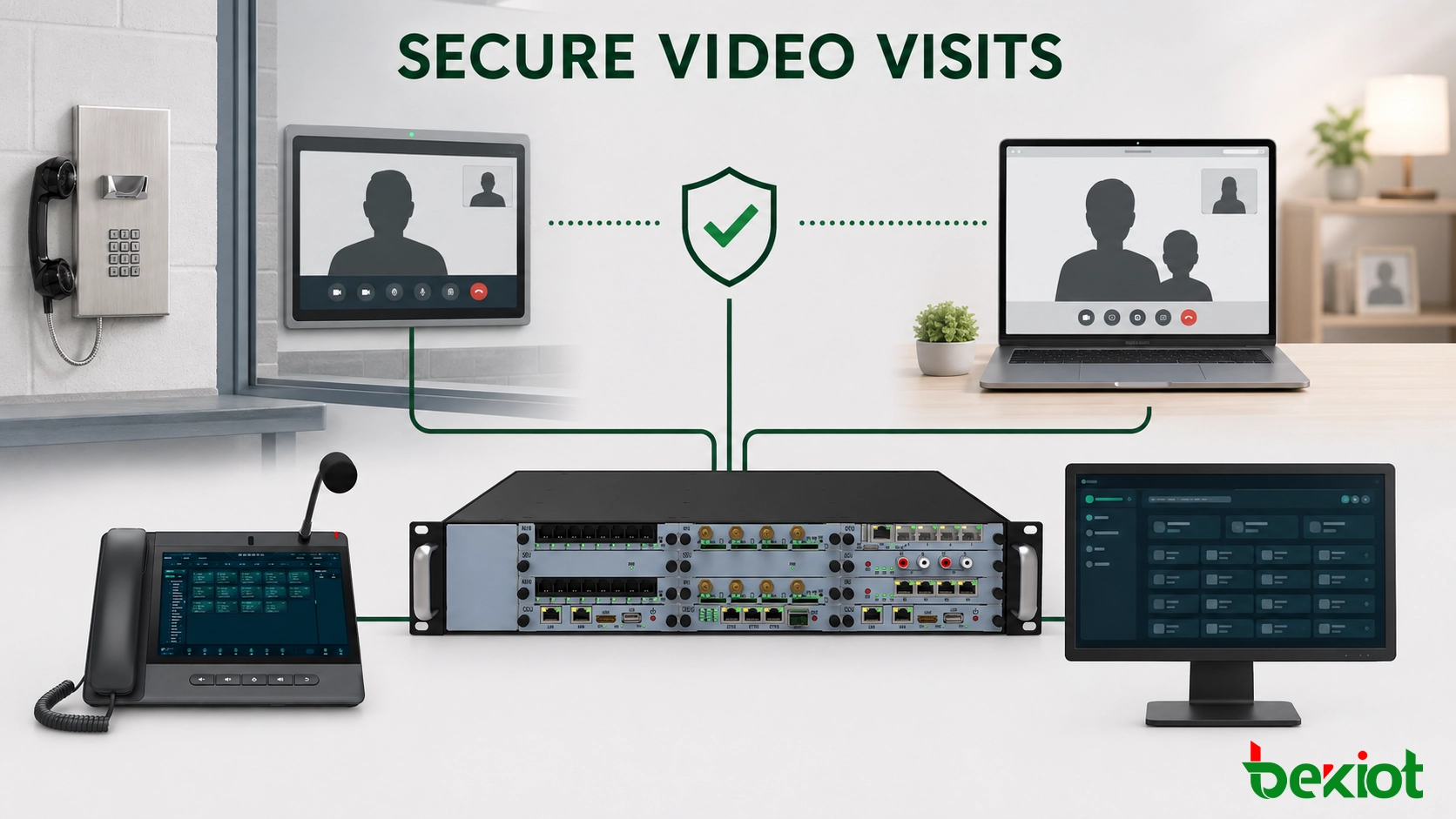
Video adds visual contact to the existing approval and supervision process. It can help families who live far from the facility, have mobility limitations or cannot attend an in-person visit during a temporary disruption. Visual communication may also strengthen the emotional value of an approved session, but it introduces more demanding identity, bandwidth and endpoint controls.
A secure video workflow should verify the inmate and remote participant, confirm the appointment, check the approved relationship and start the session only on an authorized terminal or protected web application. The platform should support staff supervision where required, prevent uncontrolled participants from joining and record the session only when policy authorizes it.
High resolution is less important than dependable communication. Network planning should prioritize stable audio, predictable delay and graceful recovery. If available bandwidth falls, the service can reduce video quality before interrupting speech; if video cannot continue, an approved audio-only fallback can preserve the scheduled contact.
Deployment and acceptance planning
Implementation should begin with policy and workflow workshops rather than terminal installation. The project team needs to define eligible users, contact-review procedures, call periods, duration and frequency limits, recording rules, protected-call treatment, staff roles, exception handling and suspension procedures. These decisions become the configuration baseline and the acceptance-test script.
Map the operating process. Document enrollment, contact approval, scheduling, live supervision, incident handling, account changes and record requests from beginning to end.
Assess the infrastructure. Check terminal locations, cabling, network segmentation, power resilience, external telephone connectivity, media capacity and storage demand. Video concurrency should be calculated separately from voice traffic.
Configure roles and rules. Use the least privilege required for officers, supervisors, investigators, contact reviewers, auditors and technical administrators. Test both normal approvals and temporary exceptions.
Pilot in one controlled area. Begin with a limited group of terminals and users. Review call completion, identity failures, audio quality, staff workload and the accuracy of reports before extending the service.
Test failure conditions. Acceptance should cover an invalid credential, unapproved number, expired allowance, unavailable recorder, interrupted network, storage alarm, duplicate login and officer-initiated termination. Each outcome must match the approved policy and appear in the audit log.
The final review should include call clarity, authentication time, rule accuracy, live-control response, recording retrieval, permission boundaries, report completeness and recovery after service interruption. Staff training is equally important: operators must understand not only which button to press, but also why a call is allowed, restricted, monitored or escalated.
After launch, the facility should schedule periodic reviews of contact data, inactive accounts, staff permissions, retention jobs, security updates and disaster-recovery copies. Reports should distinguish service availability from completed-call volume so that a low number of calls is not automatically interpreted as a technical fault. Capacity planning should also consider peak concurrency, average call duration, recording growth and the additional bandwidth created by video sessions. These reviews keep the service aligned with changing policy while preventing outdated permissions and unnecessary data from accumulating.
Becke Telecom can support a streamlined inmate family communication solution that brings secure calling terminals, centralized call control, recording, supervision and system integration into one manageable environment. The design can be adapted to existing facility workflows and expanded from controlled voice calls to approved video visits without introducing unnecessary product complexity.
Frequently Asked Questions
Can existing analog telephones be retained?
In some projects they can be connected through controlled voice gateways, but the design must prevent bypass dialing and preserve identity, authorization and event records. Purpose-built secure terminals may be more suitable in high-risk locations.
How should privileged or legally protected calls be handled?
They should follow a separate workflow defined by applicable law and institutional policy. The platform may need distinct routing, monitoring exclusions, retention rules and access permissions rather than treating every call in the same way.
Can the service support more than one language?
Yes. Terminal prompts, family portals and staff interfaces can offer multiple languages. The facility must still define how language requirements affect supervision, accessibility and approved operating procedures.
Is a prepaid account required?
No. The platform can use prepaid credit, facility-funded calls, scheduled allowances or another approved billing model. Charges, balances and refund rules should be transparent and separated from security authorization.
Can a central team manage several facilities?
Yes. A central platform can manage common policies, reporting and service health while delegating contact approval and daily operations to each facility. Data access should remain limited by site and staff role.