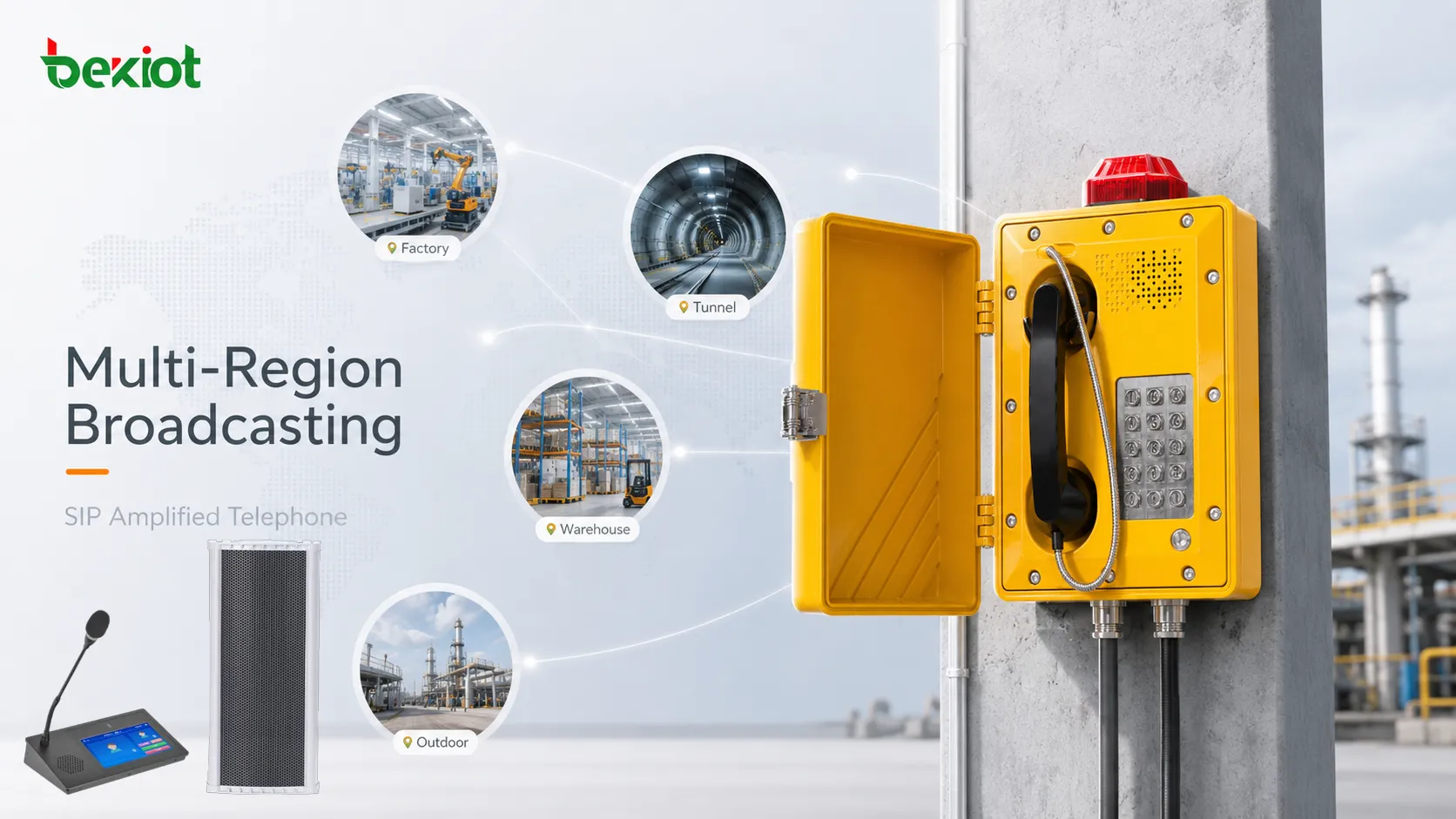
In a large industrial site, one voice message rarely needs to reach everyone at the same time. A maintenance notice may only be relevant to one workshop. A safety reminder may need to cover several loading areas. An evacuation command may need to reach one hazardous zone first, then expand to nearby areas if the risk grows. This is why multi-region broadcasting has become an important function in SIP amplified telephones and industrial paging systems.
A SIP amplified telephone is not only a device for point-to-point calling. When it is connected to a SIP server, IP PBX, dispatch platform, or paging system, it can become a field communication node for local voice access, zone paging, public address, emergency notification, and control room coordination. The value of multi-region broadcasting is that it allows voice information to be delivered by area, by priority, and by real operational need.
Why Area-Based Voice Matters
Industrial communication is different from ordinary office communication. In an office, a call between two people may be enough. In a factory, tunnel, mine, port, energy station, campus, or logistics yard, voice information often needs to reach a group of people who are spread across different spaces. These spaces may have different noise levels, different safety risks, different work schedules, and different response procedures.
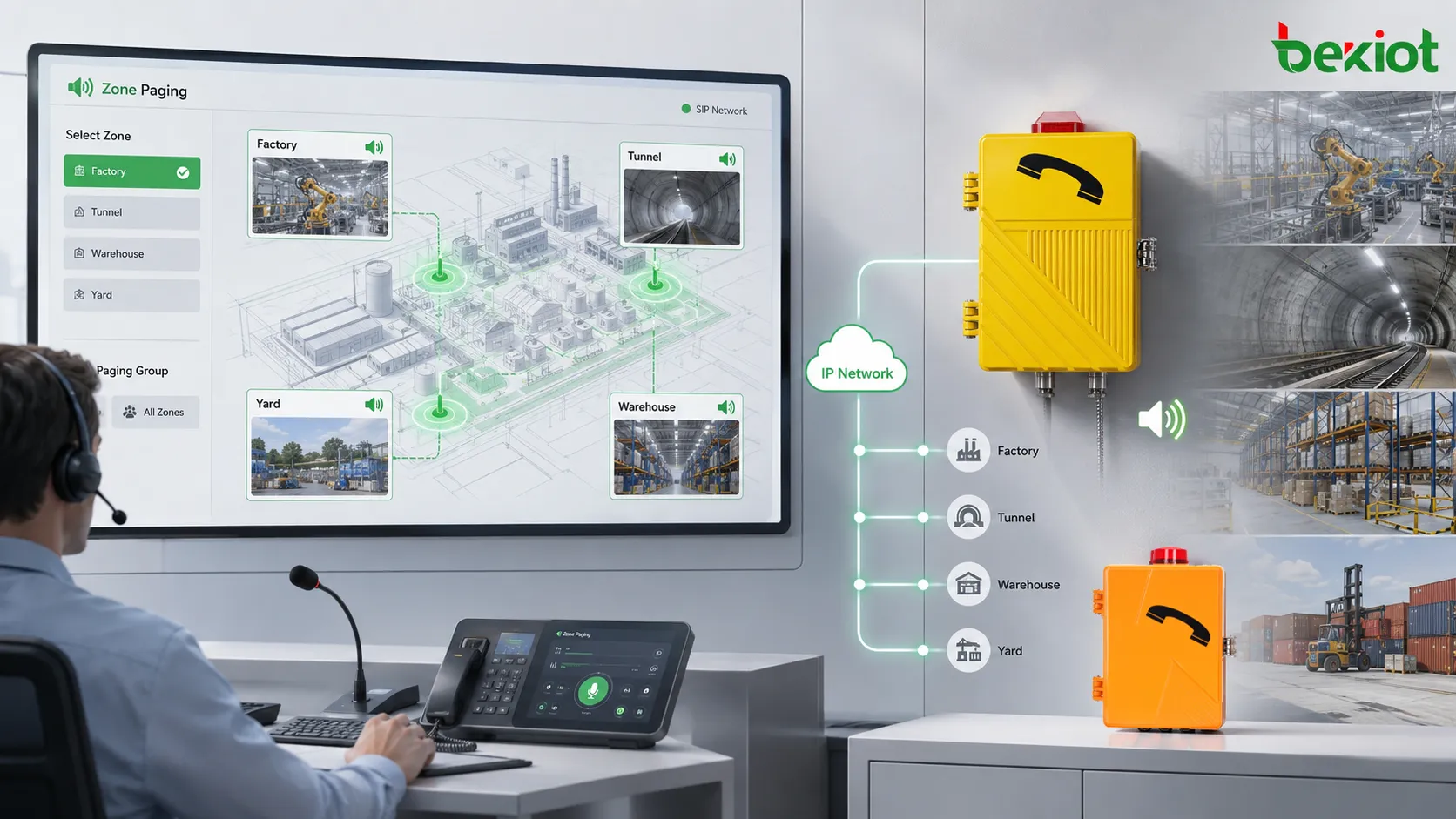
Multi-region broadcasting solves this problem by dividing the site into logical paging zones. A zone may be a workshop, warehouse, tunnel section, platform, gate, outdoor yard, pump room, tank area, loading bay, production line, or emergency evacuation route. The operator can select one zone, several zones, or all zones depending on the message.
This approach reduces unnecessary disturbance. A routine instruction for one production line does not need to interrupt the whole plant. A visitor notice for a gate area does not need to play inside a workshop. A local maintenance warning does not need to reach an office building. Targeted broadcasting helps each message remain relevant.
Area-based broadcasting also improves emergency control. During an incident, the affected area may need immediate warning, while nearby zones may need standby instructions. If the system only supports all-call broadcasting, operators may either over-notify the whole site or under-notify the people who need information. Multi-region control gives the command center a more flexible response tool.
How the Function Works
The working principle is relatively clear. A SIP amplified telephone registers to a SIP server, IP PBX, or dispatch platform. Each device or speaker endpoint can be assigned to a zone. When an operator, dispatcher, or authorized user initiates a broadcast, the system routes the voice stream to the selected group of endpoints.
The broadcast can be live voice, pre-recorded audio, alarm-triggered message, scheduled announcement, or dispatch instruction. In simple systems, a user may dial a zone number to start paging. In more advanced systems, the operator may select zones from a visual interface, choose a priority level, play a stored emergency message, or combine live paging with alarm linkage.
The amplified telephone may act as a local speaker endpoint, a call station, a paging terminal, or a field access device. Some devices are installed where workers need to speak to the control room. Others are installed where broadcast audio needs to be heard clearly. In many projects, the same device may support both calling and broadcasting.
Because the system uses SIP and IP networking, the broadcasting structure can be more flexible than traditional fixed-line public address systems. Devices can be grouped by software configuration, and zone logic can be adjusted as the site changes. This is useful in industrial facilities where production lines, warehouses, temporary construction areas, or maintenance zones may change over time.
However, the system still depends on good network planning. Voice packets must reach the target devices with low delay and stable quality. The SIP server, switches, cabling, power supply, VLAN design, QoS policy, and device registration status all affect the final result. A paging function is only useful if the message reaches the correct areas reliably.
Routine Operations Become Faster
Multi-region broadcasting is not only for emergencies. In many sites, its daily value is just as important. Routine announcements can include shift changes, loading instructions, visitor arrival, vehicle movement, maintenance reminders, equipment testing, warehouse coordination, and production scheduling. These messages may not be urgent, but they affect operating efficiency.
For example, a logistics yard may need to call drivers to a specific loading gate. A manufacturing plant may need to inform one workshop that a production line is about to start. A tunnel maintenance team may need to warn one section before equipment testing begins. A campus facility team may need to broadcast a localized notice without disturbing classrooms or offices.
Compared with manual relay, group messaging, or repeated phone calls, zone broadcasting is faster. One operator can speak once and reach the intended area immediately. This reduces communication layers and helps workers respond more consistently. In sites where workers are mobile or noisy machinery is present, an amplified voice announcement is often more effective than relying only on personal devices.
Another practical benefit is message consistency. When information is passed person to person, it may change along the way. A direct broadcast from the control room ensures that every listener in the selected zone hears the same instruction. This is useful for safety reminders, production control, and site coordination.
Emergency Response Needs Priority
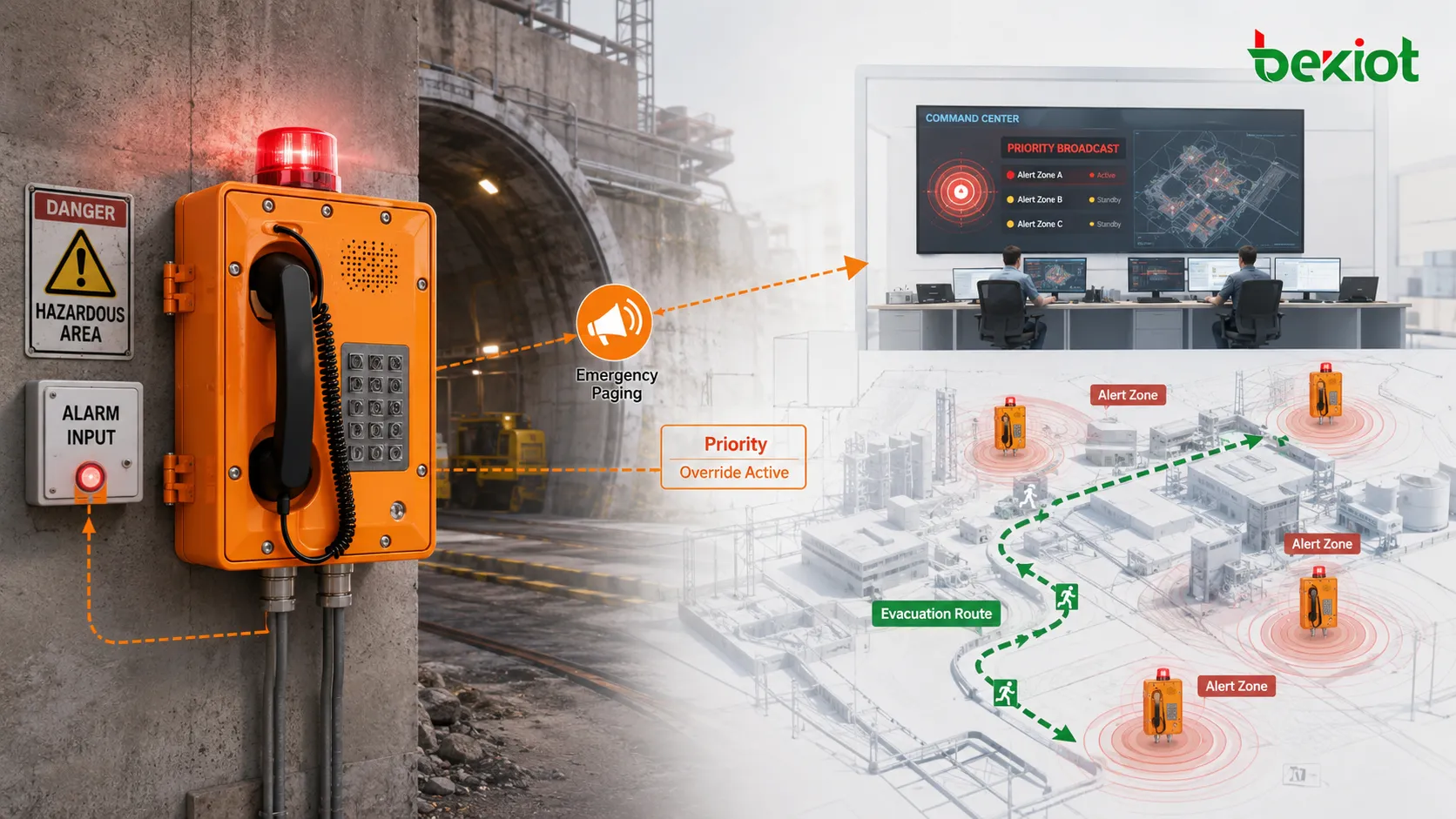
During emergencies, multi-region broadcasting must support priority handling. A fire alarm, gas warning, security incident, equipment failure, flooding event, or evacuation command should not be blocked by a routine announcement. The system should allow emergency messages to override lower-priority broadcasts or ongoing paging where required.
Priority design should be planned carefully. Operators should know which messages have the highest level, who is allowed to trigger them, which zones they cover, and whether the system plays live voice or pre-recorded instructions. If every user can broadcast to every zone with the same priority, the system may create confusion during real events.
Alarm linkage can make emergency response faster. A gas detector, emergency button, fire alarm panel, access control event, or process alarm can trigger a related broadcast zone. The announcement may warn people to leave a specific area, avoid a certain route, wait for further instructions, or contact the control room. This reduces the delay between alarm detection and field notification.
Pre-recorded emergency messages are useful when operators need quick and consistent language. Live voice is useful when the situation changes and the control room must give specific instructions. A good system can support both. The important point is that the message should be clear, short, and zone-appropriate.
Clear Audio Decides Usefulness
A multi-region broadcasting function is only useful when people can understand the message. Industrial environments often contain machinery noise, ventilation, vehicles, alarms, echo, wind, rain, or protective equipment. A loud but unclear broadcast may delay action because listeners are forced to guess what was said.
SIP amplified telephones should therefore be evaluated by speech intelligibility, not only by output power. The device should deliver voice that is strong enough for the area but not so distorted that words become difficult to identify. The most useful audio range is the range that carries spoken instructions clearly.
Microphone design also matters when live paging is used. If the person initiating the broadcast uses a handset or local microphone, the device should capture speech without excessive background noise. If the control room uses a dispatch console, the operator’s microphone, gain setting, and audio routing must also be checked.
Installation position strongly affects sound coverage. A speaker endpoint installed behind a large machine, too close to a reflective wall, too high above the work area, or directly facing a noisy source may perform poorly. Audio testing should be done when the site is operating normally, not only during quiet commissioning.
Becke Telcom can be considered in projects where SIP amplified telephones and industrial communication devices need to support clear field broadcasting, paging, and two-way communication in practical environments. The device selection should always be combined with site noise, mounting position, and system-level audio design.
System Design Shapes Reliability
Multi-region broadcasting depends on a complete system, not only on the telephone itself. The SIP server or IP PBX manages registration and routing. The network switch forwards voice packets. The power system keeps devices online. The dispatch platform or paging controller manages zones, priority, and permissions. If one part is weak, the broadcast function may become unreliable.
Network planning is especially important for SIP-based systems. Paging traffic should have stable bandwidth, low jitter, and controlled delay. QoS can help voice packets receive proper priority. VLANs can separate voice traffic from general data. Redundant switches, backup power, and failover servers may be needed in critical sites.
Zone naming and management also affect reliability. Operators should not see only confusing extension numbers. They should see meaningful area names such as “Loading Bay 2,” “North Tunnel Section,” “Pump Room,” “Tank Farm East,” or “Warehouse A.” Clear names reduce mistakes during emergencies and routine operations.
User permission control is another key element. Not every user should be able to broadcast to all regions. Routine users may have access to local zones only, while safety managers or control room operators may have wider authority. This prevents accidental all-zone broadcasts and keeps emergency functions under control.
Recording and logs can support traceability. For safety-related announcements, it may be useful to know who initiated the broadcast, when it happened, which zones received it, and whether the system reported delivery errors. These records help with incident review and system maintenance.
Where the Function Fits
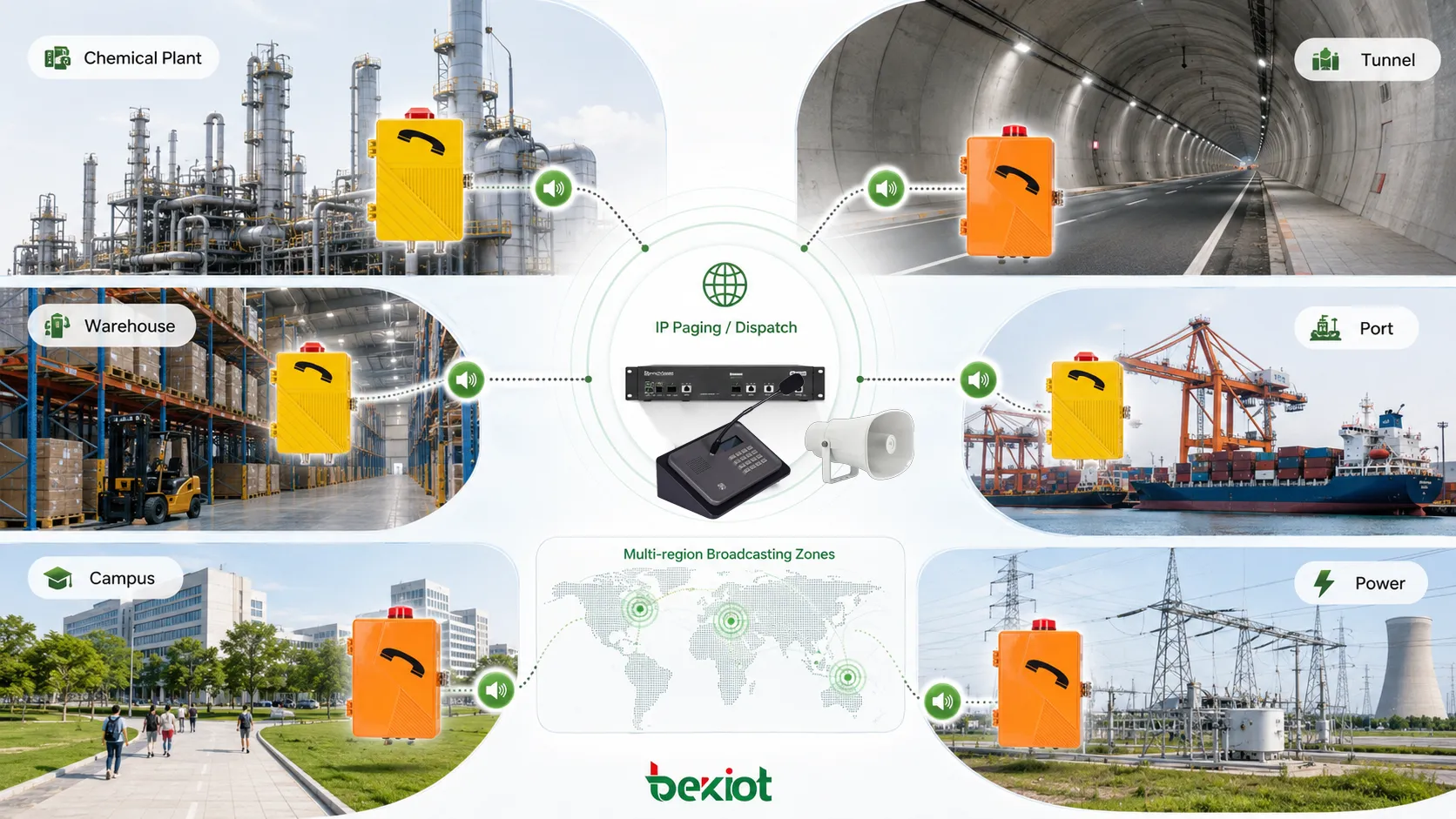
Multi-region broadcasting can be used in many industrial and public infrastructure scenarios. In chemical plants and oil facilities, it can support process warnings, loading instructions, tank area alerts, maintenance coordination, and emergency evacuation. In mines and tunnels, it can help reach different sections where distance, echo, and limited visibility make communication difficult.
In factories and warehouses, it can support production scheduling, logistics coordination, forklift traffic warnings, and equipment testing notices. In ports and logistics yards, it can broadcast to loading bays, container areas, security gates, and outdoor work zones. In power plants and utility facilities, it can support equipment rooms, substations, outdoor yards, and maintenance teams.
Campuses, hospitals, transport stations, and large public buildings can also benefit from area-based paging. Different areas may need different messages, and not every announcement should disturb the whole site. Multi-region logic gives facility operators more control over daily communication and emergency notification.
The common requirement across these sites is controlled reach. A message should reach the intended area quickly and clearly, without causing unnecessary noise in unrelated zones. This is the core reason multi-region broadcasting remains valuable even when other communication tools such as mobile apps, radios, and messaging platforms are available.
Final Notes
The multi-region broadcasting function of SIP amplified telephones improves communication control by sending the right voice message to the right area. It supports routine operations, maintenance coordination, safety reminders, emergency instructions, alarm linkage, and public address coverage without forcing every message to become an all-site broadcast.
Its real value depends on more than software zone grouping. Reliable performance requires clear audio, proper installation, stable SIP registration, good network planning, priority control, meaningful zone naming, permission management, and periodic testing. The equipment and the system must be designed together.
For projects that need SIP amplified telephones, industrial paging, emergency voice notification, or multi-region communication across factories, tunnels, ports, energy sites, campuses, or industrial facilities, Becke Telcom can provide practical communication solutions for field deployment. The final configuration should be selected according to zone layout, noise level, network architecture, emergency process, and long-term maintenance needs.
FAQ
What is multi-region broadcasting?
Multi-region broadcasting means sending live or pre-recorded voice messages to selected areas instead of broadcasting to the whole site at once. Each area can be managed as a separate paging zone.
Why use SIP amplified telephones for broadcasting?
SIP amplified telephones can connect to IP PBX, SIP servers, or dispatch platforms, making it easier to manage zones, routing, priority, recording, and system integration through the IP network.
Can multi-region broadcasting support emergencies?
Yes. It can support emergency paging, alarm-triggered messages, evacuation instructions, priority override, and selected zone notification when properly integrated with the site’s safety system.
What affects broadcast clarity?
Clarity is affected by speaker output, microphone quality, codec settings, network delay, installation position, background noise, echo, and whether the broadcast is tested under real operating conditions.
How should zones be planned?
Zones should follow real site logic, such as workshops, tunnel sections, loading bays, warehouses, outdoor yards, emergency routes, and control areas. Clear zone names help operators avoid mistakes.