The real application value of an industrial telephone set cannot be fully measured by a specification sheet alone. A device may dial and answer normally during sample testing, and its enclosure protection rating may also meet the stated requirement. Yet once it is deployed in a real industrial site, issues not shown in the parameters often appear: higher key misoperation rates when workers wear protective gloves, poor speech intelligibility around running machinery, blocked operation after oil and dust accumulation, difficulty locating the phone during night inspections, and inconvenient disassembly during troubleshooting.
For this reason, a user experience survey for industrial telephone sets should not be treated as a general satisfaction survey for consumer electronics. It is essentially a full-process review of field communication reliability. By collecting feedback from frontline workers, dispatch operators, maintenance personnel, safety managers, and project purchasers, it becomes possible to judge whether a terminal truly fits complex industrial environments. This article explains the key observation dimensions of user experience surveys and how the results can guide the selection and deployment of industrial waterproof telephones and explosion-proof telephones.
Satisfaction Scores Are Not Enough
A common mistake in user experience surveys for industrial telephone sets is reducing the entire survey to a single satisfaction score. Questions such as “Are you satisfied?”, “Is it easy to use?”, or “Would you recommend it?” may provide a quick general impression, but they do not offer enough support for engineering improvement. In industrial environments, communication experience is always shaped by many specific operating details and environmental variables.
The same industrial telephone may receive very different evaluations from different roles. Frontline inspectors focus on call response speed, speech intelligibility, and keypad feel. Dispatch personnel care more about call point identification, call stability, transfer convenience, and recording access. Maintenance personnel pay attention to wiring, sealing, testing, and replacement cost. Safety managers focus on whether the device matches the site risk level, supports emergency drills, and provides traceable communication records.
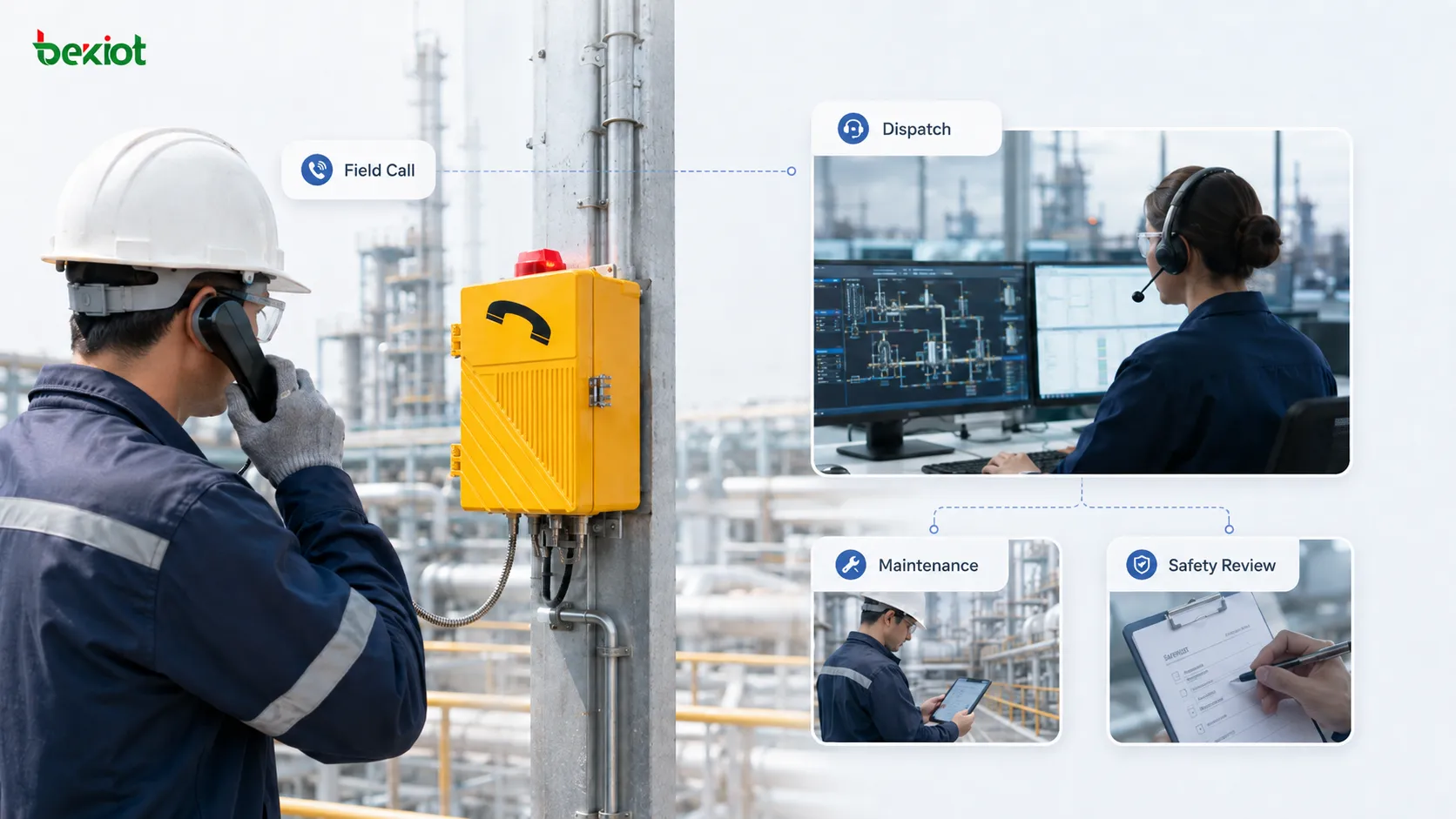
An effective survey should therefore follow the complete usage chain instead of stopping at a result score. The process can be broken down into locating the device, approaching the terminal, initiating a call, completing two-way communication, receiving instructions, ending the call, reporting faults, and performing periodic inspections. Any obstacle or inconvenience found in these steps can become direct evidence for improving future device selection and point deployment.
The survey should also be carried out by device type and application scenario. Industrial waterproof telephones, explosion-proof telephones, tunnel emergency phones, and dispatch amplified telephones all belong to industrial communication terminals, but their operating environments, user logic, and safety requirements differ greatly. If all devices are evaluated with the same satisfaction form, real problems in specific scenarios can easily be hidden.
Field Usability Drives Adoption
Frontline workers are the primary users of industrial telephone sets. Their feedback is closest to real operating conditions and reveals whether a product is genuinely easy to use. Visibility of the device, accessibility of the installation point, clarity of keypad markings, smoothness of handset pickup, comfort of the handset grip, cable routing, and visibility under low light all affect field experience.
Most industrial environments are far from ideal conditions with bare hands, low noise, and generous operating space. Workers often wear protective gloves and work clothes while operating near machinery noise, dust, steam, rain, or insufficient lighting. This means that the interaction logic of ordinary office telephones cannot be directly applied. Industrial telephone sets must allow users to complete communication quickly and accurately under imperfect conditions.
Keypad operation is one of the main observation points in field experience surveys. Small key areas, vague pressing feedback, poor character durability, and surfaces that easily collect dust or oil can all reduce operating efficiency. In emergency calling and hotline scenarios, users usually want simple steps and clear logic rather than complicated function menus and multi-level dialing procedures.
Handset ergonomics should also be taken seriously. Handset weight, grip curvature, hanging stability, and the movement freedom of the coiled cord or metal hose all affect long-term comfort. If the handset is hard to pick up or easy to drop after hanging, workers may gradually resist using the equipment and even switch to personal communication tools that may not meet site safety requirements.
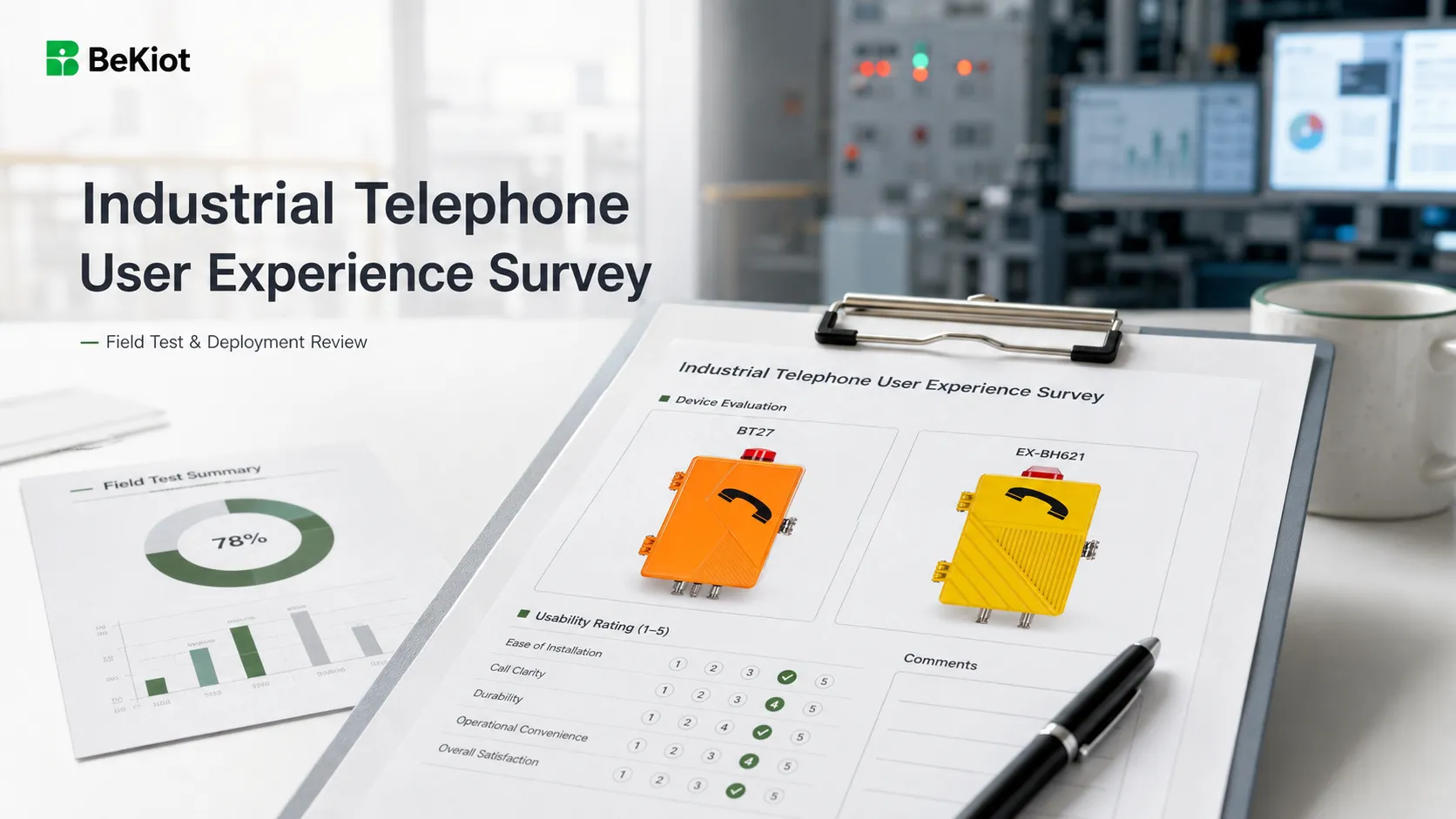
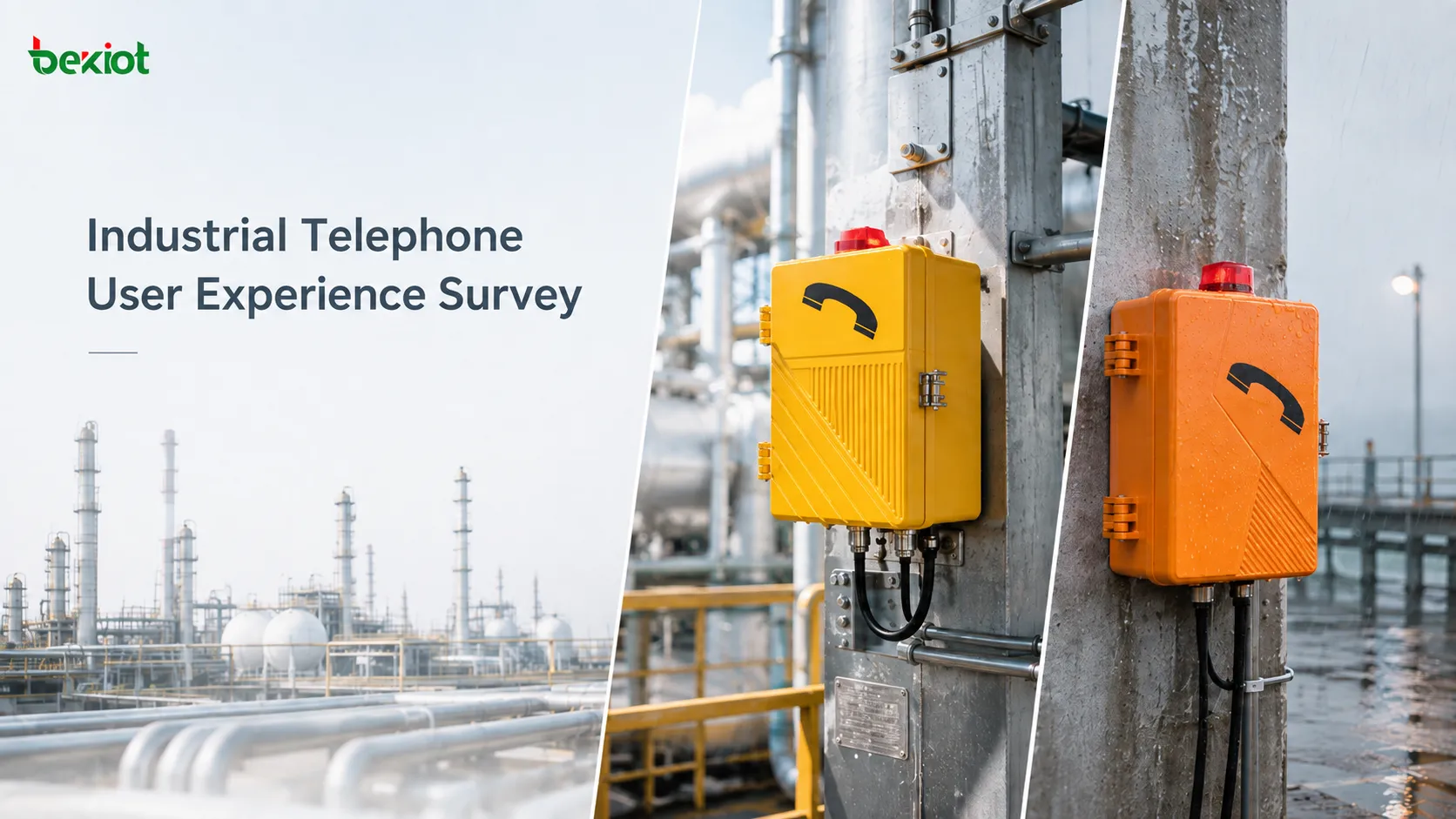
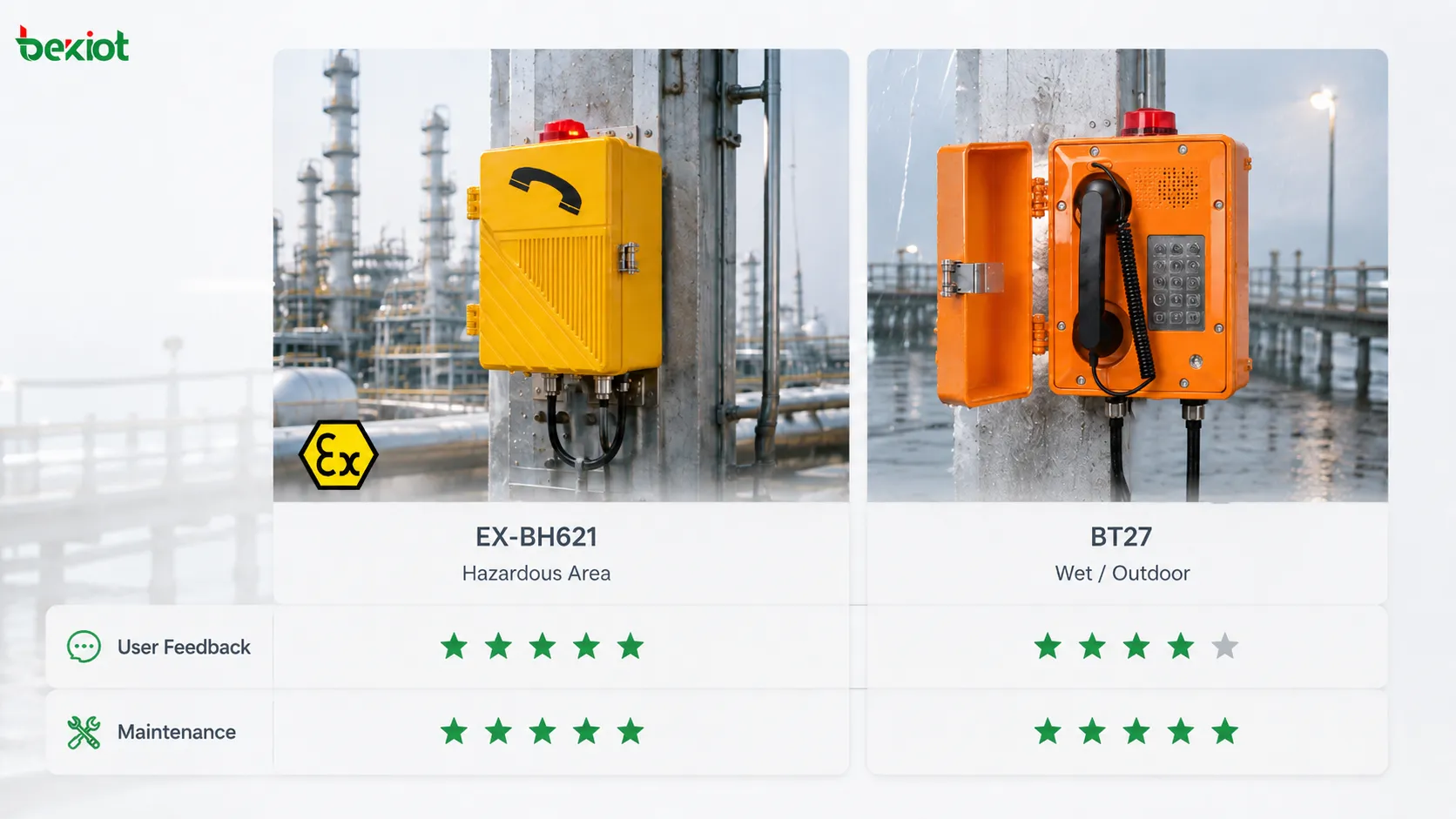
For wet, dusty, outdoor duty, tunnel, and utility corridor applications, the BT27 industrial waterproof telephone can be used as a reference sample in the survey. The focus should be on its fiberglass enclosure protection, stainless steel keypad feel, and overall call performance in daily field positions.
Voice Clarity Is the Core Metric
Among all industrial telephone experience dimensions, call clarity is usually more important than appearance or feature richness. Frontline users may not describe frequency response, voice gain, echo suppression, or signal-to-noise ratio in technical terms, but they will provide very specific feedback: repeated confirmation is needed in noisy areas, conversation becomes difficult when equipment runs at full load, the control room volume is too low, or the other side cannot clearly hear the field voice.
This type of feedback needs to be analyzed further. Poor audibility on the field side may come from insufficient receiver output, or it may be caused by environmental noise masking the speech signal. Poor pickup on the other side may result from low microphone sensitivity, incorrect user position, high line loss, or unsuitable platform gain settings. Intermittent calls are often related to network jitter, unstable power supply, aging cables, or terminal hardware faults.
A user experience survey should not reach conclusions after only one test call in a quiet environment. A more useful method is to conduct two-way call tests under normal operating conditions. For example, record the subjective experience of both field workers and dispatch operators when compressors run at full load, ventilation fans are fully open, heavy vehicles pass by, tunnel echo is strong, or outdoor work is performed in rainy weather. These results are closer to real user experience.
Call clarity also affects the user’s sense of safety. If field personnel believe that a device “can connect but cannot make the message clear,” they may not choose the industrial telephone first during an emergency. The value of an industrial telephone is not only successful call establishment, but also the confidence that critical information can be transmitted clearly when it matters.
Therefore, voice quality should be divided into practical survey questions: Can the field side clearly hear control room instructions? Can the control room accurately recognize the field voice? Is repeated speech needed under high noise? Is there obvious echo? Does the link suffer from interruption or stuttering? Are multiple tests at the same location stable? These detailed questions provide more guidance than a general “audio satisfaction” rating.
Environmental Fit Proves Reliability
User experience with industrial telephone sets is not only about smooth first-time operation. It also includes stability after long-term service. User trust is often built through years of repeated validation: the device still works after rain, the keypad still triggers reliably after dust accumulation, the handset cable does not harden in cold weather, the enclosure does not leak after washdown, and labels remain readable after long outdoor exposure.
Different scenarios magnify different experience issues. Outdoor plants focus on waterproofing, UV resistance, and tolerance to temperature changes. Tunnel environments emphasize moisture resistance, echo control, and resistance to vehicle-related impact. Mining sites focus on dust protection, mechanical impact resistance, and cable protection. Petrochemical and oil and gas areas require attention to explosion-proof compliance, corrosion resistance, and grounding. Ports and offshore sites also require salt mist resistance, wind resistance, and long-term outdoor aging performance.
Survey questions should describe environmental factors specifically rather than simply asking whether the device is durable. Targeted questions may include: Does rainfall affect normal use? Do keypad gaps collect dust and become difficult to clean? Is the enclosure easy to clean during routine maintenance? Does the handset remain stable after long-term use? Are exposed cables easily pulled or scratched by materials? Is the installation location easily blocked by equipment or materials? These questions better restore the real field experience.
Experience surveys for explosion-proof telephones should also pay attention to perceived safety. In hazardous areas, users care not only about whether calls work, but also whether the explosion-proof rating matches the area, whether labels are clear and compliant, whether installation is firm, whether cable entries are properly sealed, and whether maintenance follows safety procedures. Weak perceived safety directly reduces user acceptance.
For communication projects in high-risk areas such as petrochemical plants, oil and gas sites, and coal mines, the EX-BH621 industrial explosion-proof telephone can be included in the experience evaluation system. The focus should be on hazardous-area suitability, field operation convenience, stable voice access, and maintenance compliance.
Dispatch Experience Also Matters
The user experience of industrial telephones does not occur only at the field terminal. It also appears on the control room side. Some terminals can meet basic call requirements in the field, while the dispatch side may expose many problems: unclear call point information, difficult location identification, complicated transfer procedures, unstable recording retrieval, unclear call status, and inconsistent point naming rules. These are also core experience defects.
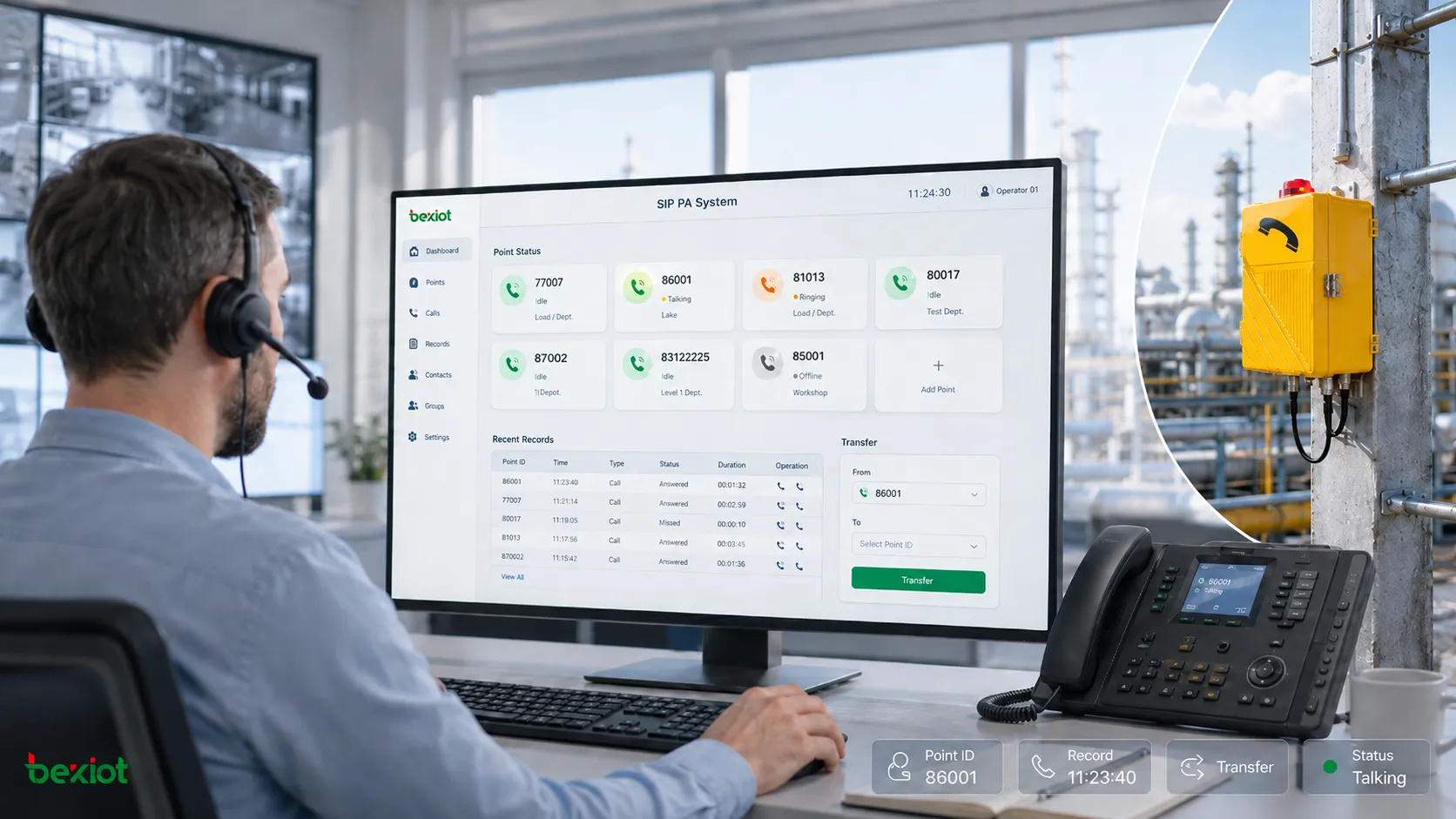
For dispatch personnel, the key experience lies in information identification efficiency and incident handling speed. Does the incoming call display the point name at the same time? Can ordinary calls and emergency calls be quickly distinguished? Is one-touch transfer to the relevant position supported? Can multi-party conference calls be initiated? Can the call be linked with broadcasting and recording systems? If every field call requires repeated location confirmation, dispatch-side experience has not reached an acceptable level.
In large industrial sites with many telephone points, the organization logic of the dispatch interface significantly affects experience. A simple number list is often not helpful for fast location judgment. Layered display by area, unit, floor, position, or map location is usually closer to a dispatcher’s decision-making logic. During the survey, actual obstacles encountered during answering, searching, transferring, and recording should be documented in detail.
Another easily overlooked point is post-call management. Can dispatch personnel quickly retrieve historical call records? Can logs be filtered by area? Can recordings from a specific point be replayed? Can offline terminal status be monitored in real time? Can equipment fault alarms be received? These functions may not be visible to field personnel, but they directly determine the management efficiency and usability of the whole industrial communication system.
For this reason, user experience surveys for industrial telephone sets should cover both the field side and the dispatch side. Collecting only frontline feedback may miss system-level management issues, while relying only on dispatch feedback may ignore real field operation pain points. These two perspectives complement each other and form a complete and objective experience evaluation.
Maintenance Shapes Lifecycle Cost
Feedback from maintenance personnel is highly valuable in industrial telephone experience surveys. Frontline users mainly see whether the device works, while maintenance teams see why it fails and how much it costs to repair. Many experience-related problems cannot be predicted directly during design; they gradually appear during long-term inspection, fault handling, and spare-part replacement.
Maintenance experience can be evaluated through installation, wiring, sealing, testing, cleaning, replacement, and reset. Is wall mounting convenient for one person? Are cable entries clearly marked? Is there enough space around terminals? Does opening the enclosure affect the original sealing performance? Is it difficult to replace vulnerable parts such as handsets and cables? Can a call test be completed quickly on site? These details directly affect labor and time cost during later maintenance.
If an industrial telephone is difficult to maintain, long-term experience will decline even when initial performance is acceptable. Small faults that cannot be fixed in time eventually create the general impression that the equipment is unreliable. Dust-blocked microphone holes, poor handset cable contact, aged keypad elasticity, failed door seals, loose terminals, and missing labels can all gradually weaken user confidence.
Maintenance personnel can also help distinguish the cause of faults. Some user complaints about frequent disconnection may not come from the telephone itself, but from poor network cable quality, water ingress at connectors, power supply fluctuation, abnormal switch ports, or incorrect platform configuration. Without maintenance input, a survey can easily mistake system-level problems for terminal product defects.
Therefore, a dedicated maintenance section should be included in the survey form to record fault frequency, common fault points, average repair time, spare-part demand, cleaning difficulty, and secondary installation risk. A good industrial telephone experience is reflected not only in smooth operation during use, but also in efficient and convenient maintenance.
Feedback Requires Role Segmentation
The key principle of user experience research is not that a larger sample size automatically creates more value. The more important task is to organize feedback by role and analyze it by category. Frontline workers, dispatch operators, maintenance personnel, safety managers, and purchasers have different priorities. If their opinions are simply averaged into one score, the most valuable decision information may be lost.
Feedback from different roles has clear characteristics. Frontline workers often mention “clear voice, easy operation, easy to find, durable, and not troublesome.” Dispatch personnel focus on “point display, accurate location, easy transfer, searchable recording, and visible status.” Maintenance personnel care about “easy installation, easy troubleshooting, quick replacement, and fewer faults.” Safety managers focus on “area suitability, rule compliance, and drill usability.” Purchasers pay attention to “lifecycle cost, delivery time, model standardization, and expansion compatibility.”
These role-based requirements may naturally conflict. Field workers want operation logic to be as simple as possible, while management teams may want richer functions and more complete records. Maintenance personnel prefer structures that are easy to open and inspect, while safety management requires sealing and protection not to be casually compromised. A qualified survey report should present these conflicts objectively instead of filtering for only positive comments.
Segmented analysis also helps projects define optimization priorities. If field users widely report insufficient call clarity, audio design and installation position should be optimized first. If the dispatch side reports confusing point identification, terminal naming rules and platform display logic should be improved. If maintenance personnel report rapid seal wear, spare-part supply and inspection cycles should be adjusted. Different problems require different solutions.
For industrial communication projects, the final purpose of user experience surveys is not to simply prove whether a product is good or bad. The goal is to make device selection, installation methods, platform integration, and maintenance systems better aligned with real site needs. When real problems are seen, analyzed, and solved, the entire system becomes smoother to use over time.
Survey Results Guide Selection
The most practical value of a user experience survey is that it provides clear decision support for future device iteration and procurement. During first-time purchasing, many projects focus on price, appearance, protection rating, or interface type. After the equipment has been running for a period of time, teams often find that user experience is more strongly affected by point layout, voice noise reduction, operating interaction, maintenance convenience, and platform linkage.
Survey conclusions can be directly converted into a selection evaluation checklist. For example, if field personnel report high misoperation rates while wearing gloves, the next selection round should focus on key size and pressing feedback. If dispatch personnel report unclear point information, the platform display logic and terminal naming rules should be defined. If maintenance personnel complain about inconvenient wiring, internal space and terminal structure should be checked. If high-noise areas show high repeated-confirmation rates, receiver volume, microphone pickup, and installation points should be carefully verified.
Different types of industrial telephones also need different experience evaluation standards. Industrial waterproof telephones focus on waterproofing, dust protection, outdoor duty, wet-environment adaptability, and routine maintenance convenience. Industrial explosion-proof telephones focus on hazardous-area suitability, explosion-proof structure compliance, safe installation, and stable voice access. Dedicated dispatch telephones focus on interface interaction, quick calling, status display, and dispatch seat coordination. When device types differ, the core survey questions and their weights should also be adjusted.
During project expansion or system upgrades, user experience surveys can also support decisions such as whether terminal models should be standardized, whether point layout should be optimized, whether broadcasting linkage should be added, whether centralized recording should be integrated, and whether platform permissions should be adjusted. It should not be a one-time questionnaire, but a regular part of continuous industrial communication system improvement.
Summary
A user experience survey for industrial telephone sets is not simply about asking whether the device is easy to use. It should uncover the details that affect communication efficiency, field trust, and long-term reliability across the real usage chain. Field operation, voice call quality, environmental adaptability, dispatch coordination, maintenance convenience, and balanced role-based requirements together determine whether an industrial telephone system truly fits site needs.
Compared with ordinary office communication equipment, the experience value of industrial telephones is often revealed in extreme scenarios and critical moments: whether speech remains clear in high noise, whether the device operates reliably in rain and dust, whether it is compliant and safe in hazardous areas, whether the dispatch side can quickly identify the call point, and whether maintenance personnel can troubleshoot faults in time. These factors shape user acceptance and determine the long-term operating quality of the entire system.
For projects requiring industrial waterproof telephones, explosion-proof telephones, or field communication terminals, Becke Telcom can provide a full range of industrial communication products, including the BT27 industrial waterproof telephone and the EX-BH621 industrial explosion-proof telephone. Actual selection should be based on user experience survey results, site environment, communication platform architecture, installation conditions, and long-term maintenance planning.
FAQ
Which roles should an industrial telephone user experience survey cover?
It should cover frontline workers, dispatch operators, maintenance technicians, safety managers, and procurement or project management personnel. Different roles observe different issues, and only combined feedback can form a complete experience evaluation.
Why can’t product quality be judged by specifications alone?
Specifications only show part of a device’s stated capability. Real user experience is also affected by installation location, noise environment, operating habits, platform configuration, maintenance quality, and long-term environmental aging.
Are the survey priorities different for industrial waterproof telephones and explosion-proof telephones?
Yes. Industrial waterproof telephones focus more on moisture, rain, dust, outdoor duty, protection performance, and cleaning convenience. Explosion-proof telephones also need evaluation of hazardous-area classification suitability, explosion-proof structure, installation compliance, and safety management requirements.
How should call clarity be evaluated?
Two-way call tests should be carried out under real production noise. The survey should record whether repeated confirmation is needed, whether echo exists, whether calls are intermittent, and whether call stability changes across different time periods and operating conditions.
How can survey results be applied to project improvement?
Survey results can be used to optimize point layout, adjust terminal selection, improve platform display logic, strengthen maintenance systems, add recording or broadcasting linkage, and build more site-oriented selection standards for the next procurement cycle.