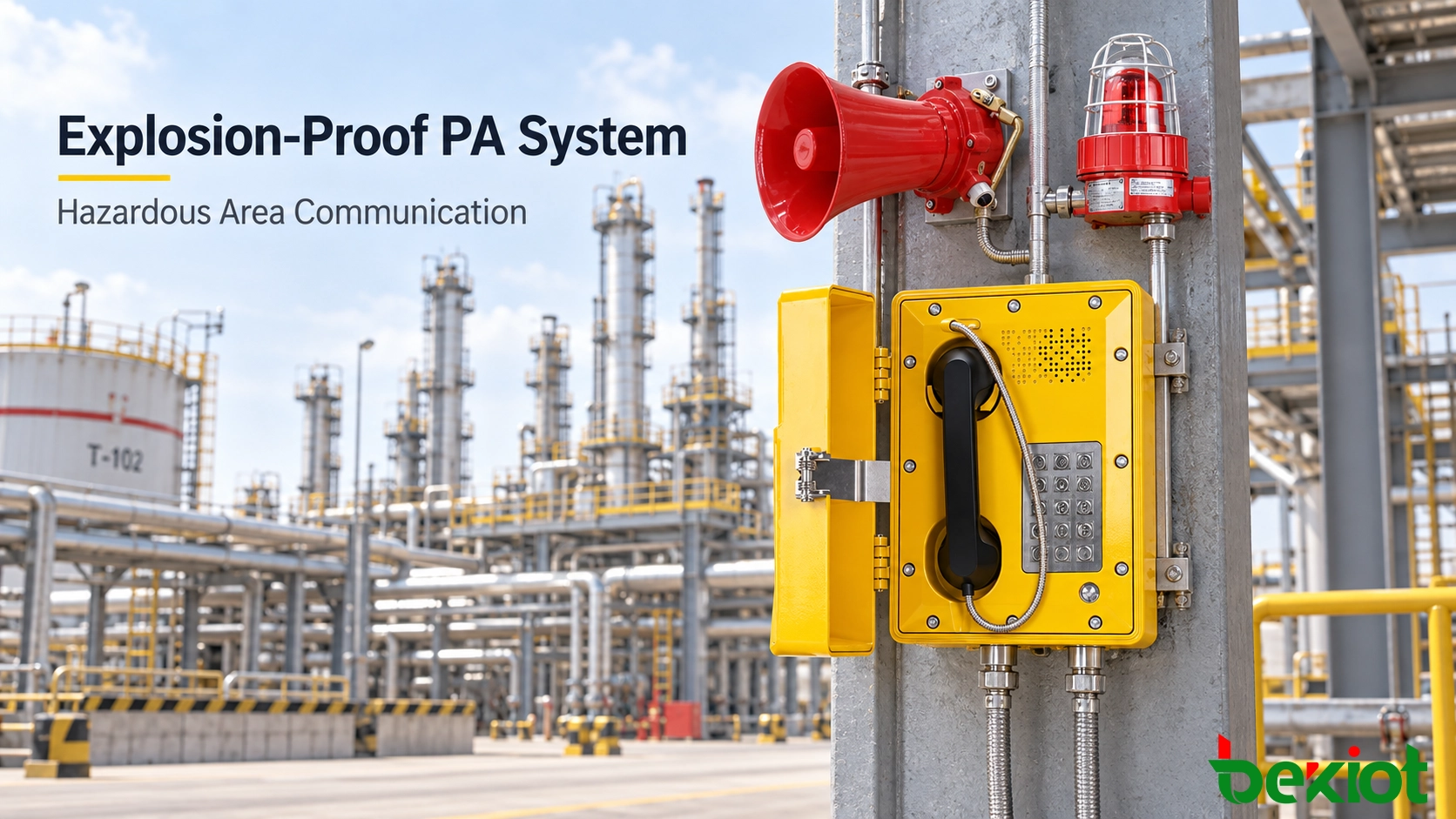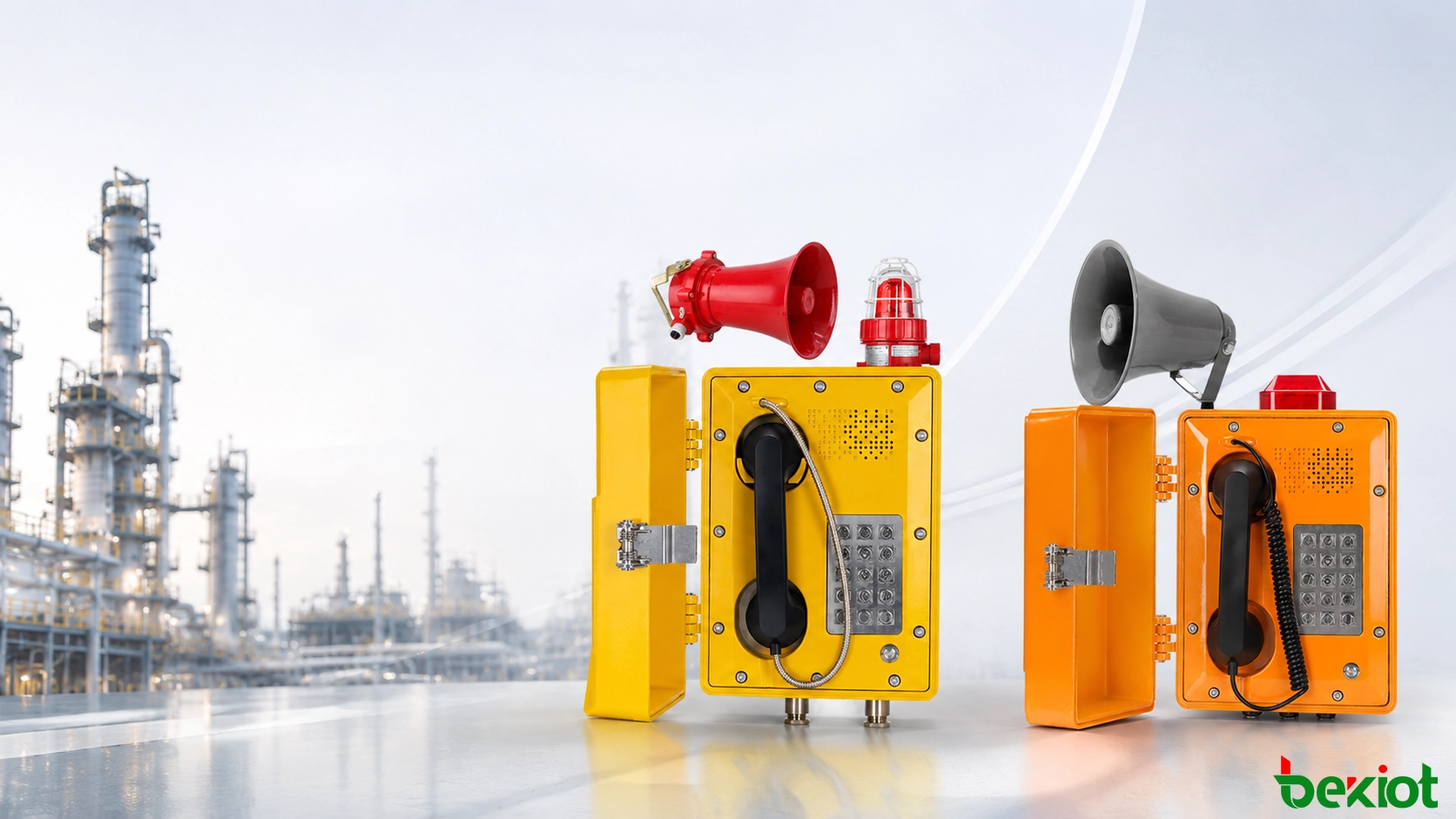
Explosion-proof telephones and waterproof industrial telephones are often compared in industrial communication projects because both may use rugged housings, sealed structures and wall-mounted designs. From appearance alone, the difference is not always obvious. This can lead to a common misunderstanding: if a telephone has a very high waterproof rating, it must also be suitable for hazardous areas.
In practice, the two types of equipment are designed around different risks. A waterproof telephone mainly protects communication equipment against rain, dust, humidity, salt spray and harsh outdoor conditions. An explosion-proof telephone addresses another issue: when flammable gases, vapors or combustible dust may be present, the communication terminal must not become a potential ignition source.
This means explosion-proof and waterproof telephones are not simply different levels of the same product. The correct choice begins with the installation environment, hazardous-area classification and actual operating conditions rather than the appearance of the enclosure.
Two Products Designed for Different Risks
Industrial waterproof telephones are primarily designed for environmental durability.
Tunnels, ports, outdoor production areas, water-treatment facilities, highways and transportation sites may expose communication terminals to rain, dust, high humidity, temperature changes and long-term outdoor conditions. Standard office telephones are rarely suitable for such environments. Moisture or dust entering the enclosure can affect buttons, handsets, speakers, connectors and internal electronics.
Waterproof industrial telephones therefore use reinforced housings, protected cable entries, sealed interfaces and industrial handset designs to improve long-term reliability under demanding environmental conditions.
Explosion-proof telephones start from a different design requirement.
Petroleum processing, chemical plants, natural gas facilities, fuel storage, coal chemical operations, mining and certain hazardous-material areas may contain explosive gas or dust atmospheres. Communication equipment installed in these locations must continue to provide reliable calling while also meeting the safety requirements defined for the hazardous area.
From a project perspective, a waterproof telephone answers the question of whether the equipment can survive the environment. An explosion-proof telephone must first answer whether it can be safely installed in the classified area.
Certification Defines the Real Boundary
Certification is one of the most important differences between the two categories.
Waterproof industrial telephones are commonly evaluated according to ingress protection, or IP, ratings. Levels such as IP65, IP66, IP67 and IP68 describe different degrees of protection against solid particles and water ingress. These ratings help engineers determine whether a telephone is appropriate for dusty areas, outdoor installation, direct rain exposure or environments where stronger water protection is required.
An IP rating, however, does not evaluate explosion risk.
IP68 ≠ Explosion-Proof Certification
A telephone can have excellent dust and water resistance and still be unsuitable for a classified hazardous location. If an installation point is located within an explosive atmosphere, the equipment must meet the applicable explosion-protection requirements of the project and local market.
Depending on the application, this may involve systems such as ATEX, IECEx or other specified certification frameworks. Project engineers may also need to consider hazardous-area classification, gas or dust category, explosion-protection method, temperature class and the exact scope covered by the equipment certificate.
IP protection and explosion protection should therefore be treated as two independent dimensions. One focuses on preventing environmental ingress. The other determines whether the equipment is suitable for operation in a defined hazardous atmosphere.
The Difference Becomes Clear On Site
Once certification requirements are placed back into the real installation environment, the distinction becomes much easier to understand.
| Comparison | Explosion-Proof Telephone | Waterproof Telephone |
|---|---|---|
| Main risk | Ignition risk from explosive gases, vapors or combustible dust | Rain, dust, moisture, salt spray and harsh weather |
| Primary selection basis | Hazardous-area suitability | Environmental protection requirements |
| Explosion-proof certification | Normally required in classified hazardous areas | Normally not required in general industrial areas |
| IP protection | Selected according to actual environmental exposure | One of the main selection criteria |
| Typical locations | Chemical plants, tank farms, oil and gas areas, hazardous storage | Tunnels, ports, highways, outdoor factories and transport facilities |
| Main objective | Safe communication in hazardous locations | Reliable communication in harsh environments |
Some industrial sites require both types of protection at the same time.
An outdoor tank farm, loading terminal or offshore oil and gas facility may contain a hazardous atmosphere while also exposing equipment to rain, dust, salt spray and temperature variation. In this situation, explosion protection and environmental protection are not alternatives. The telephone must first meet the hazardous-area requirements and then provide sufficient IP and weather protection for the actual installation conditions.
Where Explosion-Proof Telephones Are Needed
Whether an explosion-proof telephone is necessary should be determined by the classification of the actual installation point rather than simply by the name of the industry.
Typical environments that require careful evaluation include petrochemical production units, tank farms, natural gas processing facilities, LNG and LPG areas, coal chemical facilities, mining operations, hazardous chemical storage areas and certain offshore installations.
If the telephone location falls within a classified hazardous area, an ordinary outdoor or high-IP telephone cannot be selected purely because its enclosure appears rugged.
Communication in these areas also involves more than routine calls. A fixed industrial telephone may be used to report abnormal equipment conditions, contact a control room, request maintenance support or initiate an emergency call. During an incident, the control center must be able to identify the caller, confirm the situation and coordinate the appropriate response.
High-noise areas introduce another requirement. Pump stations, compressor areas, process plants and mining facilities can be too loud for conventional ringing to be heard. Depending on the project, external horns, visual alarm indicators or paging functions may be added so that calls and emergency messages can attract attention more effectively.
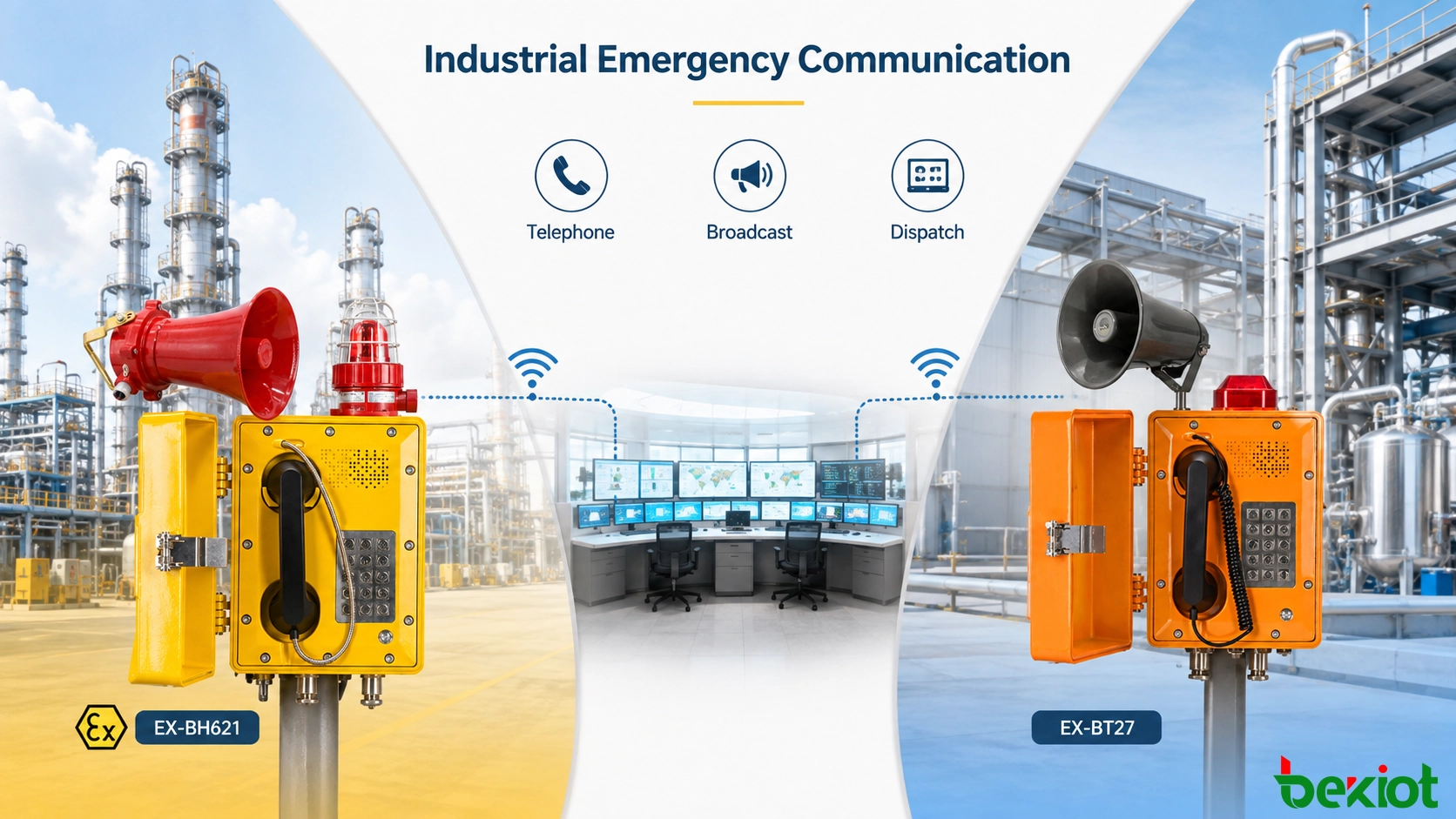
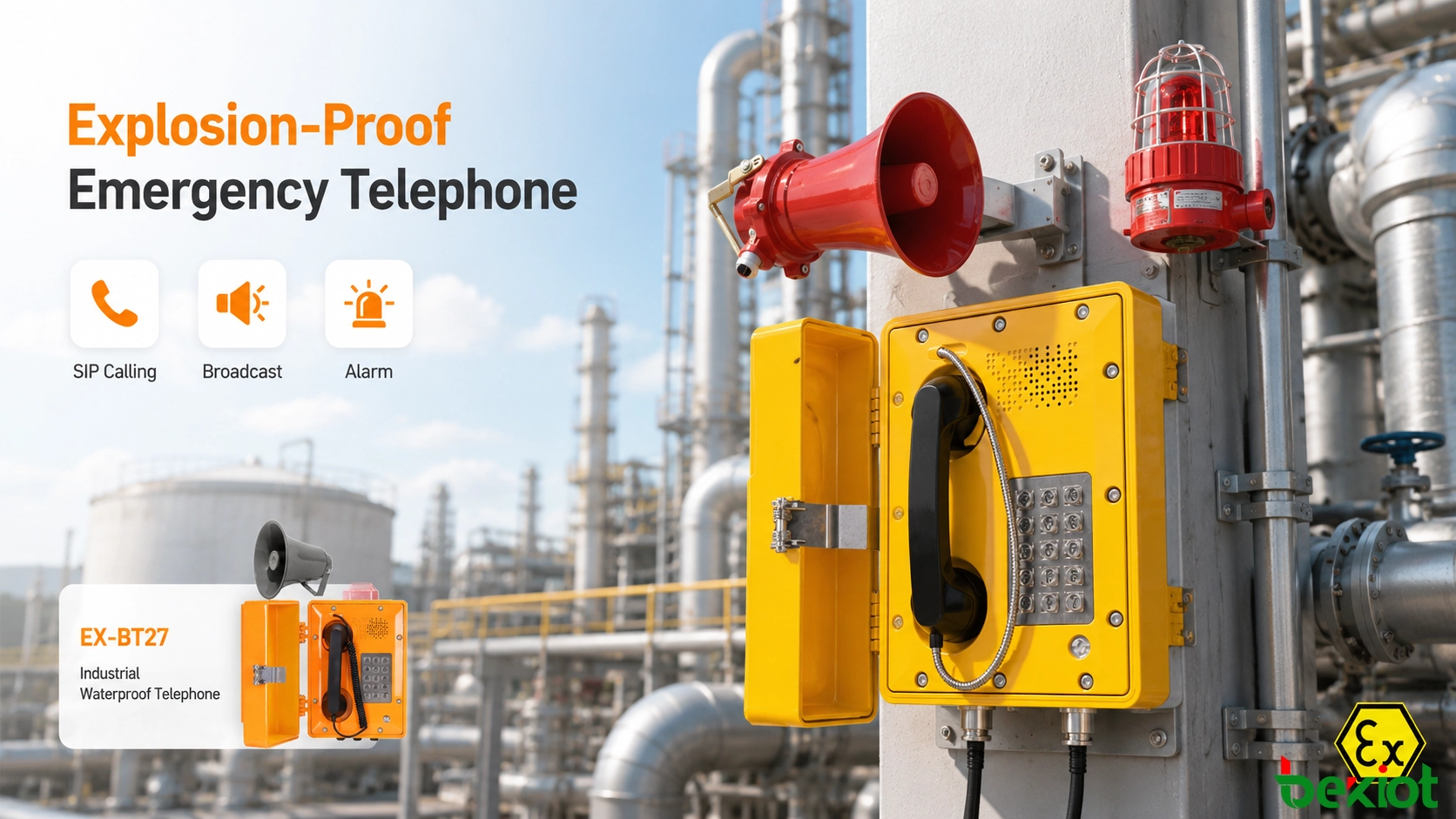
Related Product: Becke Telcom EX-BH621 Explosion-Proof Telephone
designed for fixed voice communication in hazardous industrial areas and integration with dispatch, emergency communication and in
Where Waterproof Telephones Fit Better
Many industrial locations are harsh without being classified as explosive. These are the environments where industrial waterproof telephones are commonly used.
Highway tunnels are a good example. Communication terminals may remain exposed to humidity, vehicle dust, exhaust, vibration, noise and temperature changes for years. A standard office telephone is poorly suited to these conditions, so a purpose-built industrial terminal is normally preferred.
If the installation point is not classified as a hazardous area, however, there is generally no reason to select an explosion-proof telephone simply because the environment is demanding.
Ports and coastal facilities present another typical case. Outdoor telephones may be exposed to rain, sea air and salt spray, making enclosure protection, corrosion resistance, handset durability and reliable outdoor operation more important than explosion protection where no hazardous classification exists.
Other common application areas include highways, railway facilities, metro non-hazardous areas, outdoor factory positions, wastewater treatment plants, hydropower stations, parking facilities, campuses and large industrial parks.
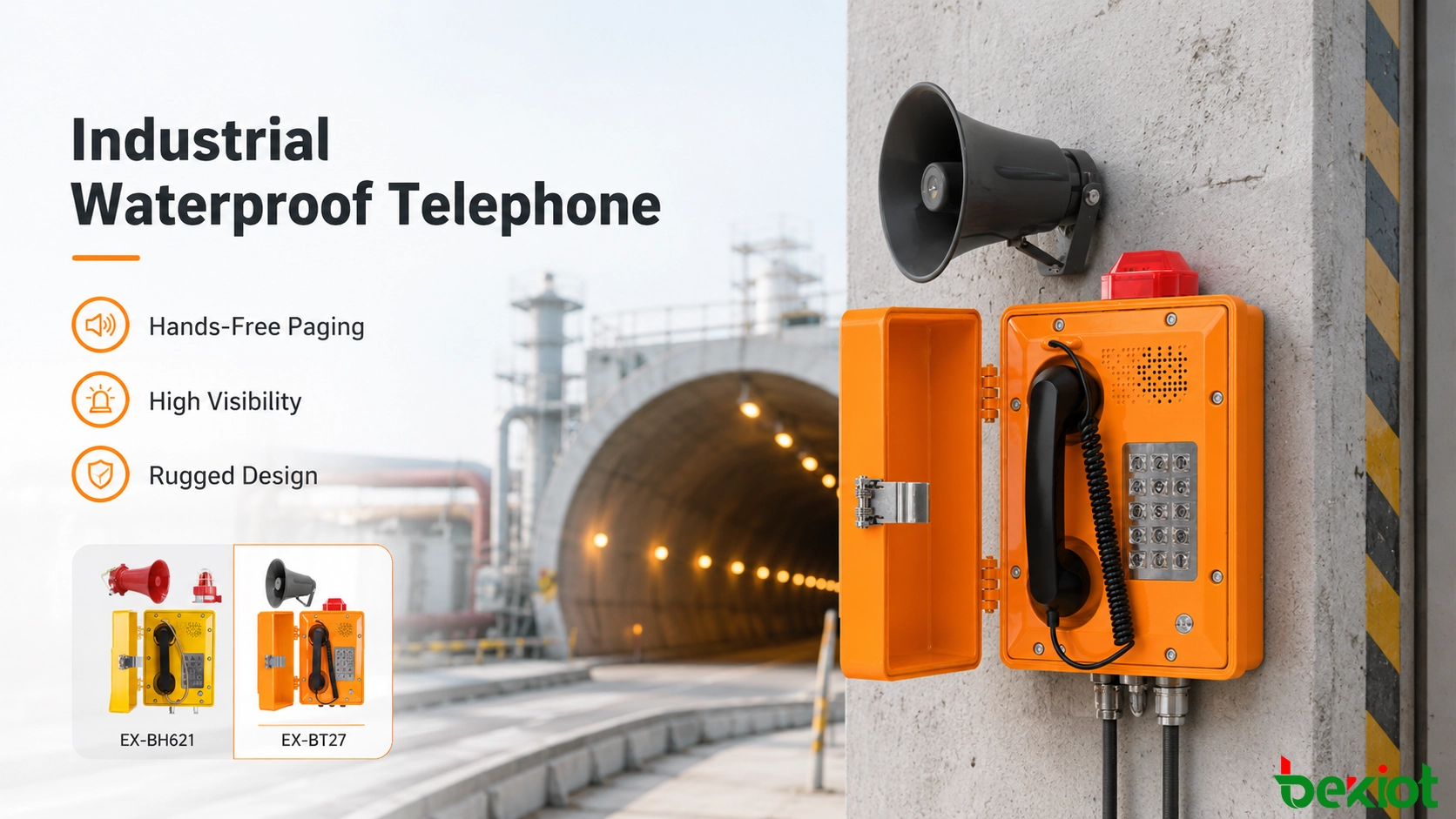
Related Product: Becke Telcom EX-BT27 Industrial Waterproof Telephone
suitable for tunnels, plants, ports and other wet, dusty or outdoor industrial locations requiring reliable fixed communication.
Start With the Site, Not the Specification Sheet
Industrial telephone selection is more reliable when engineers begin with the installation conditions rather than comparing product specifications first.
If the telephone position is already classified as a hazardous location, explosion-proof suitability becomes the first requirement. Only after this has been confirmed should the project compare IP protection, communication interfaces, keypad design, amplification functions and other features.
For a general industrial area, the questions are different. Will the telephone be directly exposed to rain? Is there persistent humidity? Is the area dusty? Will the enclosure be washed down? Is the equipment close to the coast? Are vibration, corrosion or large temperature changes expected?
These conditions determine the required enclosure and environmental protection.
Communication architecture can then be considered separately. Depending on the existing system, a project may use SIP, analog lines, hotline calling or other interfaces. Additional requirements can include numeric dialing, one-touch emergency calling, auto answer, paging, external amplification, call recording and integration with a central dispatch platform.
Communication protocol and environmental protection should not be confused.
A SIP telephone can be an office terminal, a waterproof industrial telephone or an explosion-proof telephone. SIP describes how the device communicates over the network; it does not determine whether the enclosure is suitable for rain, dust or an explosive atmosphere.
In practical industrial projects, Becke Telcom can configure explosion-proof or waterproof telephones according to hazardous-area classification, environmental conditions and the existing communication architecture, with integration into SIP, IPPBX, dispatch, paging and emergency communication systems where required.
How to Handle Mixed-Risk Environments
The installations most likely to be selected incorrectly are those where several risks exist at the same time.
Consider an outdoor telephone point inside a chemical processing area. The first task is to confirm whether the position belongs to a classified hazardous zone. If it does, explosion-proof suitability becomes mandatory before other product characteristics are considered.
The project should then evaluate rain exposure, corrosive atmosphere, ambient temperature and noise. If high noise is also present, a standard telephone ringer may be insufficient, so external amplification or visual alarm indication may be required.
Now consider a general port operating area with no hazardous classification. Rain, salt spray and outdoor weather may still be severe, but an industrial waterproof telephone can be a more appropriate solution because the primary engineering challenge is environmental durability rather than ignition risk.
This illustrates an important point: explosion protection and waterproofing are not stages on the same performance scale.
Hazardous-area classification determines explosion-protection requirements first. Environmental exposure then determines the required waterproof, dustproof and weather-resistant performance.
Conclusion
Explosion-proof and waterproof telephones can look similar, but their engineering purposes are different.
An explosion-proof telephone must first be suitable for the defined hazardous environment. A waterproof industrial telephone is primarily designed to maintain reliable communication under rain, dust, humidity, salt spray and other harsh environmental conditions.
If an installation involves explosive gases, vapors or combustible dust, hazardous-area requirements should be evaluated before IP ratings or communication features. If no explosion risk exists but the site is exposed to severe environmental conditions, IP protection, mechanical construction and outdoor durability become the main selection factors.
In outdoor hazardous areas, both requirements may apply simultaneously. Starting with the real site conditions before choosing functions, interfaces and hardware helps prevent confusion between “waterproof” and “explosion-proof” and leads to a more appropriate industrial communication design.
FAQ
Does replacing an industrial telephone with an explosion-proof model require rebuilding the whole telephone system?
Not necessarily. Explosion protection mainly relates to the field terminal and its suitability for the installation area. If the replacement device is compatible with the existing SIP, analog or dispatch communication infrastructure, the core system may often remain in service while only selected field terminals are changed.
What information should be provided when selecting an explosion-proof telephone?
Useful project information includes the installation area, required certification or hazardous-area classification, indoor or outdoor location, ambient temperature, environmental protection requirements and communication interface. High-noise locations should also indicate whether external horns, visual alarms or paging functions are required.
Can the installation method affect long-term telephone performance?
Yes. Mounting height, operating space, handset accessibility, cable-entry direction and exposure to direct weather can all influence usability and service life. Industrial installations should consider visibility, accessibility and environmental exposure rather than selecting the mounting position only according to cabling convenience.
What should be inspected on an industrial telephone used outdoors for many years?
In addition to checking calls and buttons, maintenance teams can inspect enclosure seals, handset cords, cable entries, mounting hardware and external speakers. Coastal, humid and corrosive locations may also require closer attention to connectors, brackets and metal components for signs of environmental deterioration.
Can explosion-proof and waterproof telephones operate on the same dispatch system?
Yes, provided their communication interfaces and protocols are compatible. Different types of field telephones can be deployed according to local environmental requirements while still connecting to the same SIP server, IPPBX or dispatch platform for centralized calling and communication management.