Converged communication systems and command and dispatch systems often appear in the same projects, especially in emergency response, industrial operations, transportation, utilities, public safety and large facilities. Because both can connect multiple communication channels, the two concepts are sometimes treated as interchangeable. In practice, however, they are designed around different operational goals.
A converged communication system primarily solves the problem of fragmented communications. It brings previously independent services such as voice calls, video communication, conferencing and push-to-talk into a more unified environment. A command and dispatch system goes further. Communication remains an important part of the platform, but the focus shifts toward coordinating personnel, tasks, field resources and incident response. Understanding this distinction is important when planning a system that must support both routine communication and time-critical operations.
Different Goals Behind Similar Technology
The clearest way to distinguish the two systems is to look at the problem each one is intended to solve.
Traditional communication environments often develop as separate systems. An organization may operate a telephone system for voice calls, a video conferencing platform for meetings and an independent radio or push-to-talk network for field personnel. Each system can work well on its own, but users have to switch between different terminals, applications and operating procedures.
Converged communication changes this model by treating these communication methods as parts of a broader communication environment. Users can select the most appropriate channel for a particular situation instead of being limited to one isolated system.
Command and dispatch systems start from another question: once communication resources are available, how can an organization use them to coordinate people and operations more effectively?
For that reason, dispatch platforms place greater emphasis on operational control. Operators may need to identify an incident, contact relevant personnel, organize response teams, assign tasks, view field information and coordinate different communication resources from a central position. The objective is not simply to make communication easier, but to turn communication into part of an organized operational workflow.
What Communication Convergence Actually Solves
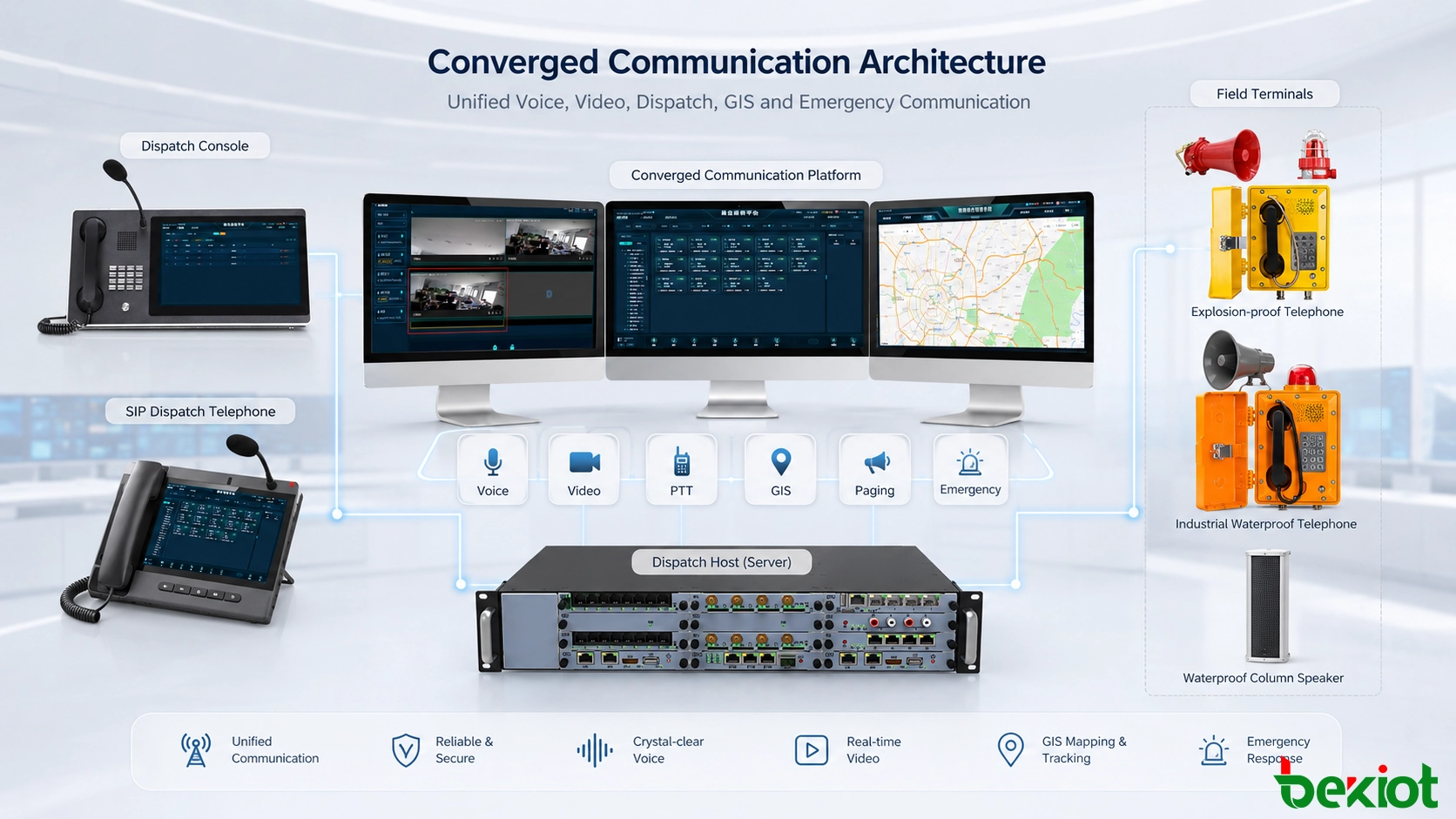
The main value of a converged communication platform is interoperability between communication methods that were traditionally separated.
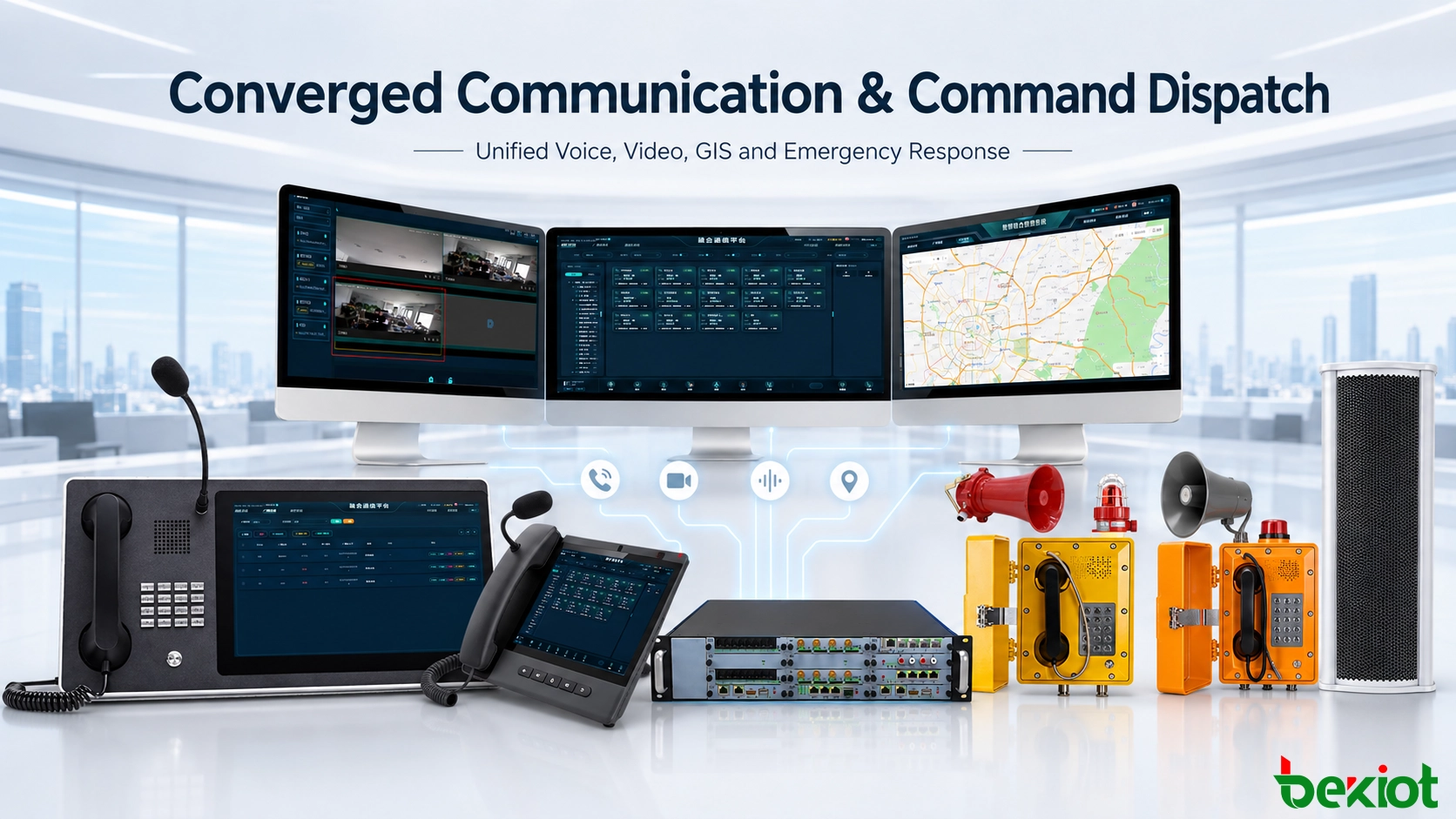
Voice remains one of the most important channels because it provides immediate person-to-person communication. Video adds visual context when operators or remote experts need to understand what is happening at another location. Conferencing allows multiple participants to discuss an issue simultaneously, while push-to-talk communication supports rapid group coordination among field teams.
Bringing these capabilities into a common environment reduces the operational barriers between different communication systems. Instead of treating telephony, video, conferencing and field communication as unrelated resources, the organization can use them according to the requirements of each event.
This approach is particularly valuable for enterprises and organizations with several departments, locations or communication networks. During normal operations, personnel may use standard voice or video communication. When collaboration becomes more complex, the same communication environment can support group communication, conferences or connections between office users and field personnel.
The key idea is flexibility. A converged communication platform does not require every situation to use the same communication method. It provides a common foundation from which different communication tools can be selected and combined.
Related Solution: Becke Telcom Converged Communication System
For organizations that need to connect different communication channels and establish a unified operating environment, a converged communication platform can provide the foundation for cross-system communication while leaving room for further dispatch and emergency-response integration.
Why Dispatch Requires More Than Communication
A command and dispatch platform can include many of the communication capabilities found in a converged system, but its operational scope is broader.
In a dispatch environment, the operator is not only choosing how to contact someone. The operator may also need to determine who should respond, where the event is taking place, which resources are available and what actions should happen next. Communication therefore becomes one element of a larger command process.
This difference is especially important in environments where events develop quickly. Public safety organizations, transportation operators, industrial facilities and emergency management centers often cannot rely on ordinary person-to-person communication alone. They need a mechanism for organizing communications around an incident or operational task.
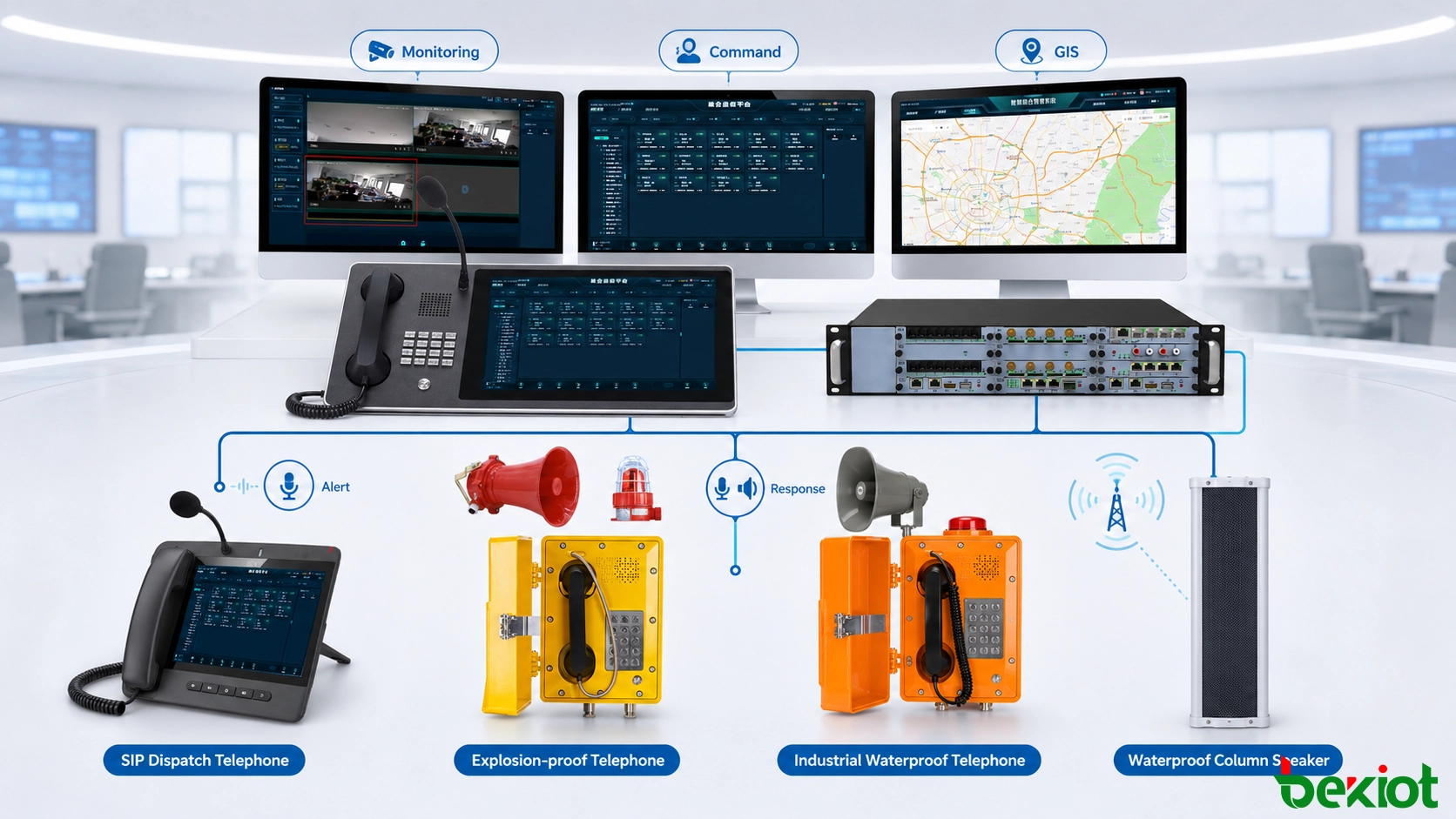
Command and dispatch systems can therefore extend beyond conventional communication resources. Depending on the project, information from video surveillance, IoT devices and other field systems can be brought into the command environment. Unmanned aerial systems may also become information sources in applications where remote observation is required.
These resources expand the operator's situational awareness. A voice report may indicate that an abnormal event has occurred, while a camera provides visual confirmation and an IoT alarm provides equipment or environmental information. The dispatch platform can then help the operator coordinate communication and response resources around the same event.
How Their Capabilities Differ in Practice
There is considerable overlap between the two types of platforms, which explains why the terminology is sometimes confusing. Some converged communication platforms include dispatch functions, while some command platforms use converged communication as their underlying communication layer.
The distinction is therefore better understood as a difference in emphasis rather than a rigid boundary.
| Comparison Area | Converged Communication | Command and Dispatch |
|---|---|---|
| Primary objective | Unify different communication methods | Coordinate operations, personnel and resources |
| Communication scope | Voice, video, conferencing, push-to-talk and related channels | Uses multiple communication channels as part of an operational workflow |
| Main user need | Flexible communication and collaboration | Rapid command, coordination and incident handling |
| Operational focus | Communication interoperability | Resource monitoring, task coordination and response management |
| External resources | Primarily communication-related systems | May extend to surveillance, IoT and other field information resources |
| Typical environment | Enterprise and organizational collaboration | Public safety, emergency response, transportation, industry and other coordinated operations |
An organization mainly concerned with reducing communication silos may place greater emphasis on convergence. An organization responsible for coordinating complex field operations will usually require more extensive command and dispatch capabilities.
Many real projects need both. The communication layer provides reliable connectivity between different users and terminals, while the dispatch layer gives operators the tools required to organize those resources according to actual operational priorities.
Where the Two Approaches Work Together
Converged communication and command dispatch are not competing architectures. In many projects, they complement each other.
Consider an emergency situation at a large industrial facility. A field worker first reports an abnormal condition using a telephone, intercom or push-to-talk terminal. The control center receives the report and needs to contact several departments. Maintenance personnel may communicate by radio, managers may join a voice or video conference and other employees may receive a broadcast or group notification.
Communication convergence makes these different channels easier to connect. Command and dispatch capabilities then allow the control center to organize them around the incident: identifying relevant personnel, contacting teams, confirming the situation and maintaining coordination while the response progresses.
A similar model can be applied in transportation. Routine communication between control rooms, stations and field personnel can operate through the unified communication environment. When an equipment failure, safety incident or service disruption occurs, dispatch capabilities help the control center coordinate different teams and communication resources according to the developing situation.
Public safety environments provide another clear example. Multiple communication methods may be required to connect control centers and field responders, but communication alone does not determine how resources should be deployed. Dispatch functions provide the operational layer required to coordinate the response.
Building an Integrated Operational Architecture
When both communication convergence and operational coordination are required, system planning should begin with business processes rather than with a list of individual devices.
The first question is which communication resources already exist. An organization may have office telephony, industrial phones, push-to-talk networks, video communication, conferencing systems or other communication channels. Understanding these resources helps determine where communication remains fragmented and which systems need to interact.
The next step is to identify the events that require centralized coordination. Routine internal calls may only require unified communications, while alarms, equipment failures, emergency requests and large-scale incidents may need a dispatch process involving several departments.
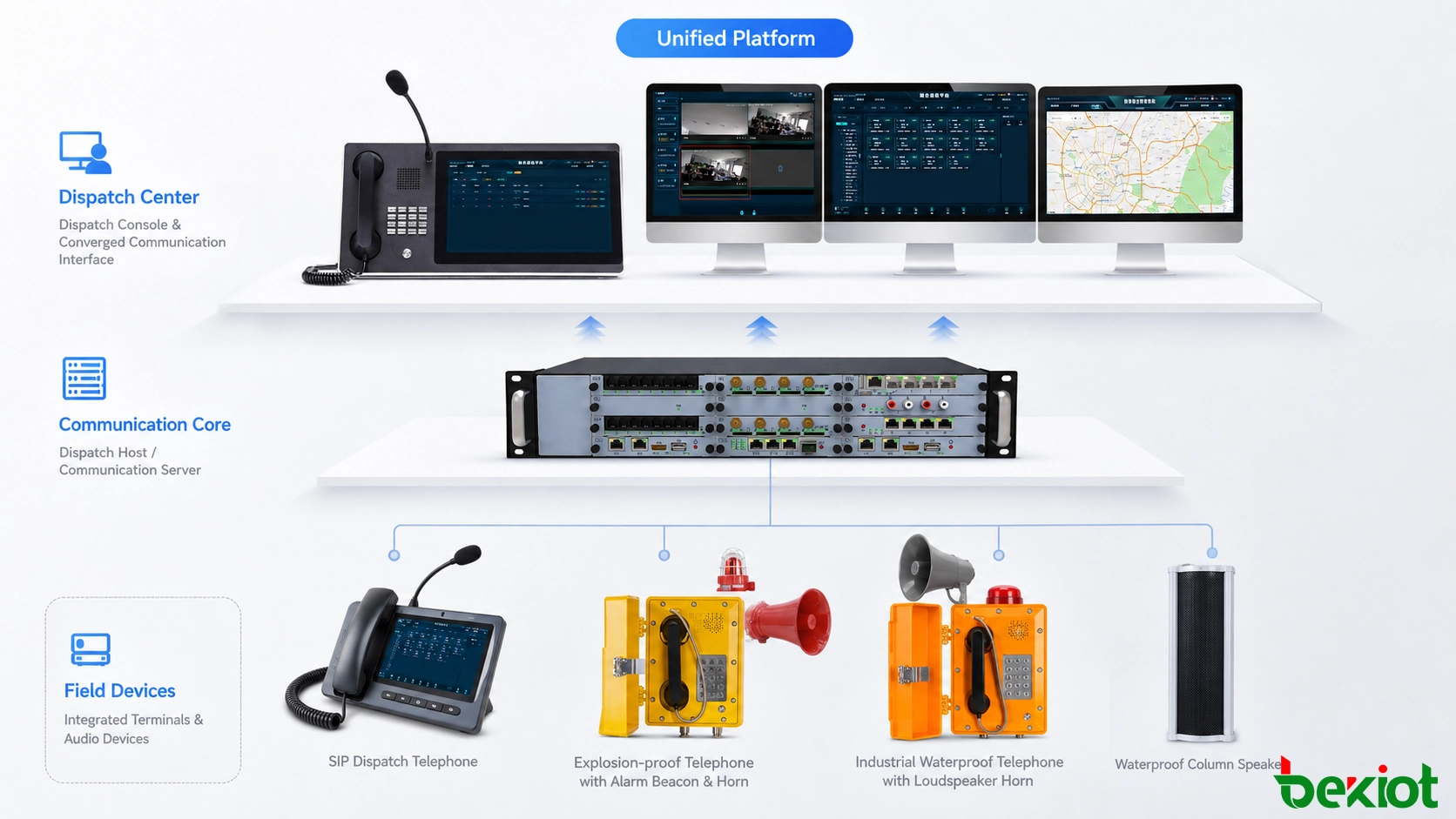
The architecture can then be designed in layers. Communication resources provide connectivity between users and locations. The convergence layer allows different communication channels to interact. The command layer organizes personnel, information and communication resources around actual operational tasks.
This layered approach also makes the distinction between the two concepts clearer. Convergence answers the question, “How can different users and communication systems communicate with one another?” Dispatch answers the question, “How should those communication resources be used when an event requires coordinated action?”
For larger deployments, it is also useful to consider whether surveillance, alarms, maps, sensors or other operational systems need to participate in the workflow. These systems do not replace communication, but their information can give operators additional context when deciding whom to contact and what actions to initiate.
Choosing the Right System for the Project
The correct choice depends on the operational problem rather than on the name of the platform.
If the primary challenge is that users rely on separate voice, video, conferencing and field communication systems, a converged communication architecture should be the priority. Its value lies in removing communication barriers and giving users more flexible ways to collaborate.
If the project must manage incidents, coordinate departments, organize field teams or bring multiple operational resources under centralized control, command and dispatch capabilities become more important.
In critical environments, the strongest design is often a combination of both. A unified communication foundation ensures that different users can reach each other, while the dispatch environment allows operators to turn those connections into coordinated action.
Organizations should therefore avoid evaluating the platforms solely by comparing feature lists. Two systems may both support voice, video or push-to-talk communication while serving very different operational purposes. The more useful question is how communication should support the organization's actual workflow before, during and after an operational event.
Conclusion
Converged communication systems and command and dispatch systems share many underlying communication technologies, but they are built around different priorities. Converged communication focuses on bringing separate communication channels together so that users can communicate and collaborate more flexibly. Command and dispatch systems use those communication resources within a broader framework for coordinating personnel, tasks, incidents and field resources.
The two approaches do not need to be separated in a modern deployment. In many industrial, transportation, emergency and public safety projects, converged communication can provide the communication foundation while command and dispatch functions provide the operational control layer. Designing the system around this relationship helps organizations build a communication environment that supports both everyday collaboration and coordinated response when conditions become more complex.
FAQ
Does building an integrated platform mean all existing communication systems must be replaced?
Not necessarily. A practical project can evaluate existing communication resources first and determine which systems should remain, which require interfaces and which should be upgraded. The objective is effective interoperability rather than replacement for its own sake.
Should every operator have access to every communication resource?
Usually not. Access can be organized according to operational roles, departments and responsibilities so that users only control the resources relevant to their work. This can also make the dispatch interface easier to operate during time-sensitive situations.
What should be tested before an integrated communication platform goes live?
Testing should cover communication paths, terminal availability, cross-system calling, group communication, network interruptions and common operational scenarios. Emergency workflows should also be tested with the personnel who will actually use the system.
Why is interface simplicity important in a command environment?
Operators may need to make decisions quickly while handling several communication channels at the same time. A clear interface reduces unnecessary operating steps and helps users identify contacts, events and available resources more efficiently.
Can the system be expanded after the initial deployment?
Expansion should be considered during architecture planning. Organizations may initially unify essential communication services and later connect additional sites, operational systems or field resources as requirements develop.