


Zone 21 is a hazardous area classification used for places where an explosive atmosphere in the form of a cloud of combustible dust in air is likely to occur occasionally during normal operation. In practical terms, it sits between Zone 20, where an explosive dust atmosphere is present continuously, for long periods, or frequently, and Zone 22, where dust clouds are not likely in normal operation and, if they do occur, persist only for a short time. This classification is widely used in industrial sectors that handle powders, fibers, granules, and fine particulate materials that can form ignitable dust clouds when released, dispersed, or disturbed.
Understanding Zone 21 matters because combustible dust hazards are often underestimated. Dust may accumulate quietly on equipment surfaces, inside conveying systems, or around transfer points. Once dispersed in air and exposed to a sufficient ignition source, that dust cloud can ignite rapidly. As a result, the classification of a Zone 21 area affects equipment selection, enclosure design, temperature limitation, cable entries, inspection routines, and the overall approach to explosion protection.
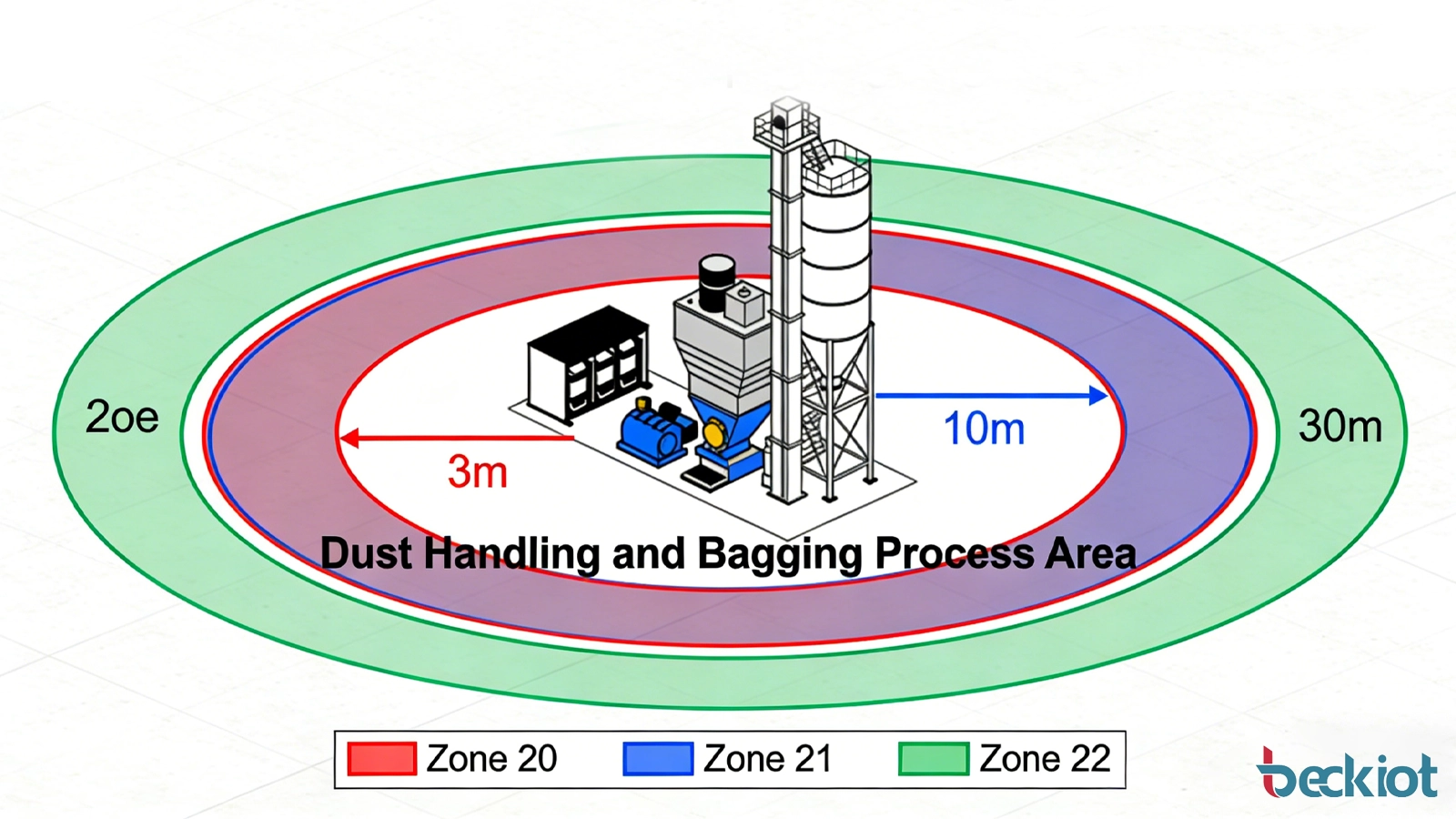
What Is a Zone 21 Dust Hazardous Area?
A Zone 21 dust hazardous area is a place where a combustible dust cloud is likely to occur occasionally in normal operation. The phrase “normal operation” is important. It does not only refer to ideal operation under laboratory conditions. It also covers the kinds of releases that can happen during ordinary industrial activity, such as filling, emptying, transfer, screening, mixing, or cleaning cycles. If those ordinary activities can create a combustible dust cloud from time to time, the surrounding area may need to be classified as Zone 21.
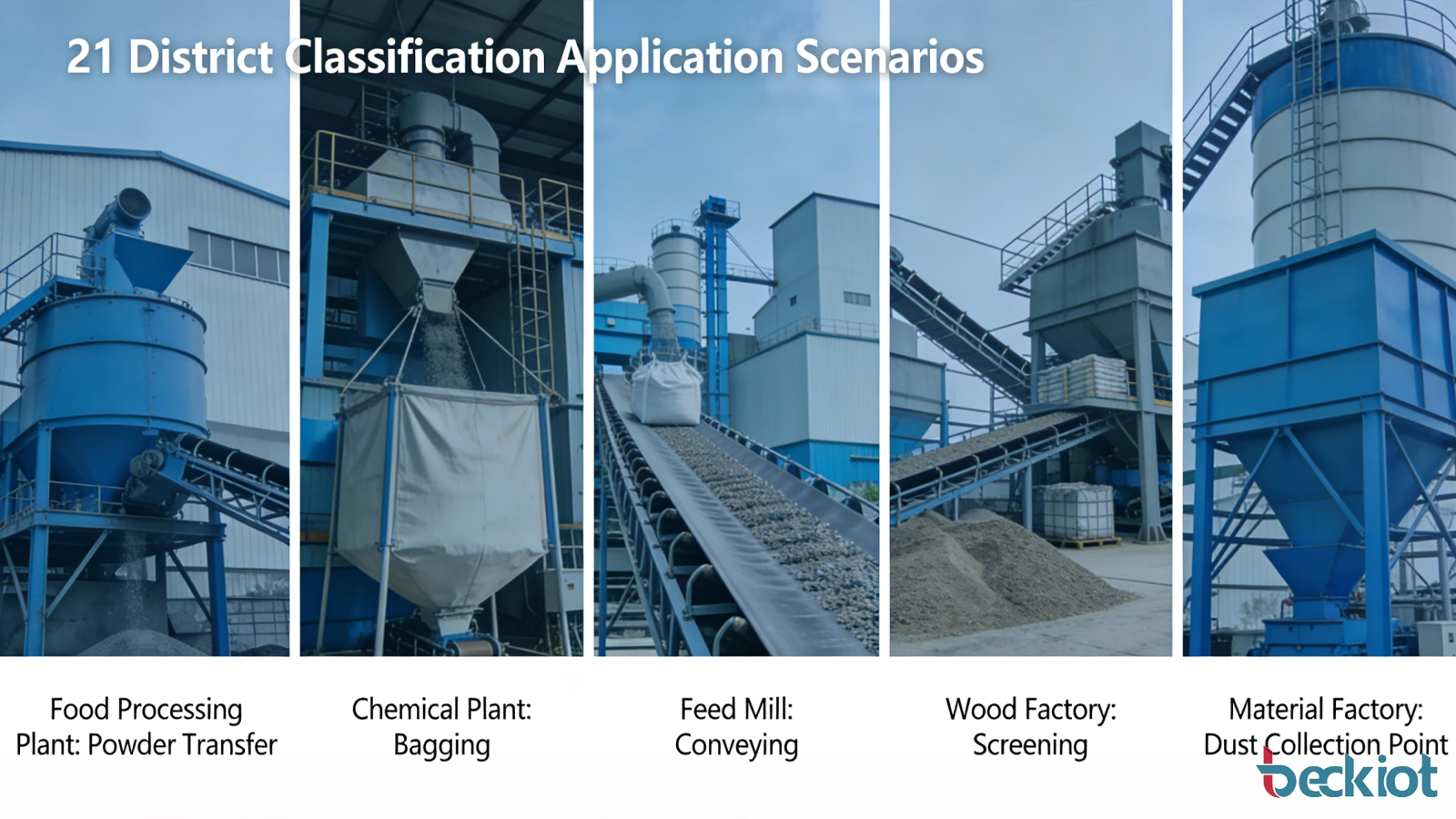
Typical Zone 21 locations include the area around bag dump stations, bucket elevator discharge points, conveyors, mixers, mills, sifters, cyclones, packaging machines, and inspection openings on dust-handling equipment. In food plants, this may involve flour, sugar, starch, milk powder, cocoa, and feed dust. In wood processing, it can involve sanding and cutting dust. In chemical and pharmaceutical plants, it may involve fine organic powders. In metals, certain finely divided materials can also create combustible dust hazards under the right conditions.
Zone 21 is not defined by dust alone. The dust must be combustible, it must be capable of dispersing into air, and the release scenario must be credible in normal operation. Area classification therefore depends on the material properties, release frequency, ventilation, housekeeping, layer accumulation, equipment layout, and process behavior.
Which Standards Define Zone 21?
The main international framework comes from the IEC 60079 series. For dust area classification, IEC 60079-10-2 addresses explosive dust atmospheres and provides the basis for deciding whether an area should be classified as Zone 20, Zone 21, or Zone 22. For equipment construction, testing, and marking, IEC 60079-0 sets the general requirements for Ex equipment, while IEC 60079-31 covers protection by enclosure “t” for explosive dust atmospheres. For design, selection, and installation of electrical equipment, IEC 60079-14 is the core reference, and lifecycle inspection and maintenance are addressed through IEC 60079-17.
In the European market, the ATEX framework is also highly important. Directive 1999/92/EC deals with workplace safety and hazardous area classification, including the formal definition of Zone 21 for combustible dust atmospheres. Directive 2014/34/EU addresses equipment and protective systems intended for use in potentially explosive atmospheres. Under ATEX, Zone 21 normally requires equipment suitable for Category 2D applications, which corresponds to a high level of protection for dust hazards.
These standards and directives work together rather than independently. Area classification determines the hazard level, product standards determine how equipment is designed and tested, and installation and maintenance standards determine whether the protection concept remains valid throughout the equipment’s service life.
How Zone 21 Is Evaluated in Practice
In real facilities, Zone 21 is determined through a risk-based area classification study. Engineers examine the source of dust release, the quantity of dust, the way dust disperses, the likelihood of cloud formation, the effectiveness of ventilation, and the duration for which an explosive atmosphere may remain present. Dust layers are also important, because accumulated dust can be lifted into the air by airflow, vibration, mechanical disturbance, or cleaning activity. In addition, hot surfaces covered by dust layers can create ignition risk even without a visible dust cloud.
Because of this, area classification is not only about airborne dust at one moment in time. It also considers how the plant behaves over time. A transfer point that releases dust briefly but repeatedly during every batch cycle may still justify Zone 21 classification. Likewise, a hopper inspection area that is frequently opened during ordinary operation can create an occasional but expected release pattern. Good housekeeping and extraction can reduce the extent of the hazardous zone, but they do not remove the need for proper classification when combustible dust release remains credible.
Protection Ratings and Ex Markings for Zone 21
One of the most important ideas in Zone 21 equipment selection is that ordinary dustproof performance is not enough by itself. A product must be suitable for explosive dust atmospheres, not merely resistant to dirt ingress. That is why engineers look beyond a simple IP rating and evaluate the full Ex marking, enclosure concept, temperature limitation, certification basis, and installation conditions.
1. Equipment protection level and ATEX category
Zone 21 commonly aligns with Equipment Protection Level Db in the IEC system and with Category 2D in the ATEX framework. This indicates equipment intended for use where an explosive dust atmosphere is likely to occur occasionally in normal operation. In other words, the product must provide a high level of protection for dust hazards, not just normal industrial durability.
2. Protection by enclosure “t”
For many electrical products used in dust atmospheres, the typical protection concept is Ex t, also written in markings such as Ex tb. IEC 60079-31 addresses this protection technique. It focuses on preventing dust ingress into the enclosure and limiting surface temperature so that dust clouds or dust layers are not ignited. For Zone 21 use, the marking often includes the “b” level, such as Ex tb, together with the appropriate dust group and EPL.
3. Dust groups IIIA, IIIB, and IIIC
Dust atmospheres are further divided into Group III categories. IIIA covers combustible flyings, IIIB covers non-conductive dust, and IIIC covers conductive dust. This matters because conductive dust is generally more demanding from an equipment design perspective. A Zone 21 product marked for Group IIIC can normally address less severe IIIA and IIIB applications as well, but the reverse is not true.
4. Surface temperature marking
For dust hazards, temperature control is critical. Equipment markings often specify a maximum surface temperature, such as T85°C or T120°C. The selected product must remain below the ignition characteristics of the actual dust present, with suitable engineering margin. This is especially important where dust layers can build up, because an insulating dust layer can raise equipment surface temperature and change ignition risk.
5. IP protection and enclosure integrity
IP ratings still matter, but they should be read correctly. IEC 60529 defines the IP code system for enclosure protection against ingress of solid particles and liquids. In dust hazardous areas, a high dust ingress protection level is often required to support the Ex protection concept. In practice, engineers often look for dust-tight enclosures such as IP6X, especially where fine dust and aggressive cleaning conditions are present. However, an IP rating alone does not prove suitability for Zone 21. It must be combined with the correct Ex design, testing, marking, and certification basis.
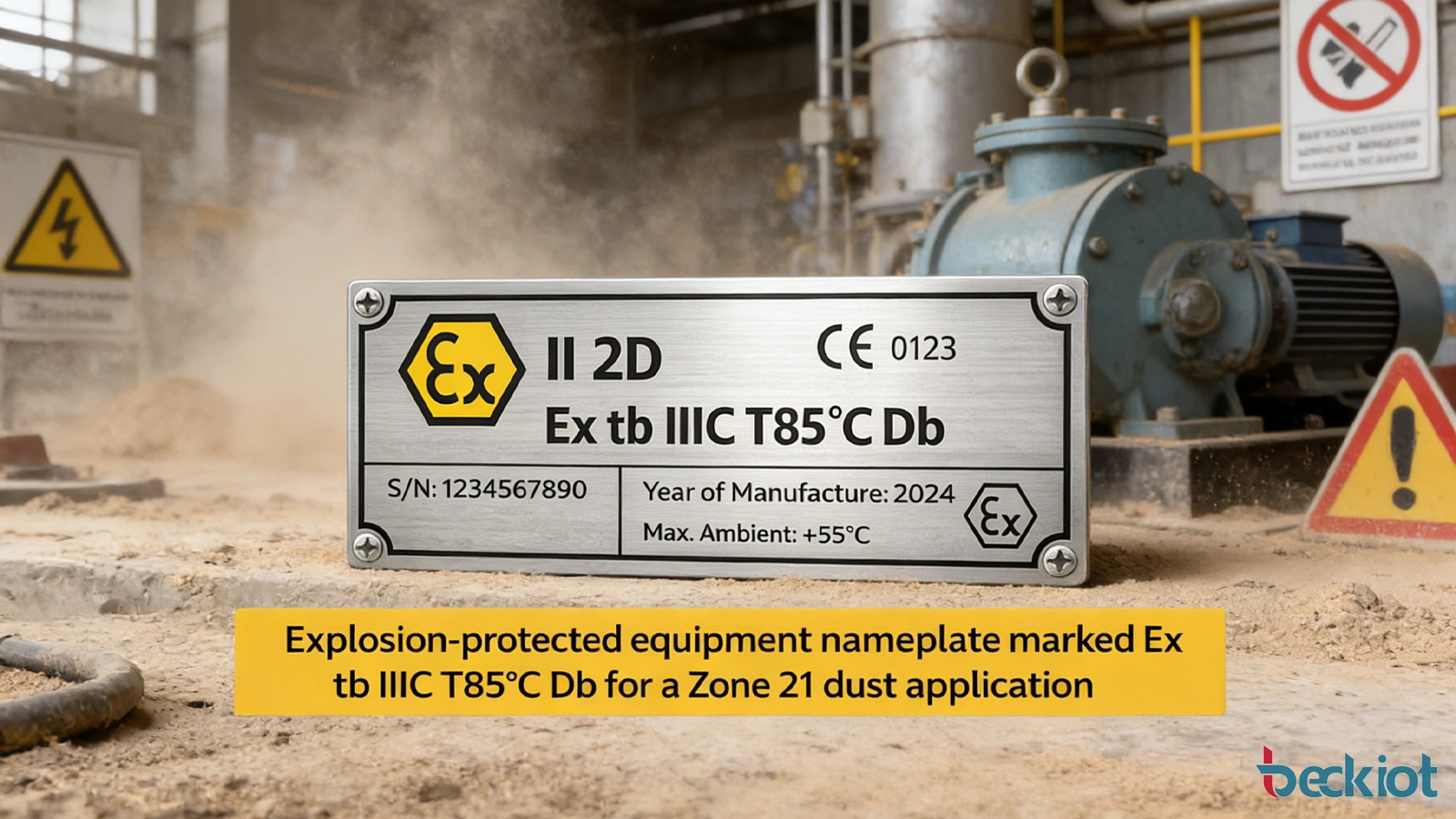
A typical marking for a Zone 21 dust application may look like this:
Ex tb IIIC T85°C Db
Ex identifies explosion-protected equipment.
tb indicates protection by enclosure “t” at the relevant level for dust.
IIIC identifies the most demanding dust group for conductive dust.
T85°C states the maximum permitted surface temperature.
Db identifies the equipment protection level suitable for Zone 21.
Why IP Rating and Ex Rating Are Not the Same
This is one of the most common sources of confusion. An IP66 or IP67 enclosure may be very useful in dusty or wet industrial environments, but it is not automatically explosion-protected equipment. The IP code mainly indicates resistance to ingress of solids and water under defined test conditions. Zone 21 suitability, by contrast, depends on whether the equipment has been designed and assessed so it will not ignite a surrounding explosive dust atmosphere. That requires consideration of enclosure design, thermal behavior, fault conditions, materials, dust ingress resistance, marking, and certification.
In short, IP rating supports environmental protection, while Ex rating addresses ignition risk in explosive atmospheres. For Zone 21, both may be important, but they are not interchangeable.
Typical Applications of Zone 21 Equipment
Zone 21 equipment is used across many industries where combustible dust can be released during ordinary operation. The following examples are among the most common:
Food and grain processing: flour mills, feed mills, sugar handling, starch processing, cereal transfer, and milk powder packaging.
Wood processing: sawmills, sanding lines, woodworking extraction systems, pellet plants, and panel manufacturing.
Chemical and pharmaceutical plants: fine organic powders, additives, intermediates, and batch material transfer points.
Metals and advanced materials: selected fine metallic powders, carbon dust, and specialty material handling systems.
Recycling and bulk solids handling: transfer points, separators, shredding lines, dosing systems, and dust collection interfaces.
In these environments, common Zone 21 products may include industrial telephones, intercom stations, local control stations, junction boxes, lighting, loudspeakers, alarm devices, sensors, motors, cable glands, and camera housings, provided they are correctly certified and installed for dust hazardous use.
Selection and Installation Considerations for Zone 21
Choosing equipment for Zone 21 is not only a matter of buying a certified product. The installation must preserve the protection concept. Cable entries, glands, plugs, stopping elements, seals, mounting methods, and maintenance access all need to match the certified conditions of use. Dust accumulation around heat-generating devices should be considered during layout. Ventilation and extraction systems should be reviewed alongside the electrical design rather than as a separate issue.
Engineers should also verify the actual dust properties of the facility, including particle behavior, layer formation tendency, ignition characteristics, and conductivity where relevant. A product suitable for one powder handling line may not be suitable for another if the dust group or temperature profile changes. This is why nameplate data, certificates, and installation instructions should always be checked against the site classification study.
Common Mistakes in Zone 21 Projects
Assuming ordinary industrial dustproof equipment is automatically suitable for explosive dust atmospheres.
Selecting by IP rating alone and ignoring Ex marking, dust group, and surface temperature data.
Ignoring conductive dust risk where IIIC equipment may be required.
Failing to account for dust layer build-up on enclosure surfaces.
Using certified equipment but installing it with incompatible glands, entries, or accessories.
Treating area classification as a paperwork exercise instead of a real engineering evaluation.
FAQ
Is Zone 21 more dangerous than Zone 22?
Yes. Zone 21 indicates that an explosive dust atmosphere is likely to occur occasionally in normal operation, while Zone 22 means it is not likely in normal operation and, if it occurs, it should persist only briefly.
What type of equipment is typically used in Zone 21?
Equipment with a dust-suitable Ex protection concept, often marked with EPL Db and frequently using protection by enclosure such as Ex tb, is commonly selected for Zone 21 applications. The exact choice depends on the dust group, temperature requirement, and installation conditions.
Is IP65 enough for Zone 21?
Not by itself. IP protection alone does not establish explosion protection. A Zone 21 product must have the correct Ex design, marking, and certification in addition to an appropriate enclosure protection level.
What is the difference between Zone 20 and Zone 21?
Zone 20 applies where an explosive dust atmosphere is present continuously, for long periods, or frequently. Zone 21 applies where it is likely to occur occasionally in normal operation.
Can dust layers be hazardous even without a visible dust cloud?
Yes. Dust layers can become dangerous because they may be disturbed and dispersed into the air, and they can also insulate hot surfaces and increase ignition risk. That is why housekeeping and temperature control are both important in dust hazardous areas.
Does Zone 21 only apply indoors?
No. Although many dust process hazards are indoors, Zone 21 can also exist outdoors where combustible dust is released, settles, and can be dispersed under normal operating conditions.
Conclusion
Zone 21 is an important classification for facilities where combustible dust clouds can occur occasionally during normal operation. It is governed by recognized frameworks such as IEC 60079 and ATEX, and it requires more than general industrial durability. Correct equipment selection depends on the full protection concept, including Ex marking, EPL or category, dust group, surface temperature, enclosure integrity, and compliant installation. When these elements are evaluated together, Zone 21 protection becomes a structured engineering task rather than a guess based on appearance or generic dustproof claims.







