


Radio communication is still essential in many industries because it offers instant group calling, simple push-to-talk operation, and dependable field coordination. Police departments, transportation operators, industrial sites, utilities, mining teams, and emergency response organizations continue to rely on radio networks for daily operations and urgent situations. At the same time, modern communication environments are increasingly IP-based, which means voice traffic, dispatch systems, monitoring tools, and remote control platforms are now expected to work across local networks, wide area networks, and distributed control centers.
Related Products:ROIP(Radio Over IP )_RoIP Gateway Equipment & Software
A RoIP gateway helps bridge these two worlds. Instead of replacing radio systems, it connects them to IP networks so radio traffic can travel farther, be managed more centrally, and integrate more easily with modern command and communication platforms. For organizations that need to link field radio users with control rooms, remote sites, or multi-agency operations, a RoIP gateway often becomes a practical and scalable part of the overall communication architecture.
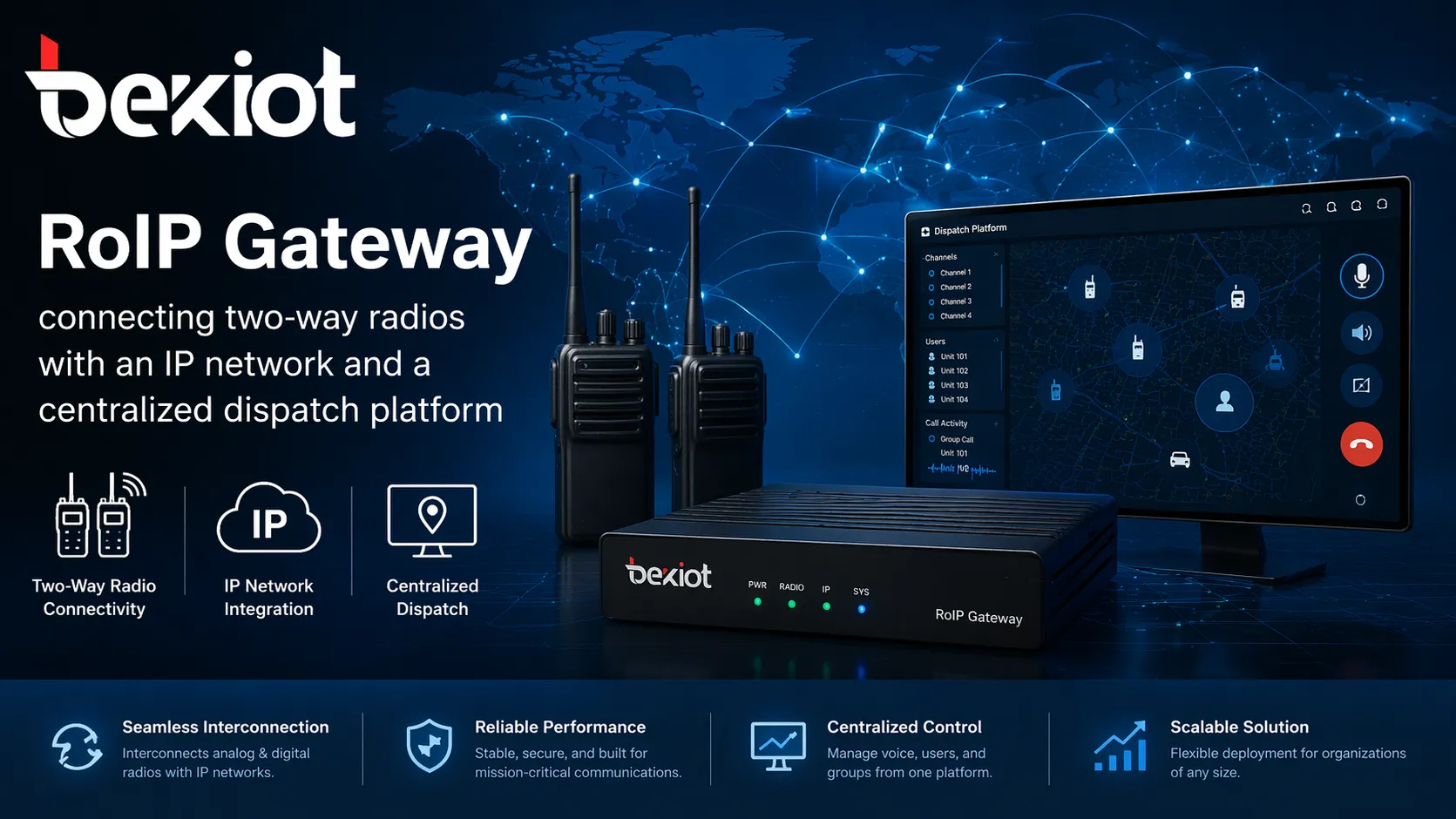
What Is a RoIP Gateway?
A RoIP gateway, short for Radio over IP gateway, is a device that connects radio communication equipment to an IP network. Its main purpose is to convert radio audio and control signals into IP data so those signals can be transmitted across a LAN, WAN, private network, VPN, or other IP-based infrastructure. In simple terms, it acts as a bridge between conventional radio systems and modern networked communication environments.
In a traditional radio-only setup, communication is often limited by the range of the radio infrastructure, the location of repeaters or base stations, and the separation between operational teams. A RoIP gateway extends the usefulness of those radio assets by allowing radio traffic to move through an IP network to other locations, dispatch centers, or interconnected systems. This can make a local radio resource part of a much wider communication framework.
It is important to understand that a RoIP gateway is not the same as a handheld radio, base station, or repeater. Those devices are part of the radio system itself. The gateway serves as an interface layer that links radio channels to networked applications, remote users, and command systems. Because of that role, it is often used in projects where radio communications must be shared, extended, monitored, or integrated with broader operational platforms.
A simple way to define a RoIP gateway is this: it allows radio communications to travel through an IP network instead of staying only within the physical limits of a standalone radio system.
How Does a RoIP Gateway Work?
Radio Signal Input and Interface
The process begins on the radio side. A RoIP gateway is connected to radio equipment such as a base radio, mobile radio, repeater, or other radio terminal interface. At this point, the gateway receives audio from radio users along with related control signals such as push-to-talk events or channel activity. Depending on the design, the connection may be made through analog audio ports, digital interfaces, accessory connectors, or dedicated control ports supported by the radio system.
This first stage is important because it allows the gateway to capture not only the voice traffic but also the behavior that makes radio communication operationally useful. In many deployments, it is not enough to move audio alone. The system must also recognize when a user is transmitting, when a channel is busy, and when a dispatch operator should be able to key a remote radio from another location.
Conversion from Radio Audio to IP Packets
Once the gateway receives the radio-side audio and control information, it converts that information into IP packets. This is the heart of Radio over IP. The gateway encodes voice, packages the data for network transport, and prepares it to move through the IP infrastructure. In many systems, this makes it possible to carry radio traffic over standard Ethernet networks, long-distance fiber links, private WANs, or secure VPN tunnels between remote facilities.
Because the communication is now packet-based, radio traffic can be transmitted far beyond the original coverage footprint of a single radio site. A user speaking into a radio in one location can be heard at another distant site if the network connection is available and the system has been configured to route the traffic correctly. This is one of the main reasons RoIP gateways are used in distributed operations.
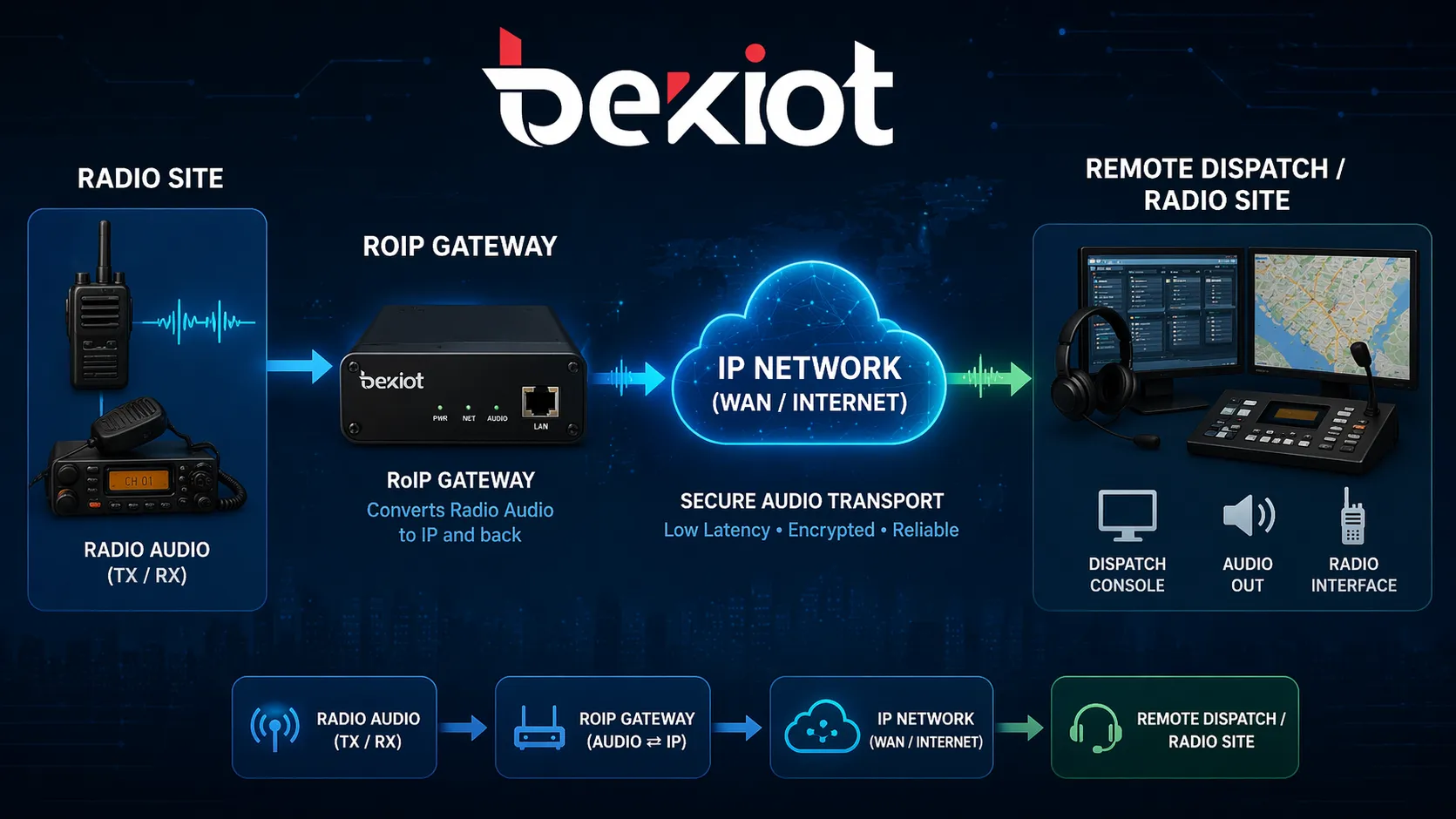
Transmission Across the IP Network
After conversion, the radio traffic travels through the IP network just like other voice or data streams. The exact transport path depends on the project design. Some organizations use a secure private network between substations or control rooms. Others use an enterprise WAN, a dedicated industrial backbone, or a combination of IP routing and VPN technology to connect geographically separated facilities. This flexibility is what makes RoIP useful in wide-area operations.
Because the transport layer is network-based, radio resources can be shared between remote control points, regional dispatch centers, backup communication rooms, and emergency command posts. Instead of forcing all users to remain near one radio site, the organization can distribute access across the network. That improves resilience and often simplifies system expansion when operations grow across multiple sites.
Reconstruction, Output, and Remote Control
At the destination, another RoIP-capable device, dispatch console, or connected endpoint receives the IP traffic and reconstructs it into usable radio audio or operator audio. In some cases, the signal is sent back into another radio system so remote users can hear and respond through local radio equipment. In other cases, the destination is a software dispatch platform where an operator monitors channels, selects talk groups, records traffic, or transmits back to the field.
This two-way behavior is what turns RoIP from a passive transport tool into an operational communication solution. A control room can listen to remote radio channels, key a remote transmitter, coordinate multiple field teams, or connect isolated radio islands into one managed communication environment. For many users, that is the real value of the gateway: not only moving audio, but also enabling remote command and coordinated radio operations.
The usual signal path is easy to picture: radio device to gateway, gateway to IP network, IP network to remote gateway or dispatch platform, then back out to radio or operator endpoints.
Core Features of a RoIP Gateway
Long-Distance Radio Extension
One of the most recognized features of a RoIP gateway is its ability to extend radio communication beyond the normal geographic boundaries of a standalone radio system. Once radio traffic is placed on an IP network, it can be carried to remote offices, branch facilities, transport corridors, regional command rooms, or backup control centers. That makes RoIP especially useful in wide-area infrastructure and multi-site operations.
For organizations with facilities spread across cities, districts, or industrial zones, this capability reduces the isolation of individual radio systems. Instead of treating each site as a disconnected communication island, the network can link them into a broader and more coordinated operating model.
Centralized Dispatch and Monitoring
RoIP gateways are often deployed so a centralized dispatch platform can monitor and manage radio communications from one location. Dispatchers can listen to field channels, communicate with remote users, manage traffic priorities, and coordinate response activities across different areas. This improves visibility and allows operational decisions to be made with better real-time awareness.
Centralization also helps with system administration. Recording, maintenance, network supervision, and event logging can be handled more consistently when radio resources are accessible through the IP layer. This is one reason RoIP is frequently used in control room environments.
Interconnection of Remote Sites
A RoIP gateway is useful wherever an organization needs to interconnect separate radio sites. These may be remote substations, highway control points, mine sections, rail corridors, utility service regions, or separate campus security zones. The gateway makes it possible for those sites to communicate through a shared network backbone without relying only on local radio reach.
This feature supports more flexible operational design. A team in one area can communicate with users in another area without building a completely new standalone communication structure for every location. The result is often better resource use and simpler coordination between distributed teams.
Integration with IP-Based Communication Systems
Another major feature is the ability to integrate radio communication with broader IP-based systems. Depending on the solution design, RoIP gateways may work alongside dispatch consoles, network management tools, voice recording platforms, SIP telephony environments, and unified communication or emergency command systems. This helps organizations bring radio traffic into a more modern and interoperable framework.
That integration matters because communication today is rarely limited to one device type or one network. Field teams may use radios, while supervisors use dispatch software, and managers rely on IP communication platforms. A RoIP gateway helps connect those layers in a more practical way.
Scalability for Expanding Operations
RoIP systems can often scale more easily than purely isolated radio setups because the IP network provides a flexible transport layer. As operations expand, additional sites, channels, operator positions, or linked radio resources can be added in stages. This makes the gateway a suitable building block for organizations that expect future growth or staged deployment across a large area.
Scalability is not only about size. It is also about operational flexibility. A system that starts with a few linked radios can later support wider-area dispatch, remote access, multi-site coordination, and stronger communication continuity planning.
Why Organizations Use RoIP Gateways
The decision to deploy a RoIP gateway usually comes from a practical operational need rather than from technology for its own sake. Many organizations already have working radio systems, but those systems may be hard to manage across distance, difficult to integrate with newer control platforms, or limited when teams must collaborate across separate sites. A gateway improves the value of existing radio investments by making them more connected and easier to coordinate.
RoIP also supports resilience. In some communication architectures, a remote control room or backup command location can still access radio resources through the IP network if local operating patterns change during an incident. This kind of flexibility is useful in mission-critical environments where communication continuity matters. The gateway therefore serves both operational efficiency and emergency preparedness.
RoIP Gateway vs. Traditional Radio-Only Communication
To truly understand the impact of RoIP, it helps to compare it directly with traditional, standalone radio systems.
The Limitations of Traditional Radio Systems:
Coverage is strictly limited by physical terrain, obstacles, and antenna power.
Interconnecting different radio sites or different frequency bands is notoriously difficult and expensive.
They are highly isolated, making it hard to integrate them into modern, software-based dispatch platforms.
Remote maintenance, troubleshooting, and centralized management capabilities are weak.
The Improvements Brought by RoIP Gateways:
IP-Driven Coverage: Extends communication ranges globally via any available IP network.
Multi-Site Interoperability: Easily connects multiple sites, brands, and frequencies.
System Integration: Readily connects with SIP phones, dispatch software, recording servers, and monitoring systems.
Modern Architecture: Perfectly fits into modern command-and-control IT infrastructures, offering remote configuration and easy scaling.
Common Applications of RoIP Gateways
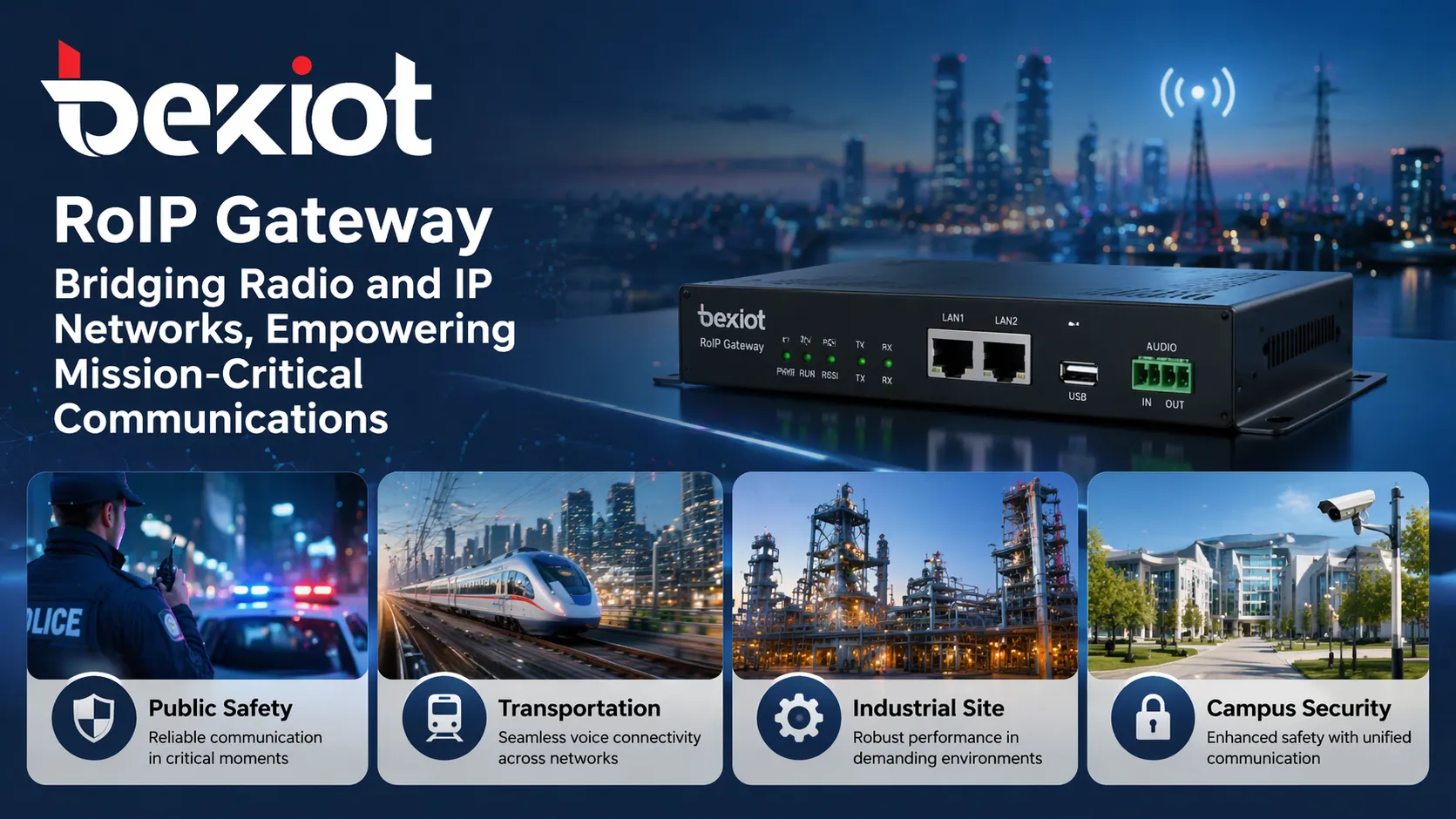
Public Safety and Emergency Response
Police, fire, rescue, emergency management, and disaster response organizations often need to coordinate radio users across multiple operational areas. A RoIP gateway allows those radio channels to be shared with centralized dispatch centers, mobile command posts, and remote support locations. This improves communication reach and can support faster coordination between field units and command staff.
In major incidents, geographically separated teams may need to work together even though they are using radio systems from different locations. RoIP provides a way to carry those communications across the network and support broader situational coordination.
Transportation Systems
Transportation networks such as rail transit, metro systems, highways, airports, and ports often cover large and operationally complex areas. Field workers, maintenance teams, security staff, and control center personnel may all rely on radio communication. A RoIP gateway helps connect those field communications back to the control room and across remote operational zones.
This is especially useful when the communication architecture must support both routine operations and emergency incident handling. By linking radio communications to the IP backbone, transportation operators can create a more unified communication environment across stations, corridors, terminals, and control centers.
Industrial, Energy, and Mining Sites
Large industrial sites often include broad production areas, hazardous zones, outdoor operations, and remote facilities where radio remains the most practical communication method. In oil and gas, power generation, mining, manufacturing, and heavy industry, RoIP gateways are used to connect radio users in the field with supervisors, dispatchers, and control room teams.
This improves coordination for routine production work, maintenance activities, safety management, and emergency response. For organizations with more than one plant, pit, yard, or operating block, RoIP can also help link those separate radio resources into a more manageable networked structure.
Utilities and Critical Infrastructure
Utilities such as electric power, water treatment, pipeline operations, and municipal infrastructure maintenance often work across distributed assets. Crews may be dispatched over wide territories while supervisors monitor operations from central facilities. A RoIP gateway makes it easier to keep radio communication connected across those distances using the existing IP backbone or secure network infrastructure.
Because utility services are often essential and geographically dispersed, communication systems must support both everyday field coordination and incident response. RoIP helps meet that requirement by giving radio traffic a broader and more controllable transport path.
Campus, Healthcare, and Large-Site Security
Universities, hospitals, industrial parks, and large commercial campuses may use radio for security patrols, facility response teams, operations staff, and emergency coordination. A RoIP gateway allows those radio users to be linked with security control rooms, central monitoring points, and broader emergency communication systems. That creates a more unified operating picture across a large site.
In these environments, the value of RoIP is often less about extreme distance and more about organized communication management. Security, facilities, and response teams can remain radio-based in the field while supervisory staff gain centralized access and better coordination tools.
RoIP gateways are most valuable where operations are spread out, response times matter, and radio users in the field must stay connected to centralized command or multi-site coordination systems.
Conclusion
A RoIP gateway is a practical communication bridge that connects traditional radio systems to modern IP networks. By converting radio audio and control signals into network-transmissible data, it allows radio communications to travel farther, be managed more centrally, and become part of a wider operational communication framework. This makes it useful far beyond the boundaries of a standalone local radio system.
For public safety, transportation, industrial sites, utilities, and large security operations, RoIP gateways support more flexible and scalable communication architecture. They help organizations preserve the speed and simplicity of radio communication while adding the reach, control, and integration advantages of IP networking. In environments where coordination across distance is essential, a RoIP gateway is often a key component of a modern communication solution.
FAQ
What does RoIP stand for?
RoIP stands for Radio over IP. It refers to the transmission of radio audio and related control signals over an IP-based network.
A RoIP gateway is the device that makes this connection possible between radio equipment and the network layer.
What is a RoIP gateway used for?
A RoIP gateway is used to connect radio systems to IP networks so radio communications can be extended, shared, monitored, and managed across multiple locations.
It is commonly used when field radio users need to communicate with centralized dispatch centers, remote sites, or broader command systems.
Is a RoIP gateway the same as a radio repeater?
No. A radio repeater mainly extends radio coverage within the radio domain, while a RoIP gateway connects radio communication to an IP network.
That means a gateway is focused on network transport, remote access, and integration, rather than only boosting or repeating radio signals over the air.
Can a RoIP gateway connect multiple sites?
Yes. One of the main advantages of a RoIP gateway is that it can help connect radio resources across geographically separate sites through an IP network.
This makes it suitable for regional operations, wide-area dispatch, and organizations with distributed facilities.
Where are RoIP gateways commonly used?
RoIP gateways are commonly used in public safety, transportation, industrial operations, utilities, mining, campus security, and other mission-critical communication environments.
They are especially useful wherever radio communication must be coordinated across distance and linked with centralized command or dispatch systems.







