
Oil and gas processing units, solvent transfer stations, and paint lines can all generate flammable gases or vapors, but not the whole plant belongs to the same hazard level. On North American engineering drawings, equipment nameplates, and procurement specifications, Class I, Division 1 (abbreviated Class I Div 1 or C1D1) is an important hazardous area classification, meaning that under specific process conditions an ignitable flammable gas or vapor mixture may be present.
Understanding C1D1 starts with separating two concepts: the area is determined by hazardous area classification, while the equipment must prove that it is suitable for that area. “Class I, Division 1” is not a generic quality certification applied to ordinary industrial products, nor can it be inferred from water resistance, corrosion resistance, or a metal enclosure. Only by checking the area class, gas group, temperature conditions, protection method, and installation method together can a complete selection basis be established.
Definition and Hazard Boundary of Class I, Division 1
Class I Means Gas and Vapor Hazard
The traditional North American Class/Division system divides hazardous locations by the category of combustible material. Class I covers flammable gases and vapors released from flammable liquids; Class II mainly covers combustible dust; Class III involves ignitable fibers and flyings. A facility may involve different categories in different rooms or process sections, and all areas with explosion risk cannot simply be labeled Class I.
How Division 1 Is Determined
According to the basic definition of North American hazardous location classification, Class I, Division 1 mainly involves the following situations: an ignitable concentration of flammable gas or vapor may occur during normal operation; it occurs frequently due to repair, maintenance, or leakage; or a hazardous concentration may be released during equipment or process failure while an electrical equipment failure also occurs, creating an ignition risk. The basis is actual process conditions, not simply whether an odor is noticeable on site.
By contrast, Division 2 focuses more on environments normally controlled by closed systems, where hazardous media may be released only under abnormal damage or abnormal operation. The boundary between Division 1 and Division 2 should be determined by qualified personnel considering release sources, operating mode, ventilation, and equipment layout. Pump areas, valve groups, sampling points, and adjacent walkways in the same workshop may have different classification results.
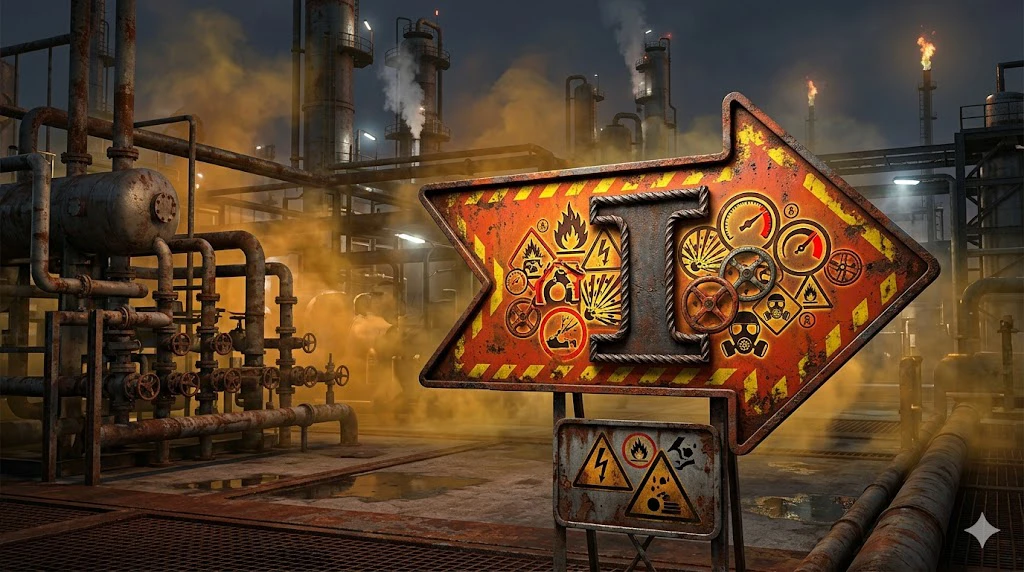
North American Regulatory Framework and Compliance Responsibility
In US projects, OSHA regulations on hazardous locations, the applicable edition of NFPA 70 “National Electrical Code” (NEC), and the approval basis for specific equipment together form the technical review framework. OSHA 29 CFR 1910.399 defines area categories, 1910.307 sets requirements for electrical equipment and installations in hazardous locations, and the NEC guides the design, wiring, and construction of electrical systems in classified areas. The edition actually adopted must follow the requirements of the project location and the decision of the authority having jurisdiction (AHJ).
On the equipment side, common technical bases include UL 1203 (explosionproof and dust-ignition-protected electrical equipment for specific hazardous locations) and UL 913 (intrinsically safe equipment and associated apparatus). However, mentioning a UL standard in technical documentation does not mean that a specific product has obtained the corresponding certification; valid certification records, model, marking, and restrictive conditions must be checked.
Engineering designer: confirm the process medium, release sources, ventilation conditions, area class, and applicable standards.
Product supplier: provide nameplate information, certification scope, and installation instructions matching the actually purchased model.
Installation and acceptance: check whether cables, conduits, seals, grounding, and explosion protection structures comply with the design and approved installation conditions.
Operation and maintenance: keep area drawings, equipment lists, inspection records, and change history to avoid maintenance activities degrading the original protection performance.
For international projects, ATEX, IECEx, or other system certificates may help engineering evaluation, but it must not be concluded, merely from the certificate name, that it automatically meets North American Class I, Division 1 installation requirements. The certification method recognized in the project jurisdiction and the specific equipment marking should be checked.
How to Read a Complete C1D1 Equipment Marking
“Class I, Div 1” on the equipment label is only part of the selection conditions. Gas group, temperature class, applicable ambient temperature, protection method, and certificate conditions also need to be checked. For electrical communication terminals, the line interface and connected associated equipment may also be subject to certification conditions.
| Check Item | Technical Information Represented | Common Selection Risk |
|---|---|---|
| Class | Hazardous medium category; Class I corresponds to gas or vapor | Confusing dust/fiber hazard with gas hazard |
| Division | Conditions and frequency of the hazardous environment | Using Division 2-only equipment in place of Division 1 equipment |
| Gas Group | Gas or vapor group A, B, C, D, etc. | Checking only the area class and ignoring the specific medium |
| Temperature Code | Maximum surface temperature class of the equipment under specified conditions | Hot surfaces may exceed the allowable medium conditions |
| Protection / Approval | Recognized ignition protection method and scope of application | Judging compliance only by a rugged enclosure, brochure, or similar model |
| Ambient / Conditions | Rated ambient temperature, installation limits, and additional conditions | On-site high/low temperature or wiring method exceeding approved conditions |
Gas Groups A, B, C, and D Cannot Be Substituted Freely
In the Class I system, Group A is typically represented by acetylene, Group B by hydrogen, Group C by ethylene, and Group D by propane. The division reflects ignition and explosion propagation characteristics of different gases or vapors. Equipment marked for Group D cannot be used directly in a Group B or Group A environment; the actual medium and certification coverage must be confirmed item by item.
T Code Controls Hot-Surface Ignition Risk
Ignition sources in hazardous locations are not only electrical sparks; equipment surfaces overheated during operation can also ignite the surrounding atmosphere. In common temperature codes, T1, T2, T3, T4, T5, and T6 correspond to maximum surface temperatures of 450°C, 300°C, 200°C, 135°C, 100°C, and 85°C, respectively, with finer subclasses also available. The selected equipment temperature class must meet the autoignition temperature requirements of the on-site medium and the applicable standard conditions, and cannot be decided only by the size of the letter or number.
For example, if equipment documentation states “Class I, Division 1, Groups C,D, T4”, it only means that the declared application boundary involves the corresponding category, group, and temperature class; it is a marking reading example and does not represent the existence of a specific certified product. Actual procurement still requires checking the complete nameplate, certification documents, and ambient temperature conditions.
Choosing Explosionproof, Intrinsically Safe, and Other Protection Methods
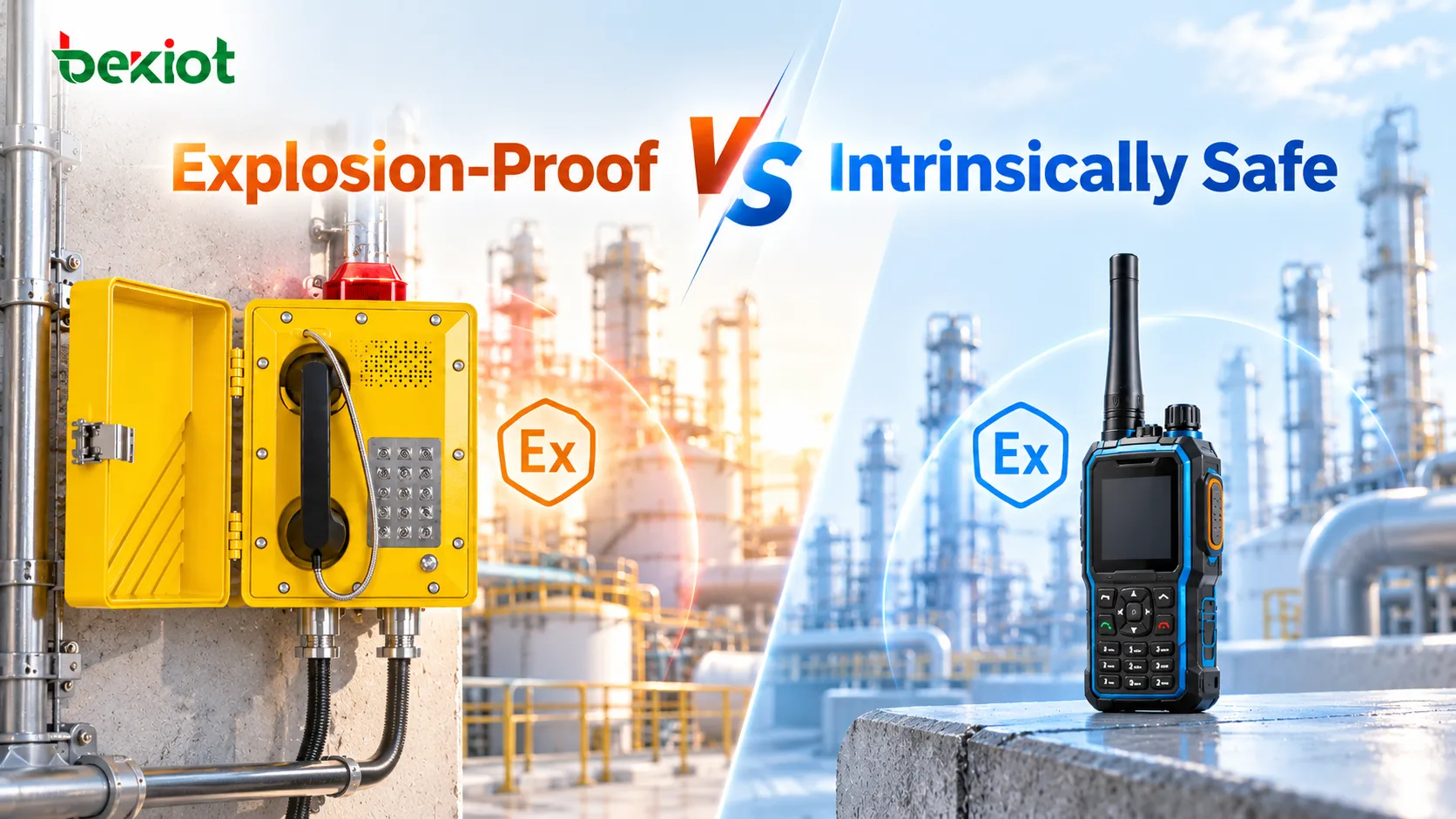
Explosionproof
Explosionproof electrical equipment withstands a possible internal explosion under specified conditions through a verified enclosure and joint structure, and prevents internal flames or hot gases from igniting the specified external atmosphere. It does not guarantee that combustion will never occur inside the equipment, nor does it mean “the thicker the metal enclosure, the safer”. Enclosure joints, fasteners, entries, and sealing structures must maintain the certified design state.
This protection method can be found in industrial control boxes, lighting devices, field operation stations, and some fixed communication equipment. During installation, attention should be paid to cable entry method, thread matching, wiring compartment, seals, and manufacturer-specified maintenance methods; unauthorized drilling, connector modification, or replacement with incompatible parts may invalidate the original explosion protection performance.
Intrinsically Safe
Intrinsic safety starts from circuit energy and limits the electrical and thermal energy that may be generated under normal and specified fault conditions to a level insufficient to ignite the target hazardous atmosphere. It is often used in sensors, instrument loops, low-power signal equipment, and some communication terminals. Its safety depends not only on the field device itself but may also depend on safety barriers, isolators, associated apparatus, and system parameters such as line capacitance and inductance.
An “intrinsically safe terminal” does not mean it can be connected to any switch, power supply, or cable. The complete circuit and associated equipment must be reviewed through the control drawing, parameter matching, and isolation measures. Some approved pressurization or purging protection schemes may also apply to specific locations, but they must be implemented according to their dedicated design and approval conditions; protection methods cannot be substituted for one another.
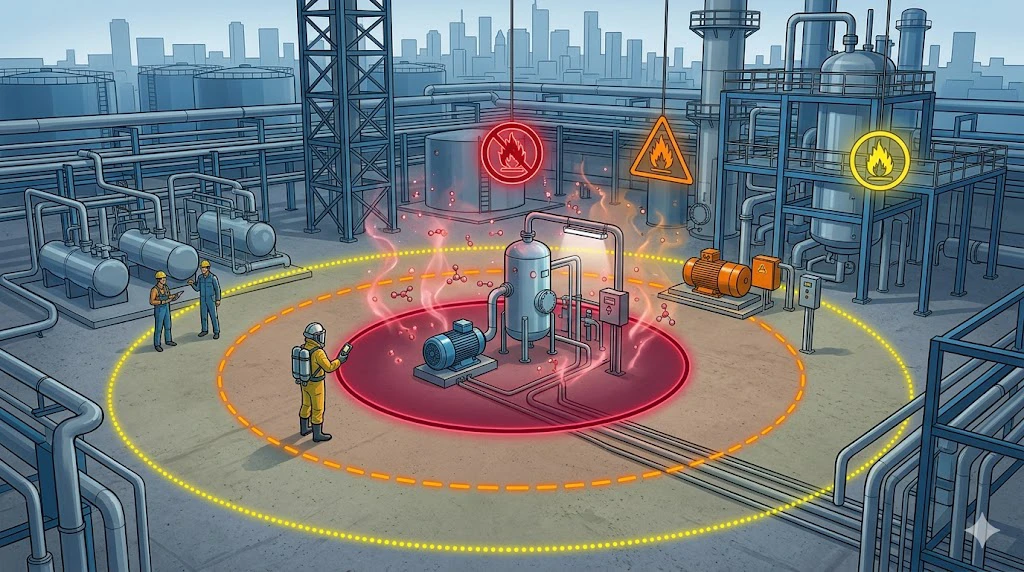
Differences Between Division 1, Division 2, and Zone 1
North American engineering may use the Class/Division system and the Class/Zone system; international projects also commonly use IEC/ATEX Zone classification. All evaluate the likelihood of explosive atmospheres, but differ in definition framework, approval route, and equipment marking; the number “1” should not be understood as interchangeable.
| Classification Name | Basic Evaluation Approach | Selection Considerations |
|---|---|---|
| Class I, Division 1 | Ignitable gas or vapor concentration may occur under normal operation, frequent maintenance leakage, or specified fault combinations | Check equipment suitability under the Division system and complete gas and temperature marking |
| Class I, Division 2 | Normal state is usually controlled by closure or other measures; hazardous concentrations are mainly related to abnormal situations | Division 2 equipment cannot be used directly in Division 1 |
| Zone 0 | Explosive gas atmosphere present continuously or for long periods | Stricter equipment suitability requirements than general Zone 1 scenarios |
| Zone 1 | Explosive gas atmosphere may occur during normal operation | Review according to the Zone system adopted by the project and the equipment marking |
| Zone 2 | Not likely during normal operation; if it occurs, usually for a short time | The Division approval scope cannot be replaced only on the basis of similar meaning |
Some Division 1 conditions may conceptually overlap with Zone 0 or Zone 1 scenarios, but Division 1 is not equal to ATEX Zone 1. When equipment has dual-system marking, the hazardous environments, gas groups, and temperature classes permitted by each marking must be checked separately, and the project area classification documents and local authority requirements must be followed.
For the same Class and gas group, equipment approved for Division 1 can generally also be used in Division 2; however, temperature, environment, wiring, and equipment approval conditions must still be met. Conversely, Division 2-only equipment cannot be used in Division 1 merely because of similar appearance.
Which Industrial Locations May Be Class I, Division 1
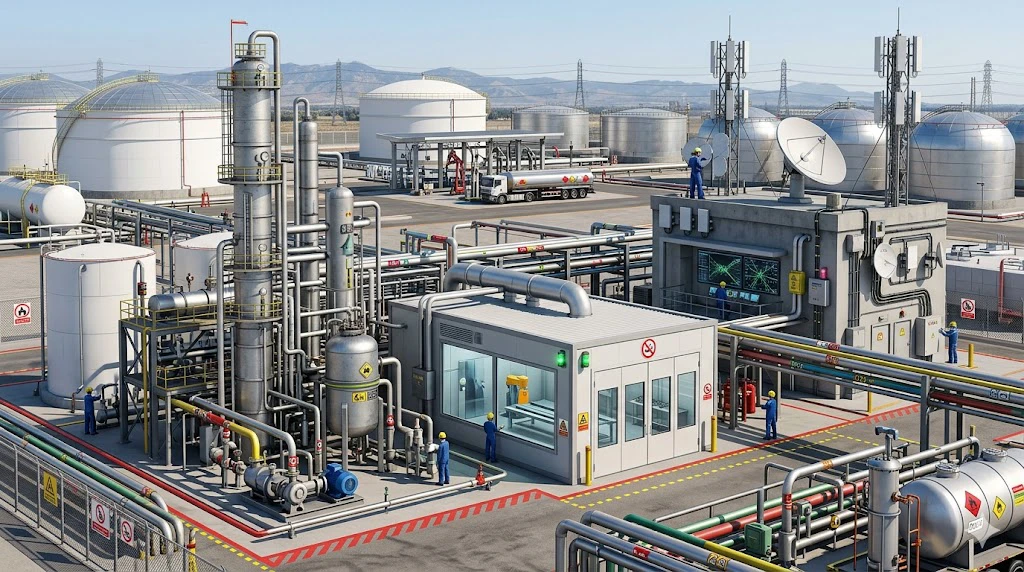
C1D1 is often related to release points of flammable media rather than one-to-one with an industry name. Area classification usually requires analyzing medium properties, number of release sources, operating and maintenance frequency, ventilation effectiveness, and spatial relationship with adjacent equipment.
Oil and Gas Extraction, Storage, Transport, and Loading
Wellhead processing units, areas near separators, sampling points, tank farm loading interfaces, pump seals, and some analyzer houses may require Division 1 determination. An ordinary walkway along closed piping far from the release source does not necessarily belong to the same class as the loading connection point. Hazard boundaries must be determined according to actual conditions and approved area drawings.
Chemical Solvents and Painting Processes
Solvent transfer, open reactors, drum filling, mixing stations, and painting areas using volatile solvents may form flammable vapors during normal operation. Local exhaust, degree of enclosure, and working method affect the hazardous extent; the area cannot be classified only by building appearance or equipment protection rating.
Industrial Communication and Alarm Points
Explosion-protected telephones, emergency call stations, intercom terminals, alarm buttons, audible and visual alarm devices, and public address equipment in hazardous areas are also electrical installations requiring review. Particular attention: even if the IP PBX or control server is installed in a safe area, telephones, gateway interfaces, power supplies, and wiring components located in the hazardous area must still meet applicable local requirements. An ordinary SIP phone with an added waterproof box cannot be used as C1D1 equipment.
Why IP, NEMA, and Corrosion Resistance Ratings Cannot Replace Explosion Protection Approval
Industrial equipment often carries IP66, IP67, NEMA 4X, salt spray resistance, or impact resistance markings. These indicators address the enclosure's ability to adapt to water, dust, corrosion, and mechanical environments, while C1D1 suitability addresses ignition risk in flammable gas or vapor atmospheres. The two requirements are independent and often need to be met simultaneously.
IP66: generally indicates dust protection and protection against strong water jets; it does not prove that internal electrical sparks will not ignite flammable gas.
IP67: generally involves dust protection and short-term immersion capability under specified conditions; it cannot be directly equated with all high-pressure washdown or corrosion resistance requirements.
NEMA 4X: emphasizes enclosure protection and corrosion resistance in specific environments, but does not automatically grant Class I, Division 1 suitability.
Salt spray, UV, and impact resistance: can affect long-term reliability, but cannot replace hazardous area class, gas group, and temperature marking.
For example, an industrial telephone on an outdoor chemical platform may require both C1D1 suitability and resistance to rain, salt spray, sunlight, and temperature changes. Engineering selection should list the two sets of conditions separately, rather than using only the general term “explosionproof waterproof telephone”. The equipment's environmental rating should also match cable glands, mounting accessories, and on-site maintenance methods.
Selection Process from Area Classification Drawing to Equipment Procurement
A reliable procurement process starts with on-site hazard information, not with selecting a product first and then looking for a certificate. Design, procurement, and installation personnel can form a traceable selection record through the following steps.
Confirm spatial scope: obtain the approved hazardous area classification drawing, plan location, equipment installation height, and release source description, and verify whether the target point is in Division 1, Division 2, or a non-hazardous area.
Clarify the medium: collect the name, composition, and operating data of flammable gases or vapors, and determine the gas group and related ignition characteristics according to applicable standards; mixed media cannot be simply classified by name.
Determine temperature conditions: check the required T code, autoignition temperature, maximum and minimum ambient temperatures, and whether the equipment may be affected by solar radiation, process heat sources, or deposits.
Select the protection scheme: according to power consumption, wiring method, and maintenance needs, choose an approved explosionproof, intrinsically safe, or other suitable method; check associated equipment and overall system conditions.
Verify evidence: compare the nameplate, complete model, certification documents, applicable gas group, rated ambient temperature, and installation instructions item by item with the project requirements.
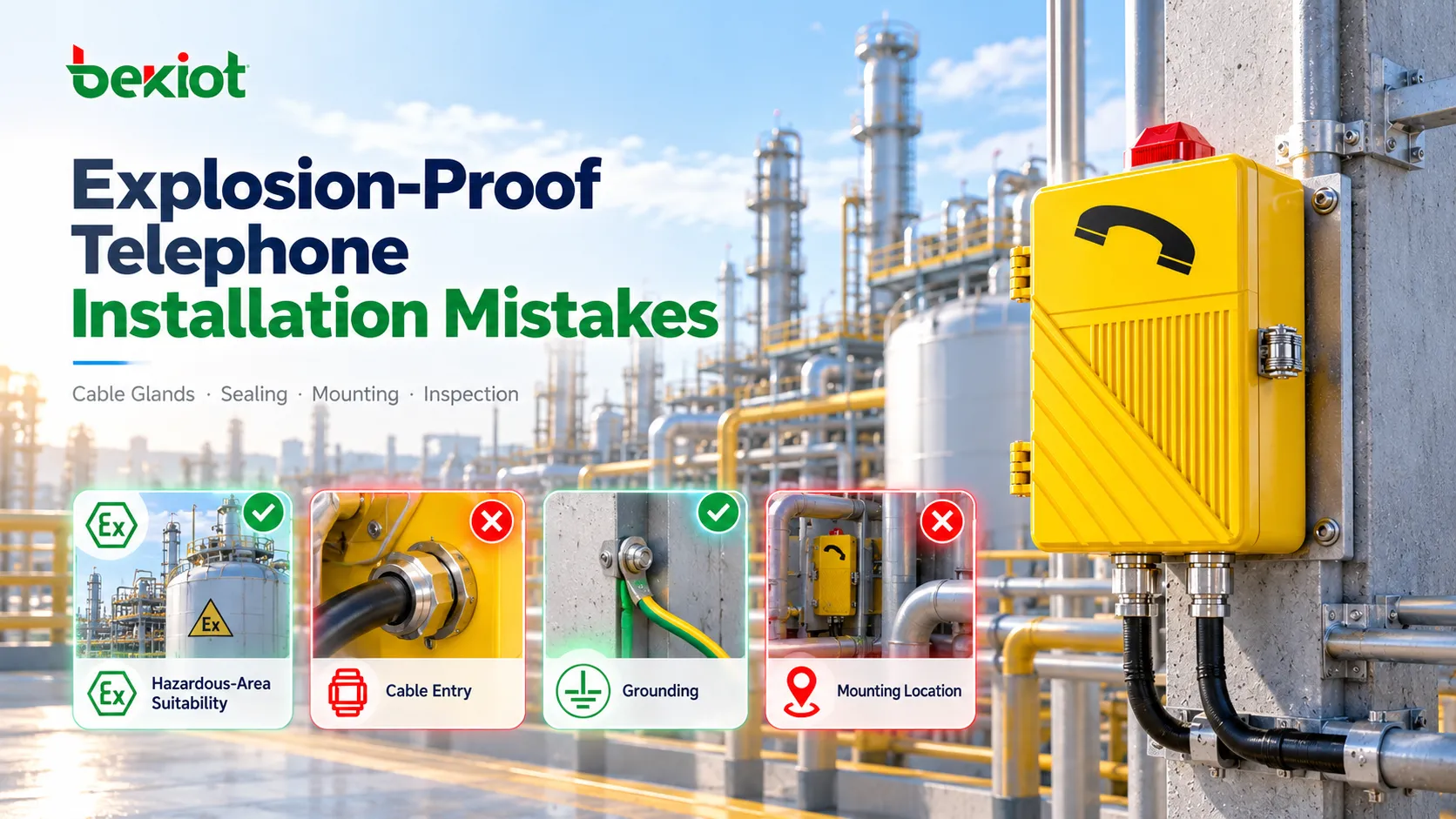
Review field interfaces: confirm that cable entries, conduits, explosion protection seals, terminals, grounding, power supply, and communication lines can be installed in the approved manner, avoiding accessories becoming the weak link.
Check environmental and operational requirements: separately review IP/NEMA protection, corrosion, vibration, impact, cleaning, audibility, communication method, and on-site personnel operation requirements.
Form an acceptance checklist: write key nameplate information, wiring diagram, approval conditions, test scope, and equipment point numbers into the procurement and acceptance documents.
For industrial communication systems, the equipment boundary between hazardous and safe areas should also be defined in advance. For example, a dispatch platform in a safe area can connect to approved terminals in a hazardous area, but whether the terminal and its circuit are allowed to use the corresponding power supply or data interface must be jointly confirmed by the equipment certification conditions and system design; compatibility cannot be assumed merely because the communication protocol is also SIP.
Installation Acceptance, Maintenance Management, and Common Misunderstandings
Installation Does Not End with “Mounting Certified Equipment on the Wall”
Approved equipment can only perform its intended protection function when installation conditions are met. During construction, check cable glands, conduit threads, seal positions, grounding and equipotential bonding, sealing of unused entries, enclosure fastening, and manufacturer-required accessories. For intrinsically safe circuits, also check the isolation method, associated equipment, cable parameters, and circuit documentation. All operations should be performed by personnel with appropriate qualifications according to valid standards.
During commissioning, both electrical safety and actual function should be verified. For hazardous area telephones or one-touch alarm terminals, call establishment, alarm triggering, power failure, and linkage with the control center should be tested, but a so-called “explosion protection test” must not be performed by unauthorized opening of an energized explosionproof enclosure or artificially creating a flammable gas environment.
Operation and Maintenance Must Maintain the Approved State
During operation, regularly check enclosure damage, corrosion, seal condition, fasteners, cable entries, grounding, and abnormal temperature rise. Before replacing parts, modifying wiring, adding external speakers, or changing the power supply, verify whether the original certification and installation scope are exceeded. When process media change, ventilation is modified, or tank conditions change, the applicability of the area classification needs to be re-evaluated.
| Common Misunderstanding | Actual Risk | Correct Approach |
|---|---|---|
| Waterproof certification is enough for Division 1 | Enclosure water resistance does not mean ignition prevention capability | Check C1D1 approval scope and environmental rating separately |
| Explosionproof marking applies to all gases | Group, temperature, and certification conditions remain limited | Confirm the actual medium and complete nameplate |
| One certificate covers all series models | Certification may apply only to specific models and configurations | Compare complete model, version, and certificate scope |
| Division 1 equals Zone 1 | Area classification and equipment approval systems are not fully consistent | Follow the classification method adopted by the project and approval requirements |
| Replacing with an ordinary cable gland does not affect explosion protection | May compromise explosionproof integrity or intrinsically safe system parameters | Use approved connection methods and compatible accessories |
| Certified equipment can be modified freely | Drilling, opening, or replacing parts may invalidate protection | Follow manufacturer documentation and change control procedures |
From an engineering management perspective, the reliability of Class I, Division 1 equipment depends on four links: accurate area classification, matching approval, compliant installation, and continuous maintenance. Linking certification nameplates, area drawings, installation documents, and inspection records is more valuable than keeping a single product brochure.
Frequently Asked Questions
Can Division 2-marked equipment be used in a Class I, Division 1 area?
It cannot be used directly. The scope of Division 2-only equipment does not automatically extend to Division 1; equipment that meets Division 1 requirements and matches the gas group, temperature conditions, and installation method must be selected.
Can equipment with ATEX or IECEx marking be used directly in a US C1D1 project?
A conclusion cannot be made based only on ATEX or IECEx marking. It should be verified whether the specific model has a hazardous location suitability basis recognized in the project jurisdiction, complete North American marking and installation conditions, and confirmation from the project authority.
Is the T code of the same model always valid at different ambient temperatures?
Not necessarily. The temperature class is related to the operating and ambient conditions at the time of approval; when the on-site temperature exceeds the specified range, the original temperature code may no longer apply. The nameplate, certification documents, and manufacturer ambient temperature limits should be checked.
Does an explosion-protected telephone in a hazardous area need to be checked together with its power supply and communication lines?
Yes. The telephone body, power supply method, terminals, cable entries, and possible associated equipment should be reviewed according to their protection method and approved system conditions. Switching equipment in a safe area cannot replace the suitability verification of the hazardous area terminal and circuit.
Can the existing C1D1 classification be retained after changing the process medium or ventilation?
It is not advisable to retain it without evaluation. Medium composition, release frequency, pressure, process temperature, and ventilation conditions may change the hazardous area boundaries and gas group. Qualified personnel should re-review the area classification, installed equipment, and subsequent maintenance requirements.