


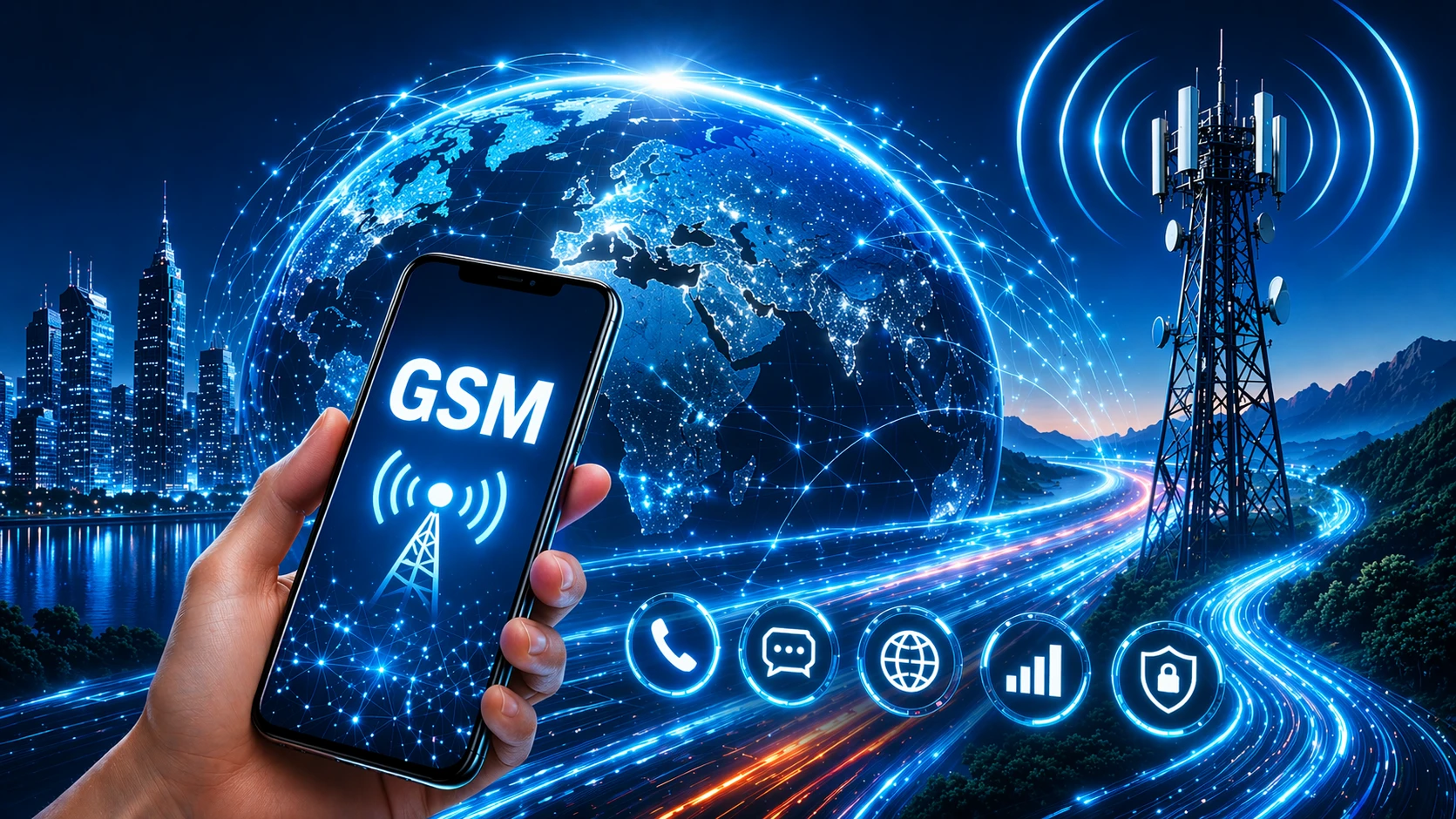
If you've ever swapped a SIM card, sent a text message, or roamed onto a foreign network without doing a thing, you've touched a piece of GSM. Short for Global System for Mobile Communications, it's the digital framework that turned mobile phones from incompatible analog bricks into a worldwide, interoperable service.
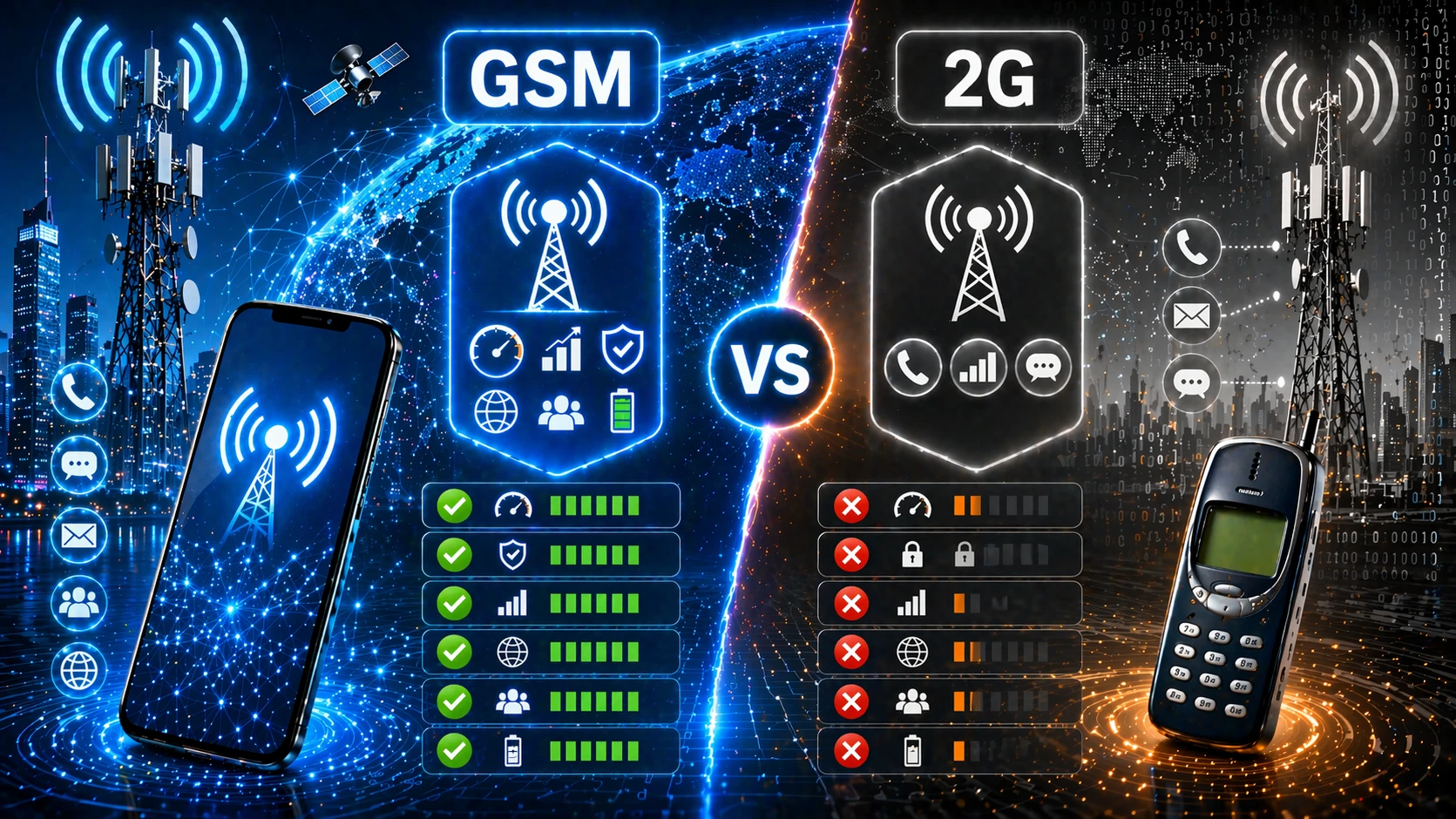
Calling GSM "2G" isn't wrong, but it misses the bigger picture. GSM isn't just a radio interface — it's a complete system that spells out how a phone identifies itself, how calls get routed, how messages fly back and forth, and how your connection stays alive while you're moving. Even as 3G, 4G, and 5G have taken over, GSM still echoes through the SIM model, international roaming, SMS, and the early marriage of voice and data.

More Than Just "2G": What GSM Really Is
At its core, GSM is a second‑generation digital cellular system built to replace a messy patchwork of incompatible analog networks. It set the rules for everything: how a handset says "I'm here" to the network, how radio channels get assigned, how voice calls are switched, and how a user stays reachable while moving between cells. That standardization made it possible for one phone to work across dozens of countries and operators.
The real genius move was splitting the subscriber from the handset with the SIM card. Suddenly, you could pop a tiny chip into any compatible phone and instantly keep your number, contacts, and identity. That flexibility — plus built‑in authentication and robust roaming — gave GSM a practical edge that earlier mobile systems never matched. It also created a scalable ecosystem where operators, device makers, and users all played by the same rulebook.
Voice, SMS, and the Birth of Mobile Data
Early GSM centered on crisp digital voice calls and the now‑ubiquitous Short Message Service. Compared with scratchy analog calls, GSM delivered more predictable capacity and clearer audio, while SMS gave users and machines a dead‑simple way to ping each other. Long before apps and push notifications, text messages became the go‑to channel for alerts, one‑time passwords, and device status updates.
As appetite for data grew, simply tying up a voice channel wasn't efficient. That's where GPRS (General Packet Radio Service) entered the picture, bolting packet‑switched data onto the GSM core. It made low‑bandwidth tasks — telemetry, basic web browsing, email, alarm reporting — possible without keeping a circuit live. Later, EDGE squeezed more speed out of the same radio foundation using smarter modulation. Together, classic GSM, GPRS, and EDGE formed the 2G and 2.5G layer that powered the first wave of mobile internet and machine‑to‑machine communication.
Inside the GSM Network: How It All Connects
A GSM network breaks down into a few logical layers that work together the moment you turn on a phone. The Mobile Station is what you carry — the device plus the SIM. Above that sits the Base Station Subsystem: the BTS (Base Transceiver Station) handles radio transmission inside each cell, while the BSC (Base Station Controller) manages multiple towers, allocates channels, and orchestrates handovers.
Behind the scenes, the circuit‑switched core handles traditional voice. The MSC (Mobile Switching Center) routes calls, the GMSC connects to outside networks, and a suite of databases — HLR (Home Location Register), VLR (Visitor Location Register), AuC (Authentication Center), and EIR (Equipment Identity Register) — keep track of who you are and what you're allowed to do. When GPRS or EDGE is active, the packet‑switched domain kicks in with the SGSN and GGSN, managing data sessions and linking to the internet.
The flow is straightforward. After power‑on, the phone scans for a network and the SIM‑based authentication handshake confirms your identity. The network registers your location so incoming calls and messages can find you. When you dial, text, or start a data session, the radio access layer assigns resources, the core checks permissions, and mobility management follows you from cell to cell — often across different operator territories without you ever noticing.
GSM in the Real World
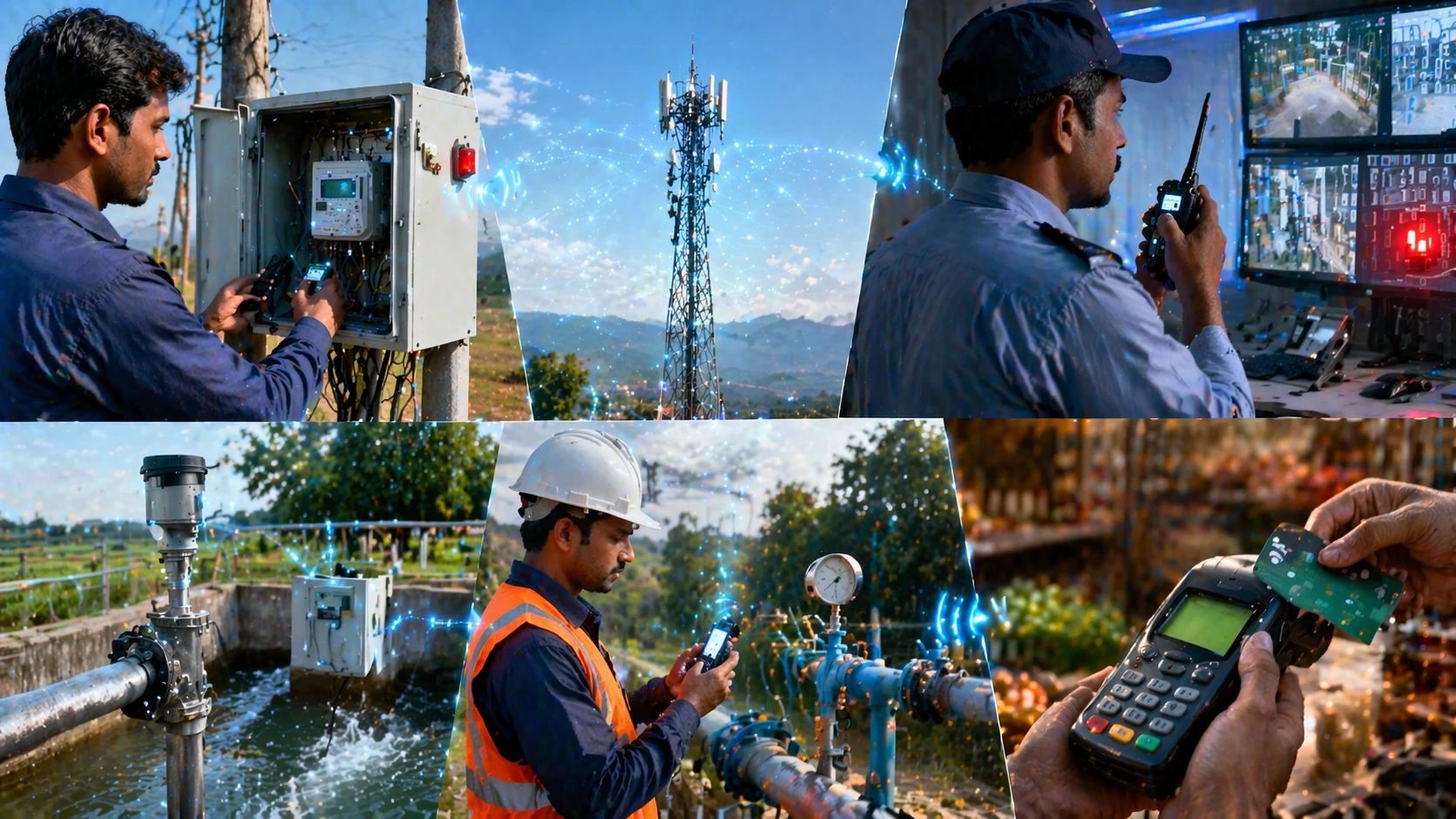
For years, GSM carried the world's daily voice calls and texts. But its reach went far beyond personal phones. M2M (machine‑to‑machine) applications adopted GSM in droves: remote utility meters, alarm panels, vehicle trackers, field sensors, and industrial monitors all leaned on SMS, GPRS, or EDGE because the modules were mature and the coverage blanketed entire regions.
In utilities and factories, GSM‑based connectivity reported pump station alarms, sent maintenance notifications, and provided backup comms for remote cabinets. Payment terminals, kiosks, and vending machines used GPRS where wired broadband was impractical. None of these needed blazing speed; they just needed reliable, wide‑area connectivity that was cheaper than building a private radio network. That niche kept GSM relevant for decades.
The Limits of Legacy: GSM vs. Modern Networks
Let's be blunt: GSM isn't a broadband system. Data speeds are glacial by today's standards, spectrum efficiency lags, and it can't touch HD video, cloud‑native apps, or real‑time industrial control. Next‑generation networks — 3G, 4G, 5G — deliver higher throughput, lower latency, and far richer multimedia support. They also integrate naturally with modern cloud services that GSM never needed to account for.
The bigger practical worry is network sunsetting. Operators in many regions are refarming 2G spectrum for LTE and 5G, which means GSM‑based devices face an uncertain future. For a new long‑life deployment, relying purely on GSM is increasingly risky. Yet GSM still matters because it laid the groundwork for mobile identity, roaming, and wide‑area service control. Understanding GSM helps engineers decode why a legacy field device behaves the way it does and why certain architectural choices — like the split between circuit and packet cores — persist in today's networks.
What to Check Before You Deploy
If a project still involves GSM, start with a reality check. Confirm local 2G service availability directly with the operator and ask whether there's a published sunset date. Next, match the application's bandwidth needs: GSM‑family tech is fine for voice, SMS, simple status reports, and low‑rate telemetry, but it's not suited for anything that needs constant broadband.
Finally, think about lifecycle. A short‑term legacy replacement might be okay on GSM. A new system designed to run for ten years probably belongs on LTE, LTE‑M, NB‑IoT, or 5G — possibly with multi‑network fallback. The hardware may be cheaper upfront on GSM, but if the network gets turned off in year three, the savings evaporate.
The Bottom Line
GSM mobile communication is far more than a nostalgic label for 2G. It's a comprehensive digital framework that standardized subscriber identity, structured radio access, enabled global roaming, and introduced the world to SMS and early packet data through GPRS and EDGE. For engineers and integrators, GSM remains a touchstone: it explains legacy device behavior, SIM‑based security, field gateway design, and the evolutionary path from early digital networks to today's multi‑generation landscape. Even where GSM is no longer the primary service, its architectural DNA still shapes how mobile communication is built and understood.
FAQ
How should I evaluate a legacy GSM device before reusing it?
Check local 2G service availability, SIM compatibility, supported frequency bands, antenna condition, data requirements, power supply needs, and the expected service life of the application. If any of these are in doubt, a migration plan should be on the table.
Why do some old alarm systems still run on GSM?
Because at the time they were installed, GSM modules were inexpensive, ubiquitous, and perfectly capable of handling SMS or low‑rate alarm reporting. Replacing them depends on whether the network is still live and whether the upgrade cost can be justified.
Can a GSM gateway bridge old systems to newer networks?
Sometimes. A gateway can convert legacy voice or alarm interfaces for IP‑based networks, but you'll need to consider local cellular support, SIP integration, number routing, and the operator's long‑term 2G policy.
What should replace GSM in long‑life IoT projects?
Common migration paths include LTE‑M, NB‑IoT, full LTE, or 5G — the choice depends on coverage, power budget, bandwidth, latency, and how long the devices need to stay in the field.
Why does GSM still pop up in technical discussions?
Because an enormous number of legacy networks, SIM‑based devices, field terminals, and early M2M systems were built around GSM's service model and architecture. It remains a reference point even as the technology itself fades.







