touchpoint

In addition to terminal devices, all personnel, places, and things connected to the network should also be considered.

View Details

resource

Understand best practices, explore innovative solutions, and establish connections with other partners throughout the Baker community.

×

touchpoint

touchpoint

In addition to terminal devices, all personnel, places, and things connected to the network should also be considered.

Learn more

resource

resource

Understand best practices, explore innovative solutions, and establish connections with other partners throughout the Baker community.

Contact Us
Encyclopedia
2026-04-03 08:59:41
What Is Class I, Division 1? Standards, Protection Ratings, and Applications
Learn what Class I, Division 1 means in hazardous location design, which standards and markings apply, how protection methods are selected, and where Class I, Division 1 equipment is commonly used.

Becke Telcom

What Is Class I, Division 1? Standards, Protection Ratings, and Applications

Class I, Division 1 is a North American hazardous location classification used for places where flammable gases or vapors can be present in the air in an ignitable concentration during normal operation, during frequent maintenance or leakage, or because a breakdown could both release the hazardous material and create an ignition source at the same time. In plain language, it describes one of the most demanding gas-and-vapor hazardous area categories in the Class/Division system.

The phrase is often shortened to Class I, Div 1 or C1D1. It appears on electrical equipment, project specifications, panel schedules, hazardous area drawings, and procurement documents across oil and gas, chemical processing, fuel handling, solvent operations, and other industries where explosive atmospheres must be taken seriously. For engineers, buyers, and integrators, the classification matters because it affects product selection, installation practices, marking requirements, maintenance planning, and overall safety compliance.

Just as important, Class I, Division 1 is not a product certification by itself. It is a location classification. The equipment used in that location must then be approved, listed, or certified for the specific hazardous conditions involved, including the gas group and temperature limits. That is why a proper discussion of Class I, Division 1 always includes not only the area definition but also the standards, markings, and protection methods behind the equipment.

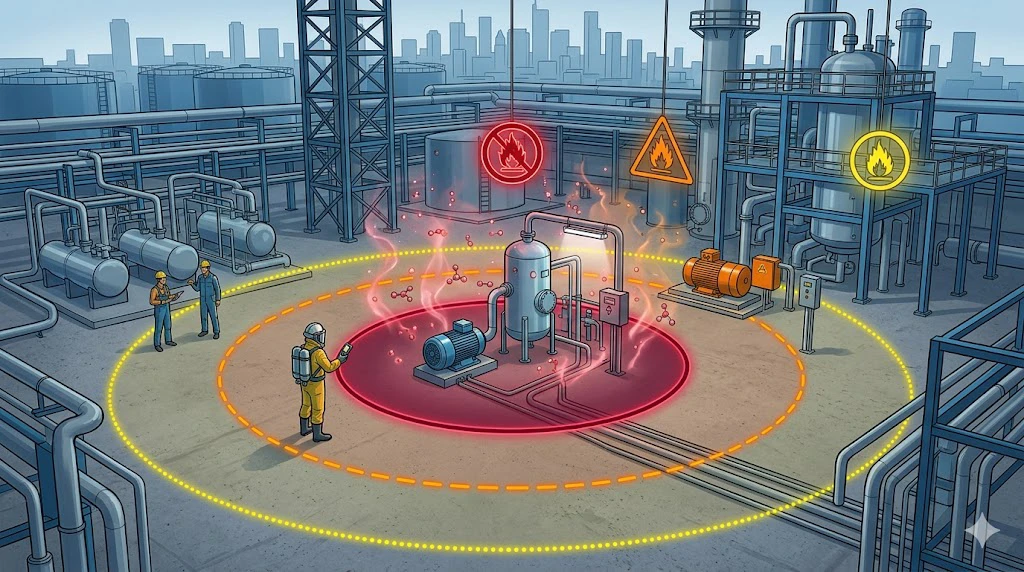
Industrial processing area with pipes, valves, and electrical equipment installed in a Class I Division 1 hazardous location
Class I, Division 1 refers to locations where ignitable concentrations of flammable gases or vapors may be present during normal operation or frequent process-related release conditions.

What Does Class I, Division 1 Mean?

The wording breaks into two parts. Class I tells you the hazard type: flammable gases, flammable liquid-produced vapors, or combustible liquid-produced vapors. Division 1 tells you the likelihood of the hazard being present: the atmosphere may become ignitable under normal operating conditions, may do so frequently because of maintenance or leakage, or may appear when a breakdown releases vapor and simultaneously makes electrical equipment a potential ignition source.

This is what makes Class I, Division 1 more severe than Division 2. In a Division 2 location, the gas or vapor hazard is not normally expected to exist in an ignitable concentration during standard operation. In Division 1, the possibility is built into the normal risk picture of the process area itself.

That also means Class I, Division 1 should never be treated as a broad label for an entire plant unless the whole plant has truly been classified that way. Hazardous locations are determined area by area. A storage room, pump bay, filling point, control shelter, and adjacent corridor may all fall under different classifications depending on process design, containment, ventilation, release sources, and code analysis.

Which Standards Define Class I, Division 1?

In the United States, the regulatory foundation is found in OSHA hazardous location rules, especially 29 CFR 1910.307 and the definitions in 29 CFR 1910.399. These provisions explain how hazardous locations are classified and what kinds of equipment approvals and markings are required.

In practical engineering and installation work, the Class/Division framework is closely associated with the National Electrical Code (NFPA 70), especially the hazardous location articles that address classification, wiring methods, and equipment selection. OSHA itself points employers and users toward these requirements, and many certification and product marking practices in North America are built around that code environment.

For equipment standards, two of the most important references are UL 1203 and UL 913. UL 1203 addresses explosionproof and dust-ignitionproof electrical equipment for hazardous locations, while UL 913 addresses intrinsically safe apparatus and associated apparatus for use in Division 1 hazardous locations. These two standards represent two of the best-known protection approaches used when designing products for Class I, Division 1 service.

How Do the Standards Actually Apply?

The location classification standard and the product standard do different jobs. The location classification tells you how hazardous the area is. The product standard tells you what kind of equipment construction, testing, and marking are needed so the device can be used there safely.

For example, a process skid handling volatile solvents may be classified as Class I, Division 1 around certain fittings, vents, open transfer points, or maintenance-prone release zones. Once that classification is established, the devices installed in that space — such as telephones, junction boxes, operators, sensors, lighting fixtures, cable fittings, signaling devices, or control stations — must be chosen according to approved hazardous location requirements for the applicable class, group, and temperature code.

That is why people often speak loosely about buying a “Class I, Division 1 product,” even though the location comes first and the equipment approval follows. The everyday shortcut is understandable, but technically the area is classified and the equipment is approved for that classification.

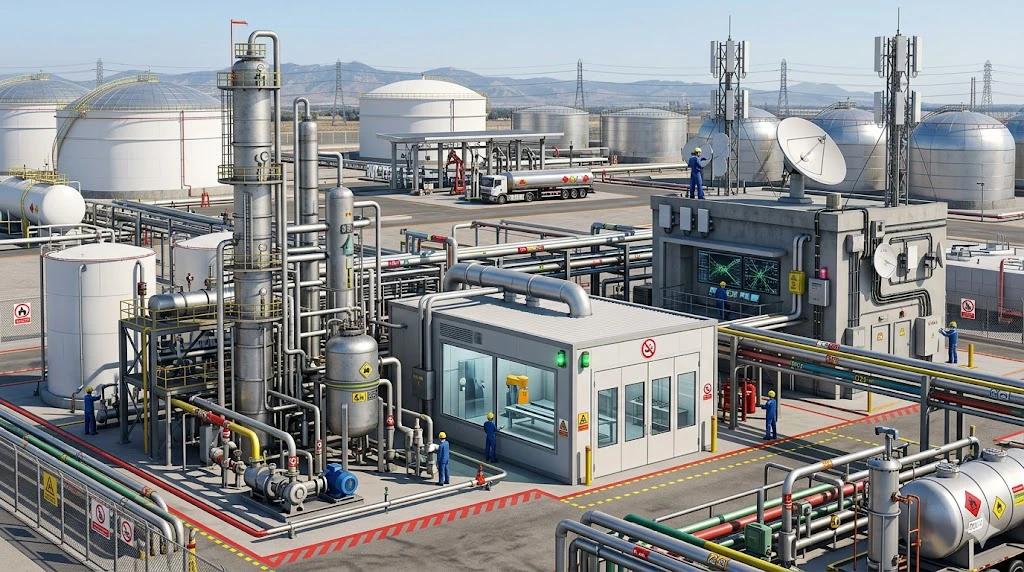
Sample hazardous location product nameplate showing Class I Division 1 marking, gas group, and temperature code
Equipment for Class I, Division 1 service is typically selected by checking the full marking set, including the class, division, gas group, and temperature code rather than the hazardous location label alone.

What Are the Protection Ratings Behind Class I, Division 1?

In this topic, the phrase protection ratings does not mainly refer to IP65, IP66, or IK10. Those ratings may still matter for environmental durability, but they do not replace hazardous location approval. For Class I, Division 1, the meaningful approval details usually include the following:

  • Class: confirms the hazard type, here meaning flammable gas or vapor atmospheres.
  • Division: confirms that the hazard may be present in normal operation or frequent release-related conditions.
  • Group: identifies the gas or vapor family for which the equipment is suitable.
  • Temperature classification: limits the maximum surface temperature of the equipment so it stays below the autoignition point of the hazardous material present.
  • Protection method or approval basis: such as explosionproof construction or intrinsic safety, depending on how the product has been designed and evaluated.

OSHA requires equipment in hazardous locations to be approved not only for the class of location but also for the ignitable or combustible properties of the specific gas, vapor, dust, or fiber present. It also requires the equipment to be marked to show the class, group, and operating temperature or temperature range for which it is approved. This is why a Class I, Division 1 device nameplate contains more than just the words “Class I, Div 1.”

Gas Groups in Class I Locations

Within the Class I division system, gases and vapors are divided into Groups A, B, C, and D. These groupings help define how demanding the ignition risk is and what kind of product construction is acceptable for the atmosphere involved.

  • Group A: acetylene
  • Group B: hydrogen and similar hazards
  • Group C: ethylene and similar hazards
  • Group D: propane and similar hazards

From a procurement standpoint, this matters a great deal. A product suitable for Group D service is not automatically acceptable for Group B. If the site contains hydrogen-rich or similar high-risk atmospheres, the equipment selection becomes more demanding. That is why buyers should never stop at the words “Class I, Division 1” and ignore the group marking.

Temperature Codes and Why They Matter

Hazardous location safety is not only about sparks and arcs. Hot surfaces can also ignite flammable atmospheres. That is why temperature classification is part of the approval marking. The equipment must have a maximum surface temperature low enough for the gas or vapor present.

In practical project language, this is often discussed through T-codes such as T1, T2, T3, T4, T5, or T6. A lower allowable temperature means a more restrictive and often more demanding rating. For example, a device chosen for a solvent-rich or hydrogen-related environment may need a tighter temperature limit than a similar device used where the autoignition point of the hazardous material is higher.

For site selection, the right question is not simply “Is this device explosionproof?” but also “Is its marked operating temperature suitable for the actual gas or vapor present?” Missing that detail can create a compliance problem even when the enclosure type seems robust.

Common Protection Methods Used for Class I, Division 1 Equipment

Explosionproof Construction

One of the classic approaches for Class I, Division 1 electrical equipment is explosionproof construction. In this method, the enclosure is designed so that if an internal ignition occurs, the enclosure can contain the event and prevent flame propagation to the surrounding hazardous atmosphere. This approach is widely associated with heavy-duty enclosures, control devices, lighting assemblies, junction boxes, and field equipment in process industries.

Intrinsic Safety

Another widely used approach is intrinsic safety. Instead of containing an internal explosion, the circuit is designed so it does not release enough electrical or thermal energy to ignite the hazardous atmosphere under defined fault conditions. Intrinsically safe design is especially valuable for instrumentation loops, transmitters, communication circuits, handheld devices, low-power terminals, and sensor networks where limiting energy is more practical than building a massive enclosure.

Both approaches can be valid for Class I, Division 1 service, but they solve the ignition problem in different ways. Explosionproof equipment tends to be enclosure-driven. Intrinsic safety tends to be circuit-energy-driven. The right method depends on the application, maintenance strategy, field wiring constraints, and how the overall system is designed.

Is Class I, Division 1 the Same as Zone 1?

Not exactly. They belong to different hazardous area classification systems. Class I, Division 1 comes from the traditional North American Class/Division method, while Zone 1 belongs to the alternative Zone system used internationally and recognized in parts of North American practice as well.

In many real projects, you will see equipment with dual markings or product families available in both systems. That does not mean the terms are always interchangeable in every design document. A proper comparison depends on the code framework being used, the certification basis, and the exact marking on the equipment. As a rule, the safest approach is to match the device approval to the classification method used in the project documentation and local authority requirements.

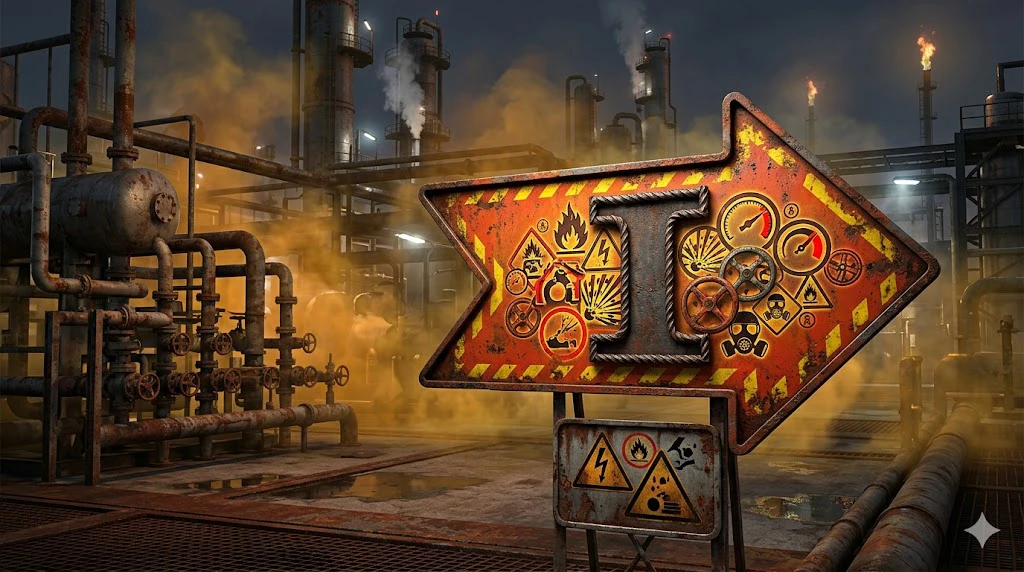
Examples of Class I Division 1 applications in paint booths fuel handling process skids pump rooms and chemical transfer areas
Typical Class I, Division 1 applications include areas where flammable vapors may be released during routine transfer, processing, coating, pumping, or solvent-handling operations.

Typical Applications of Class I, Division 1

OSHA’s own notes and examples give a practical feel for where Class I, Division 1 conditions often exist. Typical locations include areas where volatile flammable liquids or liquefied flammable gases are transferred between containers, the interiors of spray booths and nearby spray-finishing areas using volatile solvents, open tanks or vats containing volatile flammable liquids, drying rooms used for solvent evaporation, gas generator rooms, inadequately ventilated pump rooms handling flammable gas or volatile liquids, and similar spaces where ignitable vapor concentrations are expected as part of normal operations.

In modern industry, the same logic appears across a wide range of facilities:

Oil and Gas Processing

Well sites, production skids, separator areas, tank farms, loading points, analyzer shelters, and hydrocarbon handling zones may all contain Class I, Division 1 pockets depending on release sources and ventilation assumptions.

Chemical and Petrochemical Plants

Reactor areas, solvent transfer stations, blending sections, pumping bays, drum filling points, and process vessels handling volatile chemicals often require Class I, Division 1 analysis around the equipment most likely to release flammable vapors.

Paint, Coating, and Finishing Operations

Spray booths and adjacent finishing zones remain classic examples because atomized or evaporated solvents can create ignitable vapor atmospheres under normal working conditions.

Fuel Storage and Dispensing

Bulk fuel storage, loading racks, dispensing systems, and enclosed spaces around pumps or vents may include Division 1 areas when vapor release is part of routine service conditions.

Industrial Communications and Signaling

Explosionproof telephones, call stations, warning lights, alarm sounders, intercom terminals, and field communication devices may be selected for Class I, Division 1 service where personnel must communicate safely in gas-vapor hazardous process areas.

What About IP Ratings and NEMA Enclosures?

This is where many buyers get tripped up. A device may be IP66, IP67, or NEMA 4X and still not be suitable for Class I, Division 1. Environmental ingress protection and hazardous location approval solve different problems.

An IP or NEMA enclosure rating tells you about protection against water, dust, corrosion-related exposure, or general enclosure conditions, depending on the system being used. A Class I, Division 1 approval tells you whether the product has been evaluated so it will not become an ignition source in the specified hazardous atmosphere. In real projects, both may matter, but one cannot replace the other.

For example, an outdoor process area may require a communication device that is not only Class I, Division 1 approved but also weather-resistant, corrosion-resistant, impact-resistant, and suitable for washdown or offshore-like exposure. The hazardous location approval handles one layer of risk; the environmental enclosure rating handles another.

How to Select Equipment for a Class I, Division 1 Area

  1. Confirm the actual classified area. Do not assume the whole facility is C1D1 just because part of the process is hazardous.
  2. Identify the gas group. The equipment must be approved for the actual material present.
  3. Check the temperature code. Make sure the product’s maximum surface temperature is acceptable for the atmosphere involved.
  4. Review the protection method. Decide whether explosionproof or intrinsically safe design is the better engineering fit.
  5. Verify installation conditions. Cable entries, seals, glands, barriers, and wiring methods matter as much as the device body.
  6. Do not confuse environmental and hazardous ratings. IP, IK, and NEMA may be helpful, but they are supplemental to HazLoc approval.
  7. Check marking and listing details carefully. The full label matters more than marketing shorthand.

Can Division 1 Equipment Be Used in Division 2 Areas?

Yes, in general equipment approved for a Division 1 location may be installed in a Division 2 location of the same class and group. This is one reason some operators standardize certain critical devices on the higher approval level when they want consistency, spare-parts simplification, or operational flexibility.

Even so, that does not mean every project should default to Division 1 hardware everywhere. Division 1 products can be larger, heavier, more expensive, or more restrictive in maintenance and installation. Good engineering still starts with correct area classification rather than blanket overspecification.

Common Misunderstandings About Class I, Division 1

“Class I, Division 1 means explosionproof only.”

Not always. Explosionproof is one important protection method, but intrinsic safety is another major path for suitable equipment and circuits.

“If a device is rugged and waterproof, it can be used in C1D1.”

No. Mechanical ruggedness and water resistance do not automatically address ignition risk in flammable atmospheres.

“The area classification is the same as the equipment certification.”

No. The area is classified first; the equipment is then chosen and approved for that classification.

“One approval covers every gas atmosphere.”

No. Group marking and temperature code still matter. A product acceptable for one gas family may not be acceptable for another.

Applications in Different Industries

Process Instrumentation

Pressure transmitters, level switches, analyzers, junction boxes, and terminal assemblies near routine vapor release points are often chosen with Class I, Division 1 requirements in mind.

Hazardous Area Telephony and Intercom

Field telephones, emergency call stations, VoIP intercoms, paging points, and alarm terminals in solvent, fuel, or hydrocarbon areas may require C1D1-certified or approved solutions.

Lighting and Signaling

Explosionproof luminaires, beacons, horns, and combination alarm devices are commonly used where personnel need clear visual or audible notification in gas-vapor hazardous zones.

Motor and Control Installations

Depending on layout and classification extent, local operator stations, disconnects, control enclosures, and associated fittings may all be subject to Division 1 requirements.

FAQ

What is the difference between Class I, Division 1 and Class I, Division 2?

Class I, Division 1 assumes ignitable gas or vapor concentrations may exist under normal operation, frequent maintenance, leakage, or fault-related release conditions. Division 2 assumes the hazard is not normally present in ignitable concentration during ordinary operation.

Is Class I, Division 1 the same as ATEX Zone 1?

No. They come from different classification systems. They may overlap in practical intent, and some products carry dual markings, but they are not simply the same term written two different ways.

Can intrinsically safe equipment be used in Class I, Division 1?

Yes. Intrinsically safe equipment approved for the relevant hazardous location can be used in Class I, Division 1 applications. This is one of the major recognized protection approaches for low-energy circuits and instrumentation.

Does Class I, Division 1 tell me everything I need to know?

No. You still need the gas group, temperature code, protection method, installation requirements, and often supplemental enclosure or environmental information.

Do I still need IP or NEMA ratings for Class I, Division 1 products?

Often yes. Hazardous approval addresses ignition risk, while IP and NEMA ratings address enclosure performance in dust, water, corrosion, and related environmental conditions.

Where is Class I, Division 1 most commonly found?

Typical examples include spray-finishing areas, solvent handling spaces, pump rooms, fuel transfer points, gas generator rooms, and process sections where flammable gases or vapors can be released during normal operations.

Conclusion

Class I, Division 1 is one of the most important hazardous location classifications in North American industrial practice because it covers gas and vapor atmospheres that may become ignitable during normal operation or frequent release-related conditions. Understanding it properly means looking beyond the label itself and into the standards, markings, gas groups, temperature codes, and protection methods that make equipment safe for that environment.

For real-world selection, the best habit is simple: start with correct area classification, then match the equipment to the exact class, division, group, and temperature requirements of the site. That approach leads to better compliance, better safety, and better long-term reliability than relying on shorthand terms or enclosure marketing alone.

Recommended Products
catalogue
Professional industrial communication manufacturer, providing high reliability communication guarantee!
Cooperation Consultation
customer service Phone
We use cookie to improve your online experience. By continuing to browse this website, you agree to our use of cookie.

Cookies

This Cookie Policy explains how we use cookies and similar technologies when you access or use our website and related services. Please read this Policy together with our Terms and Conditions and Privacy Policy so that you understand how we collect, use, and protect information.

By continuing to access or use our Services, you acknowledge that cookies and similar technologies may be used as described in this Policy, subject to applicable law and your available choices.

Updates to This Cookie Policy

We may revise this Cookie Policy from time to time to reflect changes in legal requirements, technology, or our business practices. When we make updates, the revised version will be posted on this page and will become effective from the date of publication unless otherwise required by law.

Where required, we will provide additional notice or request your consent before applying material changes that affect your rights or choices.

What Are Cookies?

Cookies are small text files placed on your device when you visit a website or interact with certain online content. They help websites recognize your browser or device, remember your preferences, support essential functionality, and improve the overall user experience.

In this Cookie Policy, the term “cookies” also includes similar technologies such as pixels, tags, web beacons, and other tracking tools that perform comparable functions.

Why We Use Cookies

We use cookies to help our website function properly, remember user preferences, enhance website performance, understand how visitors interact with our pages, and support security, analytics, and marketing activities where permitted by law.

We use cookies to keep our website functional, secure, efficient, and more relevant to your browsing experience.

Categories of Cookies We Use

Strictly Necessary Cookies

These cookies are essential for the operation of the website and cannot be disabled in our systems where they are required to provide the service you request. They are typically set in response to actions such as setting privacy preferences, signing in, or submitting forms.

Without these cookies, certain parts of the website may not function correctly.

Functional Cookies

Functional cookies enable enhanced features and personalization, such as remembering your preferences, language settings, or previously selected options. These cookies may be set by us or by third-party providers whose services are integrated into our website.

If you disable these cookies, some services or features may not work as intended.

Performance and Analytics Cookies

These cookies help us understand how visitors use our website by collecting information such as traffic sources, page visits, navigation behavior, and general interaction patterns. In many cases, this information is aggregated and does not directly identify individual users.

We use this information to improve website performance, usability, and content relevance.

Targeting and Advertising Cookies

These cookies may be placed by our advertising or marketing partners to help deliver more relevant ads and measure the effectiveness of campaigns. They may use information about your browsing activity across different websites and services to build a profile of your interests.

These cookies generally do not store directly identifying personal information, but they may identify your browser or device.

First-Party and Third-Party Cookies

Some cookies are set directly by our website and are referred to as first-party cookies. Other cookies are set by third-party services, such as analytics providers, embedded content providers, or advertising partners, and are referred to as third-party cookies.

Third-party providers may use their own cookies in accordance with their own privacy and cookie policies.

Information Collected Through Cookies

Depending on the type of cookie used, the information collected may include browser type, device type, IP address, referring website, pages viewed, time spent on pages, clickstream behavior, and general usage patterns.

This information helps us maintain the website, improve performance, enhance security, and provide a better user experience.

Your Cookie Choices

You can control or disable cookies through your browser settings and, where available, through our cookie consent or preference management tools. Depending on your location, you may also have the right to accept or reject certain categories of cookies, especially those used for analytics, personalization, or advertising purposes.

Please note that blocking or deleting certain cookies may affect the availability, functionality, or performance of some parts of the website.

Restricting cookies may limit certain features and reduce the quality of your experience on the website.

Cookies in Mobile Applications

Where our mobile applications use cookie-like technologies, they are generally limited to those required for core functionality, security, and service delivery. Disabling these essential technologies may affect the normal operation of the application.

We do not use essential mobile application cookies to store unnecessary personal information.

How to Manage Cookies

Most web browsers allow you to manage cookies through browser settings. You can usually choose to block, delete, or receive alerts before cookies are stored. Because browser controls vary, please refer to your browser provider’s support documentation for details on how to manage cookie settings.

Contact Us

If you have any questions about this Cookie Policy or our use of cookies and similar technologies, please contact us at support@becke.cc .