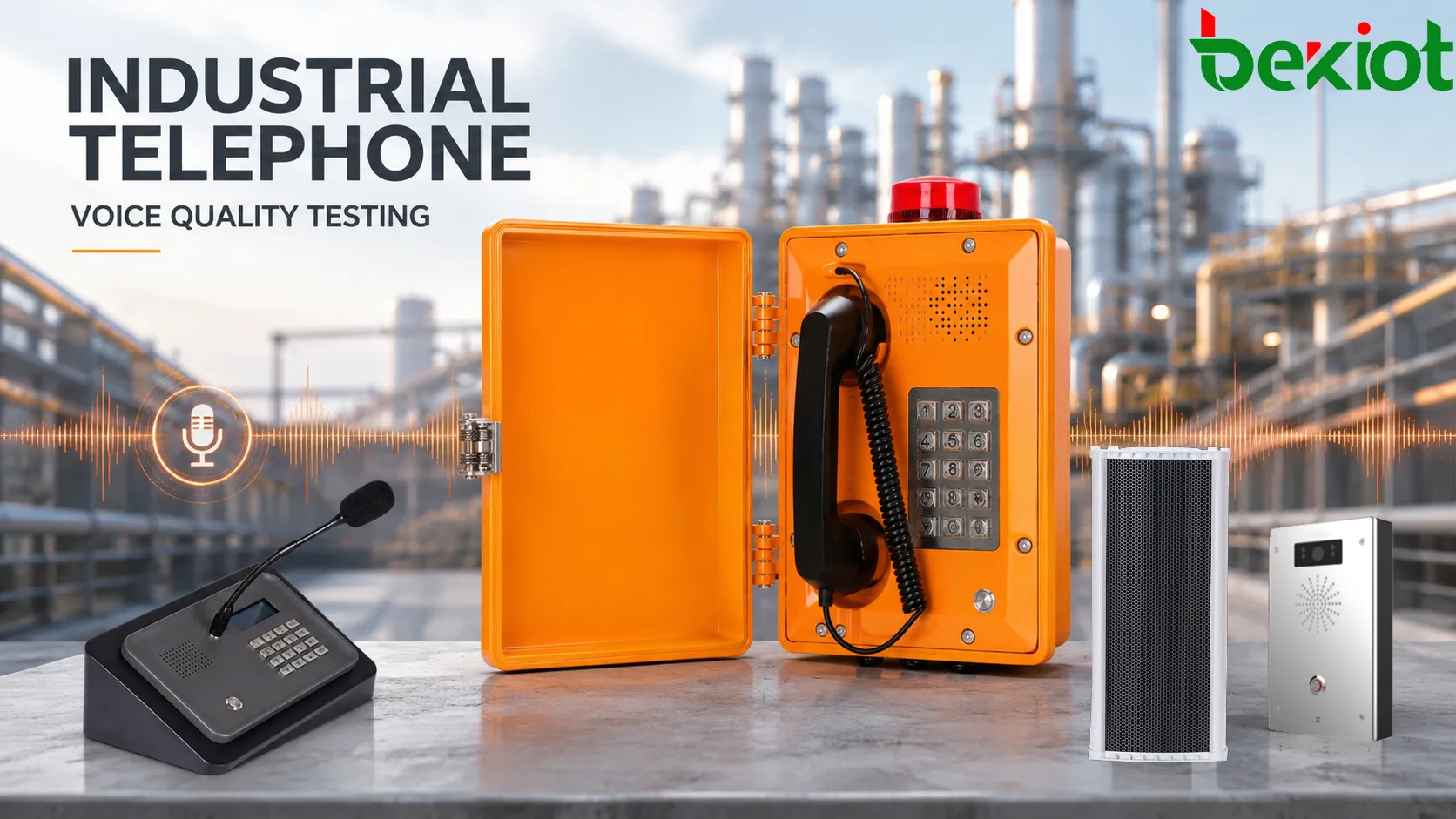
A voice quality test for an industrial telephone should not be carried out like a simple office phone check. In an office, it may be enough to confirm that the call connects and both sides can hear each other. On an industrial site, that is only the starting point. A telephone may work perfectly in a quiet room but become hard to use beside a compressor, inside a tunnel, near a conveyor line, at a port loading area, or in an outdoor yard with wind and vehicle noise.
The real purpose of testing is to answer a practical question: can the field user and the control room understand each other clearly under the conditions where the telephone will actually be used? A proper test should cover audio clarity, microphone pickup, receiver or speaker output, noise resistance, echo, delay, call stability, system integration, and maintenance condition. For industrial communication, good voice quality means fewer repeated instructions, faster confirmation, and safer response during routine work or emergency events.
Why Voice Testing Matters
Industrial telephones are usually installed in environments where communication mistakes can create real operational problems. A worker may need to report a motor fault, confirm a valve position, request maintenance support, call a control room during an alarm, or receive instructions during evacuation. If the voice is weak, distorted, delayed, or masked by noise, the call becomes unreliable even if the device is technically online.
Voice quality testing is therefore part of system acceptance, not only product inspection. It confirms whether the selected telephone, installation position, communication platform, cabling, network, and field environment work together. A rugged enclosure and a stable connection are important, but they do not automatically guarantee understandable speech.
Testing is also useful before large-scale deployment. If a project plans to install many industrial telephones across factories, tunnels, mines, parking areas, utility rooms, or outdoor posts, testing one or two representative locations can reveal problems early. It may show that some areas need louder output, better placement, additional speakers, improved cabling, or network adjustment.
For models such as the Becke Telcom BT27 industrial telephone, voice quality should be evaluated as part of the complete field scenario. The device may provide a rugged communication endpoint, but its final voice performance still depends on mounting height, background noise, line condition, SIP platform settings, user behavior, and maintenance practice.
What Should Be Measured
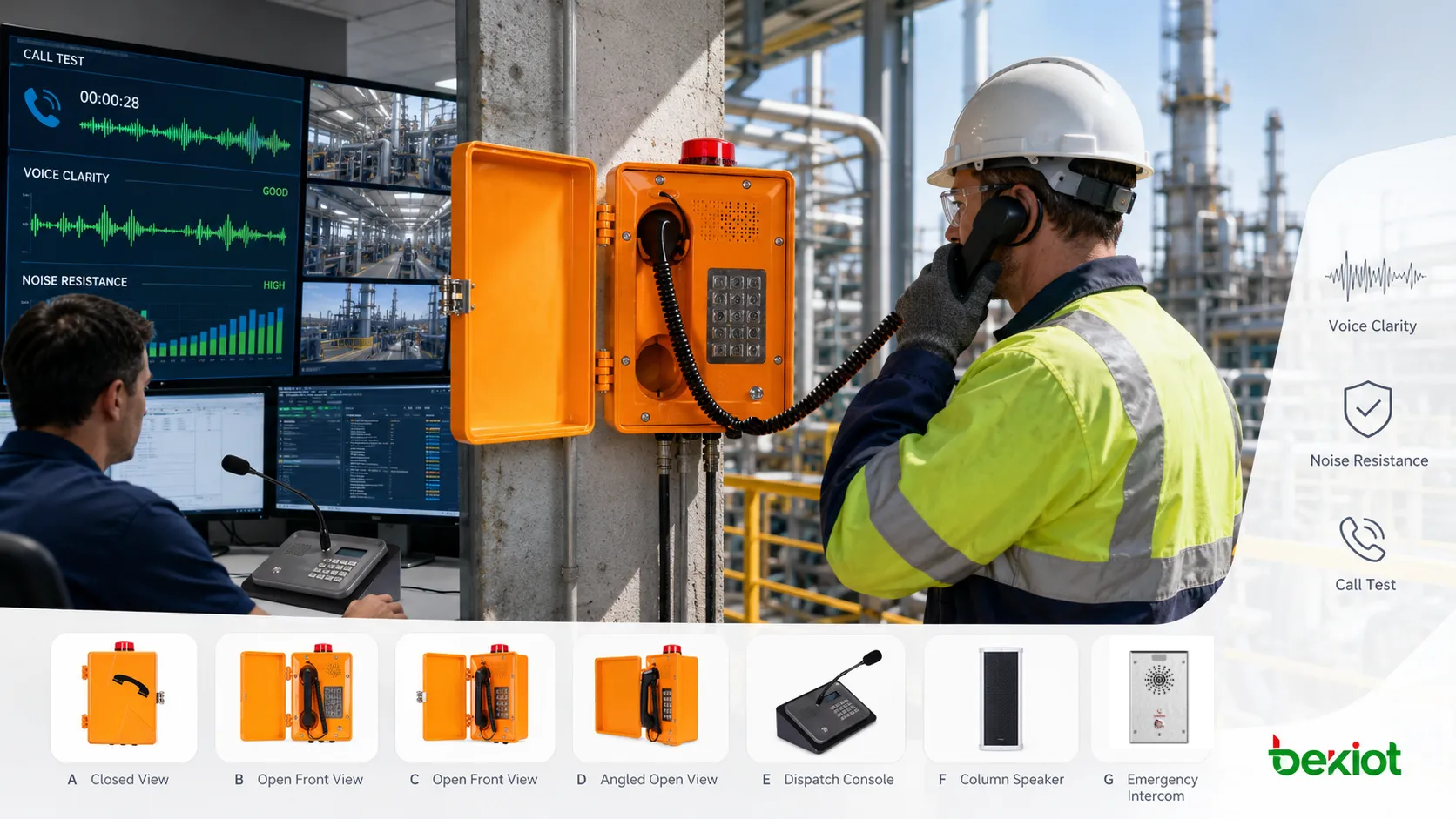
The first item to measure is speech intelligibility. The listener should be able to understand words clearly without asking the speaker to repeat every sentence. This is more important than pure loudness. A very loud call can still be poor if the sound is harsh, clipped, echoing, or covered by machine noise.
Microphone pickup is the next key point. The test should check whether the field user’s voice is captured clearly at a normal speaking distance. In handset-based telephones, the user should speak naturally into the handset. In hands-free or speakerphone modes, the test should include different standing positions because the microphone is farther from the mouth and more exposed to surrounding noise.
Output quality must also be checked. The field user should hear the control room clearly through the handset receiver, built-in speaker, or amplified output. The sound should be strong enough for the site but not painfully loud or distorted. If the user must press the receiver tightly to the ear or guess the operator’s words, the output level is not suitable.
Background noise resistance should be tested under normal site operation. This includes machinery noise, fans, pumps, vehicles, alarms, wind, rain, ventilation, and public address audio if present. The test should not be limited to quiet periods because industrial telephones are often needed when equipment is running.
Echo, delay, clipping, packet loss, intermittent sound, one-way audio, and unstable volume should also be included. These problems may come from the telephone, wiring, network, gateway, SIP server, codec settings, gain configuration, or acoustic environment. A complete test should not blame the endpoint before checking the full voice path.
How the Test Site Is Prepared
Choose real operating points
The test location should represent the actual use case. A telephone installed near a pump room should be tested near a pump room. A tunnel emergency phone should be tested in the tunnel. A port or yard telephone should be tested with outdoor noise and wind conditions. Testing only in a workshop office gives limited value.
For large projects, test points can be divided by environment type: noisy workshop, outdoor area, tunnel or corridor, control room entrance, utility area, gate post, and emergency point. Each type may have different acoustic behavior. A single test cannot represent every condition.
Prepare the communication path
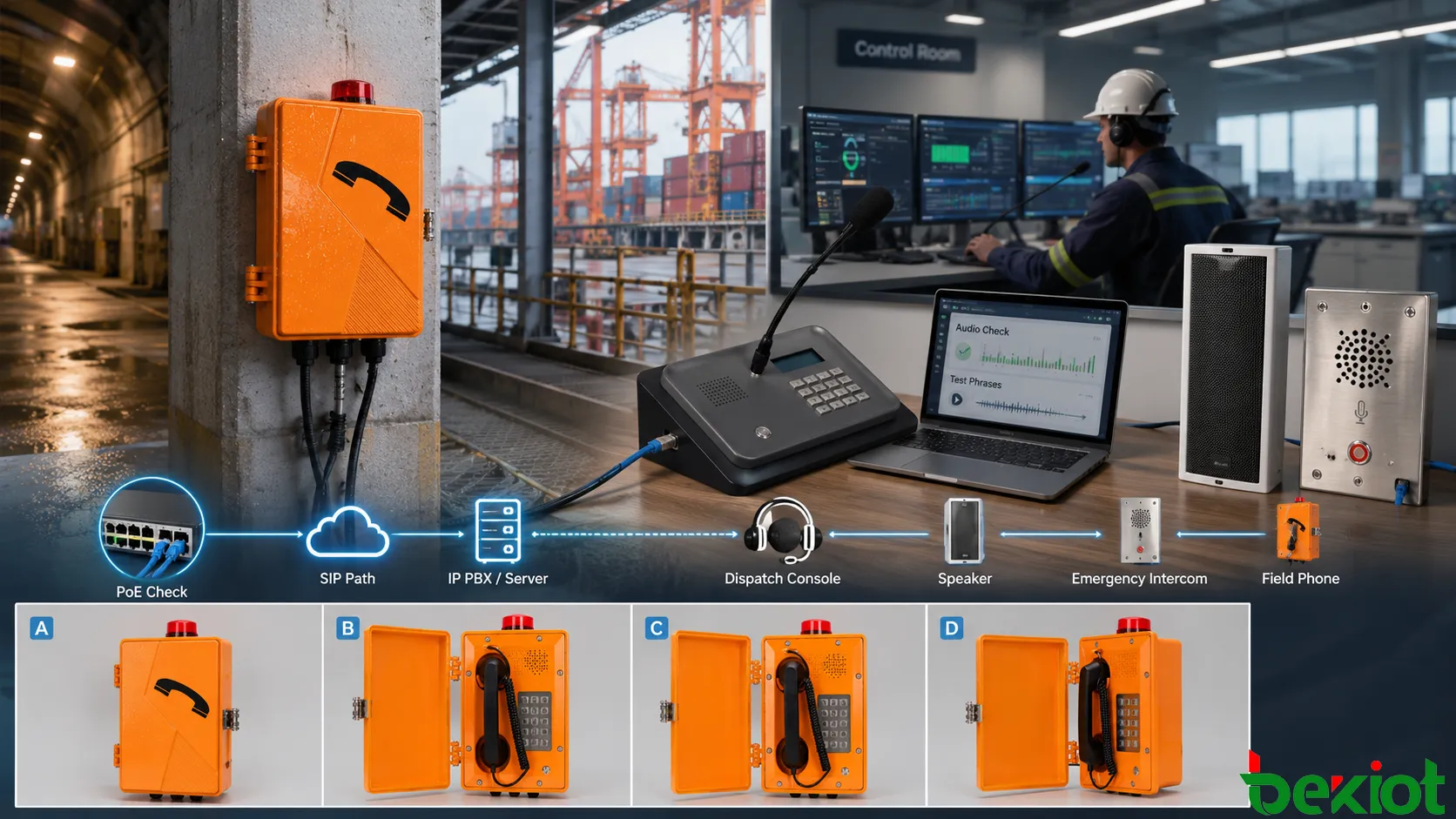
The full call path should be ready before testing. This includes the telephone, cable or network link, PoE or power supply, IP PBX or SIP server, dispatch console, gateway, recording system, and operator headset if used. Voice quality can be affected by any part of this chain.
For SIP industrial telephones, confirm registration status, IP address, codec policy, network route, VLAN, QoS, firewall rules, and RTP media path. For analog telephones, check line voltage, cable length, grounding, terminal condition, and interface compatibility. A voice quality test is much more reliable when the basic system conditions are already stable.
Use consistent test phrases
Testers should use consistent phrases instead of random conversation only. Short phrases, numbers, locations, and instruction-style sentences are useful because industrial communication often includes equipment names, room numbers, gate numbers, safety commands, and confirmation words.
For example, the field user may read a short maintenance report, a location description, a number sequence, and an emergency-style instruction. The control room operator then repeats what was heard. This simple method quickly reveals whether the message is understandable in both directions.
How Test Calls Are Run
A practical test usually begins with a baseline call in a relatively quiet condition. This confirms that the telephone, control room endpoint, routing, and audio path are working. The tester should check whether the call connects quickly, whether both sides hear each other, whether volume is reasonable, and whether any obvious noise or echo appears.
The next step is real-environment testing. Machines should be running if they normally run during work. Ventilation should be active if it is usually active. Doors, corridors, vehicles, alarms, or public address systems should be considered if they affect the actual listening environment. The test should compare what happens when the site is quiet and when it is operating normally.
The test should include both directions. The field user speaks to the control room, and the control room speaks back to the field user. Some systems perform well in one direction but poorly in the other. For example, the control room may hear the field user clearly, but the field user may not hear the reply because the receiver output is too weak. The opposite can also happen when the local microphone picks up too much noise.
Different user behaviors should be tested. One user may hold the handset close to the mouth, while another may hold it lower. A worker wearing gloves may grip the handset differently. A user in a hurry may speak faster or louder. Testing should not assume perfect behavior. Industrial telephones should remain usable under normal field habits.
If the telephone supports hands-free, hotline, auto-answer, paging, amplified output, or dispatch integration, these functions should be tested separately. A normal handset call does not prove that paging audio is clear. A successful SIP registration does not prove that emergency auto-call routing works. Each real function should be tested in the way users will operate it.
How Results Are Interpreted
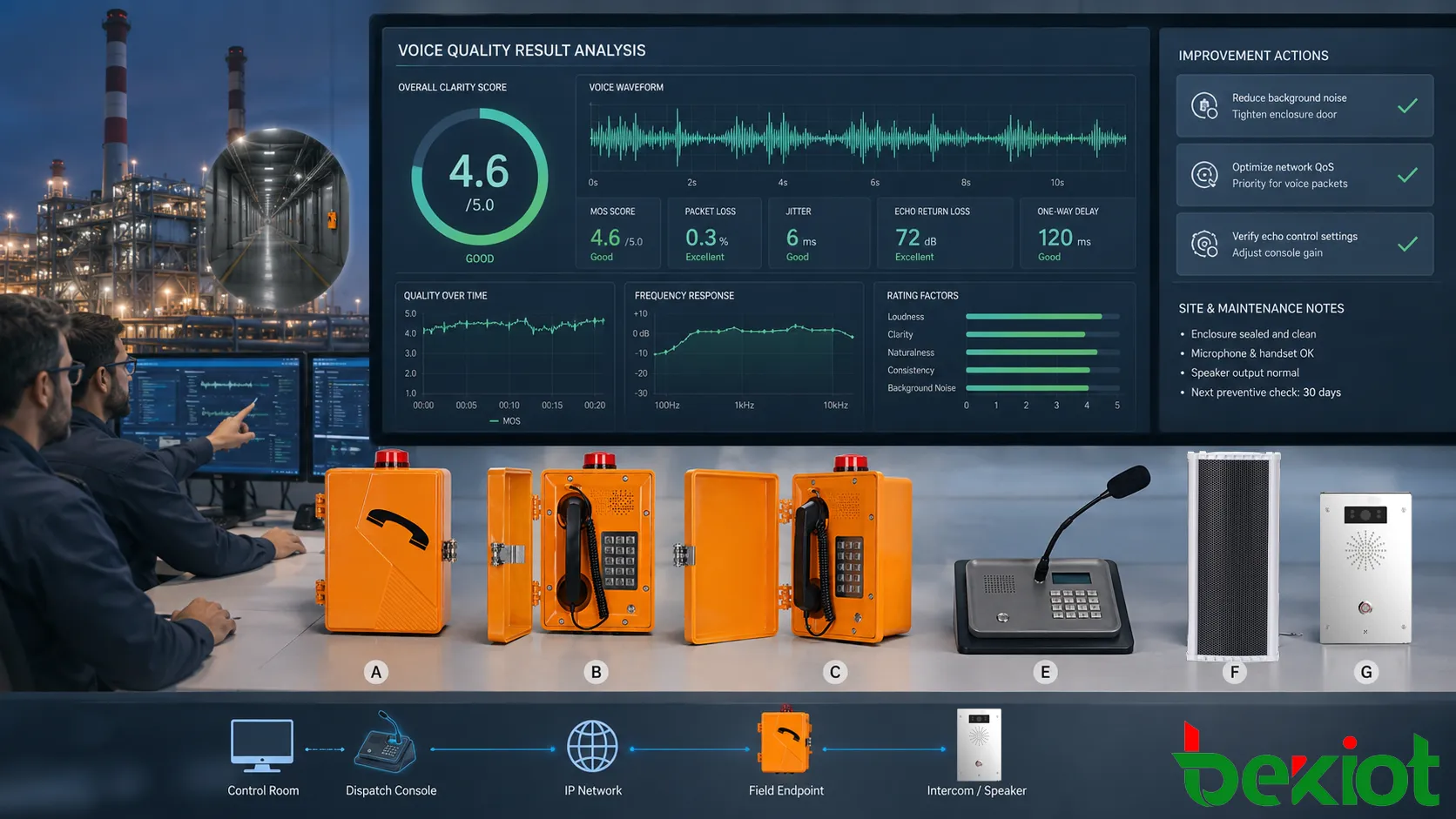
After testing, the result should be reviewed from both technical and human perspectives. Technical indicators may include call setup success, packet loss, jitter, delay, codec selection, signal level, line noise, registration stability, and recording quality. Human indicators include whether the listener understood the message, whether repeated words were needed, whether the sound was tiring, and whether the user felt confident operating the device.
A simple rating method can help. For each test point, the team can record clarity, loudness, noise level, echo, delay, and overall usability. The score does not need to be complicated, but it should be consistent. Notes should include the exact location, background condition, user position, endpoint used, and any abnormal behavior.
If voice is unclear, the cause should be analyzed step by step. A muffled field voice may come from a blocked microphone opening, poor handset position, damaged microphone, excessive background noise, or wrong gain setting. Weak local output may come from receiver failure, low volume configuration, line loss, speaker damage, or incorrect amplifier setting. Robotic sound may indicate packet loss, jitter, codec mismatch, or network congestion.
Not every problem requires replacing the telephone. Sometimes moving the device slightly away from a noise source produces a better result. Sometimes a cable terminal needs cleaning. Sometimes SIP codec policy or QoS needs adjustment. Sometimes the control room headset or dispatch console setting is the real issue. A good voice test helps identify the problem rather than guessing.
Documentation is important. Test records should be kept for future maintenance. If a site later complains about poor audio, engineers can compare the new result with the original test. This makes fault diagnosis easier and helps determine whether the problem is caused by equipment aging, site noise change, network change, or configuration adjustment.
Final Notes
Voice quality testing for industrial telephones should be practical, site-based, and repeatable. It should not stop at checking whether the call connects. A proper test evaluates speech intelligibility, microphone pickup, speaker or receiver output, noise resistance, echo, delay, line or network quality, system routing, and user operation under real working conditions.
The best test method follows the full voice path: field telephone, installation position, cable or network, communication platform, control room endpoint, and operator listening experience. This approach helps engineers find real causes instead of treating all audio problems as device failures.
For projects that require rugged field communication and clearer voice performance, Becke Telcom provides industrial telephone options such as the BT27 for factories, tunnels, outdoor yards, utility areas, and harsh operating points. The most suitable configuration should be selected after reviewing site noise, installation method, communication platform, power conditions, and maintenance requirements.
FAQ
What is the most important part of an industrial telephone voice test?
The most important part is speech intelligibility under real site conditions. Both sides should understand each other clearly when the environment is operating normally.
Should testing be done before or after installation?
Both are useful. Bench testing checks basic function, but final acceptance should be done after installation because mounting position and site noise strongly affect voice quality.
What causes poor voice quality in SIP industrial telephones?
Common causes include packet loss, jitter, delay, codec mismatch, poor QoS, unstable power, wrong gain settings, weak microphone pickup, background noise, or unsuitable installation position.
Can analog line problems affect audio clarity?
Yes. Long cables, moisture, poor grounding, oxidized terminals, surge damage, or line loss can cause low volume, noise, intermittent audio, or unstable voice quality.
How often should voice quality be retested?
Critical communication points should be retested regularly and after network changes, cable work, device relocation, platform updates, power faults, or site noise changes.