


Power over Ethernet has become a baseline requirement for modern structured cabling, eliminating the need for separate power adapters for every edge device. As higher-power standards like 802.3at and 802.3bt gain traction for PTZ cameras, high-density Wi-Fi access points and industrial IoT gateways, it is easy to dismiss the original IEEE 802.3af standard as outdated. In reality, 802.3af remains the most widely deployed PoE specification across enterprise offices, commercial buildings and industrial sites, powering millions of IP phones, compact cameras, access control readers and intercom terminals.
Its enduring relevance does not stem from backward compatibility alone. For low-to-moderate power edge devices, 802.3af strikes an unmatched balance between installation simplicity, cross-vendor compatibility, switch port density and overall project cost. This article walks through the core mechanics of 802.3af, its dominant real-world applications, how it compares to newer PoE generations, and key considerations for reliable deployment.
Core Fundamentals of IEEE 802.3af PoE
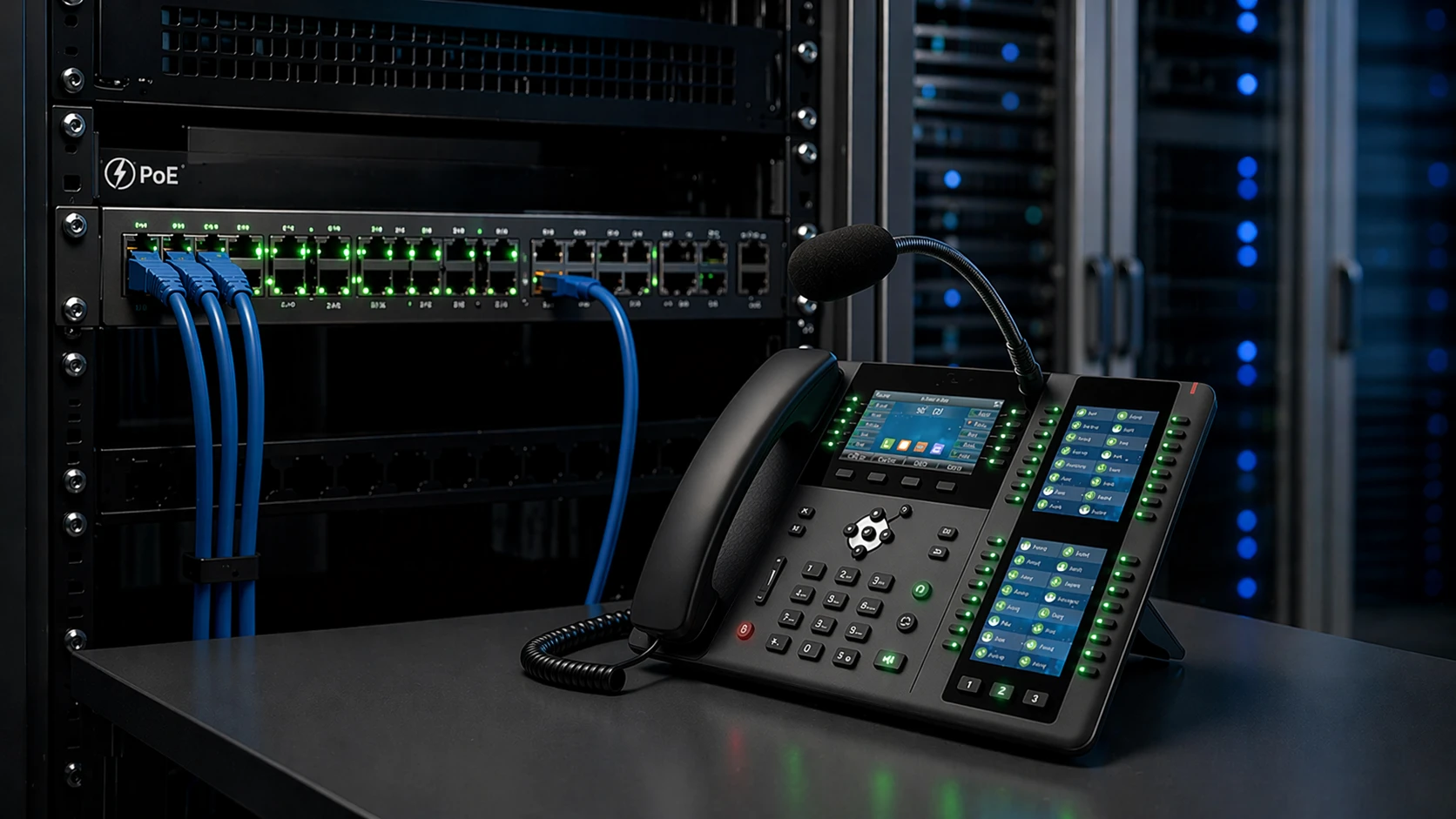
Ratified as the first universal PoE standard, IEEE 802.3af establishes a standardized framework for safely transmitting electrical power alongside data over standard twisted-pair Ethernet cabling. It defines two core roles in every PoE link: power sourcing equipment (PSE) and powered devices (PD). The PSE is the power supply side of the connection, most commonly a PoE-enabled network switch port or a standalone midspan injector installed between a regular switch and the endpoint. The PD refers to any endpoint designed to draw power from the Ethernet cable, such as IP phones, wall-mounted intercoms or fixed security cameras.
Before 802.3af was widely adopted, networked edge devices required both a data cable and a nearby AC power outlet, severely limiting placement flexibility and increasing installation labor. The standard changed this dynamic entirely: installers can position devices based on operational needs rather than the location of existing electrical sockets. This flexibility was a major catalyst for the mass adoption of IP telephony, ceiling-mounted wireless access points and distributed building automation systems.
A common misconception about 802.3af lies in its power rating. The standard specifies a maximum output of 15.4 watts per port at the PSE side, but not all of that power reaches the endpoint. Due to natural resistance and power loss along the copper cable, the guaranteed maximum power available at the PD side is 12.95 watts under standard cable length conditions. This distinction is critical for product selection: a device marketed as “PoE compatible” may still underperform or disable advanced features if its full-load power draw exceeds the PD-side limit.
How 802.3af Power Delivery Operates End to End
One of the greatest strengths of 802.3af is its plug-and-play safety mechanism. Unlike passive power injectors that apply constant voltage to cable pins, compliant PSE ports do not output full operating power by default. Instead, they follow a structured multi-stage process to verify and negotiate power with connected devices, reducing risk for both equipment and installers.
The process begins with detection: the PSE sends a low-voltage sensing signal to check for a valid signature resistance on the connected device, confirming it is a PoE-compatible PD. This step prevents accidental power delivery to non-PoE equipment such as laptops or desktop switches, making mixed-port deployments safe and straightforward. After successful detection, the PSE may perform a classification step to estimate the PD’s power requirements and allocate appropriate power budget.
Once negotiation completes, the port supplies full operating power and continuously monitors the link. If the device is disconnected or a fault occurs, the PSE cuts power to the port to protect both equipment and cabling. For end users, this entire sequence happens automatically — installers simply plug in a compliant device and the network handles the rest, with no manual configuration required at the port level.
For retrofit projects where existing non-PoE switches are still in service, 802.3af also supports midspan deployment. A midspan injector is installed between the switch and the PD, adding power to the Ethernet line without disrupting data transmission. This approach is highly cost-effective for sites that only need to power a small number of endpoints, as it avoids the expense of replacing entire switch chassis.
Dominant Real-World Use Cases for 802.3af
802.3af may not support the highest power levels, but it covers the vast majority of common edge network devices. Its low implementation cost and broad ecosystem support make it the default choice for three major deployment categories across commercial and industrial environments.
First is IP voice and intercom systems, the use case that first drove mainstream PoE adoption. Desktop IP phones, wall-mounted SIP intercoms, paging terminals and industrial emergency phones almost universally operate within the 802.3af power envelope. Single-cable deployment simplifies desk and wall installations, reduces cable clutter, and enables centralized UPS backup through the switch infrastructure. For critical communication systems, this means voice services can remain available even during local AC power outages — a reliability benefit difficult to achieve with scattered local power adapters.
Second is lightweight wireless and network infrastructure. Earlier-generation Wi-Fi access points, low-density indoor radios and small branch-office APs commonly run on 802.3af. Ceiling and wall mounting becomes far simpler when no dedicated electrical outlet is required, with a single structured cabling run handling both data uplink and operating power. While modern high-performance Wi-Fi 6/7 APs often require PoE+, many compact, cost-effective models are still designed for 802.3af power levels.
Third is physical security and access control systems. Fixed-lens IP cameras, door intercom stations, badge readers, alarm controllers and small sensor gateways are nearly ideal matches for 802.3af. These devices are typically installed at perimeter or remote locations where running separate power lines is expensive or logistically difficult. Centralized PoE power also simplifies maintenance: administrators can monitor port power status and remotely reboot unresponsive endpoints without dispatching on-site technicians.
802.3af vs. Newer PoE Standards: Making the Right Choice
As device power requirements have grown, the IEEE has introduced higher-power PoE standards: 802.3at (commonly called PoE+) and 802.3bt (PoE++). These newer specifications deliver significantly more power — up to 30W for 802.3at and 90W for 802.3bt at the PSE side — to support more demanding hardware such as pan-tilt-zoom cameras, outdoor wireless backhaul units and large digital displays.
Despite the availability of higher standards, 802.3af is still the optimal choice for many scenarios. If an endpoint’s full-load power consumption falls comfortably within the 12.95W PD limit, selecting 802.3af-compatible hardware reduces per-port switch cost, simplifies power budget planning and ensures maximum compatibility with older infrastructure. Most modern PoE switches support all three standards on a per-port basis, so low-power devices will automatically negotiate 802.3af operation even on higher-capable hardware.
802.3at becomes necessary when powering dual-radio high-performance APs, PTZ security cameras, video phones with large color displays, or devices with integrated heaters or auxiliary modules. 802.3bt is reserved for high-load equipment such as industrial IoT gateways, advanced building automation controllers and high-power outdoor radios. The key takeaway is that newer is not always better. Matching the PoE standard to actual device requirements delivers better cost efficiency and avoids overprovisioning power capacity that will never be used.
Actionable 802.3af Deployment Best Practices
Even with a mature standard like 802.3af, careful planning prevents common deployment pitfalls and improves long-term reliability. Three practices deliver the most tangible benefits for projects of all sizes.
First, verify actual device power draw instead of relying on marketing claims. Many products advertise “PoE support” but only boot basic functions on 802.3af, disabling features like backlight, speaker amplification or sensor modules when power is limited. Always review the datasheet for maximum full-load power consumption and confirm it stays below the 12.95W PD limit under all operating conditions, including low temperatures that may increase internal heater draw.
Second, plan total switch power budgets early in the design phase. A switch with 24 PoE-capable ports does not necessarily have enough internal power supply to run all 24 ports at maximum 802.3af load simultaneously. Calculate the combined maximum draw of all connected PDs and select a switch with sufficient total power budget, plus headroom for future expansion. This is especially critical for large IP phone deployments and multi-building campus networks.
Third, integrate 802.3af into a broader network resilience strategy. Pair PoE switches with uninterruptible power supply systems to keep critical communication and security devices online during power outages. Separate voice and security devices into dedicated VLANs for improved stability and security, and use network management tools to monitor both link status and per-port power consumption. For industrial and mission-critical sites, these steps turn basic PoE power delivery into a reliable operational infrastructure.
FAQ
What type of Ethernet cable is required for 802.3af?
802.3af is designed for standard twisted-pair cabling. Category 5e or better cable is recommended for reliable performance, and it must comply with standard TIA/EIA 568 wiring schemes to ensure minimal power loss and data integrity.
Does 802.3af work with Gigabit Ethernet?
Yes. 802.3af supports both 10/100Mbps and Gigabit Ethernet speeds. It delivers power over twisted pairs without interfering with Gigabit data signaling, so the same cable can handle both functions simultaneously.
What is the maximum cable length for 802.3af PoE?
Like standard Ethernet data transmission, 802.3af supports a maximum horizontal cable distance of 100 meters. Beyond this length, both power delivery and data signal may degrade below usable levels.
Can a non-PoE Ethernet device be safely plugged into an 802.3af PSE port?
Yes. Compliant 802.3af PSEs perform a detection handshake before applying full power. Non-PoE devices will not trigger the valid signature, so the port remains in low-voltage sensing mode and will not damage the connected equipment.
Does 802.3af use all four pairs of the Ethernet cable for power?
No. 802.3af delivers power using two pairs, either on the data pairs (Mode A) or the spare pairs (Mode B). Both configurations are supported by the standard, and compliant devices negotiate the appropriate mode automatically during the detection phase.







