


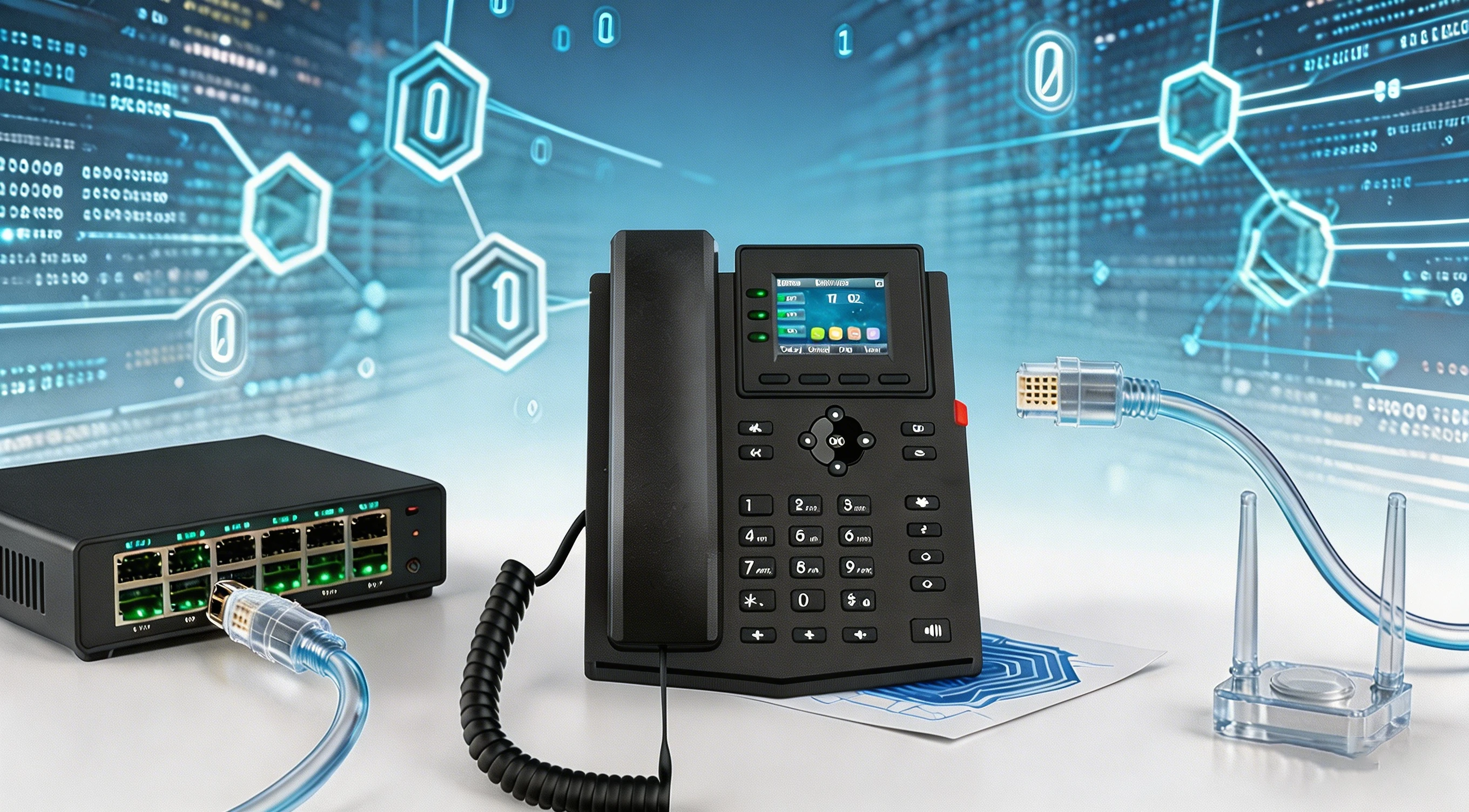
Power over Ethernet changed the way network devices are deployed by allowing one cable to carry both data and electrical power. Within that family of standards, PoE+ refers to IEEE 802.3at, the version that expanded available power and made Ethernet more practical for devices that needed more than basic PoE could provide. It is widely used in business networks, wireless infrastructure, security systems, and industrial communication deployments where cleaner cabling and simpler installation matter.
PoE+ is often mentioned in product sheets almost as if it were a generic convenience feature, but it is really a specific Ethernet power standard with defined roles, power classes, negotiation methods, and compatibility behavior. Understanding it is useful not only for switch and endpoint selection, but also for planning voice networks, wireless access layers, IP paging systems, and other edge devices that rely on stable power delivery through structured cabling.
What Is PoE+ Standard (802.3at)?
PoE+ is the Type 2 generation of standardized Power over Ethernet
PoE+ is the common industry name for IEEE 802.3at. In practical terms, it is the second major standardized PoE generation, following IEEE 802.3af. Its purpose is straightforward: make more power available over standard Ethernet cabling while keeping interoperability with earlier PoE devices and switching infrastructure in mind.
The simplest way to think about PoE+ is this: basic PoE made it possible to power lower-consumption endpoints such as many desk phones and small network devices, while PoE+ extended that concept to equipment with a higher power demand. That step mattered because enterprise networks were no longer powering only phones. They were also beginning to support stronger wireless access points, pan-tilt-zoom cameras, intercom terminals, and other devices that needed more headroom.
It sits between classic PoE and higher-power PoE generations
In everyday deployment language, PoE+ sits in the middle of the common Ethernet power ladder. IEEE 802.3af is usually treated as the original PoE baseline. IEEE 802.3at raised the ceiling. Later, IEEE 802.3bt pushed power higher still for more demanding equipment. That is why PoE+ remains so relevant: it is often the practical standard for mainstream business edge devices without requiring the power budgets associated with very high-power ports.
For many network planners, PoE+ hits the sweet spot. It offers enough power for a wide range of modern endpoints, while remaining widely supported across switches, injectors, and devices from different vendors. In real projects, that balance is often more important than chasing the highest possible wattage.
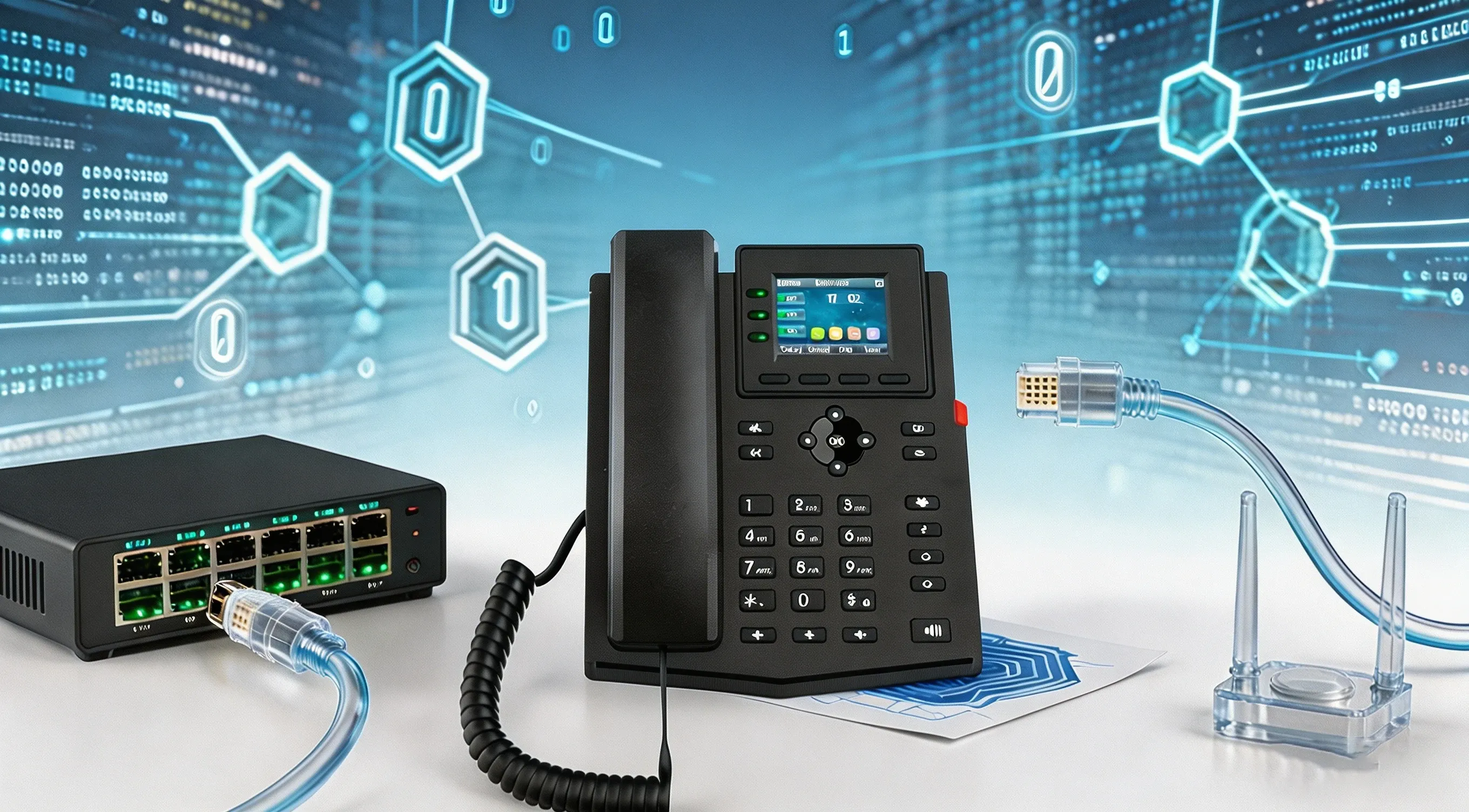
PoE+ allows a single Ethernet cable to carry both data and power to common edge devices such as IP phones, access points, and cameras.
How Does PoE+ Work?
PoE+ relies on a power sourcing device and a powered device
Every PoE+ link starts with two roles. The first is the power sourcing equipment (PSE), which is usually a PoE-capable Ethernet switch port or a PoE injector. The second is the powered device (PD), such as an IP phone, wireless access point, paging speaker, intercom terminal, or camera. The PSE provides power, and the PD receives it.
This role split is important because PoE+ is not just raw voltage being pushed blindly onto a cable. The standard defines a negotiation process so that the switch or injector can determine whether a connected device is PoE-capable and how much power it is allowed to receive. That controlled behavior is one of the reasons PoE became practical for large enterprise and industrial networks.
The process begins with detection and classification
Before full power is delivered, the PSE checks whether the attached endpoint presents a valid PoE signature. After detection, the equipment can classify the device so the switch can reserve an appropriate amount of power. In the PoE+ context, this matters because the network may be powering dozens of devices at once, and power budgeting has to be managed across the entire switch.
PoE+ also improved how higher power can be identified. In practical deployment terms, that means a Type 2 PSE and a Type 2 PD can recognize each other and allow operation above basic 802.3af levels. Some systems also use LLDP-based power negotiation to exchange more detailed information about power needs after the link is established. That helps the network allocate power more intelligently instead of treating every device the same.
Power and data share the Ethernet infrastructure
One reason PoE+ became so attractive is that it does not require separate AC outlets at every endpoint location. The Ethernet cabling plant already carries the network connection, and PoE+ allows that same cabling path to deliver DC power from the access switch or injector. This simplifies installation in ceilings, hallways, production areas, gatehouses, stations, warehouses, and office walls where local power is inconvenient or expensive to add.
In practice, this means the network edge becomes easier to standardize. Installers can bring the endpoint online with one cable, administrators can restart or schedule devices from the switching layer, and UPS-backed switch rooms can keep voice and security devices powered during short local outages.
How Much Power Does PoE+ Provide?
PoE+ increases available power compared with basic PoE
The number most people remember is 30 watts per port. That is the commonly cited PoE+ supply level at the PSE side. Because some power is lost across the cable, the powered device side is typically specified at up to 25.5 watts. That gap is normal and reflects real delivery conditions across standard cabling lengths.
This distinction matters when evaluating product requirements. A device that says it needs 25 watts may fit comfortably within PoE+, while a device that needs more than 25.5 watts at the endpoint may require a higher-power standard such as IEEE 802.3bt or a separate local power supply. Reading only the switch-side headline number without checking the PD requirement can lead to wrong assumptions during design.
Type 2 power changed what Ethernet edge devices could do
The increase from 802.3af to 802.3at made a practical difference. It opened the door for devices with stronger radios, brighter displays, expanded audio capability, motorized camera behavior, and more feature-rich edge hardware. That is one reason PoE+ became closely associated with IP phones, enterprise access points, and security cameras for many years.
Even today, a large share of enterprise endpoint designs still target PoE+ because it is broadly available. Vendors often optimize mainstream devices to stay within the 25.5 W PD envelope so they can work across more installed switch bases without forcing customers into a full network power upgrade.
Key Uses of PoE+ Standard (802.3at)
IP phones and unified communications endpoints
PoE+ is a natural fit for business telephony because desk phones are usually located where data cabling already exists, but power outlets may be limited or poorly placed. A PoE+ switch can power the phone, support data passthrough to a nearby PC in some designs, and keep the voice edge tied to centralized UPS protection in the communications room.
For more advanced communication devices, the extra power budget can also support color displays, expansion modules, video calling features, integrated Bluetooth, or richer local processing. In communication systems, that means administrators can standardize endpoint deployment without adding power bricks all over the workspace.
Wireless access points
Wireless infrastructure is one of the most common PoE+ application areas. Access points are frequently mounted on ceilings or high walls where AC outlets are not ideal. PoE+ makes those placements far easier because the installer only needs Ethernet back to the switch. As access points added more radios, stronger processing, and higher throughput features, 802.3at became an important design target.
In many organizations, PoE+ is the minimum practical standard for mainstream Wi-Fi deployments, especially when dual-band or feature-rich APs are involved. Some newer high-end access points may demand 802.3bt for full functionality, but PoE+ still remains a core requirement for a large middle tier of wireless devices.
Security cameras, intercoms, and edge control devices
IP cameras, SIP intercoms, door stations, paging speakers, alarm beacons, and similar edge devices benefit from the same one-cable deployment model. These products are often mounted outdoors, in entrances, along corridors, above gates, or inside industrial and public-service environments where a separate power circuit increases cost and complexity.
PoE+ helps these devices remain easier to deploy and easier to manage. It can also simplify maintenance, because the switch can often report power state, overload events, and port status remotely. For distributed sites, that reduces the need for first-response troubleshooting based only on guesswork.

PoE+ is widely used wherever network edge devices need both Ethernet connectivity and practical centralized power delivery.
Deployment Benefits of PoE+
Cleaner installation and simpler rollout
The most obvious advantage of PoE+ is cable reduction. If a device would otherwise need both Ethernet and local AC power, PoE+ removes one of those dependencies. That can shorten installation time, reduce visible clutter, and simplify work in finished spaces where opening walls or extending electrical service is disruptive.
For project teams, this is not just a cosmetic benefit. It can affect labor cost, installation scheduling, and the speed at which devices go live. In office upgrades, hospital wings, school buildings, stations, warehouses, or terminals, that difference quickly becomes meaningful.
Centralized backup power and easier control
Because PoE+ power originates from the network side, endpoints can benefit from centralized power protection. If the access switches are backed by UPS systems, phones, intercoms, access points, and selected cameras may continue operating during a local outage that would otherwise affect wall-powered devices.
Network administrators also gain a degree of operational control. Depending on the platform, they may be able to check power draw, disable or enable ports, cycle a frozen endpoint remotely, and monitor overall switch power budgets. That turns the access switch into part of the device operations layer, not just a transport box.
PoE+ vs PoE vs Higher-Power PoE
How 802.3at compares with 802.3af
Compared with 802.3af, PoE+ provides a higher power ceiling and supports devices that would be constrained under the original PoE budget. If an endpoint can run on 802.3af, it will usually have modest power needs. If it is designed for 802.3at, it likely needs more operational headroom for its radios, display, camera mechanics, audio stage, or processing features.
From a procurement perspective, moving from 802.3af to 802.3at is often less about chasing specifications and more about protecting future device choices. A network that only supports the older baseline may work for basic phones, but it can become restrictive once the organization expands into richer wireless, security, or intercom functions.
How 802.3at compares with 802.3bt
Compared with 802.3bt, PoE+ is more moderate. It does not target the highest-power Ethernet endpoints. Instead, it serves a broad class of mainstream devices. That is why many access switches still advertise PoE+ as their practical standard mix even when higher-power models exist in the same product family.
For planners, the decision usually comes down to endpoint demand and power budget strategy. If most devices are desk phones, standard APs, and common cameras, PoE+ may be the right balance. If the design includes multiradio high-end APs, larger display devices, or other high-power endpoints, a move beyond 802.3at becomes easier to justify.
Design and Planning Considerations
Per-port power is only part of the story
A switch may support PoE+ on every port, but that does not automatically mean it can deliver the maximum level on every port at the same time. Total PoE budget matters. If a switch has 24 or 48 ports, the available shared power pool must still be checked against the actual endpoint mix.
That is why experienced planners calculate both per-device power need and total switch budget. A network that looks correct on paper can still run short if too many high-draw endpoints are connected to the same unit. Budget awareness is especially important in wireless-heavy projects and multiservice edge networks.
Cable plant, heat, and endpoint behavior still matter
PoE+ works with standard structured cabling, but real-world performance still depends on proper installation practice, suitable cable quality, and environmental conditions. Dense switch closets, long cable runs, and large populations of powered endpoints all affect design choices. Good planning also includes understanding what an endpoint does if only lower power is available. Some devices reduce features, some reboot repeatedly, and others require a local power adapter to unlock full operation.
In other words, PoE+ deployment is not only about whether the link comes up. It is about whether the connected device performs as intended under real load. That is why product datasheets and switch power policies should be read together rather than in isolation.
Typical Applications of PoE+ in Modern Networks
Enterprise offices and campuses
In office networks, PoE+ commonly supports desk phones, conference phones, access points, cameras, and door-entry intercoms. These environments benefit from quick moves, adds, and changes, and PoE+ supports that flexibility well. When office layouts change, devices can often be relocated without requiring new local power work.
Campuses also benefit because network teams can manage many endpoint categories through a common switching infrastructure. Instead of treating telephony, Wi-Fi, security, and building-edge communication as completely separate power projects, they can align more of the edge around one access-layer model.
Industrial, transportation, and public-service sites
PoE+ is also useful in industrial and public deployments where devices are distributed across corridors, gates, stations, workshops, warehouses, utility rooms, or roadside cabinets. In these environments, reducing the number of separate power supplies can simplify installation and cut maintenance points.
For communication-focused systems, PoE+ is especially practical for IP intercoms, SIP paging devices, help points, industrial workstations, and selected network cameras. It can fit naturally into converged communication networks where the Ethernet layer already links phones, gateways, speakers, and operational endpoints.
FAQ
Is PoE+ the same as regular PoE?
No. PoE+ usually refers to IEEE 802.3at, while regular PoE commonly refers to IEEE 802.3af. The difference is not just branding. PoE+ provides a higher standardized power level and supports devices with greater power requirements.
In simple planning terms, basic PoE is for lighter loads, while PoE+ is the more capable standard for many mainstream modern endpoints.
How much power does PoE+ actually deliver?
PoE+ is commonly described as delivering up to 30 W per port at the PSE side, with up to 25.5 W available to the powered device. The difference accounts for losses across the cable plant.
That is why product matching should always be based on the device-side requirement rather than only the switch marketing headline.
Can a PoE+ switch power older PoE devices?
Yes, in standard deployments PoE+ is designed to remain backward compatible with earlier PoE behavior. A PoE+ switch can usually power lower-consumption PoE endpoints without issue, provided the device is standards-compliant.
This compatibility is one reason PoE+ became a popular upgrade path for organizations that wanted more flexibility without replacing every legacy endpoint at once.
Does PoE+ mean the endpoint needs no local power adapter?
Often yes, but not always. Many PoE+ devices are designed to run fully from Ethernet power alone. However, some products may use PoE+ for standard operation and require a local adapter for optional high-power features.
That detail depends on the product design, so the safest approach is to check the vendor's power mode notes rather than assume every function is available under every power source.
Where is PoE+ most commonly used?
Common uses include IP phones, wireless access points, security cameras, video door stations, intercom terminals, paging speakers, and other Ethernet-connected edge devices. It is especially useful where a one-cable installation improves deployment speed or removes the need for local AC work.
That is why PoE+ appears so often in enterprise, education, healthcare, transportation, industrial, and smart-building projects.
Conclusion
PoE+ is one of those network standards that becomes more important the closer you get to real deployment work. On paper, it is a defined Ethernet power amendment. In practice, it is what allows many modern edge devices to be installed quickly, powered centrally, and managed more cleanly through the access layer.
For planners, integrators, and IT teams, the value of IEEE 802.3at is not just that it supplies more power than early PoE. It is that it does so in a widely supported, interoperable, and still highly relevant format. Whether the endpoint is a phone, an access point, a camera, or an intercom terminal, PoE+ remains one of the most practical building blocks in modern IP infrastructure.







