


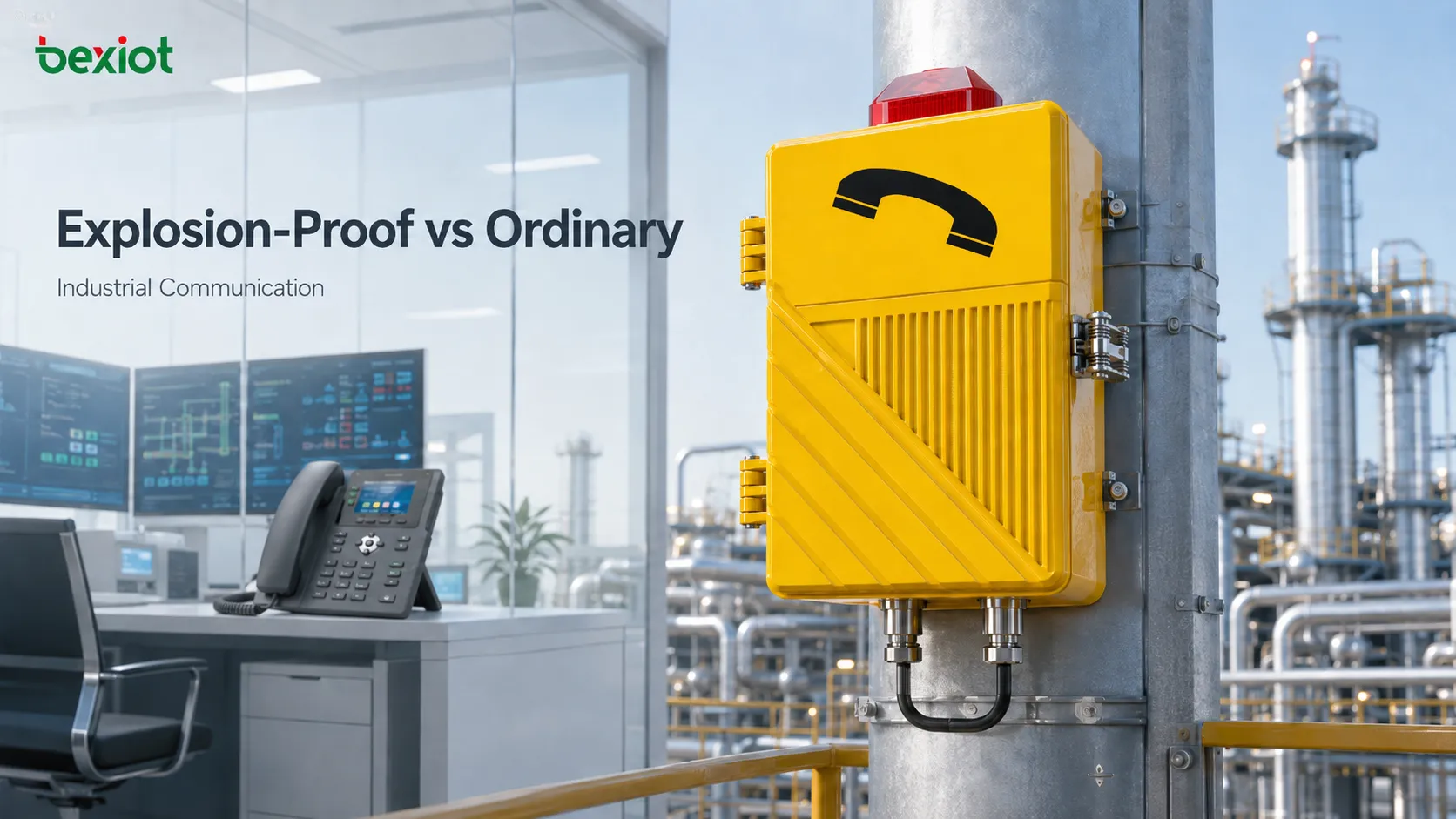
Put an ordinary telephone on an office desk, and the question is usually simple: can it make a clear call? Put a communication device beside a chemical tank, inside a coal preparation area, near a fuel loading point, in a dusty workshop, or along a hazardous industrial corridor, and the question changes completely. The device is no longer judged only by voice quality, keypad response, or appearance. It must first be safe for the environment where it is installed.
This is the basic reason explosion-proof telephones exist. They are built for areas where flammable gas, vapor, combustible dust, corrosive atmosphere, moisture, impact, or heavy industrial use may be present. Ordinary telephones are designed for general communication. Explosion-proof telephones are designed for communication under controlled safety requirements.
Purpose Comes First
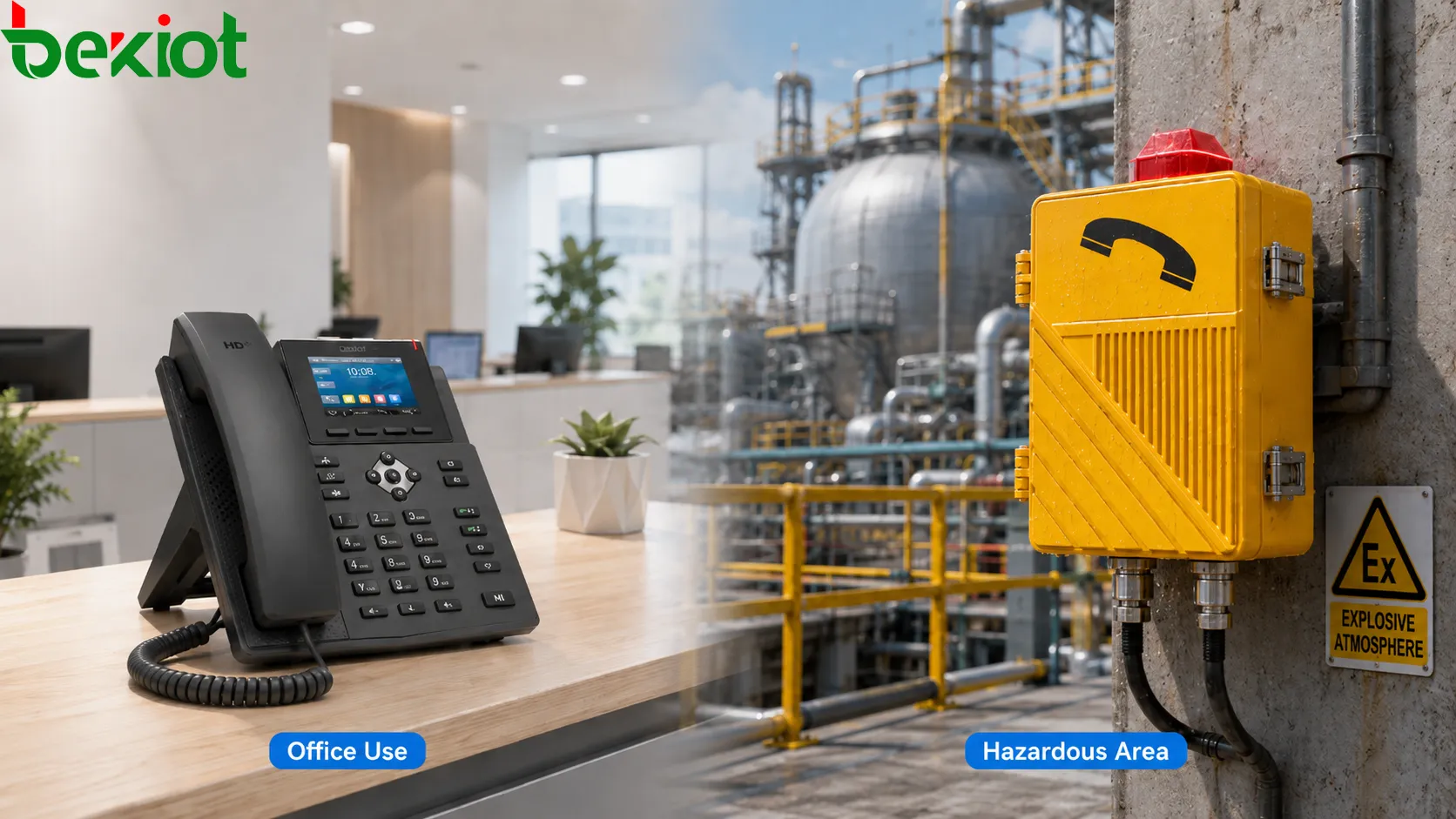
The most important difference is application purpose. An ordinary telephone is usually used in offices, homes, reception desks, meeting rooms, schools, shops, hotels, or indoor public areas. Its main task is daily voice communication. The expected environment is relatively clean, dry, stable, and free from explosive atmospheres.
An explosion-proof telephone is designed for places where the communication point may be exposed to hazardous conditions. These may include petroleum and chemical plants, coal mines, gas stations, fuel depots, pharmaceutical workshops, grain processing areas, paint rooms, offshore platforms, tunnel projects, and other industrial sites with explosion risk. In these locations, a communication device must avoid becoming an ignition source.
This difference affects every part of the product. The ordinary telephone is optimized for convenience, cost, light structure, simple wiring, and user comfort. The explosion-proof telephone is optimized for safety, enclosure strength, sealed entry, controlled circuit behavior, mechanical durability, and long-term operation under harsh conditions.
From a purchasing perspective, this means the two products should not be compared only by price or appearance. They belong to different use scenarios. A normal phone that works well in an office may be unsuitable, unsafe, or non-compliant in a hazardous industrial area.
Safety Design Is Different
Explosion-proof telephones are built around safety principles. Their enclosure, electrical design, cable entry, sealing method, grounding, keypad, handset, speaker, microphone, and internal components must be considered as part of the protection system. The goal is to reduce the risk that sparks, heat, arcs, static discharge, or damaged parts could ignite the surrounding atmosphere.
Ordinary telephones do not need this level of protection. They may contain exposed plastic structures, light housings, standard circuit boards, ordinary connectors, and unprotected cable entries. These are acceptable in a normal office but not necessarily acceptable in areas with combustible gas or dust.
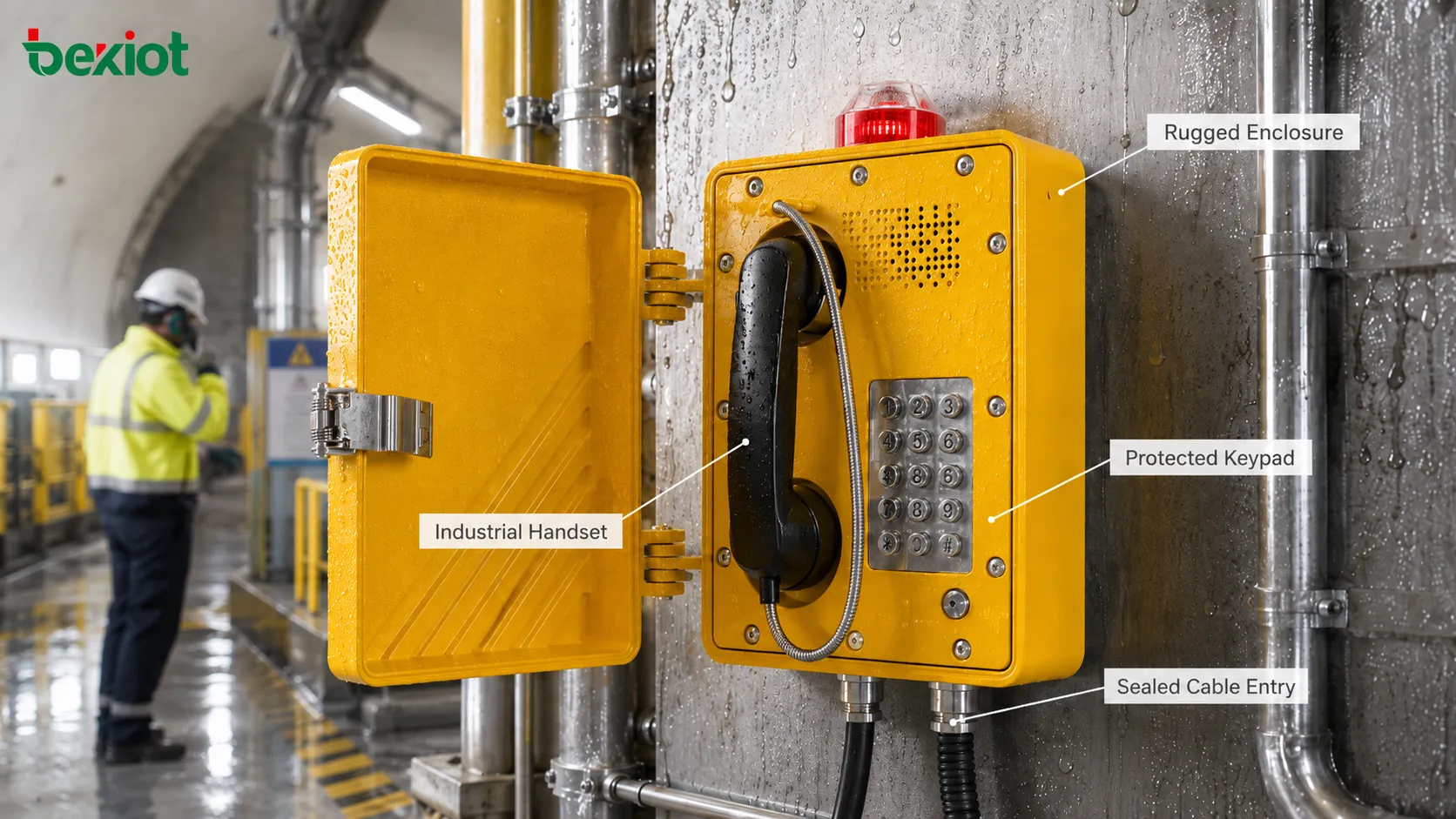
The enclosure of an explosion-proof telephone is usually much heavier and stronger. It may use metal or reinforced industrial materials, sealed joints, protected buttons, strong handset structure, and specialized cable glands. The design is not only about resisting impact. It is also about maintaining the protective structure after years of vibration, moisture, cleaning, handling, or outdoor exposure.
Safety design also affects installation. An explosion-proof telephone must be installed according to the required site conditions and protection method. Cable entry, grounding, sealing, mounting, and inspection should follow project rules. An ordinary telephone normally does not require this kind of hazardous-area installation discipline.
Structure and Durability Matter
Ordinary telephones are often lightweight. They may be placed on a desk, mounted on a wall, or connected to an office network. Their housing is usually designed for indoor use. If dropped, hit, sprayed with water, exposed to dust, or used with gloves in a rough environment, the device may fail quickly.
Explosion-proof telephones are built for tougher field conditions. They may need to withstand impact, vibration, high humidity, dust, temperature variation, corrosion, oil mist, cleaning water, and rough operation. The handset cord, hook switch, keypad, speaker grille, microphone opening, and cable entry must all survive repeated use.
This difference is important because industrial communication points are often installed in places where maintenance is inconvenient. A telephone at a remote pump station, underground roadway, tank farm, conveyor line, or outdoor loading bay cannot be treated like an office phone that can be replaced in minutes. It must remain reliable between inspections.
Durability also protects voice performance. A cracked handset, loose terminal, blocked microphone hole, damaged cable, or corroded connector can reduce call quality. Explosion-proof and industrial-grade structures help keep the audio path stable for longer periods.
Voice Performance Has Different Goals
Both ordinary telephones and explosion-proof telephones need clear voice, but the meaning of “clear” is different. In an office, clear voice usually means low noise, natural sound, and comfortable listening. In an industrial site, clear voice means speech can still be understood near machines, ventilation, alarms, vehicles, wind, rain, echo, or protective equipment.
Explosion-proof telephones often need stronger acoustic design. A close-talk handset can improve the speech signal because the microphone is near the user’s mouth. A stronger receiver or speaker can help the field user hear the control room. Microphone placement, acoustic shielding, speaker tuning, and enclosure design all influence the final result.
Ordinary telephones may sound pleasant in a quiet room, but they may not perform well in a noisy industrial area. Their microphone may pick up too much background noise. Their speaker may not be loud enough. Their housing may create unwanted resonance if installed near metal surfaces or machinery.
For hazardous-area communication, voice clarity is not only a comfort issue. It affects work efficiency and emergency response. If an operator must repeat every instruction, time is lost. If a worker misunderstands a location, valve number, alarm message, or evacuation instruction, the result may be serious. This is why explosion-proof telephone selection should include real-site audio testing rather than only checking technical parameters.
Installation and Integration Vary
Ordinary telephones are usually easy to install. They may use a simple analog line, Ethernet cable, power adapter, or PoE network. The installation environment is predictable, and the device can often be moved without major planning.
Explosion-proof telephones require more careful installation. The mounting location must match the hazardous-area layout, worker route, background noise, cable path, emergency plan, and maintenance access. The installer must consider whether the device can be reached safely, whether the voice can be heard clearly, and whether the cable entry remains protected.
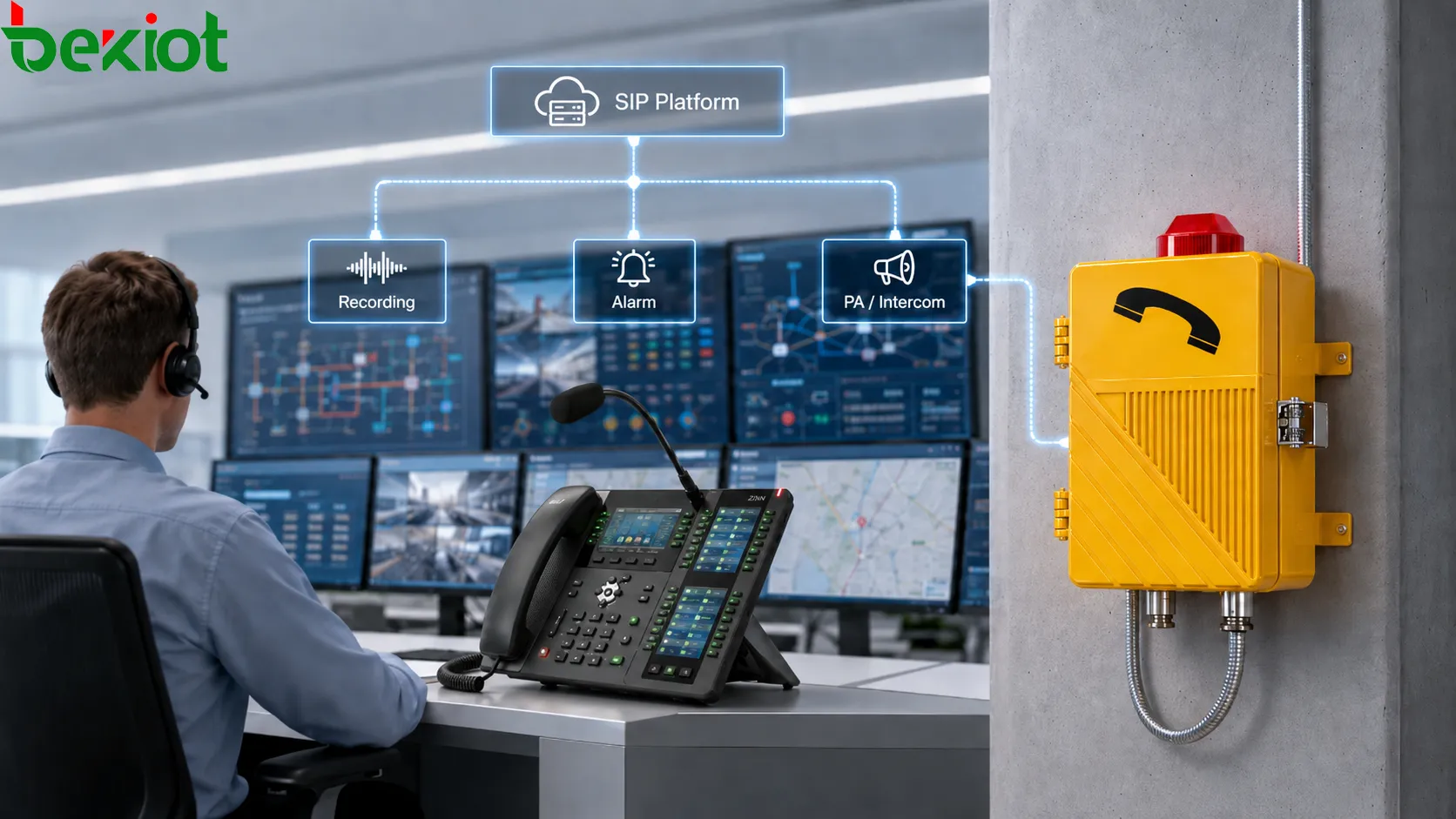
Integration is also different. Ordinary telephones may connect to an office PBX or simple VoIP platform. Explosion-proof telephones are often connected to industrial communication systems, dispatch platforms, emergency call systems, public address systems, recording platforms, alarm linkage systems, or control room consoles.
This integration can create more value. A call from an explosion-proof telephone can be routed to a control room, recorded for safety review, displayed by location, linked with an alarm event, or included in a dispatch workflow. In this sense, the device is not just a telephone; it is a field communication node in an industrial safety system.
Maintenance Is More Demanding
Maintenance requirements are also different. Ordinary telephones are usually replaced when they fail. In most office environments, a faulty phone causes inconvenience but not a major safety concern. The device can be unplugged, repaired, or exchanged quickly.
Explosion-proof telephones need more disciplined inspection. The enclosure should remain intact. Cable glands should not be loose or modified casually. Handset cords, buttons, microphone openings, speaker grilles, grounding, labels, and mounting parts should be checked. If the protective structure is damaged, the device may no longer be suitable for the hazardous area even if it can still make a call.
Maintenance teams should also test audio quality regularly. A telephone that rings successfully may still have weak microphone pickup, low receiver volume, line noise, intermittent connection, or poor call routing. For emergency communication points, periodic call testing is necessary because the device may stay unused for long periods before it is needed.
Good maintenance reduces lifecycle cost. It helps identify small problems before they become failures, prevents unsafe modification, and keeps the communication system ready for real incidents.
Selection Should Follow Risk
The correct choice depends on the environment. If the telephone will be installed in a clean office, guard room, reception desk, ordinary workshop office, or non-hazardous indoor area, an ordinary telephone may be enough. It is lower in cost, easier to install, and suitable for daily communication.
If the telephone will be installed in a hazardous area, dusty industrial space, chemical production zone, mine, fuel storage area, offshore platform, tunnel, or heavy-duty outdoor point, an explosion-proof telephone should be considered. The decision should follow site risk, not only call function.
Buyers should review hazardous-area classification, certification needs, environmental exposure, expected noise level, installation position, communication platform, cable route, maintenance plan, and emergency workflow. A telephone used for routine calls may have different requirements from one used for emergency reporting or evacuation coordination.
Becke Telcom can be lightly considered in projects where industrial sites require protected field communication and integration with dispatch or emergency systems. The important point is to select a device that fits the risk level and communication process, not simply a product that looks rugged.
Final Notes
The difference between explosion-proof telephones and ordinary telephones is not limited to appearance. Ordinary telephones are designed for general communication in safe and controlled environments. Explosion-proof telephones are designed for hazardous industrial areas where communication equipment must remain safe, durable, and understandable under difficult conditions.
Explosion-proof telephones differ in purpose, safety structure, enclosure design, cable entry, acoustic performance, installation rules, system integration, and maintenance requirements. They are more than rugged telephones. They are part of the communication and safety infrastructure of industrial sites.
For projects involving chemical plants, mines, oil and gas facilities, tunnels, energy sites, or hazardous production areas, Becke Telcom provides explosion-proof and industrial communication options that can support field calling, dispatch connection, and emergency communication. The right model should be selected according to site risk, installation environment, system interface, and long-term maintenance needs.
FAQ
Can an ordinary telephone be used in a hazardous area?
It should not be used in hazardous areas unless the site requirements clearly allow it. Hazardous locations usually require equipment designed and approved for the specific risk environment.
Are explosion-proof telephones only used in mines?
No. They are also used in petroleum, chemical, gas, offshore, tunnel, power, pharmaceutical, grain processing, and other industrial environments where explosion risk or harsh conditions may exist.
Why are explosion-proof telephones heavier?
They usually need stronger enclosures, protected cable entries, rugged handsets, sealed structures, and durable components. These design features increase weight but improve safety and reliability.
Do explosion-proof telephones provide better voice clarity?
They can provide better practical clarity in industrial environments because they are designed for noise, rugged use, stable installation, and stronger field communication needs.
What should be checked before purchasing?
Check the hazardous-area requirement, protection method, certification, installation environment, communication interface, audio needs, cable route, maintenance plan, and system integration requirements.







