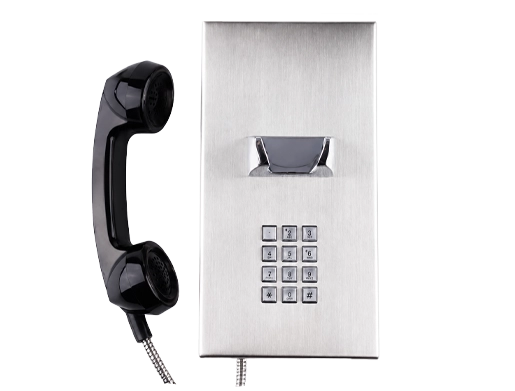
Pick up an IK10‑rated junction box or emergency phone, and you’ll feel it — the weight, the thick walls, the gaskets that look like they belong on a submarine. The label promises impact resistance, but what does that actually mean? Under the hood, it’s a 20‑joule hammer strike, delivered in a lab under a standard that leaves no room for marketing fluff. For engineers putting gear in train stations, factory floors, or unsupervised outdoor spaces, that number is the difference between a cracked housing and a device that keeps working through years of accidental kicks and tool drops.
Still, IK10 gets misread all the time. It’s not a waterproofing badge, it doesn’t make something explosion‑proof, and it definitely doesn’t mean every glass window or touchscreen on the unit is equally tough. This walkthrough unpacks the rating, the tests behind it, and the questions you should ask before trusting a spec sheet.
What IK10 Means
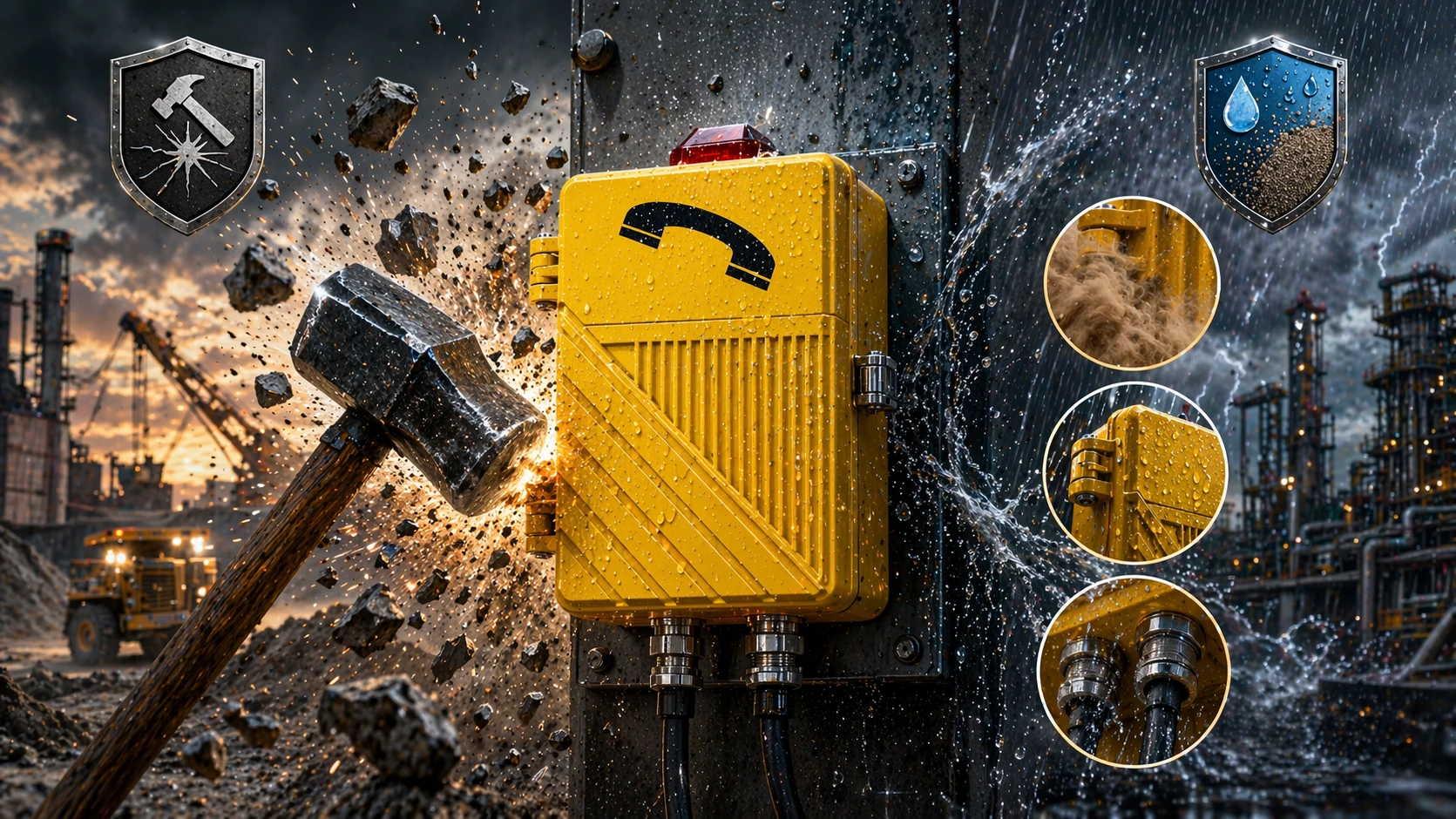
In the IEC classification system, IK10 sits at the heavy end of the scale. It means the enclosure withstood a 20‑joule impact — a 5 kg mass dropped from 400 mm — without cracking, deforming, or letting the striker reach live parts. That’s a specific, repeatable test, not a subjective claim about “ruggedness.” When a datasheet prints IK10 (20 J), it’s telling you the housing was pushed to a known limit and passed.
The number matters because “anti‑vandal” or “heavy‑duty” can mean almost anything. An office phone might survive a coffee mug; a tunnel‑side intercom has to survive a boot. The IK scale forces a common language onto those wildly different expectations. But the rating applies to the enclosure — not necessarily to the display, the keypad, or the cable glands bolted onto it. That’s a distinction that bites teams who assume the whole assembly carries the same toughness.
IEC Rule
The rulebook lives in two standards that usually get mentioned together. IEC 62262 defines the IK codes and their energy levels; IEC 60068‑2‑75 describes the hammer test methods. You’ll also see EN 62262 in European catalogues, which is essentially the same document adopted regionally. When a buyer asks for the standard reference, they’re really checking that the rating wasn’t invented by a marketing team — it was measured against a published, auditable procedure.
For anyone writing a project specification, the combination of those two standards is the safety net. It connects the code on the nameplate to a lab setup that can be verified, repeated, and challenged if the equipment doesn’t hold up in the field.
20 J Test
The shorthand “20 J” is the most honest part of the rating. IK07, IK08, and IK09 all step up in energy, but IK10 represents the highest level most enclosure standards recognize for heavy industrial and public‑facing gear. A 20‑joule impact is roughly what you’d get from dropping a bowling ball from waist height onto a small point — not an everyday bump, but exactly the kind of concentrated shock that turns a cheap plastic lid into shrapnel.
Engineers often find the joule value more intuitive than the code itself because it translates directly into the test severity. That’s why responsible datasheets print both: the code tells you the class, the joule value tells you what it took to earn it.
IK vs IP
This is the mix‑up that never goes away. IK measures how well the box takes a hit. IP measures how well it keeps out dust and water. An IP66 rating means it shrugs off powerful water jets and fine dust; an IK10 rating means it stays in one piece when something heavy slams into it. One does not imply the other, and outdoor installations frequently need both.
A terminal rated IK10 only might survive a baggage cart but fail in a rainstorm. A waterproof box with no IK rating could shatter the first time a forklift clips it. The habit worth forming is to read the two ratings as a pair — if the site has weather and foot traffic, you need both columns checked.
Test It
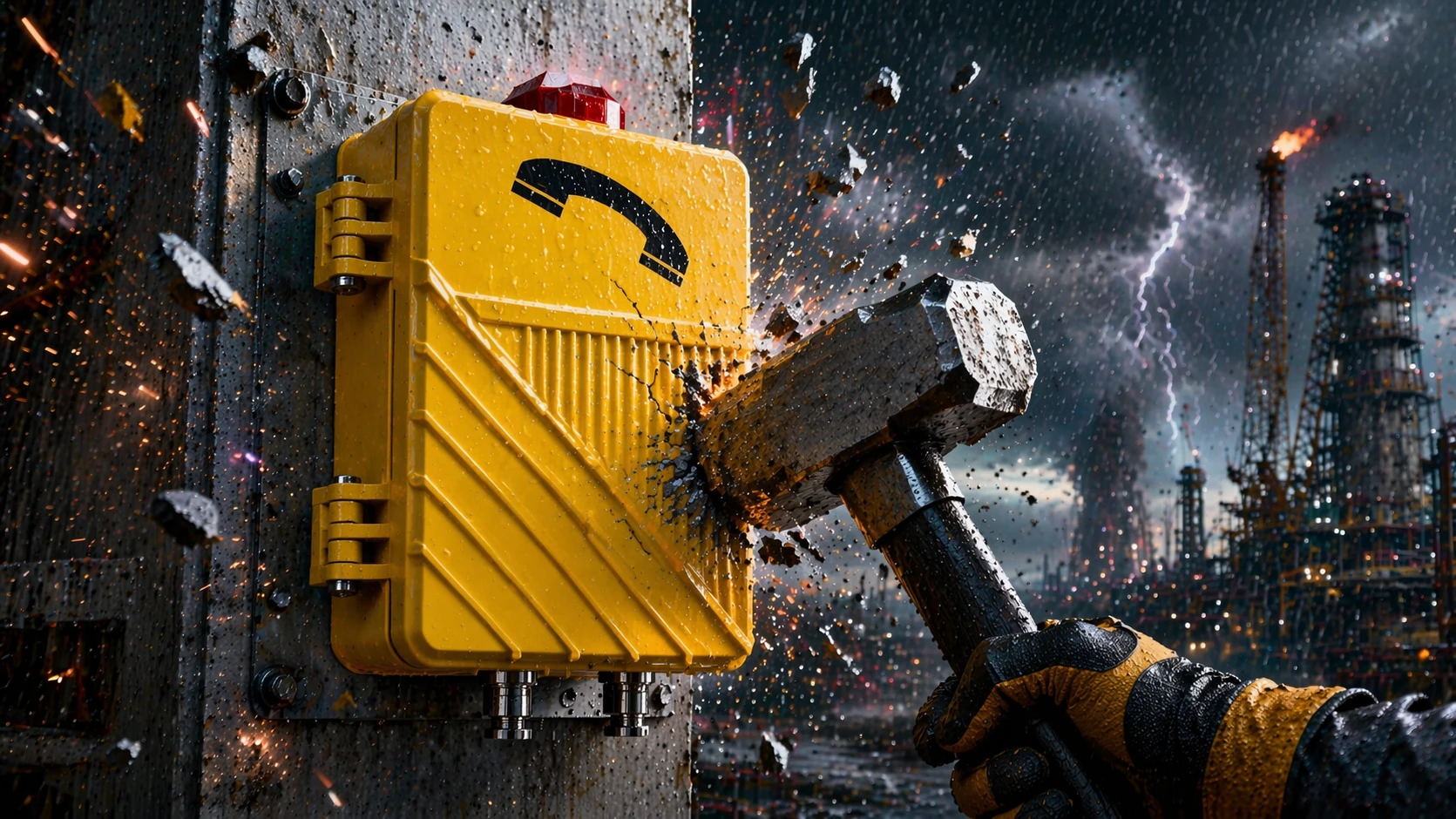
The IK10 hammer test isn’t a wild attempt to recreate every real‑world accident. It’s a calibrated spring‑driven striker that hits predetermined points on the enclosure at exactly 20 J. The goal is repeatability — so a buyer in Germany and a buyer in Brazil are looking at the same benchmark. After the impacts, the enclosure still has to meet its stated protection level, meaning no cracks, no openings, and no compromise to the internal components.
That’s also why terms like “vandal‑proof” or “indestructible” shouldn’t appear on a serious compliance document. The IK rating proves performance under defined conditions, not immunity from every possible assault. A sledgehammer is still a sledgehammer, but a certified IK10 housing gives you a documented line in the sand.
Who Uses
You’ll spot IK10 on equipment that lives within arm’s reach of the public or in the path of heavy machinery. Emergency help points on metro platforms, factory‑floor control stations, roadside EV chargers, parking‑garage intercoms — these are the usual suspects. The common thread is that a broken enclosure doesn’t just look bad; it exposes wiring, invites water, and creates a safety or service outage.
In rail, oil and gas, utilities, and logistics, IK10 also reduces the frequency of nuisance service calls. A housing that survives a knock at 3 a.m. doesn’t wake up a maintenance crew. Over a decade, that adds up to real savings and fewer moments when a critical communication point goes dark.
Why It
A cracked lid or a dented door isn’t just cosmetic damage — it’s an invitation to water, dust, and unplanned downtime. In public areas, a broken intercom or help point that was supposed to be the emergency lifeline becomes a safety violation. IK10 targets that risk directly by proving the enclosure can absorb significant mechanical energy and still keep its protective function intact.
Even without intentional vandalism, accidental hits from carts, tools, luggage, and maintenance work are routine in busy environments. Choosing an IK10 enclosure up front often costs marginally more and saves multiples in replacement parts, labour, and lost service hours later.
Check It
An IK10 badge on the main box doesn’t automatically extend to the glass window, the touch‑panel overlay, or the hinged door. Before you spec a product, ask the manufacturer which components carry the IK10 rating and under what mounting conditions. A viewing pane that’s only IK08 can still fail even if the surrounding steel is IK10, and that’s where water and fingers find their way in.
Also verify that the claim appears in a formal test report or certificate, not just a brochure. Look for the exact standard reference, the scope of the assembly tested, and any environmental caveats. A quick cross‑check of the IK and IP ratings, the installation height, and the expected traffic patterns will catch mismatches long before the equipment goes live.
Best Fit
IK10 products earn their keep anywhere that enclosure damage can stop a service or trigger a safety incident. Rail platforms, tunnel walkways, chemical loading bays, and busy logistics yards all put equipment in the line of fire. In these settings, a stronger housing isn’t an upgrade — it’s a baseline requirement that keeps help points, alarms, and control panels operational through years of heavy contact.
The rating also supports lifecycle planning. When a device is expected to run for a decade with minimal intervention, a robust enclosure reduces the chance that a simple impact forces an early replacement. That’s a decision that looks more like an operational investment than a purchase cost.
Quick Qs
Can a repair shop restore IK10 after damage?
Possibly, but only if they follow the original enclosure manufacturer’s instructions and use approved parts. A welded patch or a different gasket can alter the impact behaviour, so the repair should be verified against the same standard that was originally tested.
Does IK10 cover the mounting bracket?
Usually not, unless the bracket was part of the tested assembly. A separately sourced wall bracket or pole‑mount kit needs its own evaluation, especially if it places stress on the enclosure in ways the lab didn’t simulate.
How does IK10 handle repeated low‑energy hits?
The standard test is a single high‑energy blow. Repeated smaller impacts — like a door constantly bumping the enclosure — can cause fatigue cracking that IK10 alone doesn’t predict. For those environments, ask about material thickness and long‑term cycle testing.