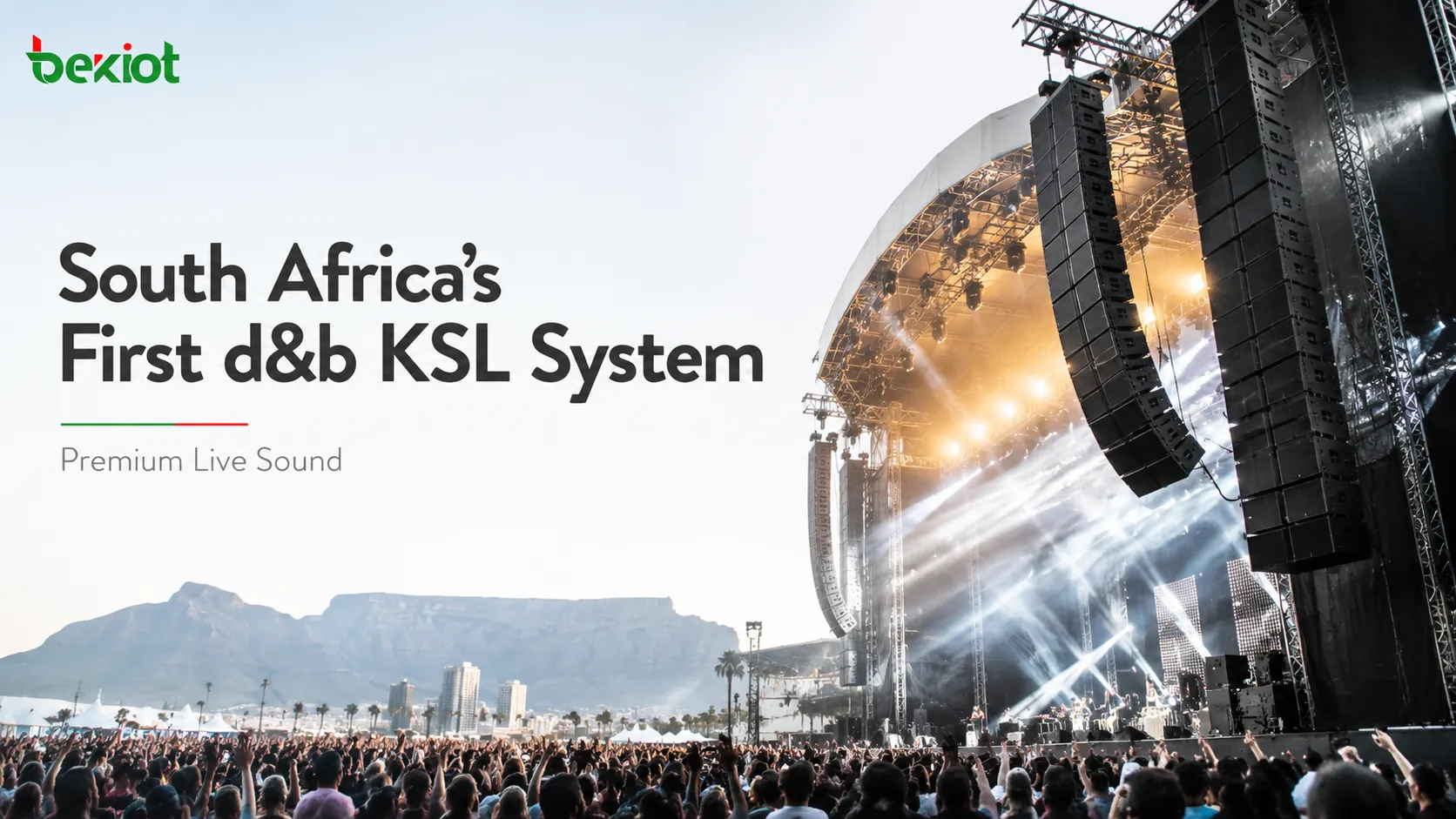
A major sound system purchase can say more about a market than a simple equipment list. When a production company invests in a high-performance line array system, it is usually responding to real pressure from touring riders, local event demand, audience expectations and the need to deliver repeatable results in different venues. South Africa’s first d&b KSL system represents that kind of market signal.
Blue Array Productions has added 28 KSL line array modules with D40 amplifiers through Stage Audio Works, strengthening a long professional relationship that began years before this latest investment. The move is important not only because of the product name involved, but because it reflects how South African live sound production is moving closer to the technical expectations of international touring, large-format events and premium local productions.
For rental companies, concert suppliers, event producers and system engineers, a flagship PA investment is rarely made for one show. It is made to solve a wider operational question: how can a company provide consistent coverage, controlled directivity, high output, efficient logistics and rider-ready performance across many types of productions? The KSL purchase answers that question from both a technical and business perspective.
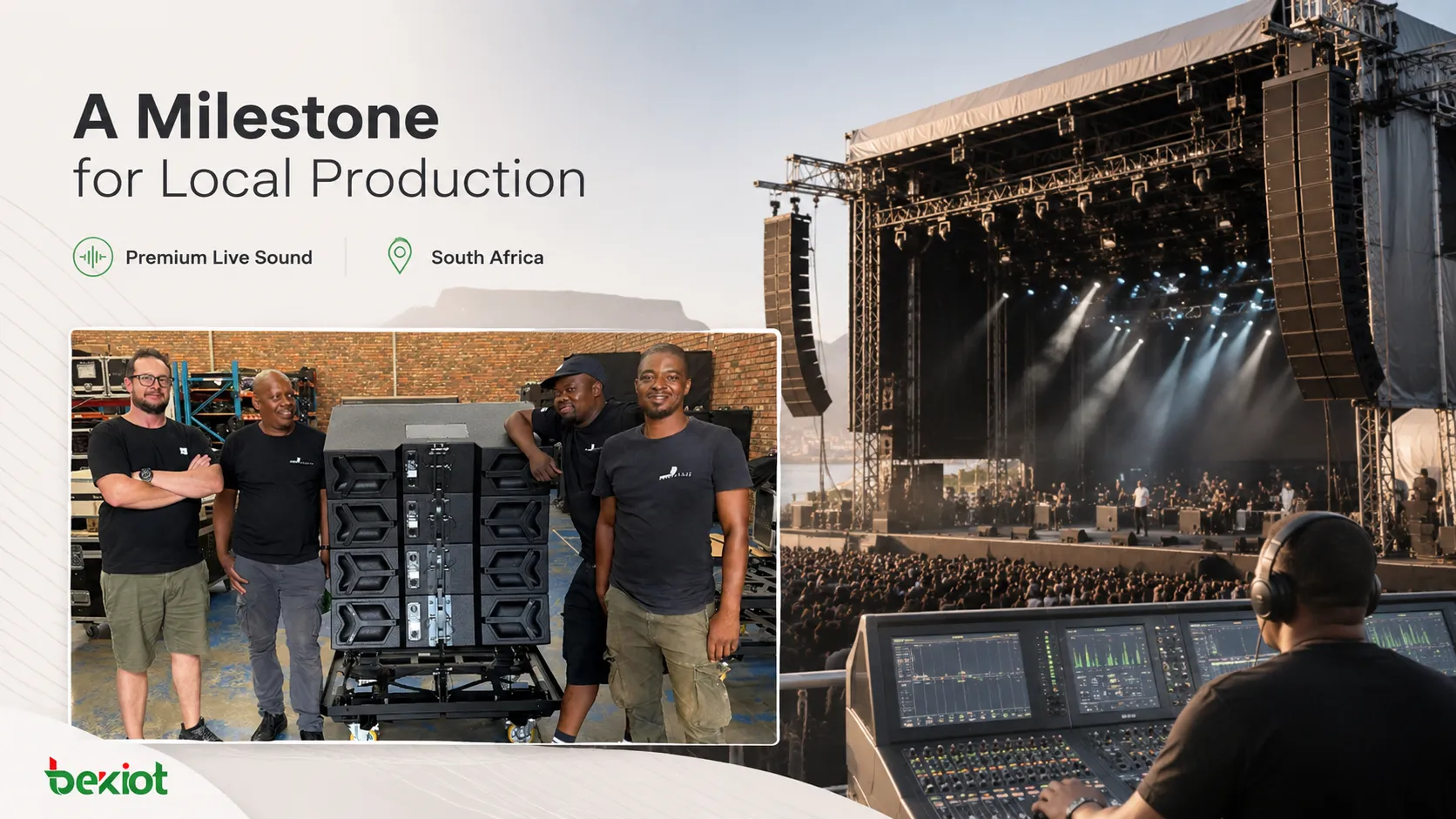
A Milestone For Local Production
The arrival of the first d&b KSL system in South Africa marks a visible step forward for the country’s live sound infrastructure. In practical terms, it gives local productions access to a system class that is widely associated with large-scale touring, controlled coverage and high technical consistency. That matters in a market where international artists, festival promoters, corporate clients and regional event producers increasingly expect global-standard audio delivery.
Live sound is not only about loudness. A professional PA system must manage coverage, intelligibility, tonal balance, low-frequency control, rigging efficiency, amplifier performance, monitoring, transport and repeatability. These requirements become more demanding as venues grow larger, audience areas become more complex and production schedules become tighter.
In this environment, a high-end system can become a competitive tool. It allows a rental company to serve more demanding shows without depending on imported equipment for every project. It can also give event planners more confidence when booking regional productions, because the necessary PA infrastructure is available locally.
South Africa already has a strong live events culture, with concerts, festivals, churches, conferences, sports events, theatre productions and broadcast-linked shows all requiring different sound reinforcement strategies. A system such as KSL supports that landscape by giving engineers a more capable platform for both local and international work.
Why KSL Fits Modern Shows
Modern productions place different demands on PA systems than older live sound environments did. Audiences expect clarity across the listening area, not only near the front. Promoters expect systems that can scale between venue types. Engineers expect predictable behavior during system design, tuning and show operation. Artists and production managers expect rider-friendly equipment that can be trusted under pressure.
The d&b KSL system is positioned for these kinds of requirements. It belongs to the SL-Series family and is designed for applications where directivity control, output capability and efficiency are important. For a rental company, the value is not only in the loudspeaker boxes themselves, but in the complete ecosystem of amplifiers, processing, prediction tools, system workflow and professional acceptance.
D40 amplifiers also matter in this kind of investment. A line array system depends on amplifier control, processing accuracy, output headroom and integration with the loudspeaker system. When loudspeakers and amplifiers are selected as a matched platform, the production team can work with a more predictable technical chain.
Another advantage is operational flexibility. A system that can support different show sizes helps a company avoid owning equipment that is only useful in a narrow set of conditions. For live sound rental, flexibility directly affects utilization. A PA system that works across concerts, festivals, corporate events, worship productions and special events can create a stronger return over time.
Partnership Shapes Equipment Choices
Large audio purchases are rarely based on specification sheets alone. Trust between the production company and the supplier often has a direct influence on timing, configuration, training, support and long-term confidence. The relationship between Blue Array Productions and Stage Audio Works shows how this pattern works in real professional audio markets.
Their cooperation began with earlier d&b system investments, including Q-Series and later J-Series equipment. That history matters because it shows a gradual path rather than a sudden brand decision. A company that has already built workflows, engineering habits and client confidence around one professional system family can make a more natural transition into a newer and more capable platform.
A long-term supplier relationship also reduces risk. High-value sound systems require more than purchase delivery. They require technical consultation, system design advice, product knowledge, amplifier and software support, service planning and sometimes training for crews. When a supplier understands the buyer’s market, inventory and production style, the equipment choice becomes easier to translate into practical results.
For the supplier, supporting a leading rental company also strengthens regional market credibility. When a serious production company invests in a flagship system, other clients and engineers notice. That can influence the wider perception of what is possible in the local live sound market.
Rider Demand Drives Investment
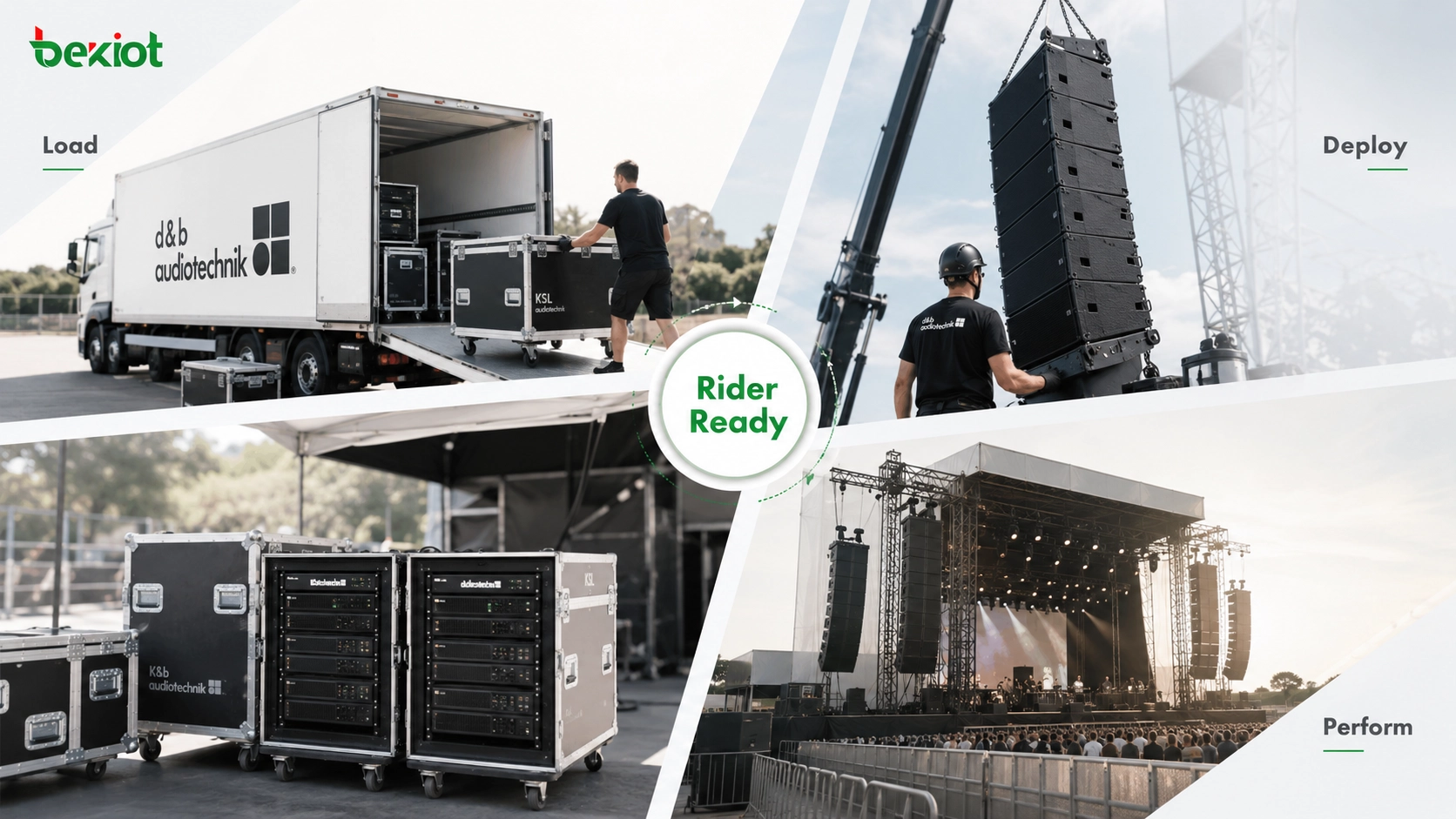
International touring riders are one of the strongest forces behind premium PA investment. A rider is not simply a brand preference list; it is a practical production document that tries to protect consistency. Touring engineers want to know that the system available in each city can deliver the coverage, SPL, tuning workflow and control required for the show.
When more productions request d&b systems, local suppliers face a business decision. They can rent suitable systems from outside the region when needed, or they can invest directly and keep more production capability in-house. Owning a rider-accepted platform helps a company respond faster and compete for more demanding projects.
Local demand matters as well. South African audiences are exposed to increasingly polished live productions, and local artists, corporate clients and event organizers also expect better audio quality. A high-end PA system is therefore not only for international touring. It can raise the standard for domestic productions and give local shows access to the same level of system design discipline.
This kind of investment can also affect regional touring routes. When high-quality infrastructure is available locally, it becomes easier for promoters and production managers to plan shows without excessive equipment transport. That can help reduce logistical complexity and make the region more attractive for larger productions.
What It Means For Engineers
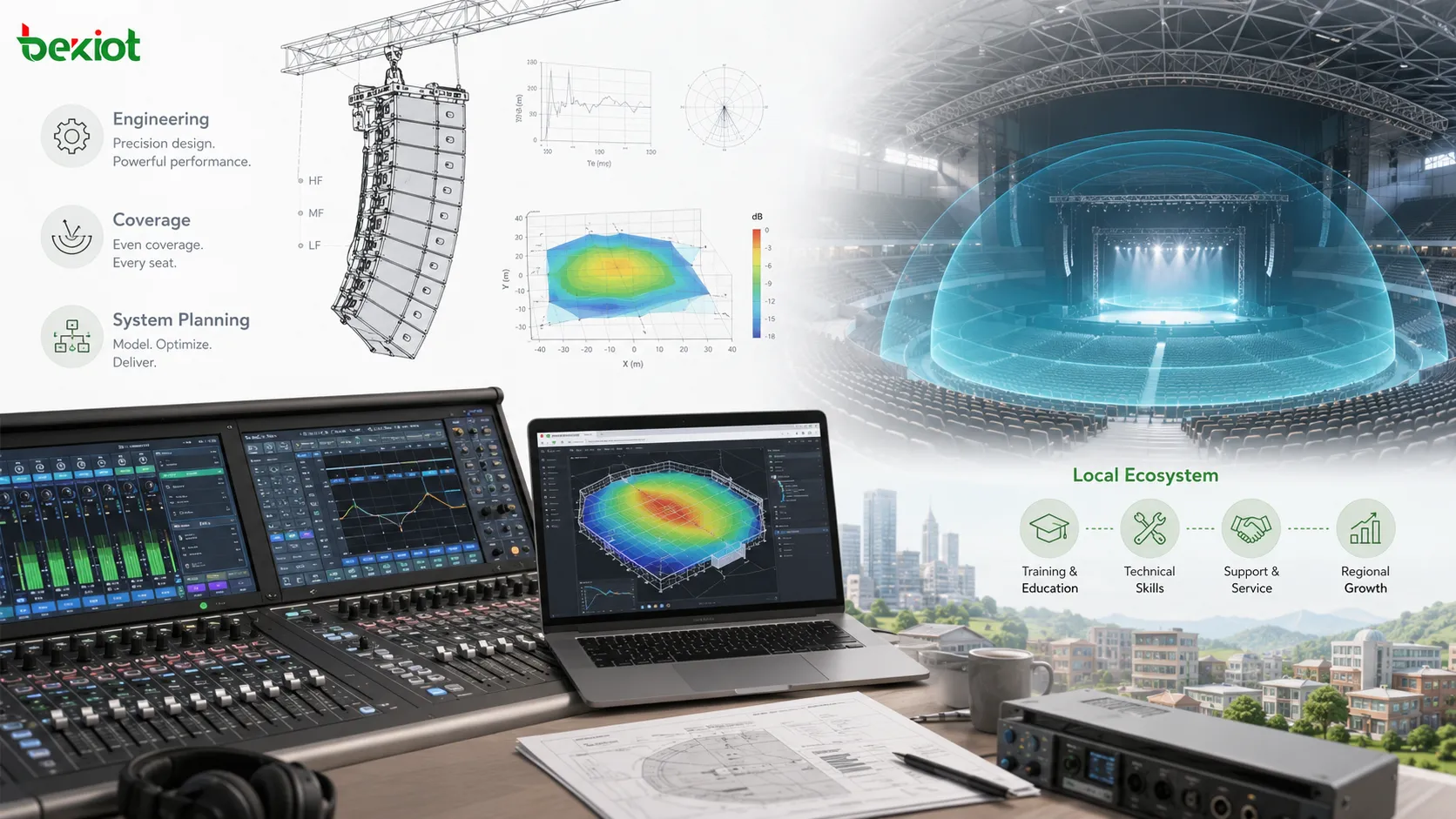
For system engineers, a new high-performance PA platform changes the technical conversation. The focus moves from simply making a system loud enough to designing coverage that is controlled, even and repeatable. Engineers need to think about array length, splay angles, subwoofer strategy, rigging positions, amplifier channel allocation, network control, delay systems and venue-specific tuning.
A system such as KSL also encourages better pre-production. Before the loudspeakers are flown or stacked, the team can model the venue, estimate coverage, plan system zones and prepare amplifier and processing configurations. This reduces guesswork on site and helps crews work faster during load-in and alignment.
The technical benefit is especially clear in venues where sound spill, reflections or uneven audience areas are major concerns. Better directivity control gives engineers more useful tools for managing energy across the room or outdoor audience space. That does not remove the need for skilled tuning, but it gives the crew a stronger foundation.
For younger engineers, access to a modern large-format system can also have training value. It exposes crews to advanced system workflows, measurement practice, amplifier management and international production expectations. Over time, this helps build local expertise rather than relying only on imported crew knowledge for high-level events.
Market Impact Beyond One Purchase
One equipment purchase does not transform an entire industry overnight, but it can influence expectations. When a premium PA system becomes available in a market, clients begin to understand what higher-quality sound reinforcement can offer. Engineers gain a stronger platform to demonstrate best practice. Other rental companies may review their own inventory strategies. Promoters may become more confident about planning larger shows locally.
The impact is also cultural. Live sound quality affects how audiences experience music, worship, theatre, festivals and public events. Poor audio can make even a strong performance feel weak. Clear, controlled and powerful sound can make a production feel more professional, more immersive and more memorable.
For South Africa, the addition of a KSL system supports a broader story of technical development in the live events sector. It shows that local companies are investing not only in equipment, but in production standards, supplier relationships and long-term capability. That is important for a market that must serve both local creativity and international production demands.
The most meaningful result will be seen over time. If the system is used well, maintained properly and supported by skilled engineers, it can help raise expectations across concerts, festivals, corporate events and touring productions. The purchase is therefore not only a business milestone for one company. It is part of the continuing modernization of professional live sound in the region.
FAQ
Why do production companies invest in large-format PA systems?
They invest to support larger shows, meet technical riders, improve sound consistency, reduce outside rental dependence and strengthen their ability to serve demanding clients.
What makes a system rider-friendly?
A rider-friendly system is widely accepted by touring engineers, supported by proper amplifiers and control tools, and capable of meeting predictable coverage, output and reliability requirements.
How does supplier support affect PA ownership?
Supplier support helps with configuration, technical training, service planning, spare parts, troubleshooting and long-term system confidence after the purchase is complete.
Why is local system availability important?
Local availability can reduce transport complexity, shorten planning time, improve production confidence and make it easier for promoters to bring demanding shows into the region.
What should engineers consider before using a new PA system?
Engineers should review venue geometry, rigging points, array design, subwoofer layout, amplifier setup, network control, measurement workflow and audience coverage goals before deployment.