
At the end of September, the business VoIP market offered a useful signal of where enterprise communications are heading. Intermedia Unite received a 4.5 rating in its latest review and remained an Editors’ Choice selection. While business VoIP reviews have traditionally focused on call quality, pricing and video conferencing, this rating increase was also driven by the continued expansion of AI features and improvements to the overall user experience.
The more important takeaway is where AI now sits within the product. Voice transcription, meeting summaries and sentiment analysis were once more commonly associated with Contact Center platforms, advanced analytics modules or separately priced add-ons. Today, some business phone platforms are moving AI Assistant, Call Recap, automated summaries and Action Items directly into everyday communications plans. For small and midsize businesses, that shift is beginning to change how VoIP systems are evaluated. Companies are no longer buying only a cloud phone account; they are increasingly selecting a communications environment that continues working after the call ends, from answering and routing to meetings, messaging and post-call information processing.
AI Features Are Moving into the Core Business VoIP Layer
One of the most representative developments in Intermedia Unite is that AI has not been kept entirely inside a higher-tier Contact Center product.
Its main Business VoIP plans already include capabilities such as AI Assistant, call summaries and content summarization. After a call, users can receive a Call Recap. Video meetings can generate Transcripts, Summaries and Action Items. Some recorded calls can also receive basic customer sentiment labels such as Positive, Neutral or Negative.
These functions are no longer positioned only as AI demonstrations. They are becoming part of everyday office workflows.
After a sales call, an employee may previously have needed to replay the recording, write notes manually and then enter follow-up tasks into a CRM. A modern voice platform can now create an initial summary automatically and reduce some of that administrative work. Internal meetings are following the same pattern: instead of receiving only a recording, users may also receive a transcript, a concise summary and a list of next actions.
The value of AI in Business VoIP is therefore expanding beyond providing intelligence during a live conversation. It is increasingly being used to reduce the manual work that surrounds calls and meetings.
That does not mean every platform now provides the same depth of AI. Call Summary, Transcription and simple Sentiment Tags are relatively easy to standardize, while real-time agent coaching, Agent Sentiment, Conversation Intelligence, advanced quality scoring and Skill-Based Routing are still more commonly found in dedicated Contact Center platforms.
For buyers, the phrase “AI-powered VoIP” is becoming less useful on its own. A better question is which part of the communications workflow the AI actually supports and whether that capability is included in the standard service or requires an additional product.
Business VoIP Competition Is Shifting Toward the Complete Call Workflow
The growing emphasis on AI has not reduced the importance of traditional telephony. In fact, as more vendors begin offering similar AI summary features, the quality of the underlying calling and routing functions becomes easier to compare.
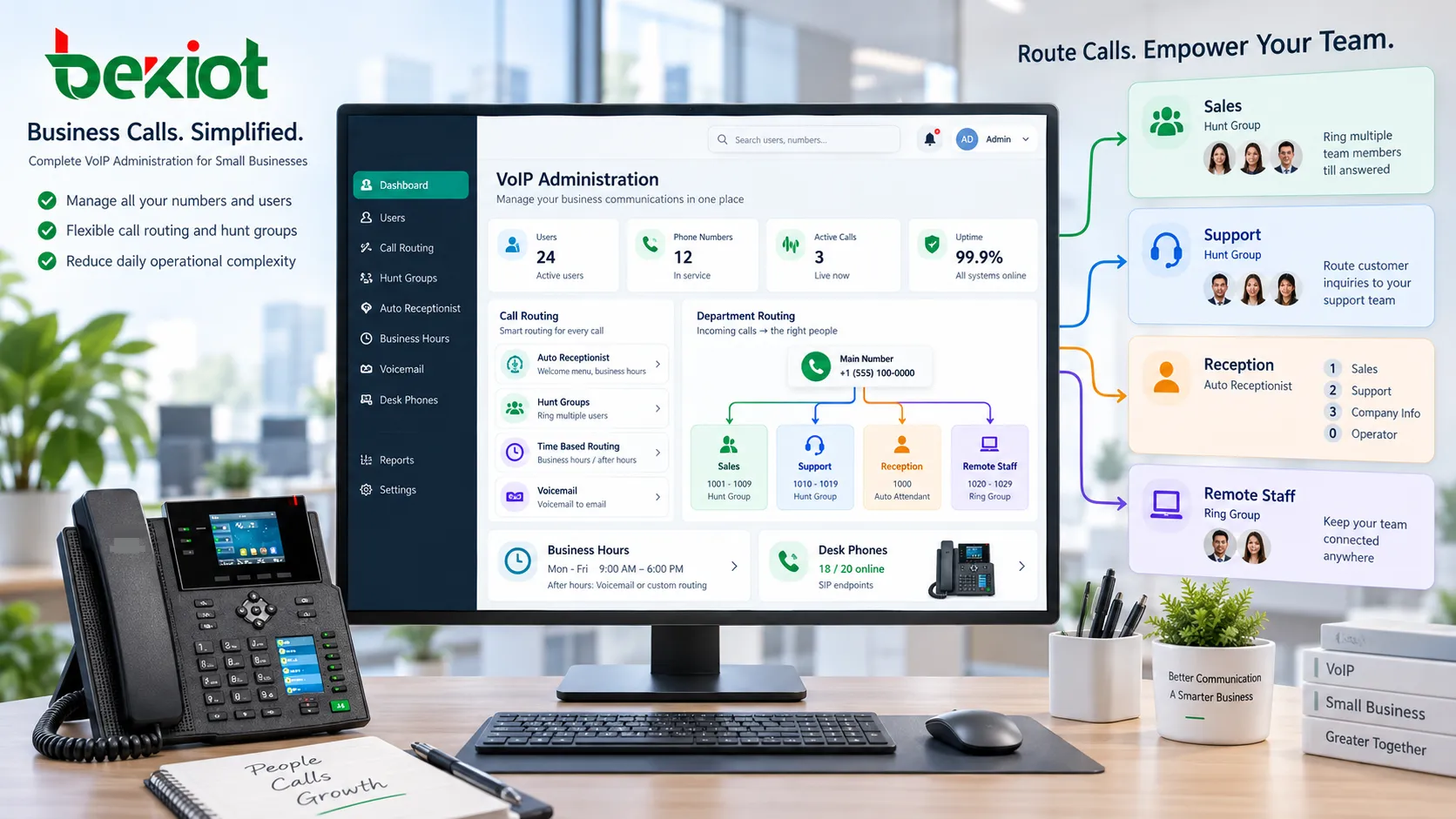
Intermedia Unite still places substantial emphasis on conventional business phone administration. Administrators can configure Call Forwarding, Voicemail, Routing and business hours on a per-user basis, while also creating Hunt Groups, Automated Receptionists and departmental menu branches. More controlled environments can also use functions such as Monitor, Whisper and Barge.
None of these capabilities is new, but they strongly influence how well a VoIP system works after deployment.
A company with 80 employees may not need a sophisticated AI prediction engine, but it deals with practical routing questions every day. Who answers calls before normal office hours? Where should calls go during lunch? What happens when no one in the sales group answers? If one employee is absent, should the customer reach voicemail or another team member?
AI operates on top of those rules. If number routing is poorly designed, Hunt Groups are misconfigured or department menus are difficult to maintain, even a strong summary engine cannot compensate for a weak telephony workflow.
Business VoIP in 2026 is therefore developing along two layers. The lower layer remains Calling, Routing and Administration. The upper layer increasingly adds Transcription, Summary, AI Assistant and Workflow Automation.
Both layers matter. A platform with AI but weak phone-system control behaves more like a collaboration tool, while a platform with telephony alone but little data automation can remain closer to a traditional Cloud PBX.
Administration Efficiency Is Becoming Part of the Real Adoption Cost
Small and midsize businesses often focus first on the per-user monthly subscription price of a VoIP service. Once the system is deployed, however, the amount of time IT staff spend maintaining users, numbers, routes and devices becomes another ongoing cost.
Intermedia Unite provides a useful example of this balance. Advanced phone settings are concentrated in an administrative portal where staff can manage user routing, voicemail, business hours and call schedules, as well as create Automated Receptionists and Hunt Groups. The platform offers considerable configuration depth while keeping most routine management relatively centralized.
For organizations without a large IT team, the balance between configuration flexibility and administrative overhead can be as important as the monthly license price.
A communications platform may have an extensive feature list, but if changing one department’s call path requires multiple portals, multiple licenses and a service-provider ticket, operational costs can rise quickly. A system that allows an internal administrator to make routine changes without external support may deliver lower long-term management costs even when the subscription price is not the lowest available.
Device compatibility belongs in the same discussion. Business VoIP is becoming increasingly software-driven, but many offices still rely on Desk Phones, Conference Phones and Headsets. Intermedia Unite supports different desk-phone options while also offering BYOP, or Bring Your Own Phone, allowing certain existing Cisco, Polycom, Yealink and other supported devices to remain in service.
For organizations migrating from a legacy PBX, this can be more important than a new AI interface. The ability to retain some existing endpoints and replace hardware gradually affects migration cost, project timing and operational disruption.
The Boundary Between Unified Communications and Contact Center
As more AI capabilities move into mainstream business phone platforms, the boundary between Unified Communications and Contact Center platforms becomes easier to blur.
Sentiment Analysis is a good example. A Business VoIP user may now receive a simple customer sentiment label generated from a recorded call, which can be useful when reviewing sales conversations or scanning past interactions. If the organization wants to analyze agent sentiment, perform deeper Conversation Analytics, apply Skill-Based Routing or continuously manage customer-service quality, the requirement moves closer to Contact Center territory.
The distinction is not simply that one product tier includes more features. The two platforms manage different operational objects.
Unified Communications primarily supports day-to-day voice, video, messaging and collaboration. Its main objects are users, numbers, meetings and multi-device communications. A Contact Center goes further by managing Queues, Agents, Customer Interactions, Service Levels and the ongoing operation of customer-service teams.
A Business VoIP platform with strong AI Call Summary functionality therefore does not automatically become a complete Contact Center.
For an organization with a sales team, administrative users and internal collaboration needs, AI Recap inside a UC platform may already provide enough value. A company processing thousands of inbound customer calls per day may instead need Agent Analytics, Skill-Based Routing, quality management and much deeper Reporting.
AI makes this distinction more important to confirm during procurement. Capabilities that once appeared mainly in Contact Center products are now moving down into Business VoIP plans, but identical feature names do not necessarily mean the same depth, management model or operational workflow.
VoIP Evaluation Is Moving Beyond Feature Lists
The higher rating for Intermedia Unite reflects a wider shift in the market: it is becoming increasingly difficult to judge enterprise phone platforms from a Feature List alone.
Voice, Video, Messaging, SMS, CRM Integration and AI Summary can now appear on many competing product pages. The more meaningful difference is how those capabilities work together in daily operations.
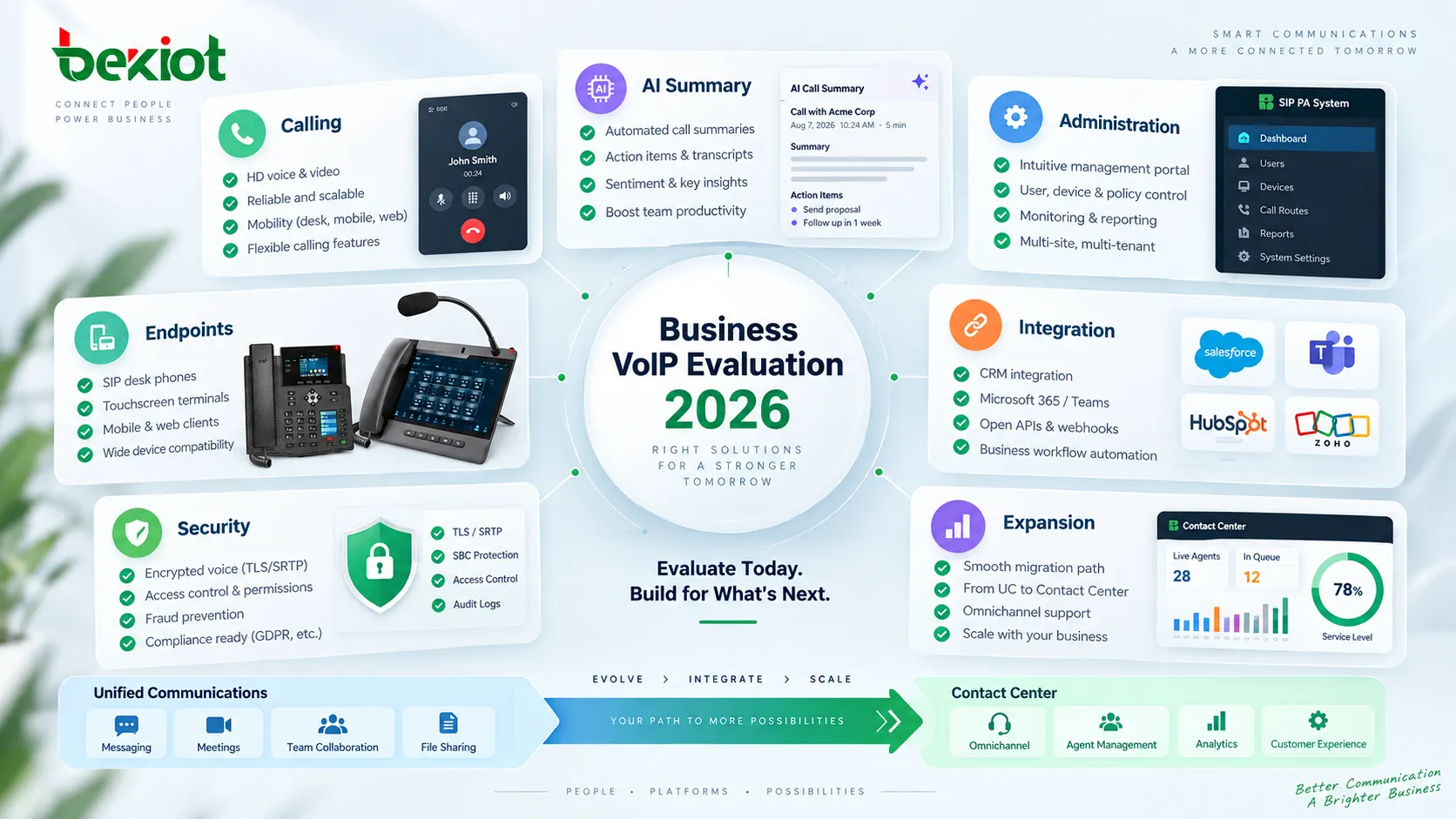
Organizations comparing Business VoIP platforms can evaluate several practical areas:
Calling: whether number management, Call Routing, IVR, Hunt Groups, Voicemail and international calling support existing business processes;
AI: whether Transcription, Call Recap, Summary and Action Items are included by default or require separate licensing;
Administration: whether an internal IT administrator can manage users, routing, business hours and devices without frequent provider intervention;
Endpoints: whether the platform supports Softphones, Mobile Apps, Web Clients, Desk Phones and migration of compatible existing devices;
Integration: whether CRM systems, Microsoft Teams, Slack, Help Desk platforms and other business applications can connect to the communications environment;
Security: whether MFA, media protection, account permissions and communications-data controls meet the organization’s requirements;
Expansion: whether moving into Contact Center functionality later requires replacing the platform or simply extending the existing architecture.
A feature-counting approach can easily lead to the wrong decision. Hundreds of third-party Integrations may matter to a complex enterprise, while a 40-person company may care more about whether an administrator can change a Hunt Group in five minutes. Advanced Sentiment Analysis may be valuable to a customer-service operation, while a conventional office may gain more practical value from a stable Mobile App and accurate Call Summaries.
As enterprise communications enter the AI stage, procurement actually needs to become more specific. The useful question is no longer simply whether a platform has AI, but which AI functions employees will use every day, which manual steps those functions remove, and whether they introduce new complexity into administration or licensing.
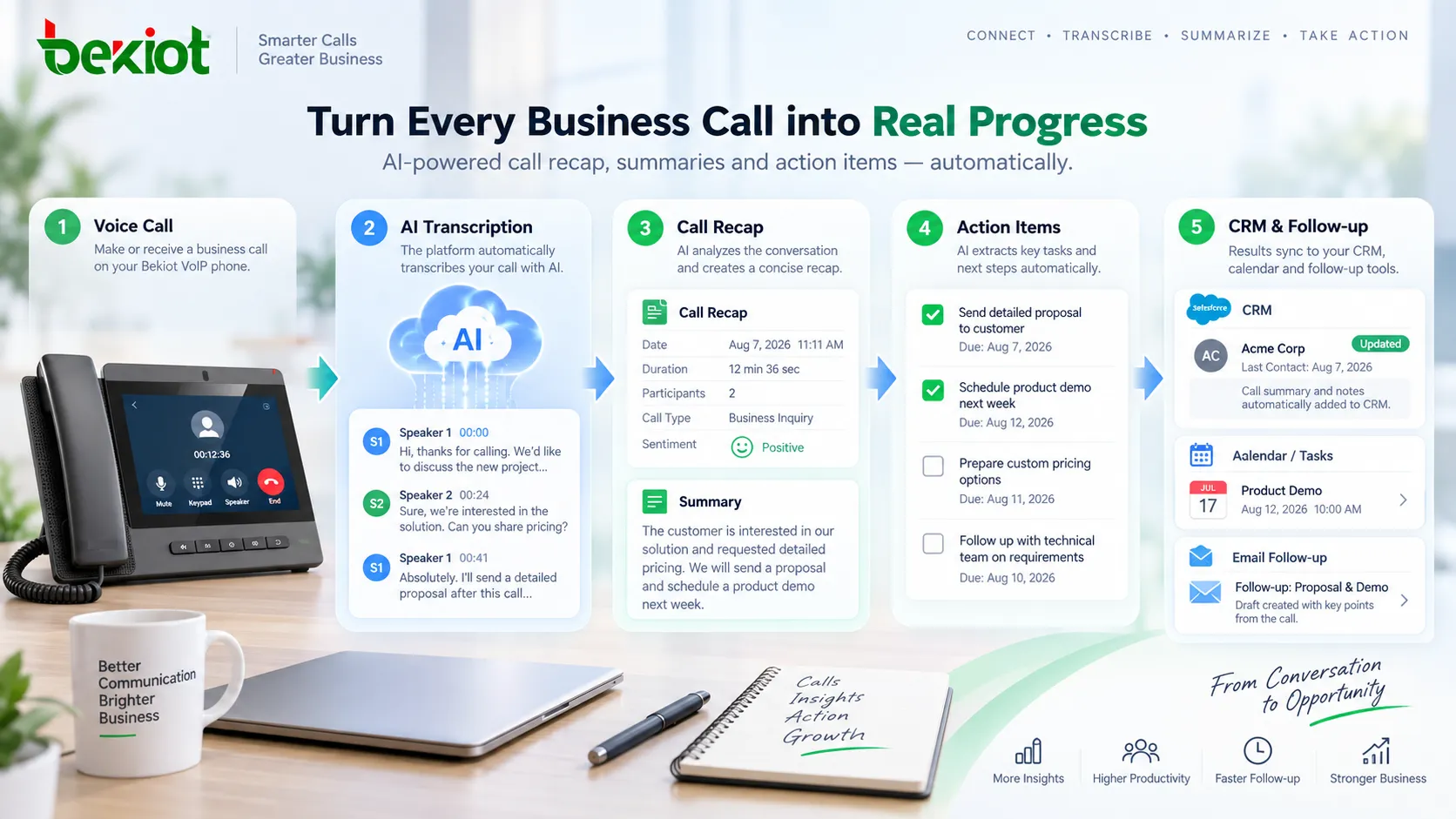
Intermedia Unite’s latest rating makes more sense in this broader context. Business VoIP is not leaving traditional telephony fundamentals behind because AI has arrived. Mature Routing, Device Management and Administration are increasingly being combined with AI summaries, transcription and workflow automation.
The next stage of Business VoIP competition is unlikely to be decided by one highly visible AI feature. It will depend more on whether the complete communications workflow can be managed, recorded, summarized and carried into later business processes without adding unnecessary complexity for users and administrators.
FAQ
Is AI Now an Essential Feature for Business VoIP?
Not necessarily. AI Call Recap, Transcription and Summary are becoming more common, but their value depends on how an organization communicates. Teams handling frequent customer calls, meetings or large amounts of call documentation may benefit significantly, while businesses that mainly need basic internal extensions should still prioritize call quality, routing and reliability.
What Is the Difference Between AI Call Summary and Contact Center Conversation Intelligence?
AI Call Summary mainly processes an individual conversation by producing a transcript, summary or list of action items. Conversation Intelligence usually analyzes a much larger body of interactions and may include agent performance, quality management, customer sentiment trends and operational metrics across an entire service team.
Do Businesses Still Need Desk Phones When Using VoIP?
It depends on the role. Remote and mobile employees may work primarily with Softphones, while reception desks, conference rooms, fixed workstations and some operational positions still benefit from SIP Desk Phones. A complete Business VoIP environment often needs to support both software endpoints and physical phones.
What Is the Value of BYOP During a Business VoIP Migration?
BYOP allows compatible existing IP phones to remain in service on the new platform, which can reduce the cost of replacing every desktop endpoint at once. Before migration, organizations should still confirm supported models, firmware requirements, Provisioning methods and the provider’s support policy.
Can a Unified Communications Platform Replace a Contact Center?
A UC platform can cover business telephony, video, messaging, IVR, Hunt Groups and some AI capabilities. When the operation requires complex queues, Skill-Based Routing, agent quality management, supervisor monitoring and deeper Customer Interaction Analytics, dedicated Contact Center capabilities are usually still required.
Becke Telcom provides VoIP communication products and solutions for enterprise and industrial environments, supporting headquarters-to-branch connectivity, SIP endpoint access, number and call routing, migration of legacy telephone networks to IP, and unified voice communications across multiple sites.