Private radio networks remain central to operations in factories, airports, ports, utilities and other critical facilities. Systems based on DMR, PDT or TETRA provide fast push-to-talk communication, controlled talk groups and dedicated coverage for field personnel. Their main strength is dependable operational voice, but their ability to support broadband video, mobile data and wide-area access is often limited.
Push-to-talk over cellular, commonly known as PoC, adds coverage through LTE, 5G or Wi-Fi and can support location reporting, emergency alerts, video calls and live video return. However, deploying PoC terminals alongside an existing private radio system does not automatically create interoperability. The two environments use different identities, group structures, signaling methods and media paths.
A practical integration solution therefore requires more than one gateway. It needs a platform that controls calls and groups, radio interfaces that expose private channels to the IP network, suitable user terminals and clearly defined rules for channel access, emergency priority and failure handling.
Why the Two Networks Are Stronger Together
Private radio and PoC solve different communication problems. A private radio system is normally designed for predictable local coverage, rapid group calls and continued operation under site-controlled conditions. It is especially useful where field teams need simple, immediate and disciplined half-duplex communication.
PoC extends communication beyond the radio coverage area. A supervisor can join a group from another facility, a mobile user can report an incident through video, and a dispatcher can view device locations on a map. These functions are valuable for regional operations, remote support and multimedia coordination.
Integration allows each network to retain its strengths. Existing radio users continue operating their familiar handheld, vehicle or base radios, while PoC users gain controlled access to selected private-radio channels. The dispatch center becomes the point where identities, permissions, call records and operational workflows are coordinated.
The objective is not to transfer every PoC feature into the private radio network. In most projects, the common service between the two sides is voice and PTT control. Location, video, images and application data remain on the broadband side and are presented to dispatchers or other authorized PoC users.
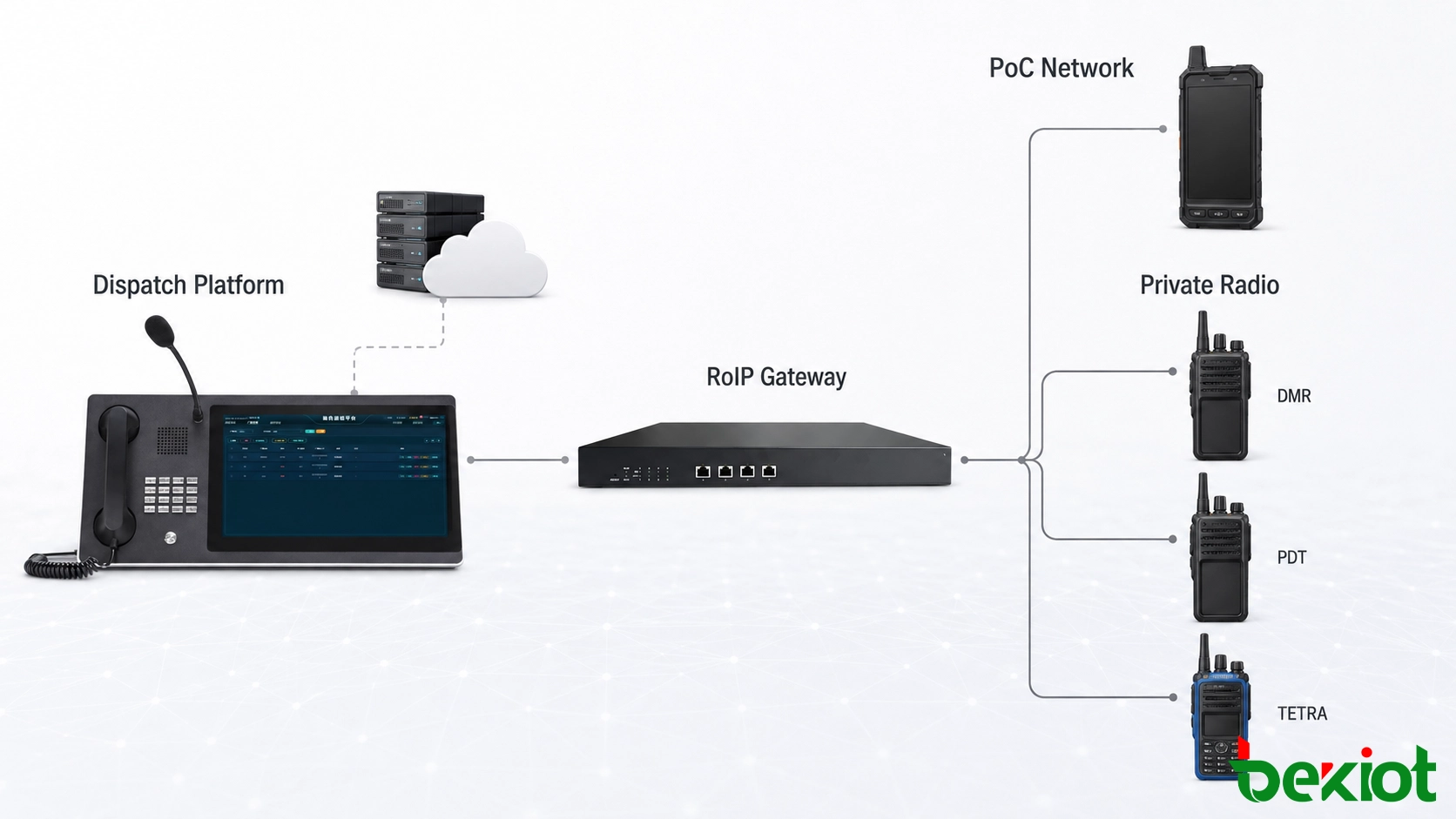
The Six Building Blocks Behind the Solution
1. Command and Dispatch Platform
The central platform manages users, groups, calls and communication permissions. It may be installed on an on-site server, in a private data center or on a cloud platform, depending on the required availability, security policy and network conditions.
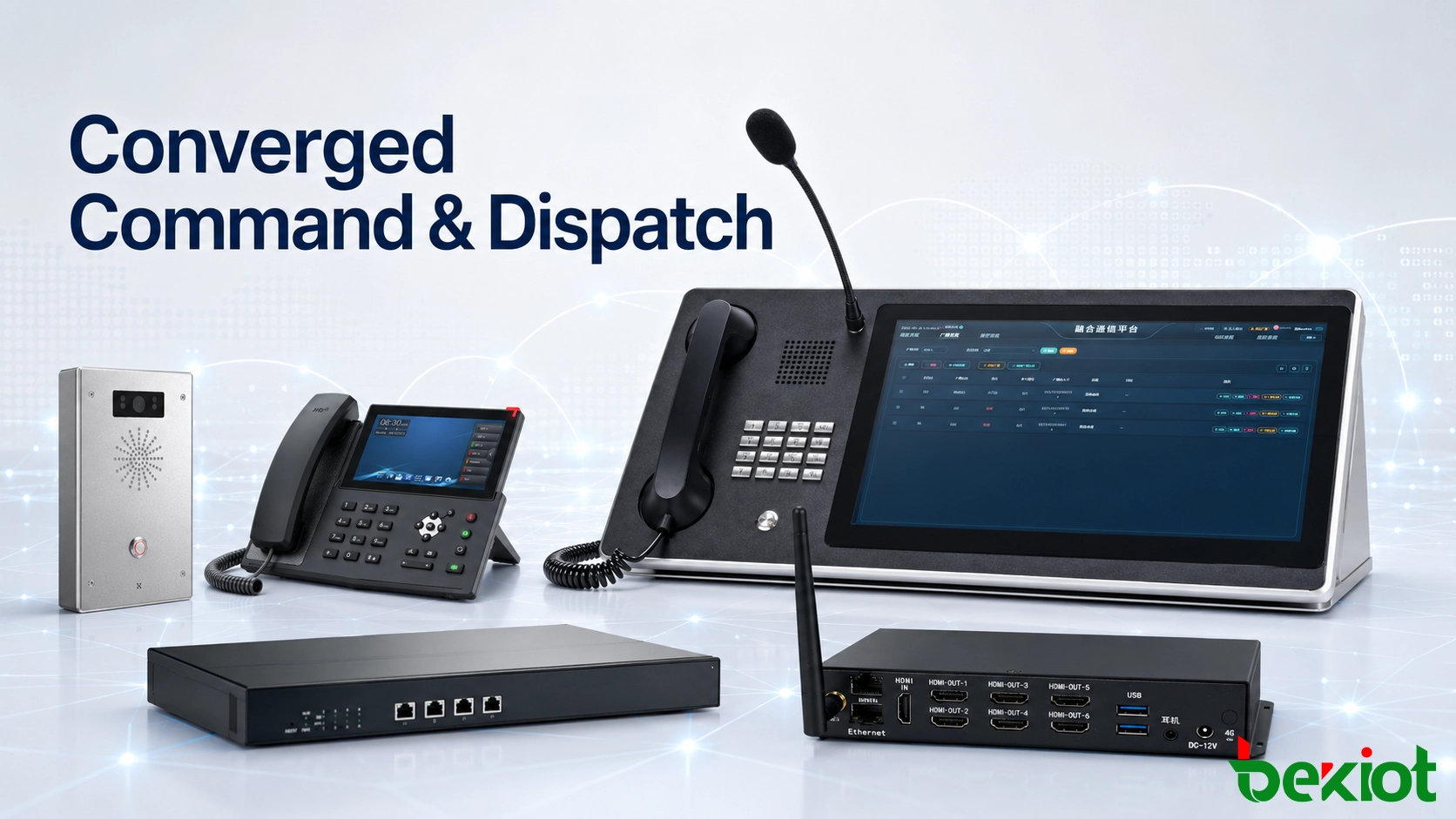
Its core functions normally include SIP call control, PoC group communication, voice dispatch, video handling, GIS-based location display, incident instructions, call recording and operational logs. It also provides the connection point for dispatch consoles, mobile terminals, IP phones, gateways and compatible third-party applications.
The platform should separate user identities from physical devices. A dispatcher needs to understand operational names such as Maintenance Group, Airside Security or Emergency Channel rather than radio connector numbers and gateway ports.
2. Radio Interworking Gateway
The radio interworking gateway connects the IP dispatch environment to the existing private radio system. On the radio side, it may connect to a base station, mobile radio or compatible handheld radio through audio, PTT, carrier detection and accessory interfaces. On the IP side, it communicates with the platform through SIP, RTP or another supported control method.
Each gateway path represents a controllable radio resource. If four radio channels must be monitored and transmitted independently at the same time, the design normally requires four independent radio-side paths. The number of handheld users sharing those channels does not determine gateway capacity; the required number of simultaneous channel connections does.
A basic gateway connection normally carries radio audio and PTT control. Radio ID, emergency signaling, text messages, GPS information and remote channel selection require additional signaling support or a direct interface to the radio infrastructure. This limitation must be confirmed before the equipment list is finalized.
3. PoC Terminals and Mobile Clients
PoC access can be provided through rugged handheld terminals, smartphones, vehicle terminals or software clients. Depending on the platform, users may receive group PTT, private calls, SOS alarms, positioning, image transmission, video calls and live video return.
Terminals can use managed SIM cards, public mobile subscriptions, private LTE or approved Wi-Fi networks. Industrial and hazardous locations may require devices with stronger environmental protection or the appropriate hazardous-area certification.
Terminal selection should follow the user’s task. A patrol officer may need physical PTT and location reporting, while a supervisor may need a mobile application with maps, video and incident information. Using the same terminal type for every role can increase cost without improving the workflow.
4. Telephone Access Gateway
A telephone gateway extends dispatch communication to analog telephones, public telephone networks, mobile numbers or existing enterprise telephony. This allows an authorized telephone user to reach a radio group or PoC user through a defined call route.
The gateway type depends on the existing telephone environment. Analog extensions, outside telephone lines, digital trunks and SIP trunks require different interfaces. Number translation and call permissions should be configured so that an ordinary telephone user cannot accidentally transmit to a restricted radio channel.
5. SIP Phones and Intercom Endpoints
IP phones provide a cost-effective voice position for offices, duty rooms and technical departments that do not require a full dispatch console. SIP intercoms can be installed at entrances, equipment rooms, remote facilities or emergency points where one-touch calling and hands-free communication are more suitable.
These endpoints can communicate with PoC users or mapped radio channels through the central platform. A SIP intercom alarm can also create an incident prompt for the dispatcher before the voice session is connected.
6. Video Access Gateway
A video access gateway makes selected surveillance resources available to the dispatch platform. It may connect cameras, network video recorders or video management platforms through supported protocols and convert their streams into formats the command application can display or distribute.
Video access is most useful when it is associated with an operational object. A PoC user, intercom point, alarm input or radio channel can be linked with nearby cameras. When an event occurs, the dispatcher can open the relevant view instead of searching through a separate surveillance system.
How Calls and Data Move Through the System
A private-radio-to-PoC call begins when the connected radio receives traffic from its RF channel. The gateway detects the receive state, captures the audio and sends it to the dispatch platform. The platform then distributes the audio to the authorized PoC group, dispatch position or recording service.
In the opposite direction, a PoC user requests permission to speak. After the platform checks the user’s role and the availability of the mapped channel, it sends the audio and transmission request to the appropriate gateway. The gateway activates PTT on the connected radio and delivers the audio to the private radio network.
Telephone access follows a controlled call route. A telephone or SIP user calls an assigned number, and the platform maps that number to a PoC group or radio resource. Incoming radio traffic can be sent back through the same session, subject to half-duplex control.
Video, positioning and SOS data take a different path. These services are normally received directly from PoC terminals, surveillance platforms or application interfaces. The dispatch platform correlates them with the voice session, but the RoIP gateway does not automatically carry these broadband services into a narrowband radio channel.
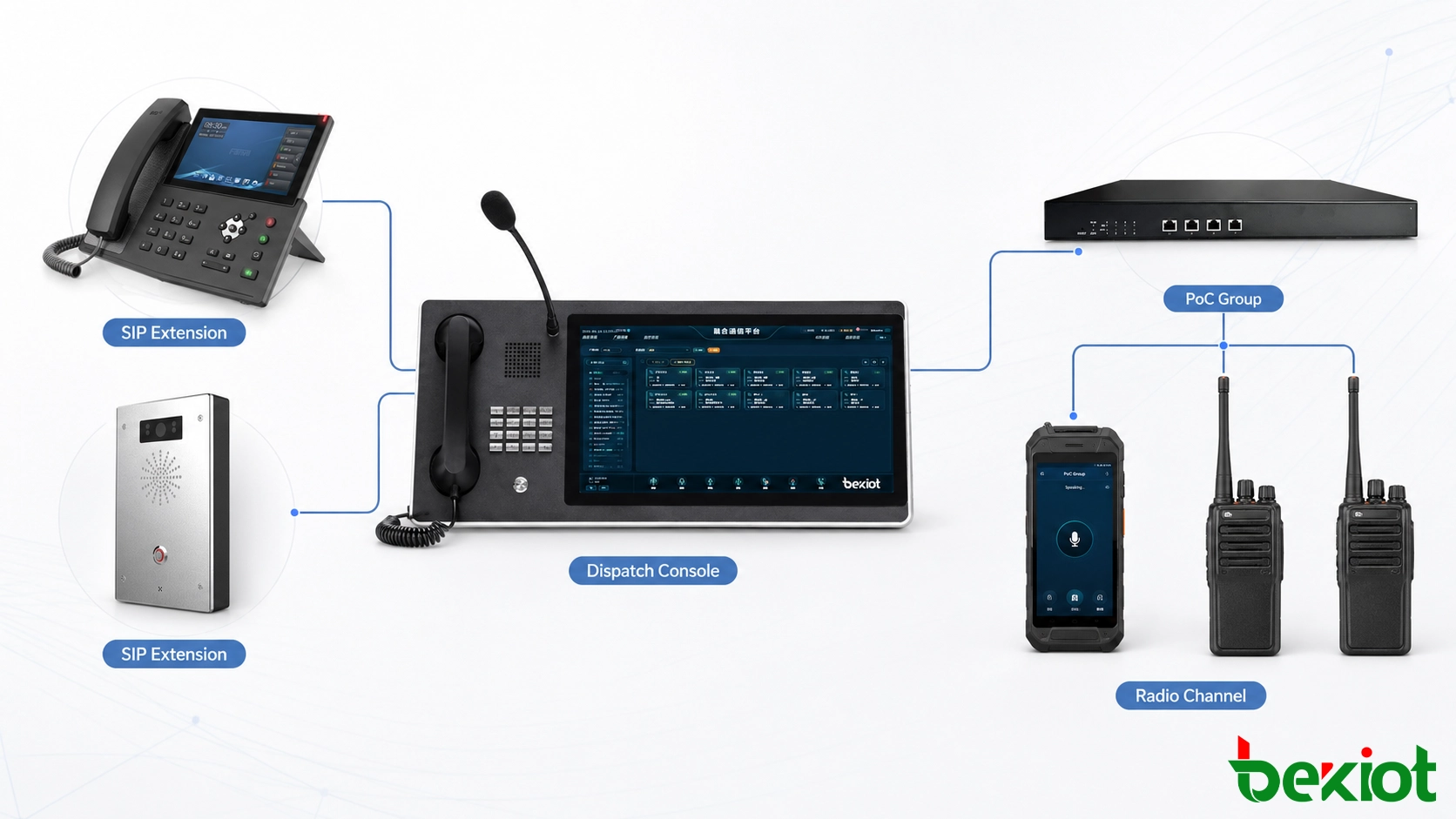
Decisions That Must Be Made Before Equipment Selection
Define the Integration Boundary
The first decision is whether the project needs voice interoperability only or deeper radio control. Voice and PTT can often be implemented through a radio accessory interface. Displaying individual radio IDs, emergency states, locations or text messages may require a supported control protocol or integration with the radio network controller.
Count Independent Radio Resources
Gateway quantity should be calculated from simultaneous channel requirements. A shared channel used by hundreds of radios may need only one gateway path, while a smaller project with several independently operated channels may need multiple paths.
The design should identify which channels require monitoring, which require two-way transmission and which may be temporarily bridged during an incident. Permanent bridging of unrelated groups can create unnecessary radio traffic and make operational control difficult.
Create a Consistent Mapping Plan
PoC groups, SIP extensions, gateway ports and private-radio channels use different naming structures. A written mapping plan should associate each resource with a department, location, operational purpose and permission level.
| Operational Resource | Platform Object | Access Rule |
|---|---|---|
| Maintenance radio channel | Maintenance PoC group and SIP resource | Routine two-way access for maintenance dispatchers |
| Security radio channel | Restricted security group | Monitor and transmit access limited by role |
| Emergency coordination channel | Temporary incident group | Activated during approved emergency workflows |
| Public help intercom | Named SIP endpoint | Routes to the responsible dispatch queue |
Coordinate PTT and Talk Permission
Private radio channels are usually half-duplex, so only one party should transmit at a time. The integration must define how the platform detects a busy channel, how long the gateway waits before sending audio and which user has priority when several transmission requests arrive together.
PTT timing should be tested with the actual radio equipment. If audio begins before the transmitter is ready, the first words may be clipped. If the release delay is too long, the channel remains occupied after the user has finished speaking.
Verify Network and Media Handling
Successful SIP registration does not prove that the complete audio path works. Routing, firewall and NAT policies must also allow media traffic between the platform, gateways and remote users. Codec selection should minimize unnecessary transcoding, especially where radio audio already has restricted bandwidth.
For PoC users, mobile coverage should be evaluated along actual work routes rather than only at fixed test points. Coverage inside basements, workshops, cargo areas and moving vehicles may differ significantly from outdoor network measurements.
Keeping the Service Available and Controlled
Public and private networks should complement each other without creating a single new point of failure. If the PoC platform or wide-area IP connection becomes unavailable, the original private radio network should continue supporting its local radio users wherever possible.
Critical deployments may use redundant servers, backup power, dual network paths and secondary dispatch positions. Remote sites can also retain local radio operation while the central platform connection is interrupted. The required fallback behavior should be documented before deployment because it affects server placement, gateway design and network topology.
Security controls should separate voice resources by role and site. Management interfaces should use restricted administrative access, and signaling, media and device-management traffic should be isolated where practical. Cloud-hosted platforms should not expose radio gateways directly to the public internet.
Scalability should be planned in terms of users, simultaneous calls, radio channels, recording capacity, video streams and site count. These resources grow at different rates. Adding more PoC users may only require platform capacity, while adding independently controlled radio channels requires additional radio-side interfaces.
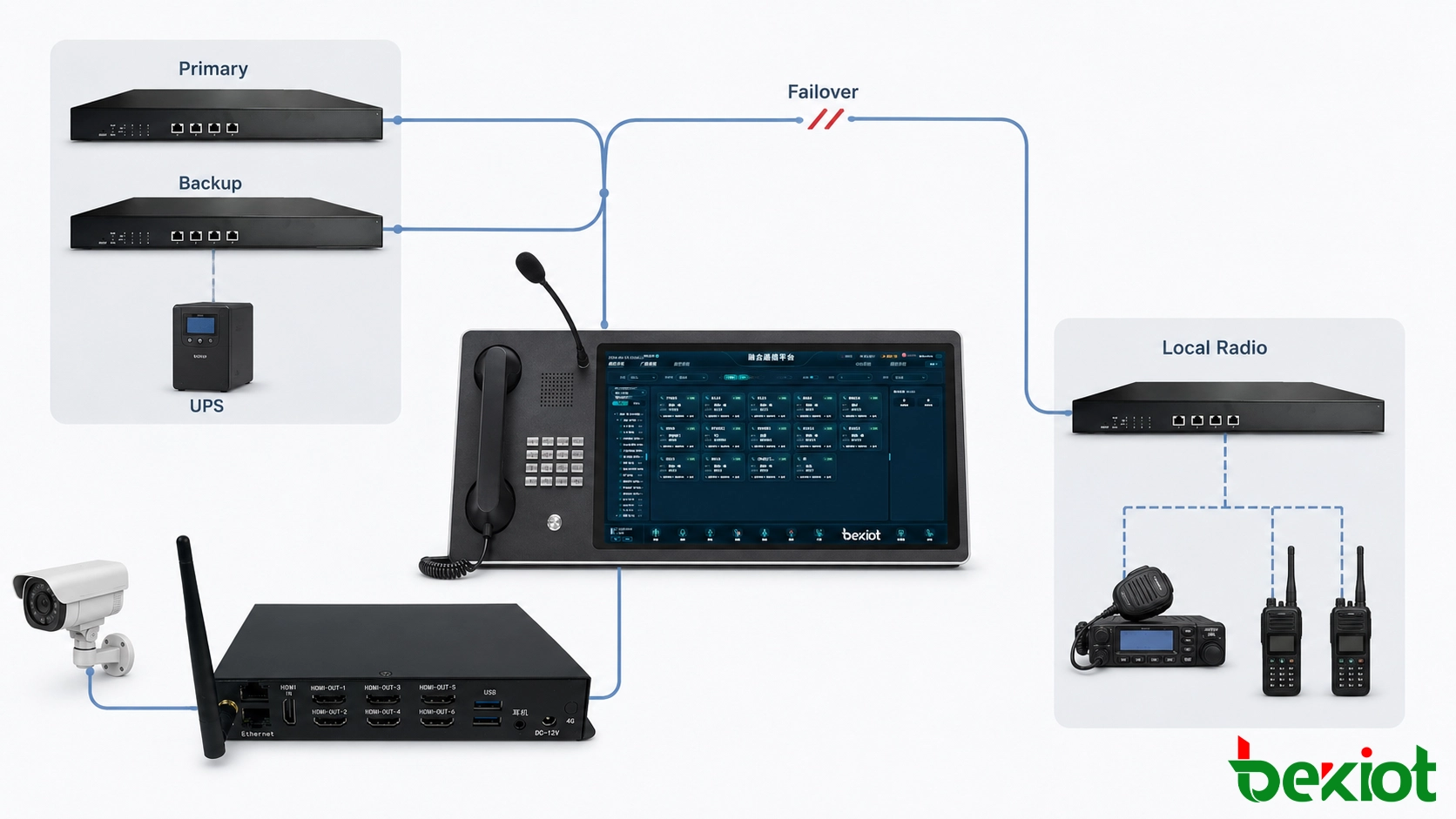
Commissioning the Complete Workflow
Acceptance testing should follow real communication paths rather than testing each device separately. The project team should confirm that users can reach the correct group, that channel names are clear and that permissions prevent unauthorized monitoring or transmission.
Test radio-to-PoC and PoC-to-radio voice in both directions.
Verify channel-busy detection and simultaneous PTT requests.
Check the beginning and end of every transmission for clipped audio.
Confirm telephone-to-radio and SIP-endpoint call routing.
Verify SOS, location and video handling on the broadband side.
Test recording time, channel labels and operator identification.
Interrupt WAN, server and gateway connections and observe recovery.
Repeat tests under realistic background noise and network loading.
The final system should be accepted as an operational workflow: an event is reported, the correct dispatcher is notified, the appropriate voice resource is selected, field personnel receive the instruction, multimedia information is displayed where available, and the communication record can be reviewed afterward.
Frequently Asked Questions
Does connecting a private radio system to PoC change its licensed frequencies?
No. The gateway provides an additional access path to the existing radio equipment, but it does not change the radio frequencies, licensing conditions, transmitter power or spectrum-management obligations of the private network.
Can a hosted PoC service supplied by a mobile operator be integrated?
It depends on the interfaces provided by the service. A hosted platform may support SIP, an API or an approved dispatch connection, while some closed services provide no external integration path. This should be confirmed with the service provider before choosing the gateway architecture.
Can video and location information be displayed on legacy private radios?
Normally not. Legacy narrowband radios generally continue to receive voice through their existing radio channel. Video, GIS and detailed location information are displayed on dispatch consoles, PoC terminals or other broadband clients that support those services.
What documentation should be delivered after commissioning?
The handover package should include the final channel map, SIP numbering plan, radio cable definitions, permission matrix, network addressing, backup and recovery procedure, administrator account policy, configuration records and signed acceptance-test results.
Who should maintain group names and communication permissions?
Operational ownership should remain with the organization using the system. Technical administrators may apply the configuration, but department names, emergency access, monitoring permissions and cross-group communication rules should be approved by the responsible operational managers.