LatestNews
2026-10-21 15:34:00

RuggON Launches SVA 500: A New Rugged VoIP Communications Terminal

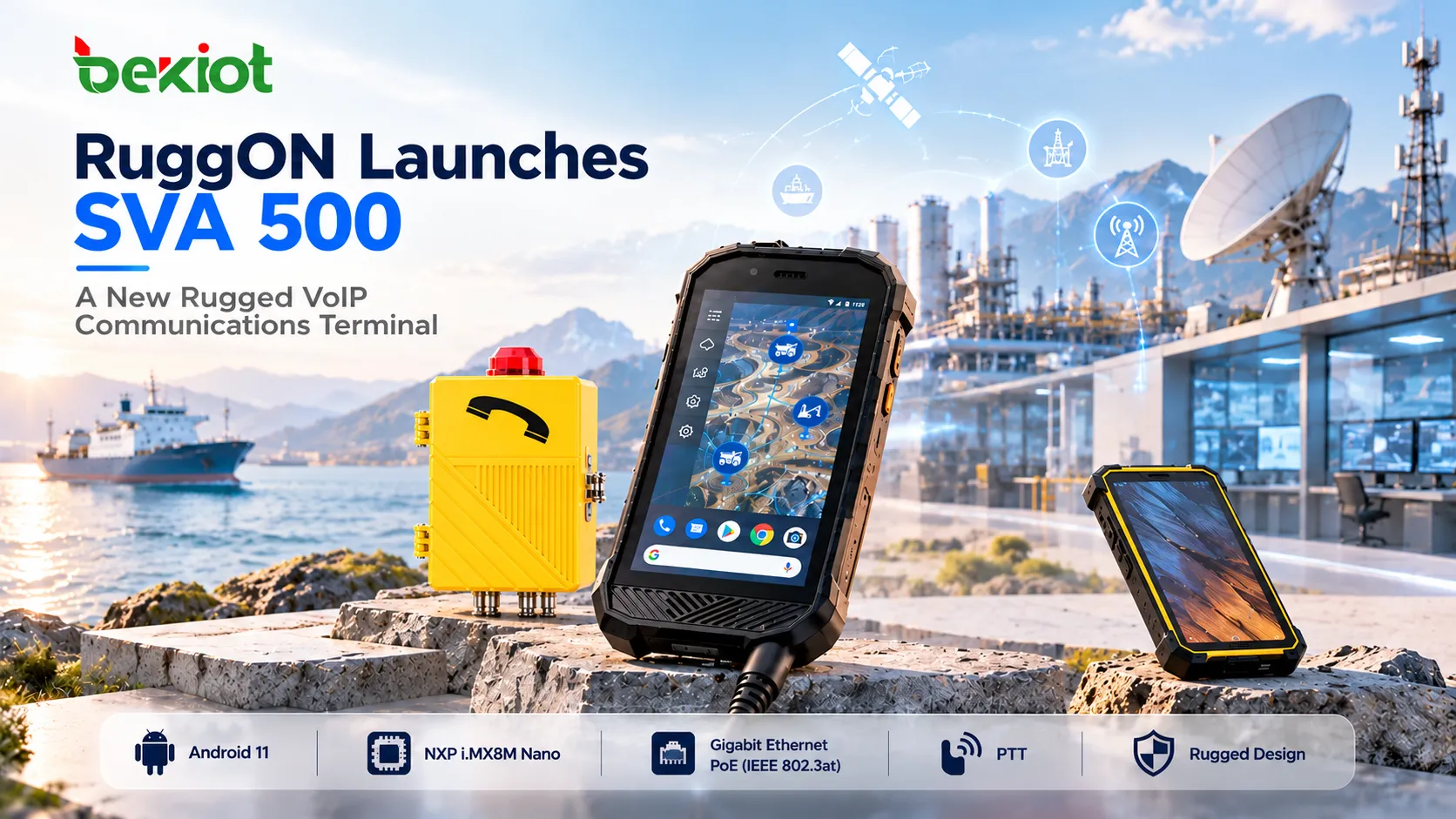
RuggON’s SVA 500 combines Android 11, PoE, PTT, a 5-inch touchscreen and ruggedized hardware for mission-critical VoIP communications across maritime, remote field, satellite and control environments.

Becke Telcom

RuggON Launches SVA 500: A New Rugged VoIP Communications Terminal

Rugged VoIP terminals are quietly taking on a new role in industrial environments. Instead of simply placing the functions of an office IP phone inside a tougher enclosure, a new generation of terminals is beginning to combine voice calling, PTT operation, field applications and network connectivity in a single device.

On October 20, 2026, RuggON introduced the SVA 500 rugged touchscreen VoIP communications terminal for satellite communications, maritime operations, unmanned system control, remote field deployments and other mission-critical environments. The new terminal combines an Android platform, PoE power and a dedicated PTT button, bringing voice communications, software extensibility and rugged field deployment into one fixed communications device.

What makes the SVA 500 particularly interesting is not any single specification, but the shift in product positioning. Traditional industrial telephones have largely focused on maintaining reliable calling in harsh environments. Devices of this type raise a broader question: can a field communications terminal also serve as a configurable software interface?

Rugged VoIP Terminals Are Evolving from Phones into Mission Platforms

The SVA 500 is powered by an NXP i.MX8M Nano quad-core processor, runs Android 11 and provides 32GB of eMMC storage. With BSP software integration, the device can support mission-specific applications alongside its core voice communications functions.

This differs from the traditional operating model of an industrial telephone. Conventional industrial phones are typically centered on calling, programmable keys, intercom functions or dispatch connectivity. An Android-based architecture allows project-specific interfaces and applications to be added, turning the terminal from a single-purpose voice endpoint into part of the field operator interface.

At an unmanned system ground control station, satellite communications site or remote field location, for example, operators may need to establish voice communications immediately while also viewing mission status or running dedicated applications. Combining these functions on one rugged terminal can reduce the need to switch between separate devices.
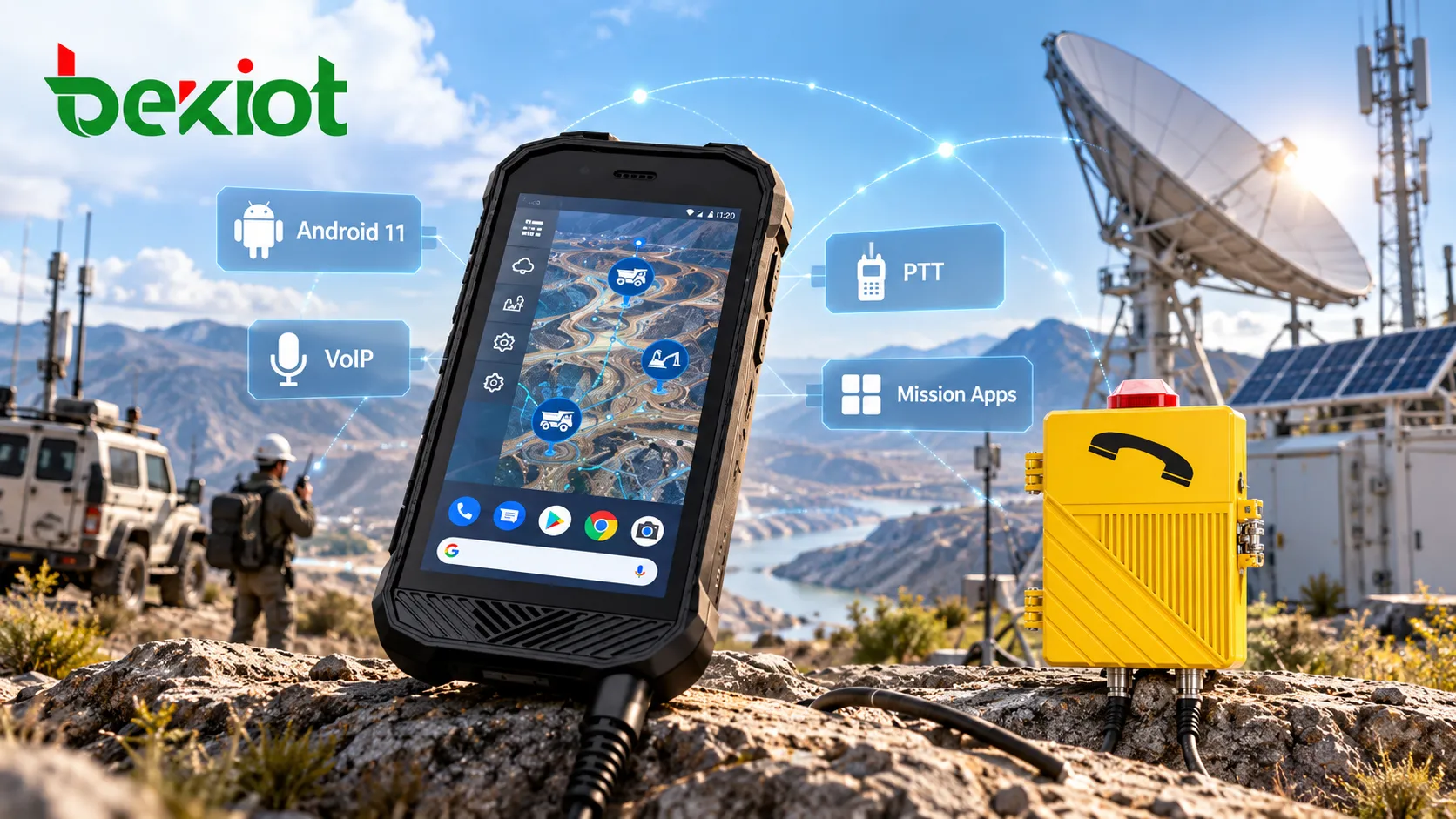
SVA 500 rugged VoIP communications terminal using a 5-inch touchscreen, Android platform and PTT button to support voice communications and mission applications in critical field environments

PoE and Dedicated PTT Target Fixed Field Communications

The SVA 500 provides a 10/100/1000 Mbps RJ45 Ethernet interface and supports IEEE 802.3at PoE. Power and network data can therefore be delivered through the same Ethernet connection, an approach particularly well suited to control consoles, operator stations and fixed field positions.

Compared with battery-powered mobile smart devices, PoE can reduce the need for separate local power adapters. Compared with traditional analog telephones, Ethernet also provides a common data connection for both voice services and software applications.

The terminal also retains a very traditional communications control: a dedicated Push-to-Talk button.

In high-frequency operations or situations where users need to establish voice contact quickly, a physical PTT control can be more direct than locating a software button on a touchscreen. The SVA 500 also includes an earpiece and hands-free speaker, with the speaker rated at up to 85 dB SPL at 50 cm, making the device more similar to a control-station communications terminal than a standard Android tablet.
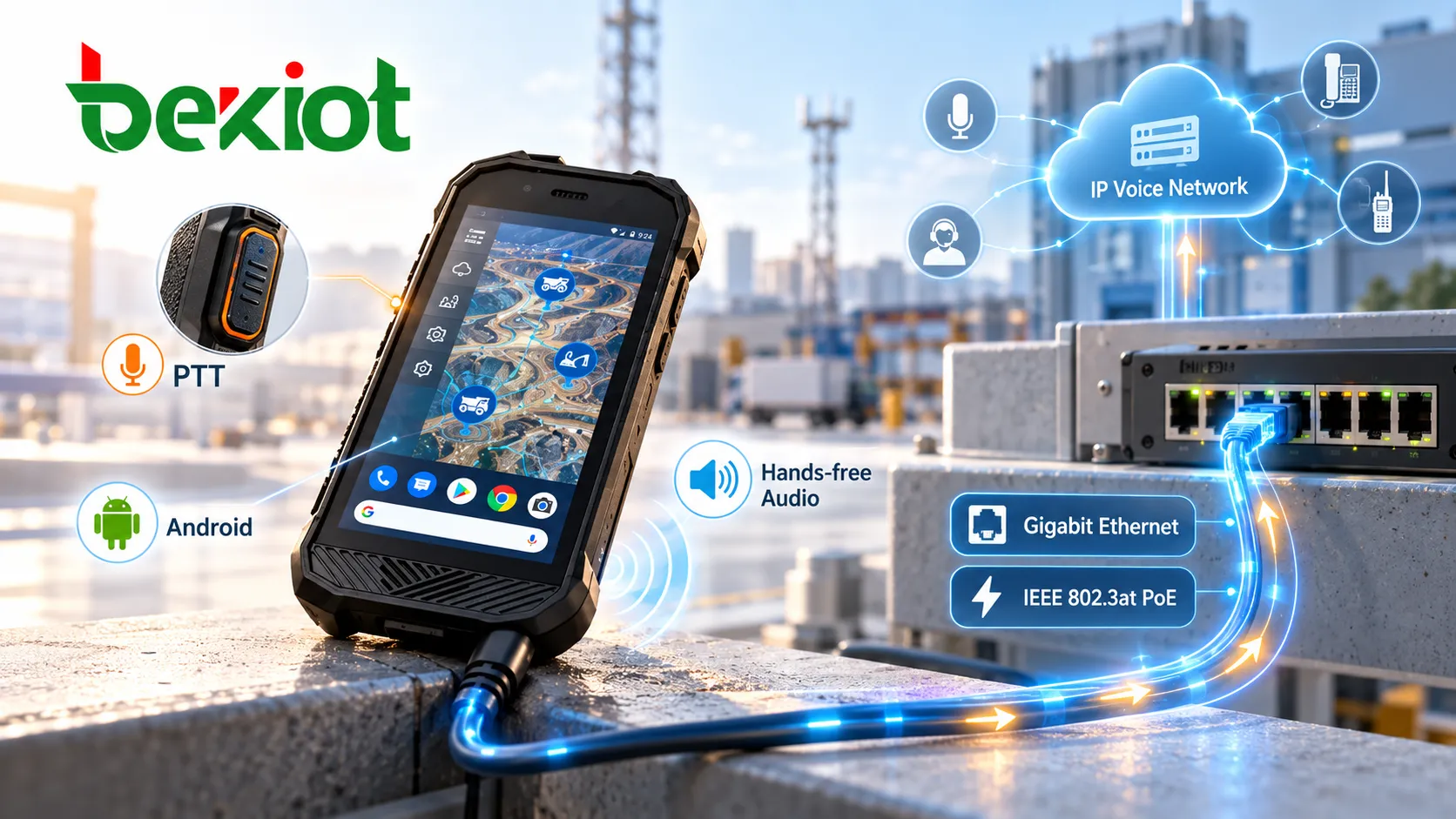
SVA 500 connecting to an IP voice network through Gigabit Ethernet and IEEE 802.3at PoE while using a physical PTT button, Android software and hands-free audio for field communications

IP65 and MIL-STD Testing Extend VoIP into More Demanding Environments

Additional software capability does not remove the first requirement of industrial communications equipment: the device still has to operate when environmental conditions become difficult.

The SVA 500 carries an IP65 rating and has been tested against MIL-STD-810G and MIL-STD-810H requirements. It has also undergone operational testing at altitudes of up to 40,000 feet. These characteristics are aimed at environments very different from a conventional office, including vehicles, maritime installations, remote sites and other locations exposed to vibration, dust and changing environmental conditions.

The front-mounted 5-inch touchscreen provides a resolution of 720 × 1280 and a brightness of 500 nits, with outdoor and high-ambient-light visibility among the practical deployment considerations.

For a mission-critical VoIP terminal, ruggedization is not simply an additional feature. A device may still have network connectivity, but if the display becomes unreadable, connectors cannot withstand the installation environment, or the hardware cannot continue operating under field conditions, the communications endpoint has effectively become unavailable.

Mission-Critical VoIP Is Moving Toward Integrated Hardware and Software

The broader trend behind the SVA 500 launch may be more significant than the product itself.

Industrial VoIP equipment has traditionally been evaluated around three areas: environmental protection, dependable voice communications and network connectivity. Android and other open software environments are now adding a fourth dimension: mission applications.

This means some future industrial communications terminals may no longer operate only as extensions connected to a PBX or dispatch platform. They may also provide mission interfaces, status displays, data entry and access to dedicated operational software.

This approach will not replace every industrial telephone. Tunnel SOS points, hazardous-area call stations and unattended emergency call points still benefit from simple controls and clearly defined calling functions. At control stations, vehicle installations, maritime platforms and remote work locations, however, a configurable Rugged VoIP Terminal can provide significantly more room for software integration.
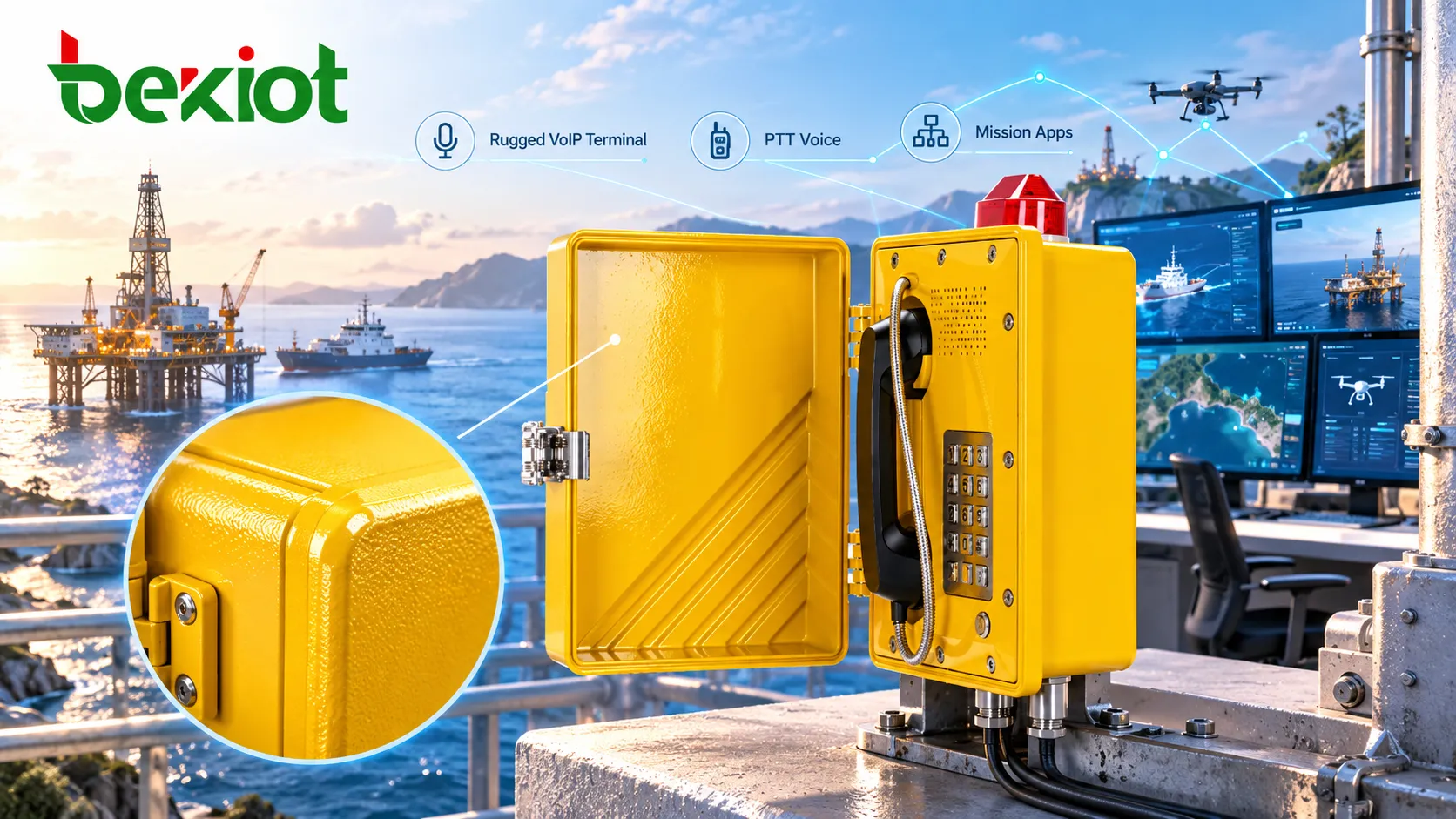
Rugged VoIP communications terminal deployed at remote control stations, maritime platforms and unmanned system ground control environments using wired IP networks for PTT voice and mission applications

From this perspective, the SVA 500 is more than an industrial phone with a touchscreen. It represents a type of field communications terminal that combines rugged hardware, IP voice, PTT and software applications. As industrial communications become more closely connected with dispatch, operational data and mission software, the boundary between a communications endpoint and an application terminal is likely to continue expanding.

Becke Telcom provides industrial telephones, explosion-proof telephones, SIP communications terminals, dispatch consoles and VoIP access devices. These products can connect field voice endpoints with IP PBX systems, SIP servers and command-and-dispatch platforms, supporting unified IP voice communications across industrial, transportation, energy and remote operation environments.

Recommended Products
catalogue
customer service Phone
We use cookie to improve your online experience. By continuing to browse this website, you agree to our use of cookie.

Cookies

This Cookie Policy explains how we use cookies and similar technologies when you access or use our website and related services. Please read this Policy together with our Terms and Conditions and Privacy Policy so that you understand how we collect, use, and protect information.

By continuing to access or use our Services, you acknowledge that cookies and similar technologies may be used as described in this Policy, subject to applicable law and your available choices.

Updates to This Cookie Policy

We may revise this Cookie Policy from time to time to reflect changes in legal requirements, technology, or our business practices. When we make updates, the revised version will be posted on this page and will become effective from the date of publication unless otherwise required by law.

Where required, we will provide additional notice or request your consent before applying material changes that affect your rights or choices.

What Are Cookies?

Cookies are small text files placed on your device when you visit a website or interact with certain online content. They help websites recognize your browser or device, remember your preferences, support essential functionality, and improve the overall user experience.

In this Cookie Policy, the term “cookies” also includes similar technologies such as pixels, tags, web beacons, and other tracking tools that perform comparable functions.

Why We Use Cookies

We use cookies to help our website function properly, remember user preferences, enhance website performance, understand how visitors interact with our pages, and support security, analytics, and marketing activities where permitted by law.

We use cookies to keep our website functional, secure, efficient, and more relevant to your browsing experience.

Categories of Cookies We Use

Strictly Necessary Cookies

These cookies are essential for the operation of the website and cannot be disabled in our systems where they are required to provide the service you request. They are typically set in response to actions such as setting privacy preferences, signing in, or submitting forms.

Without these cookies, certain parts of the website may not function correctly.

Functional Cookies

Functional cookies enable enhanced features and personalization, such as remembering your preferences, language settings, or previously selected options. These cookies may be set by us or by third-party providers whose services are integrated into our website.

If you disable these cookies, some services or features may not work as intended.

Performance and Analytics Cookies

These cookies help us understand how visitors use our website by collecting information such as traffic sources, page visits, navigation behavior, and general interaction patterns. In many cases, this information is aggregated and does not directly identify individual users.

We use this information to improve website performance, usability, and content relevance.

Targeting and Advertising Cookies

These cookies may be placed by our advertising or marketing partners to help deliver more relevant ads and measure the effectiveness of campaigns. They may use information about your browsing activity across different websites and services to build a profile of your interests.

These cookies generally do not store directly identifying personal information, but they may identify your browser or device.

First-Party and Third-Party Cookies

Some cookies are set directly by our website and are referred to as first-party cookies. Other cookies are set by third-party services, such as analytics providers, embedded content providers, or advertising partners, and are referred to as third-party cookies.

Third-party providers may use their own cookies in accordance with their own privacy and cookie policies.

Information Collected Through Cookies

Depending on the type of cookie used, the information collected may include browser type, device type, IP address, referring website, pages viewed, time spent on pages, clickstream behavior, and general usage patterns.

This information helps us maintain the website, improve performance, enhance security, and provide a better user experience.

Your Cookie Choices

You can control or disable cookies through your browser settings and, where available, through our cookie consent or preference management tools. Depending on your location, you may also have the right to accept or reject certain categories of cookies, especially those used for analytics, personalization, or advertising purposes.

Please note that blocking or deleting certain cookies may affect the availability, functionality, or performance of some parts of the website.

Restricting cookies may limit certain features and reduce the quality of your experience on the website.

Cookies in Mobile Applications

Where our mobile applications use cookie-like technologies, they are generally limited to those required for core functionality, security, and service delivery. Disabling these essential technologies may affect the normal operation of the application.

We do not use essential mobile application cookies to store unnecessary personal information.

How to Manage Cookies

Most web browsers allow you to manage cookies through browser settings. You can usually choose to block, delete, or receive alerts before cookies are stored. Because browser controls vary, please refer to your browser provider’s support documentation for details on how to manage cookie settings.

Contact Us

If you have any questions about this Cookie Policy or our use of cookies and similar technologies, please contact us at support@becke.cc .