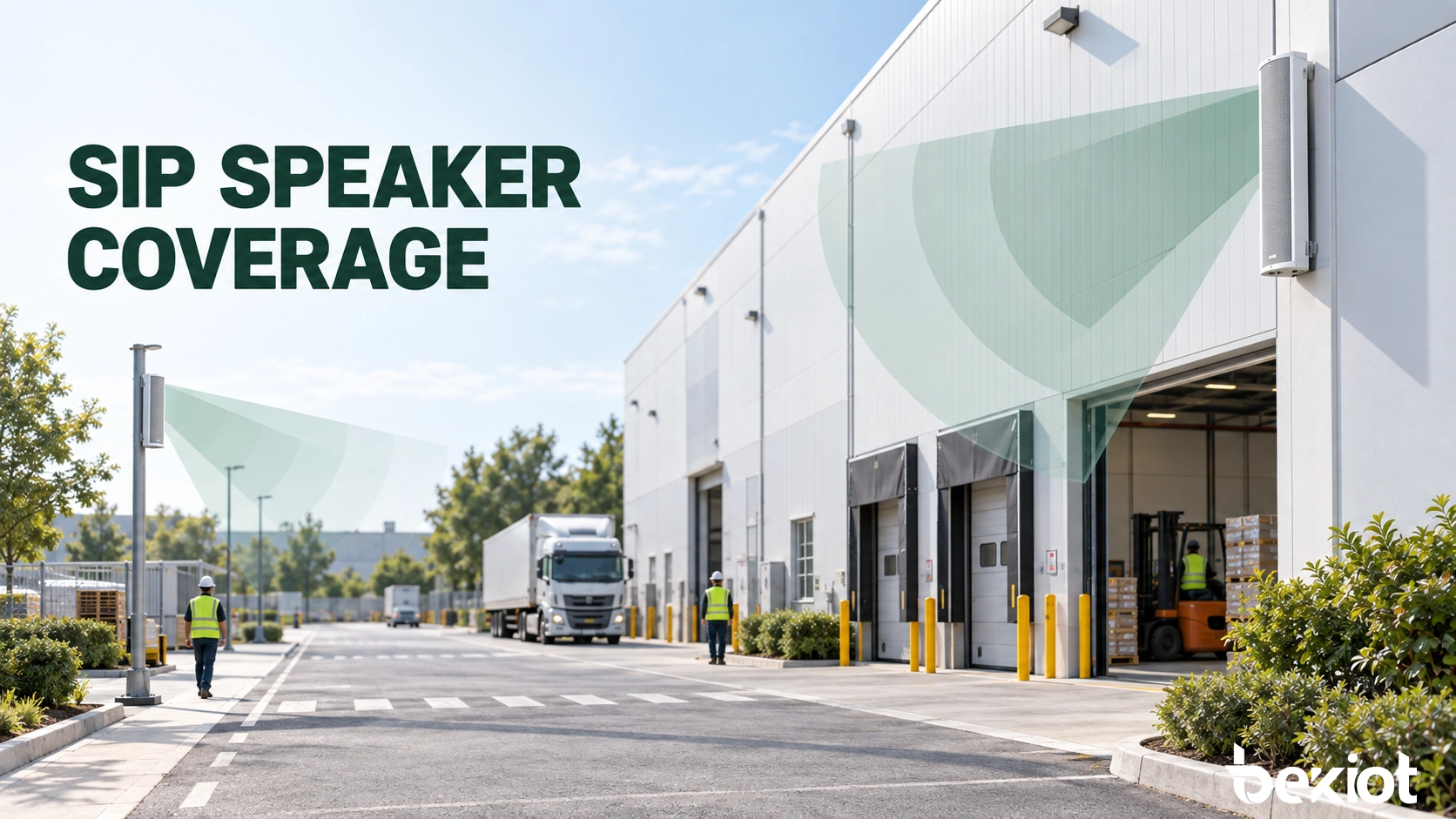
A high-output SIP column speaker may be suitable for a large outdoor area, but its power rating cannot tell an engineer how many speakers the site requires. The answer depends on where people are located, how much background noise is present and what stands between the speaker and the listener.
Consider two sites of similar size. One is an open campus road with low traffic and clear sightlines. The other is a logistics yard divided by warehouses, parked trailers and container stacks. Although their total areas are similar, the second site will usually require more speaker positions because several objects interrupt the sound path.
Coverage planning should therefore begin with the places where announcements must be understood—not with the total site area or the largest wattage shown on a product page.
Mark the Areas That Actually Need Paging
The first drawing should show required listening areas rather than a single boundary around the entire property. Empty land, restricted areas and unused corners do not necessarily need the same coverage as production zones, entrances or evacuation routes.
On an industrial or logistics site, the coverage drawing normally includes:
Outdoor workstations and production areas
Loading bays and vehicle waiting zones
Main roads and pedestrian routes
Gates, security posts and building entrances
Storage yards and equipment areas
Evacuation routes and assembly points
These locations should then be divided by purpose. A loading bay may need routine vehicle instructions, while an assembly point may receive only emergency announcements. Keeping them in separate paging zones prevents everyday messages from being sent across the entire site.
Physical boundaries also matter. A warehouse wall, storage tank or row of containers can divide one administrative zone into several acoustic areas. Instead of trying to force sound around an obstruction, it is usually better to install another speaker on the opposite side.
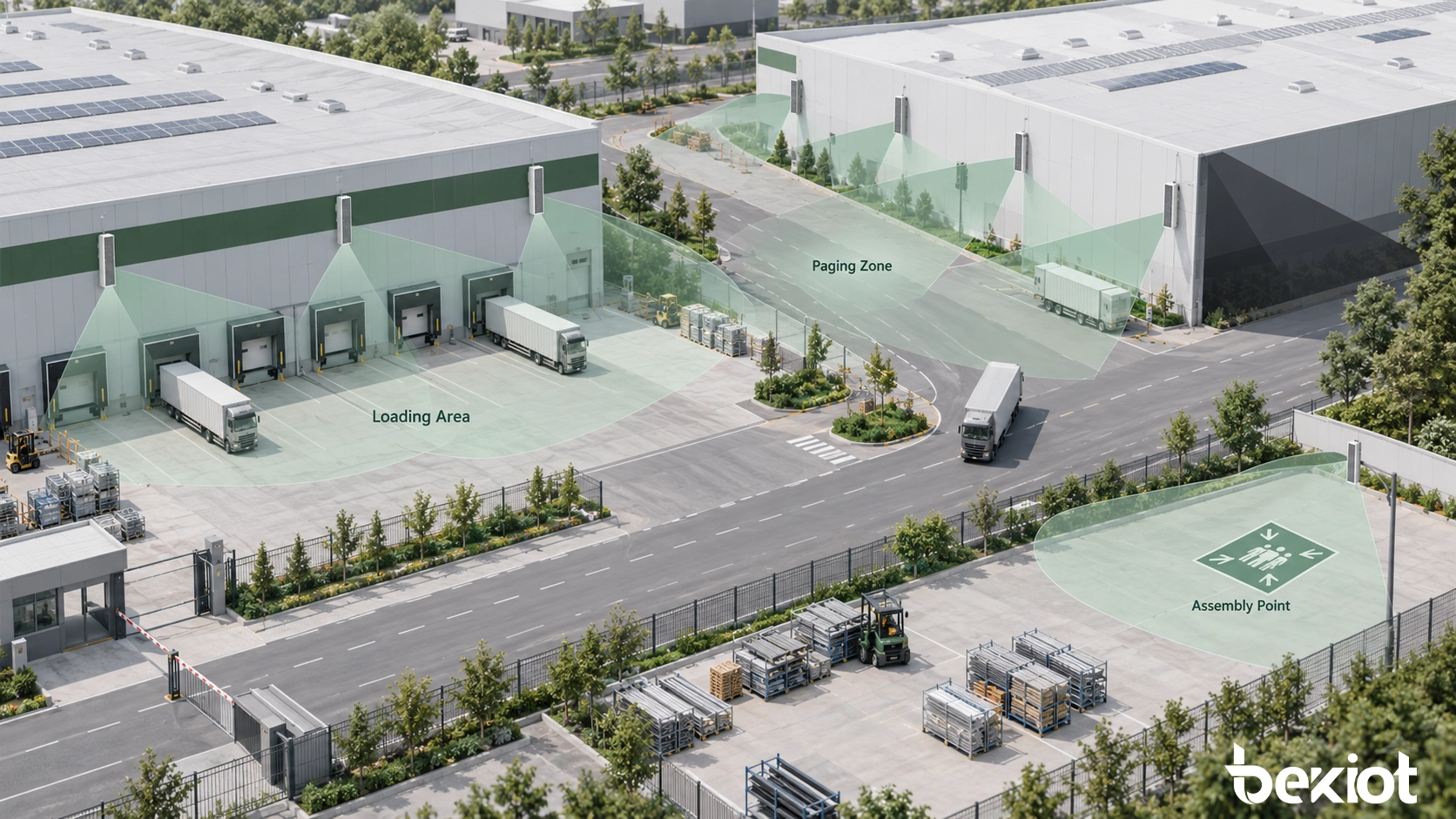
Fig.1 - Required listening areas and physical obstructions should be marked before the speaker quantity is estimated.
Use Noise and Listening Distance to Select Each Position
Outdoor paging is designed for understandable speech. Hearing a tone in the distance is not enough if workers cannot understand the instruction that follows it.
Background noise should be checked while the site is operating. Measurements taken before a shift begins may not represent conditions near running machinery, loading vehicles, ventilation equipment or busy access roads.
The loudspeaker output needs to remain clearly above the local noise level, with the required margin determined by the project environment and applicable standard. Raising the volume too far can create another problem: people close to the speaker experience excessive sound while distant listeners still receive unclear speech.
Distance Reduces the Available Sound Level
In an unobstructed free field, sound pressure falls as the listener moves away from the speaker. Doubling the distance can reduce the sound level by approximately 6 dB. Outdoor surfaces, walls, wind and surrounding structures can change the actual result.
This relationship is useful during preliminary planning. It shows why a loud result at 10 metres does not confirm suitable coverage at 40 or 50 metres. The farthest required listening position must be evaluated separately.
Obstructions Create Acoustic Shadows
Direct sound can be weakened by buildings, machines, containers and landscaping. A speaker mounted at one end of a warehouse may cover the open roadway but fail to reach a loading position around the corner.
Site drawings should show these obstructions, but drawings alone are not always enough. Temporary materials, parked vehicles and seasonal vegetation may change the coverage after installation. Locations with changing layouts benefit from shorter speaker spacing and flexible broadcast grouping.
Speech Requires More Than Audible Volume
Reflections from metal walls, building façades and covered loading areas can cause words to overlap. The problem often becomes worse when several speakers send the same announcement into the same area from different directions.
For voice paging, a clear message at a controlled level is more useful than maximum output. Representative speech should therefore be used during commissioning rather than relying only on alarm tones.
Set the Mounting Height, Direction and Spacing
A suitable mounting point keeps the speaker clear of vehicles and routine interference while directing its main coverage toward the listener. Building walls, lighting poles and purpose-built supports are common options.
Mounting a speaker very high can increase the unobstructed path, but it may also send too much sound over the target area. The final height and downward angle should follow the speaker’s vertical dispersion and the distance to the intended listeners.
Follow the Direction of Movement
Along service roads, platforms and pedestrian routes, speakers are usually more effective when aimed in a consistent direction. This arrangement gives people a clearer progression of sound as they move through the area.
Installing two speakers directly opposite each other can cause the listener to receive the same words at slightly different times. Where opposing coverage is unavoidable, the output level, direction and overlap should be checked on site.
Use Smaller Zones Around Buildings
A single speaker may cover an open section of a yard but cannot reliably serve areas hidden behind a building. Separate positions near entrances, loading bays or corners provide more predictable results.
Smaller zones also improve operational control. A dispatcher can call one loading area without disturbing offices, neighbouring production zones or the entire site.
Keep Overlap Controlled
A limited amount of overlap prevents weak spots between adjacent speakers. Too much overlap can make speech difficult to follow, especially when one speaker is considerably farther from the listener than another.
SIP multicast can help compatible speakers begin the same audio stream together. It does not remove the acoustic delay caused by different physical distances. Placement still needs to be checked from the listener’s position.
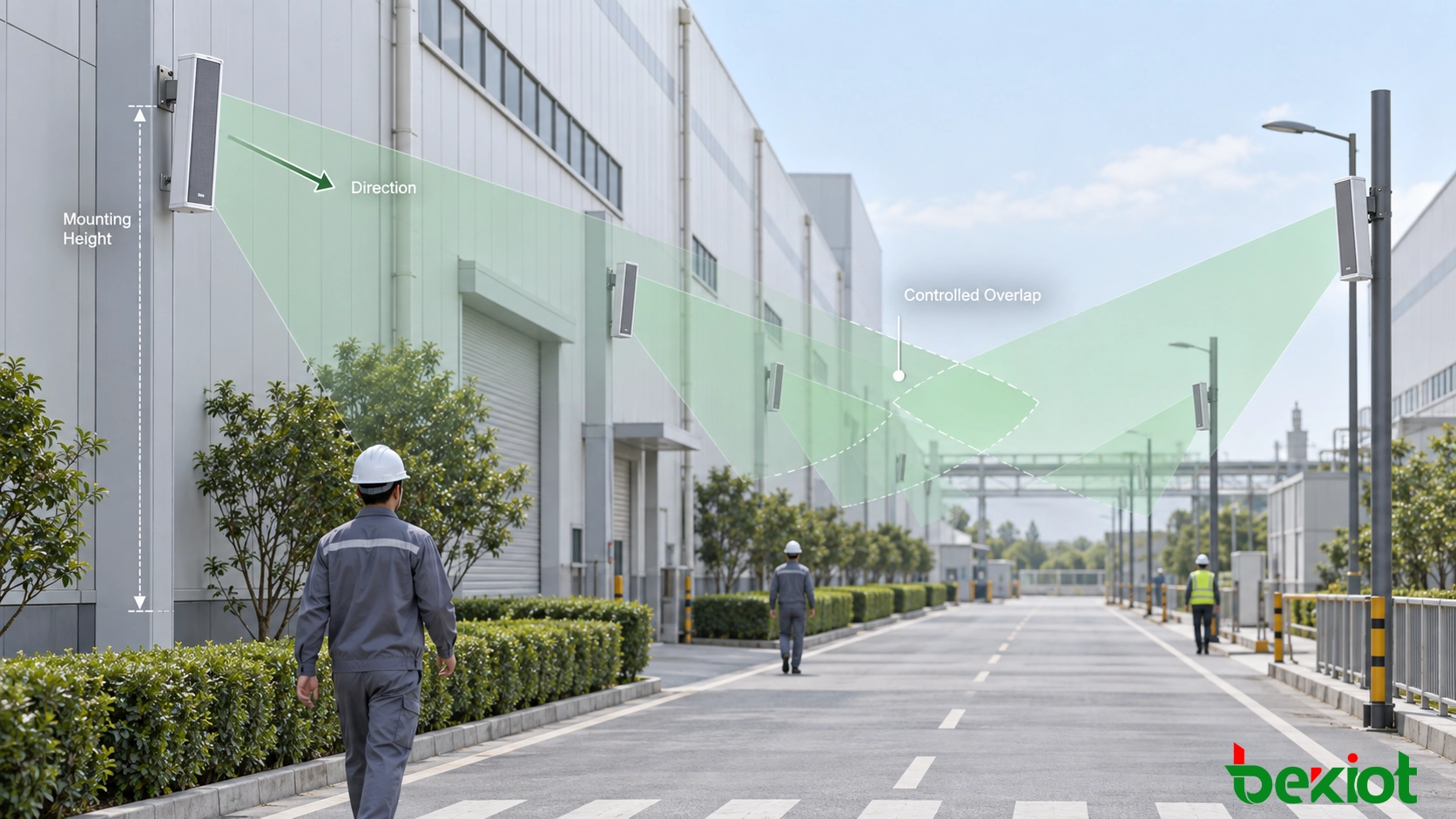
Fig.2 - Speaker direction and controlled overlap help maintain consistent voice coverage along roads, yards and building entrances.
Match Speaker Power to the Coverage Task
Output power is one part of speaker selection. Sensitivity, sound pressure data, directivity and installation conditions determine how effectively that power is converted into useful coverage.
Quiet entrances and short pedestrian routes may be served by lower-output models. Large yards, transport areas and industrial sites with continuous machinery noise may require higher output or more closely spaced speakers.
A high-output SIP column speaker can be considered for wide outdoor paging zones where strong voice output and weather-resistant construction are required. It should not be assigned a fixed coverage radius without reviewing its acoustic data and the proposed mounting conditions.
One high-output speaker may appear to reduce equipment quantity, but it can create an uneven result: excessive volume near the unit and weak speech at the far end of the zone. Several well-positioned speakers operating below their maximum output often provide a more consistent listening level.
Power selection should be reviewed against:
The farthest required listening position
Normal and peak background-noise levels
Speaker sensitivity and directional coverage
Mounting height and angle
Buildings and equipment in the sound path
Whether the zone carries routine or emergency messages
Related Products: Becke Telcom SIP Speakers
Estimate the Quantity with a Site-Based Layout
Speaker quantity can be estimated after the listening zones, obstructions and available mounting points have been marked. The basic planning process can be kept to five steps:
Mark the required listening areas on the latest site drawing.
Record representative noise levels and important obstructions.
Select practical mounting positions and aim each speaker toward its zone.
Check the estimated coverage against the speaker’s acoustic data.
Install a representative unit and adjust the layout after field testing.
Example: Planning Speakers Along an Industrial Service Road
Consider an illustrative project with a 240-metre service road running between two workshop buildings. Workers use three entrances along the road, and vehicle noise increases near a loading area at the eastern end.
Installing one speaker at the centre would create a long listening distance in both directions. The buildings would also block sound from reaching two recessed entrances.
A more practical preliminary layout could use several directional positions:
| Position | Main Coverage | Planning Reason |
|---|---|---|
| West entrance | Gate and first road section | Provides direct coverage instead of relying on distant sound |
| Central workshop wall | Middle road and nearby entrance | Fills the area screened by the first workshop |
| Eastern loading area | Loading bays and final road section | Places the speaker closer to the highest-noise location |
| Recessed side entrance | Entrance behind the second workshop | Removes the acoustic shadow created by the building corner |
This produces an initial estimate of four speaker positions. It is not a universal spacing rule. During testing, one position might be moved, its angle changed or an additional unit installed if vehicle noise prevents clear speech at the loading bays.
This example also shows why dividing the total area by a fixed number of square metres is unreliable. The site shape and obstructions determine the layout before the speaker count is finalized.
Confirm Network and Power Availability
Each proposed position must have a suitable network and power path. The design should confirm Ethernet distance, switch-port availability, VLAN assignment, SIP registration and multicast support where group broadcasting is required.
If PoE is used, the switch must provide the required power for all connected endpoints. Higher-output models may require local power or another manufacturer-specified supply arrangement.
Outdoor installations also need sealed cable entries, suitable junction boxes, grounding and surge protection. A weather-resistant speaker will not protect an exposed connector or an unsuitable power supply.
Test the Installed Coverage Under Working Conditions
The final quantity is confirmed at the site. Testing should take place while machinery, ventilation systems and normal traffic are operating. A quiet test before production begins can conceal weak coverage.
The engineer should listen at the centre and boundary of every zone, as well as behind buildings and other identified obstructions. Special attention should be given to evacuation routes, loading areas and positions farthest from a speaker.
The acceptance test should check:
Whether spoken instructions are understandable throughout the zone
Whether any building or equipment creates a weak area
Whether adjacent speakers produce distracting delayed audio
Whether the volume changes sharply between nearby and distant positions
Whether every speaker belongs to the correct SIP or multicast group
Whether emergency audio overrides routine announcements correctly
If a location fails the test, increasing the volume should not be the automatic response. First check the speaker direction, mounting angle, obstruction and overlap with adjacent units. Repositioning one speaker can improve clarity without making the entire area louder.
The completed drawing should record the location, height, direction, network address and paging group of every speaker. It then becomes the reference for maintenance and for future changes to buildings, storage layouts or traffic routes.
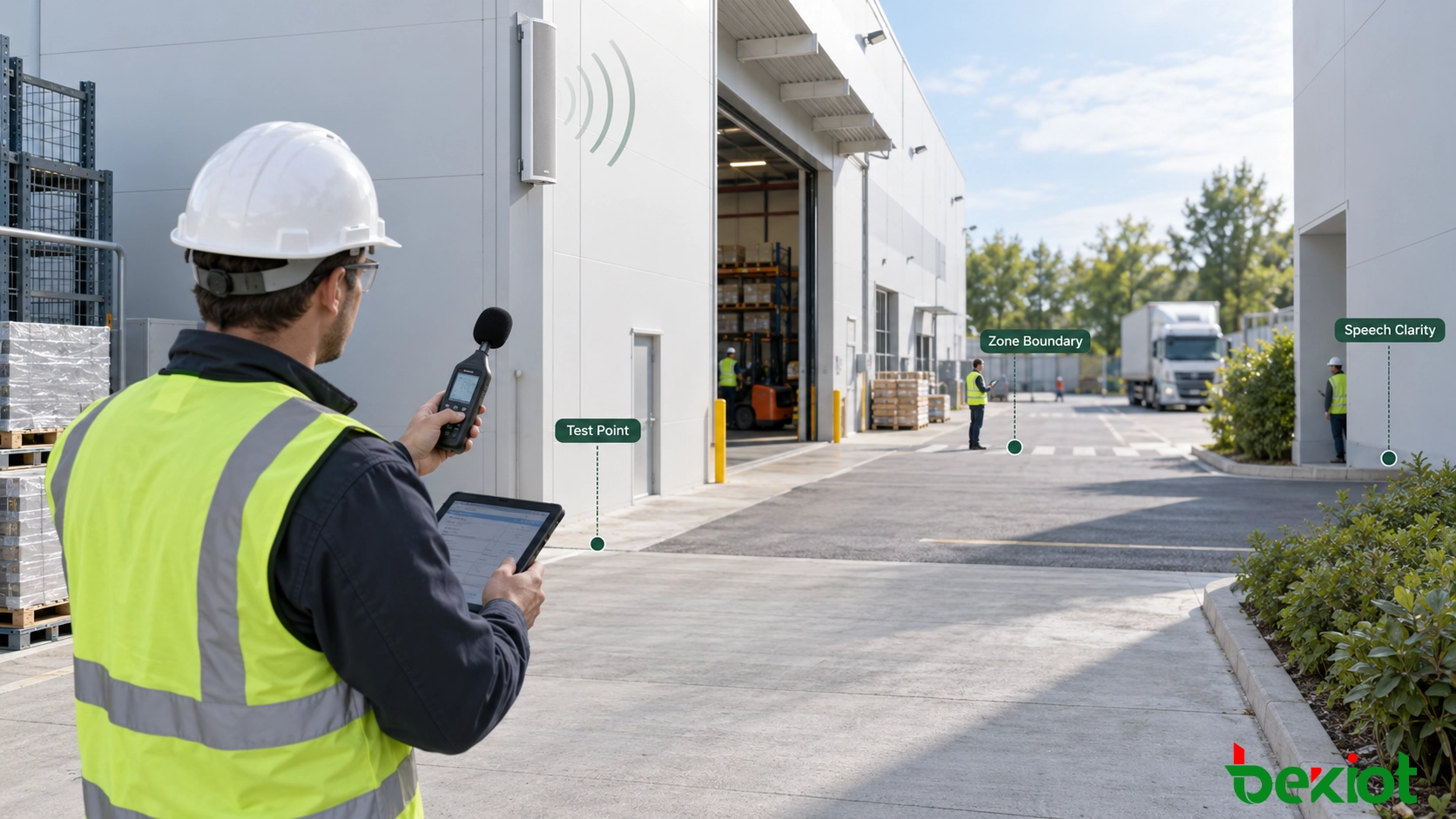
Fig.3 - Voice clarity should be checked at zone boundaries and behind obstructions while the site is operating normally.
The number of SIP column speakers required for an outdoor site is determined by the coverage layout, not by one power rating or area formula. Mark the listening zones, identify noise and obstructions, choose directional mounting positions and then verify the result at the site.
This process may produce a higher speaker count than a simple area estimate, but it also avoids excessive volume, missed announcements and expensive changes after installation.
FAQ
How Far Can a SIP Column Speaker Be Heard Outdoors?
The useful distance depends on acoustic output, speaker sensitivity, direction, installation height, background noise and physical obstructions. Project planning should use the distance at which speech remains understandable, rather than the farthest point where a sound can be detected.
Can One High-Output SIP Column Speaker Cover an Entire Outdoor Yard?
It may cover a large open area, but buildings, machinery, containers and high noise levels can create weak positions. A coverage drawing and on-site voice test are required before one speaker can be accepted as sufficient.
How High Should an Outdoor SIP Column Speaker Be Installed?
It should be high enough to avoid vehicles, interference and unauthorized access while remaining aimed toward the listeners. The final height depends on the speaker’s vertical dispersion, coverage distance and available mounting structure.
How Is the Final Number of SIP Column Speakers Confirmed?
Begin with an estimated layout based on noise, distance, obstructions and acoustic data. The quantity is finalized after representative speakers have been tested under normal site operating conditions.