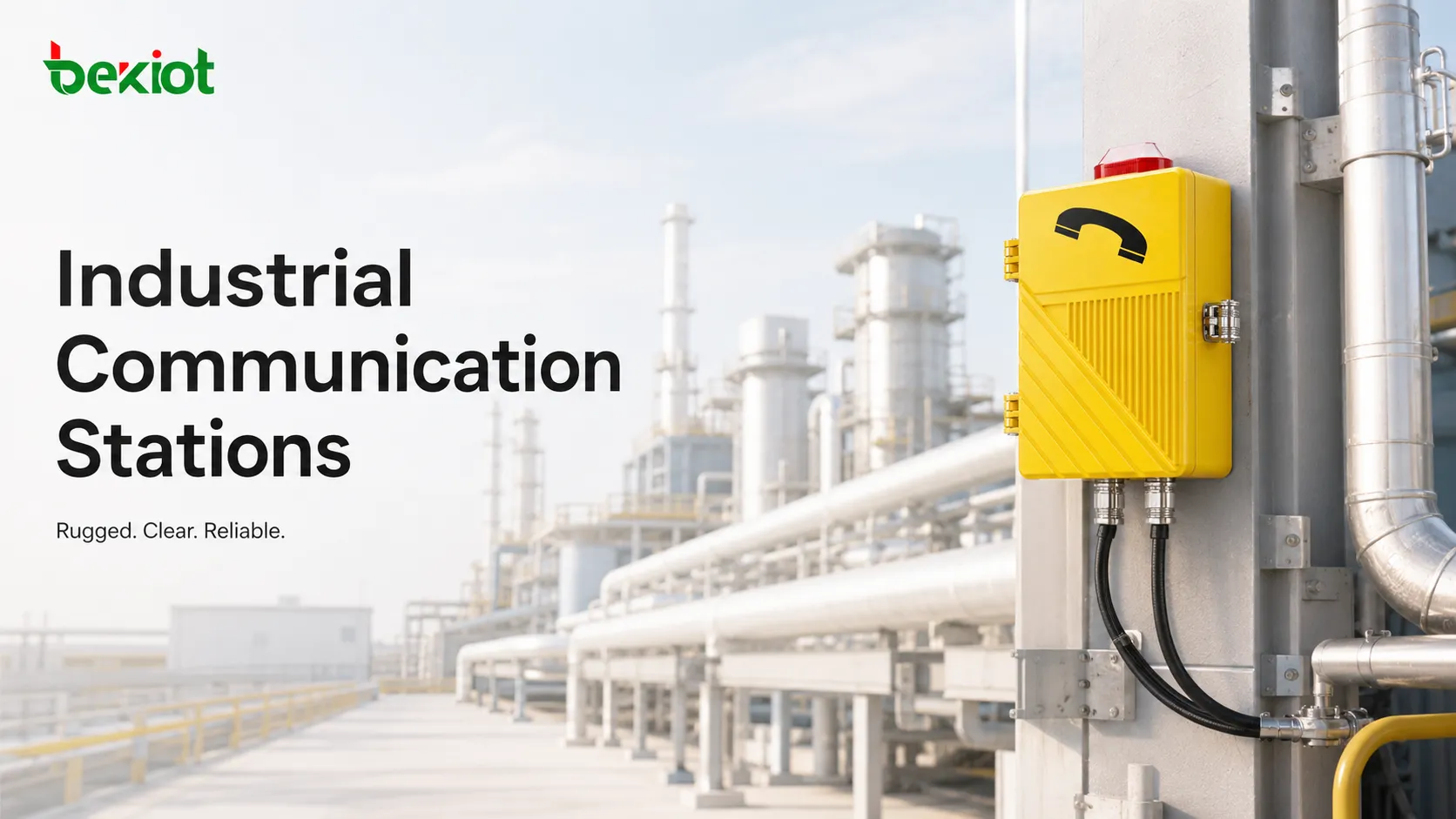
A communication station installed beside a production line, tunnel entrance, mine roadway, port loading area, power room, chemical workshop, or outdoor security post is not judged in the same way as an office phone. The buyer does not only ask whether it can make a call. The more important questions are whether it can remain online, whether workers can hear clearly, whether the enclosure can survive the site, whether it can connect with the existing communication system, and whether it can still be used during an emergency.
This is where industrial communication stations form their market value. They serve as fixed field access points for voice calls, intercom, paging, emergency help, dispatch communication, alarm linkage, and sometimes public address functions. Their competitiveness comes from practical site performance, not from appearance alone. A product that looks rugged but cannot integrate with the project system will be hard to justify. A product that connects well but cannot handle moisture, dust, impact, or noise will also lose value quickly.
Site Conditions Create Demand
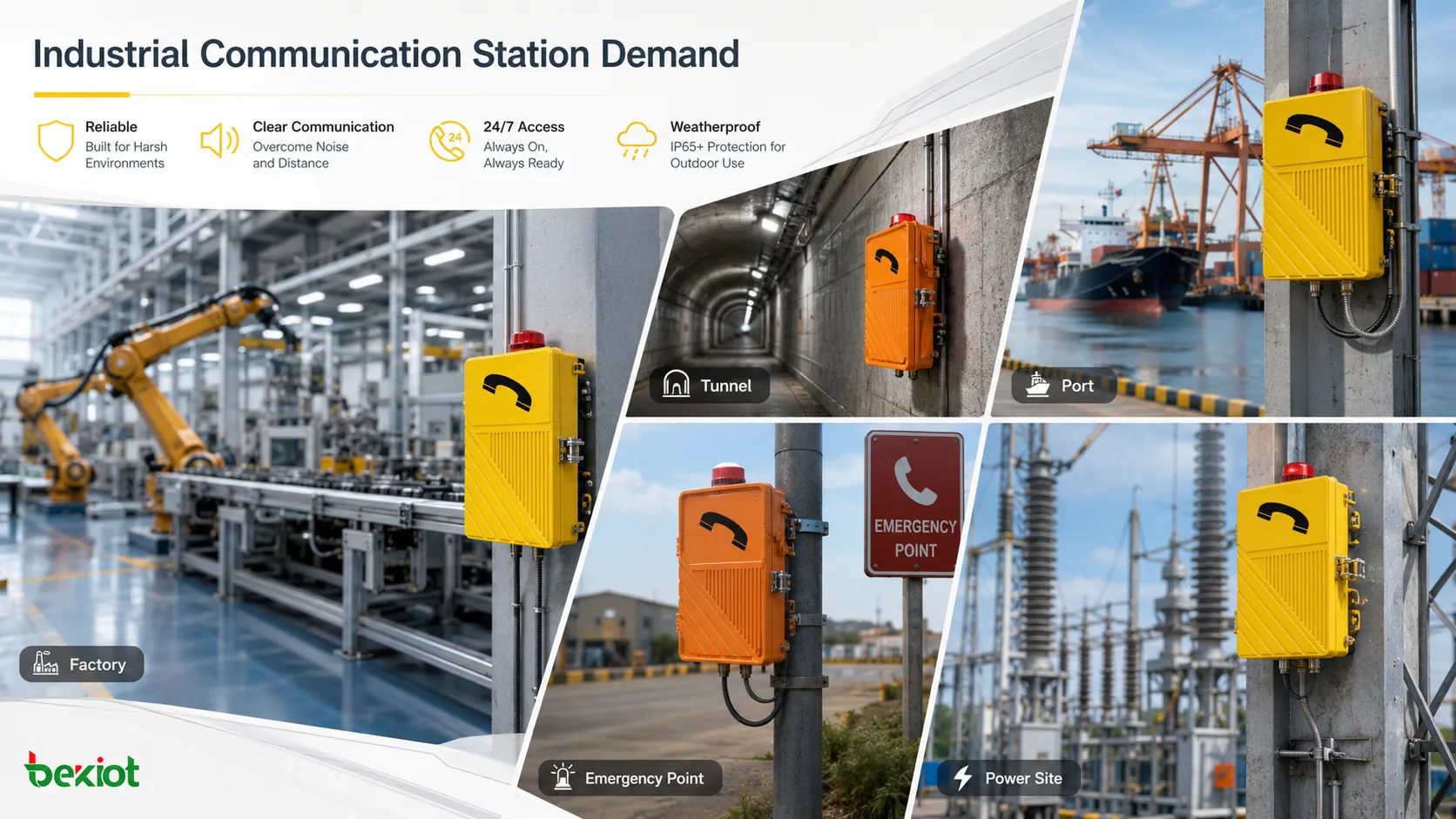
The market demand for industrial communication stations starts with the working environment. Many industrial and public infrastructure sites contain noise, dust, rain, vibration, temperature change, corrosive air, long walking distances, limited mobile signal, and frequent equipment movement. In these places, workers need communication points that are visible, easy to operate, and physically reliable.
Factories use communication stations for production coordination, maintenance contact, equipment-room calling, gate access, and emergency reporting. Tunnels and underground corridors use them along routes where mobile coverage may be unstable. Mines, chemical plants, energy facilities, ports, and transportation hubs use them because field communication must remain available even when ordinary devices are unsuitable.
This demand is not limited to new construction. Existing sites also replace old telephones, add emergency points, expand communication zones, upgrade analog systems, introduce SIP platforms, or connect field terminals to centralized dispatch systems. As industrial sites become more digital, the field communication station is no longer a simple endpoint. It becomes part of the site’s operational and safety infrastructure.
The stronger the site requirement, the stronger the product differentiation. A clean indoor area may accept many device types. A dusty workshop, coastal port, tunnel, or hazardous industrial zone needs a station with better protection, clearer audio, stable wiring, stronger structure, and easier maintenance. This gives professional industrial communication products a more defensible market position.
Buyers Compare More Than Price
Price is always part of procurement, but industrial communication stations are rarely selected by price alone. A low-cost device may become expensive if it fails often, cannot be installed properly, has poor voice clarity, lacks system compatibility, or requires repeated site visits. For industrial buyers, total lifecycle cost is usually more important than the first purchase price.
Durability is one of the first comparison points. Buyers want to know whether the enclosure can resist rough handling, whether the handset cord can survive frequent use, whether buttons remain reliable, whether the cable entry is protected, and whether the device can operate under the expected environmental conditions. A station installed outdoors or in a production area should not need constant attention.
Voice clarity is another competitive factor. In an industrial site, a connected call is not enough. The field user and the control room must understand each other during normal operation, not only during quiet commissioning. If workers need to repeat every message, the station loses practical value. Good microphone pickup, receiver output, acoustic structure, and stable circuits can become real market advantages.
System compatibility also affects purchasing decisions. Some projects require SIP communication, some use analog lines, some connect with IP PBX systems, some require dispatch consoles, and some need alarm linkage or recording. A station that supports the project architecture with less customization has stronger competitiveness because it reduces engineering risk.
Service and documentation should not be ignored. Industrial projects often involve contractors, integrators, safety teams, IT departments, and site maintenance personnel. Clear wiring information, installation guidance, interface description, and support response can influence whether the product is trusted by the project team.
Features Become Differentiators
Rugged structure builds confidence
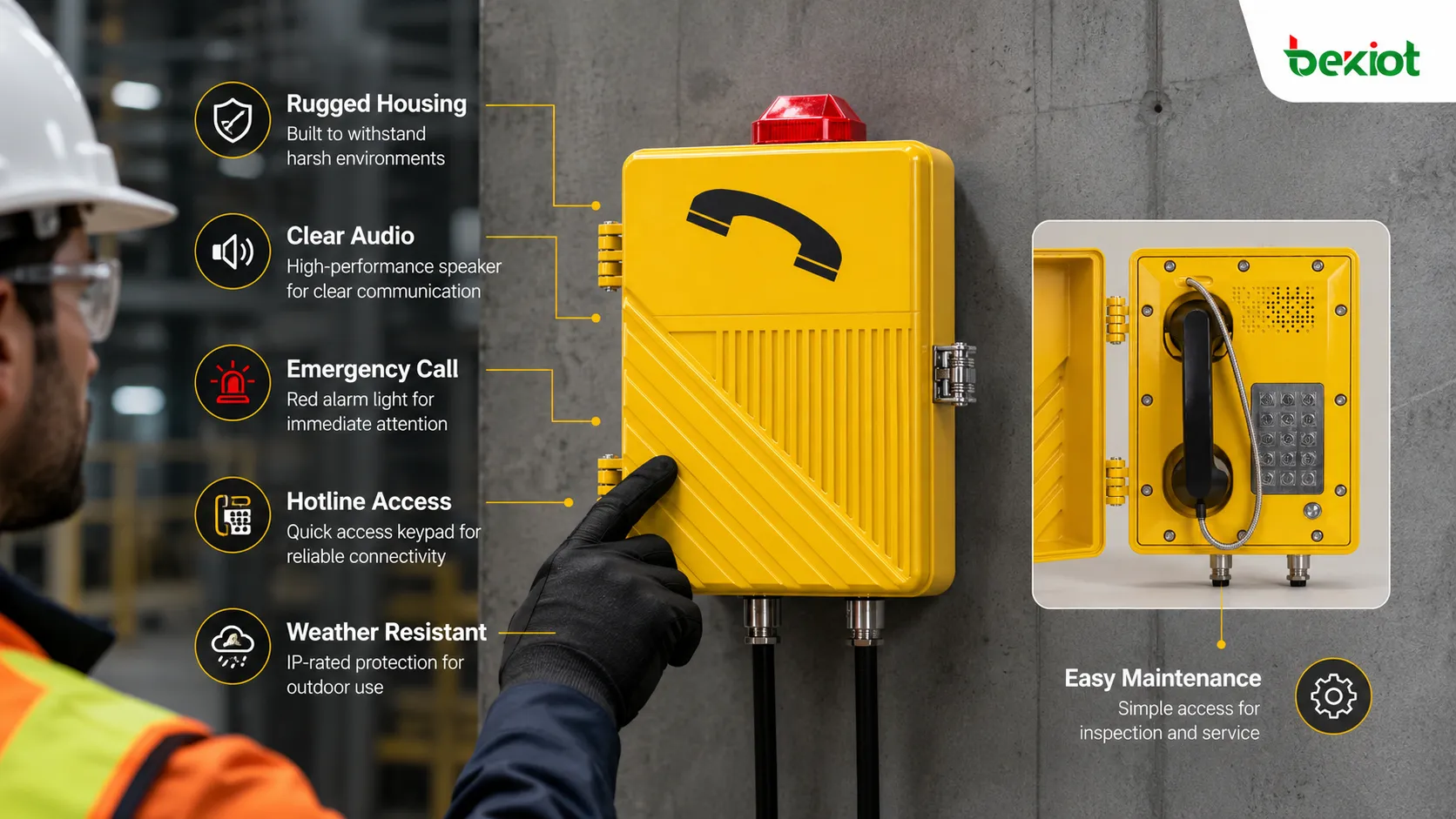
A major differentiation advantage of industrial communication stations is rugged structure. Strong housing, protected keypad, industrial handset, sealed cable entry, corrosion-resistant treatment, wall-mounting design, and weather-resistant components all help the product survive demanding locations. These details may not be obvious in a simple product photo, but they become important after years of field use.
In harsh sites, structural failure often leads to communication failure. A loose handset, broken hook switch, damaged button, or corroded terminal may interrupt the voice path. A well-designed station reduces these risks and gives buyers a practical reason to choose an industrial-grade product instead of a general-purpose communication device.
Clear audio supports real work
Audio performance is a strong differentiator because industrial calls often happen beside running machines, vehicles, fans, pumps, alarms, or outdoor wind. The device should help speech remain understandable. This may involve close-talk handset design, suitable microphone position, stronger receiver output, speaker tuning, echo control, and stable gain.
Clear audio is especially valuable for emergency calls, maintenance instructions, access control, production dispatch, and public facility support. When a worker says a location, fault type, valve number, room number, or safety instruction, the operator must understand it quickly. Voice clarity reduces repeat calls and shortens response time.
Emergency usability adds value
Many industrial communication stations are judged by emergency usability. Can a user find the device quickly? Can it call the right desk or control room? Can it work with gloves? Can it support one-button calling or hotline dialing? Can it be linked with alarm systems or dispatch platforms? These questions influence product differentiation.
Emergency communication equipment should be simple at the moment of use. A station with too many complex steps may look powerful but perform poorly in stressful situations. Practical button layout, clear labels, reliable call routing, visible status, and stable connection can create stronger value than unnecessary features.
System Fit Decides Value
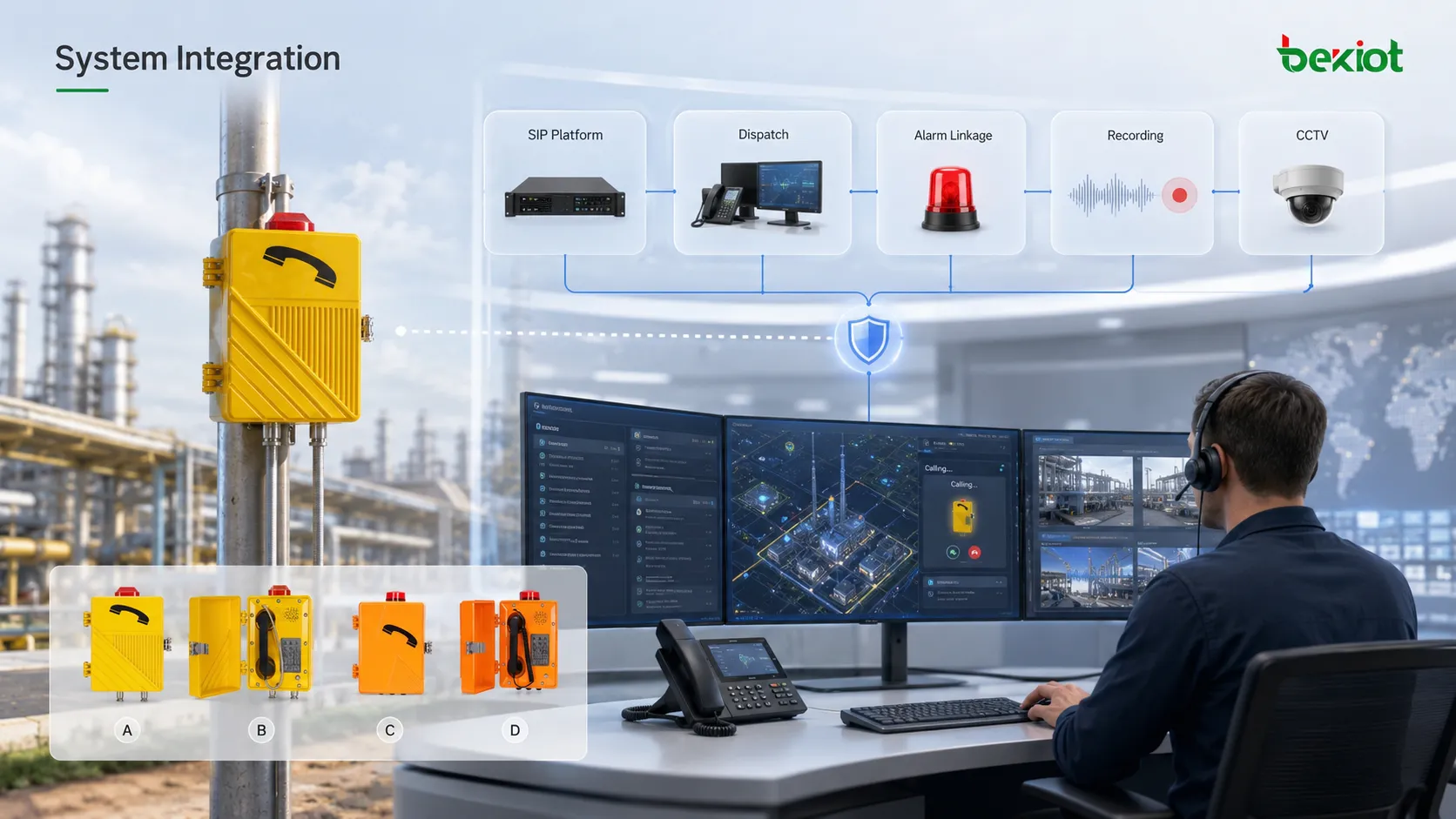
An industrial communication station becomes more competitive when it fits into the whole communication system. Many sites already use IP PBX, SIP servers, dispatch platforms, public address systems, video monitoring, access control, alarm systems, recording platforms, or maintenance management tools. A station that can connect with these systems is more valuable than an isolated field phone.
SIP compatibility is an important advantage in modern industrial communication. It allows flexible numbering, centralized routing, remote configuration, call recording, dispatch integration, and multi-site management. For users upgrading from traditional systems, SIP-based stations can become part of a wider digital communication architecture.
Analog compatibility still has market value as well. Many existing industrial sites have long cable routes and legacy telephone systems. Replacing the entire system may not be realistic in one step. Products that can support existing infrastructure or provide migration options can reduce upgrade pressure.
Integration with dispatch and alarm platforms creates a stronger differentiation point. A call from a station can identify its location, appear on a dispatch console, trigger a recorded call, open a related camera view, or connect with an emergency workflow. This turns the station from a simple communication device into a field node of the safety and operation system.
Becke Telcom can be considered in projects where industrial communication stations need to work with practical field deployment and system-level communication needs. In competitive projects, the product should be judged together with the platform, network, installation position, maintenance method, and user workflow.
Final Notes
The market competitiveness of industrial communication stations comes from their ability to solve real field problems. They are expected to provide clear voice, rugged operation, emergency access, stable installation, system compatibility, and long service life in places where ordinary communication devices are often not enough.
Differentiation does not depend on one feature alone. A strong station needs durable structure, practical audio design, suitable interfaces, easy operation, reliable power and network connection, simple maintenance, and the ability to integrate with dispatch or safety systems. The more closely the product matches the site workflow, the stronger its market advantage becomes.
For industrial sites that need dependable communication points for factories, tunnels, ports, energy facilities, outdoor yards, public infrastructure, or emergency response areas, Becke Telcom offers industrial communication solutions that can support field calling, dispatch integration, and rugged long-term use. The suitable configuration should be selected according to site environment, communication platform, audio conditions, installation method, and maintenance plan.
FAQ
What is an industrial communication station?
It is a fixed field communication device used for voice calls, intercom, paging, emergency help, dispatch contact, or alarm-linked communication in industrial and public infrastructure environments.
Why is it more competitive than an ordinary phone?
It is designed for harsher environments, clearer field audio, stronger housing, stable installation, and integration with industrial communication or emergency systems.
What features help create differentiation?
Important differentiators include rugged structure, clear microphone pickup, loud and intelligible output, SIP or analog compatibility, one-button calling, alarm linkage, remote monitoring, and easy maintenance.
Where are these stations commonly used?
They are commonly used in factories, tunnels, mines, ports, power plants, chemical sites, logistics yards, campuses, transport hubs, utility rooms, and outdoor emergency points.
How should buyers evaluate them?
Buyers should evaluate site environment, protection level, audio clarity, installation method, communication interface, dispatch integration, maintenance access, spare parts, and long-term lifecycle cost.